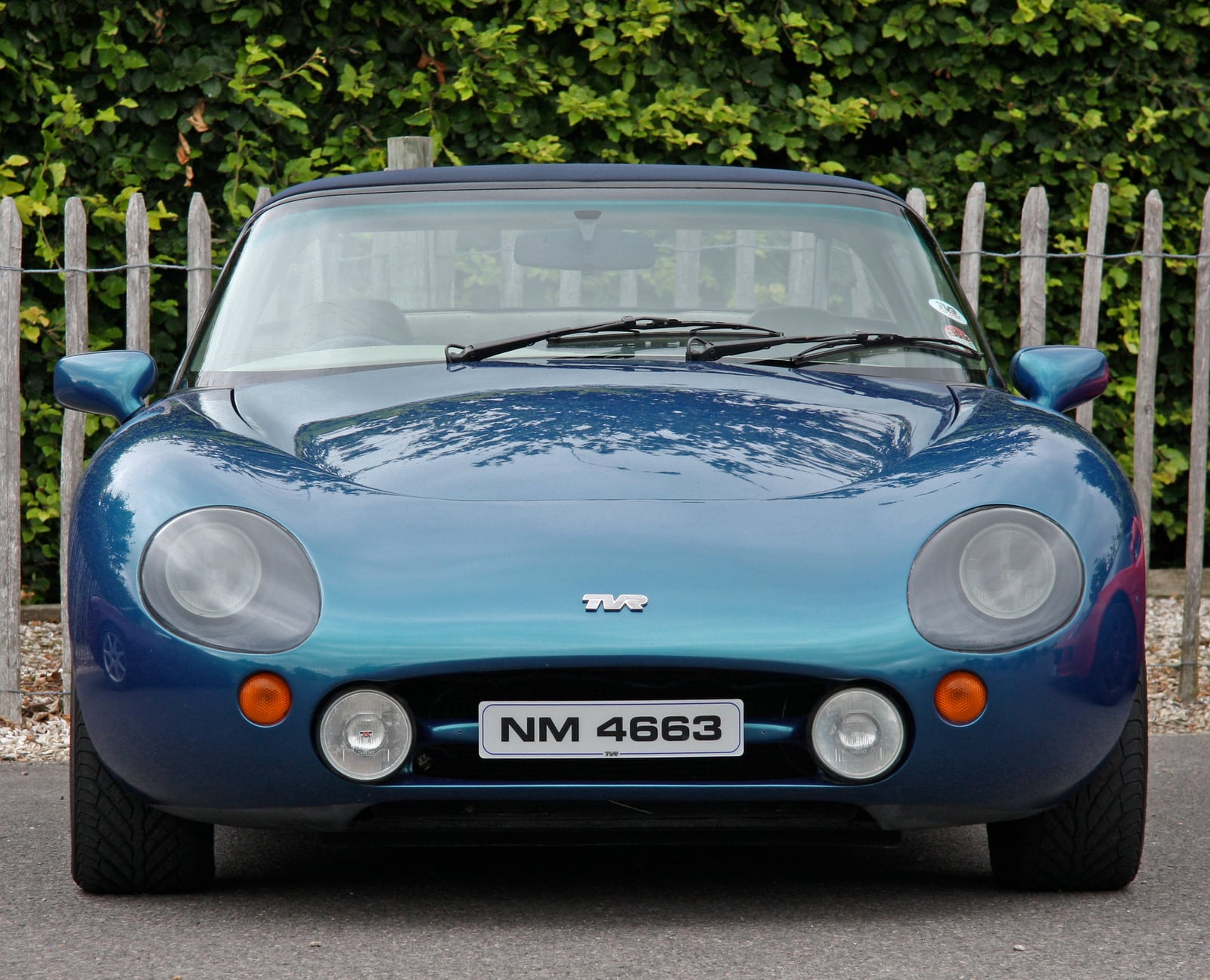
Every era of British motoring had its respectable sports cars, and then it had TVR. From 1958 to 2006 the Blackpool firm built glassfibre-bodied, tube-chassis machines with the biggest engines that would fit and none of the electronic manners the industry adopted around it, and the classic TVR cars that survive, Grantura to Griffith to Chimaera to the factory-engined firebrands of the end, remain the loudest value in the specialist market. This page indexes our TVR guides and tells the seaside story behind them.
Blackpool begins: the Grantura
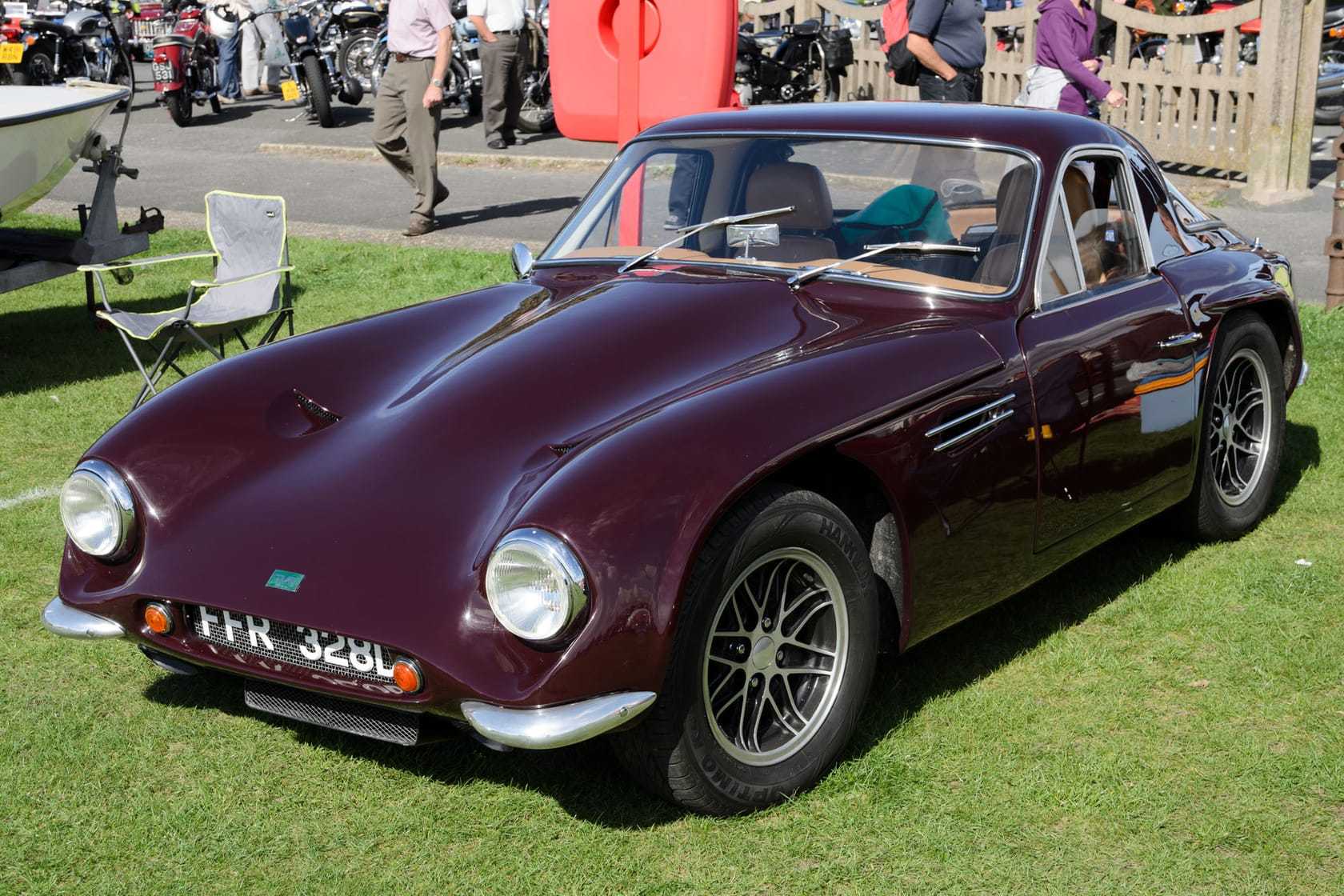
Trevor Wilkinson’s engineering shop had built specials since the late forties, but the 1958 Grantura made TVR a car maker: a stubby glassfibre coupe over a tubular chassis, powered by Coventry Climax, Ford or BMC engines, light enough to embarrass grander machinery and pretty enough to sell. Granturas raced everywhere, evolving through four marks, and set the template every Blackpool car followed: proprietary power, glassfibre curves, minimal weight and a certain willingness to frighten. The Lotus comparison was made in period and flattered both firms; Blackpool built its cars angrier.

TVR at auction
What a classic TVR sells for at auction
- Median sale, 2025
- £12,095 Down from £15,009 in 2021
- Sales in 2025
- 94 The most we have recorded in a year
- Sold when offered
- 73% Of the cars put up for auction since 2001
- The record
- £602k Cerbera Speed 12, Silverstone Auctions, May 2023
V8 lightning: the sixties Griffith
In 1963 an American dealer named Jack Griffith wedged a Ford 289 V8 into a Grantura shell and TVR gratefully industrialised the result: the Griffith 200 and 400 offered supercar acceleration in a car shorter than a Mini, with handling that demanded respect and often got headlines instead. Blackpool nearly died when American sales collapsed, but the V8-in-a-small-car formula became the company’s signature, resurrected to enormous effect a generation later. Sixties Griffiths are now the marque’s blue chips, trading far above the rest of the classic range.
M-series, wedges and the Wheeler revolution
The seventies M-series, 2500M and 3000M with Triumph and Ford power, matured TVR into a proper small manufacturer, and the angular Tasmin wedges carried it through the eighties. Salvation and legend arrived with owner Peter Wheeler: the 1986 S-series revived the classic curves at an honest price, and the 1991 Griffith and 1992 Chimaera put Rover V8 muscle into two of the prettiest British bodies of their decade, selling faster than Blackpool could build them. Wheeler’s TVR then went further, building its own AJP8 and Speed Six engines for the Cerbera, Tuscan, T350 and Sagaris, cars whose speed and savagery closed the company’s story at full volume in 2006.

The philosophy: no aids, no apologies
TVR’s product plan fitted on a beer mat: big engine, light glassfibre body, tubular backbone chassis, and nothing between driver and consequences, no anti-lock brakes, no traction control, no airbags, long after rivals fitted all three. The stance made every fast TVR a test of character and the brand an outlaw institution, beloved of enthusiasts in exact proportion to the establishment’s disapproval. The Jensen crowd built gentlemen’s expresses; Blackpool built the other thing, and sixty years of loyal owners have never wanted it tamed.

Owning a classic TVR
The buying rules are consistent across eras: the tubular chassis rusts, outriggers first, hidden under glassfibre that never corrodes, so structural inspection outweighs cosmetics entirely; Rover-V8-engined cars enjoy the hobby’s best engine support; factory-engined 2000s cars need committed specialists. The club scene is enthusiastic and knowledgeable, values are honest, 560 measured sales at a £13,900 median across the range, and the model guides in the index above carry the detail. Budget for the chassis, buy the best you can, and join the loudest ownership fellowship in the classic world.

More photos