Search the guides
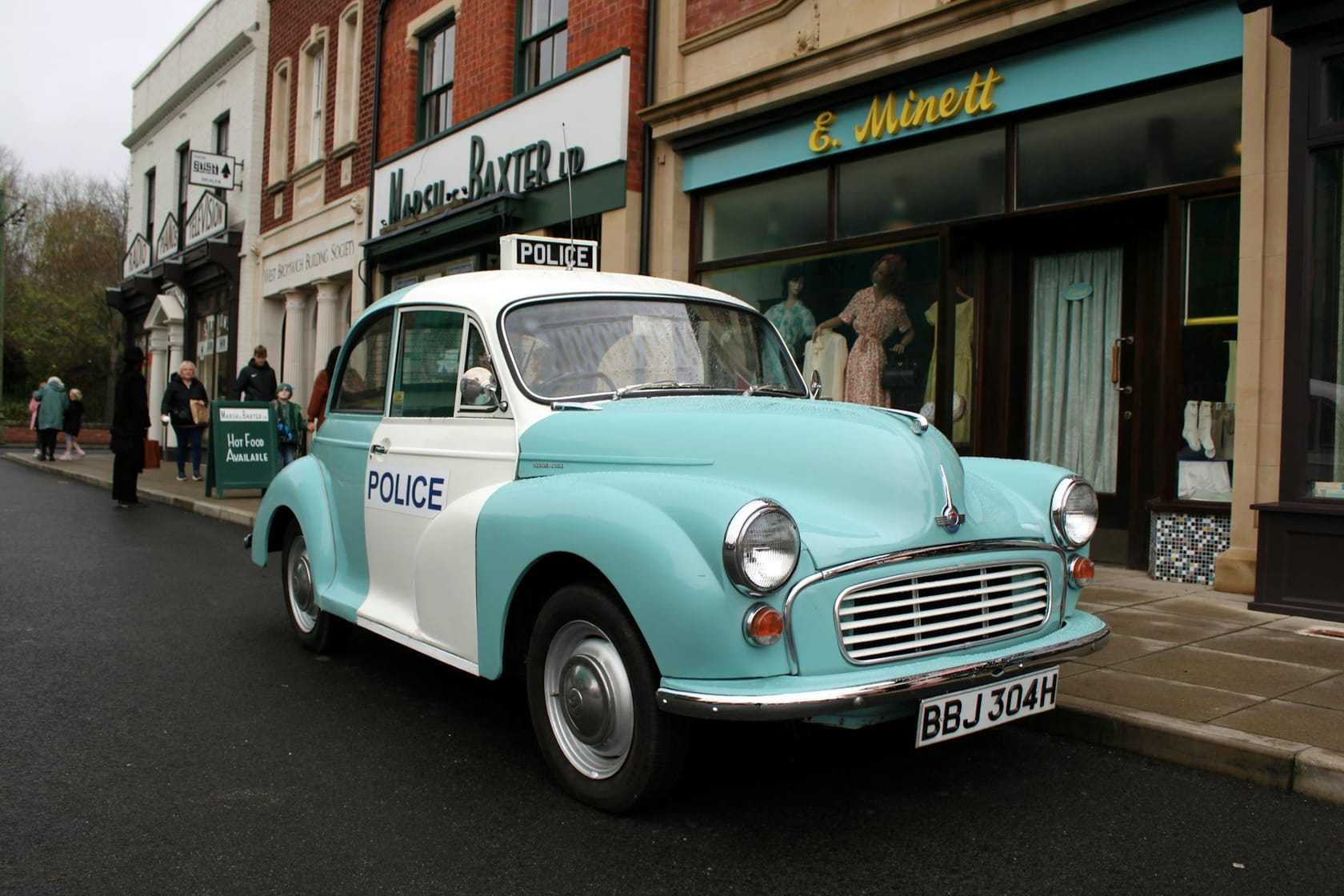
A pale blue and white Morris Minor police panda car parked on a British high street
Marque guide

Morris: Cowley, the Minor and the empire William Morris built

William Morris started with bicycles in an Oxford shed and ended as Lord Nuffield, running Britain's biggest car company and giving most of his fortune away. In between, Morris Motors built the cars that defined ordinary British motoring: the Bullnose Oxford, the Eight that out-sold everything in the late 1930s, and the Minor, the first British car to pass a million. Below, the classic Morris cars and the Nuffield-family Rileys we cover, and the story of the marque that made Cowley famous.

The marque file
Founded
1912; first car 1913
Founders
William Morris, later Lord Nuffield
Headquarters
Cowley, Oxford
Classic era
1935–1971 (the classics covered here)
Values
from £3k
Model guides
5
Defining models EightMinorRiley RM
5 guides

The models

A maroon and black 1935 Morris Eight four-seat tourer at a classic car show, front three-quarter view
Morris Eight
1935–1948 from £4k

The Morris Eight was Cowley's answer to Ford's Model Y and became Britain's best-selling car of the late 1930s, running from the Series I to the post-war Series E. A guide to the series, the tourers and vans, what to check when buying, and what a Morris Eight costs today.

Read the full Morris Eight guide
The span of the marque

The Morris years, model by model

Production years as covered by our model guides. Select a bar to open the guide.

Bullnose beginnings at Cowley

William Morris progressed from repairing bicycles in Oxford to assembling his own car in 1913, the round-radiatored Morris Bullnose Oxford, built from bought-in parts at a disused military college in Cowley; the cheaper Morris Cowley model soon joined it, taking its name from the factory’s home. His genius was production and price: by undercutting rivals and building in volume he took Morris Motors past every competitor, and through the 1920s Cowley was Britain’s biggest car factory, with the Bullnose and its Flatnose successor the best-selling cars in the country. The profits built an empire, and the empire acquired badges: Wolseley in 1927, MG born of the Morris Garages dealership in Oxford, and Riley in 1938.

A dark blue 1927 Morris Oxford saloon with black wings on a showfield, other vintage cars behind
A 1927 Oxford: the Flatnose successor to the Bullnose that built Cowley.Photo by grobertson4 / CC BY 2.0

The Eight and the pre-war boom

The Morris Eight of 1935 was the company’s answer to Ford’s cut-price Model Y, and it landed perfectly: honest, cheap and better-equipped than its price suggested, it became Britain’s best-selling car of the late 1930s and restored Morris to the top of the sales charts. Its story, Series I to the headlamps-in-wings Series E, gets its own page. Alongside it the Ten and the bigger saloons filled out a range that made Cowley, like Longbridge, one of the twin capitals of British motoring.

A grey 1924 Morris Cowley Bullnose tourer with brass lamps on museum display, UK registration OR 5885
From the Bullnose Cowley to the Eight, Morris undercut everyone and sold the country its first cars.Photo by Dave Hamster / CC BY 2.0

The Minor: a million and counting

Alec Issigonis designed the Morris Minor as, in his own phrase, a proper car for the ordinary family, and from its 1948 launch it became exactly that: the first British car to pass a million sales, in production for nearly a quarter of a century as a saloon, convertible, the wood-framed Morris Traveller (the late 1,098cc cars are widely listed as the Morris 1000) and the van and pick-up that served the Post Office and every high-street trade. The Minor’s engineering brief led directly to the Mini, and its designer’s story is told in our Alec Issigonis profile. On today’s roads it remains the easiest introduction to classic motoring Britain offers.

A dark green Morris Minor saloon parked outside a brick building in Ely
Issigonis called the Minor a car for the people; a million buyers agreed.

Riley, Wolseley and the Nuffield family

By 1938 William Morris was Lord Nuffield, and his personal purchase of the bankrupt Riley company that year brought Coventry’s great sporting marque into the family. The pre-war Riley Kestrel fastbacks and their twin-cam engines kept their character under Nuffield ownership, and the post-war Riley RM saloons and roadsters, the last true Rileys, were the family’s finest work. Wolseley played the respectable uncle, its illuminated badge gracing upmarket versions of Morris designs for three more decades. Both marques ended as badges on shared BMC bodies, but the cars covered here are the real things.

A cream and brown two-tone Wolseley 1500 saloon parked on tarmac, front three-quarter view, UK registration 624 XUF
Wolseley and Riley came into the Nuffield fold and spent thirty years wearing Morris mechanicals.Photo by exfordy / CC BY 2.0

Oxfords, Cowleys and the BMC years

The 1952 merger with Austin created the British Motor Corporation, and Morris settled into the role of the combine’s sensible badge. The Series Oxfords and Cowleys sold steadily at home and famously forever in India, where the Oxford Series III became the Hindustan Ambassador and outlived its parent by decades. The Morris 1100 of 1962 launched BMC’s brilliant 1100 and 1300 family wearing the Morris badge first, and the range went on to be Britain’s best-selling car for most of the decade, the last time the badge led the national sales charts. Under British Leyland the badge went to the conventional cars: the roomy Morris 1800 “Landcrab”, above all the Marina of 1971, covered with our 1970s family saloons, and the Morris Ital facelift of the same car, whose 1984 demise retired the Morris name from cars altogether.

A green 1955 Morris Oxford saloon at a classic car show, front three-quarter view, UK registration SU 7141
A Series II Oxford: the sensible middle of 1950s Britain, and ancestor of the Hindustan Ambassador.Photo by grobertson4 / CC BY 2.0

Owning a classic Morris today

The classic Morris cars covered here are among the most sensible old cars in Britain to run. Minor parts supply is effectively complete, with specialists remanufacturing almost everything; the Eight and the pre-war cars lean on strong clubs and simple engineering; and the A-series and B-series mechanicals underneath most post-war models are shared with half of BMC production, so nothing is exotic. The checks are the usual ones: structural rust in sills, floors and spring hangers, the Traveller’s ash frame, and originality on the pre-war cars. Values stay friendly, with even excellent Minors under £15,000 and the rarer Rileys the main exception upward; each model page carries its own auction price bands and buying notes. Every Morris here is also old enough for historic vehicle status, which takes road tax and, on unmodified cars, the annual MOT off the list of running costs.

A white Morris Minor Traveller with varnished ash rear framing parked on a town street
The Traveller's ash frame is furniture-grade woodwork; check it as carefully as the steel.

More photos

Quick answers

Frequently asked questions

What happened to Morris cars?

The badge outlived its independence by decades. Morris merged with Austin in 1952 to form the British Motor Corporation, was folded into British Leyland in 1968, and thereafter appeared mostly on the conventional cars in the range, the Minor, the Oxford, then the Marina and its Ital facelift. When Ital production ended in 1984 the Morris name was retired from cars, seventy-one years after the first Bullnose left Cowley.

What was the most famous classic Morris?

The Minor, by a distance. Alec Issigonis's 1948 design was the first British car to sell a million, stayed in production for nearly a quarter of a century in saloon, convertible, Traveller and van forms, and remains one of the easiest and best-supported classics to own. The Bullnose Oxford made the company and the Eight made its fortune, but the Minor made its legend.

Why do Riley pages sit with Morris here?

Because that is where history put them. Riley, the old Coventry sporting marque, hit financial trouble in 1938 and was bought personally by Lord Nuffield, who folded it into the Morris family alongside Wolseley and MG. The post-war RM-series Rileys were built by the Nuffield Organization, and the last Rileys of all were badge-engineered cousins of Morris designs, so the marque's classic-era story is a chapter of the Morris story.

Was Morris bigger than Austin?

For much of the inter-war period, yes. Morris was Britain's largest carmaker through the 1920s, holding over a third of the home market at his peak, with Austin his constant rival one place behind. By the late 1930s the two were effectively level, which is why their 1952 merger into the British Motor Corporation created a combine holding roughly forty percent of British car production.

What do classic Morris cars cost?

Gentle money almost throughout. Usable Morris Eights and Minors start around £4,000 to £6,000, good examples run £7,000 to £12,000, and only the rarest pre-war cars, early Bullnoses and the best Riley RMs climb far beyond that. The convertibles and Travellers carry premiums over the saloons. Each model page carries detailed price bands built from real auction results.