Morris Minor: a million of the best-loved car Britain ever made (1948–1971)
The Morris Minor was the first British car to sell a million, Issigonis's people's car built for twenty-three years as saloon, convertible, wood-framed Traveller and van. A guide to the Series MM, Series II and Minor 1000, the bodies decoded, why it remains the easiest classic to own, and what to check before buying one.
Built 1948–1972
At a glance
- Years
- 1948–1971 (commercials to 1972)
- Body styles
- Two and four-door saloon, convertible (Tourer), Traveller estate; van and pick-up
- Drivetrain
- Front engine, rear-wheel drive
- Engines
- 918cc sidevalve; 803cc and 948cc A-series; 1098cc (Minor 1000)
- Power
- Around 27 bhp to 48 bhp
- Top speed
- Around 62 mph (early) to 77 mph (1098cc)
- Trim levels
- Series MM, Series II, Minor 1000; Tourer, Traveller and commercial derivatives
- Production
- Over 1.6 million, the first British car past a million
- Assembly
- Cowley, Oxford
- Designer
- Alec Issigonis
- Values
- Usable saloons from around £4,000; good cars £6,000-£10,000; Tourers and Travellers beyond
- The milestone
- The first British car to sell a million, celebrated with the lilac Minor Million editions
- The support
- Effectively every part is available new; the easiest classic in Britain to keep running
The models
Some cars are classics because they were rare or fast. The Morris Minor is a classic because it was neither: over 1.6 million were built across twenty-three years, it became the first British car to pass a million sales, and it taught more Britons to drive than any machine before or since. Morris’s masterpiece is the easiest classic in the country to own, and the auction record behind this page, nearly a thousand sales, is the deepest we track.
Issigonis builds a car for the people
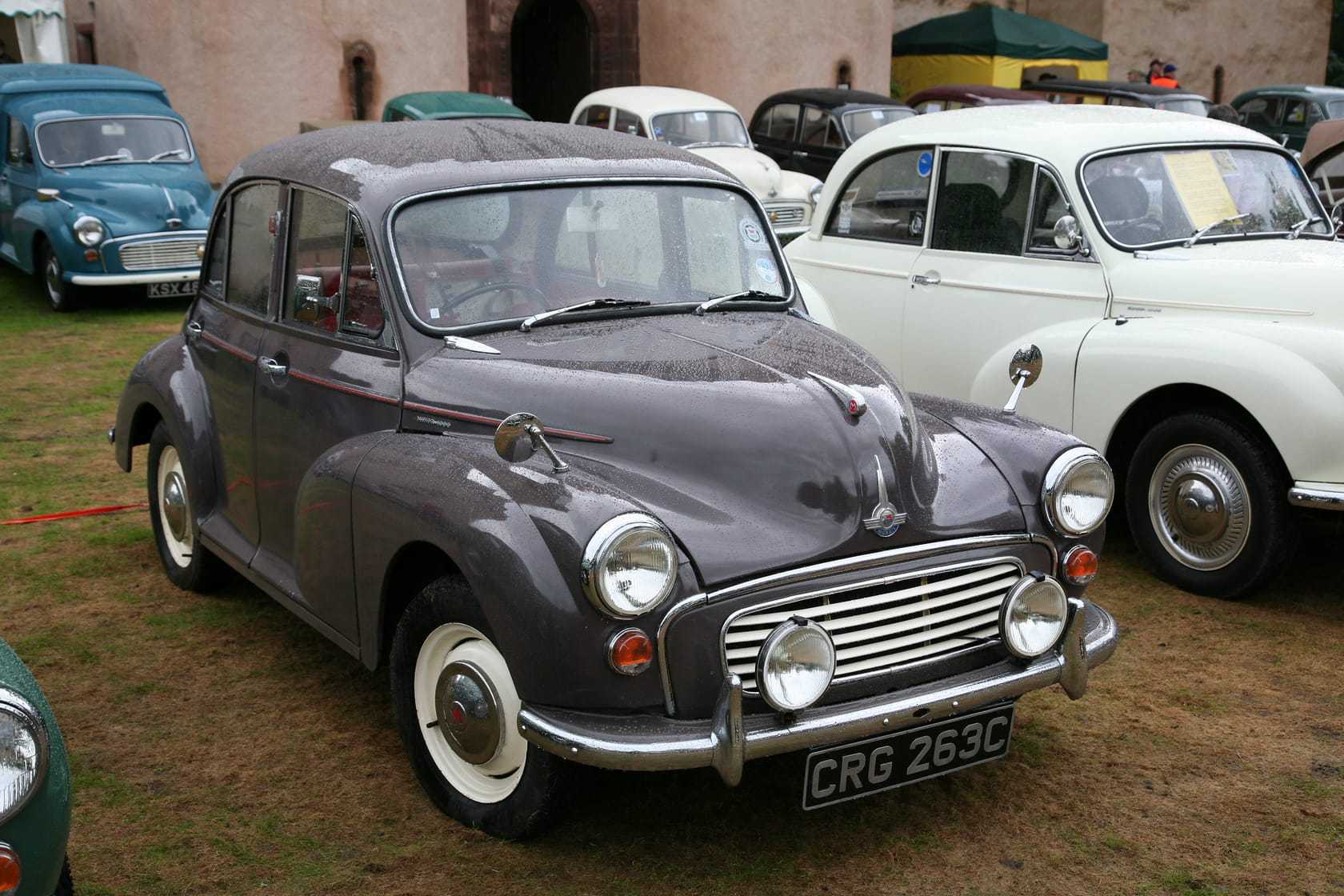
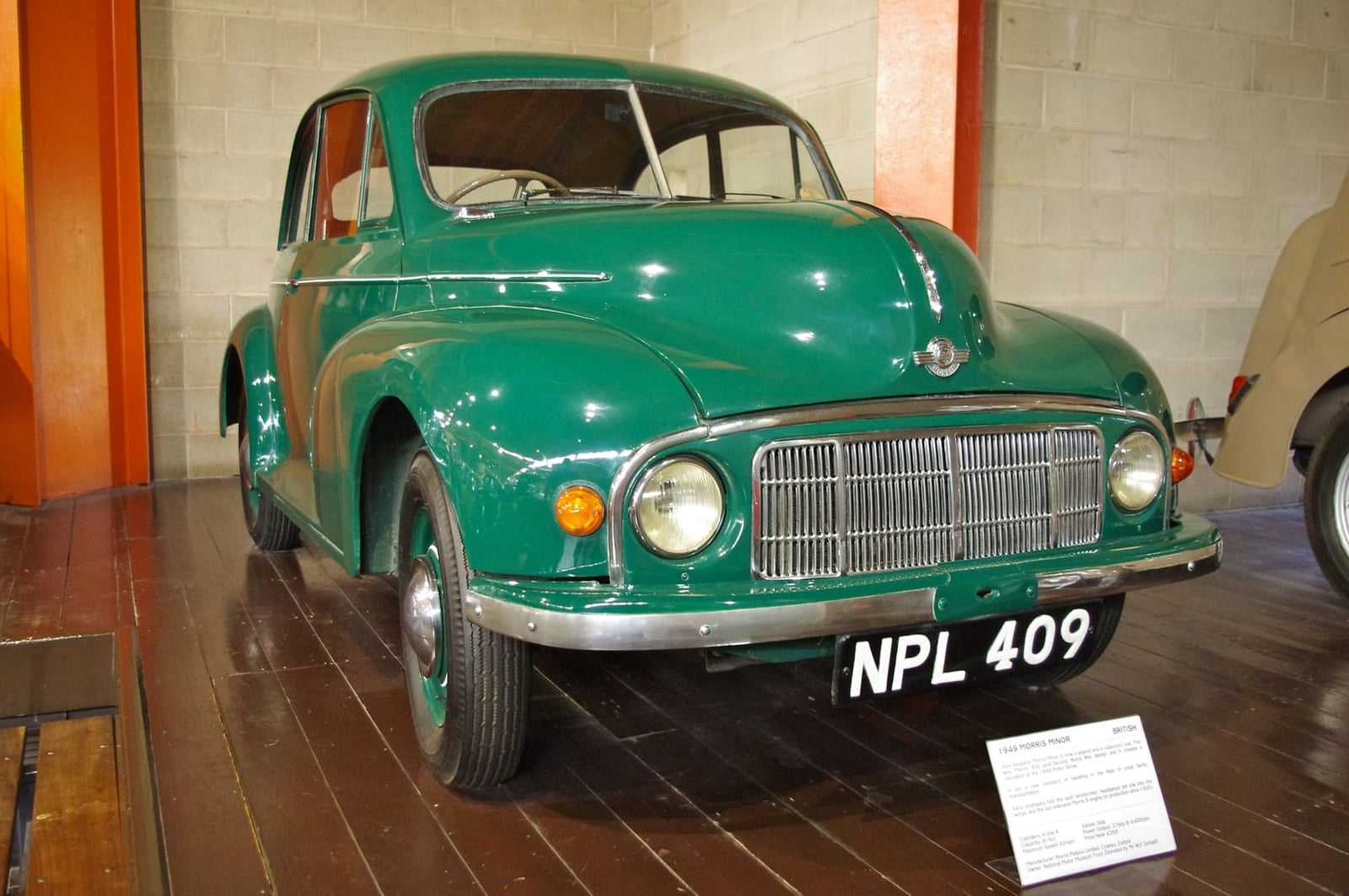
Alec Issigonis designed the Minor during the war years as, in his phrase, a proper motor car for the ordinary family, and fought for engineering the class had never seen: rack-and-pinion steering, torsion-bar independent front suspension, unitary construction, and packaging that put the wheels at the corners. A late demand from management widened the car by four inches, the seam down the bonnet of early cars marking the stretch. Launched at Earls Court in 1948 as the Series MM, it drove like nothing else cheap, and the Issigonis story runs straight from here to the Mini.

Saloon, Tourer, Traveller: the bodies decoded
The family grew quickly. Two and four-door saloons anchored the range; the open Tourer gave Britain its definitive budget convertible; and from 1953 the Traveller added the varnished-ash estate whose structural timber frame remains the most charming maintenance item in classic motoring. The van and pick-up versions served the GPO and every high street trade, and are covered in their own guide. The 1952 Austin merger swapped the old sidevalve for the A-series engine, creating the Series II and beginning the Minor’s long mechanical kinship with half of BMC.

The Minor 1000 and the million
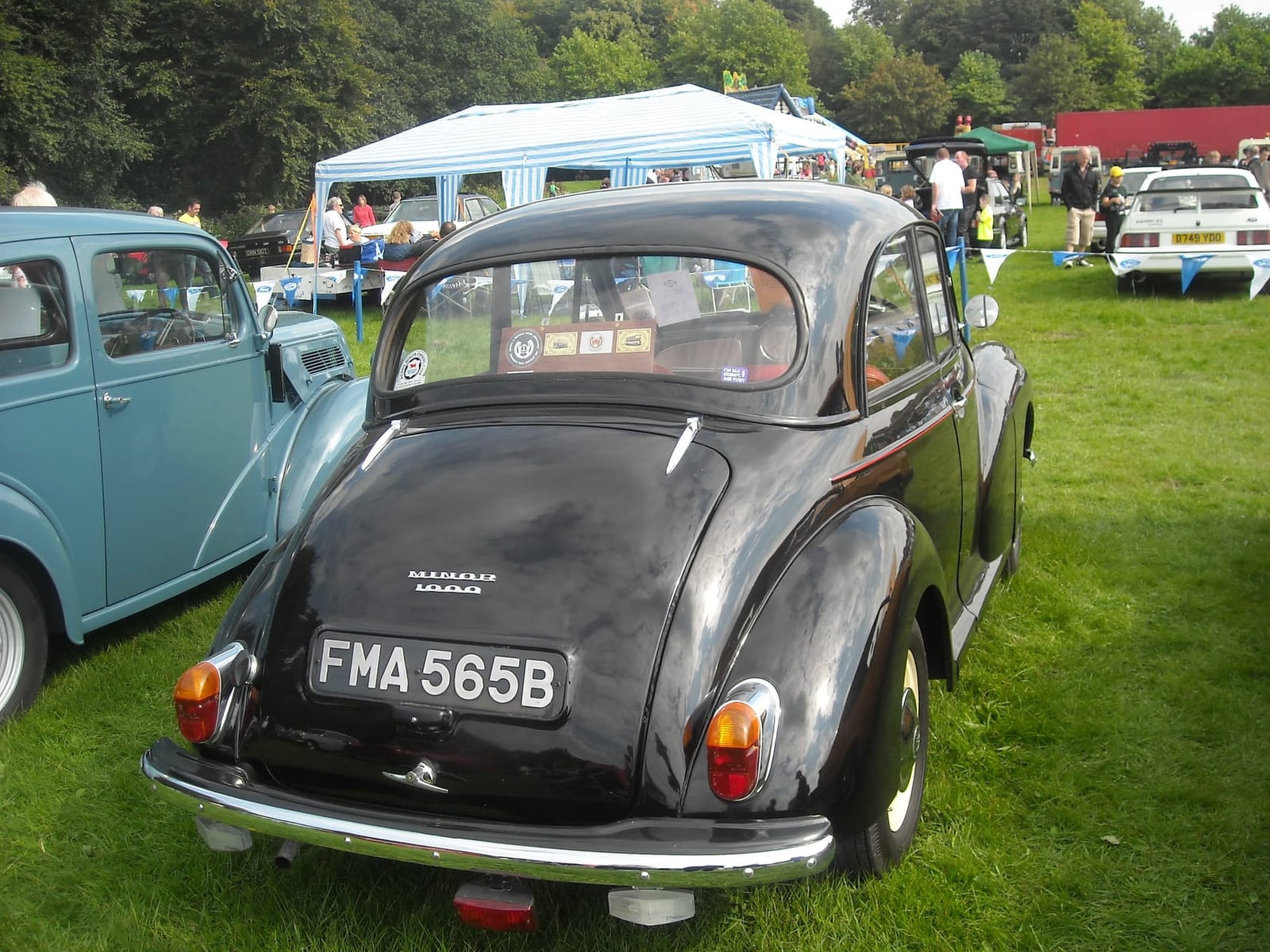
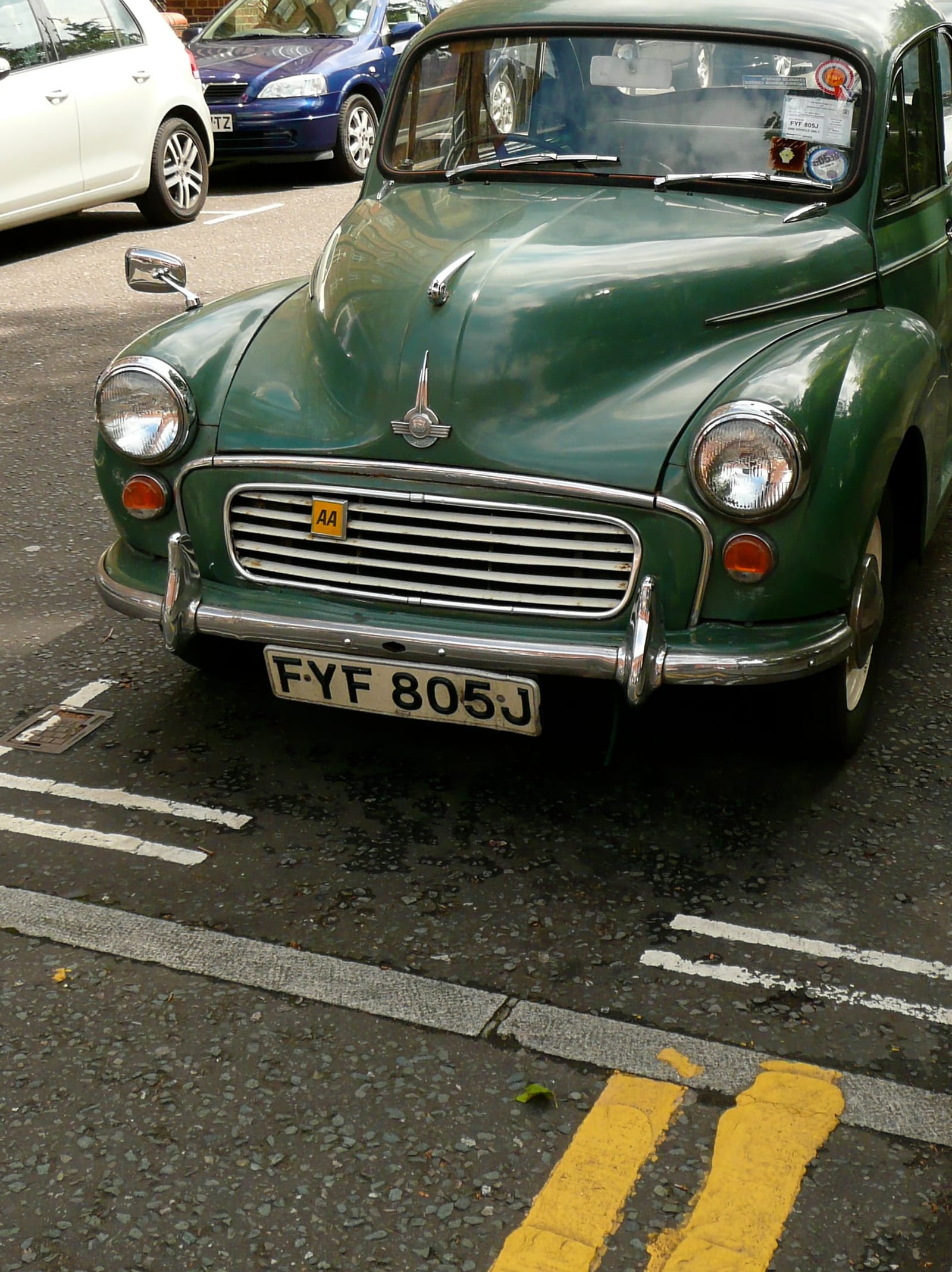
The 1956 Minor 1000 is the car most people know: 948cc, a single-piece windscreen, and finally the performance to match the chassis, improved again by the 1098cc engine of 1962. In January 1961 the Minor became the first British car to pass a million built, celebrated with 350 lilac-painted, white-seated Minor Million specials that are blue-riband collectables today. Production ran gently down to 1971 for cars and 1972 for commercials, outliving its official replacements; nothing ever quite filled its slot, though the Morris Marina formally tried.

The Minor at work
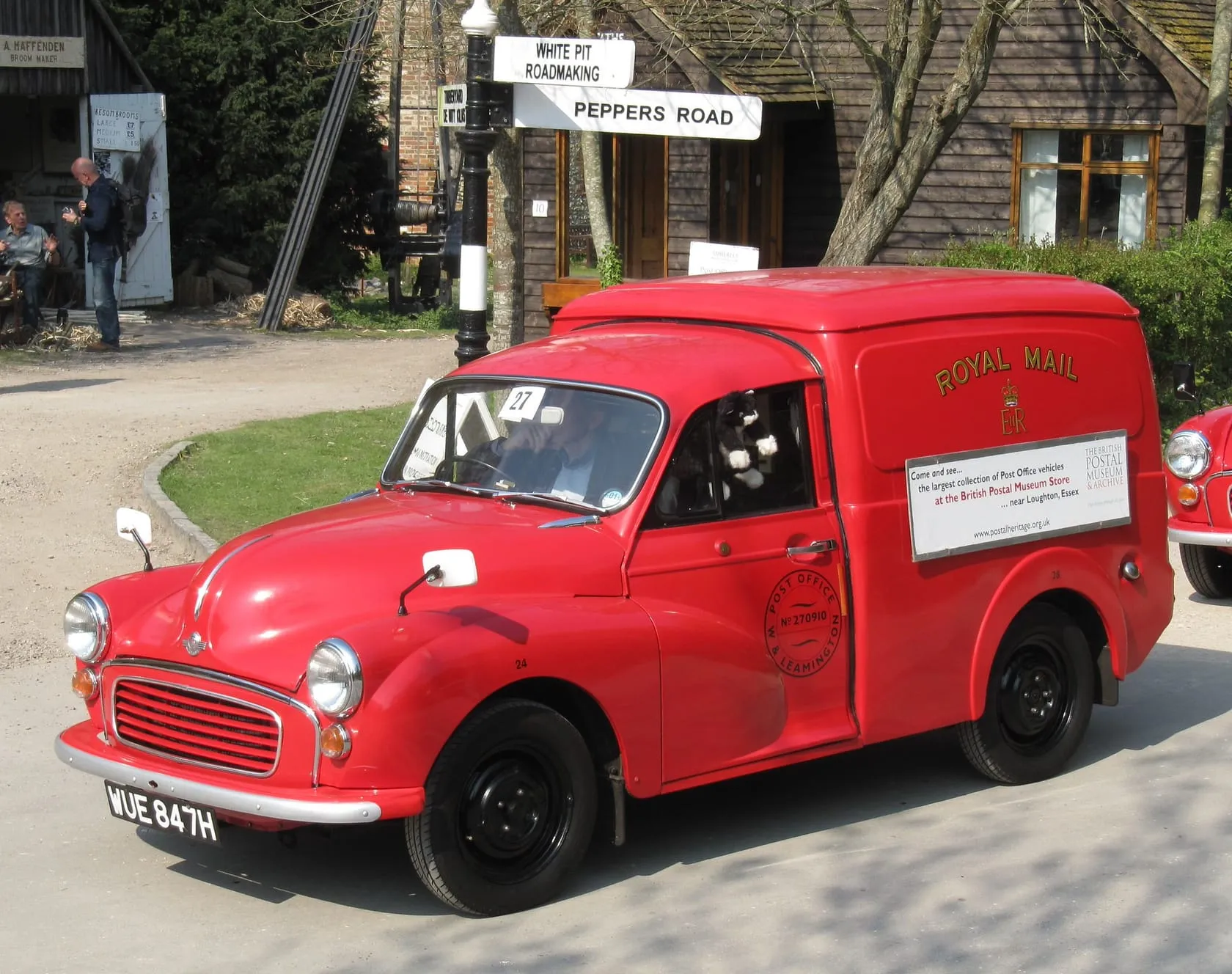
Britain put its people’s car straight into uniform. Police forces ran Minor panda cars into the 1970s, the district-nurse Minor became a national stereotype with a basis in procurement fact, driving schools wore out thousands, and the GPO’s fleets made the shape part of every street. Exports ran worldwide, with left-hand-drive cars selling steadily in 1950s America of all places. That working ubiquity is why the survivor scene is so rich in liveried restorations, and why a Minor in period dress, post office red or panda blue and white, remains the show field’s most reliable crowd magnet.

What a Minor is like to drive
The Minor’s manners are why it endures. The steering is genuinely accurate in a way few classics of any price match, the ride is soft but tidy, and the A-series thrums along at 55 with charm instead of stress. It is slow by every modern measure and completely unintimidating with it: visibility is total, controls are light, and the car telegraphs everything. Motorways are tolerable in an 1098; B-roads are the natural habitat. Thousands of owners use Minors as everyday transport still, which no other 1940s design in Britain can claim.

Buying a Morris Minor today
Structure decides everything: sills, floors, the central crossmember, spring hangers and the rear chassis legs are the Minor’s rot points, all repairable with cheap panels but labour-heavy, so a £3,000 structural horror costs more than a £7,000 honest car. Travellers add the ash frame, which is load-bearing and must be sound. Mechanically everything is available new, often over the counter, and nothing is beyond a home mechanic. The clubs and specialists are the hobby’s most developed; use them before buying, not after. Originality matters less here than condition, because so many Minors evolve gently with their owners; unleaded heads, alternators and disc brake conversions are so common the clubs treat them as maintenance rather than modification.

The million-seller’s market
The measured record, 948 sales, says it plainly: usable saloons £4,000 to £6,000, good cars £6,000 to £10,000, Tourers and Travellers £9,000 to £15,000 with the best beyond, and everything tracking condition far more than year. That stability is the Morris Minor’s quiet strength as a first classic: bought sensibly, it neither soars nor sinks, it just keeps working. The full record, the Traveller premium in figures and what the market has done over twenty years, is on the page covering Morris Minor values. Alongside its great rival the Austin A30 and A35, it defines the affordable 1950s, and rather more of Britain besides.

More photos
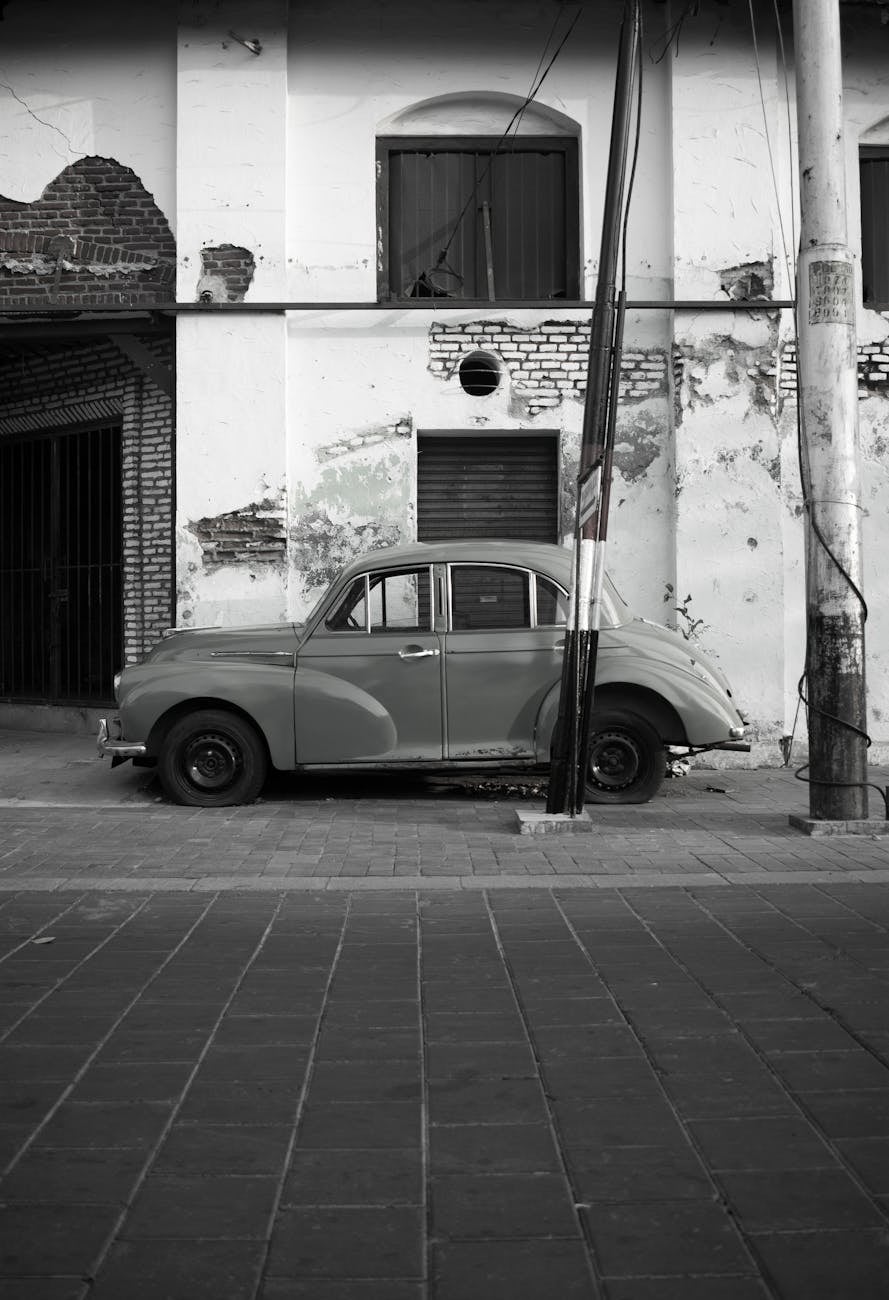
The Minor timeline
- 1948Launched at Earls Court as the Series MM, designed by Issigonis as a proper motor car for the ordinary family, widened four inches by a late management demand that left its seam down early bonnets.
- 1952The Austin merger swaps the sidevalve for the A-series engine, creating the Series II.
- 1953The Traveller adds the varnished-ash estate; the Tourer serves as Britain's definitive budget convertible.
- 1956The Minor 1000 brings 948cc and a single-piece windscreen.
- Jan 1961The Minor becomes the first British car past a million built, celebrated with 350 lilac Minor Million specials.
- 1962The 1,098cc engine improves the performance again.
- 1971Car production winds down, commercials following in 1972, at over 1.6 million in all.
Buying checklist: the Minor in front of you
Structure, which decides everything
- Sills, floors and the central crossmember
- Spring hangers and the rear chassis legs
- All repairable with cheap panels, but the labour is what costs
- A structural horror at £3,000 costs more than an honest car at £7,000
Traveller-specific
- The ash frame is load-bearing and must be sound, not just varnished
- Timber repair is a different trade from welding, and priced accordingly
- Check the joints and the bottoms of the posts, where water sits
- A good frame with tired varnish beats fresh varnish over soft wood
Mechanical and upgrades
- Everything is available new, and nothing is beyond a home mechanic
- Unleaded heads, alternators and disc-brake conversions are treated by the clubs as maintenance
- Originality matters less here than condition, because so many Minors evolve gently
- Use the clubs and specialists before buying, not after
Frequently asked questions
How many Morris Minors are left?
What is the difference between a Morris Minor Series MM, Series II and Minor 1000?
Is a Morris Minor a good first classic car?
Why is the Morris Minor famous?
Related across themes


More from Morris


Recently added

Bentley S-series: the quiet twin with the beautiful secrets (1955–1965)

Rolls-Royce Silver Spirit and Silver Spur: the last Crewe bargain (1980–1999)

Rolls-Royce Corniche: the coachbuilt survivor that outlived its makers (1971–1995)
