Riley RM series: the last real Rileys (1945–1955)
The Riley RM series, RMA to RMF, was the final flowering of the true Riley, a twin-cam sports saloon with torsion-bar suspension and coachbuilt elegance, plus the rare RMC roadster and RMD drophead. A guide to every RM model, how to tell them apart, buying checks and values.
Built 1945–1955 166 recorded sales
At a glance
- Years
- 1945–1955
- Body styles
- Four-door sports saloon, roadster (RMC), drophead coupe (RMD)
- Drivetrain
- Front engine, rear-wheel drive
- Engines
- 1496cc and 2443cc twin-cam fours
- Power
- Around 55 bhp (1.5) to 100 bhp (2.5)
- Top speed
- Around 75 mph (RMA); over 90 mph (RMB/RMF)
- Trim levels
- RMA, RMB, RMC, RMD, RME, RMF
- Production
- Around 22,000 across all models
- Assembly
- Coventry to 1949, then MG's Abingdon works
- Designer
- Riley drawing office under the Nuffield Organization
- Values
- Usable saloons from around £8,000; good cars £11,000-£18,000; open cars far beyond
- The engines
- Riley's pre-war twin-cam fours, carried into the post-war world
- What followed
- The 1953 Pathfinder began the badge-engineered years; the RM was the last car built as a true Riley
The models
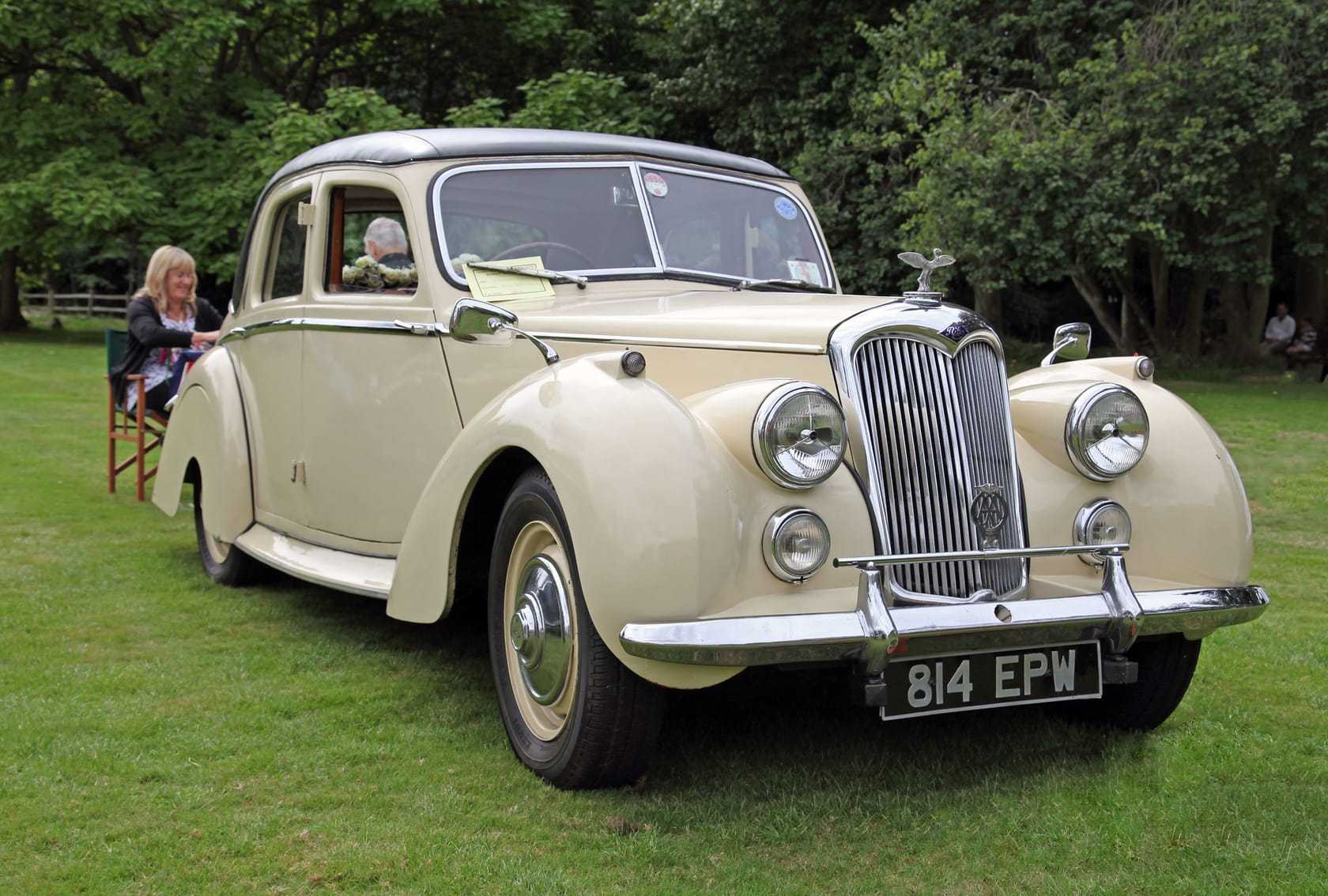
When enthusiasts say “the last real Riley”, they mean the RM. Built from 1945 to 1955, the RM series carried the Coventry firm’s twin-cam engines and sporting manners into the post-war world wrapped in some of the loveliest saloon coachwork of the age, and when it ended, so, in every meaningful sense, did Riley. What remains is a family of six models, RMA to RMF, that gives today’s buyer coachbuilt style and real engineering for ordinary-saloon money.
A sports saloon in a ration-book world
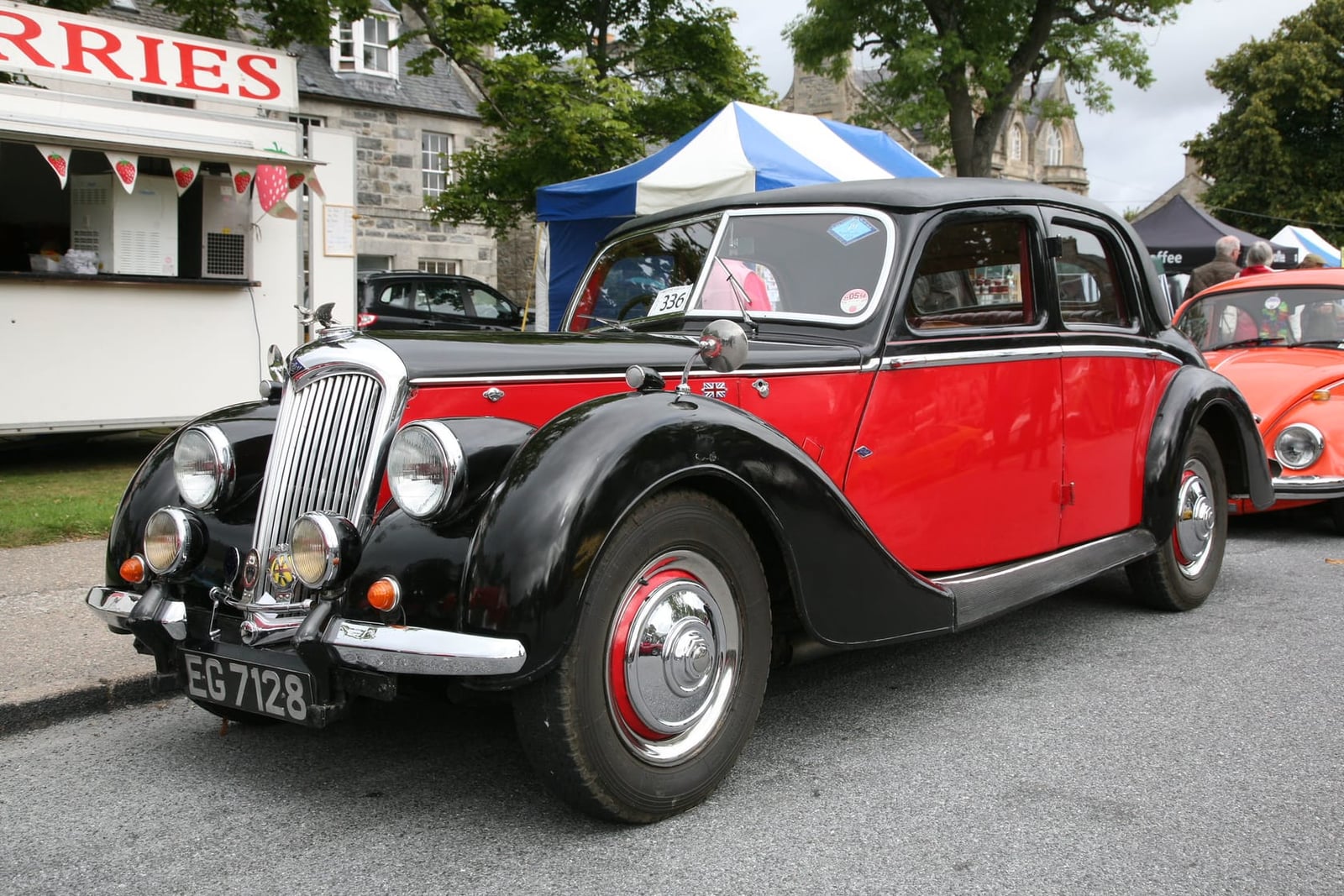
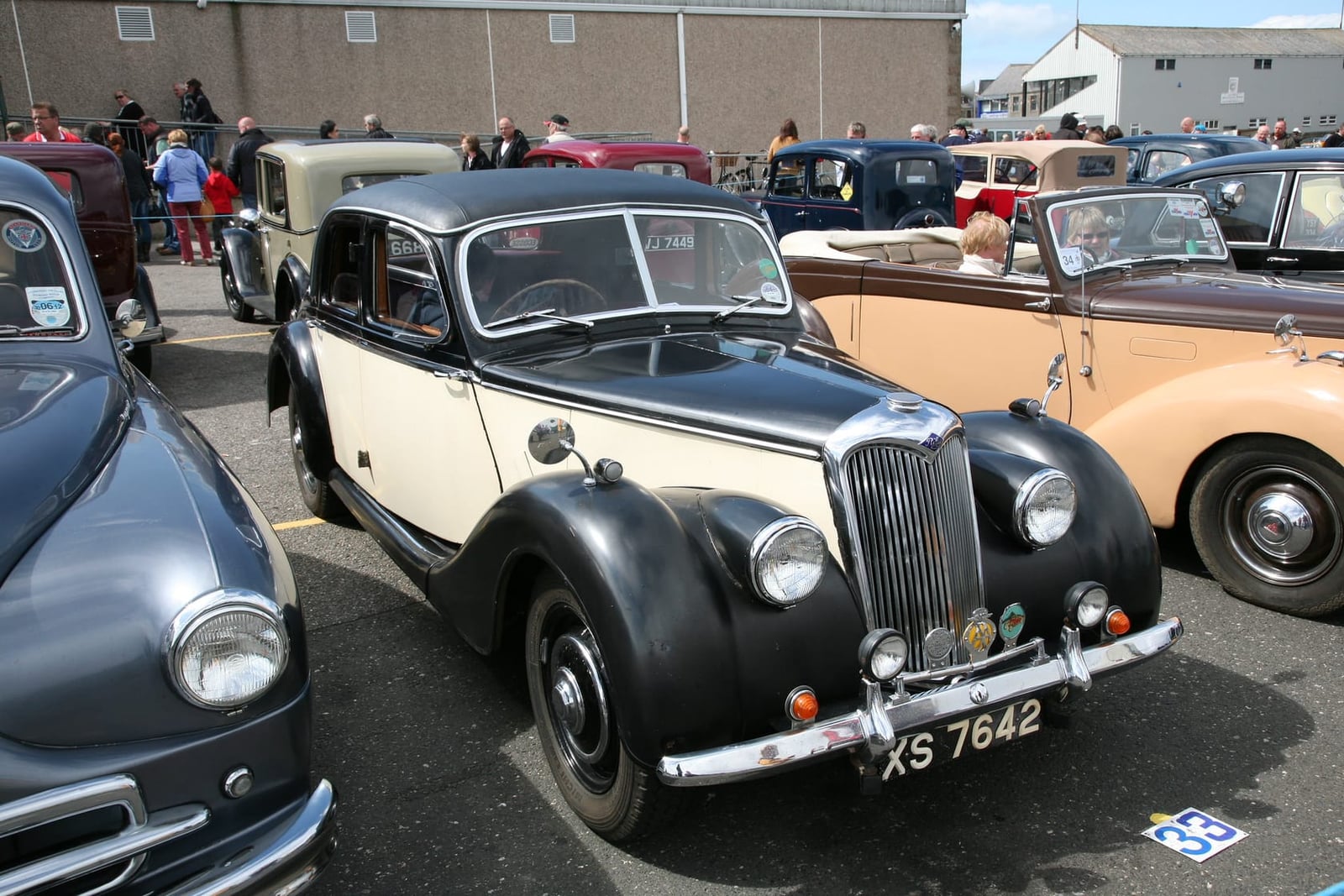
Riley entered the peace with something nobody else had: a properly sporting saloon ready to build. The RMA of 1945 paired the firm’s 1,496cc twin-camshaft four with a new chassis wearing torsion-bar independent front suspension and quick rack-like steering, under a low, flowing body with a fabric-covered roof and sweeping wings. In a Britain of warmed-over 1930s designs it looked and drove like a promise of better times, and the export-or-die drive sent RMs to every market the Nuffield Organization could reach. The 2,443cc RMB of 1946 added the pace the chassis deserved.

RMA to RMF: the family decoded
The codes read like a cipher and decode simply. RMA (1945) and its improved successor RME (1952) are the 1.5-litre saloons; RMB (1946) and RMF (1952) the longer, faster 2.5-litre cars; RMC the rakish three-seat roadster and RMD the traditional drophead, both short-lived, export-minded and now the treasures of the family. The RME’s late “streamline” form dropped the running boards and added rear wheel spats, giving the last true Riley a moderately daring farewell dress. Production moved from Coventry to MG’s Abingdon works in 1949, a detail with consequences: RM and MG saloon owners still compare notes at the same club tables.

The engine: Riley’s twin-cam inheritance
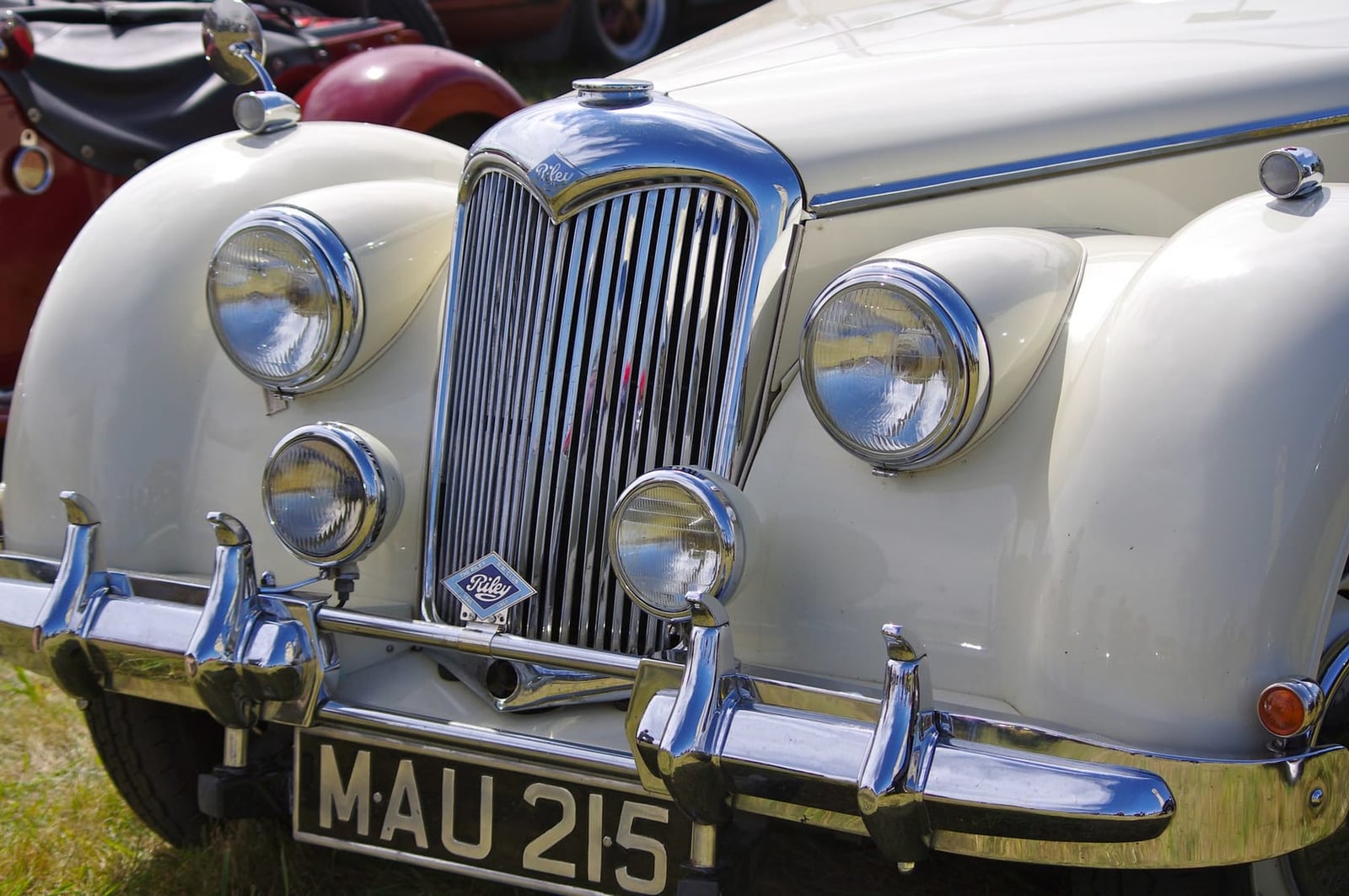
Every RM ran a version of the engine architecture Percy Riley laid down in 1926: twin high-set camshafts, short pushrods and hemispherical combustion chambers, breathing like a sports unit while pulling like a family one. The 1.5 gives around 55 bhp of sweet-revving willingness; the 2.5, up to 100 bhp and a genuine 95 mph, made the RMB among the fastest British saloons of its day. The same architecture had powered Riley’s pre-war Kestrel fastbacks and racing specials, and the family resemblance is audible the moment either engine clears its throat.

What an RM is like to drive
The RM’s reputation rests on how modern it feels underneath its classical body. The steering is quick and full of feel, the torsion-bar front end keeps the nose flat where rivals wallow, and the gearbox rewards a deliberate, mechanical hand. A 1.5 flows along B-roads at 50 with total composure; a 2.5 adds the long-legged stride that made it a police pursuit car in period. Brakes are the era’s one caution, the earlier hydro-mechanical system asking more pedal planning than the later full-hydraulic cars. It is the rare 1940s saloon that a sports-car owner steps out of impressed, and the reason the RM register’s touring events cover distances that would embarrass many younger classics: these were built as drivers’ cars, and seventy years have not changed their minds.


Buying a Riley RM today
Timber first, always: every Riley RM body hangs its steel and aluminium panels on an ash frame, and the frame’s condition around the door pillars, sills and rear quarters decides a car’s real value more than any gleam. Then the usual checks: chassis outriggers, wing edges, hydraulic health by model, and engine originality, since a correct, matching twin-cam is central to value. Trim and brightwork are the long hunts. The Riley clubs hold records, spares schemes and deep expertise, and the RM world’s habit of documented histories makes patience profitable: the right car with the right file is worth the wait over the shiny quick sale.


Values: the undervalued aristocrat
RM saloon values look like a market oversight: £8,000 buys a usable example of one of the finest-engineered British saloons of its era, £11,000 to £18,000 the pick of the closed cars, while comparable coachbuilt rivals trade at multiples of that. The RMD dropheads and RMC roadsters, at £30,000 upward, show what open-air rarity does to the same bones, and left-hand-drive export cars repatriated from America add a steady trickle to the open-car supply. Riley car sales at auction stay steady rather than spectacular, and the spread between rough and right cars is wide, so read the statistics below alongside the timber caveats above. It all suits patient buyers: the RM remains the thinking route into the cars of the 1940s and early 1950s, an aristocrat priced as a commoner.

More photos
Riley RM: the short history
- 1945The RMA pairs the 1,496cc twin-cam four with torsion-bar front suspension and a low, flowing body, a promise of better times in a ration-book world.
- 1946The 2,443cc RMB adds the pace the chassis deserved, up to 100 bhp and a genuine 95 mph.
- 1948The RMC roadster and RMD drophead serve the export drive, short-lived and now the family's treasures.
- 1949Production moves from Coventry to MG's Abingdon works.
- 1952The RME and RMF refine the two engine sizes; the RME's streamline form drops the running boards and adds spats.
- 1955Production ends at around 22,000 cars; the badge-engineered Pathfinder years begin, and the true Riley story closes.
The Riley RM viewing checklist
Timber, first always
- The ash frame around the door pillars, sills and rear quarters
- Frame condition decides real value more than any gleam
- Steel and aluminium panels hang on the wood, so panel fit reads the frame
- A right car with the right file is worth the wait over the shiny quick sale
Chassis and mechanicals
- Chassis outriggers and wing edges
- Hydraulic health by model
- Engine originality: a correct, matching twin-cam is central to value
- The twin-cam architecture is well understood by the clubs' specialists
Model and provenance
- RMA and RME are the 1.5 saloons; RMB and RMF the faster 2.5s; RMC and RMD the open treasures
- Repatriated left-hand-drive export cars supply much of the open-car market
- The Riley clubs hold records, spares schemes and deep expertise
- Documented histories are the RM world's habit, so expect and demand one
What the Riley RM sells for at auction
In 2025 the median Riley RM sold for £7,502 across 22 sales, 14% up on 2024. In real terms, typical Riley RM prices were down about 24% over the five years to 2025, once inflation is accounted for.
| Variant | Sold | Typical range | Median |
|---|---|---|---|
| RME | 45 | £5,040 - £9,206 | £7,204 |
| RMA | 30 | £3,807 - £9,541 | £7,335 |
| RMB | 27 | £5,820 - £12,400 | £9,520 |
| 2.5 Litre | 27 | £11,440 - £19,406 | £13,300 |
| RMF | 14 | £4,197 - £11,025 | £5,431 |
| RMD | 10 | £16,914 - £28,704 | £24,131 |
| RMC | 6 | £7,443 - £20,412 | £10,400 |
| RM | 5 | £4,600 - £8,700 | £7,885 |
Show the year-by-year mediansHide the year-by-year medians
| Year | Sold | Median | In 2025 money |
|---|---|---|---|
| 2026 (so far) | 20 | £8,350 | |
| 2025 | 22 | £7,502 | £7,502 |
| 2024 | 10 | £6,588 | £6,840 |
| 2023 | 12 | £8,074 | £8,664 |
| 2022 | 13 | £9,548 | £10,935 |
| 2021 | 12 | £9,958 | £12,314 |
| 2020 | 13 | £7,770 | £9,846 |
| 2019 | 4 | £14,506 | £18,570 |
| 2018 | 5 | £9,225 | £12,010 |
| 2017 | 13 | £10,960 | £14,599 |
| 2016 | 6 | £9,050 | £12,365 |
| 2015 | 6 | £9,180 | £12,668 |
| 2013 | 5 | £12,375 | £17,391 |
| 2009 | 3 | £10,688 | £16,780 |
| 2008 | 4 | £4,658 | £7,456 |
| 2007 | 5 | £6,750 | £11,182 |
| 2005 | 6 | £9,338 | £16,229 |
- £4,984RMB
- £13,2192.5 Litre
- £3,890RMB
- £3,400RMB
- £6,160RME
Reasonable evidence. 166 recorded sales: enough for the range to mean something, though a few unusual cars can still move a single year's median. Based on 166 sold results from public classic car auctions (2004 to 10 August 2026). Sold prices, not asking prices, and not a valuation: condition, history and specification vary from car to car. Inflation-adjusted figures use the ONS CPIH index, in 2025 money.
Frequently asked questions
What is a Riley RM?
What do the Riley RM model codes mean?
How fast is a Riley RM?
Is a Riley RM a good classic to own?
How much is a Riley RM worth?
What is the most expensive Riley RM ever sold at auction?
How often does a Riley RM come up for sale?
Related across themes



More from Morris


Recently added

Bentley S-series: the quiet twin with the beautiful secrets (1955–1965)

Rolls-Royce Silver Spirit and Silver Spur: the last Crewe bargain (1980–1999)

Rolls-Royce Corniche: the coachbuilt survivor that outlived its makers (1971–1995)
