Ford Capri Mk3: four headlamps and eight more years (1978–1986)
Four headlamps and a slatted grille turned the Mk2 into the Capri Mk3 in 1978, a cheap and clever reskin built at Cologne until December 1986. The 1.6 and 2.0 Pintos, the 3.0 S, the special editions and the Laser, The Professionals and Zakspeed, what rots, and Mk3 prices from 194 auction sales.
Built 1978–1986 194 recorded sales
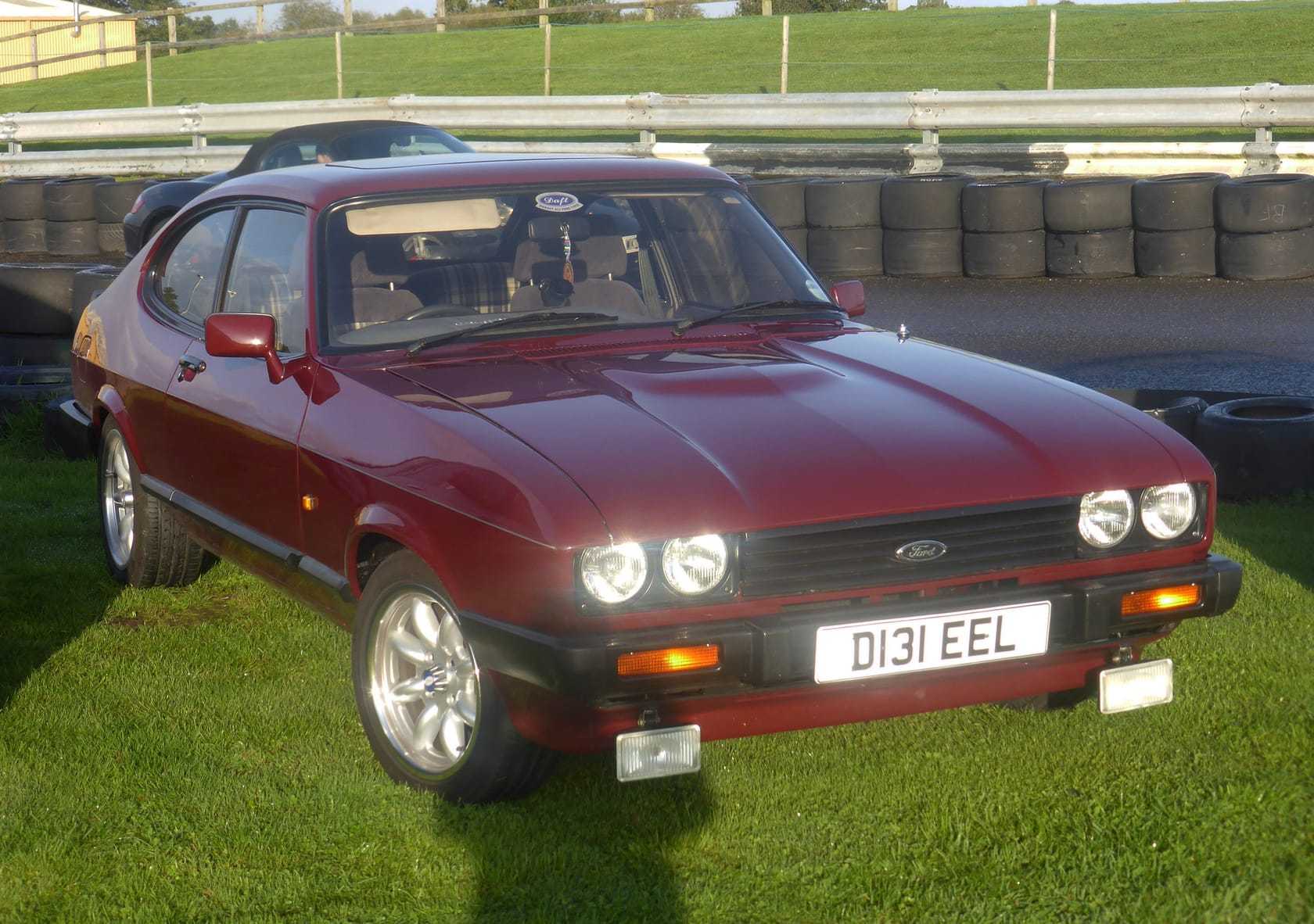
At a glance
- Years
- 1978–1986
- Body styles
- Three-door hatchback coupe
- Drivetrain
- Rear-wheel drive
- Engines
- 1.3 Kent, 1.6 and 2.0 Pinto, 3.0 Essex V6; 2.8 Cologne V6 in the 2.8 Injection from 1981
- Power
- 57 bhp in the 1300 to 138 bhp in the 3.0 S
- Trim levels
- L, GL, S, Ghia, LS; Laser from November 1984; Calypso, Cabaret, Cameo and other special editions
- Production
- 1,886,647 Capris of all generations by the end in December 1986
- Assembly
- Cologne
- UK survivors
- No reliable Mk3-only count; the DVLA-based Capri totals disagree by a wide margin
- Values
- Around £9,500 median at auction; four-cylinder cars from about £5,000, the 3.0 S around £20,000
The models
By 1976 the Capri Mk2 was selling far below the Mk1’s best years, and Ford did not have the money or the appetite to start again. Its answer was Project Carla, a facelift done on a budget that one account puts at around £480,000, against the £20 million the original Capri had cost. It worked better than anyone expected. The Mk3 went on sale in 1978, outlived the rest of Ford’s European interest in the car, and was still being built for British buyers at the end of 1986.
Project Carla
The Capri Mk3 used the Mk2’s inner body and tailgate and changed what you could see from the outside. Four round headlamps replaced the two big rectangles, the leading edge of the bonnet dropped, a black slatted grille and a chin spoiler appeared at the front, and sawtooth lamps went on at the back. The aim was cleaner airflow as much as a new look, and the result was the shape most people picture when they hear the name.
It was unveiled at the Geneva Motor Show in March 1978, styled in the new house manner of Ford of Europe under Uwe Bahnsen. Every Mk3 came from Cologne. Halewood had stopped building Capris in October 1976, so no Mk3 was ever built in Britain.

Four cylinders and the 3.0 S
The engines carried over from the Mk2. The 1.3 Kent crossflow, quoted at 57 brake horsepower in the 1,298cc car, opened the range, with the overhead-cam Pinto in 1.6 and 2.0 litre sizes above it and the 3.0 Essex V6 at the top. A revised intake cured the Essex’s habit of carburettor icing. Four-speed and later five-speed manual gearboxes and a three-speed automatic were offered.
The 3.0 S was the car that mattered. With 138 brake horsepower it could reach 60 mph in about 8.5 seconds and run to around 122 mph, and it became the Capri of the 1980s television screen. It lasted until the 1982 model year, when the 2.8 Injection replaced it.

The 2.8 Injection, briefly
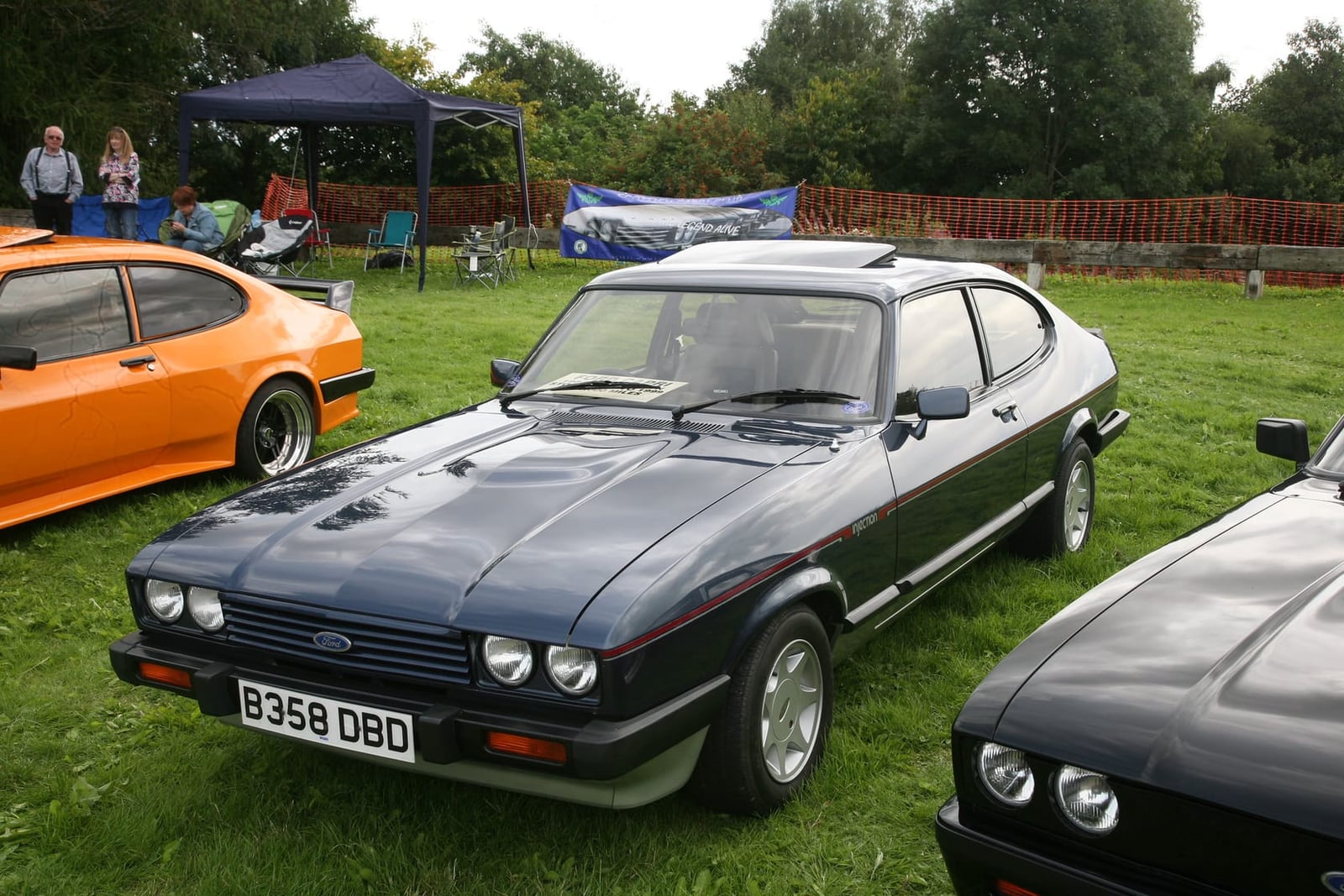
The car that took over at the top has its own page. The Capri 2.8 Injection arrived at the Geneva show in 1981, developed by Ford’s Special Vehicle Operations, with a fuel-injected Cologne V6 that Ford claimed at 160 PS. A five-speed gearbox followed in January 1983, the Injection Special in 1984, and the Brooklands 280 run-out edition in 1987, with 1,038 built. The Tickford turbo conversion was rarer still, at well under a hundred cars.
Specials and the Laser
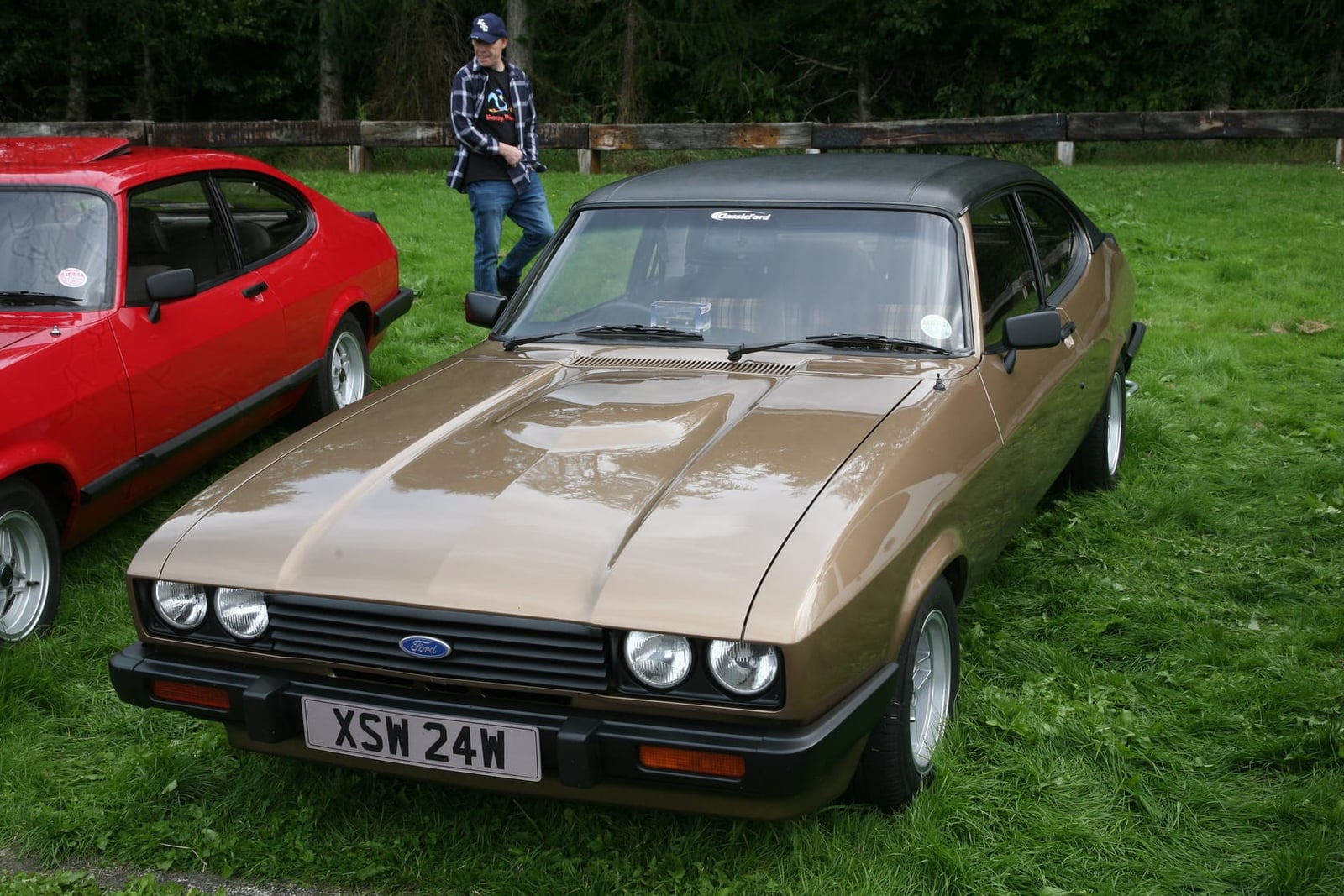
Ford kept the four-cylinder cars fresh with special editions. The Calypso was a 1.6 LS-based car with two-tone paint, tinted glass and a rear wash-wipe. The Cabaret came with a sunroof, alloys and two-tone paint on 1.6 or 2.0 engines. The Cameo of 1981 was a stripped-out L, and the Tempo and GT4 followed the same idea.
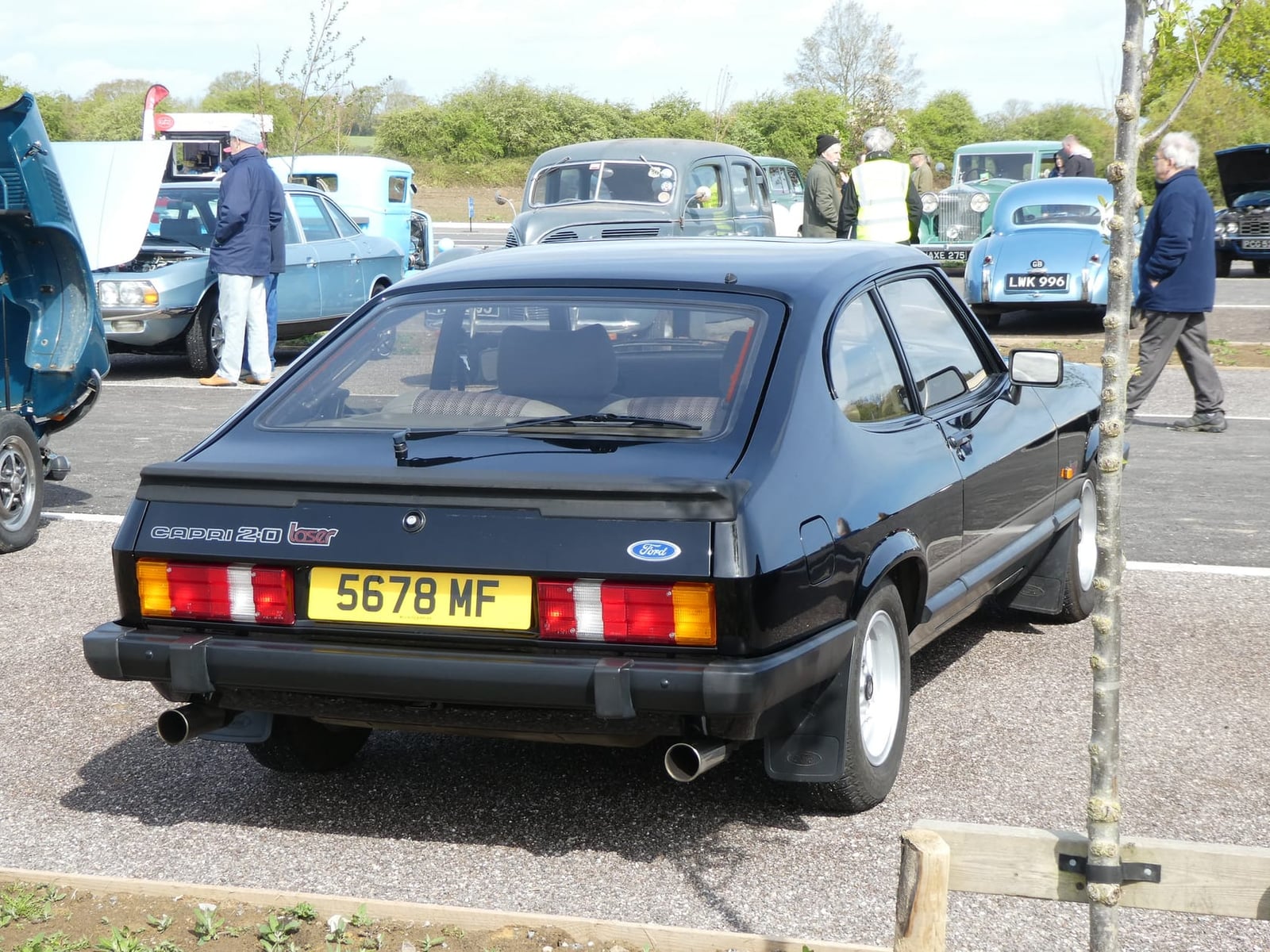
The biggest change came at the end of 1984. Ford stopped building left-hand-drive Capris on 30 November that year, and from then on the car was made for Britain alone. The same month brought the Laser, a British-only trim for the 1.6 and 2.0 with a leather-trimmed steering wheel and gear lever, a full set of instruments and four-spoke alloy wheels. The final range was the Laser 1.6, the Laser 2.0 and the 2.8 Injection, and the last Laser was built in November 1986 in Mercury Grey.

On screen and on track
Television made the Mk3 famous. From the fourth series of The Professionals in 1980, Bodie drove a silver 3.0 S and Doyle a gold one, both registered to Ford in June 1980, and Capris turned up in Minder and Only Fools and Horses too. Greater Manchester Police ran Capris for years, retiring its last Mk3 2.8i in 1992.
On the track the most extreme Capri of all was the Zakspeed turbo car built for German Group 5 racing, with a 1,426cc turbocharged Cosworth-based engine making about 530 PS. Klaus Ludwig drove it to the German championship in 1981, winning nine of the fourteen races.

Buying a Capri Mk3 today
The rust checklist is the same as for the Mk2: chassis rails and legs, floors, sills, the boot floor, inner arches, the bulkhead, strut tops, A-pillars and the drains around any sunroof. Poor crash repairs are common, so look for uneven panel gaps and fresh underseal in odd places.
Pinto engines wear their camshafts, and the Essex V6 suffers head gasket failures and overheating. A car with a limited-slip differential needs the right oil, and the leaf-sprung rear sags with age. Mechanical parts are easy; panels, trim and specialists are getting scarce. Have a marque expert check any Tickford, Series X or GP1 car before paying for the badge. There is no reliable count of Mk3s alone, because the DVLA-based Capri totals published by different sites disagree by a wide margin, but Capri Club International and the Surrey Capri Club are good places to start.
The driving is part of the decision. Auto Express, looking back, found a fierce clutch, brakes without much feel and limited grip, and judged the experience not quite what its reputation suggests. Buy a Mk3 for the look, the noise of the V6 and the period, not for modern handling.

Values: the 3.0 S leads by a distance
A hundred and ninety-four recorded auction sales since 2005, leaving out the 2.8 Injection family, put the Mk3 median near £9,500, with the middle half of the market between about £5,200 and £14,500 and nearly three cars in four offered actually selling. The 3.0 S is in a different league, at a median near £20,000 from twenty-seven sales. The 2.0 Laser sits near £11,000, an ordinary 2.0 near £8,600 and a 1.6 LS near £7,400.
The best single-car result is £42,612 for a 3.0 S in June 2023. The two cars from The Professionals made £186,750 at auction in August 2023, but as one lot for both, so they are left out of the figures, as are the cars built for racing. The injection cars, the Brooklands and the Tickford are counted on the 2.8 Injection page and on the Capri sold-price page.
More photos
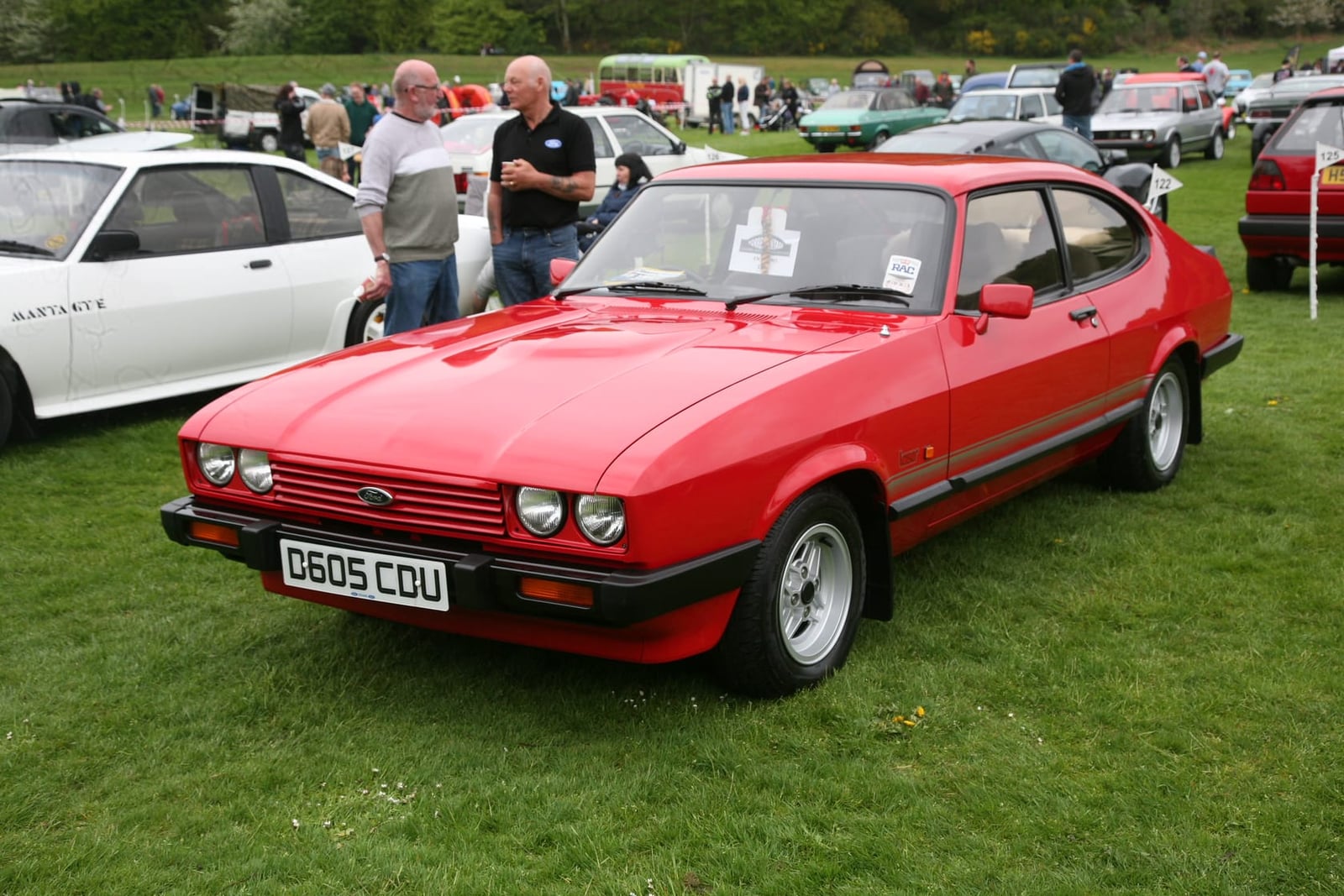
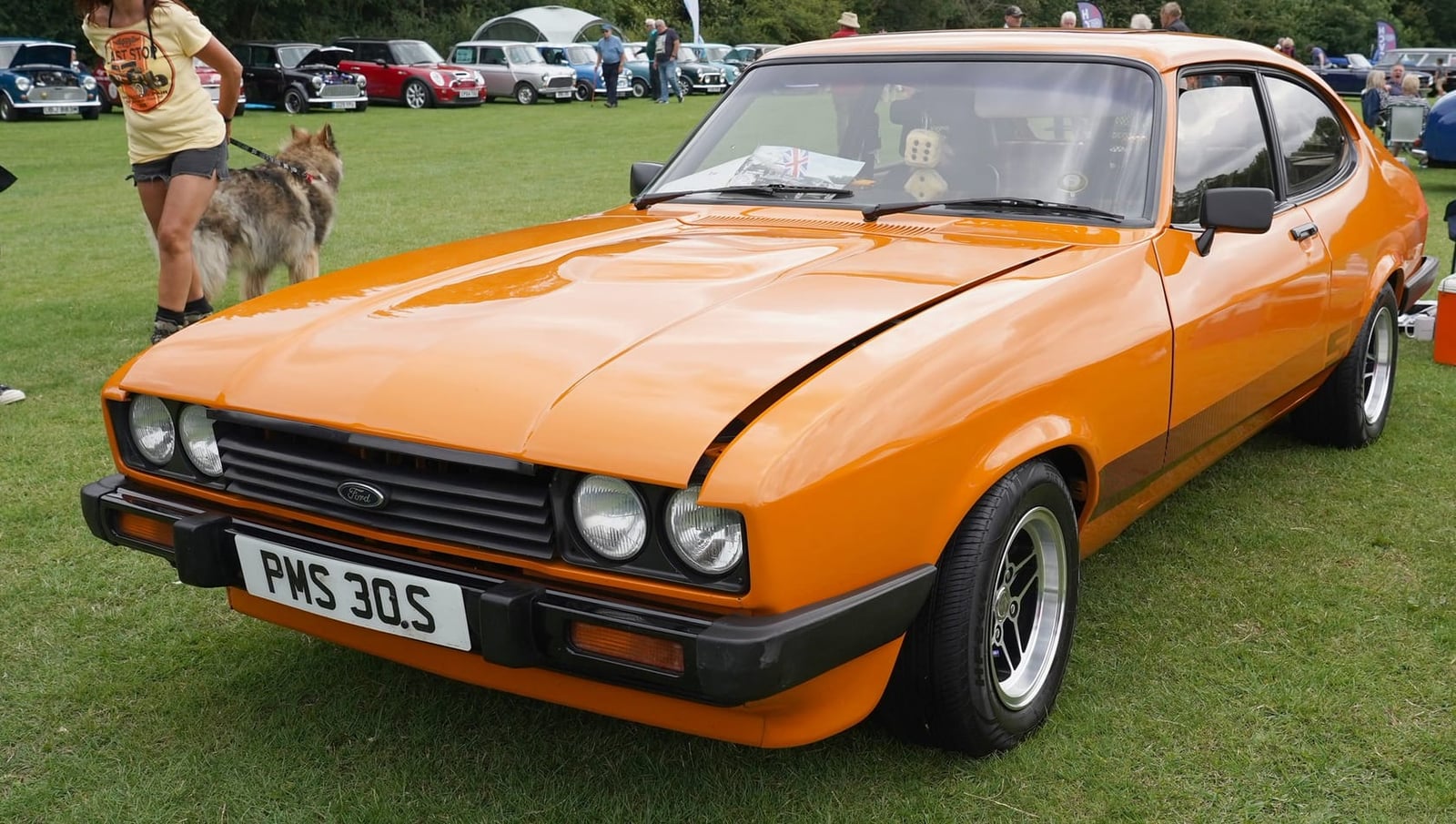
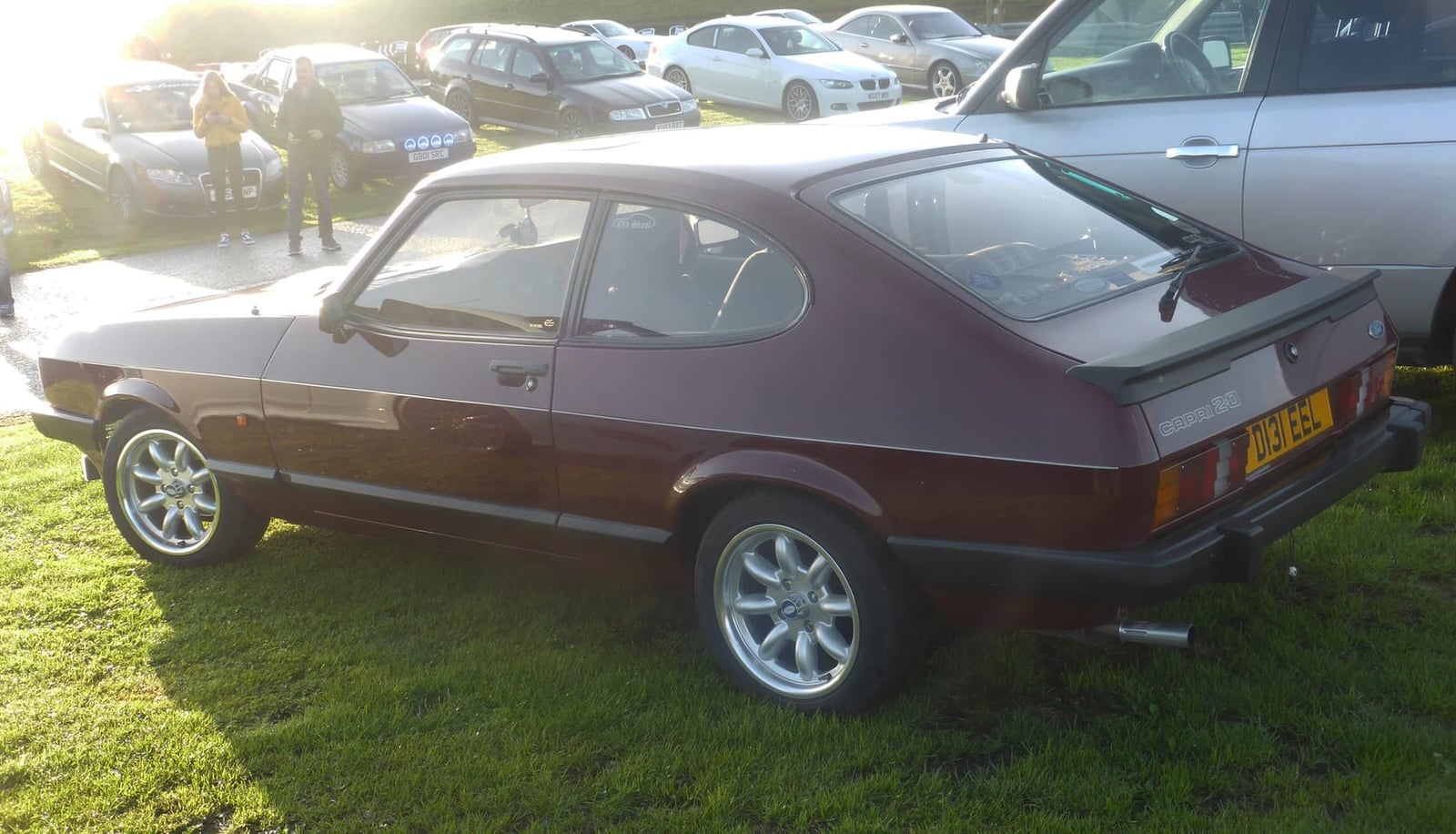
Capri Mk3: what changed and when
- 1976Design work on Project Carla, a low-cost reskin of the Mk2, begins.
- Mar 1978The Mk3 is unveiled at Geneva with four headlamps, a slatted grille and better aerodynamics.
- 1981The 2.8 Injection arrives at Geneva; Klaus Ludwig wins the German racing championship in a Zakspeed turbo Capri.
- 1982The 3.0 Essex V6 is dropped in favour of the 2.8 Injection.
- Nov 1984Left-hand-drive production ends, and the Laser trim arrives for British buyers.
- 19 Dec 1986The last Capri is built at Cologne, the 1,886,647th of all generations.
Buying checklist: the Capri Mk3 in front of you
Bodywork
- Chassis rails and legs, floors, sills and the boot floor
- Inner arches, bulkhead, strut tops and A-pillars
- Sunroof drains, and signs of poor crash repairs, which are common
Engines and drivetrain
- Pinto camshaft wear
- Essex V6 head gaskets and overheating
- The right oil in a limited-slip differential, and sagging rear leaf springs
Identity
- 3.0 S, Laser and special-edition trim is easy to copy
- Have a marque expert check any Tickford, Series X or GP1 car
What the Capri Mk3 sells for at auction
In 2025 the median Capri Mk3 sold for £9,648 across 31 sales, much where it was in 2024. In real terms, typical Capri Mk3 prices were down about 65% over the five years to 2025, once inflation is accounted for.
| Variant | Sold | Typical range | Median |
|---|---|---|---|
| Capri Mk III | 87 | £4,560 - £13,008 | £8,700 |
| Capri Mk III 3.0 S | 27 | £15,840 - £24,261 | £20,022 |
| Capri Mk III 2.0 | 21 | £6,325 - £11,880 | £8,600 |
| Capri Mk III 2.0 Laser | 17 | £7,560 - £14,625 | £11,250 |
| Capri Mk III 3.0 | 14 | £5,812 - £11,609 | £7,934 |
| Capri Mk III 1.6 Laser | 11 | £1,923 - £8,965 | £3,100 |
| Capri Mk III 1.6 | 6 | £5,044 - £7,635 | £6,098 |
| Capri Mk III 1.6 LS | 6 | £4,454 - £9,912 | £7,425 |
| Capri Mk III 1.6 GL | 5 | £3,024 - £8,316 | £6,900 |
Show the year-by-year mediansHide the year-by-year medians
| Year | Sold | Median | In 2025 money |
|---|---|---|---|
| 2026 (so far) | 13 | £8,500 | |
| 2025 | 31 | £9,648 | £9,648 |
| 2024 | 33 | £9,500 | £9,865 |
| 2023 | 27 | £7,020 | £7,533 |
| 2022 | 19 | £10,859 | £12,436 |
| 2021 | 29 | £10,482 | £12,962 |
| 2020 | 6 | £21,573 | £27,338 |
| 2019 | 9 | £10,100 | £12,929 |
| 2018 | 8 | £11,505 | £14,978 |
| 2017 | 5 | £9,350 | £12,455 |
| 2016 | 6 | £10,040 | £13,718 |
| 2015 | 3 | £6,720 | £9,274 |
- £15,600Capri Mk III
- £9,000Capri Mk III
- £4,600Capri Mk III
- £18,200Capri Mk III
- £3,200Capri Mk III
Reasonable evidence. 194 recorded sales: enough for the range to mean something, though a few unusual cars can still move a single year's median. Based on 194 sold results from public classic car auctions (2005 to 10 August 2026). Sold prices, not asking prices, and not a valuation: condition, history and specification vary from car to car. Inflation-adjusted figures use the ONS CPIH index, in 2025 money.
Frequently asked questions
How much is a Ford Capri Mk3 worth?
When was the Ford Capri Mk3 made?
Was the Capri Mk3 built in Britain?
What was the Capri Laser?
What Capri was used in The Professionals?
What is the most expensive Capri Mk3 ever sold at auction?
How often does a Capri Mk3 come up for sale?
Related across themes

More from Ford


Recently added

What a Jaguar XK8 or XKR sells for: below the XJS it replaced, and the cheapest it has ever been

Bentley T-series values: the cheapest Bentley there has ever been

Ford Granada Mk1 and Consul: the big Ford that replaced the Zodiac (1972–1977)
