Ford Capri Mk1: Project Colt and the original long-bonnet Capri (1969–1974)
Project Colt became the Capri at the Brussels show in January 1969, built at Halewood and in Germany on Cortina Mk2 mechanicals. The Kent, Essex V4 and V6 engines, the 3000GT and 3000E, the German RS2600 and the Halewood RS3100, what rots, and Mk1 prices from 119 auction sales.
Built 1969–1974 119 recorded sales
At a glance
- Years
- 1969–1974
- Body styles
- Two-door fastback coupe; Crayford convertible conversions
- Drivetrain
- Rear-wheel drive
- Engines
- 1.3 and 1.6 Kent, 2.0 Essex V4, 3.0 Essex V6; 1.6 Pinto after the facelift; RS3100 3.1 Essex V6
- Power
- 52 bhp in the 1300 to 138 bhp in the 3000GT; 148 bhp in the RS3100
- Trim levels
- L, XL, GT, XLR, 3000E, 3000GXL; R-pack and X-pack options
- Production
- More than 1.2 million across all plants; the millionth Capri was built in August 1973
- Assembly
- Halewood, Cologne and Saarlouis
- UK survivors
- No Mk1-only national count; DVLA-based tallies list fewer than a hundred records under the 3000 GXL label alone
- Values
- Around £17,000 median at auction; 1600s near £10,000, 3000s near £20,000, road-going RS cars £33,000 and up
The models
Ford wanted a European car that did what the Mustang had done in America: sell a sporting coupe to people who could only afford a saloon. The answer, launched in 1969, was a long bonnet, a short tail and a mechanical package taken almost entirely from the Cortina Mk2. The Capri sold four hundred thousand in its first two years, and by August 1973, before the Mk1 had finished its run, Ford had built a million of them.
Project Colt
The car was approved in July 1966 as Project Colt, with a budget of £20 million. The codename could not become the badge, because Mitsubishi held the rights to Colt, so Ford reused a name from its own back catalogue: the Consul Capri coupe of 1961. Ford’s British and German operations developed it together, which is why the Mk1 was built at Halewood on Merseyside and at Cologne and Saarlouis in Germany, with different engines for each market.
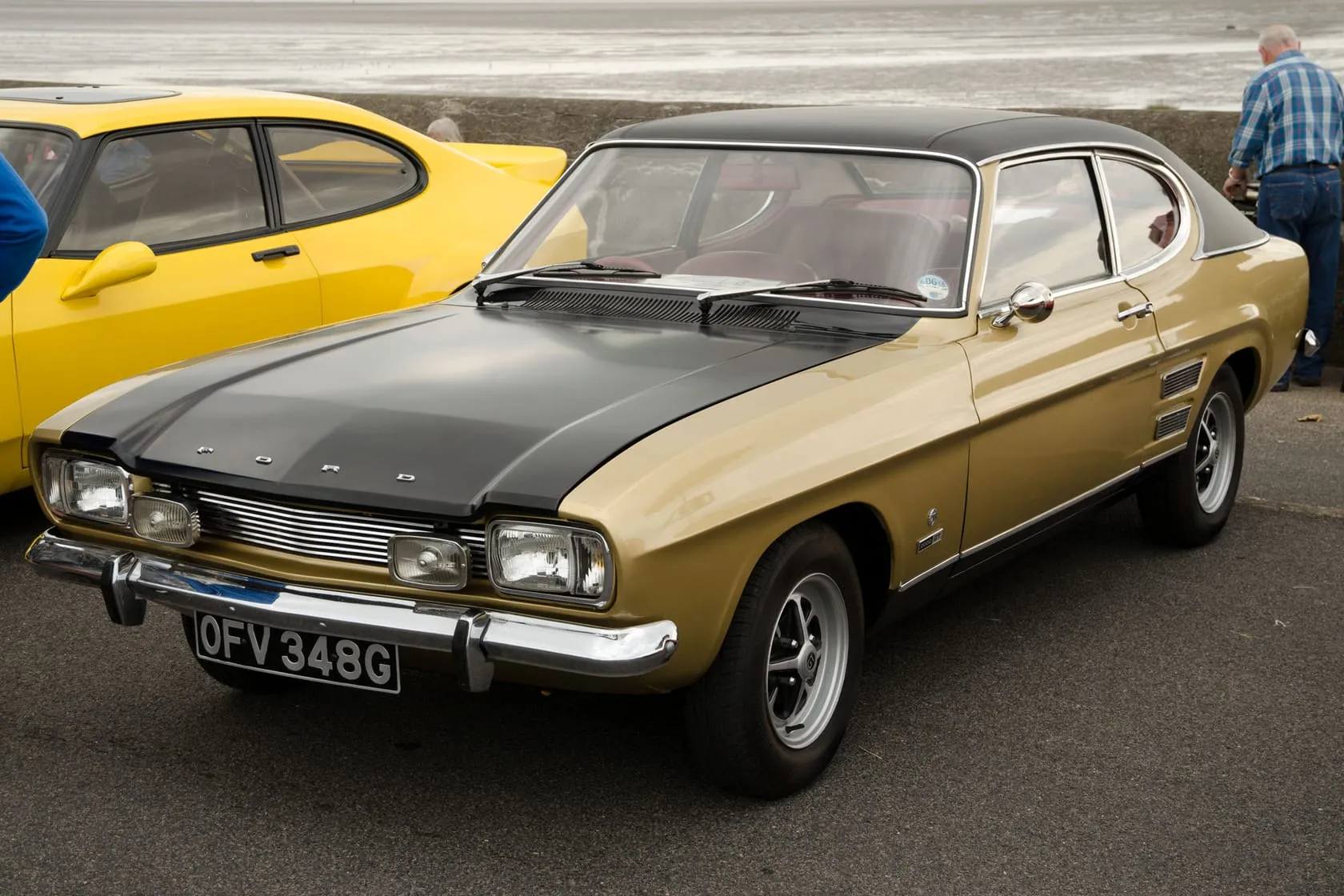
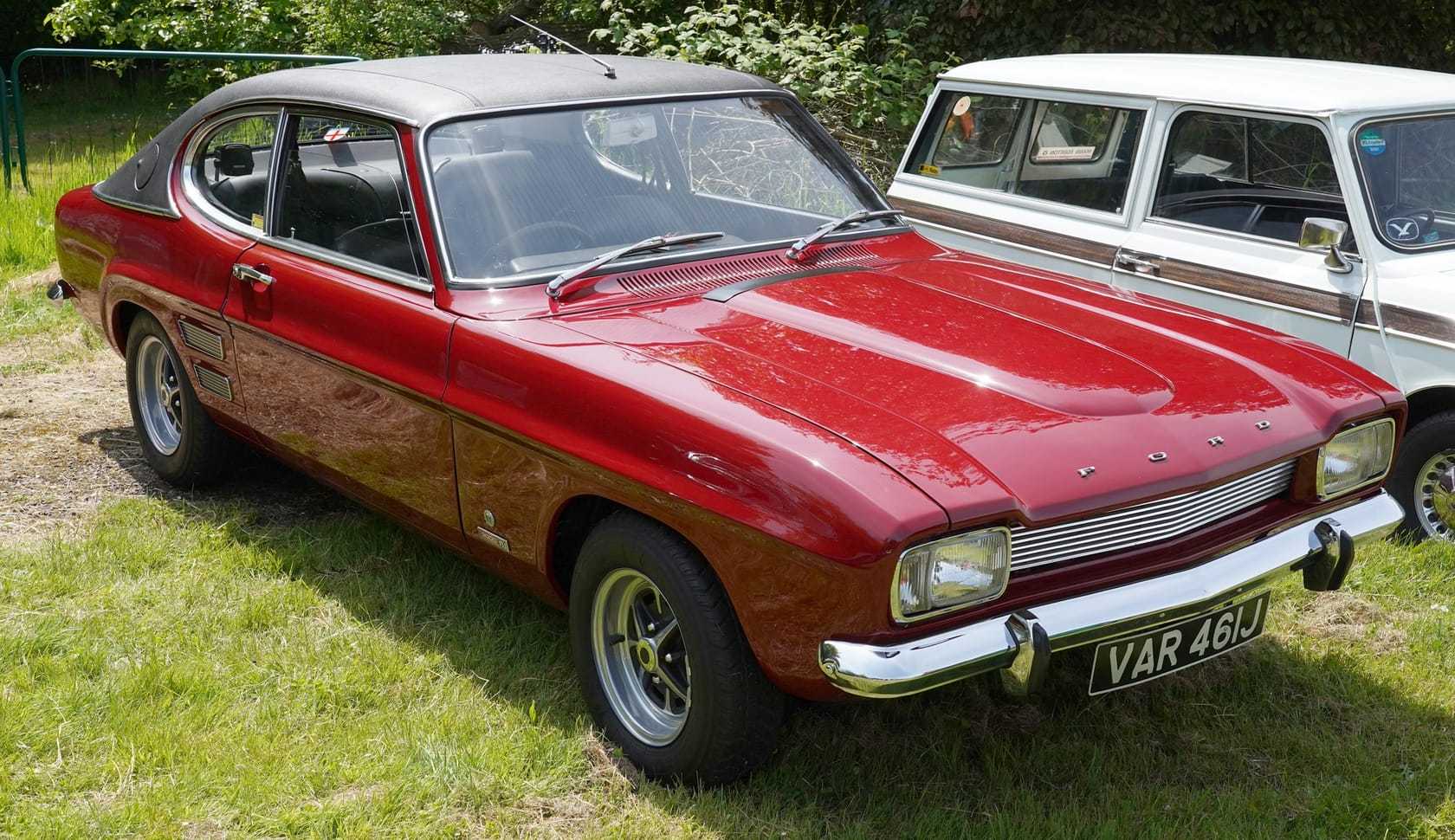
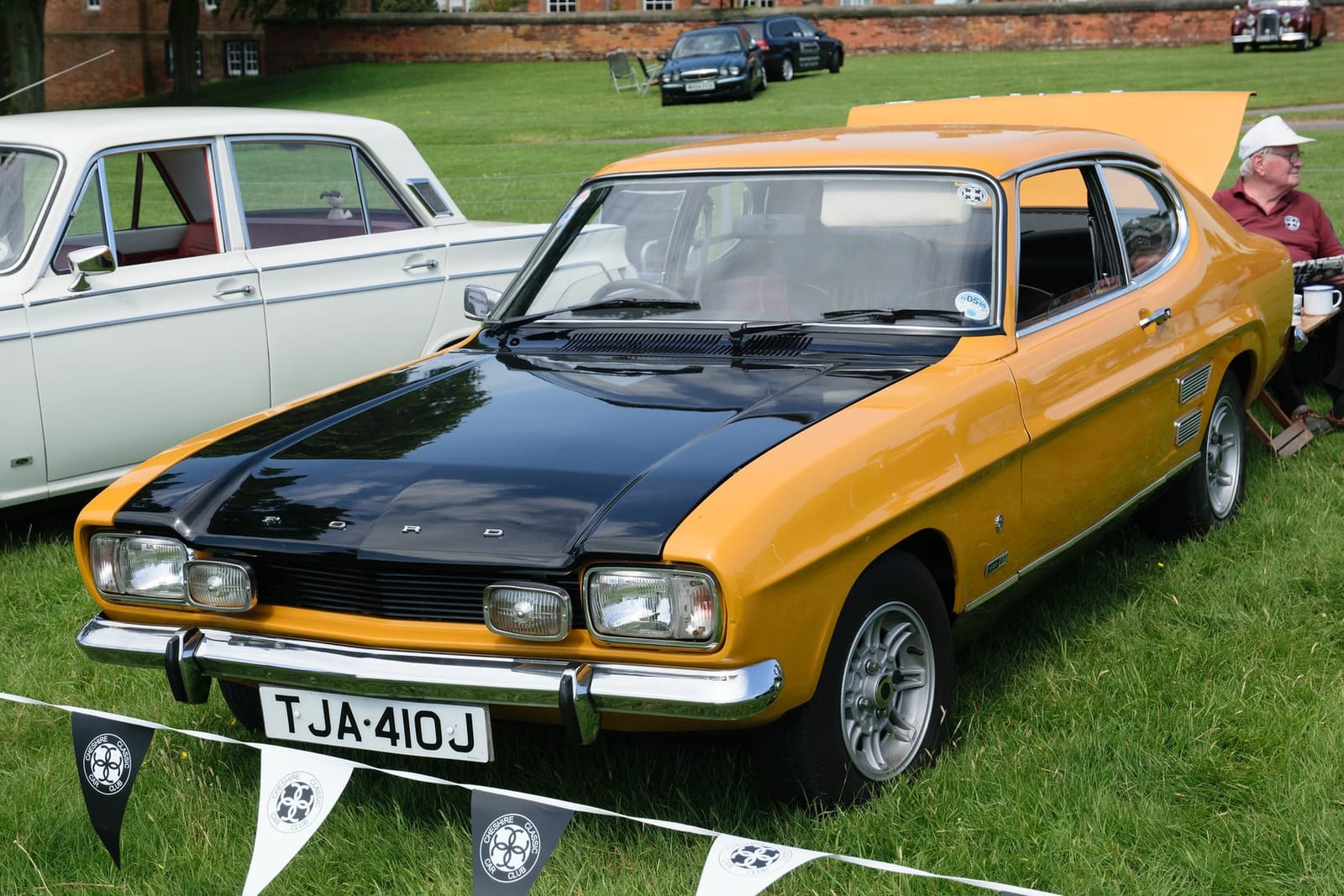
Underneath was simple Ford hardware. MacPherson struts at the front, a live rear axle on leaf springs, discs at the front and drums behind, all closely related to the Cortina. What made it a Capri was the body: a low, long-nosed fastback with four proper seats and a boot, and dummy scoops ahead of the rear wheels that told passers-by it was meant to be fast whether it was or not.

Brussels, January 1969
Production started at Halewood in November 1968, and the Capri was unveiled at the Brussels Motor Show in January 1969, with British sales from February. The cheapest car, the 1300, cost £890 including purchase tax.
Britain took to it immediately and stayed its biggest market. In 1972 alone British buyers took about 42,000 Capris, around 11,000 more than in Germany. Lancashire Constabulary put 3000GTs into service from 1971, which tells you how quickly the car went from novelty to everyday Ford.
Kent, Essex and the V6
British Capris started with the Kent four-cylinder engines in 1.3 and 1.6 litre form, at about 52 and 64 brake horsepower. Above them sat the 2.0 Essex V4, the top British engine at launch at 93 brake horsepower in the 2000GT. Germany used its own Taunus V4s and a Cologne V6 instead.
In the autumn of 1969 the 3000GT arrived with the 3.0 Essex V6 and 138 brake horsepower, and the Capri finally had the performance its shape promised. The 3000E followed in March 1970 as the plushest British model. All of them used a four-speed, all-synchromesh manual gearbox. The later facelift swapped the 1.6 Kent for the overhead-cam Pinto, while the 2.0 V4 stayed for British buyers.

L, XL, GT and the custom packs
Ford sold the Capri the way it sold the Mustang: pick an engine, then add packs. The trim letters L, XL, GT and XLR stacked up on top of the engine size, and the R-pack and X-pack options added more again, which is how a car came to be called a 2000 GT XLR.
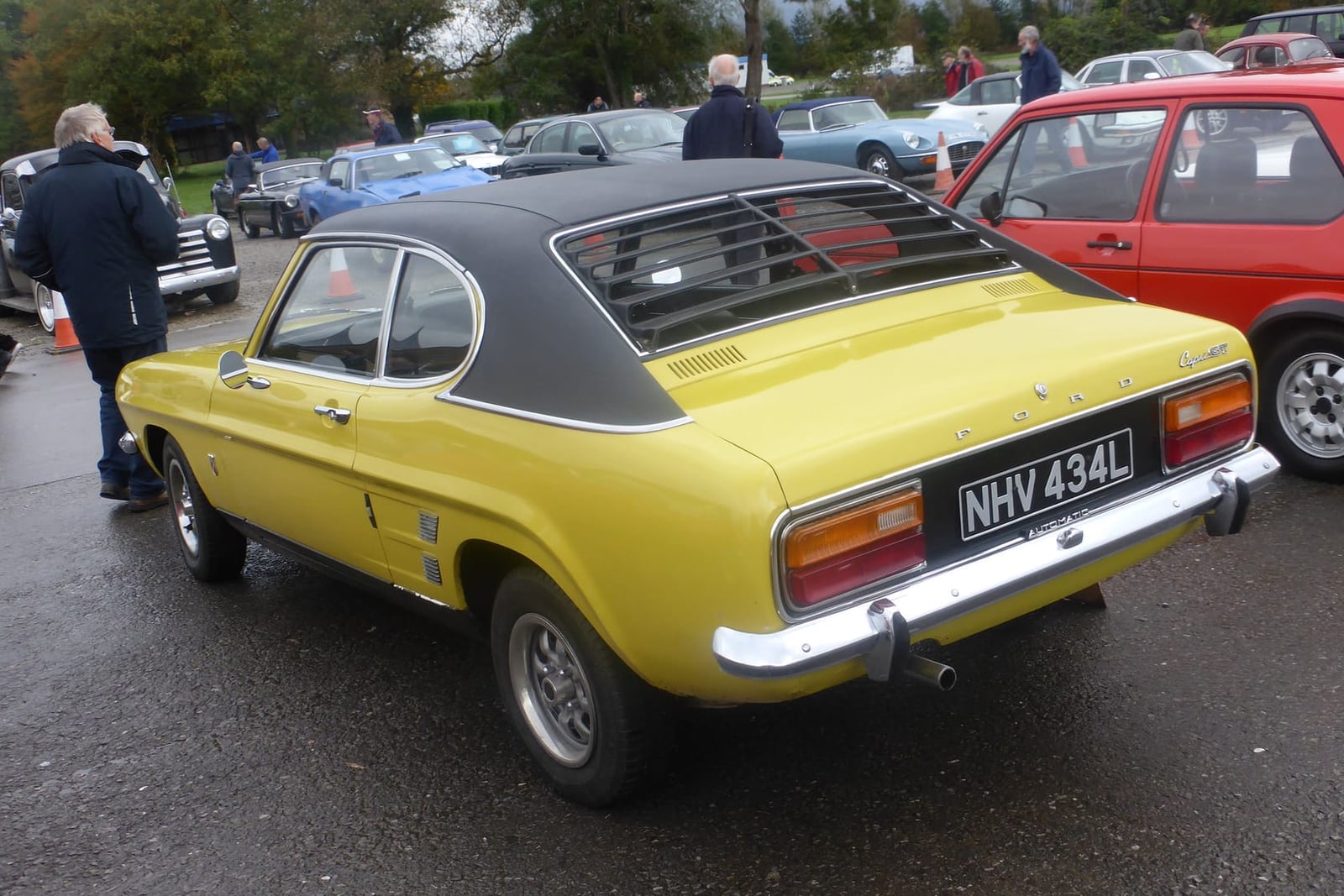
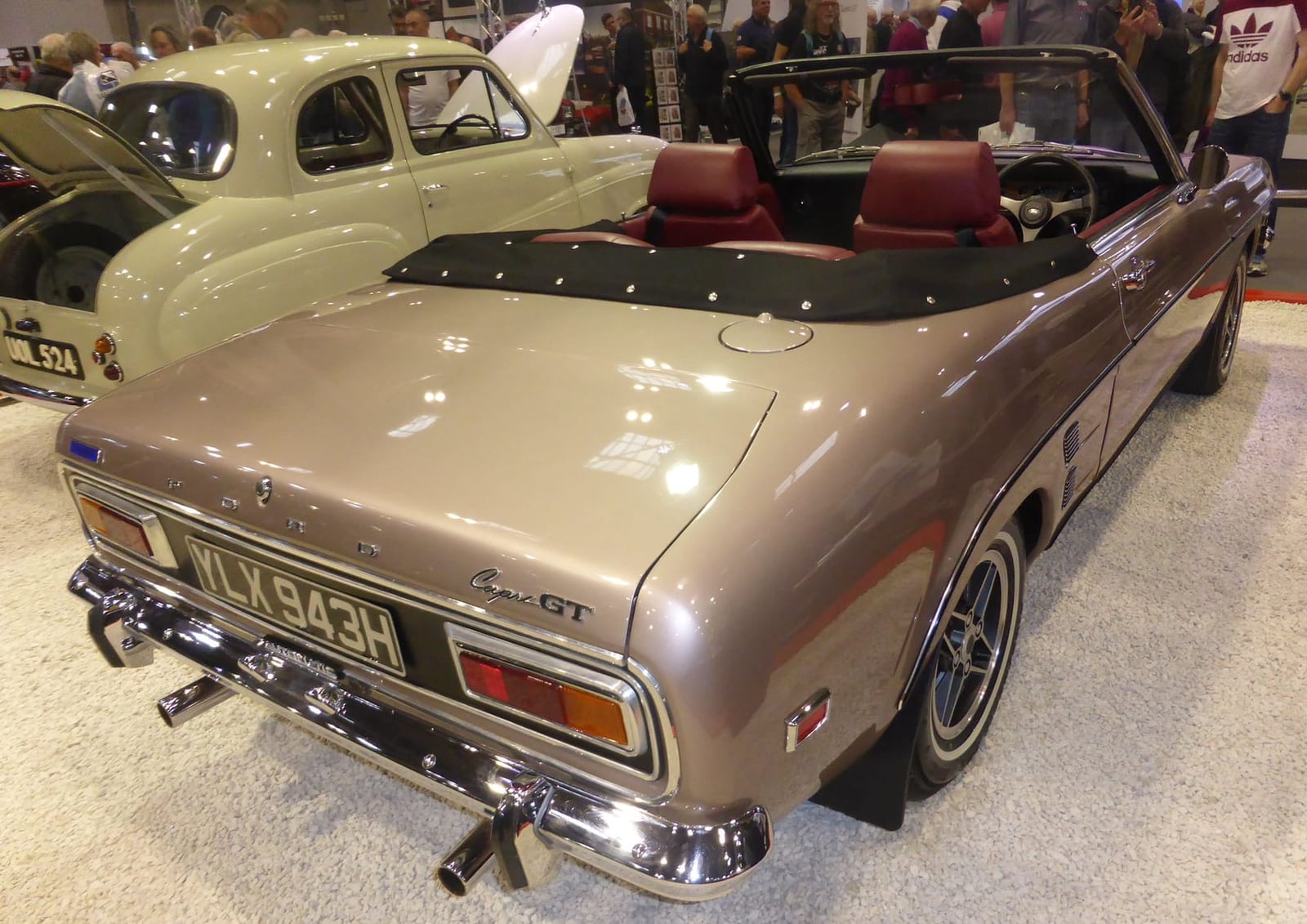
Specials came and went. The Capri Special of November 1971 was offered only in Vista Orange, with about 1,200 built and rear window slats and a spoiler fitted by dealers. Crayford offered convertible conversions. The facelift, which arrived between late 1971 and 1972, brought a bonnet bulge, bigger rear lights and suspension changes, and the range-topping 3000GXL gained a four-headlamp front. In the 1970s market today, the names that move prices are 3000GT, 3000E and 3000GXL, with the 1600 as the affordable way in.

RS2600 and RS3100
The two RS cars are often confused, and they were quite different machines. The RS2600 was German, built from September 1971 with a 2,637cc Cologne V6, Weslake-developed heads and Kugelfischer fuel injection. It was the car that won the European Touring Car Championship for Ford in 1971 and 1972, and the millionth Capri, built in August 1973, was an RS2600.
The RS3100 was British. Ford built it at Halewood in November and December 1973 with a 3,098cc Essex V6 on carburettors and about 148 brake horsepower, to qualify a bigger engine for racing. It cost £2,450. Homologation called for a thousand cars, and Ford built about 250. That scarcity is why an RS3100 now sells for several times the price of a 3000GT.

Buying a Capri Mk1 today
Rust is the main enemy. Check the A-pillars and the point where they meet the footwells, the front scuttle and bulkhead, the front suspension turrets, the sills, the chassis rails and floors, the inner edges of the bonnet and the boot floor. Much of this is structural, and much of it hides under paint.
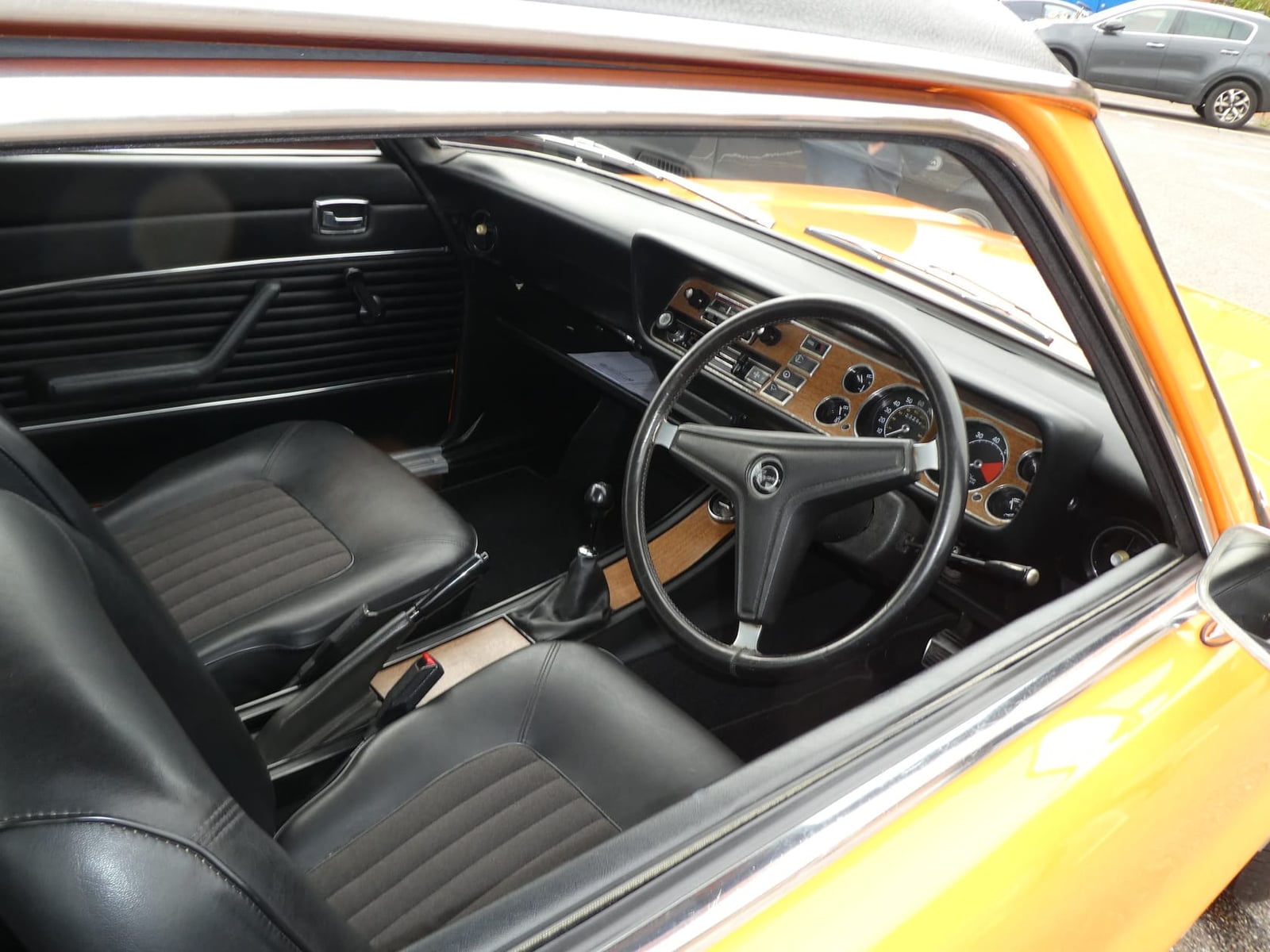
Mechanically the Mk1 is straightforward. The Essex V6 used fibre timing gears, which wear; steel ones are noisier but last. Pinto engines can wear their camshafts and announce it with a top-end rattle. Most running parts are shared with other Fords of the period, but interior trim and original instruments are scarce and dear.
Originality matters more than condition alone. Plenty of cars that left the factory as a 1600 have since gained a V6, so check engine and chassis numbers before paying 3000GT money. The Capri Mk1 Register, the Capri Mk1 Owners Club and Capri Club International can help confirm a car. There is no reliable count of Mk1s alone on the roads; DVLA-based tallies list fewer than a hundred records under the 3000 GXL label, for example, which hints at how few of the best-equipped cars are left.

Values: engine size sets the price
A hundred and nineteen recorded auction sales since 2006 put the Mk1 median near £16,900, with the middle half of the market between about £10,300 and £25,700, and two cars in three offered actually selling. The pattern follows the engine. A 1600 sells at a median near £10,400, a 2000 near £16,000 and a 3000 near £19,800.
The RS cars are a separate market. Fourteen RS3100s have sold at a median of nearly £49,000 and eight road-going RS2600s at about £33,200, and the highest price on record is £59,625 for an RS3100 in May 2025. Cars built or prepared for racing are left out of these figures because they trade as a separate market: one race-prepared RS2600 made £169,675 at Artcurial in February 2023. The whole Capri range, generation by generation, is on the Capri sold-price page. The Capri Mk2 that replaced the Mk1 in February 1974 kept the long bonnet and added a hatchback.
More photos
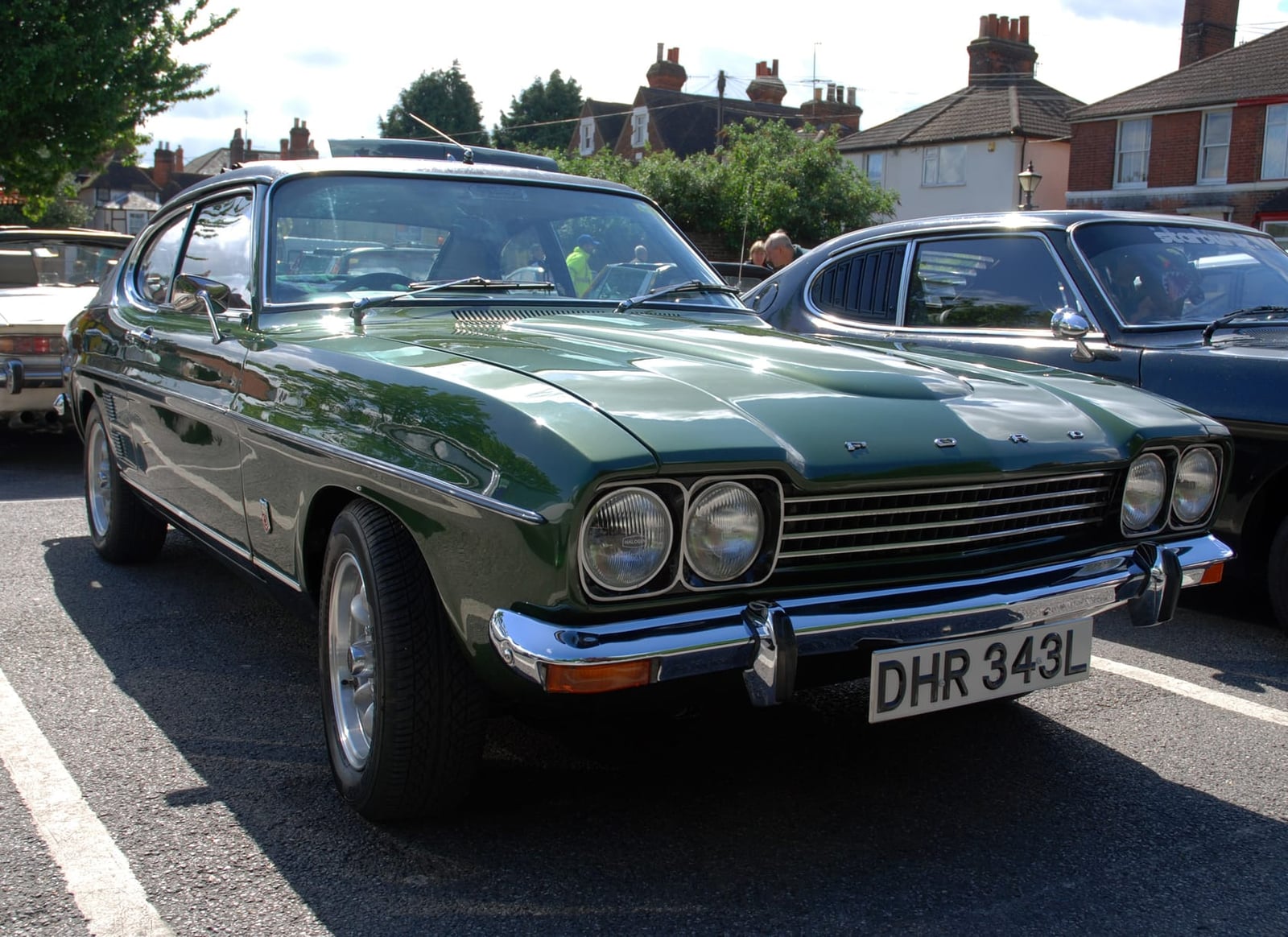
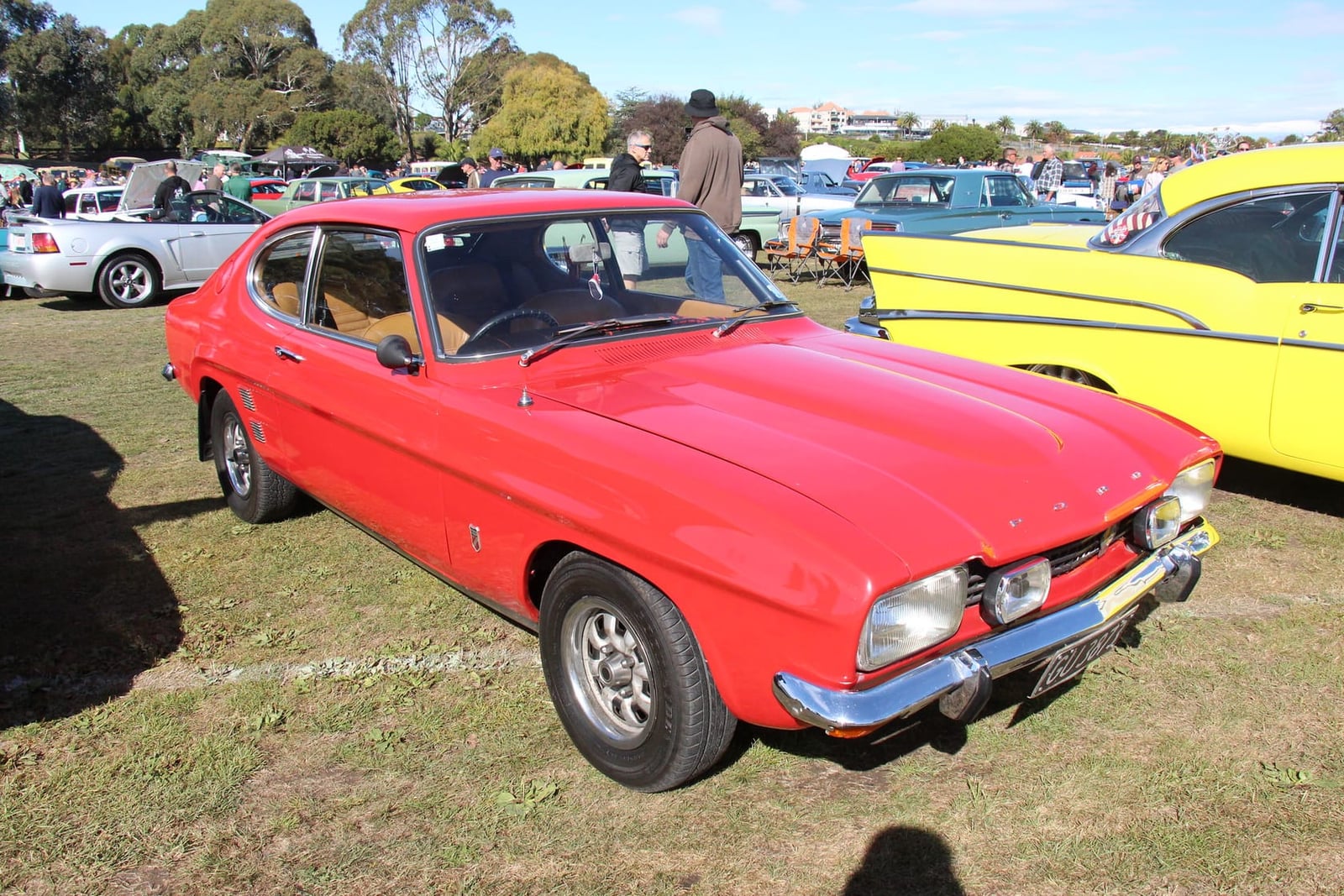
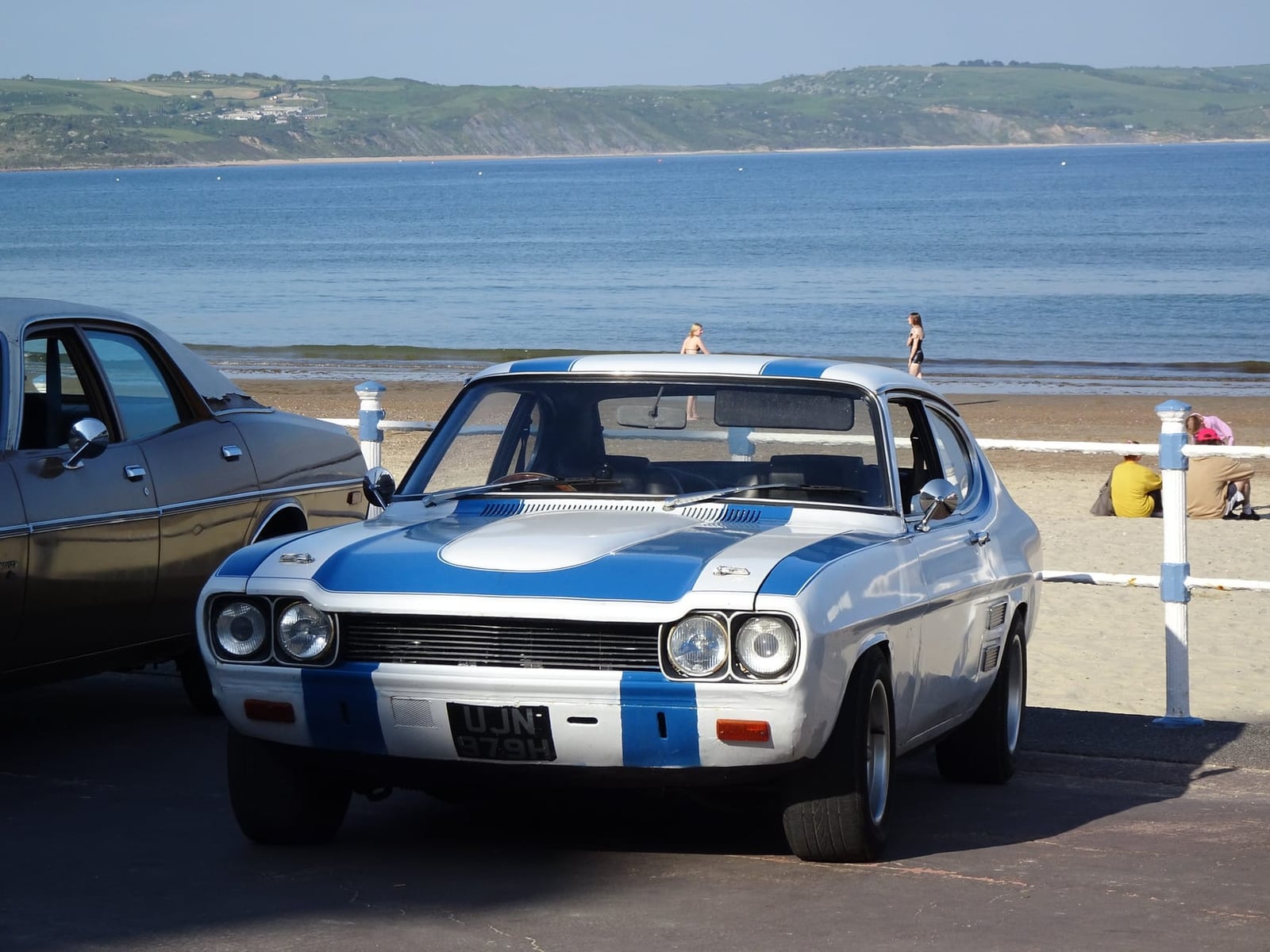
Key dates for the Capri Mk1
- Jul 1966Ford approves Project Colt, a European answer to the Mustang, with a £20 million budget.
- Nov 1968Production starts at Halewood.
- Jan 1969The Capri is unveiled at the Brussels Motor Show, and goes on sale in February.
- Autumn 1969The 3000GT arrives with the 3.0 Essex V6.
- Mar 1970The 3000E becomes the top British model.
- Sept 1971The German RS2600 brings fuel injection; it wins the European Touring Car Championship in 1971 and 1972.
- Late 1971 to 1972A facelift brings a bonnet bulge, bigger rear lights, revised suspension and the Pinto 1.6.
- Aug 1973The millionth Capri, an RS2600, is completed.
- Nov–Dec 1973About 250 RS3100s are built at Halewood.
- Feb 1974The hatchback Mk2 replaces it.
Capri Mk1: what to check before you buy
Bodywork
- A-pillars and the junction with the footwells
- Front scuttle, bulkhead and the front suspension turrets
- Sills, chassis rails, floors, the inner edges of the bonnet and the boot floor
Engines
- Fibre timing gears on the Essex V6 wear; steel replacements are noisier but last
- Pinto camshaft wear shows up as a top-end rattle
- A V6 in a car that left the factory as a 1600 is common; check the identity
Trim and identity
- Interior trim and original instruments are the hard parts to find
- GT, 3000E, GXL and RS cars should be checked against the Capri Mk1 Register before money changes hands
What the Capri Mk1 sells for at auction
In 2025 the median Capri Mk1 sold for £16,875 across 13 sales, 10% up on 2024. In real terms, typical Capri Mk1 prices were down about 14% over the five years to 2025, once inflation is accounted for.
| Variant | Sold | Typical range | Median |
|---|---|---|---|
| Capri Mk I 3000 | 35 | £13,480 - £23,950 | £19,800 |
| Capri Mk I 1600 | 25 | £8,200 - £14,742 | £10,414 |
| Capri Mk I | 20 | £7,470 - £21,598 | £10,863 |
| Capri Mk I RS3100 | 14 | £28,781 - £52,616 | £48,938 |
| Capri Mk I 2000 | 12 | £11,871 - £20,372 | £15,968 |
| Capri Mk I RS2600 | 8 | £29,906 - £43,721 | £33,220 |
Show the year-by-year mediansHide the year-by-year medians
| Year | Sold | Median | In 2025 money |
|---|---|---|---|
| 2026 (so far) | 7 | £14,000 | |
| 2025 | 13 | £16,875 | £16,875 |
| 2024 | 20 | £15,371 | £15,961 |
| 2023 | 15 | £16,240 | £17,427 |
| 2022 | 11 | £15,320 | £17,545 |
| 2021 | 11 | £21,501 | £26,587 |
| 2020 | 6 | £15,490 | £19,629 |
| 2019 | 7 | £28,688 | £36,725 |
| 2018 | 4 | £16,940 | £22,054 |
| 2017 | 4 | £20,850 | £27,773 |
| 2016 | 7 | £12,000 | £16,396 |
| 2014 | 3 | £24,380 | £33,780 |
- £10,360Capri Mk I 2000
- £19,750Capri Mk I 3000
- £19,320Capri Mk I 2000
- £10,250Capri Mk I 1600
- £9,072Capri Mk I 1600
Reasonable evidence. 119 recorded sales: enough for the range to mean something, though a few unusual cars can still move a single year's median. Based on 119 sold results from public classic car auctions (2006 to 10 August 2026). Sold prices, not asking prices, and not a valuation: condition, history and specification vary from car to car. Inflation-adjusted figures use the ONS CPIH index, in 2025 money.