Ford Cortina Mk2: the Cortina that looked bigger than it was (1966–1970)
Roy Haynes reskinned the Cortina in 1966 on the Mk1's floorpan, Ford added crossflow engines and the 1600E a year later, and the Mk2 became Britain's best-selling car of 1967. The range from De Luxe to GT, the Savage and Crayford specials, what rots, and what a Mk2 costs at auction now.
Built 1966–1970 90 recorded sales
At a glance
- Years
- 1966–1970
- Body styles
- Two-door saloon, four-door saloon, five-door estate; Crayford convertible conversions
- Drivetrain
- Rear-wheel drive
- Engines
- 1.3 and 1.5 Kent at launch; 1.3 and 1.6 crossflow from August 1967; Lotus twin-cam in the Lotus Cortina
- Power
- From around 60 bhp in the 1300 to 92 bhp gross in the 1600 GT and 1600E
- Trim levels
- Base, De Luxe, Super, GT, 1600E (from October 1967)
- Production
- Just over a million; Britain's best-selling new car in 1967
- Assembly
- Dagenham, plus overseas assembly in Ireland, Australia and New Zealand
- Designer
- Roy Haynes
- UK survivors
- No reliable Mk2-only count: the DVLA files many Cortinas under loose model names
- Values
- Around £9,500 median at auction; usable cars from about £5,500, the best GTs and 1600Es into the mid-teens, Savages over £30,000
The models
By 1966 the Cortina had already done the hard part. Four years of the Cortina Mk1 had made it the car Britain’s company fleets ran on, so the Mk2 that Ford unveiled on 18 October 1966, the opening day of the London Motor Show, had a narrower brief: keep every buyer it had won while BMC and Vauxhall tried to take them back. It did that well enough to be Britain’s best-selling new car in 1967, and to sell more than a million before the Mk3 replaced it.
Roy Haynes and a Cortina that looked bigger
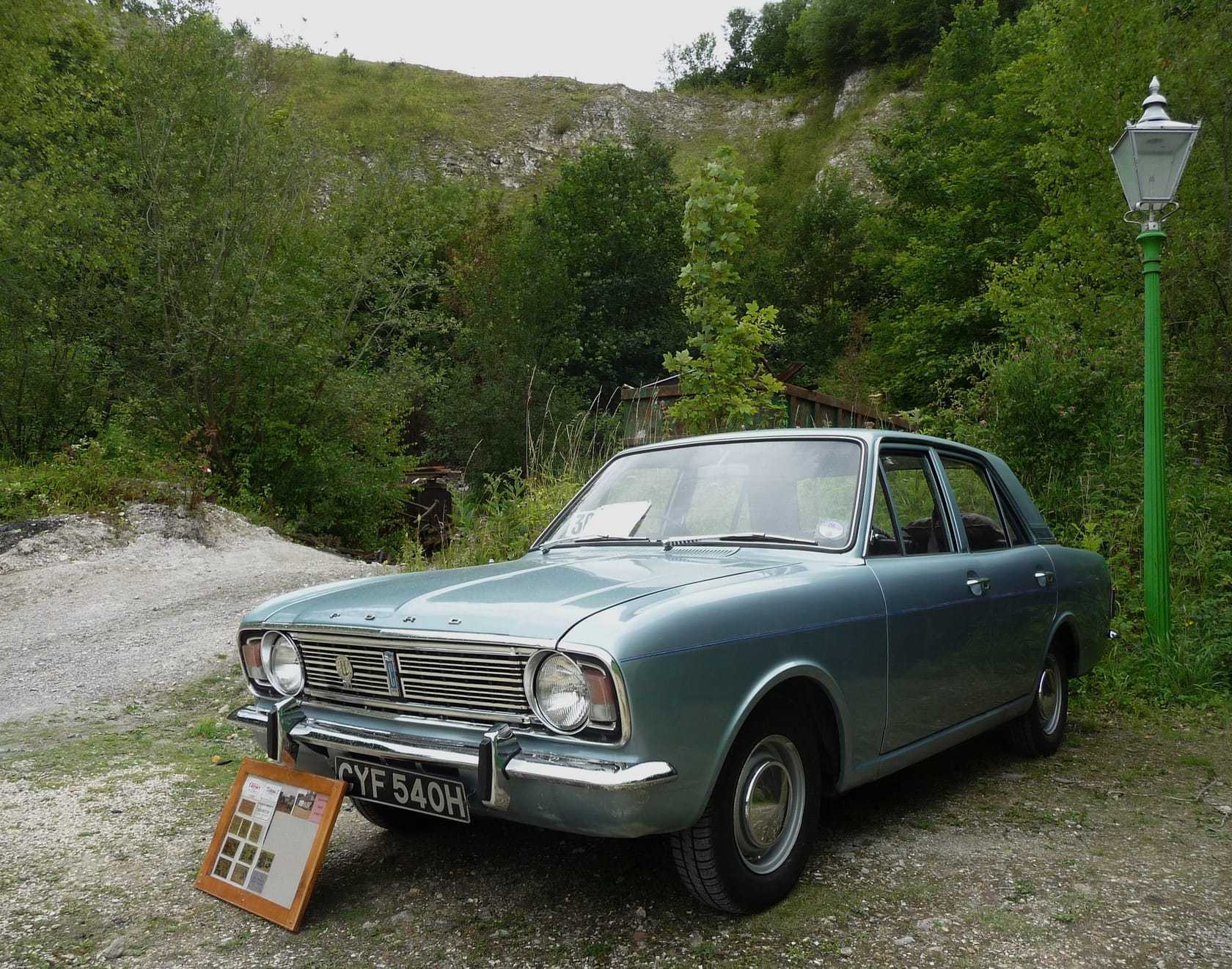
Ford did not re-engineer the Cortina for 1966. It reclothed it. The Mk2 kept the Mk1’s floorpan, its 98-inch wheelbase and its basic layout, and Roy Haynes drew a new body over the top: flatter, cleaner panels, fuller sides and a wide, simple grille. The car came out about two and a half inches wider than before and slightly shorter overall, which is why it looks so much more substantial in photographs than it is in a car park.
Underneath, the changes were about comfort rather than speed. The suspension was softened, the turning circle tightened, and the brakes and clutch became self-adjusting. The layout stayed simple Ford practice: MacPherson struts and coil springs at the front with an anti-roll bar, a live rear axle on semi-elliptic leaf springs, discs at the front and drums behind, and recirculating-ball steering.
Two-door and four-door saloons arrived first. The five-door estate followed on 15 February 1967. Haynes moved on to British Leyland before the decade was out, which is why the Mini Clubman wears his flat nose.

From Kent to crossflow
At launch the Mk2 used the Kent engine family it had grown up with: a 1,298cc four with a new five-bearing crankshaft for the De Luxe, and the 1,499cc unit for the Super and GT. The GT’s twin-choke Weber took the 1500 to 83.5 brake horsepower.
The engine changed in August 1967, ten months into the car’s life. Ford’s new crossflow heads, with the inlet and exhaust on opposite sides and the combustion chamber in the piston crown, replaced the old units across the range. The 1500 disappeared and a 1,599cc crossflow took its place, the 1300 was reworked in the same way, and the boot lids gained 1300 and 1600 badges. Ford rated the GT 1600 crossflow at 92 brake horsepower gross, a useful step up for a car that weighed about 860kg in De Luxe form.
All of them drove the rear wheels through a four-speed, all-synchromesh gearbox with a floor change. A Borg-Warner three-speed automatic was on the options list for buyers who wanted one. For the 1960s, this was a straightforward, light, easily repaired car, and it remains one now.

De Luxe, Super, GT and the E
The range climbed in plain steps. The base car and the De Luxe were the fleet and family models. The Super added trim and the bigger engine. The GT brought a rev counter, a centre console, a close-ratio gearbox, lowered suspension and twin radius arms locating the rear axle, and it was the Mk2 Ford advertised on its rally results.
Then, at the Paris Motor Show in October 1967, Ford showed the 1600E. It took the GT 1600 engine and the lowered, Lotus-type suspension and dressed them in Rostyle wheels, a black grille, fog lamps, a walnut dashboard, reclining front seats and a sports steering wheel. It is often described as a GT with a nicer cabin, and that undersells it: the suspension changes made it sit and handle differently too. It is the Mk2 that collectors chase hardest today.
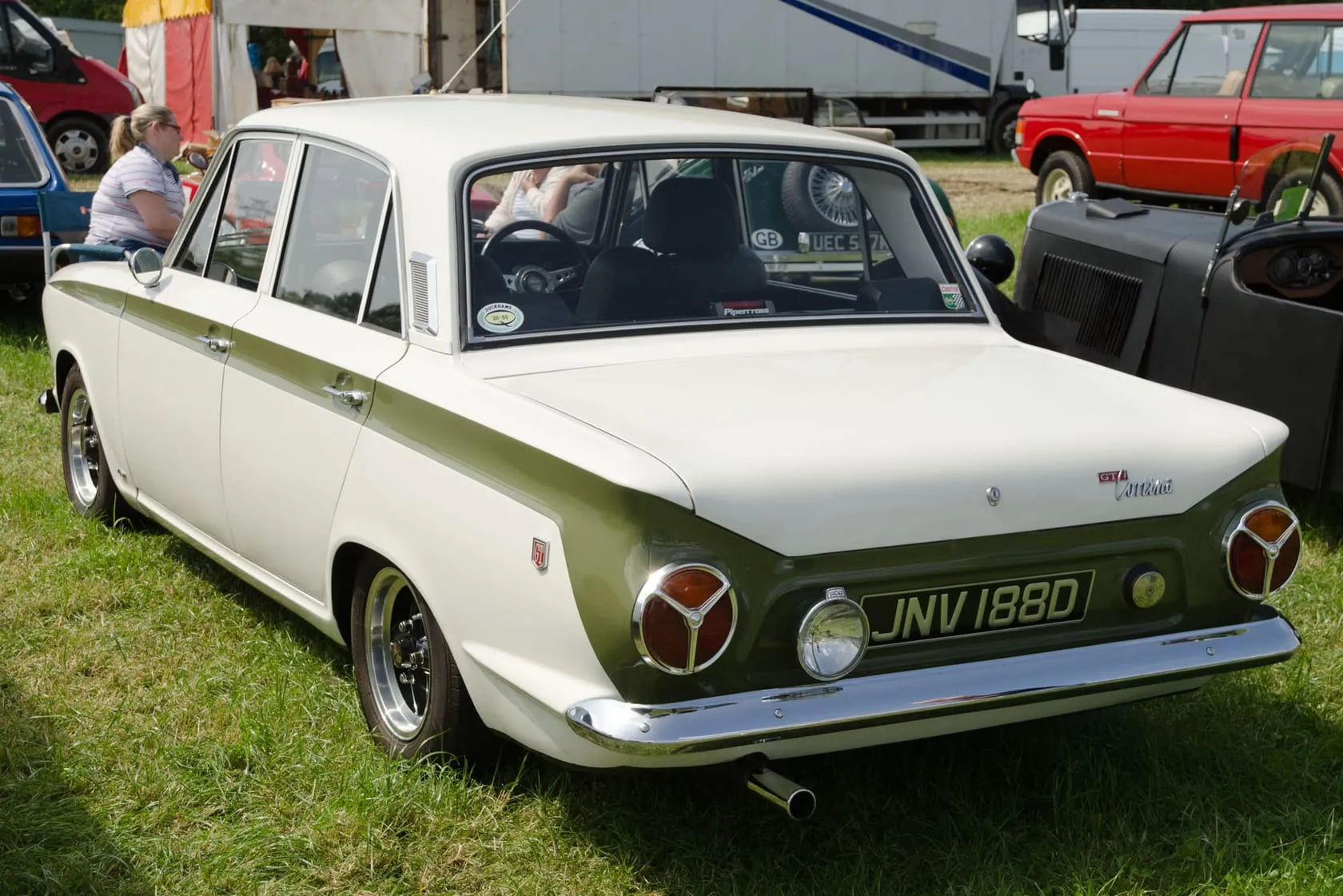
Above both sat the Lotus Cortina Mk2, launched in March 1967. Where the Mk1 Lotus had been built by Lotus, the Mk2 was built by Ford at Dagenham on the heavy-duty two-door GT shell, with the 1,558cc twin-cam breathing through two Weber 40DCOEs.

The facelift, and the end of the line
The 1969 facelift was light. The bonnet and boot gained separate FORD letters, the grille was blacked out, and chrome strips ran across the rear panel. Underneath nothing much changed, and the car ran on in that form until the Coke-bottle Cortina Mk3 replaced it in October 1970.
By then the Cortina had become the default answer to the question of what a British family or a British company should buy. The Mk3 changed almost everything underneath, swapping the struts for double wishbones and the leaf springs for coils, which makes the Mk2 the last Cortina built on the original 1962 recipe.
Savages, Crayfords and other specials
The Mk2 spawned more specials than any Cortina before it. The most valuable now is the Savage, Jeff Uren’s conversion that put Ford’s 3.0-litre Essex V6 into the engine bay. Something over a thousand Savages were built across the Cortina generations, the great majority on the Mk2, and they were never factory cars. A genuine one is the top of the Mk2 market by a distance.
Crayford, the Kent coachbuilder, cut the roofs off Mk2 saloons including GTs and 1600Es to make convertibles that Ford itself never offered. Overseas, Australia sold Mk2s under its own 220, 240 and 440 names, New Zealand built a 1600E equivalent called the GTE, and South Africa had V6 Peranas. The market vocabulary follows: sellers talk about crossflow and Kent engines, GT and 1600E, Savage and Crayford, and those words matter more to a car’s value than its colour.

Buying a Cortina Mk2 today
Rust decides everything. Start at the front, where the strut tops, inner wings, bulkhead, scuttle and A-posts all corrode. The front wings are welded on rather than bolted, so a bulkhead repair turns into a major job. A knocking front end usually means tired strut-top mounts; the later bonded type is no longer made and owners fit roller tops instead. Further back, look at the sills, jacking points, floors, rear chassis rails, spring hangers, spare-wheel well and boot floor.
Mechanically the Mk2 is about as easy as a 1960s car gets. The Kent and crossflow engines are cheap to rebuild and the parts network is deep. Original trim and some early body panels are the expensive hunt.
Identity is the other trap. The chassis number lives on the front offside inner wing and has often been welded over during repairs, and GT, 1600E and Savage cars are the ones most often misdescribed. The Ford Cortina MkII Owners Club and the Mk2 and 1600E owners’ club are where the registers and the knowledge sit. There is no reliable national count of Mk2s alone, because the DVLA files many Cortinas under model names that mix the generations.
Every Mk2 is now well past the rolling 40-year line, so it qualifies for the historic vehicle tax class, and one that has not been substantially changed can also be exempt from the annual MOT.

Values: a market led by the E and the Savage
Ninety recorded auction sales since 2011 put the median near £9,500, with the middle half of the market between about £5,500 and £16,000 and only six cars in ten offered actually selling. The 1600E is the most traded Mk2, at a median around the overall figure; the GTs and ordinary 1600s sit a little below it, and a 1300 can still change hands for a few thousand pounds.
The Savages are the outliers. Six sold at a median a little over £31,000, and one made £39,620 at Historics in November 2021, the highest price for any Mk2 in the record. The wider Cortina picture, Lotus cars included, is on the Cortina sold-price page.
More photos
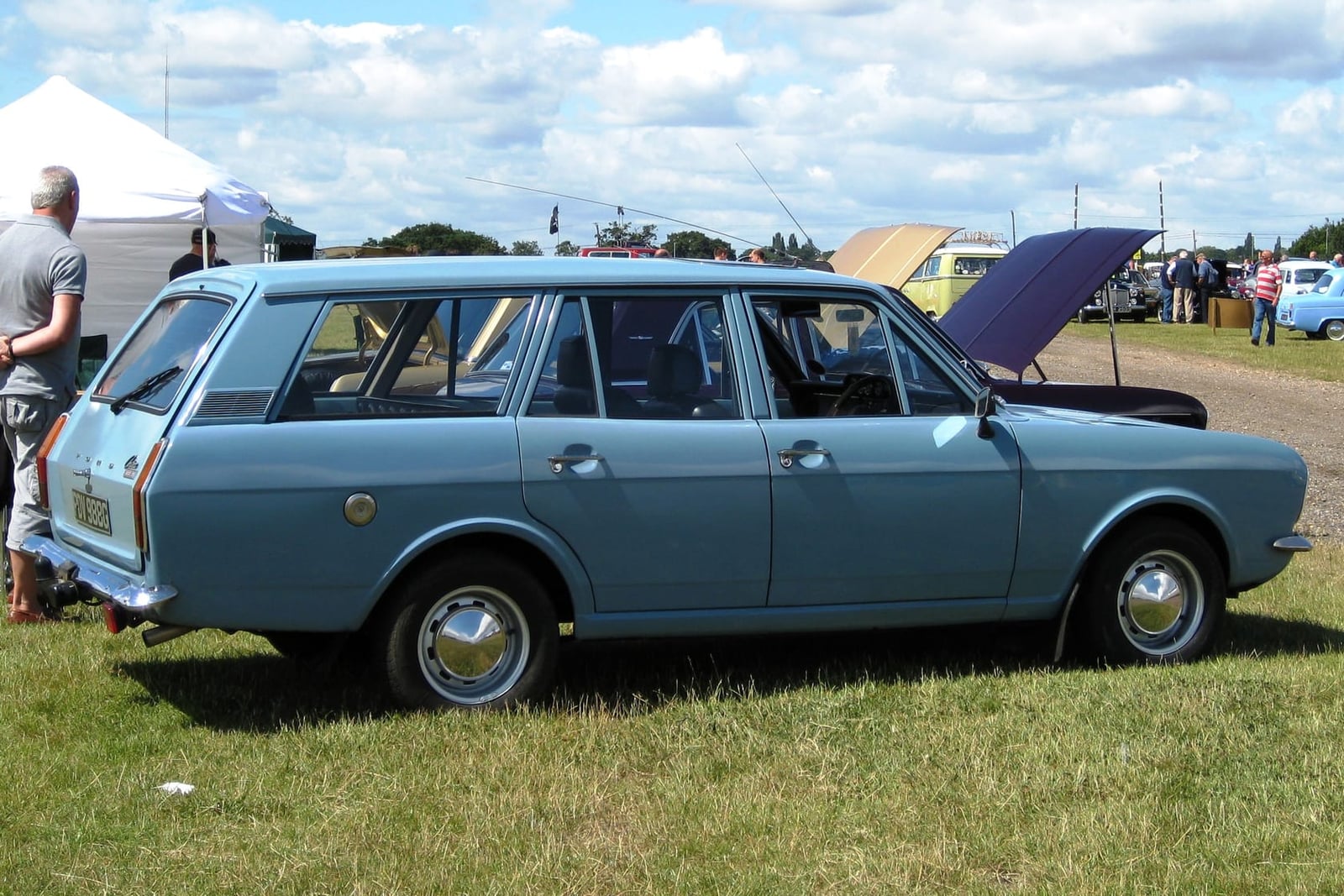
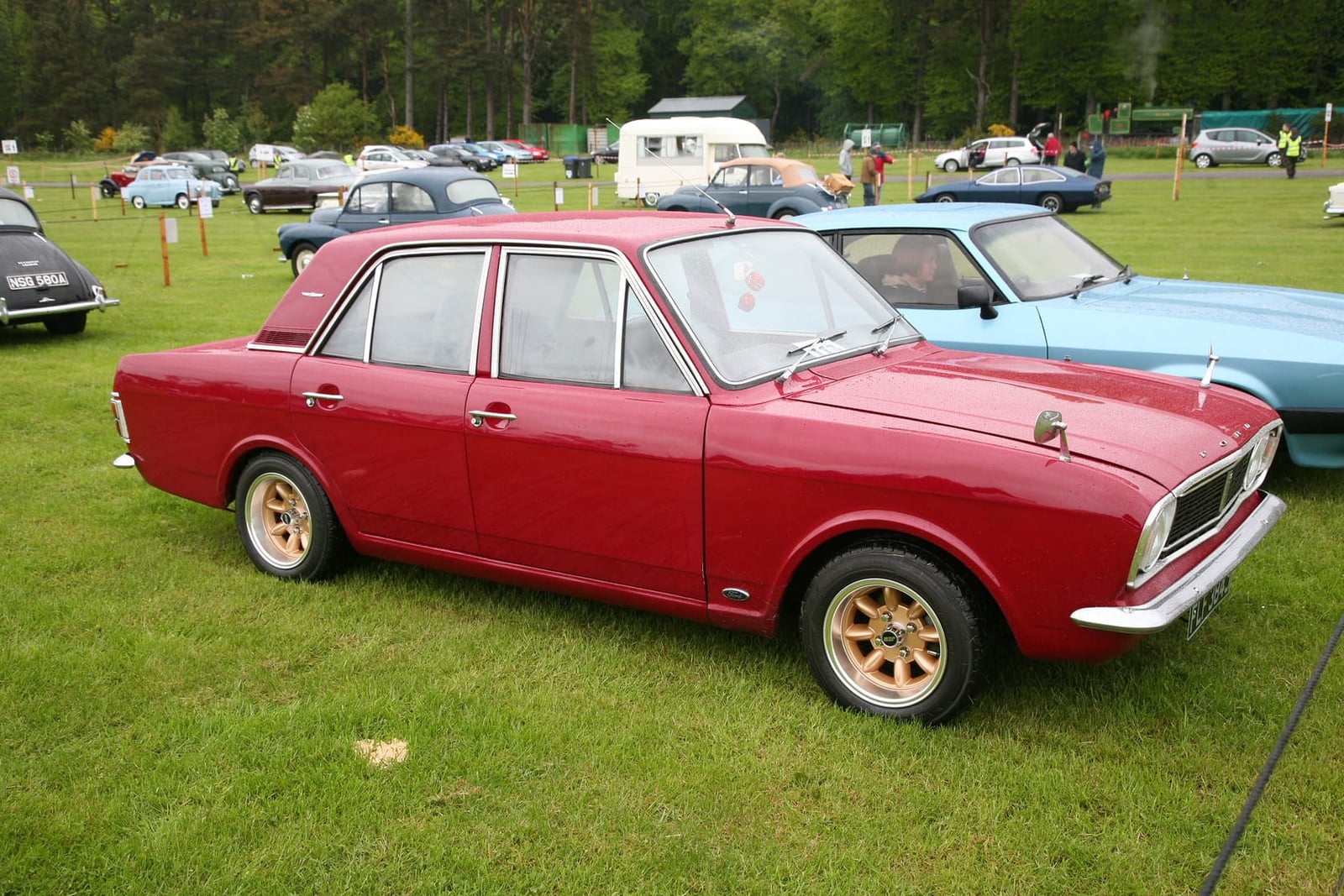
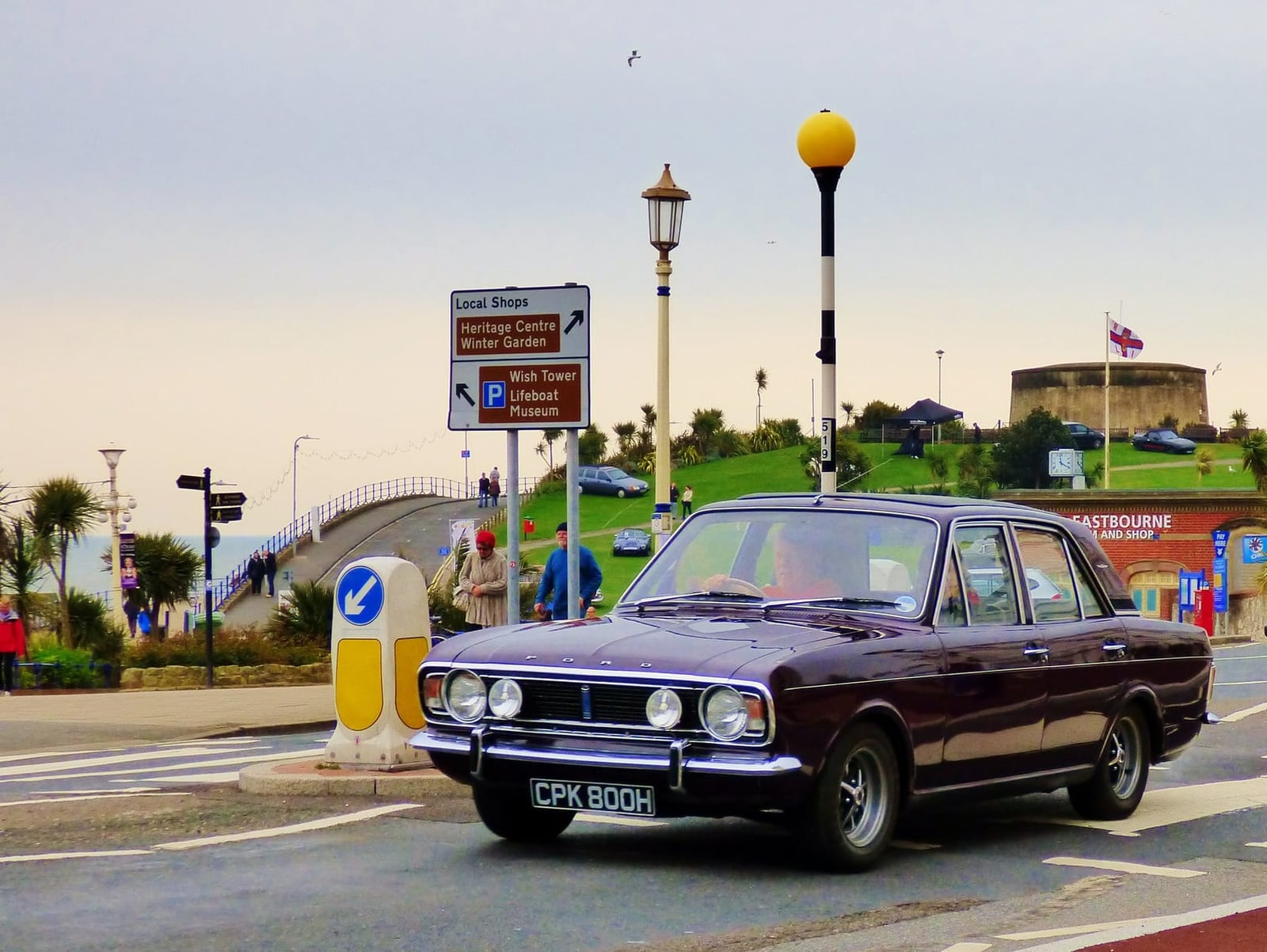
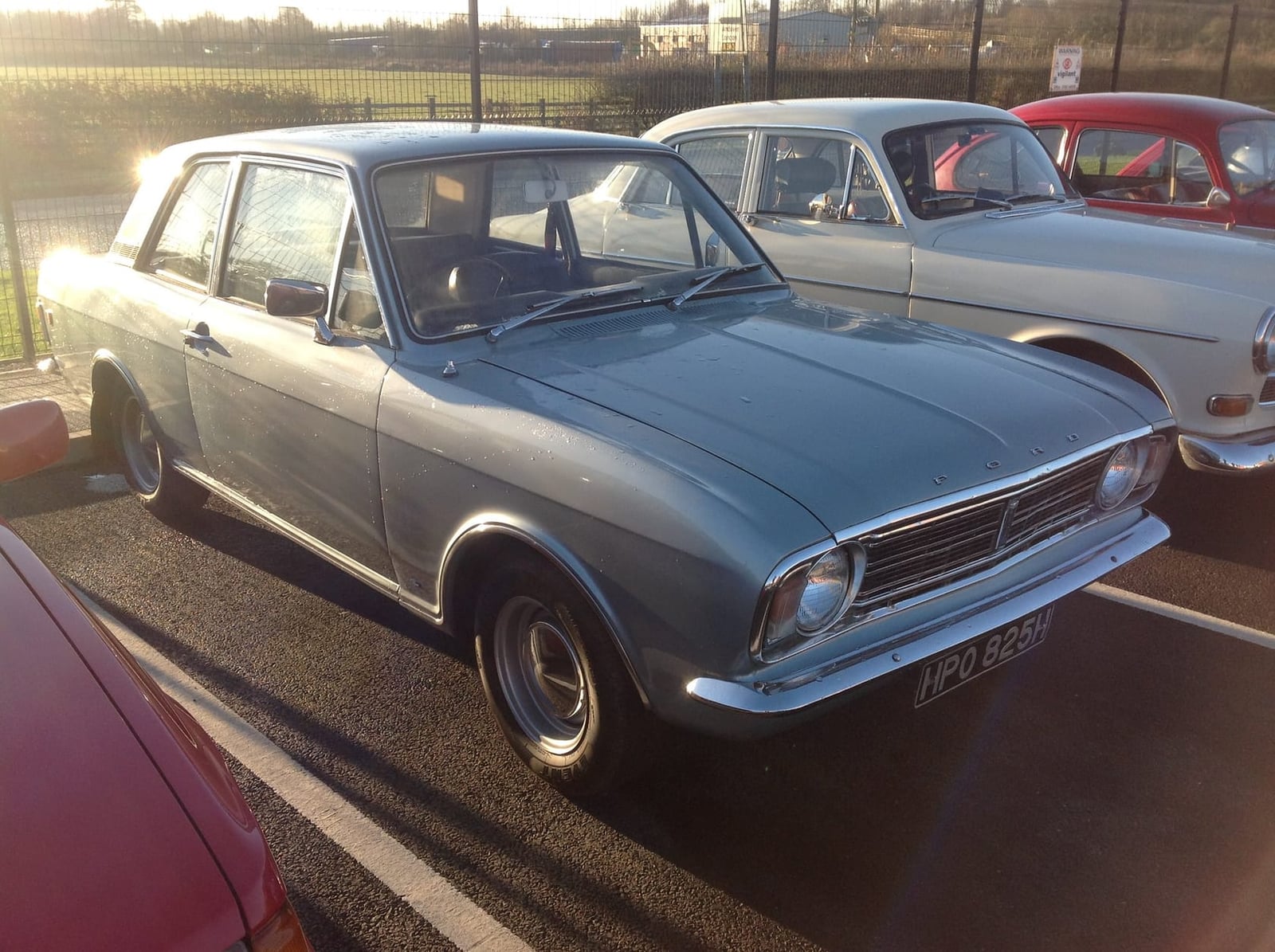
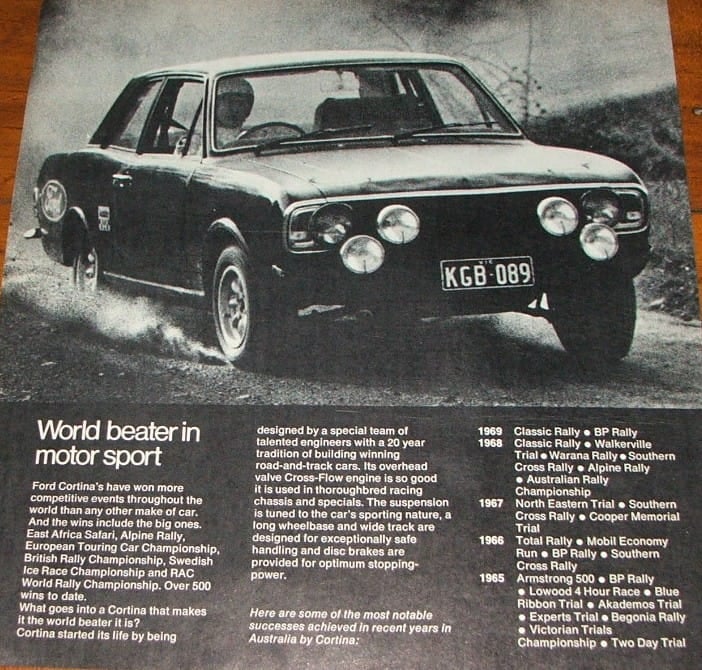
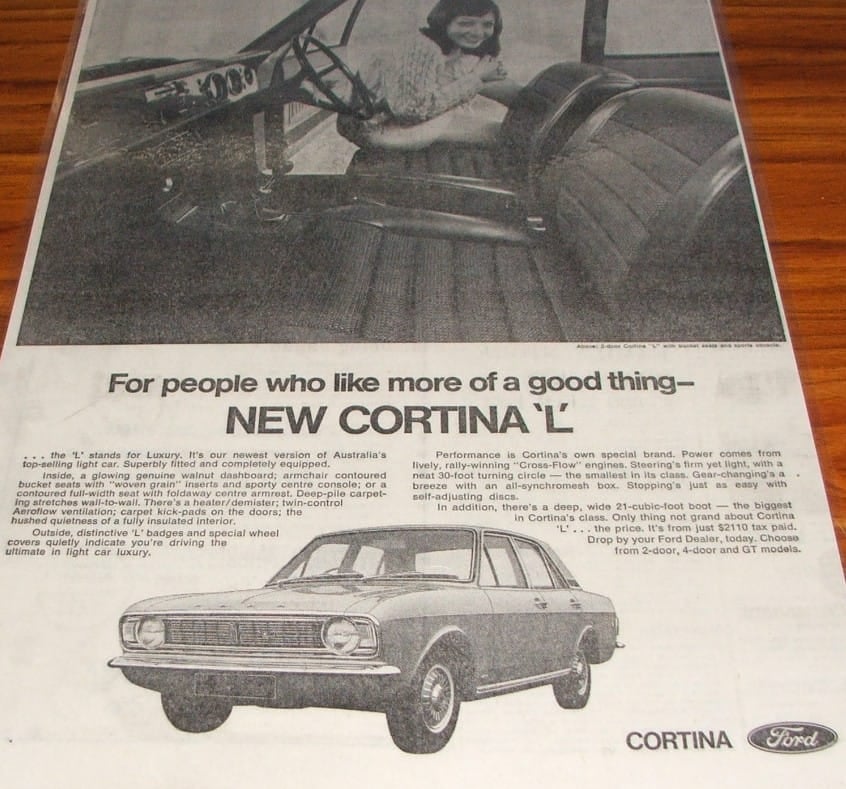
The Cortina Mk2 timeline
- 18 Oct 1966The Mk2 launches at the London Motor Show in two-door and four-door saloon form, with 1300 and 1500 Kent engines.
- Feb 1967The five-door estate goes on sale in Britain.
- Mar 1967The Lotus Cortina Mk2 arrives, now built by Ford at Dagenham on the two-door GT shell.
- 1967The Cortina is Britain's best-selling new car of the year.
- Aug 1967Crossflow 1300 and 1600 engines replace the old units and the 1500 is dropped.
- Oct 1967The 1600E appears at the Paris Motor Show.
- 1969A light facelift brings separate FORD letters on the bonnet and boot, a blacked-out grille and chrome strips across the tail.
- Oct 1970The Coke-bottle Mk3 replaces it.
Buying checklist: the Cortina Mk2 in front of you
The front structure
- Strut tops, inner wings and the bulkhead, where the welded-on front wings make repairs major work
- Scuttle and A-posts, then the sills and jacking points
- A knock from the front usually means worn strut-top mounts; the later bonded type is obsolete and owners fit roller tops
The back half
- Floors, rear chassis rails and the leaf-spring hangers
- The spare-wheel well and boot floor
Identity
- The chassis number sits on the front offside inner wing and is often welded over, so confirm it
- GT, 1600E and Savage cars are the most often misdescribed; check engine, suspension and records against the owners' clubs
- Mechanical parts for the Kent and crossflow engines are easy; original trim and panels are the hunt
What the Cortina Mk2 sells for at auction
In 2025 the median Cortina Mk2 sold for £7,776 across 14 sales, 33% down on 2024. In real terms, typical Cortina Mk2 prices were up about 52% over the five years to 2025, once inflation is accounted for.
| Variant | Sold | Typical range | Median |
|---|---|---|---|
| Cortina Mk II 1600 E | 24 | £7,412 - £12,426 | £9,454 |
| Cortina Mk II 1500 | 8 | £6,442 - £13,181 | £8,350 |
| Cortina Mk II 1600 | 8 | £5,105 - £10,174 | £6,084 |
| Cortina Mk II 1600 GT | 8 | £5,044 - £11,580 | £7,728 |
| Cortina Mk II Savage | 6 | £25,470 - £37,240 | £31,180 |
| Cortina Mk II 1300 | 5 | £3,000 - £7,150 | £3,334 |
Show the year-by-year mediansHide the year-by-year medians
| Year | Sold | Median | In 2025 money |
|---|---|---|---|
| 2026 (so far) | 7 | £6,568 | |
| 2025 | 14 | £7,776 | £7,776 |
| 2024 | 14 | £11,630 | £12,076 |
| 2023 | 10 | £15,542 | £16,678 |
| 2022 | 8 | £12,248 | £14,027 |
| 2021 | 15 | £13,724 | £16,971 |
| 2020 | 4 | £4,031 | £5,108 |
| 2019 | 6 | £18,330 | £23,464 |
| 2017 | 3 | £10,500 | £13,986 |
| 2016 | 3 | £3,203 | £4,376 |
- £6,568Cortina Mk II 1600
- £1,250Cortina Mk II 1600 E
- £12,937Cortina Mk II 1600 E
- £9,000Cortina Mk II 1600 E
- £9,225Cortina Mk II 1500
Reasonable evidence. 90 recorded sales: enough for the range to mean something, though a few unusual cars can still move a single year's median. Based on 90 sold results from public classic car auctions (2011 to 10 August 2026). Sold prices, not asking prices, and not a valuation: condition, history and specification vary from car to car. Inflation-adjusted figures use the ONS CPIH index, in 2025 money.