Ford Cortina Mk1: the car Britain bought every seven minutes (1962–1966)
At a glance
- Years
- 1962–1966
- Body styles
- Two/four-door saloon, estate; Crayford convertible conversions
- Drivetrain
- Front engine, rear-wheel drive
- Engines
- 1198cc and 1498cc Kent four (pre-crossflow)
- Power
- Around 48-78 bhp (GT)
- Top speed
- Around 75-95 mph
- Trim levels
- Standard, De Luxe, Super, GT; Lotus Cortina above
- Production
- 1,013,391 in four years
- Assembly
- Dagenham, Essex
- Designer
- Roy Brown Jr (styling); the Archbishop project under Terence Beckett
- Values
- Usable from around £6,000; good cars £9,000-£14,000; GTs and the best beyond
- The sales pitch
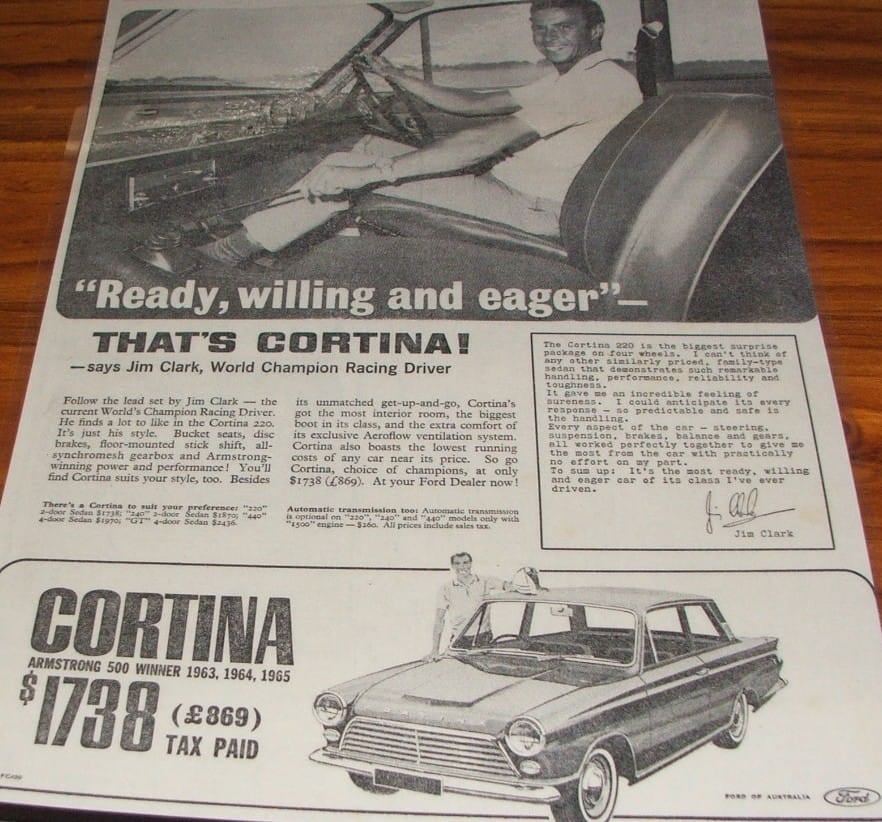
- A Cortina sold every seven minutes, as the 1965 advertising boasted
- The details
- Aeroflow vents, and the circular rear lamps everyone calls ban-the-bomb
The models
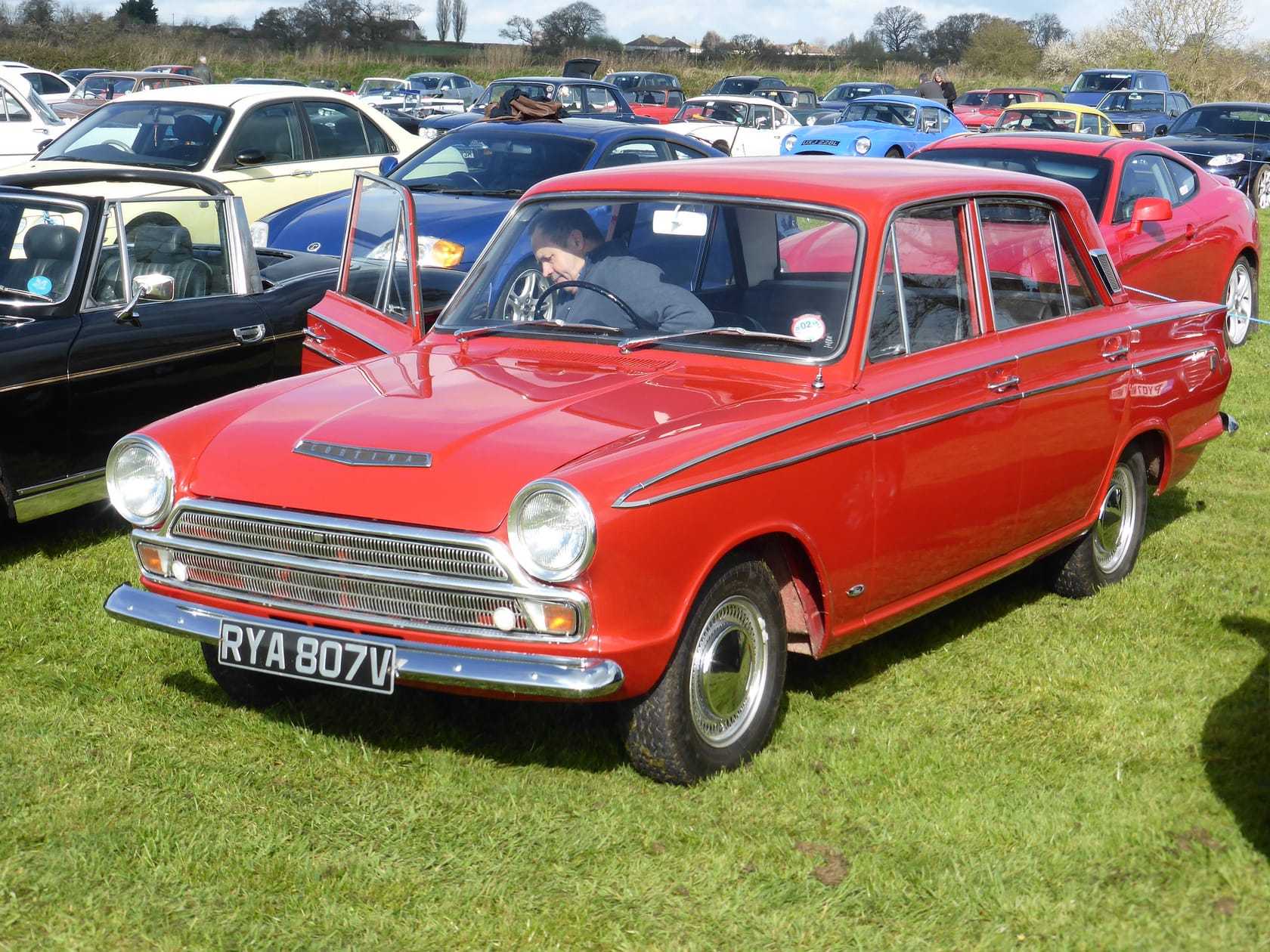
Few British cars were ever engineered quite as coldly, or ended up loved quite as warmly. The Ford Cortina Mk1 of 1962 was created by the Archbishop project to a ruthless brief, lighter and cheaper to build than anything BMC could answer, priced from £639, and it worked so completely that Ford sold 1,013,391 in four years and boasted, accurately, that a Cortina sold every seven minutes. The Cortina line that carried Britain through two decades starts here, with the crisp original that did the revolutionary work.
The Archbishop project
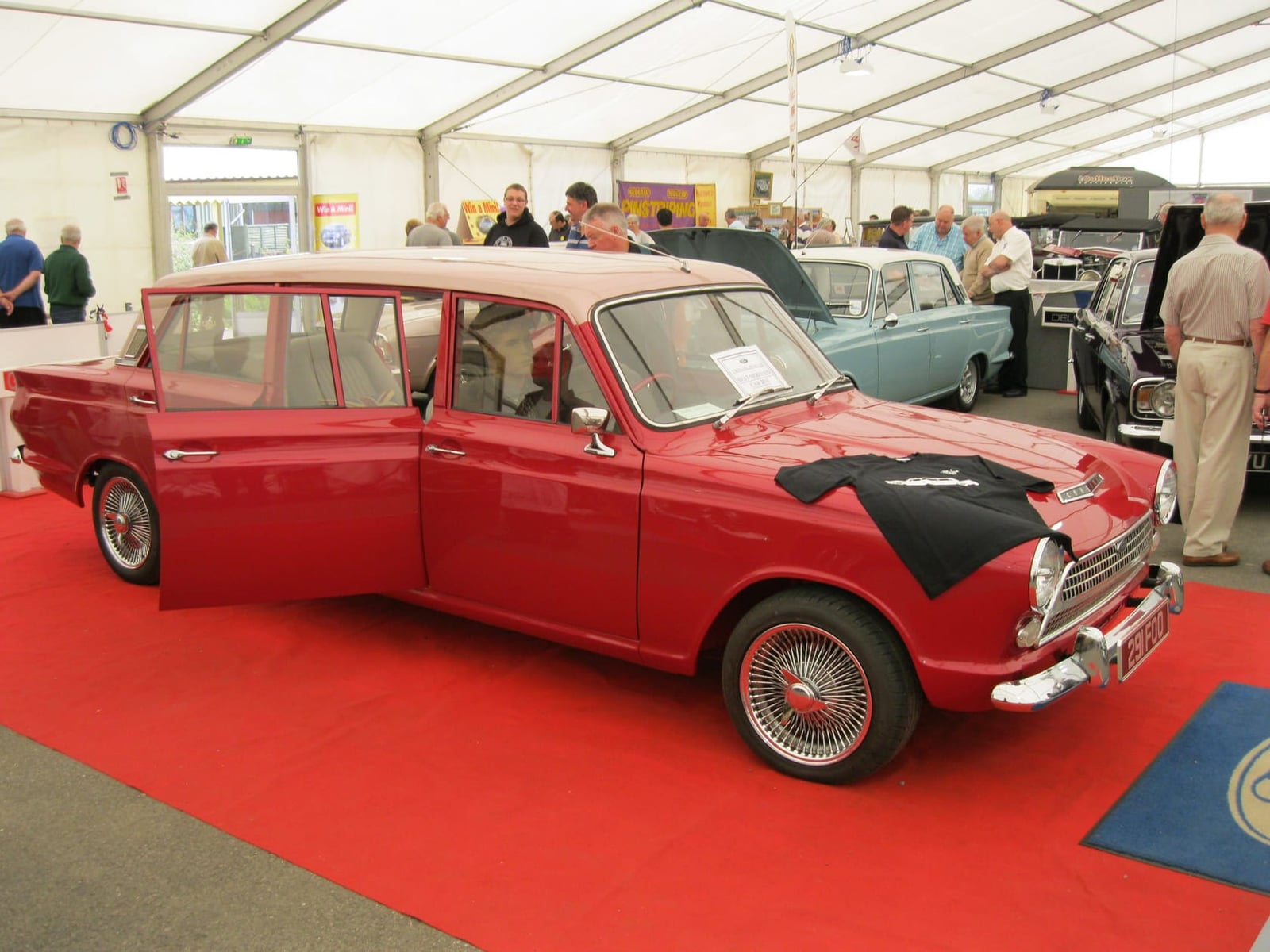
Terence Beckett’s product planners specified the Mk1 backwards from a target weight and a target cost, and the engineering delivered: a light, stiff shell with straightforward MacPherson-strut front suspension, the simple pushrod Kent engine in 1200 and later 1500 forms, and room for a family and their luggage inside a car that undercut the technically adventurous competition on price while beating it on boot space. Launched in September 1962 as the Consul Cortina, it offered Standard to Super trims, two or four doors, and an estate, everything the fleet buyer and the private motorist actually wanted, and nothing they would not pay for.

A car every seven minutes
The result was the fastest-selling Ford Britain had built: the millionth Cortina left the line inside four years, a first for any British Ford, and the 1965 advertising simply printed the arithmetic under the single word SOLD. The Mk1 caught the sixties precisely, young, unpretentious and modern without strangeness, and the company car park was never the same again. Rivals with cleverer engineering watched the Cortina outsell them on the strength of costs, dealers and honest packaging, a lesson Ford would apply for the next twenty years.

Aeroflow, ban-the-bomb and the details
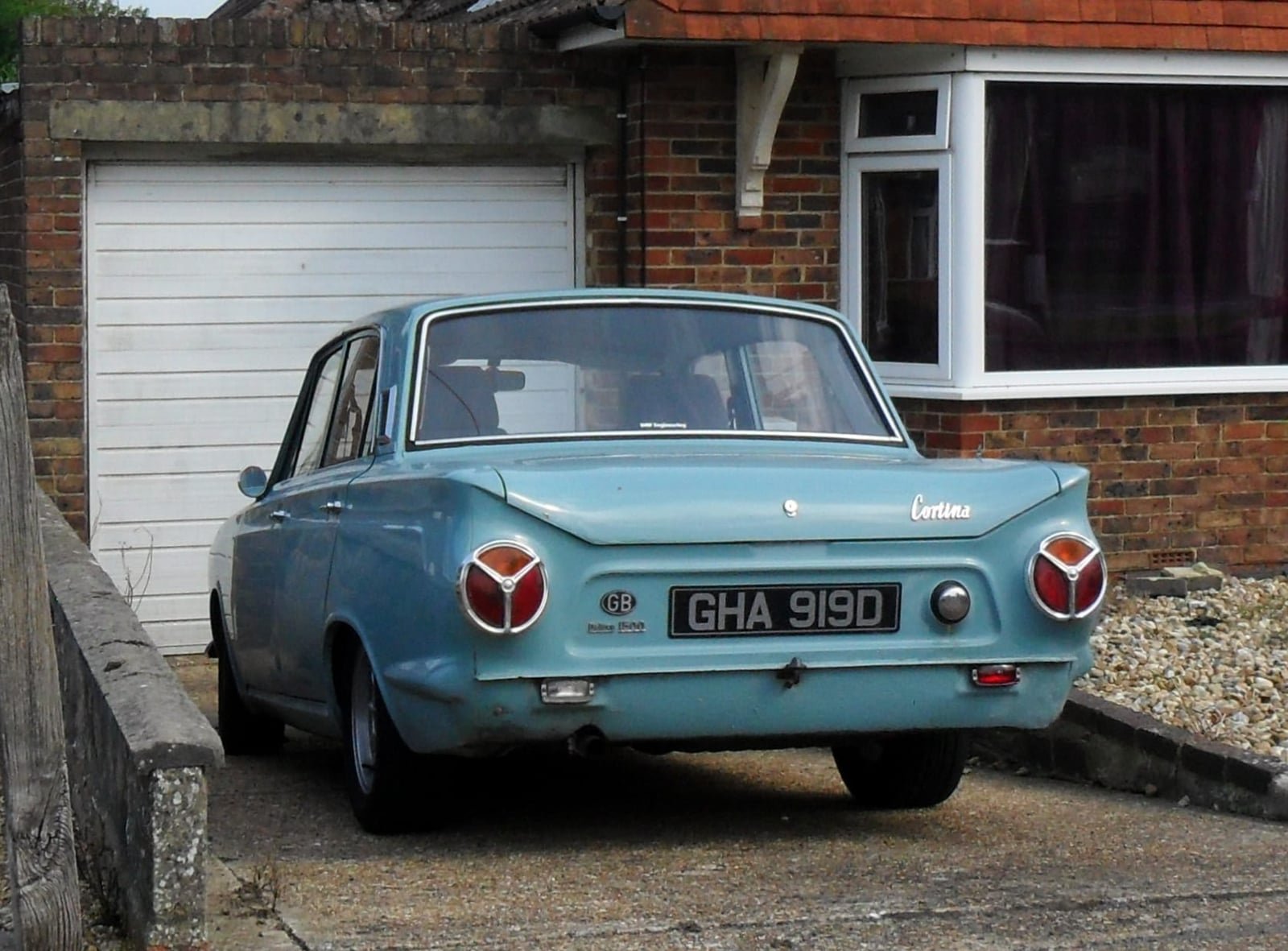
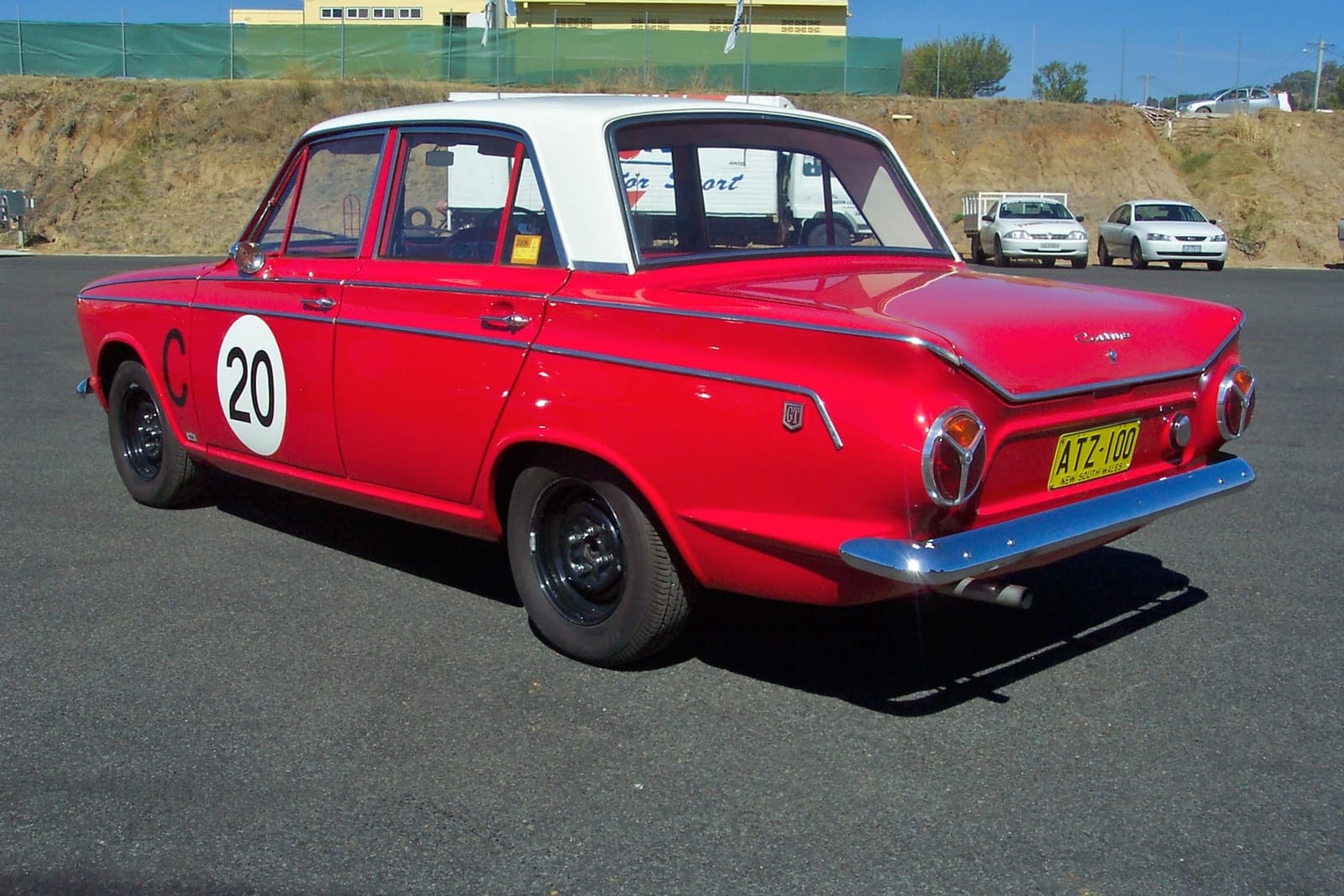
The Mk1’s identity lives in its details. The 1964 facelift brought Aeroflow through-ventilation, its extractor vents flanking the rear screen, a genuine first at the price. The circular tail lamps with their Y-shaped dividers match the CND peace symbol so exactly that ban-the-bomb became their permanent name. The sculpted lightning-flash side crease gave the shape its energy, Crayford built convertibles at the margin, and the GT added a Weber carburettor, 78 bhp and disc brakes, creating the sporting Cortina template. The Lotus Cortina, the Mk1’s fiercest expression, has its own story told separately.

Safari winners and circuit heroes
The Mk1 earned its sporting stripes immediately: a Cortina GT won the 1964 East African Safari outright, an astonishing result for a light family saloon against specialist opposition, and GTs gathered results across European rallying while the Lotus version rewrote saloon-car racing with Jim Clark three-wheeling to championships. The competition pedigree fed the showrooms, and it still feeds the survivor population: historic racing and rallying remain full of Mk1s, and the club-motorsport demand for shells explains why honest road cars deserve protecting.

Living with a Mk1
Ownership is the Mk1’s quiet strength. The pre-crossflow Kent and its gearbox are as cheap to run as classic motoring gets, service items come from stock, and the wider Cortina and small-Ford parts industry, remanufactured panels included, means nothing on the car is unobtainable. The club scene spans the dedicated Mk1 register through general Ford gatherings, where the car is aristocracy, and running one as regular transport is entirely realistic: 80 mph cruising in a 1500, 40-plus mpg driven gently, and unleaded conversion a straightforward job. Insurance and tax fall under the usual classic exemptions, and the driving is period-honest, light, narrow and visible in a way that flatters town work as much as B-roads.

Buying a Cortina Mk1 today
Bodywork is the whole battle: sills, floors, chassis rails, strut tops, arches and the front panel all rot, and good original panels are scarcer than mechanical parts will ever be, so structure and originality outrank everything else. Mechanically the Kent engine and its gearbox are cheap, simple and supported by the vast Ford parts network, so a tired drivetrain should discount a car far less than tired metal. Verify GT authenticity through correct engine and details, since upgrades are common, and treasure unrestored interiors, whose trim is the genuine hunt. Four-door De Luxes are the value; two-door GTs the demand.

Values: the million-seller grown scarce
Ninety-one measured sales at a £9,000 median tell the quiet story: the car that sold a million is now genuinely scarce, with usable Mk1s from £6,000, good cars £9,000 to £14,000, and GTs, Crayfords and the finest beyond. Among 1960s saloons the Mk1 offers the rare double of historic significance, Britain’s definitive fleet car, and genuine usability, with parts a phone call away. The seven-minute car rewards taking your time now.

More photos
Key dates for the Mk1
- Sept 1962Launched as the Consul Cortina in Standard to Super trims, with two doors, four doors or an estate.
- 1963The GT arrives with a Weber carburettor, 78 bhp and disc brakes, creating the sporting Cortina template.
- 1964A Cortina GT wins the East African Safari outright, an astonishing result for a light family saloon against specialist opposition.
- 1964The Aeroflow facelift brings through-ventilation, its extractor vents flanking the rear screen, a genuine first at the price.
- 1966The millionth Cortina leaves the line inside four years, a first for any British Ford, and the Mk2 replaces it.
Before you buy a Mk1
Bodywork is the whole battle
- Sills, floors, chassis rails and strut tops
- Arches and the front panel
- A tired drivetrain should discount a car far less than tired metal
Authenticity
- Verify GT authenticity through the correct engine and details, since upgrades are common
- Crayford convertibles were built at the margin and want confirming
- Aeroflow extractor vents beside the rear screen date a car to the 1964 facelift or later
What to prize
- Unrestored interiors, whose trim is the genuine hunt
- Four-door De Luxes are the value, two-door GTs the demand
- Club-motorsport demand for shells is why honest road cars deserve protecting
What the Cortina Mk1 sells for at auction
In real terms, typical Cortina Mk1 prices were down about 52% over the five years to 2025, once inflation is accounted for.
| Variant | Sold | Typical range | Median |
|---|---|---|---|
| Cortina Mk I | 54 | £4,305 - £15,688 | £8,692 |
| Cortina Mk I 1500 | 14 | £6,196 - £8,348 | £7,544 |
| Cortina Mk I 1500 GT | 11 | £13,940 - £27,160 | £20,000 |
Show the year-by-year mediansHide the year-by-year medians
| Year | Sold | Median | In 2025 money |
|---|---|---|---|
| 2026 (so far) | 4 | £10,600 | |
| 2025 | 26 | £8,030 | £8,030 |
| 2024 | 7 | £8,280 | £8,598 |
| 2023 | 7 | £9,676 | £10,383 |
| 2022 | 7 | £8,438 | £9,663 |
| 2021 | 15 | £11,557 | £14,291 |
| 2020 | 4 | £13,202 | £16,730 |
| 2019 | 4 | £7,151 | £9,154 |
| 2017 | 4 | £8,062 | £10,739 |
| 2016 | 3 | £26,880 | £36,727 |
| 2015 | 3 | £22,924 | £31,635 |
| 2012 | 3 | £17,250 | £24,797 |
- £11,200Cortina Mk I
- £4,000Cortina Mk I
- £10,000Cortina Mk I
- £16,500Cortina Mk I 1600
- £3,000Cortina Mk I
Reasonable evidence. 91 recorded sales: enough for the range to mean something, though a few unusual cars can still move a single year's median. Based on 91 sold results from public classic car auctions (2005 to 10 August 2026). Sold prices, not asking prices, and not a valuation: condition, history and specification vary from car to car. Inflation-adjusted figures use the ONS CPIH index, in 2025 money.