Search the guides
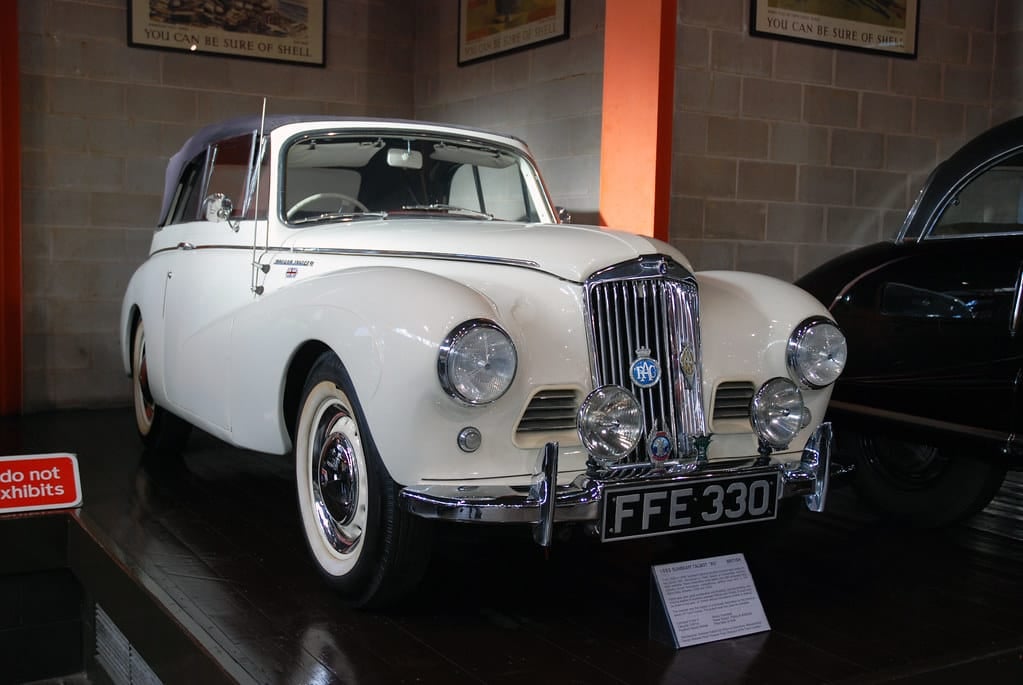
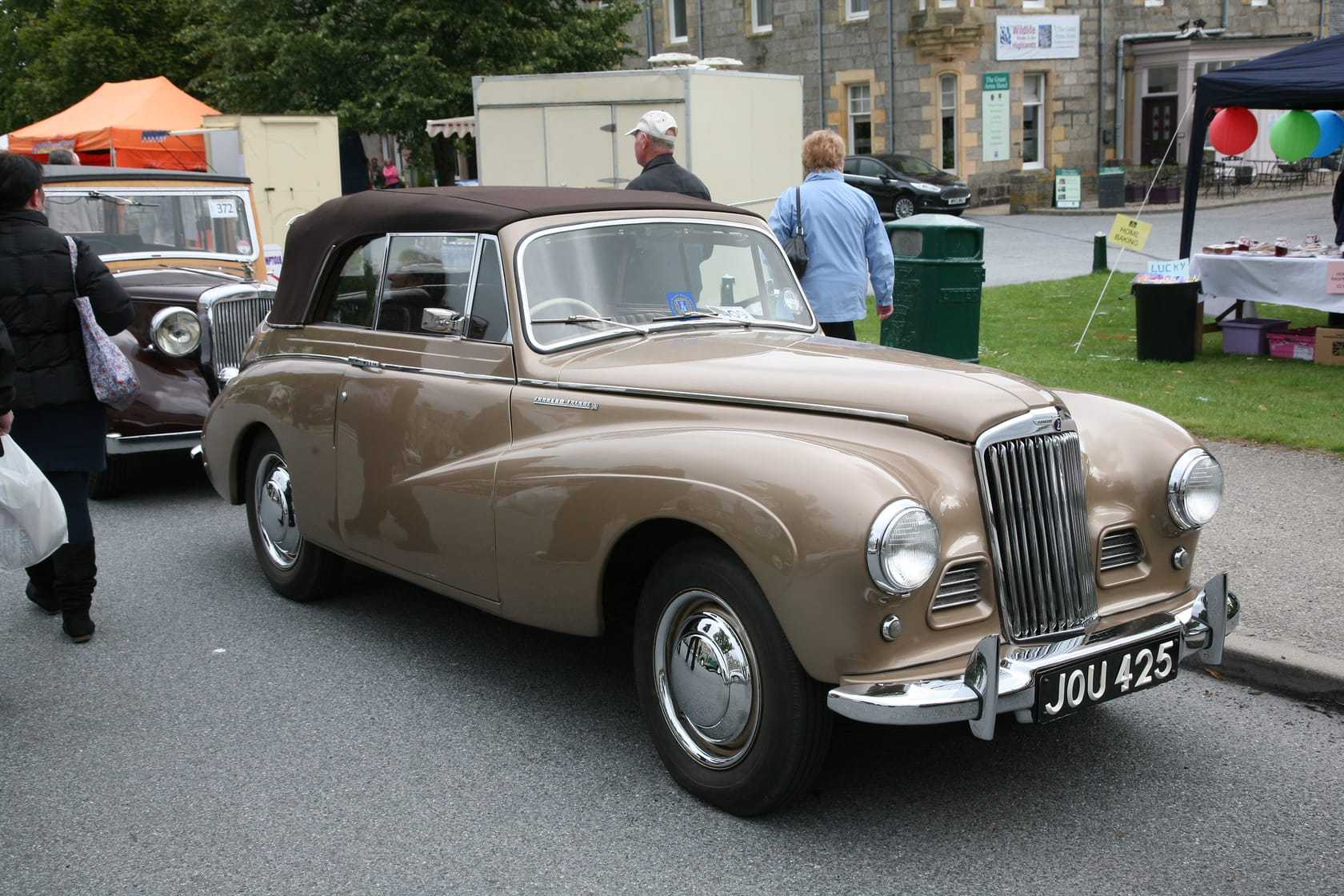
A two-tone brown 1951 Sunbeam-Talbot 90 drophead at a street gathering, front three-quarter view, UK registration JOU 425
Photo by grobertson4 / CC BY 2.0
Marque guide

Rootes Group: the family firm behind Hillman, Sunbeam and Humber

Two brothers from Kent started as car dealers and ended up owning half the badges in the British motor industry. The Rootes Group built sensible Hillmans, sporting Sunbeams, stately Humbers and everything in between, one basic car wearing many suits, until the gamble of the Imp and the arrival of Chrysler ended the empire. Below, every classic Rootes car we cover and what each is like to own.

The marque file
Founded
1913 as a car sales business; carmaking from 1929
Founders
William and Reginald Rootes
Headquarters
Devonshire House, London; works at Ryton-on-Dunsmore and Linwood
Classic era
1929–1976 (the classics covered here: 1955–1976)
Values
from £3k
Model guides
6
6 guides

The models

A light blue Hillman Minx 1600 saloon on a showground, front three-quarter view
Hillman Minx
1932–1970 from £3k

The Hillman Minx was the Rootes Group's bread-and-butter family car for nearly forty years, from the sidevalve saloons of the 1930s through the crisp Loewy-styled Audax Series cars to the last New Minx of 1970. A guide to the generations, the Super Minx and the badge-engineered cousins, what to look for when buying, and what a Minx is worth today.

Read the full Hillman Minx guide
Sunbeam Alpine
1959–1968 (Series); name first used 1953–1955 from £9k
1,739 recorded sales

Rootes Group at auction, in brief

Median price £11,200
Usual range £4,980 to £30,375
Sales a year about 167
Highest result £868,530, Tourist Trophy Race Car

Every Rootes Group model, what it sells for →

Sold prices from public auction results to 10 August 2026, not valuations: a concours car and a project both sit inside these ranges. The sold-price pages carry the full picture, model by model and year by year.

The span of the marque

The Rootes Group years, model by model

Production years as covered by our model guides. Select a bar to open the guide.

From a Kent bicycle shop to a motoring empire

The Rootes Group did not begin with a car. William Rootes senior sold bicycles and then motor cars in Kent, and his sons William and Reginald turned the sales side into the biggest motor distributor in Britain by the mid 1920s. Selling other people’s cars taught the brothers exactly what the market wanted, and at the end of the decade they used that knowledge, and City backing, to buy their way into making them.

The shopping list came quickly: Hillman and Humber, along with the Commer commercial-vehicle business, came under Rootes control around the turn of the 1930s, Karrier followed in 1934, the remains of the once-glorious Sunbeam and Talbot companies were picked up in 1935, and Singer completed the set in 1956. William, later Lord Rootes, was the salesman and front man; Reginald ran the business. Between them they built Britain’s clearest example of a badge-engineered range, one sensible set of mechanicals wearing five badges at five prices.

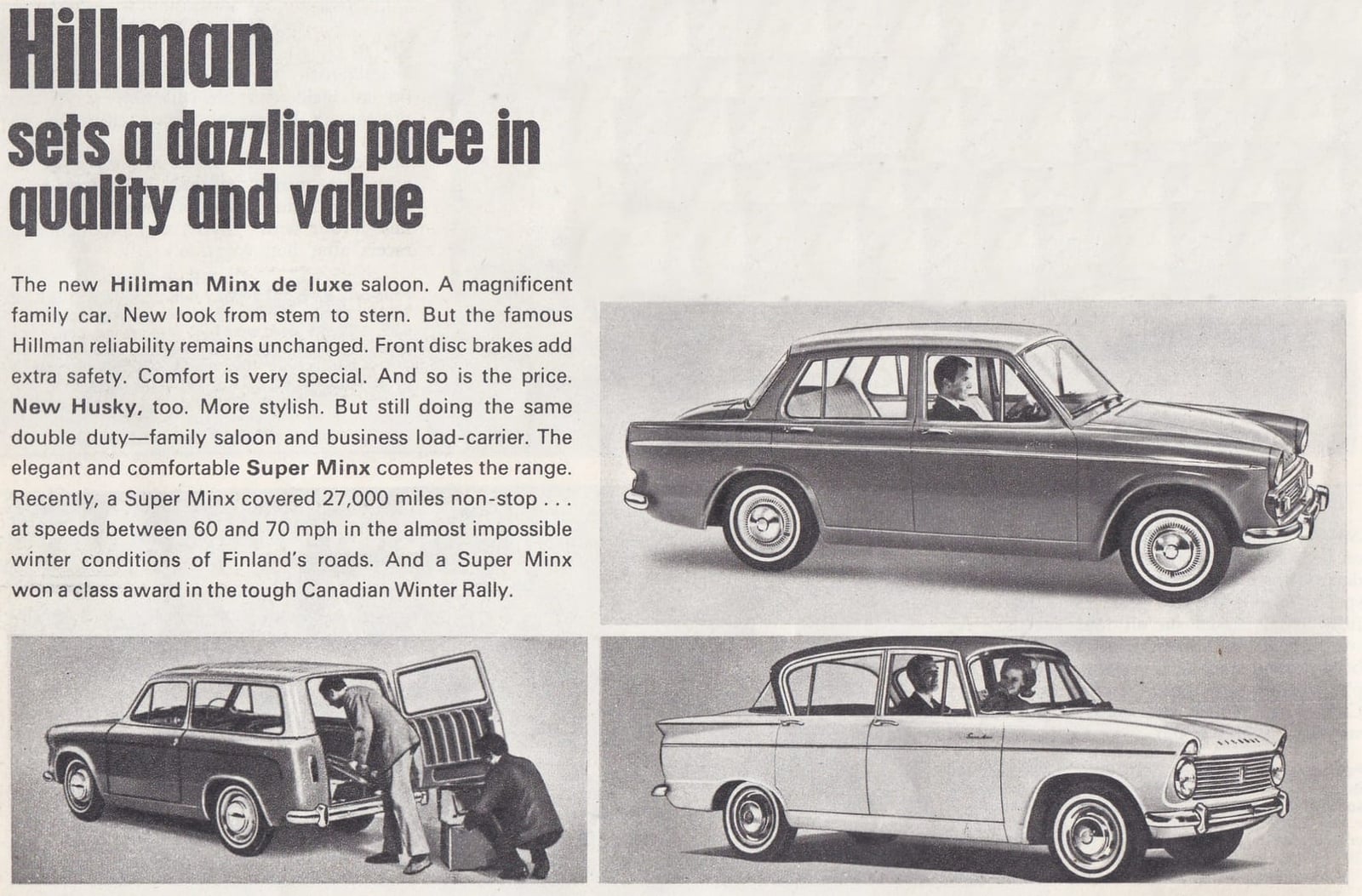
A period Rootes advertisement headed Top the Bill at Every Show, picturing the 1959 Hillman, Sunbeam and Humber models
Salesmanship first: the brothers built the empire from the showroom outwards, and the advertising never let you forget it.Photo by Andrew Bone / CC BY 2.0

The badges and the pecking order

The genius of Rootes was range discipline. Hillman sold the volume cars, honest family saloons like the Minx. Singer, once an independent maker of some standing, became the better-trimmed Hillman for the buyer who wanted wood on the dashboard. Sunbeam carried the sporting reputation earned by the pre-war Sunbeam company into rally-winning coupes and roadsters. Humber sat at the top, building the limousines and stately saloons that carried ministers and managing directors. Commer and Karrier did the working vehicles, the classic vans and trucks of the group.

The system had a wartime interlude of real consequence: Rootes ran shadow factories building aero engines and armoured vehicles, and Humber staff cars carried British commanders through the war. When peace returned, the group poured its output into the post-war export drive.

A period advertisement showing the 1963 Rootes range, a Humber Super Snipe, Hillman Minx, Sunbeam Rapier, Sunbeam Alpine and Singer Vogue in a line
One family, five suits: the 1963 range from stately Super Snipe to sporting Alpine in a single lineup.Photo by Andrew Bone / CC BY 2.0

The Loewy look and the Audax years

In the 1950s Rootes hired the American industrial-design consultancy of Raymond Loewy, and the result was the Audax family, the crisp, transatlantic styling worn by the Hillman Minx Series cars, the Sunbeam Rapier and their relatives from 1955 onwards. These were the group’s confident years: the Rapier won rallies outright, the Sunbeam Alpine gave Rootes a proper sports car with film-star exposure, and the Minx sold in the hundreds of thousands, with licence-built versions made as far away as Japan.

The range logic ran right through the decade that followed. The Humber Sceptre began life as a proposed Sunbeam, the Alpine grew a Ford-V8 alter ego in the Sunbeam Tiger, and nearly every car in the showroom, whatever its badge, traced back to the same well-proven floorpans and the durable 1725cc engine.

A silver-grey Sunbeam Rapier Series saloon, front three-quarter view
The Audax line at its sharpest: a Series Rapier wearing the transatlantic style of the Loewy years.Photo by GPS 56 / CC BY 2.0

The Imp, Linwood and the fall

The Hillman Imp was the boldest thing Rootes ever did and the thing that broke it. An all-new rear-engined small car with an all-aluminium overhead-cam engine, built in an all-new factory at Linwood in Scotland because government regional policy steered the investment there, it was a gamble three times over, and every part of it cost more than planned. The car matured into a fine small saloon, but the early quality troubles and the half-empty factory drained the group at exactly the wrong moment.

Chrysler, hunting a European foothold, bought in during 1964, took control in 1967 and put its own name over the door in 1970. The badges went out one by one: Singer in 1970, Humber and Hillman by 1976, when the last Sceptre and the final Hillman-badged cars were built, and Sunbeam ended as a model name on a Chrysler hatchback. In 1978 Peugeot bought Chrysler’s European operations, and the surviving models were rebadged Talbot. The story of the group’s last mainstream saloon, the Hillman Avenger, sold under three badges in eleven years, is the whole decline in one car.

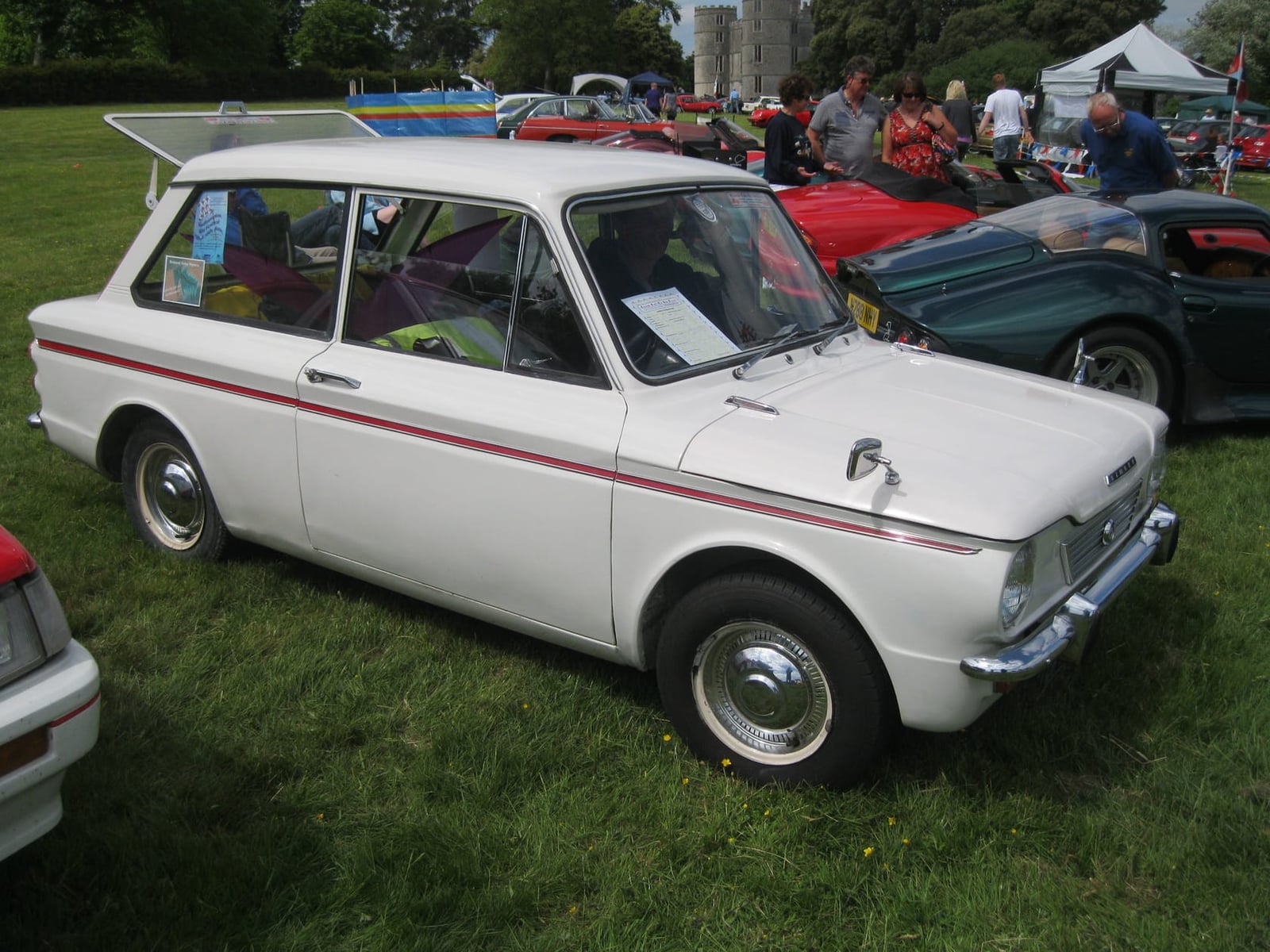
A white 1964 Hillman Imp Mk I at a classic car show, front three-quarter view
The Imp: the boldest thing Rootes ever did, and the bet that broke the bank.Photo by Cars Down Under / CC BY 2.0

Buying and owning a Rootes classic

The practical news is good. Rootes engineering was conventional where it mattered, the cars share parts across badges, and the well-proven 1494cc and 1725cc four-cylinder engines are tough, simple and well supported by specialists. Club support across the group is strong, and most models remain cheaper to buy than their BMC and Ford rivals of the same era, the Imp and Minx especially.

The watch-points are the usual ones for unitary-bodied cars of the period: structural rust in sills, floors and spring hangers, scarce model-specific trim, and, on the Imp, a cooling system that must be right. All the cars here are old enough for historic vehicle status.

A grey 1966 Humber Sceptre on grass at a show, front three-quarter view, UK registration PRP 335D
Shared engineering across the badges keeps Rootes classics simple and affordable to run.Photo by Andrew Bone / CC BY 2.0

More photos

Quick answers

Frequently asked questions

What was the Rootes Group?

Rootes was the family-run motor combine built by the brothers William and Reginald Rootes. Starting from a Kent car-sales business, they bought their way into manufacturing from the late 1920s, collecting Hillman, Humber and the Commer commercial business, then Karrier, then Sunbeam and Talbot, and finally Singer. At its peak it was one of Britain's big six carmakers, selling essentially the same engineering under carefully ranked badges.

Which brands did the Rootes Group own?

Five main ones. Hillman was the volume brand for family saloons, Sunbeam the sporting badge, Humber the luxury flagship, Singer the slightly better-appointed step above Hillman, and Commer, with Karrier, covered vans, trucks and buses. The group applied the same basic floorpans and engines across all of them, which is why a Sunbeam Rapier, a Humber Sceptre and a Hillman Minx are cousins under the skin.

What happened to the Rootes Group?

The Hillman Imp broke it. Developing an all-new rear-engined car in an all-new factory at Linwood in Scotland cost far more than the small firm could carry, and the Imp's early troubles kept sales below what the plant needed. Chrysler bought a stake in 1964, took control in 1967 and renamed the business Chrysler UK in 1970. The old badges faded one by one, Humber and Hillman going in 1976, and Peugeot bought the remains in 1978.

What was the difference between Hillman, Sunbeam, Humber and Singer?

Position in the range, more than engineering. A Hillman was the sensible family car, a Singer added wood and better trim, a Sunbeam added performance and rally glamour, and a Humber added space, leather and boardroom respectability. Under Rootes ownership they increasingly shared platforms and engines, so the badge told you the trim and the intended buyer rather than what was underneath.

What is the best-known Rootes car?

The Hillman Minx was the big seller, the family car that carried the group for four decades, and the Hillman Imp is the most famous story, the brave rear-engined Mini rival that helped sink the company. Among enthusiasts the Sunbeam Alpine and the Ford-V8 Sunbeam Tiger have the strongest following today, with the Series Rapier and the Humber Sceptre close behind.