Sunbeam Alpine: the civilised British sports car (1959–1968)
Comfortable, well-equipped and genuinely a sports car, the Alpine evolved through five Series from 1959 to 1968 and put James Bond behind its wheel before he ever drove an Aston. A guide to the Series I to V, the Harrington fastbacks, what to look for when buying, and what an Alpine is worth.
Built 1953–1968 311 recorded sales
At a glance
- Years
- 1959–1968 (Series); name first used 1953–1955
- Body styles
- Two-seat roadster; GT hardtop; Harrington fastback conversions
- Drivetrain
- Front engine, rear-wheel drive
- Engines
- 1494cc, 1592cc and 1725cc overhead-valve fours
- Power
- Around 78 bhp to 93 bhp
- Trim levels
- Series I, II, III, IV, V
- Production
- Around 70,000 Series cars
- Assembly
- Ryton-on-Dunsmore, England
- Designer
- Kenneth Howes (Rootes)
- Values
- Usable from around £9,000; good cars £12,000-£20,000; Harringtons and the best beyond
- Screen credit
- James Bond's first car on film, in Dr. No (1962)
- V8 sibling
- The Ford-powered Sunbeam Tiger wears the same body
The models
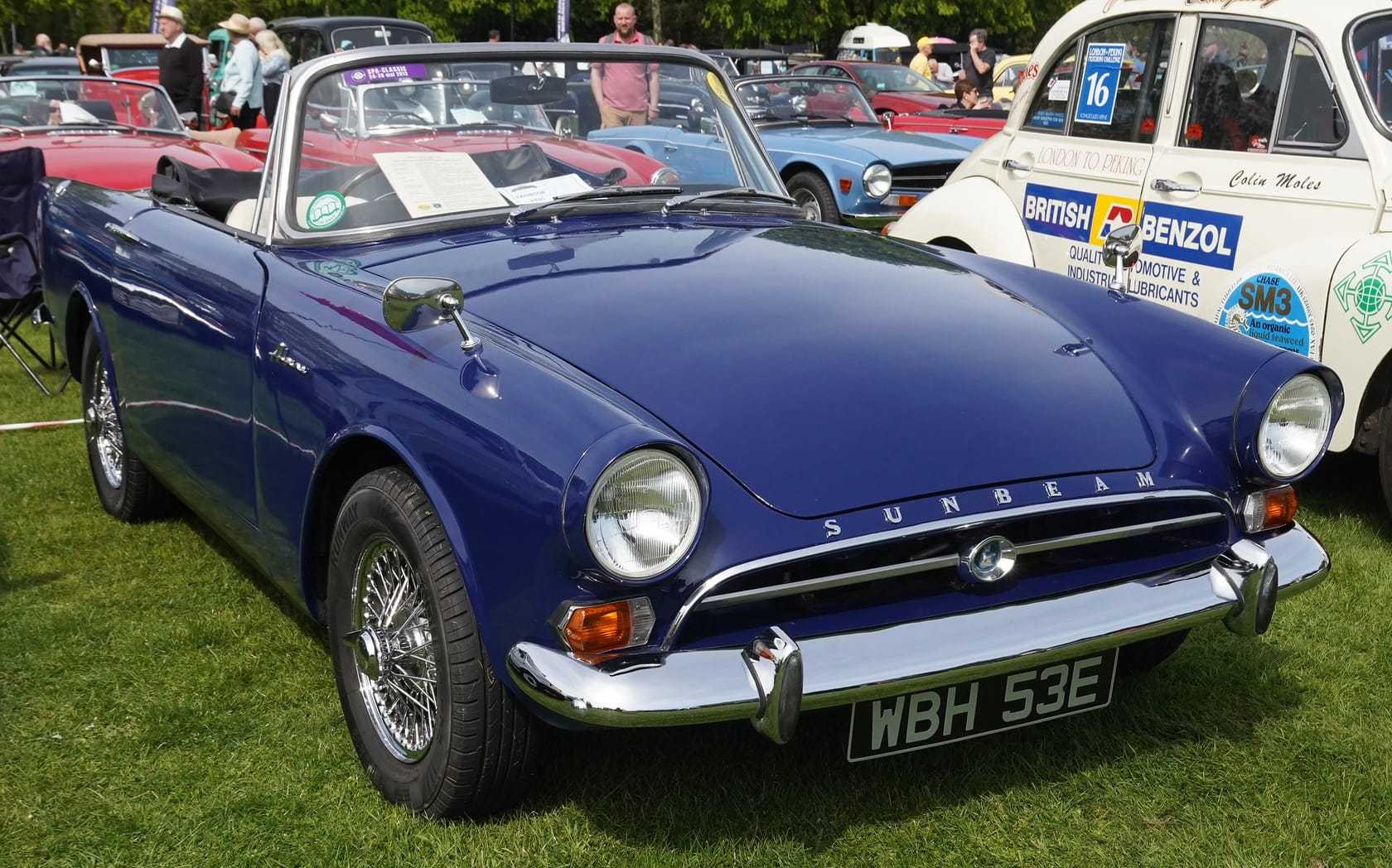
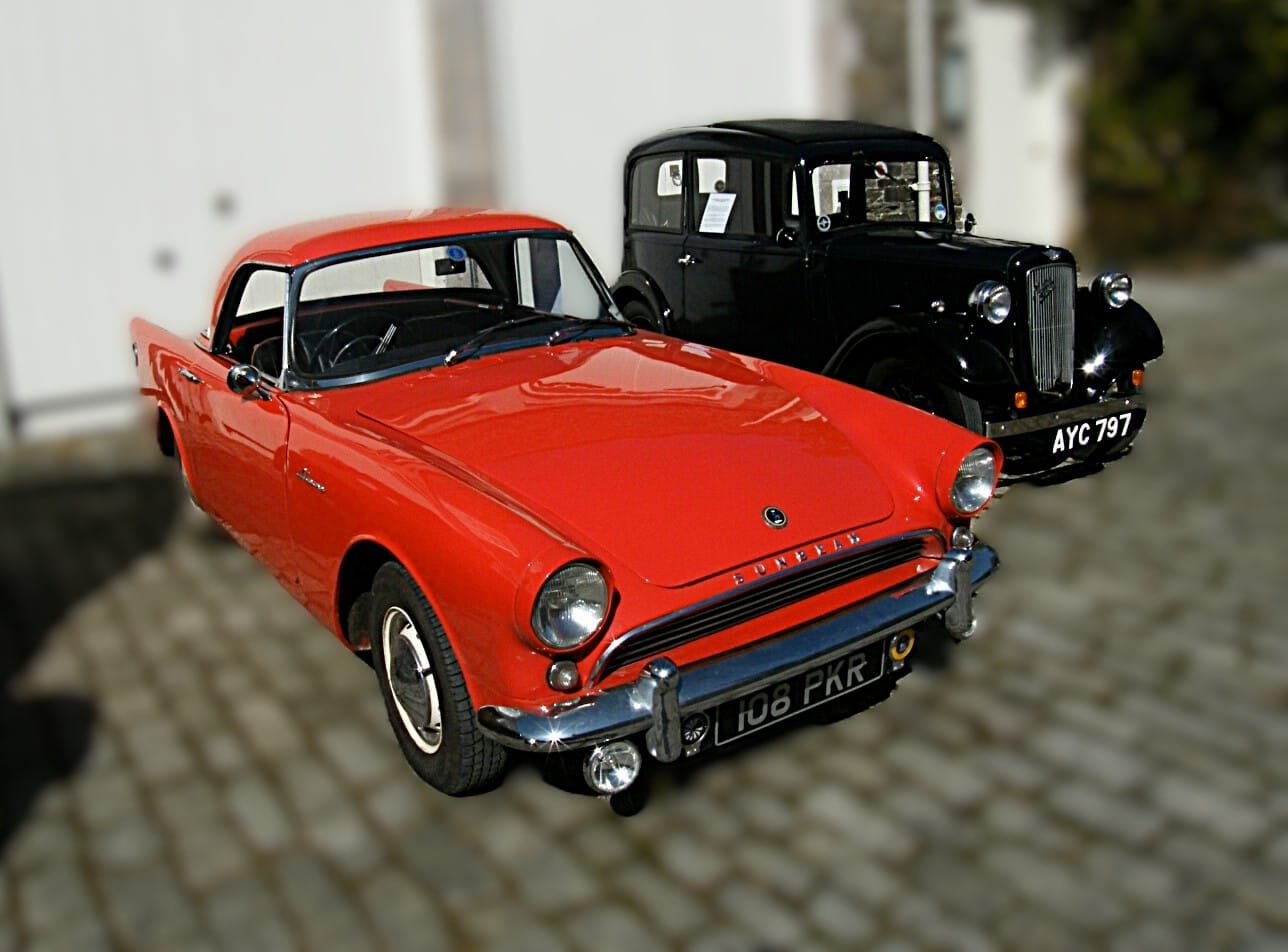
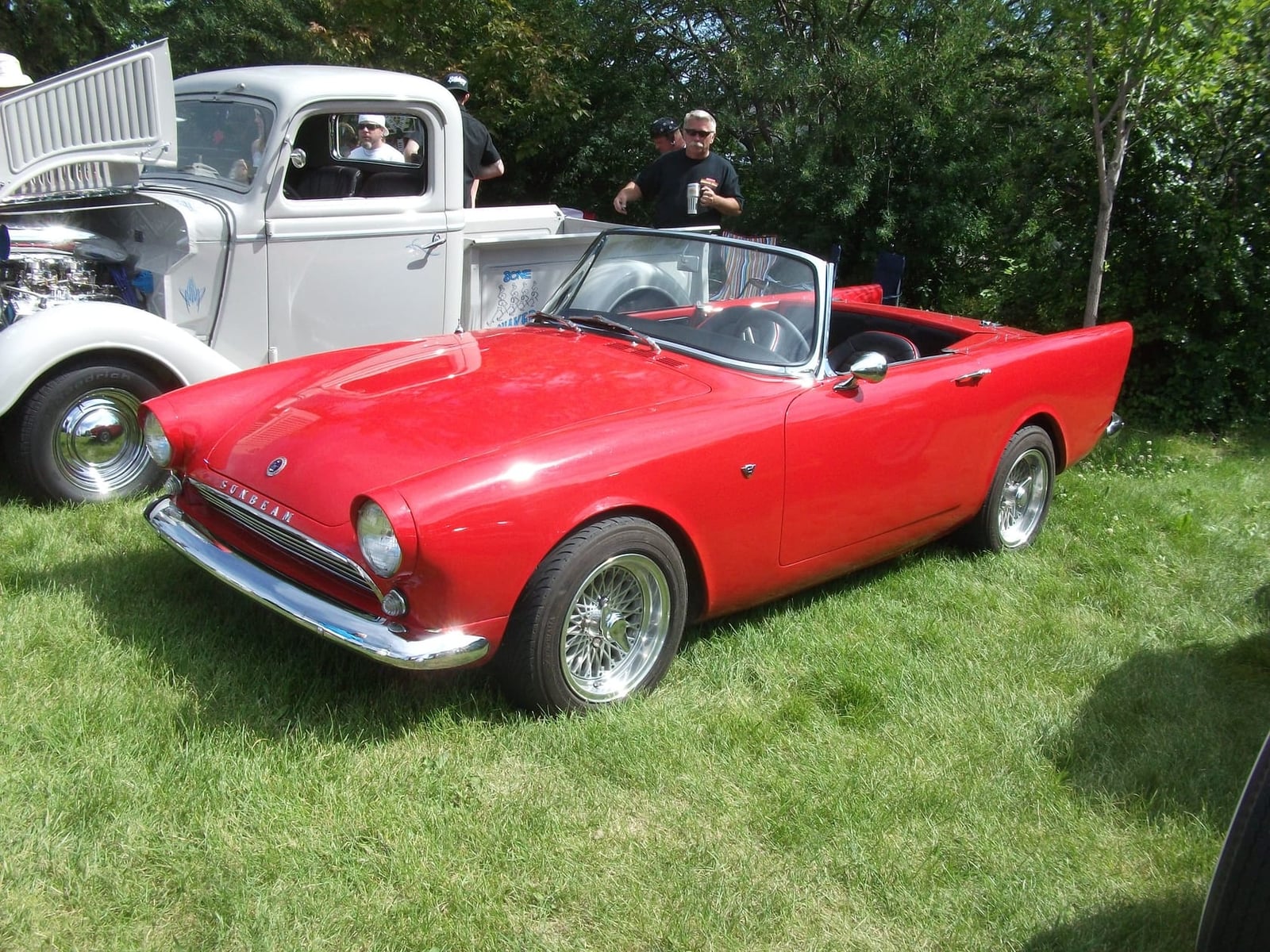
Most British sports cars of the 1950s asked their owners to suffer for the badge. The Sunbeam Alpine took the other road: wind-up windows, a hood that worked, a heater that heated, and handsome transatlantic lines over dependable Rootes mechanicals. Launched in 1959 and refined through five Series, it was the sports car for people who liked comfort with their open air, and it found its way into film history before any Aston Martin did.
From rally name to roadster
Sunbeam had used the Alpine name before, on a low-slung two-seater of 1953 to 1955 whose rally exploits, including class success on the gruelling Alpine Rally that named it, kept Sunbeam’s sporting reputation alive after the war. The name then rested until 1959, when Rootes applied it to an all-new roadster styled by Kenneth Howes with a confident nod to transatlantic taste, crisp, finned and modern, sitting on well-proven running gear from the group’s saloons. It looked expensive, and deliberately was not.

Series I to Series V: gradual civilisation
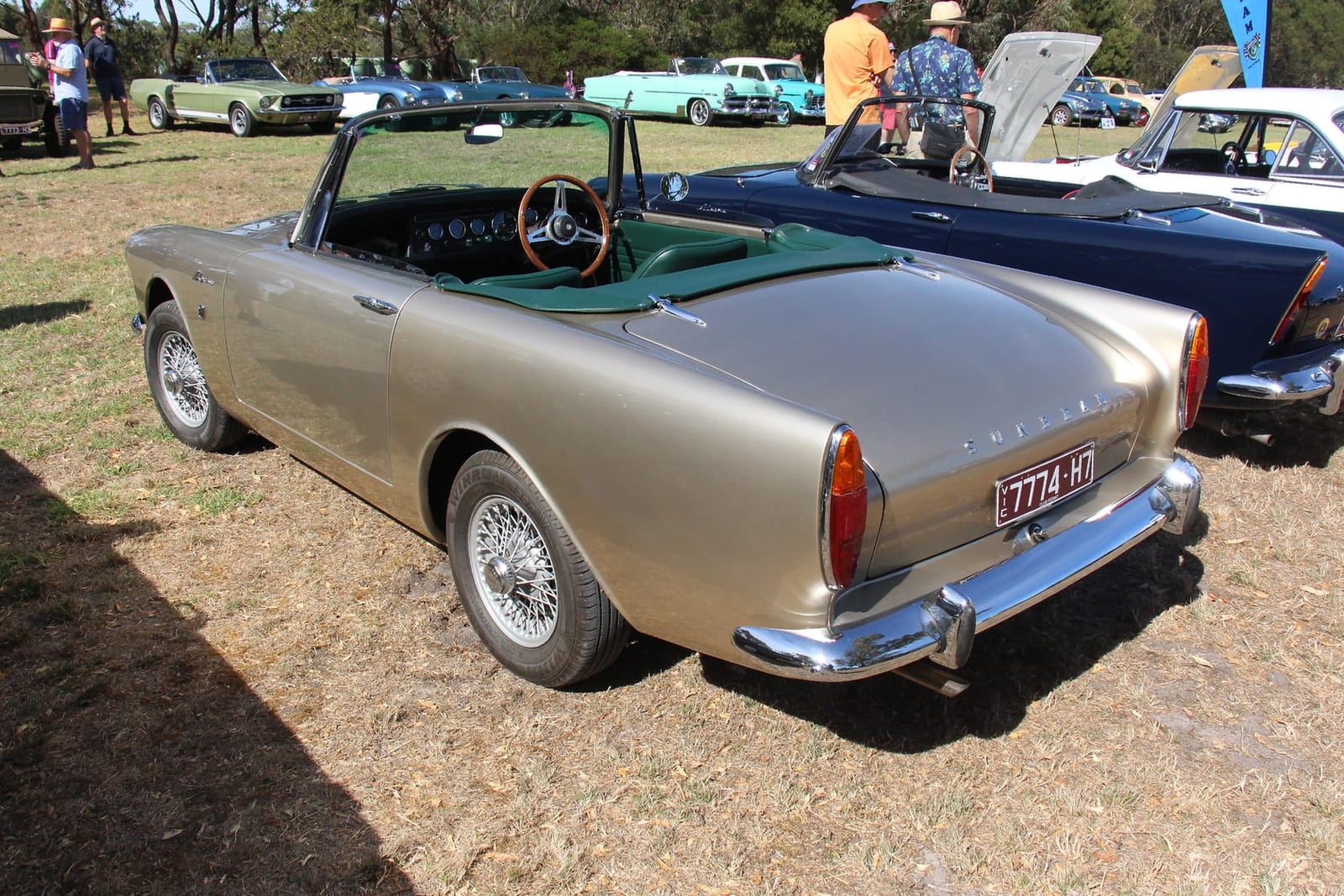
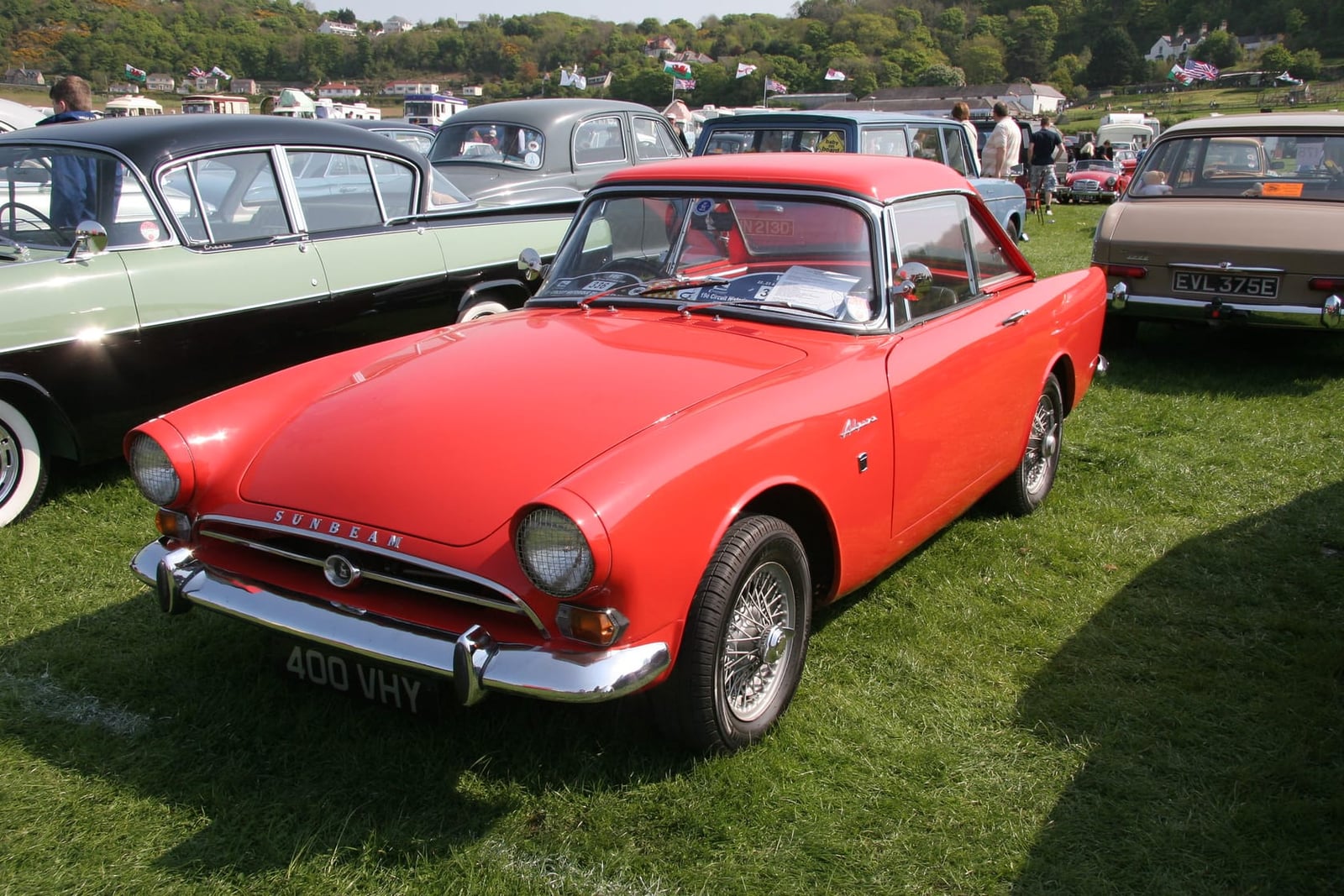
The Alpine evolved the way Rootes liked, steadily. The Series I’s 1494cc engine grew to 1592cc in the Series II; the Series III added a proper GT version with a removable hardtop; the Series IV of 1964 cropped the tall tailfins into the softer look of the later cars; and the Series V of 1965 fitted the five-bearing 1725cc engine, giving the most relaxed and durable drive of the family. Through it all the car kept its essential character: a touring sports car, happier covering ground briskly than being flogged, and far kinder to its occupants than the spartan norm of the class.

Dr. No and the film-star years
In 1962 the producers of the first James Bond film needed a sports car in Jamaica and hired a lake-blue Alpine Series II. So it was a Sunbeam, not an Aston, that gave 007 his first drive on screen, pursued through the Blue Mountains in Dr. No. The association has followed the car ever since, and it suits it: the Alpine was always more about style and capability than brute speed.

Harringtons, Le Mans and the Tiger
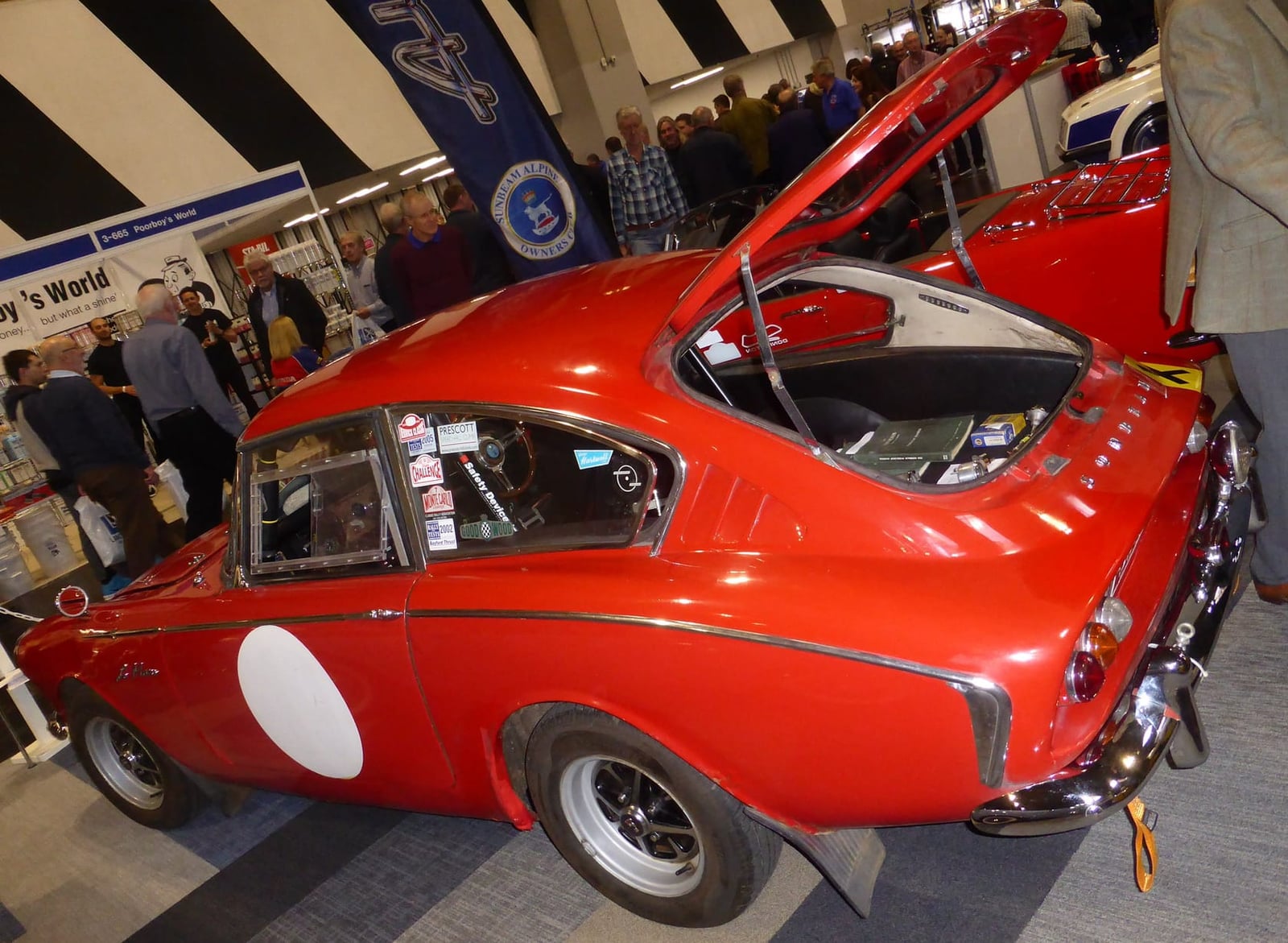
The Alpine’s sporting record is better than its gentle image suggests. The coachbuilder Thomas Harrington built fastback versions, the Harrington Alpine and Harrington Le Mans, and an Alpine-based Harrington won the Index of Thermal Efficiency at the 1961 Le Mans 24 Hours. Works Alpines rallied and raced throughout the early 1960s. And in 1964 the body gained its famous alter ego: with a Ford V8 in the nose it became the Sunbeam Tiger, an altogether angrier machine wearing the same polite suit.

What an Alpine is like to drive
The Alpine drives the way it looks: tidy, willing and unruffled. The steering is accurate, the ride is supple by sports-car standards, and the four-cylinder engines pull cleanly rather than fiercely, with the 1725cc Series V the strongest and smoothest of the family. Overdrive, fitted to many cars, drops the revs usefully at cruising speed and is well worth seeking out. None of them is fast against a big Healey, and an MGB will out-drag the smaller engines, but the Alpine covers real journeys with less noise, less draught and less effort than either, which was always the design brief.
The cockpit makes the same case. Wind-up windows, a full set of instruments, decent seats and a hood that can be raised from the driver’s seat were rare luxuries in this class in 1959, and they still shape the ownership experience now. It is the roadster for the owner who wants to arrive comfortable, and it turns more heads today than its period reputation as the sensible choice would suggest.
Buying a Sunbeam Alpine today
The Alpine’s unitary body is the whole story at inspection time. Check sills, floors, spring hangers, front crossmember and the areas behind the front wheels; the mechanical parts are tough, cheap and shared with millions of Rootes saloons, but structural repair costs real money. Watch too for Alpines dressed as Tigers, and for non-original engines, since the correct unit matters to value. Hoods, brightwork and Series-specific trim are the scarce items.
Running one is easy company: the 1725cc Series V happily keeps modern pace, overdrive makes a fine cruiser, a factory hardtop adds winter usability, and club and specialist support is strong on both sides of the Atlantic. Prices stay friendly, with usable cars from around £9,000, good ones £12,000 to £20,000, and only the Harringtons and the finest restorations beyond that, cheaper than the equivalent MGB or TR4 and, to Alpine eyes, the better-mannered car among the sports cars of the 1960s. Buy on the chassis, drive it far, and let the Bond trivia start the conversations.

More photos
The Alpine timeline
- 1953The Alpine name first appears on a low-slung two-seater whose Alpine Rally exploits keep Sunbeam's sporting reputation alive.
- 1959Kenneth Howes' all-new finned roadster revives the name on proven Rootes saloon running gear.
- 1960The Series II grows the engine to 1,592cc.
- 1961A Harrington fastback Alpine wins the Index of Thermal Efficiency at Le Mans.
- 1962A lake-blue Series II gives James Bond his first drive on film, in Dr. No.
- 1964The Series IV crops the tall tailfins; the Tiger puts a Ford V8 in the same body.
- 1965The Series V fits the five-bearing 1725cc engine, the most relaxed and durable of the family.
- 1968Production ends at around 70,000 Series cars.
Buying checklist: the Alpine in front of you
Structure, which is the cost
- Sills, floors and spring hangers
- The front crossmember and the areas behind the front wheels
- Mechanical parts are cheap, so structural repair is where the money goes
- A sound shell with tired mechanicals beats the reverse every time
Identity and originality
- Watch for Alpines dressed as Tigers, in both directions of deception
- Non-original engines matter to value; confirm the correct unit
- Series I through V differ in fins, engine and trim, so date the car properly
- Harrington fastbacks are coachbuilt rarities with their own premium
Usability
- Overdrive drops the revs at cruise and is well worth seeking out
- A factory hardtop adds winter usability
- The 1725cc Series V is the strongest and smoothest for modern use
- Hoods, brightwork and Series-specific trim are the hunts
What the Sunbeam Alpine sells for at auction
In 2025 the median Sunbeam Alpine sold for £9,910 across 36 sales, 33% up on 2024. In real terms, typical Sunbeam Alpine prices were down about 43% over the five years to 2025, once inflation is accounted for.
| Variant | Sold | Typical range | Median |
|---|---|---|---|
| Alpine (1959 - 1968) | 229 | £6,000 - £12,375 | £9,407 |
| Alpine (1953 - 1955) | 55 | £18,200 - £49,684 | £33,750 |
| Alpine Harrington | 11 | £16,868 - £53,996 | £19,550 |
| Alpine Fastback | 8 | £2,175 - £8,362 | £5,549 |
Show the year-by-year mediansHide the year-by-year medians
| Year | Sold | Median | In 2025 money |
|---|---|---|---|
| 2026 (so far) | 22 | £9,392 | |
| 2025 | 36 | £9,910 | £9,910 |
| 2024 | 32 | £7,459 | £7,745 |
| 2023 | 23 | £10,530 | £11,300 |
| 2022 | 20 | £14,233 | £16,300 |
| 2021 | 28 | £12,182 | £15,064 |
| 2020 | 20 | £13,785 | £17,469 |
| 2019 | 17 | £13,601 | £17,411 |
| 2018 | 13 | £10,752 | £13,998 |
| 2017 | 14 | £11,987 | £15,967 |
| 2016 | 14 | £12,716 | £17,374 |
| 2015 | 16 | £11,100 | £15,318 |
| 2014 | 10 | £10,016 | £13,877 |
| 2013 | 6 | £14,528 | £20,417 |
| 2012 | 8 | £3,960 | £5,693 |
| 2011 | 5 | £3,680 | £5,426 |
| 2010 | 3 | £5,283 | £8,092 |
| 2009 | 5 | £7,875 | £12,363 |
| 2008 | 5 | £14,375 | £23,013 |
| 2007 | 3 | £3,680 | £6,097 |
| 2006 | 4 | £3,600 | £6,103 |
| 2005 | 4 | £6,414 | £11,148 |
| 2004 | 3 | £3,488 | £6,187 |
- £11,250Alpine (1959 - 1968)
- £8,450Alpine (1959 - 1968)
- £4,650Alpine (1959 - 1968)
- £2,721Alpine (1959 - 1968)
- £25,463Alpine (1953 - 1955)
Strong evidence. 311 recorded sales and a dozen or more a year: the median and the range are well founded. Based on 311 sold results from public classic car auctions (2004 to 10 August 2026). Sold prices, not asking prices, and not a valuation: condition, history and specification vary from car to car. Inflation-adjusted figures use the ONS CPIH index, in 2025 money.
Frequently asked questions
Was the Sunbeam Alpine really James Bond's first car?
Is a Sunbeam Alpine a good classic to buy?
What is the difference between the Alpine Series I to V?
What is a Harrington Alpine?
How much is a Sunbeam Alpine worth?
What is the most expensive Sunbeam Alpine ever sold at auction?
How often does a Sunbeam Alpine come up for sale?
Related across themes
More from Rootes Group


Recently added

Bentley S-series: the quiet twin with the beautiful secrets (1955–1965)

Rolls-Royce Silver Spirit and Silver Spur: the last Crewe bargain (1980–1999)

Rolls-Royce Corniche: the coachbuilt survivor that outlived its makers (1971–1995)
