Sunbeam Tiger: a Ford V8 in the Alpine's polite suit (1964–1967)
The Sunbeam Tiger dropped a Ford V8 into the Alpine's body, an idea developed with Carroll Shelby's workshop and built for Rootes by Jensen in West Bromwich. A guide to the Mk I and rare Mk II, how the Tiger differs from an Alpine, why authentication matters so much, and what genuine cars are worth.
Built 1964–1967 386 recorded sales
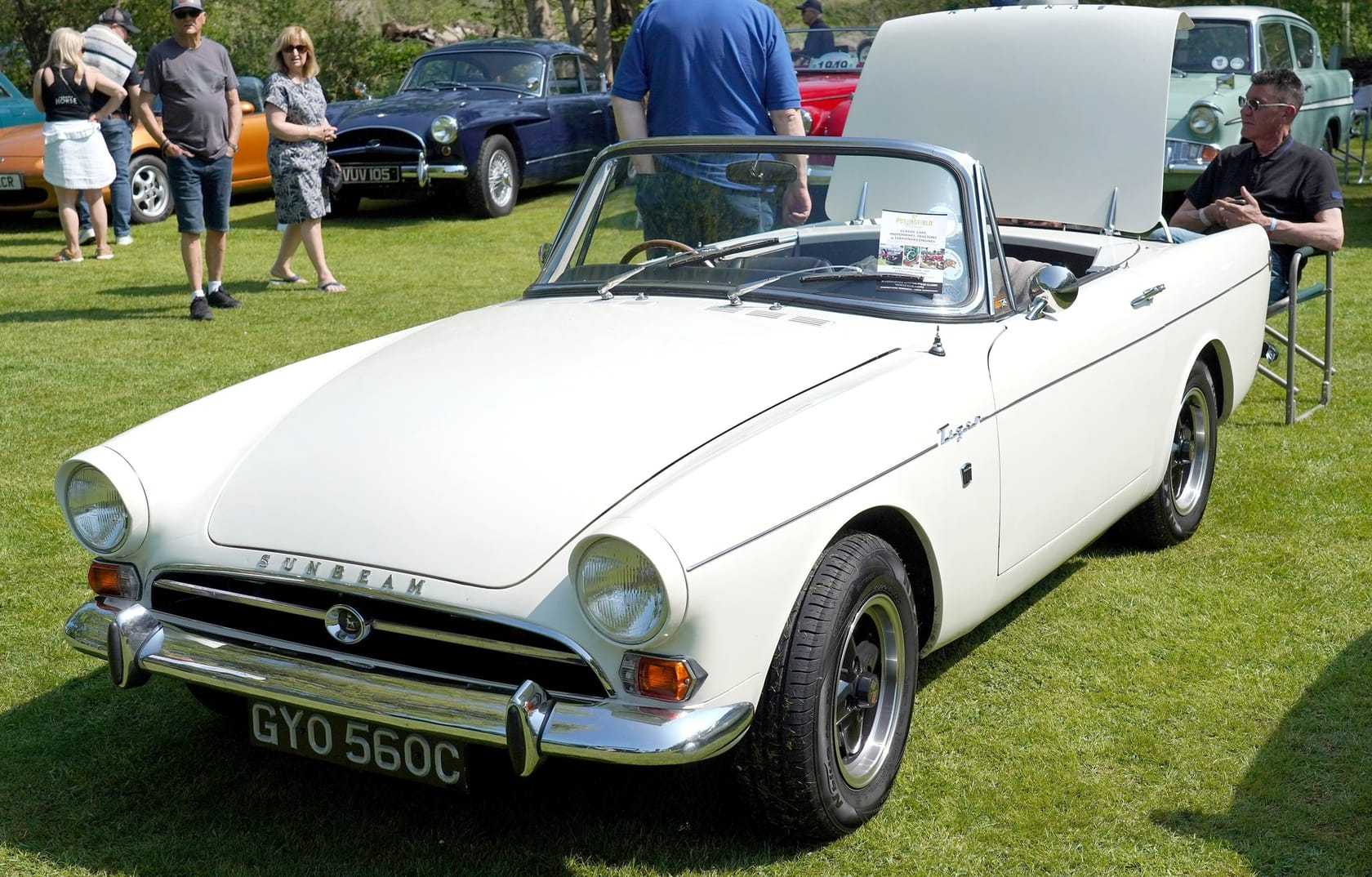
At a glance
- Years
- 1964–1967
- Body styles
- Two-seat roadster
- Drivetrain
- Front engine, rear-wheel drive
- Engines
- Ford 4.2-litre (260 cu in) V8; 4.7-litre (289 cu in) in Mk II
- Power
- 164 bhp (Mk I); around 200 bhp (Mk II)
- Trim levels
- Mk I, Mk IA, Mk II
- Production
- Around 7,000; only some 530 of them Mk IIs
- Assembly
- Jensen, West Bromwich, England
- Designer
- Alpine body by Kenneth Howes; V8 conversion developed via Carroll Shelby's workshop
- Values
- Genuine Mk Is roughly £30,000-£55,000; Mk IIs well beyond
- The idea
- The same recipe as the AC Cobra, applied to a gentler British roadster
- Caution
- Many Alpines have been converted; authentication is everything to value
The models
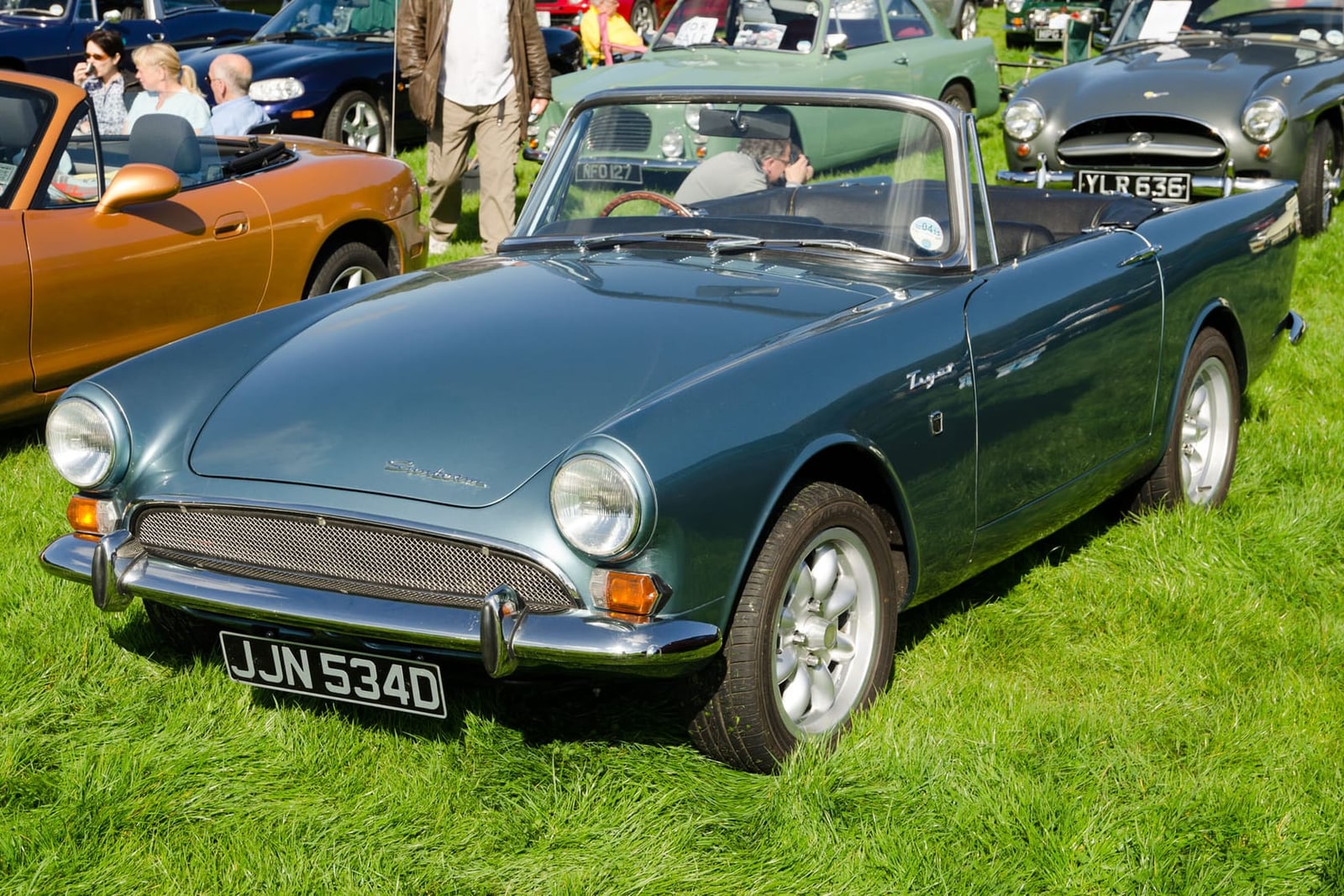
Take the Sunbeam Alpine, Britain’s most civilised roadster, and slide a Ford V8 under its bonnet: that is the Sunbeam Tiger, and the idea came from the same place as the AC Cobra. Where the Alpine murmured, the Tiger thundered, nearly identical to look at and utterly different to drive, and its three-year life left behind one of the most wanted, and most faked, British sports cars of the 1960s.
Born in California, engineered in Coventry, built in West Bromwich
The Tiger was the American arm of Rootes talking Britain into something wonderful. West Coast management wanted a performance Alpine for the United States market, and in 1963 Carroll Shelby’s workshop, which had just created the Cobra by the same method, built the V8 prototype that made the case. Rootes engineered the result for production and contracted assembly to Jensen in West Bromwich, a firm that knew all about putting big American engines in British bodies. The Tiger went on sale in 1964 with Ford’s 4.2-litre 260 V8 and a quiet exterior that gave almost nothing away.

What the V8 changed
The numbers tell half the story: 164 bhp in a car the size and weight of an Alpine made the Tiger genuinely fast by mid-1960s standards, with the lazy, muscular delivery no four-cylinder rival could match. The conversion also brought rack-and-pinion steering and a stronger drivetrain, and the whole car acquired a different personality, short-fused and effortless where the Alpine was light and eager. The chassis carries the extra weight well, and a sorted Tiger remains a fast car on modern roads, not merely a fast car for its day.

Mk I, Mk IA and the 289 Mk II
The Mk I and the detail-improved Mk IA carried the 260 engine and the overwhelming bulk of production. The Mk II of 1967 fitted Ford’s 4.7-litre 289, good for around 200 bhp, with an eggcrate grille and detail changes, and was sold almost entirely in America; only some 530 were built. The Mk II is the Tiger at its best and its rarest, and prices reflect both.

Killed by its own parent
The Tiger’s end is a boardroom story. Chrysler’s takeover of Rootes in 1967 made a Ford-engined flagship impossible, no suitable Chrysler V8 would fit without redesigning the car, and production simply stopped. Around 7,000 Tigers had been built in barely three years. The short run, the Shelby connection and the sleeper looks have put the Tiger at the top of the Rootes market, the one car of the group that trades in Jaguar money.

What a Tiger is like to drive
The Tiger’s character is all in the delivery. The V8 makes its torque from idle, so the car steps off with an ease no four-cylinder rival can match and overtakes on a whisper of throttle, all to a soundtrack the Alpine never dreamed of. The rack-and-pinion steering is quicker than the Alpine’s, the nose is heavier, and the short wheelbase asks for respect in the wet, which is a large part of the fun. Driven well it is a fast, relaxed, long-legged car; driven carelessly it will remind you why period road testers treated it with a certain awe.
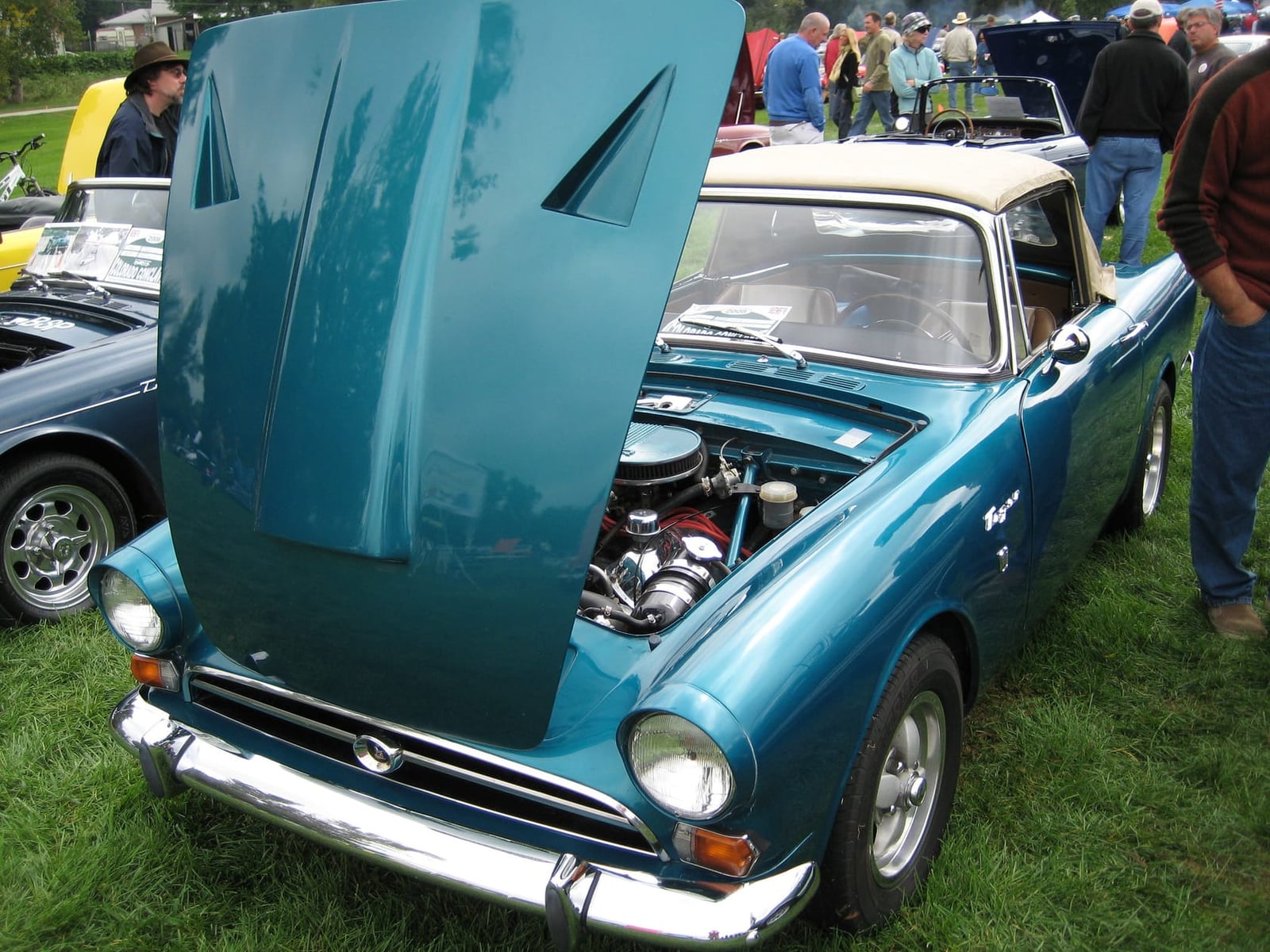
It is also, by exotic-car standards, an easy machine to live with. The Ford engine is as cheap and simple to maintain as anything in an American saloon, tuning parts are plentiful, and the car shrugs off modern traffic. The one mechanical caveat is heat: the V8 fills the engine bay, so the cooling system and the wiring that lives beside the exhaust manifolds must both be in proper order.
Buying a Tiger: authentication is everything
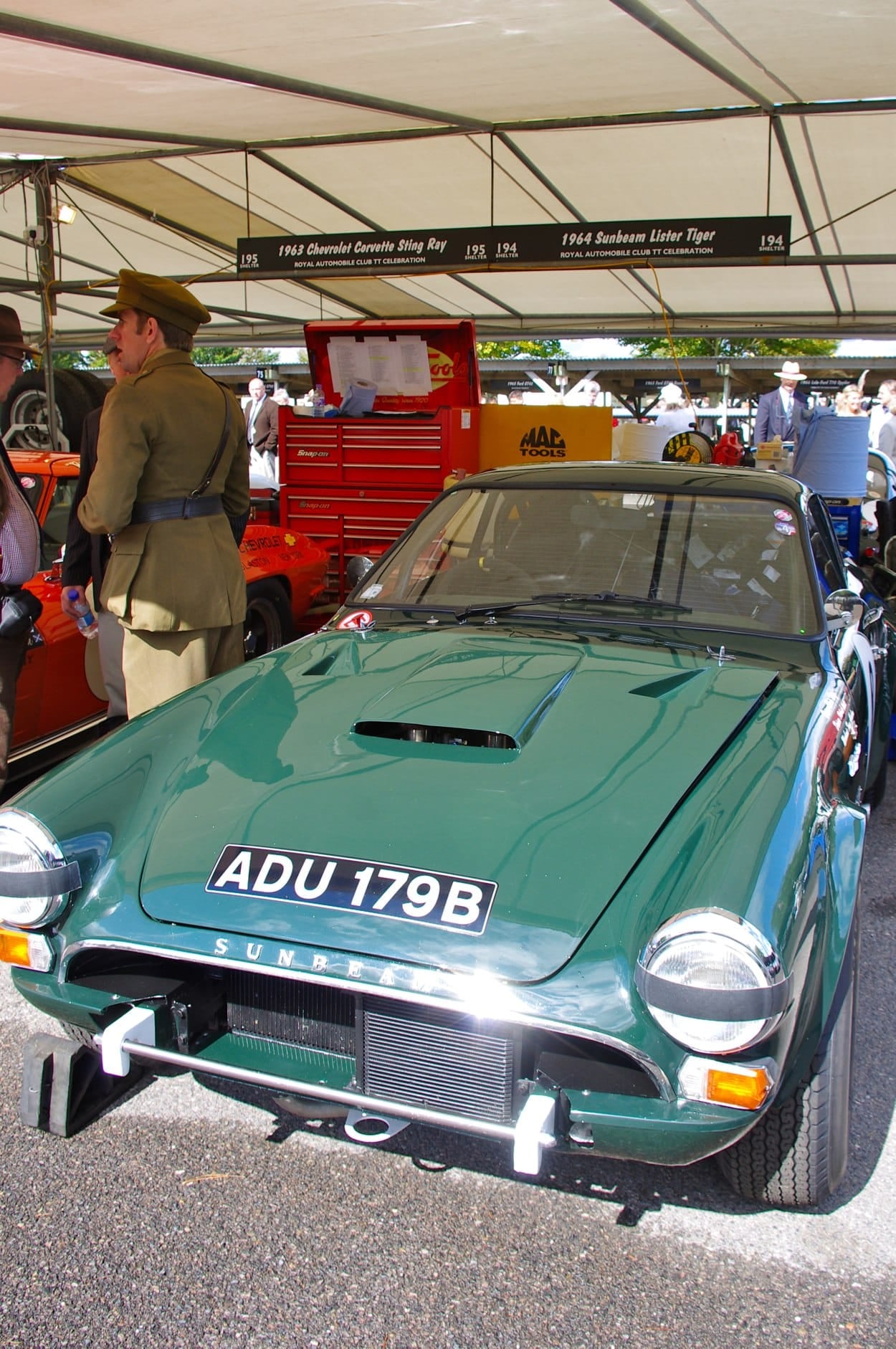
Every Tiger conversation starts with the same question: is it real? The Alpine’s identical body makes conversions easy, and after sixty years many exist, from honest tribute builds to deliberate fakes. Genuine cars carry known chassis-number sequences and factory build details, and the owners’ clubs operate a recognised authentication scheme whose certificate has become the market’s de facto title deed. Beyond provenance, inspection is the usual Alpine story, structural rust in sills, floors and spring hangers, plus heat-hardened wiring and cooling systems that must be right for the V8’s sake.
In a typical Sunbeam Tiger sale at auction, genuine Mk Is trade between roughly £30,000 and £55,000, Mk IIs well beyond, and declared conversions far below both. Period dealer performance options fitted by Rootes’ American arm add interest and value when documented. Run properly, a Tiger is surprisingly undemanding, with simple Ford mechanicals and strong specialist support. For the wider era, see the sports cars of the 1960s. Genuine, certificated and sorted is the whole buying brief; everything after that is pure V8 pleasure.

More photos
Tiger: the short history
- 1963Rootes' American arm has Carroll Shelby's workshop build the V8 prototype, by the same method that had just created the Cobra.
- 1964The Tiger goes on sale with Ford's 4.2-litre 260 V8, assembled by Jensen at West Bromwich, with a quiet exterior giving almost nothing away.
- 1965The detail-improved Mk IA carries the bulk of production.
- 1967The Mk II fits the 4.7-litre 289 at around 200 bhp, sold almost entirely in America; only some 530 are built.
- 1967Chrysler's takeover of Rootes makes a Ford-engined flagship impossible, and production stops at around 7,000 cars.
The Tiger viewing checklist
Authentication, which is everything
- Genuine cars carry known chassis-number sequences and factory build details
- The owners' clubs' authentication scheme certificate is the market's de facto title deed
- Declared conversions trade far below genuine cars, and honest ones say so
- Period dealer performance options add value when documented
Structure, the Alpine story
- Sills, floors and spring hangers
- The usual Alpine rot points apply unchanged
- Structural repair costs real money against cheap mechanicals
- The body gives almost nothing away, which cuts both ways at inspection
V8-specific
- Heat-hardened wiring wants checking through the engine bay
- The cooling system must be right, not adequate
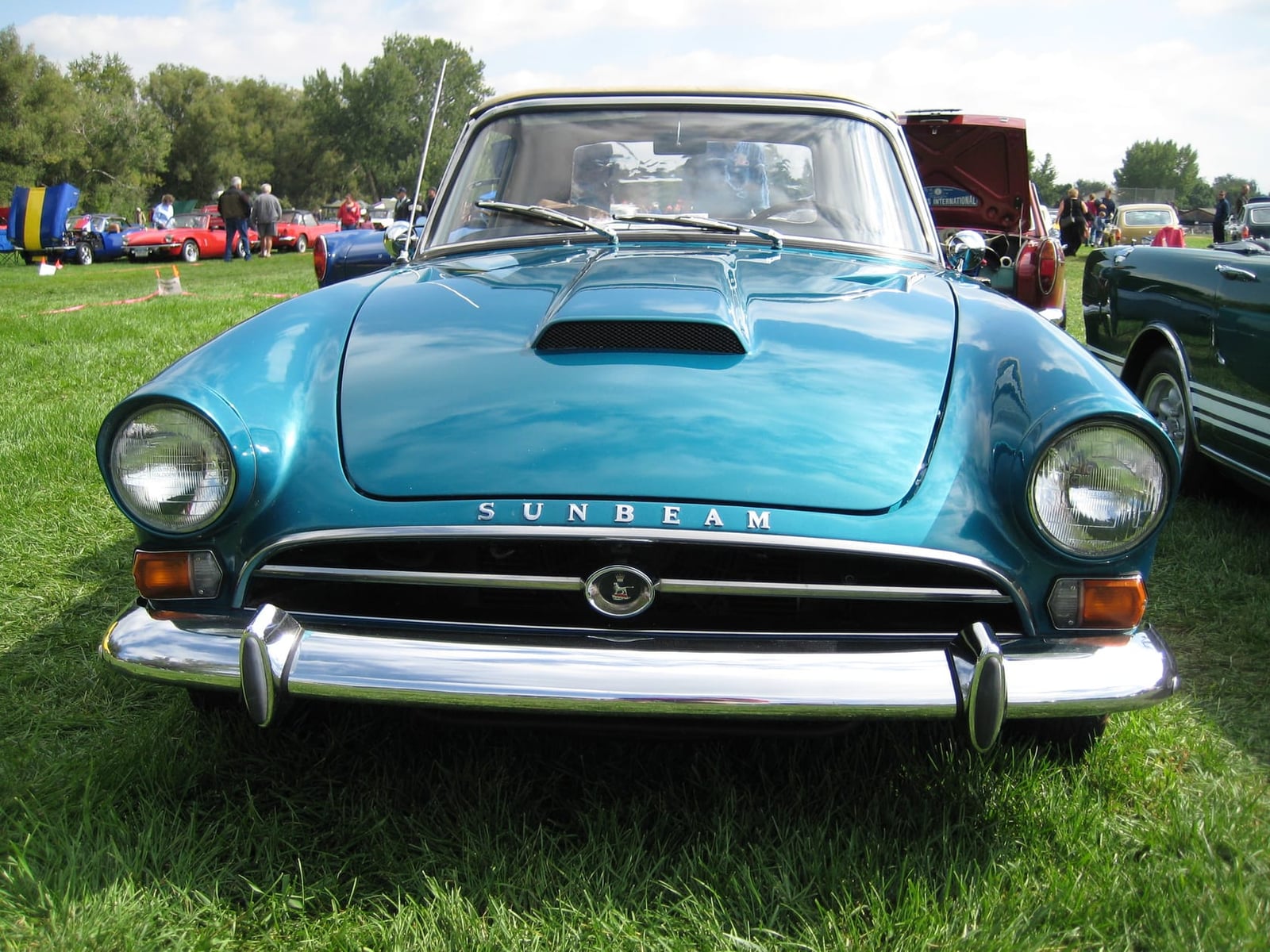
- The 260 and 289 differ; the Mk II's eggcrate grille is the visual tell
- Ford mechanical parts are cheap and everywhere, which keeps running costs sane
What the Sunbeam Tiger sells for at auction
In 2025 the median Sunbeam Tiger sold for £36,729 across 39 sales, 17% down on 2024. In real terms, typical Sunbeam Tiger prices were down about 48% over the five years to 2025, once inflation is accounted for.
| Variant | Sold | Typical range | Median |
|---|---|---|---|
| Tiger Mk I | 208 | £32,358 - £53,816 | £42,658 |
| Tiger | 73 | £24,190 - £51,505 | £40,862 |
| Tiger Mk IA | 71 | £34,030 - £57,418 | £45,981 |
| Tiger Mk II | 24 | £56,851 - £88,114 | £68,074 |
Show the year-by-year mediansHide the year-by-year medians
| Year | Sold | Median | In 2025 money |
|---|---|---|---|
| 2026 (so far) | 30 | £34,166 | |
| 2025 | 39 | £36,729 | £36,729 |
| 2024 | 35 | £43,989 | £45,677 |
| 2023 | 34 | £46,167 | £49,542 |
| 2022 | 42 | £45,710 | £52,349 |
| 2021 | 27 | £44,370 | £54,866 |
| 2020 | 28 | £55,326 | £70,110 |
| 2019 | 29 | £48,984 | £62,707 |
| 2018 | 18 | £46,966 | £61,145 |
| 2017 | 14 | £50,322 | £67,032 |
| 2016 | 17 | £44,807 | £61,221 |
| 2015 | 18 | £55,901 | £77,143 |
| 2014 | 15 | £41,165 | £57,036 |
| 2013 | 11 | £40,143 | £56,413 |
| 2012 | 10 | £34,975 | £50,277 |
| 2011 | 7 | £25,875 | £38,149 |
| 2010 | 3 | £19,997 | £30,628 |
| 2005 | 3 | £27,269 | £47,394 |
- £11,178Tiger Mk I
- £56,285Tiger Mk II
- £32,106Tiger Mk IA
- £44,850Tiger Mk I
- £20,611Tiger Mk IA
Strong evidence. 386 recorded sales and a dozen or more a year: the median and the range are well founded. Based on 386 sold results from public classic car auctions (1999 to 10 August 2026). Sold prices, not asking prices, and not a valuation: condition, history and specification vary from car to car. Inflation-adjusted figures use the ONS CPIH index, in 2025 money.
Frequently asked questions
What makes a Sunbeam Tiger different from an Alpine?
Did Carroll Shelby design the Sunbeam Tiger?
Why was the Sunbeam Tiger discontinued?
How do I know if a Sunbeam Tiger is genuine?
How much is a Sunbeam Tiger worth?
What is the most expensive Sunbeam Tiger ever sold at auction?
How often does a Sunbeam Tiger come up for sale?
Related across themes
More from Rootes Group


Recently added

Bentley S-series: the quiet twin with the beautiful secrets (1955–1965)

Rolls-Royce Silver Spirit and Silver Spur: the last Crewe bargain (1980–1999)

Rolls-Royce Corniche: the coachbuilt survivor that outlived its makers (1971–1995)
