Morgan Plus 8: a Rover V8 in a vintage suit (1968–2004)
The Morgan Plus 8 dropped the all-alloy Rover V8 into an ash-framed thirties silhouette and created one of the fastest-accelerating British cars of its day, a recipe Malvern kept cooking for thirty-six years. A guide to the V8 Morgans, the 2012 revival, buying checks and values.
Built 1968–2018 143 recorded sales
At a glance
- Years
- 1968–2004 and 2012–2018
- Body styles
- Two-seat roadster
- Drivetrain
- Front engine, rear-wheel drive; ash frame on steel chassis
- Engines
- Rover V8: 3.5, 3.9, 4.0 and 4.6 litres (classic); BMW 4.8 V8 (revival)
- Power
- Around 143-220 bhp (classic cars)
- Top speed
- Around 120-130 mph
- Trim levels
- Carburettor, EFi and injection eras; aluminium-bodied options
- Production
- About 6,000 classic cars
- Assembly
- Malvern Link, Worcestershire
- Designer
- Peter Morgan's Malvern, around the ex-Buick Rover V8
- Values
- Usable from around £25,000; good cars £30,000-£40,000; early and exceptional cars beyond
- The trick
- An all-alloy V8 in a car weighing around 830 kg: supercar sprinting, vintage scenery
- The span
- Thirty-six years of Rover V8 power, then a BMW-engined encore
The models
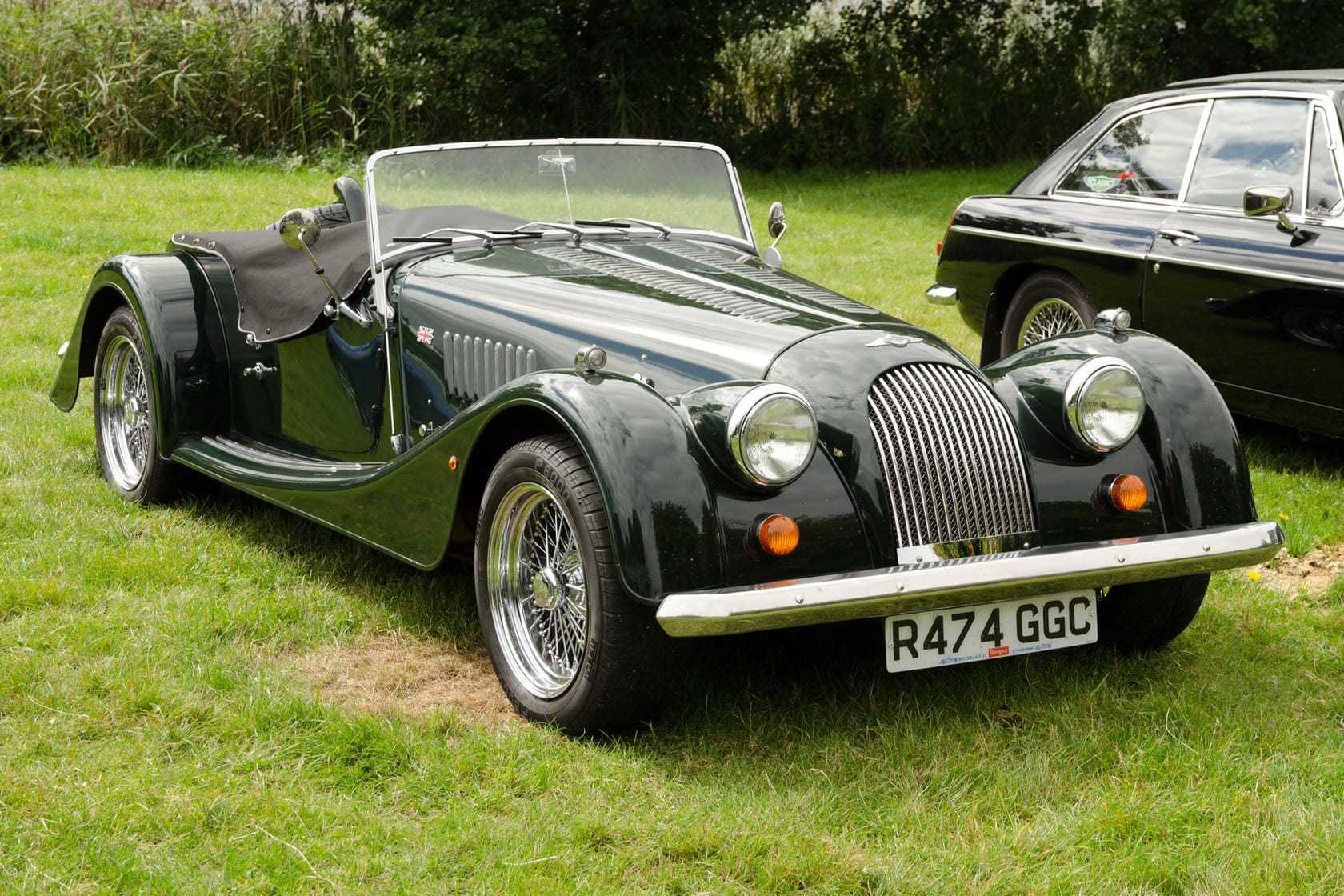
The best ideas at Malvern were always borrowed engines, and the greatest borrowing of all arrived in 1968: Rover’s all-alloy ex-Buick V8, light enough not to spoil the balance of an ash-framed roadster weighing around 830 kilograms. The Morgan Plus 8 that resulted was among the fastest-accelerating British cars of its day while looking ready for a 1936 concours, and Malvern liked the joke so much it kept building the car for thirty-six years.
The V8 lands in Malvern
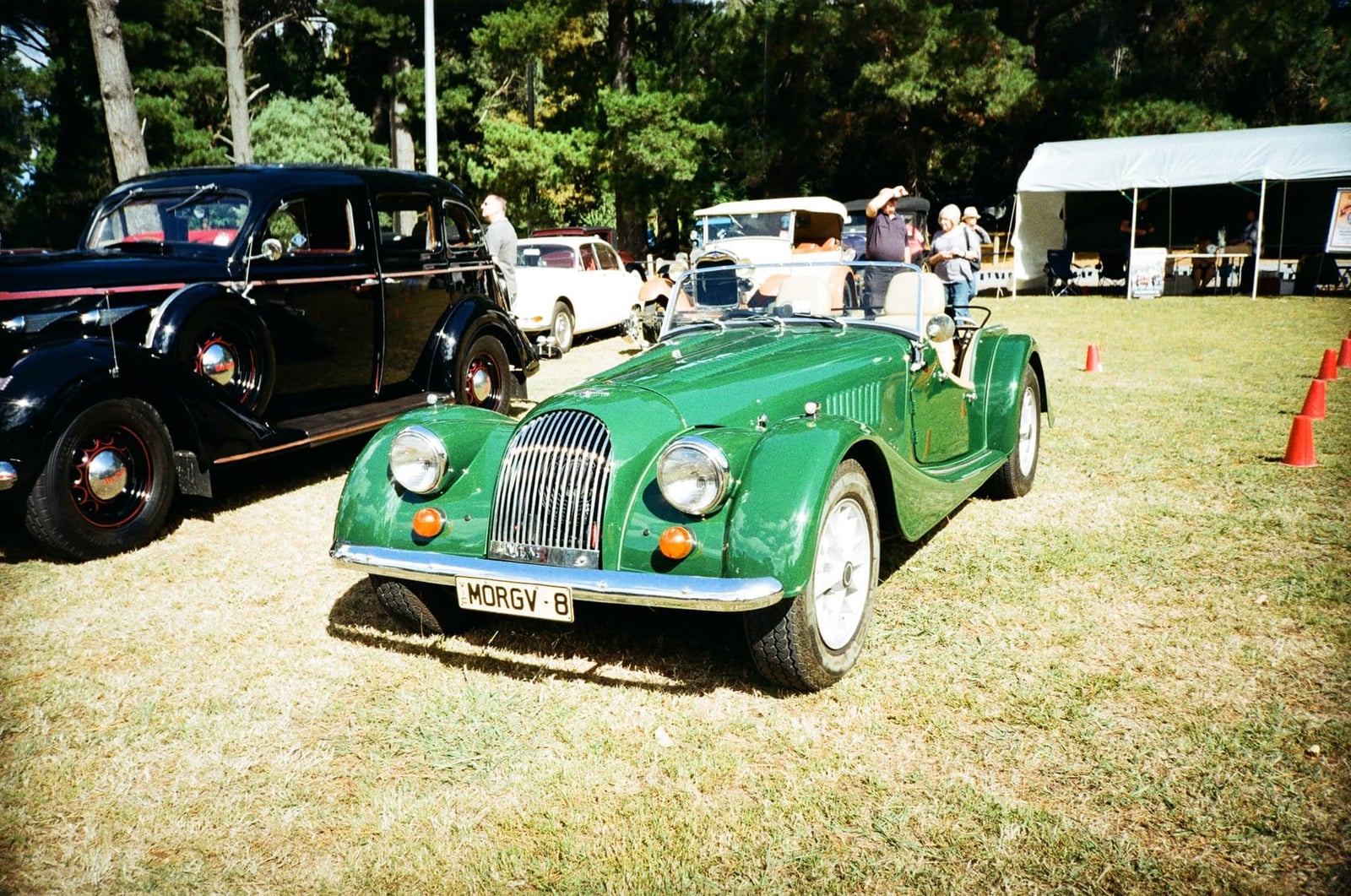
Peter Morgan’s problem in the late sixties was Triumph ending the TR engine supply that powered the Plus 4; his solution rewired the marque. The Rover V8, aluminium, compact and barely heavier than the four it replaced, slid into a widened version of the traditional chassis, and the 1968 Plus 8 stunned the road testers: the old-world Morgan out-sprinted contemporary exotics, its performance limited mainly by the driver’s commitment to the vintage chassis beneath. The famous waiting list lengthened immediately, and the Plus 8 settled in as flagship for the rest of the century.

Thirty-six years of more
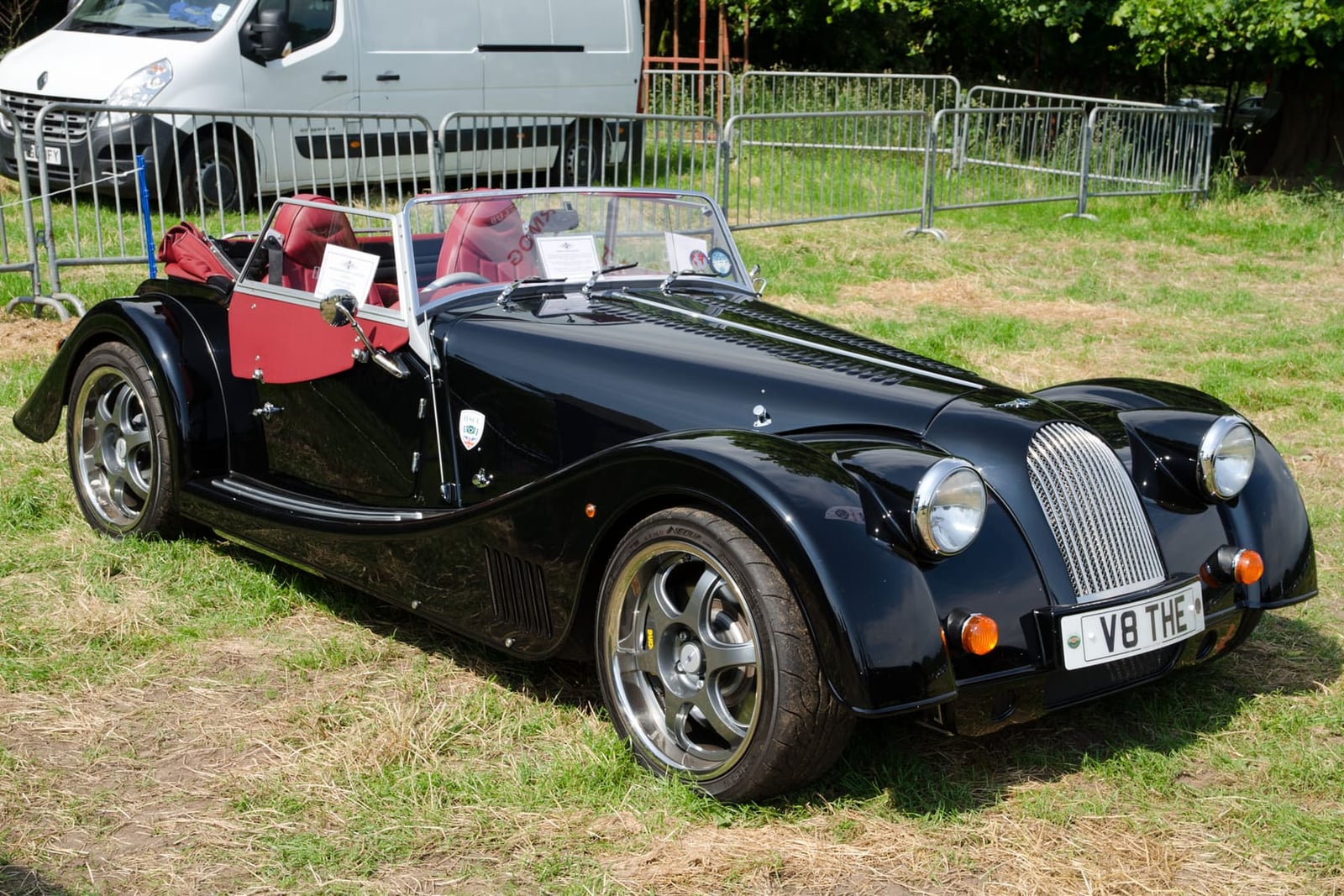
The recipe evolved only where it absolutely had to. The earliest cars used the venerable Moss gearbox, soon replaced by Rover’s own four-speed and then the five-speed; carburettors gave way to fuel injection through the eighties; and the V8 itself grew from 3.5 through 3.9 and 4.0 to a final 4.6 litres, power rising toward 220 bhp while the car’s kerb weight barely moved a kilogram. Aluminium body panels were a popular option, wings widened by degrees, and about 6,000 cars were built before Rover engine supply died with MG Rover in 2004. Malvern gave the name an encore from 2012 to 2018, a limited BMW 4.8 V8 run on the modern chassis that now collects as the nameplate’s bookend.

Which Plus 8: carburettors, injection or encore
Four eras share the badge and reward different buyers. The 1968–76 Moss-gearbox cars are the collectors’ tier, rawest and rarest, with values to match. The mid-period carburettor cars on Rover’s own gearboxes are the classic sweet spot, torquey, simple and cheapest to keep. The injected 3.9, 4.0 and 4.6 cars from the late eighties onward add pace, cleaner running and easier starting, and make the best touring choice; aluminium-panelled cars are prized for their resistance to the traditional steel-wing corrosion. The 2012–18 BMW-engined revival stands apart, a modern chassis in period dress, collected as the nameplate’s finale rather than cross-shopped with the classics. Condition and frame health still outrank era in every negotiation.

What a Plus 8 is like to drive
The Plus 8 experience is a deliberate, glorious collision: V8 torque that surges the car forward on a whisper of throttle, housed inside pure thirties architecture, a sliding-pillar front end, a live rear axle and an ash-framed body, which together turn every fast road into an event demanding full attendance. The soundtrack is Rover-V8 rumble amplified by minimal weight and short exhausts; the ride is firm and endlessly talkative; the steering asks real involvement whenever the pace rises. Owners cross continents in them regardless, hood down, luggage strapped to the rack, collecting conversations at every fuel stop. Nothing about it is effortless in the modern manner, and that is the entire point: this is muscle-car pace delivered with vintage ceremony, and no other British car does the trick.

Buying a Plus 8 today
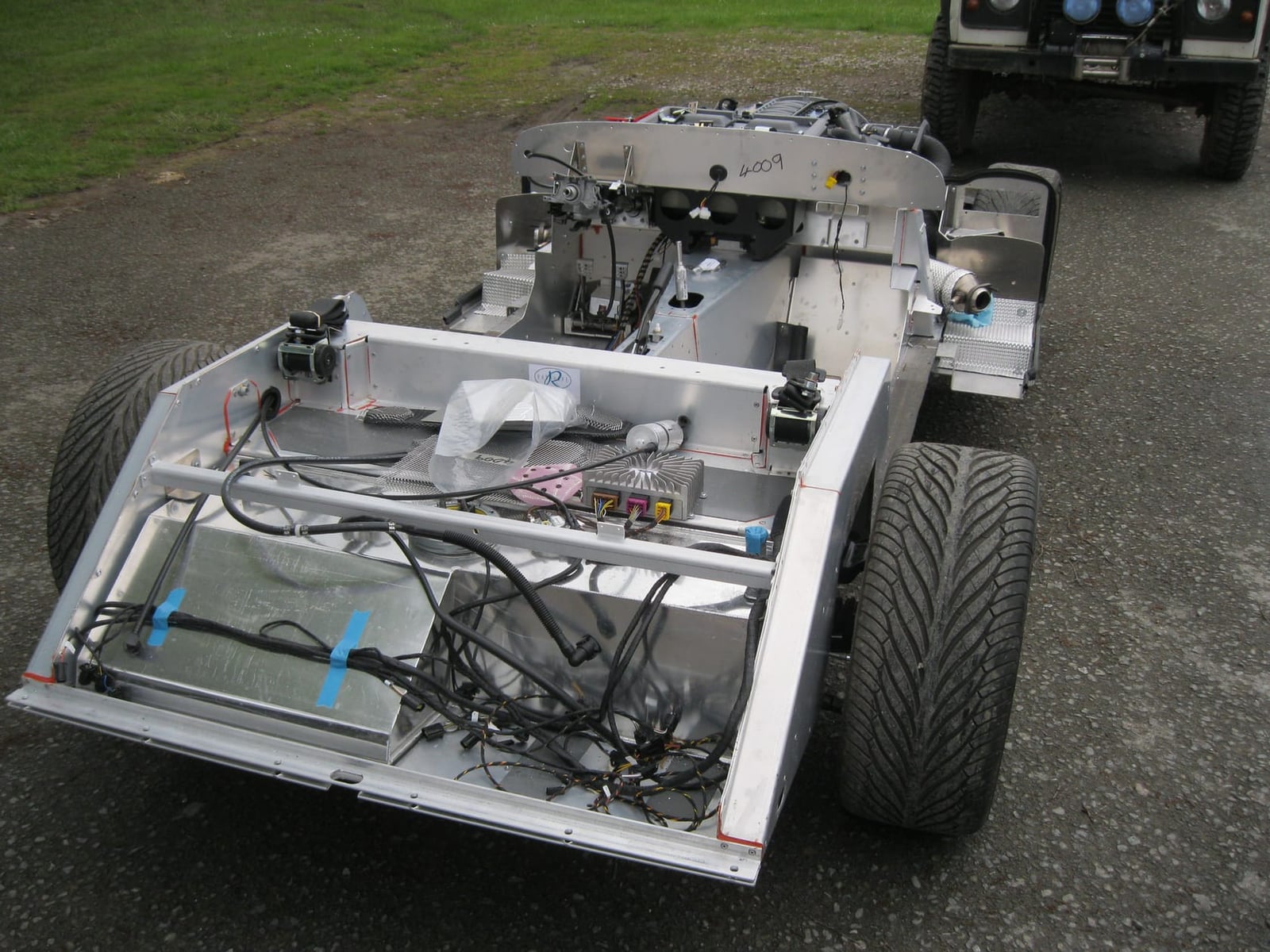
The disciplines are Morgan-standard plus V8 specifics: probe the ash frame at sills, door posts and wing edges, inspect the chassis for rust and repair, and confirm the sliding pillars’ lubrication history. The Rover V8 itself is understressed and cheap to maintain with the hobby’s deepest parts network, but check for overheating history and tired top-ends on neglected cars. Factory records verify identity and original specification; early Moss-box cars deserve specialist inspection. Buy on structure, then history, and the engine will rarely be the problem.

The Plus 8 at events
The V8 Morgan earned a competition record of its own: Plus 8s have run in production sports-car racing, hillclimbs and sprints since the seventies, where the power-to-weight sums still work, and the model remains a fixture of the Morgan Challenge grids alongside its four-cylinder siblings. For owners the event calendar matters as social fabric as much as sport: club tours, factory visits to Malvern and the big Morgan gatherings absorb Plus 8s in numbers, and the car’s long-distance credentials make it the line most often seen far from home.

Values: the flagship premium
One hundred and forty-three measured sales at a £31,000 median put the Plus 8 at the head of the classic Morgan market: usable cars from £25,000, good ones £30,000 to £40,000, with the earliest cars, exceptional histories and the BMW-engined revival beyond. That is serious money for vintage architecture, and entirely rational for the car that delivers the marque’s fullest experience, the 1960s idea of a supercar built, gloriously, to a 1936 drawing.

More photos

Key dates for the Plus 8
- 1968Triumph ends TR engine supply, so Peter Morgan slides Rover's aluminium ex-Buick V8 into a widened traditional chassis; the road testers are stunned.
- 1970sThe venerable Moss gearbox gives way to Rover's own four-speed, then the five-speed.
- 1980sCarburettors give way to fuel injection, and the V8 grows from 3.5 to 3.9 litres.
- 1990s4.0 and finally 4.6-litre engines take power toward 220 bhp while kerb weight barely moves.
- 2004Production ends at about 6,000 cars when Rover engine supply dies with MG Rover.
- 2012Malvern gives the name an encore: a limited BMW 4.8 V8 run on the modern chassis, running to 2018.
Before you buy a Plus 8
Structure, first
- Probe the ash frame at sills, door posts and wing edges
- Inspect the chassis for rust and for previous repair
- Confirm the sliding pillars' lubrication history
- Aluminium-panelled cars resist the traditional steel-wing corrosion and are prized for it
The V8
- Understressed and cheap to maintain, so the engine is rarely the deal-breaker
- Check for overheating history, which is what actually kills these engines
- Tired top-ends on neglected cars are the common fault
- Early Moss-gearbox cars deserve specialist inspection in their own right
Era and provenance
- 1968 to 1976 Moss-box cars are the collectors' tier, rawest and rarest
- Mid-period carburettor cars on Rover gearboxes are the sweet spot: torquey, simple, cheapest to keep
- Injected 3.9, 4.0 and 4.6 cars make the best touring choice
- Factory records verify identity and original specification; the 2012 to 2018 revival is collected separately
What the Morgan Plus 8 sells for at auction
In 2025 the median Morgan Plus 8 sold for £26,884 across 25 sales, 7% down on 2024. In real terms, typical Morgan Plus 8 prices were down about 46% over the five years to 2025, once inflation is accounted for.
Show the year-by-year mediansHide the year-by-year medians
| Year | Sold | Median | In 2025 money |
|---|---|---|---|
| 2026 (so far) | 18 | £37,873 | |
| 2025 | 25 | £26,884 | £26,884 |
| 2024 | 25 | £28,776 | £29,880 |
| 2023 | 14 | £30,934 | £33,195 |
| 2022 | 11 | £32,625 | £37,363 |
| 2021 | 8 | £28,193 | £34,862 |
| 2020 | 10 | £39,375 | £49,897 |
| 2019 | 5 | £28,500 | £36,484 |
| 2018 | 10 | £41,302 | £53,771 |
| 2016 | 3 | £36,560 | £49,953 |
| 2013 | 4 | £33,483 | £47,054 |
- £15,680Plus 8
- £43,601Plus 8
- £27,746Plus 8
- £68,653Plus 8
- £22,071Plus 8
Reasonable evidence. 143 recorded sales: enough for the range to mean something, though a few unusual cars can still move a single year's median. Based on 143 sold results from public classic car auctions (2003 to 10 August 2026). Sold prices, not asking prices, and not a valuation: condition, history and specification vary from car to car. Inflation-adjusted figures use the ONS CPIH index, in 2025 money.
Frequently asked questions
What engine does the Morgan Plus 8 have?
How fast is a Morgan Plus 8?
What is the difference between a Plus 8 and other Morgans?
Why did the Morgan Plus 8 end production?
How much is a Morgan Plus 8 worth?
What is the most expensive Morgan Plus 8 ever sold at auction?
How often does a Morgan Plus 8 come up for sale?
Related across themes

Recently added

A classic as a first car: the licence rules, the insurance reality, and the cars that make it work

Triumph Spitfire values: Mk1 and Mk2 at nearly double the 1500, the Mk3 between, and the cheapest open Triumph there is

British car records: the smallest, the fastest, the dearest
