Rolls-Royce Silver Shadow values: a Rolls for Fiesta money, and why that is the trap
A decade of flat prices has quietly cost the Shadow two fifths of its real value. Rolls-Royce Silver Shadow values from 744 recorded auction sales, why the Shadow II sells above the Shadow I, and what a two-door Mulliner Park Ward car makes.
Built 1965–1980
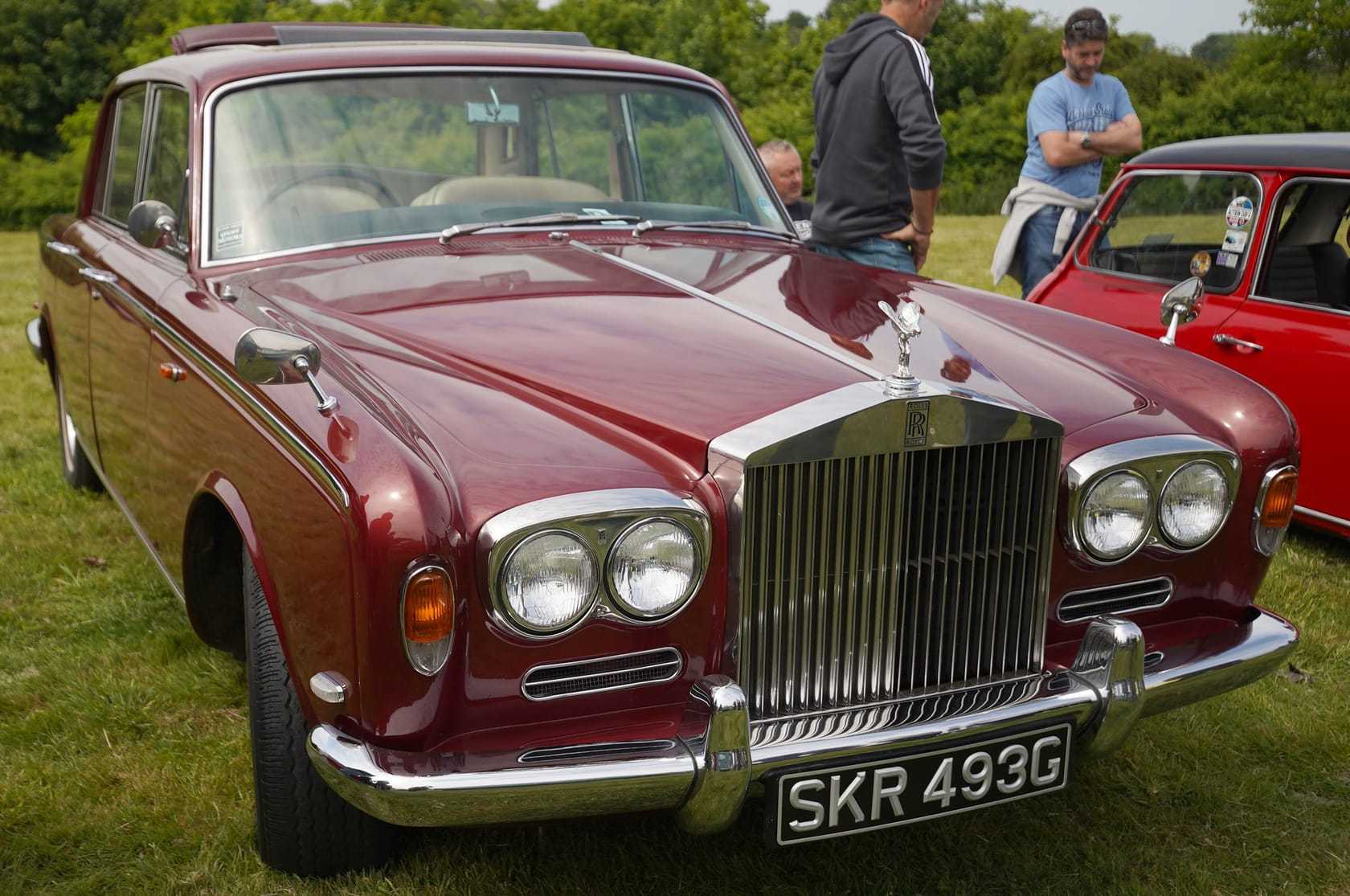
What the Silver Shadow sells for at auction
In 2025 the median Silver Shadow sold for £9,076 across 76 sales, much where it was in 2024. In real terms, typical Silver Shadow prices were down about 42% over the five years to 2025, once inflation is accounted for.
| Variant | Sold | Typical range | Median |
|---|---|---|---|
| Silver Shadow I | 451 | £5,868 - £15,742 | £9,229 |
| Silver Shadow II | 261 | £6,565 - £14,625 | £10,125 |
| Silver Shadow Mulliner Park Ward | 23 | £16,655 - £24,820 | £19,320 |
Show the year-by-year mediansHide the year-by-year medians
| Year | Sold | Median | In 2025 money |
|---|---|---|---|
| 2026 (so far) | 41 | £10,347 | |
| 2025 | 76 | £9,076 | £9,076 |
| 2024 | 62 | £9,112 | £9,462 |
| 2023 | 66 | £12,554 | £13,472 |
| 2022 | 60 | £11,466 | £13,131 |
| 2021 | 63 | £10,640 | £13,157 |
| 2020 | 43 | £12,375 | £15,682 |
| 2019 | 34 | £9,994 | £12,794 |
| 2018 | 36 | £9,064 | £11,801 |
| 2017 | 33 | £12,375 | £16,484 |
| 2016 | 46 | £11,694 | £15,977 |
| 2015 | 24 | £7,914 | £10,921 |
| 2014 | 20 | £6,947 | £9,625 |
| 2013 | 15 | £6,670 | £9,373 |
| 2012 | 15 | £5,980 | £8,596 |
| 2011 | 15 | £9,355 | £13,793 |
| 2010 | 14 | £12,198 | £18,683 |
| 2009 | 8 | £8,786 | £13,794 |
| 2008 | 12 | £4,837 | £7,744 |
| 2007 | 14 | £6,718 | £11,130 |
| 2006 | 10 | £7,085 | £12,011 |
| 2005 | 12 | £6,820 | £11,854 |
| 2004 | 16 | £7,461 | £13,234 |
| 1996 | 3 | £12,213 | £24,604 |
- £6,924Silver Shadow I
- £8,650Silver Shadow I
- £11,250Silver Shadow II
- £13,507Silver Shadow II
- £3,680Silver Shadow II
Strong evidence. 744 recorded sales and a dozen or more a year: the median and the range are well founded. Based on 744 sold results from public classic car auctions (1996 to 10 August 2026). Sold prices, not asking prices, and not a valuation: condition, history and specification vary from car to car. Inflation-adjusted figures use the ONS CPIH index, in 2025 money.
The Silver Shadow is the cheapest way to own the car that was once sold as the best in the world. Rolls-Royce Silver Shadow values sit at a median of £9,800 across 744 recorded sales, with the middle half between £6,208 and £15,915, which puts a running, usable Rolls-Royce at less than a new supermini. Roughly three in four cars offered find a buyer, about 65 change hands a year, and the spread runs from £488 to £286,250.
The Rolls-Royce Silver Shadow guide covers the 1965 revolution, the Shadow I and II, the hydraulics and what to check. This page is about the money, and about why the cheapest car here is rarely the cheapest to own.
Shadow I, Shadow II, and the two-door apart
Three rows, and only one of them is a real gap. The Shadow I sits at £9,229 across 451 recorded sales and the Shadow II at £10,125 across 261, which is under a thousand pounds between them. The Shadow II is generally the better car, with rack-and-pinion steering and the revised front suspension, and the market pays almost nothing for that. At this level condition and history swamp the version entirely, so the sensible rule is to buy the better car rather than the later one.
The exception is the coachbuilt two-door. Mulliner Park Ward cars sit at £19,320 across 23 recorded sales, roughly double a saloon, and that premium is genuine scarcity rather than sentiment: they were built in small numbers, the panels are coachbuilt, and there is no supply. They are also the part of this market that has held its ground while the saloons drifted, which makes them the only Shadow anybody has ever bought as a store of value.

Flat for a decade, which is a fall
The yearly median reads £11,694 in 2016, £12,375 in 2017, £9,064 in 2018, £9,994 in 2019, £12,375 in 2020, £10,640 in 2021, £11,466 in 2022, £12,554 in 2023, £9,112 in 2024, £9,076 in 2025 and about £10,347 so far in 2026. In cash that is a market going nowhere for ten years.
Restated in today’s money it is going somewhere, and the direction is down. The same run reads £15,977 in 2016 falling to £9,076 in 2025: the Shadow has given up about two fifths of its real value in a decade while its price in pounds stood still. Unlike most of the thin markets on this site, that reading is solid. Sixty-five recorded sales a year over twenty years is one of the deepest records here, so this is the market speaking rather than a small sample wobbling.

The cheapest Rolls-Royce is the most expensive mistake
Thirty thousand Shadows were built, which is most of the answer to why they are cheap. The rest of the answer is the bills.
The high-pressure hydraulic system that runs the brakes and the self-levelling suspension is the specific problem: complex, unique to these cars, and priced by specialists who know both facts. Around it sit the ordinary costs of a two-and-a-half-tonne car with a 6.75-litre V8, and under it the same rot that afflicts any 1970s British monocoque, in sills, floors, subframe mountings and arches, all of it labour-intensive because of what has to come off first.
That is why this record has a £488 sale in it. At the bottom of the range you are not buying a cheap Rolls-Royce, you are buying somebody else’s deferred maintenance, and the deferral is usually larger than the purchase price. The £15,915 upper quartile is where the sorted cars sit, and on a Shadow the gap between those two numbers is smaller than the gap between their running costs.

Where Silver Shadows change hands
Everywhere, which is unusual and useful. The British regional rooms carry the ordinary cars and the projects, the specialist sales take the best saloons and the two-doors, and the American online platforms take a steady share of the tidy ones. The summer of 2026 shows the working range inside a fortnight: a Shadow II at £3,680 and a Shadow I at £6,924 at the bottom, £8,650 and £11,250 in the middle, and £13,507 for a good Shadow II. The £286,250 record sale is a different kind of car entirely and should be read as provenance rather than as a ceiling. Whether a recorded price includes the buyer’s premium varies by sale, which is one more reason to read the usual range rather than any single result.

Insuring, restoring, selling
For an agreed-value policy a sorted saloon belongs at the upper end of its range rather than the median, because the median is weighed down by cars that need everything, and a two-door needs its own figure. On restoration the arithmetic is unambiguous and worth stating plainly: a full mechanical and body restoration costs several times what a finished saloon makes, so the only Shadow worth taking on is one that is already sound. If you are selling, the history file is the asset. A continuous run of specialist invoices moves a Shadow further up its range than paint, chrome or mileage ever will, because it is the only evidence a buyer has about the one thing they are afraid of.
Related
The Shadow shares its underpinnings with the Bentley T-series, which sells for about the same money, and was replaced by the Silver Spirit. Above it in the marque’s own history sit the Silver Cloud and the Phantom. For the period, see British classic cars of the 1960s and 1970s. For how all the figures on this site are compiled, see what classic cars sell for.
Frequently asked questions
How much is a Rolls-Royce Silver Shadow worth?
Is a Silver Shadow II worth more than a Shadow I?
What is a two-door Silver Shadow worth?
Are Silver Shadow prices falling?
Why is a Rolls-Royce Silver Shadow so cheap?
What should I check before buying a Silver Shadow?
What is the most expensive Silver Shadow ever sold at auction?
How often does a Silver Shadow come up for sale?
Related across themes

Recently added

Daimler V8 250: the sweetest-engined Mk2 of them all (1962–1969)

Aston Martin V8 values: twelve badges, a six-fold spread, and a chart that lies

Daimler SP250: the fibreglass V8 the police couldn't catch (1959–1964)
