Jaguar XJ values: the cheapest big Jaguar, 1968 to 2009, and the coupé at three times the saloon
What the Jaguar XJ family sells for at auction
In 2025 the median Jaguar XJ family sold for £5,435 across 232 sales, 20% down on 2024. In real terms, typical Jaguar XJ family prices were down about 41% over the five years to 2025, once inflation is accounted for.
| Variant | Sold | Typical range | Median |
|---|---|---|---|
| XJ6 | 584 | £2,868 - £8,901 | £5,022 |
| XJ8 | 407 | £3,316 - £9,846 | £5,808 |
| XJR | 327 | £4,998 - £12,928 | £8,580 |
| XJ | 165 | £4,945 - £13,885 | £8,440 |
| XJ12 | 123 | £3,982 - £13,058 | £7,600 |
| XJ-C | 54 | £11,164 - £23,278 | £16,120 |
| XJ Sport | 46 | £1,225 - £5,675 | £3,059 |
| XJ Executive | 36 | £1,403 - £3,881 | £1,949 |
| XJ40 | 31 | £1,150 - £5,145 | £2,700 |
| XJ6 Executive | 14 | £1,572 - £6,360 | £3,299 |
| XJ8 Executive | 14 | £1,672 - £5,260 | £2,524 |
| XJ12 C | 13 | £11,357 - £26,859 | £21,050 |
Show the year-by-year mediansHide the year-by-year medians
| Year | Sold | Median | In 2025 money |
|---|---|---|---|
| 2026 (so far) | 159 | £5,120 | |
| 2025 | 232 | £5,435 | £5,435 |
| 2024 | 217 | £6,812 | £7,073 |
| 2023 | 237 | £9,040 | £9,701 |
| 2022 | 207 | £9,800 | £11,223 |
| 2021 | 123 | £7,566 | £9,356 |
| 2020 | 77 | £7,327 | £9,285 |
| 2019 | 81 | £6,038 | £7,730 |
| 2018 | 78 | £5,279 | £6,873 |
| 2017 | 59 | £5,400 | £7,193 |
| 2016 | 65 | £5,398 | £7,375 |
| 2015 | 58 | £4,702 | £6,488 |
| 2014 | 51 | £3,735 | £5,175 |
| 2013 | 48 | £3,576 | £5,025 |
| 2012 | 36 | £4,474 | £6,431 |
| 2011 | 21 | £1,840 | £2,713 |
| 2010 | 4 | £4,340 | £6,647 |
| 2009 | 15 | £2,415 | £3,791 |
| 2008 | 4 | £660 | £1,056 |
| 2007 | 7 | £2,250 | £3,727 |
| 2006 | 4 | £2,878 | £4,879 |
| 2005 | 21 | £3,375 | £5,866 |
| 2004 | 10 | £6,168 | £10,941 |
- £8,374XJ8
- £29,022XJ
- £1,200XJ6
- £3,360XJ8
- £1,600XJ Executive
Strong evidence. 1,818 recorded sales and a dozen or more a year: the median and the range are well founded. Based on 1,818 sold results from public classic car auctions (1996 to 10 August 2026). Sold prices, not asking prices, and not a valuation: condition, history and specification vary from car to car. Inflation-adjusted figures use the ONS CPIH index, in 2025 money.
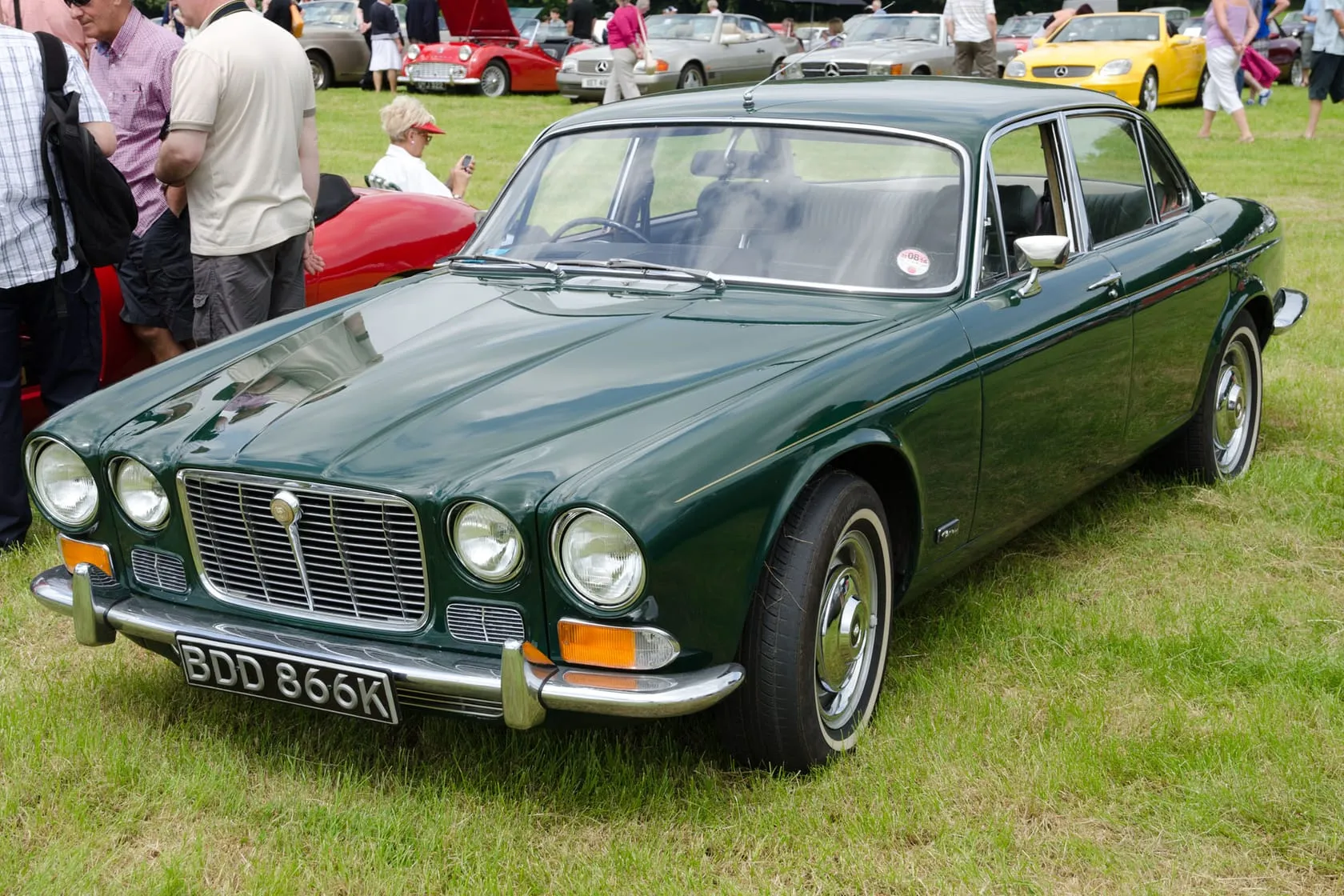
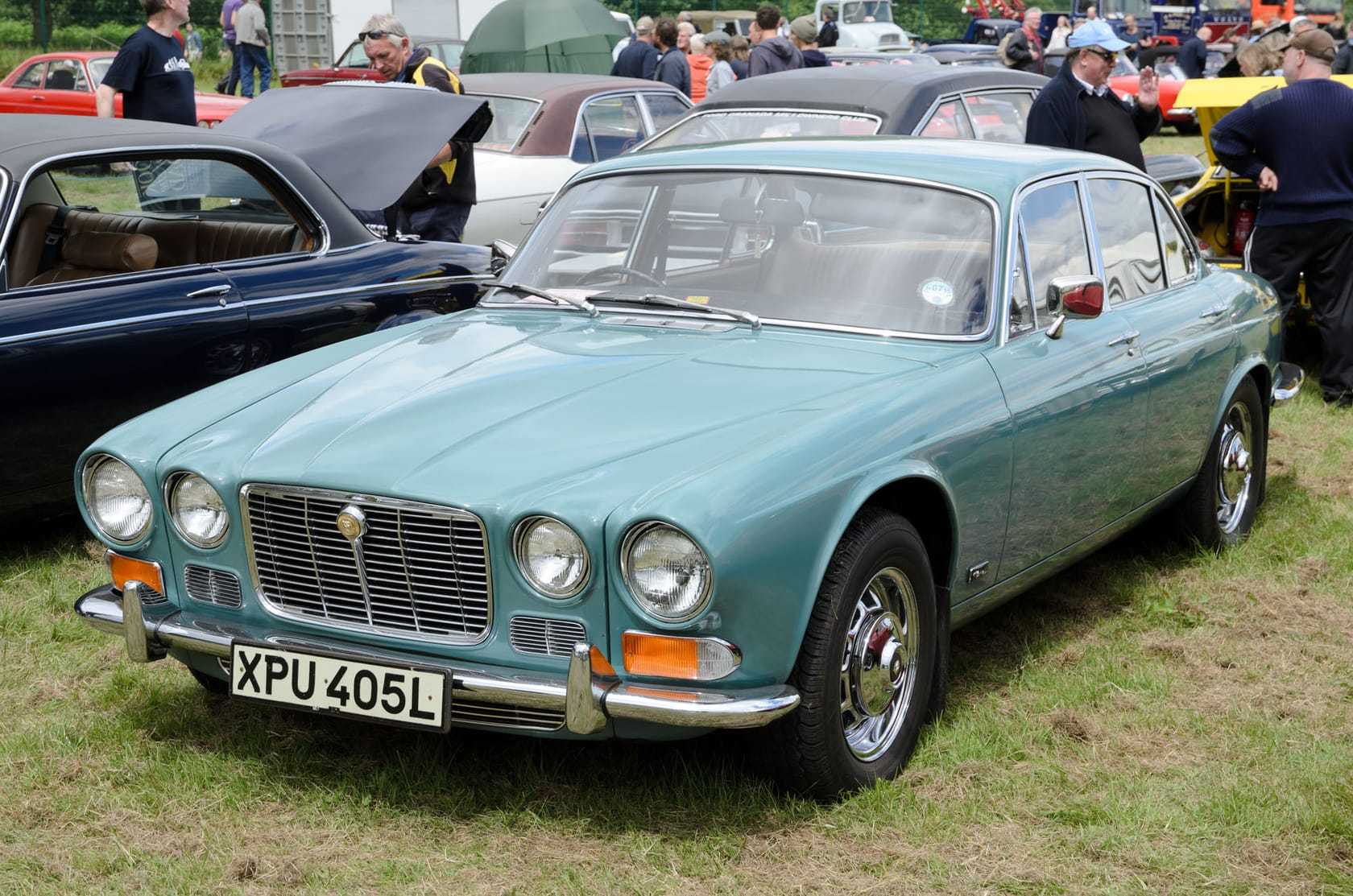
The XJ is the saloon that replaced every other Jaguar in 1968 and then held the company’s flagship post for forty years, and Jaguar XJ values are the lowest of any Jaguar on this site: 1,818 recorded sales, more than 200 a year lately, at a median of £6,292, with the middle half between £3,291 and £10,947. Five in six of the cars offered find a buyer, the highest rate of any Jaguar in the database, because an XJ is estimated honestly and bought for what it is. The spread runs from a £225 project to £157,500 for one exceptional coupé, and most of the record is an ordinary saloon sold in Britain to someone who wants a big Jaguar for the price of a small hatchback.
The Jaguar XJ family guide decodes the generations, from Series 1 to X308, and the XJ6 guide covers the classic six-cylinder cars and what to check on them. This page is about the money across the whole line, and about a market that has given back three years of gains in three years.
The badge ladder, from the Executive to the coupé
The family sorts itself by badge more cleanly than by age, and the table above is the whole argument. At the bottom the trim-level cars, the XJ Executive at about £1,949 across 36 sales and the XJ Sport at £3,059 across 46, are the cheapest big Jaguars anywhere, followed by the XJ40 at £2,700 across 31. In the middle sit the volume saloons: the XJ6 at £5,022 across 584 sales and the XJ8 at £5,808 across 407, within a thousand pounds of each other despite thirty years between their extremes. Above them the engine and the supercharger start to tell, the XJ12 at £7,600 across 123 and the XJR at £8,580 across 327. And apart from all of it, the XJ-C coupé at £16,120 across 54.
Two notes on reading those rows. The XJ6 row runs to the X300 car of 1997, so it is a wider slice than the classic-era figure on the XJ6 guide, which stops at 1994; the two are different cuts of the same sale rooms, not a disagreement. And the plain “XJ” row, 165 sales at £8,440, is the sale rooms’ catch-all for cars listed without a badge, which skews to the older and better-described ones.
The series split inside the six-cylinder cars is narrow enough that it barely registers beside the badge ladder. Across the classic-era rows the Series 1 of 1968 to 1973 sits at around £6,300, the Series 2 of 1973 to 1979 at about £6,600 and the Series 3 of 1979 to 1992 at about £5,300. The gap is small and condition decides it: a good Series 3 sells above a tired Series 1, and the early cars’ premium appears only at the top, where a restored 1968 to 1970 4.2 with overdrive reaches £15,000 to £25,000 and a Series 3 rarely passes £15,000. The Daimler Sovereign 4.2 sits level with the XJ6 and the Double Six level with the XJ12.

What moves the price of a classic XJ
The body, first, second and third, and it is the same body story from 1968 to 2009. An XJ rusts in the multi-section sills, the floors, the front and rear valances, the wheel arches, the boot floor, the screen surrounds and the rear radius-arm mountings, where a rotten floor can let the rear suspension pull away, and every one of those repairs costs more than the difference between a cheap car and a good one. A dry, straight shell with sound sills sits in the upper half of its range whatever the mileage; a car with filler in its sills is a project whatever the paint, because a full body restoration costs several times what any XJ short of a coupé is worth.
The engine moves the price less than buyers expect and the running costs more. The XK six is durable and cheap to keep; the AJ V8 of the XJ8 and XJR is durable when serviced and expensive when not; the V12 is ruinous when neglected, which is why the cheap XJ12 is the classic trap and the cheap XJR the modern one. Then specification and history. A manual-overdrive car sells clearly above an automatic, a 4.2 above a 2.8, a Series 1 with its chrome bumpers above a later car of the same condition, and an original colour with leather in good order above a respray with vinyl. A long history file is worth more on an XJ than on most classics, because so few survivors have one, and the cars that make the top of the range are the ones that were garaged and serviced for decades rather than restored once.

Half the money gone since 2022
The chart shows a car that had one boom and gave it straight back. The yearly median sat between £2,250 and £5,400 from 2005 to 2018, when the XJ was an old Jaguar rather than a classic one, rose through £6,038 in 2019 and £7,566 in 2021 to a peak of £9,800 in 2022, and has fallen every year since: £9,040 in 2023, £6,812 in 2024, £5,435 in 2025 and about £5,120 so far in 2026. Restated in today’s money the family is roughly half what it was at the 2022 peak, and back where it stood in 2015.
Two causes, as usual, and one of them is the record itself. The online auctions have brought far more tired saloons and projects into the data, and the sample has more than doubled: over 200 recorded sales a year since 2022 against fewer than 100 before 2020. A median built on those cars is lower than one built on the restored Series 1s the catalogued sales preferred, so part of the fall is the market being measured more completely rather than the cars being worth less. The rest is real. The market for big 1970s and 1980s saloons has softened as its buyers have aged, more than the sports-car market, because a saloon is bought out of memory rather than for driving. The coupés and the best Series 1s have held up; the ordinary saloons, which are most of the record, have not, and at the time of writing a sound one costs less than a Mini Cooper.

Where XJs change hands
The XJ is a British car in a British record, with an American accent at the top. The regional sale rooms, from Yorkshire to the Welsh borders, sell the ordinary cars and the projects, and the summer of 2026 shows the bottom of the range: a Series 3 at £1,200, an XJ Executive at £1,600 and an XJ8 at £3,360, all inside a fortnight. The American online platforms sell the restored cars and the Series 1s, and the same months produced an XJ at £29,022 and an XJ8 at £8,374 there. The coupés and the best V12s pass through the Jaguar specialists and the catalogued sales at prices above the auction range. Whether a recorded price includes the buyer’s premium varies by sale, which is one more reason to read the usual range rather than any single result.

Insuring, restoring, selling
For an agreed-value policy an ordinary saloon belongs around its badge’s median rather than the family’s, a restored Series 1 in the upper half of its range, and a coupé or a V12 on its own figures. On restoration the XJ is the most unforgiving car on this site: a body restoration costs several times what a finished saloon is worth, so the only project worth buying is the one with a sound shell and a tired interior, and the sensible buy at today’s prices is the garaged, serviced car with the history file. If you are selling, a manual-overdrive Series 1 in an original colour sells itself, a Series 3 sells on its sills, an XJR sells on its service history, and the photograph that sells the car is of the underside, not the walnut.
Related
The XJ replaced the Mk2, which now sells for several times as much, and shared its V12 with the XJS, which sells for half as much again; its rivals in period were the Rover P6 and the Mercedes S-Class. For the decades it spans, see British classic cars of the 1970s and 1980s. For how all the figures on this site are compiled, see what classic cars sell for.