Rover P6: the first Car of the Year, and still the clever one (1963–1977)
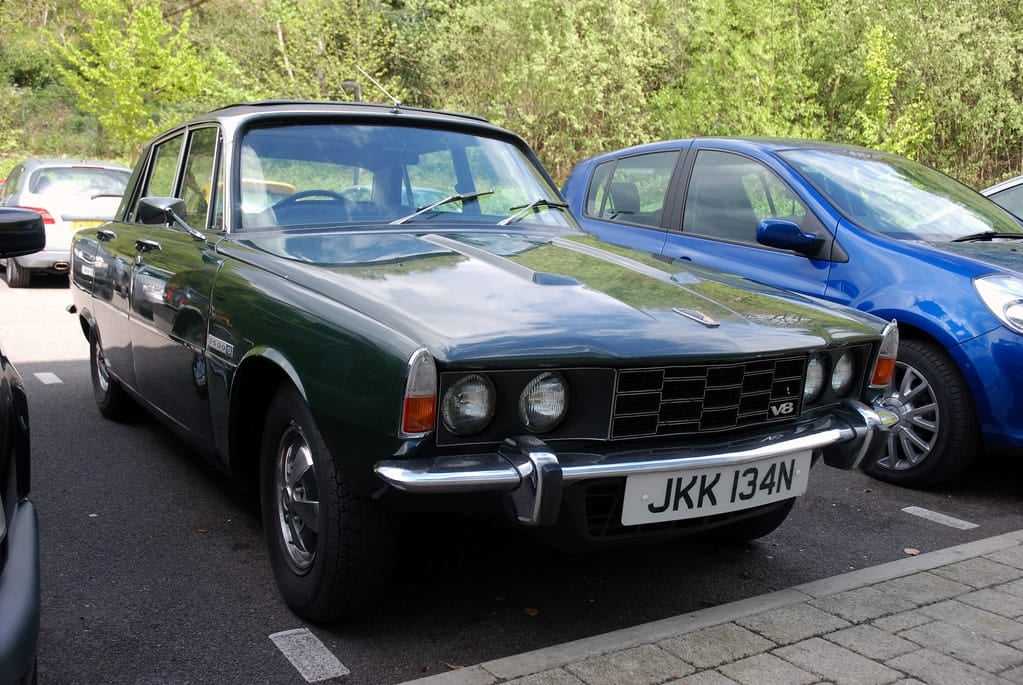
The Rover P6 rethought the executive saloon from its skeleton outward, won the first European Car of the Year award as the 2000, and gained the V8 to become the 3500. A guide to the base-unit engineering, 2000 to 3500S, what the advanced design asks of buyers, and values.
Built 1963–1977 260 recorded sales
At a glance
- Years
- 1963–1977
- Body styles
- Four-door saloon
- Drivetrain
- Front engine, rear-wheel drive; de Dion rear suspension
- Engines
- 1978cc and 2205cc OHC four; 3528cc aluminium V8
- Power
- Around 90 bhp (2000) to 150 bhp (3500S)
- Top speed
- Around 104 mph (2000) to 122 mph (3500S)
- Trim levels
- 2000/2000TC, 2200/2200TC, 3500/3500S; Series I and II
- Production
- Around 322,000
- Assembly
- Solihull, Warwickshire
- Designer
- Rover under Peter Wilks; styling by David Bache
- Values
- Usable from around £3,500; good cars £6,000-£11,000; the best 3500S beyond
- The award
- European Car of the Year's very first winner, 1964
- The structure
- A base-unit skeleton with bolt-on panels, a decade before the industry caught up
The models
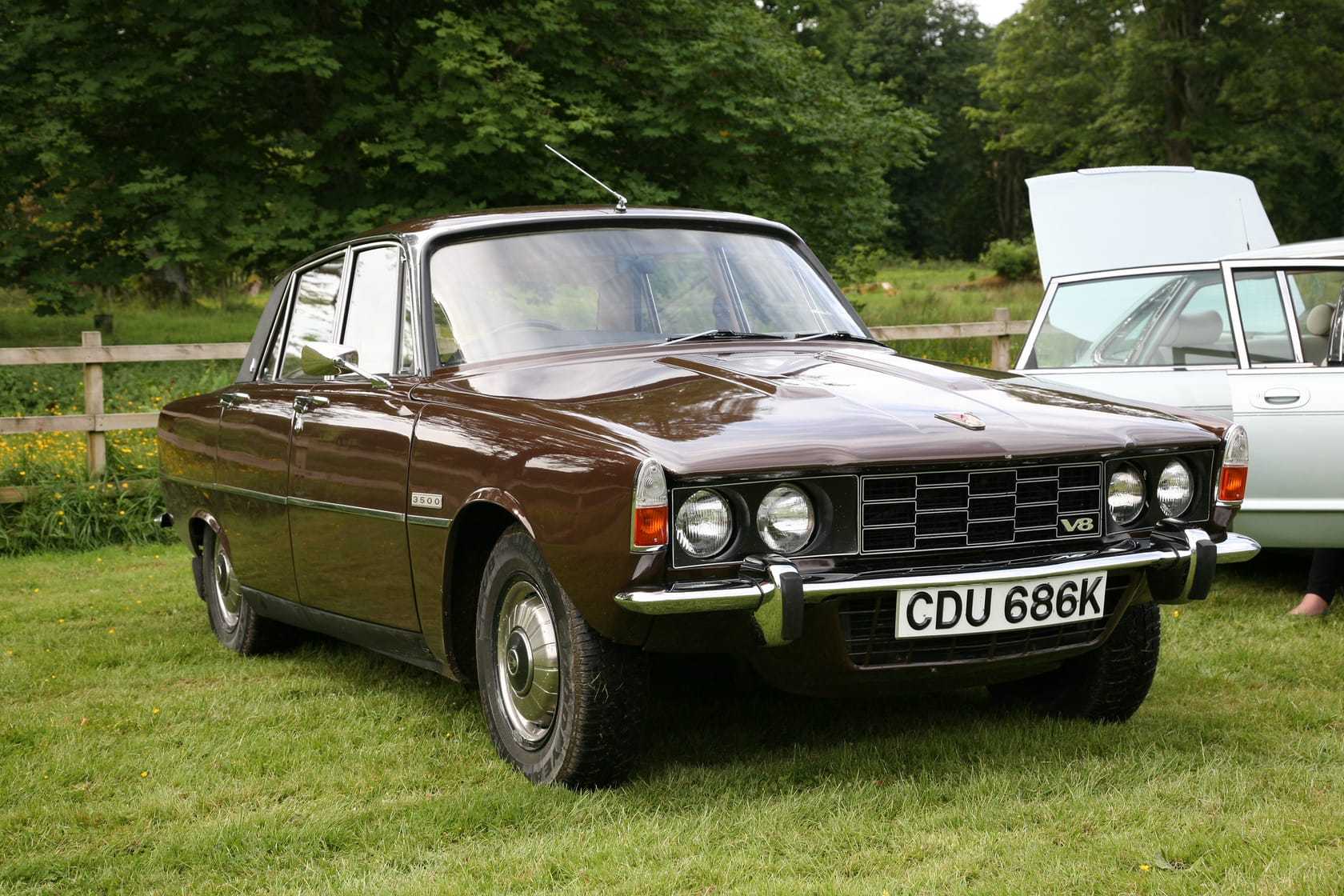
In 1964 a panel of European journalists chose the first ever Car of the Year, and they gave it to a Rover. The P6 2000 had rethought the respectable saloon from the skeleton outward, and the award’s inaugural verdict stands as the marque’s engineering high-water mark. Fourteen years and 322,000 cars later, the Rover P6 had carried Solihull from Auntie’s era to the V8 age, and it remains the clever buy of its class.
The base unit and the clean sheet
The P6’s radicalism started underneath: a load-bearing steel skeleton, the base unit, with every outer panel unstressed and bolted on, an approach the wider industry took a decade to adopt. Onto it Rover hung de Dion rear suspension for race-bred wheel control, disc brakes on all four corners, and an all-new overhead-cam 2.0-litre four. Safety was designed in before legislation asked. After the P4’s decade of dignity, the 2000 announced that the quiet engineers had been saving up ideas, and the first European Car of the Year jury agreed.

2000 to 3500: the range decoded
The single-carburettor 2000 opened the line in 1963; the twin-carb 2000TC of 1966 gave it pace to match the chassis; and in 1968 the aluminium V8 arrived to create the 3500, with the manual 3500S of 1971 the enthusiast’s pick at 122 mph. The 2200 fours replaced the 2000s in 1973 with more torque, and Series II styling from 1970 freshened grilles and cabins. Every variant kept the formula: advanced structure, unflustered manners, and engineering depth the German rivals were still advertising a decade later.

The P6 in its world
The P6 redefined who a Rover buyer was: younger, professional, interested in the engineering their parents’ P5 concealed beneath walnut. Police forces ran 3500s hard on the new motorways, beginning a patrol relationship the SD1 would inherit; the American market briefly took the 2000TC; and the V8’s arrival wove the P6 into the same engine story as the Range Rover and the specialist sports-car industry. Its replacement inherited the mission wholesale, but the P6 kept the affection: the 1970s never produced a saloon that flattered its driver’s judgement quite so well.

The details that delight
P6 ownership comes with engineering conversation built in. The horizontal front suspension acts through bell-cranks against the bulkhead to keep the engine bay wide, sized, the story goes, for a gas-turbine that never came; the de Dion tube runs sliding joints patented by the company; and the optional boot-mounted spare wheel solved luggage space with pure pragmatism. Even the seats, thin-shelled and deeply padded, were years ahead. None of it was showroom glitter; all of it repays the owner who enjoys knowing why the car feels the way it does.

What a P6 is like to drive
The Rover P6 still feels a size smarter than its era, and a first drive routinely converts sceptics. The structure is rigid, the de Dion rear plants power cleanly, the brakes work like a modern’s, and the steering, though low-geared, talks. A TC four thrives on revs; the V8 turns the same chassis effortless, with the 3500S adding control to the pace. The driving position, deep and low behind that shelf of a dashboard, completes the sports-saloon impression. Of all Britain’s executive classics, this is the one that asks to be driven rather than merely kept.

Buying a P6 today
Everything hinges on the base unit: sills, floors, bulkheads, suspension mounts and the rear elbows rot invisibly behind the bolt-on panels, so inspection means carpets up and a torch underneath, with panel fit the tell-tale for hidden sag. Mechanically the fours want cam-and-carb care and the V8s cooling honesty; both are long-lived when maintained. Trim survives poorly, box-pleat leather and dashboard mouldings above all, making complete original cabins genuinely valuable. The clubs grade the survivor pool expertly, and a documented, dry car at fair money beats any glossy unknown. Factor the small jobs honestly too: bell-crank bushes, de Dion gaiters and instrument gremlins are cheap singly and add up quickly, so a fettled car’s premium usually represents money already well spent.

Values: intelligence at a discount
At a measured median near £4,700 across 260 sales, the P6 remains the thinking buyer’s bargain: usable cars from £3,500, good ones £6,000 to £11,000, the best 3500S manuals beyond. That prices Europe’s first Car of the Year at hot-hatch money, for a machine whose ideas still read modern. The clever one in the Rover family has always been the value pick; sixty years on, the discount has simply become the opportunity, and the first drive still closes the sale.

More photos
The P6 timeline
- 1963The 2000 launches on the base-unit skeleton with bolt-on panels, de Dion rear suspension, four-wheel discs and an all-new overhead-cam four.
- 1964The inaugural European Car of the Year jury gives it the first award ever made.
- 1966The twin-carburettor 2000TC gives the chassis the pace it deserved.
- 1968The aluminium V8 creates the 3500.
- 1970Series II styling freshens grilles and cabins.
- 1971The manual 3500S arrives, the enthusiast's pick at 122 mph.
- 1973The 2200 fours replace the 2000s with more torque.
- 1977Production ends at around 322,000 cars; the SD1 replaces it.
Buying checklist: the P6 in front of you
The base unit, on which everything hinges
- Sills, floors, bulkheads and suspension mounts, inspected with carpets up and a torch underneath
- The rear elbows, which rot invisibly behind the bolt-on panels
- Panel fit is the tell-tale for hidden sag
- A documented, dry car at fair money beats any glossy unknown
Mechanical
- The fours want cam-and-carburettor care
- The V8s want cooling honesty
- Bell-crank bushes and de Dion gaiters are the small jobs that add up
- A fettled car's premium usually represents money already well spent
Trim and version
- Box-pleat leather and dashboard mouldings are the survival weak points
- Complete original cabins are genuinely valuable
- The 3500S manual leads the range; the 2000TC is the four-cylinder pick
- Instrument gremlins are known and fixable, but test everything
What the P6 2000 & 3500 sells for at auction
In 2025 the median P6 2000 & 3500 sold for £4,360 across 31 sales, 22% down on 2024. In real terms, typical P6 2000 & 3500 prices were down about 46% over the five years to 2025, once inflation is accounted for.
| Variant | Sold | Typical range | Median |
|---|---|---|---|
| P6 3500 | 139 | £4,000 - £8,648 | £6,188 |
| P6 2000 | 86 | £1,565 - £5,144 | £3,612 |
| P6 2200 | 22 | £1,892 - £4,499 | £2,544 |
| P6 | 13 | £3,600 - £7,000 | £6,000 |
Show the year-by-year mediansHide the year-by-year medians
| Year | Sold | Median | In 2025 money |
|---|---|---|---|
| 2026 (so far) | 29 | £5,220 | |
| 2025 | 31 | £4,360 | £4,360 |
| 2024 | 25 | £5,600 | £5,815 |
| 2023 | 28 | £5,057 | £5,427 |
| 2022 | 33 | £4,275 | £4,896 |
| 2021 | 34 | £4,684 | £5,793 |
| 2020 | 12 | £6,425 | £8,142 |
| 2019 | 9 | £4,500 | £5,761 |
| 2018 | 12 | £6,904 | £8,988 |
| 2017 | 16 | £3,712 | £4,945 |
| 2016 | 13 | £1,805 | £2,466 |
| 2015 | 6 | £7,719 | £10,652 |
| 2004 | 3 | £1,100 | £1,951 |
- £1,125P6 2000
- £7,750P6 3500
- £3,100P6 3500
- £12,000P6 3500
- £18,000P6
Strong evidence. 260 recorded sales and a dozen or more a year: the median and the range are well founded. Based on 260 sold results from public classic car auctions (2004 to 10 August 2026). Sold prices, not asking prices, and not a valuation: condition, history and specification vary from car to car. Inflation-adjusted figures use the ONS CPIH index, in 2025 money.
Frequently asked questions
Why was the Rover P6 so advanced?
What is the difference between the Rover 2000, 2200 and 3500?
Is the Rover P6 reliable?
Why does the Rover P6 bonnet have a bulge or spare wheel?
How much is a Rover P6 worth?
What is the most expensive P6 2000 & 3500 ever sold at auction?
How often does a P6 2000 & 3500 come up for sale?
Related across themes
More from Rover


Recently added

Bentley Turbo R: the blown Bentley that saved the badge (1985–1999)

Bentley S-series: the quiet twin with the beautiful secrets (1955–1965)

Rolls-Royce Silver Spirit and Silver Spur: the last Crewe bargain (1980–1999)
