Rolls-Royce Corniche: the coachbuilt survivor that outlived its makers (1971–1995)
The Corniche carried the coachbuilt tradition through a quarter-century, Mulliner Park Ward hand-building the two-door Rolls long after the trade around it vanished. A guide to the coupe and convertible, the four series, and what to check before buying.
Built 1971–1995 411 recorded sales
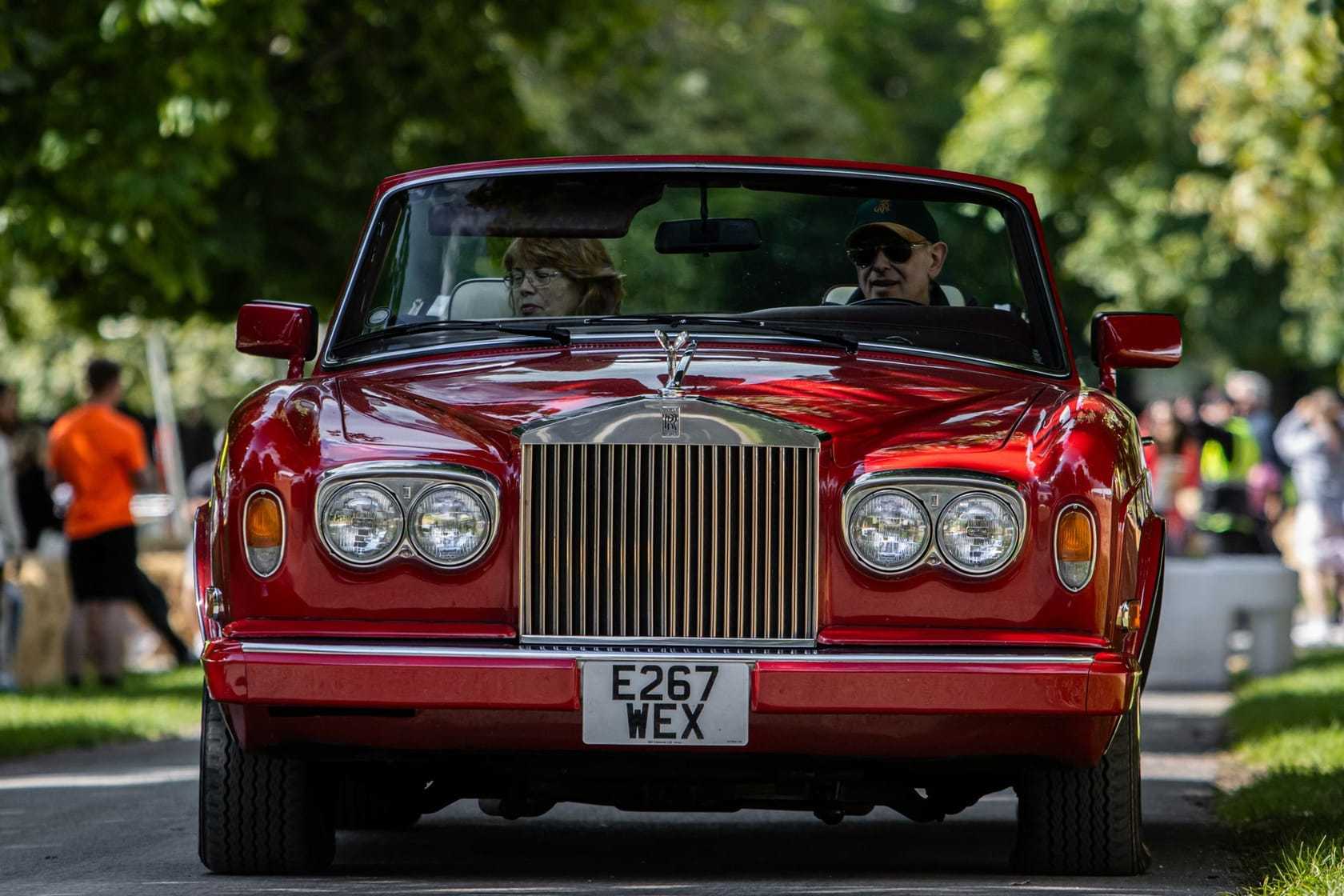
At a glance
- Years
- 1971–1995
- Body styles
- Two-door saloon (to 1980) and convertible
- Drivetrain
- Front engine, rear-wheel drive; Silver Shadow-derived platform
- Engines
- 6750cc all-alloy V8
- Power
- Sufficient (roughly 200-230 bhp by era)
- Top speed
- Around 120 mph
- Trim levels
- Corniche I-IV; Bentley Corniche and Continental siblings
- Production
- About 6,300 cars across the series
- Assembly
- Bodies by Mulliner Park Ward, London; completion at Crewe
- Designer
- John Blatchley and Bill Allen (from the Shadow two-door)
- Values
- Coupes from around £25,000; convertibles £35,000-£70,000; the best and latest beyond
- The role
- The last coachbuilt Rolls-Royce line, hand-made for twenty-five years
- The favourite
- The convertible became the default glamour Rolls of two decades of film and pop
The models
When the British coachbuilding trade finally died away in the nineteen-sixties, one production line simply declined to take any notice of the fact. The Rolls-Royce Corniche, named in 1971 for the two-door Silver Shadow derivatives already in build, kept Mulliner Park Ward’s London craftsmen hand-making bodies for a quarter of a century, the convertible outliving the coupe, the Shadow platform beneath it, and very nearly the company itself. It became the default glamour Rolls-Royce of film and pop culture, and its market has been quietly firming ever since collectors noticed what it represents.
The coachbuilt survivor
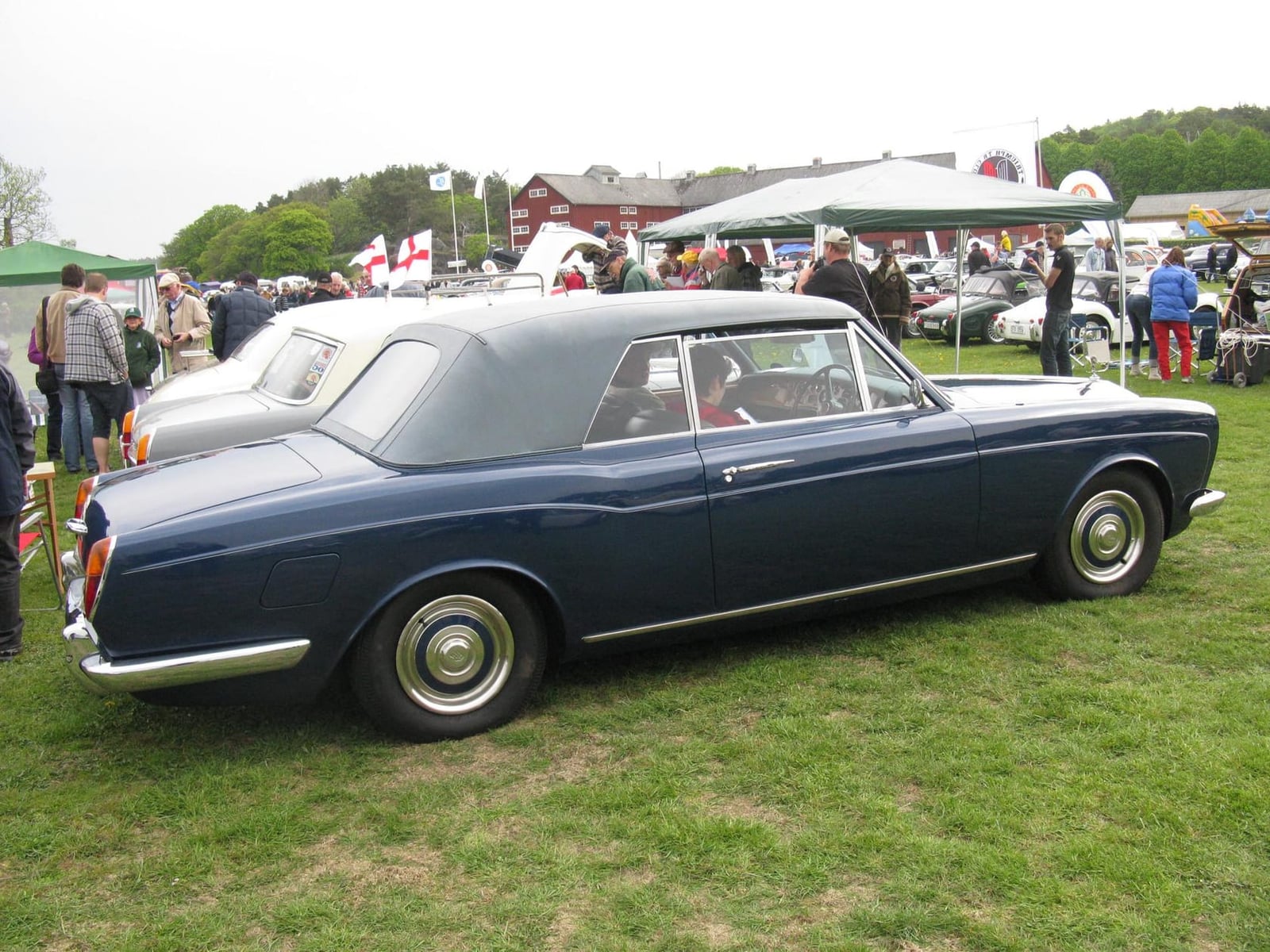
The Corniche’s construction was the point: platforms left Crewe for Mulliner Park Ward in London, where bodies were hand-formed, lead-loaded, trimmed and painted across months of craftsman time, then returned north for completion, a process unchanged in spirit from the coachbuilt age. The premium over the Shadow saloon was enormous and the waiting list long regardless. The coupe served until 1980, with about 1,100 built in all; the convertible then simply refused to die, carrying the tradition alone until 1995 as the last continuously coachbuilt British production car.

Series by series: I to IV
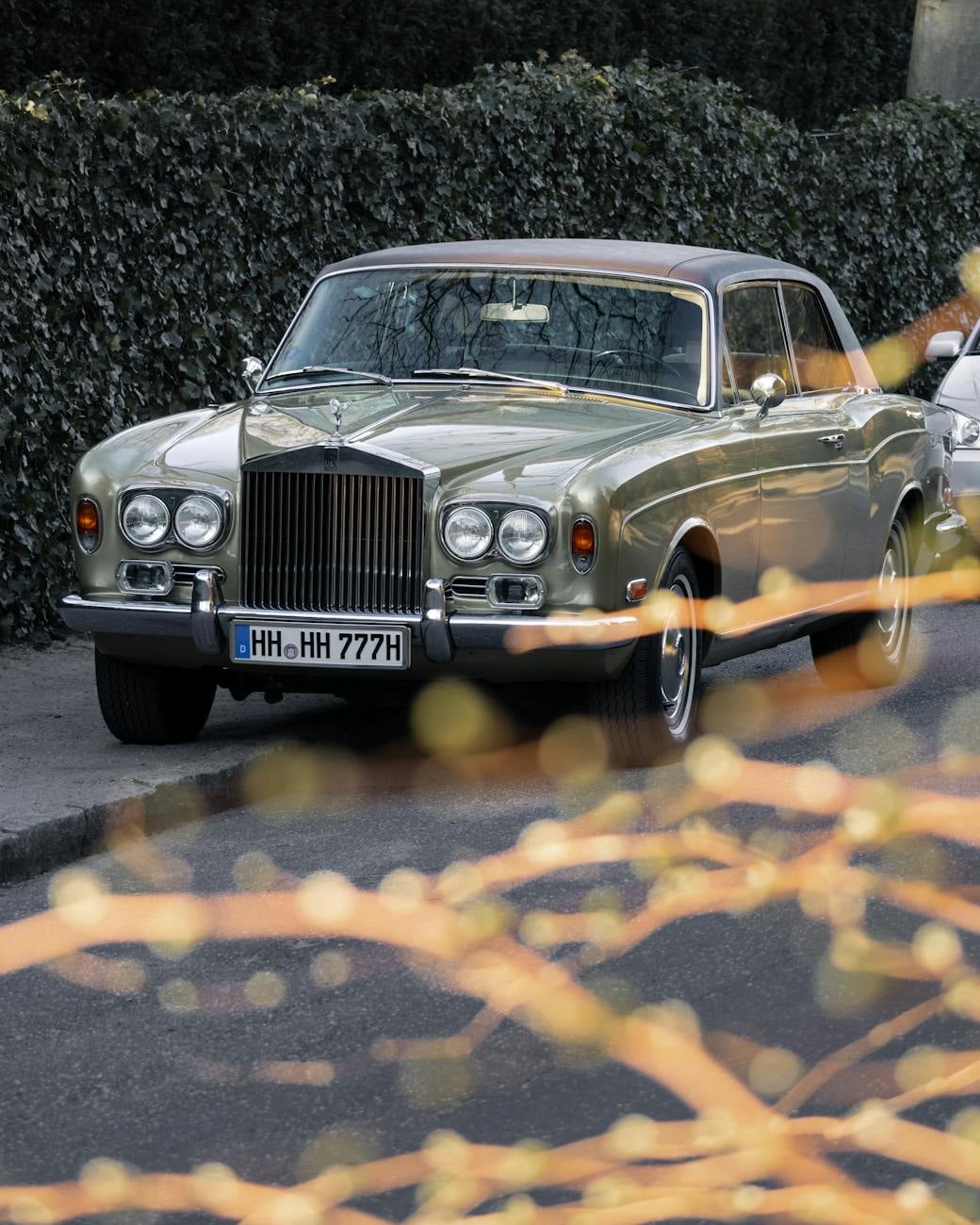
The quarter-century run divides usefully. Chrome-bumper cars to 1977 wear the original jewellery; impact bumpers and the Shadow II-era updates then modernised the family; the 1986 Corniche II brought fuel injection and consolidated development; and the III and IV of 1989 onward added adaptive damping, airbags and colour-keyed detailing for the final six years. Bentley-badged versions shadowed the line rarely, becoming the Continental in 1984. Each series has partisans, chrome purity versus late usability, and the market prices the argument rather than settling it.

The glamour default
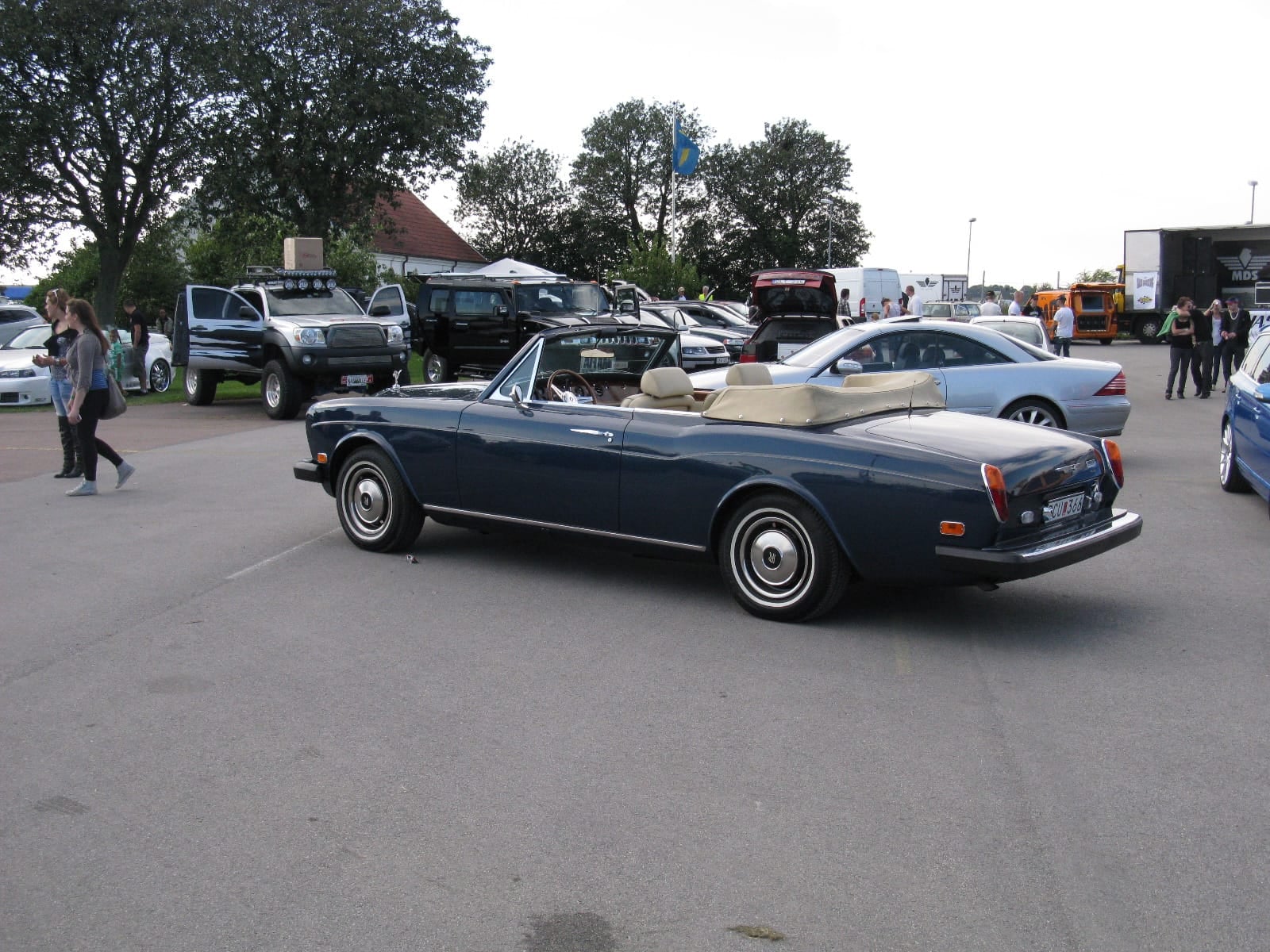
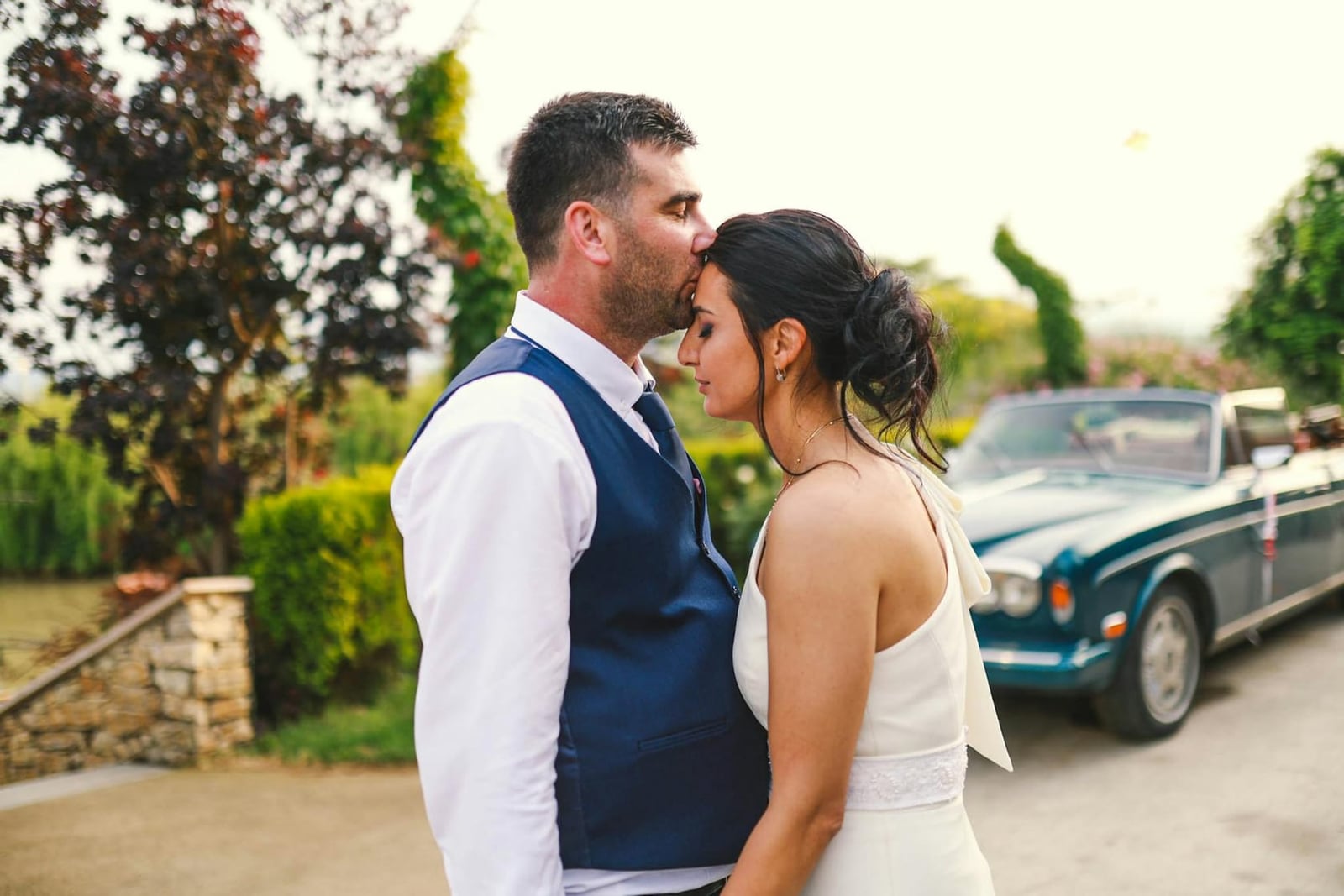
For twenty years the convertible Corniche was shorthand: the open Rolls in the film, the video, the paddock and outside the church, chosen wherever effortless arrival needed stating. That cultural service kept values honest through the decades when Shadows slumped, and it still shapes the market, with weddings and events sustaining working Corniches everywhere. Few classics carry so much recognisability per mile, none deliver it with the same four-seat, luggage-swallowing usefulness, and the convertible remains the rare glamour car that earns its keep as readily as it spends it.
Which Corniche to choose
The quarter-century run sorts by taste and purpose. The chrome-bumper convertibles to 1977 are the collectors’ tier, purest in jewellery and firmest in value; the impact-bumper cars of the late seventies and early eighties offer the same handwork at the gentlest prices; the injected Corniche II of 1986–89 is the specialists’ recommendation for anyone planning actual miles; and the III and IV bring the most developed engineering with values rising toward the end of production. The coupe, built only to 1980, stands apart as the connoisseur’s quiet buy, rarer than any convertible series yet trading below all of them. Bentley-badged cars add scarcity premiums whenever they surface, and hood condition, colour originality and the maintenance file move every band more than the badge on the boot.
What a Corniche is like to drive
It drives as the Shadow family does, elevated a register: the 6.75-litre V8 delivers its silent thrust, the hydraulics iron the road entirely flat, and the hand-built body adds a bank-vault solidity that even the saloons cannot quite match, the convertible’s lined hood folding away to leave four seats under open sky with no loss of composure whatsoever, and remarkably little wind at speed. Later cars steer and stop with genuinely modern confidence. It remains grand touring in the fullest period sense, and a sorted example crosses countries with a serenity nothing German of the era approaches.

Buying a Corniche today
The buying disciplines compound the Shadow’s own: hydraulic-system history first, structural honesty in the sills and floors second, and then the coachbuilt extras on top, hood mechanism and fabric condition on the convertibles, and hand-finished trim whose restoration costs answer to Mayfair rates rather than to the ordinary motor trade. The maintenance file outranks everything visible. Coupes offer the family’s quiet value; chrome-bumper convertibles the collector premium; Corniche IIs the usability sweet spot. Specialist inspection before purchase is non-negotiable at every tier, and the 1970s cars now qualify for every historic concession going.
Where the Corniche sits in the market
As the last coachbuilt line’s story spreads, the Corniche has stopped being a cheap Shadow derivative and started being collected on its own terms, and the direction of travel looks as settled as the craftsmanship. The recorded sales bear that out: this is the only Rolls-Royce or Bentley in the sale-room data that has held its real value over the past six years, and the only one whose four series climb in an orderly line from first to last. The full record is on the page covering what a Corniche sells for.
More photos
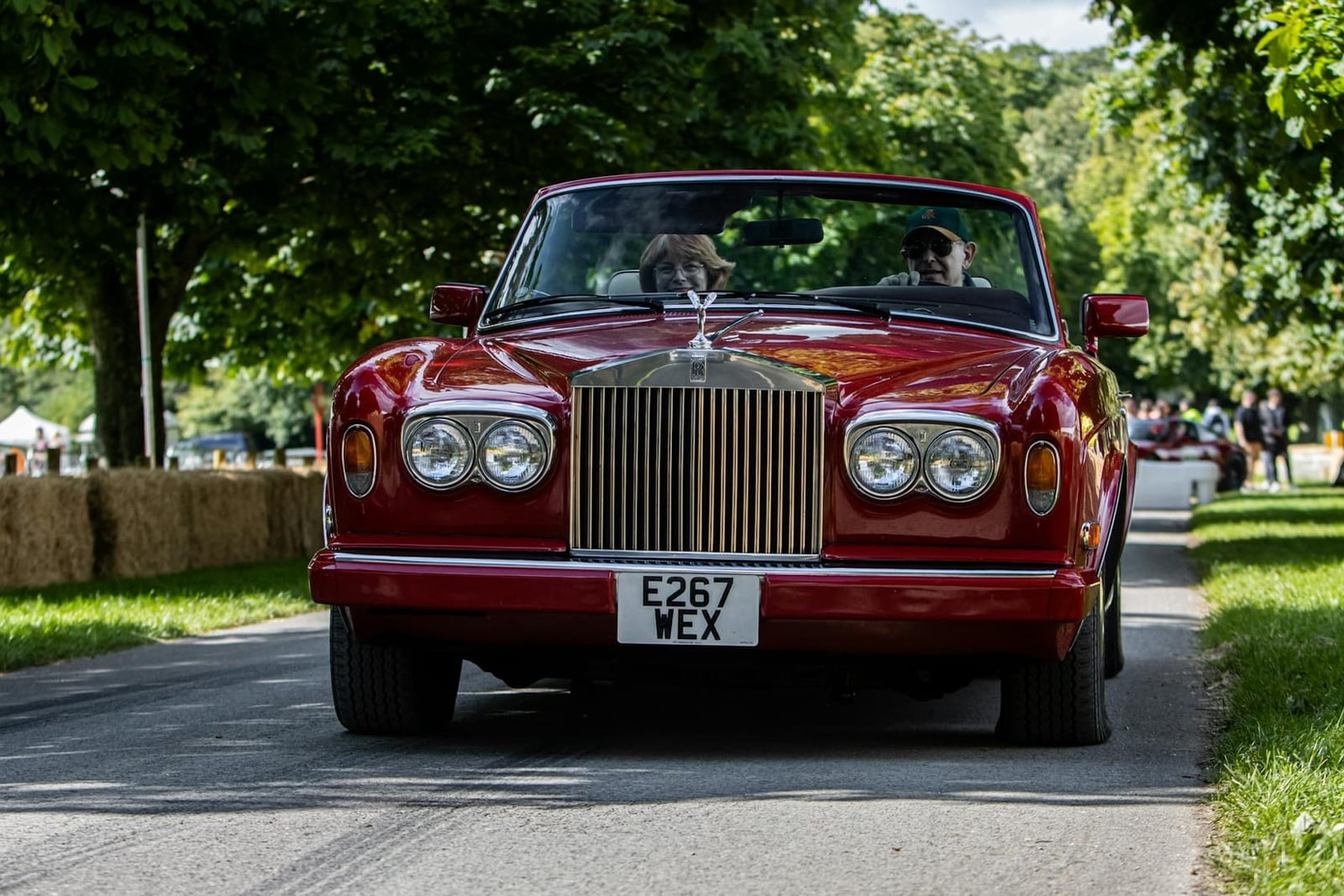
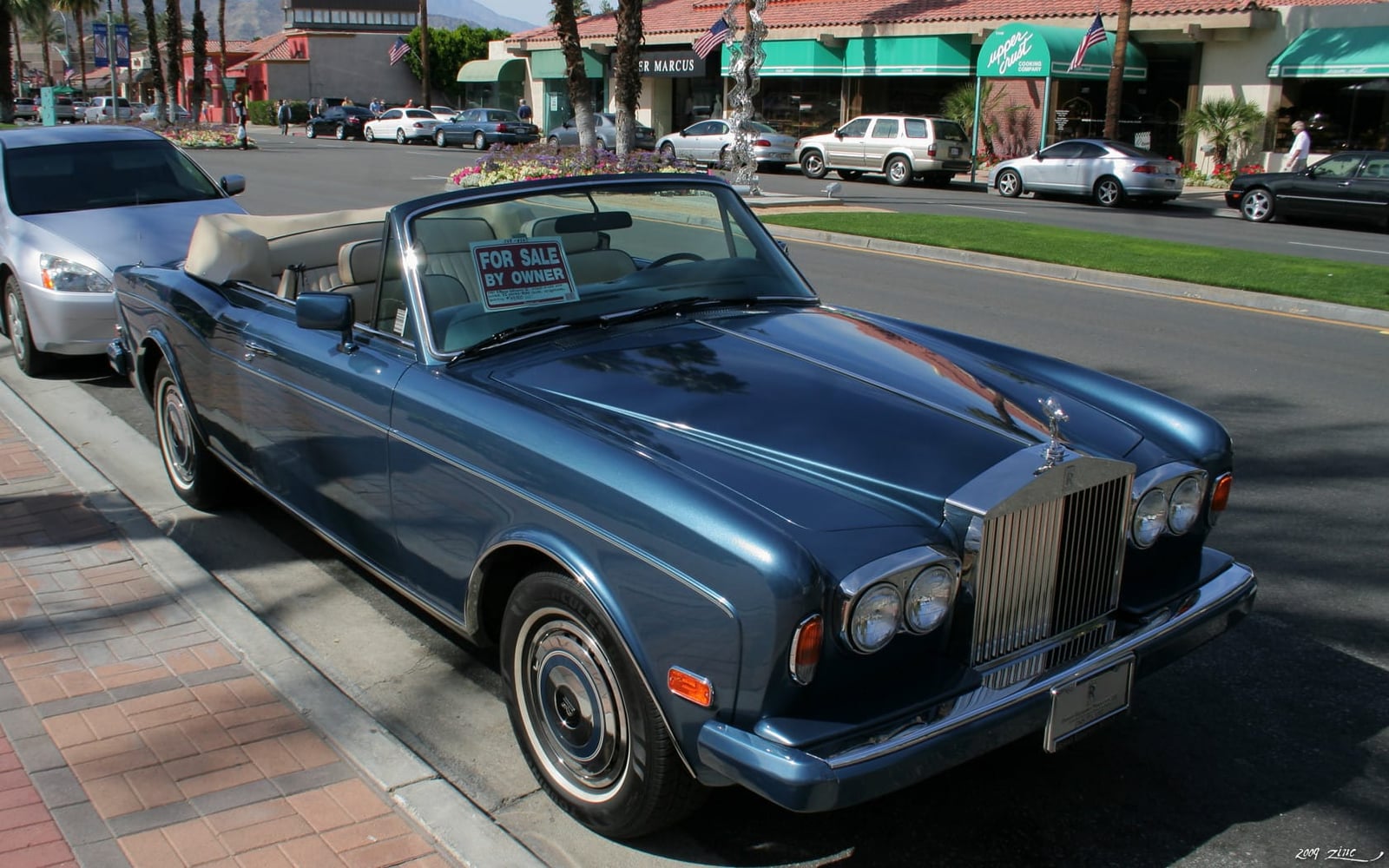
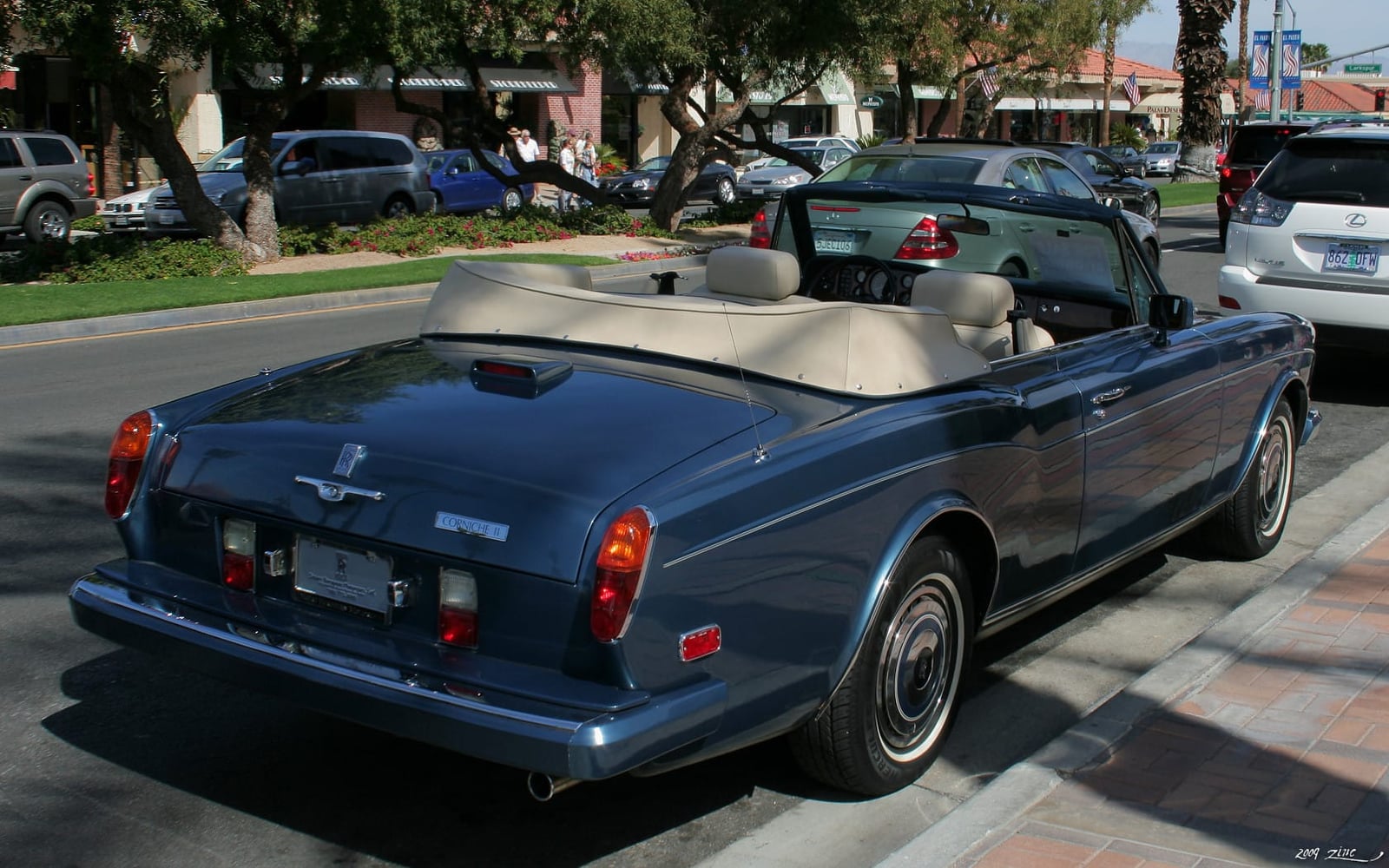
The Corniche timeline
- 1971The name is applied to the two-door Silver Shadow derivatives already in build: platforms leave Crewe for Mulliner Park Ward in London and return north for completion.
- 1977Chrome bumpers give way to impact bumpers and the Shadow II-era updates.
- 1980Coupe production ends at about 1,100 cars; the convertible carries the tradition alone.
- 1984The Bentley-badged version becomes the Continental.
- 1986The Corniche II brings fuel injection and consolidated development.
- 1989The III and IV add adaptive damping, airbags and colour-keyed detailing.
- 1995Production ends at about 6,300 cars, the last continuously coachbuilt British production car.
Buying checklist: the Corniche in front of you
The Shadow disciplines, first
- Hydraulic-system history with the correct fluids, evidenced not promised
- Structural honesty in the sills and floors
- The maintenance file outranks everything visible on the car
- Specialist inspection before purchase is non-negotiable at every tier
The coachbuilt extras
- Hood mechanism and fabric condition on the convertibles
- Hand-finished trim, whose restoration answers to Mayfair rates rather than the ordinary motor trade
- Lead-loaded seams and hand-formed panels need a body specialist who has seen them before
- Colour originality moves the price more than the badge on the boot
Which series
- Chrome-bumper convertibles to 1977 are the collectors' tier and firmest in value
- Impact-bumper cars offer the same handwork at the gentlest prices
- The injected Corniche II of 1986 to 1989 is the specialists' pick for actual miles
- The coupe, built only to 1980, is rarer than any convertible series yet trades below all of them
What the Rolls-Royce Corniche sells for at auction
In 2025 the median Rolls-Royce Corniche sold for £42,846 across 36 sales, 22% up on 2024. In real terms, typical Rolls-Royce Corniche prices were up about 6% over the five years to 2025, once inflation is accounted for.
| Variant | Sold | Typical range | Median |
|---|---|---|---|
| Corniche I | 286 | £23,135 - £40,853 | £31,310 |
| Corniche II | 77 | £32,419 - £50,600 | £43,770 |
| Corniche III | 21 | £50,090 - £63,562 | £54,829 |
| Corniche IV | 20 | £80,208 - £115,669 | £92,182 |
Show the year-by-year mediansHide the year-by-year medians
| Year | Sold | Median | In 2025 money |
|---|---|---|---|
| 2026 (so far) | 16 | £44,036 | |
| 2025 | 36 | £42,846 | £42,846 |
| 2024 | 33 | £35,236 | £36,588 |
| 2023 | 30 | £43,816 | £47,018 |
| 2022 | 30 | £55,391 | £63,435 |
| 2021 | 29 | £45,944 | £56,812 |
| 2020 | 26 | £31,753 | £40,238 |
| 2019 | 20 | £36,878 | £47,209 |
| 2018 | 15 | £33,144 | £43,150 |
| 2017 | 22 | £35,922 | £47,850 |
| 2016 | 26 | £31,624 | £43,208 |
| 2015 | 29 | £27,040 | £37,315 |
| 2014 | 18 | £31,983 | £44,314 |
| 2013 | 12 | £23,058 | £32,403 |
| 2012 | 8 | £21,676 | £31,160 |
| 2011 | 11 | £32,480 | £47,887 |
| 2010 | 11 | £32,893 | £50,380 |
| 2009 | 5 | £38,250 | £60,051 |
| 2008 | 4 | £13,974 | £22,371 |
| 2007 | 7 | £25,123 | £41,620 |
| 2005 | 6 | £18,631 | £32,381 |
| 2004 | 6 | £28,216 | £50,050 |
- £45,000Corniche I
- £63,192Corniche II
- £63,192Corniche II
- £100,000Corniche IV
- £44,468Corniche II
Strong evidence. 411 recorded sales and a dozen or more a year: the median and the range are well founded. Based on 411 sold results from public classic car auctions (1994 to 10 August 2026). Sold prices, not asking prices, and not a valuation: condition, history and specification vary from car to car. Inflation-adjusted figures use the ONS CPIH index, in 2025 money.
Frequently asked questions
What is the difference between the Corniche and the Silver Shadow?
How many Rolls-Royce Corniches were built?
Which Rolls-Royce Corniche is best to buy?
Are Rolls-Royce Corniche running costs high?
What is the most expensive Rolls-Royce Corniche ever sold at auction?
How often does a Rolls-Royce Corniche come up for sale?
Related across themes
More from Rolls-Royce


Recently added

Bentley Mk VI and R Type: the first complete Bentley, and the fastest four-seater on earth (1946–1955)

Bentley: from the Bentley Boys to Crewe, the sporting side of magnificence

Rolls-Royce: the best car in the world, and the price of saying so
