Aston Martin V8: the two decades of British muscle that saved the marque (1967–1989)
From the six-cylinder DBS to the 170 mph V8 Vantage, the big Towns-bodied Astons carried Newport Pagnell through bankruptcy, rescue and revival for twenty-two years. A guide to the DBS and V8 family, the Bond and Vantage years, and what to check before buying one.
Built 1967–1989 755 recorded sales
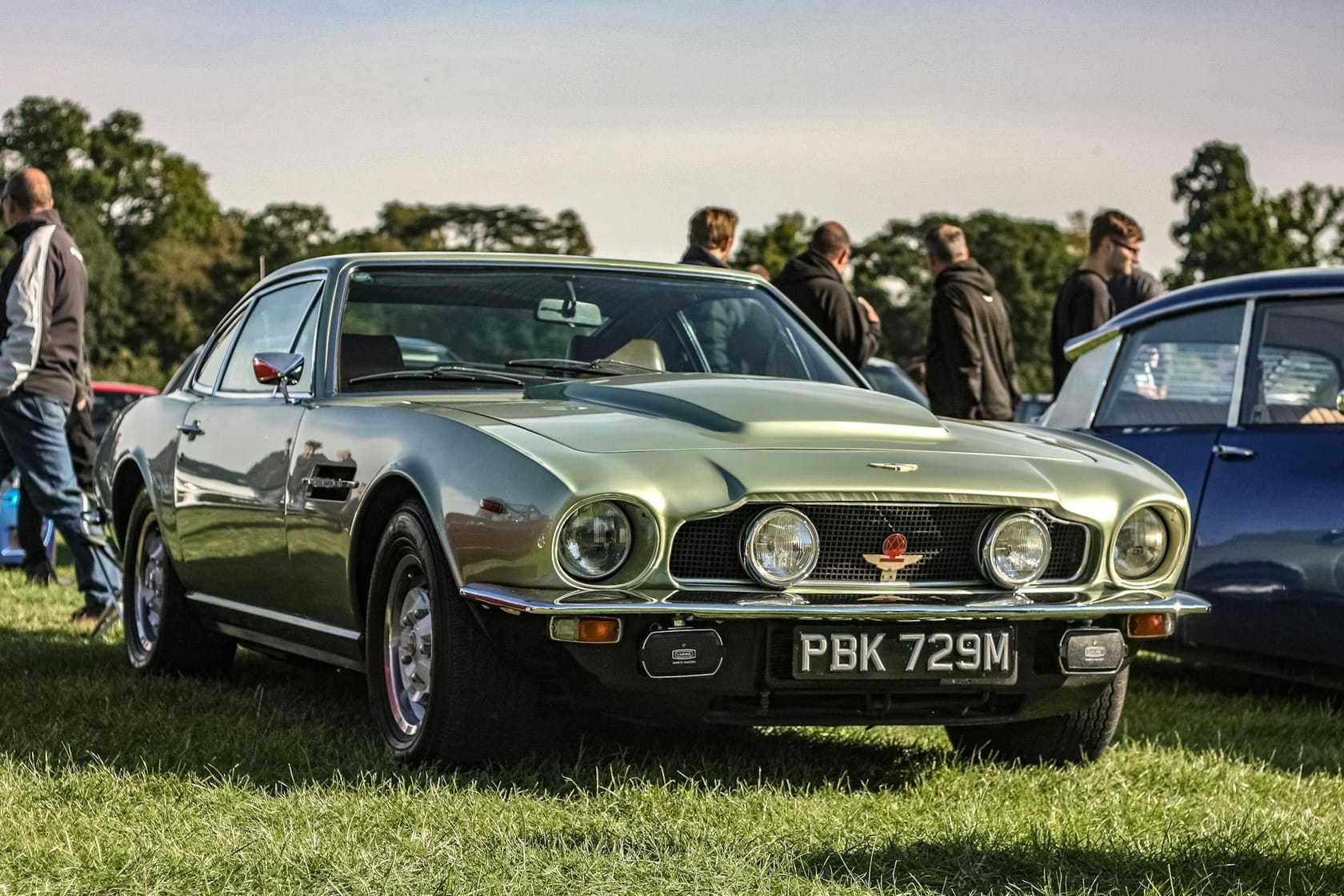
At a glance
- Years
- 1967–1989
- Body styles
- Two-door 2+2 saloon; Volante convertible
- Drivetrain
- Front engine, rear-wheel drive
- Engines
- 3995cc six (DBS); 5340cc Tadek Marek V8 (carburetted and injected)
- Power
- Around 282 bhp (DBS six) to about 400-plus bhp (Vantage, undisclosed in period)
- Top speed
- Around 140 mph (DBS) to 170 mph (V8 Vantage)
- Trim levels
- DBS, DBS Vantage, DBS V8; V8 Series 2-5; V8 Vantage; Volante; Oscar India
- Production
- Around 4,000 across the family over twenty-two years
- Assembly
- Newport Pagnell, Buckinghamshire
- Designer
- William Towns (body); Tadek Marek (V8)
- Values
- Six-cylinder DBS from around £45,000; V8 saloons £60,000-£100,000; Vantages and Volantes well beyond
- The claim
- The V8 Vantage of 1977 was hailed as Britain's first 170 mph supercar
- The service
- Twenty-two years of one body carrying the company through every crisis
The models
The glamour years get the films and the headlines, but it was the muscle years that quietly did the surviving. From 1967 to 1989 Aston Martin built essentially one car, William Towns’ broad-shouldered coupe, first as the six-cylinder DBS, then for two decades as the Aston Martin V8 in saloon, Volante and mighty Vantage forms, and that single long-lived family carried Newport Pagnell through bankruptcy, rescue and revival. Today the V8 era is the affordable door into classic Aston ownership, with 755 measured sales behind this page’s honest numbers.
DBS: the shape arrives early
William Towns drew the DBS as a V8 car, but Marek’s engine needed longer than the body: the DBS launched in 1967 with the DB6’s 4.0-litre six under its four-headlamp nose, a wider, sharper, more American-accented Aston with De Dion rear suspension and genuine four-seat space. Period buyers noted the pace gap; history has been kinder, prizing the six-cylinder DBS as the era’s elegant opening statement and its value entry. On television it became the Persuaders’ car; in the Bond film On Her Majesty’s Secret Service, briefly and tragically, 007’s.

The V8 lands, the company wobbles
Marek’s all-alloy 5,340cc V8 arrived in 1969 and the DBS V8 became Britain’s fastest four-seater; the 1972 facelift to single headlamps renamed it simply V8 as David Brown sold up and the familiar corporate peril resumed, receivership in 1975 included. Through it all Newport Pagnell hand-built the car in series collectors now catalogue: Weber-carburetted Series 3, the 1978 Oscar India refinements with their tea-tray tail, injected Series 5 to the end in 1989, plus the returning Volante convertible from 1978. Around 4,000 cars across the family kept the lights on for twenty-two years.

Vantage: Britain claims the supercar
In 1977 the era found its legend: the V8 Vantage, big valves, high compression, output undisclosed in period and estimated around 400 bhp, delivering roughly 170 mph and 0-60 in the low fives, numbers that beat Ferrari’s Daytona in contemporary testing and earned the enduring billing of Britain’s first supercar. The blanked bonnet scoop and deep chin spoiler were the only exterior announcements, in the best gentleman-thug tradition. Bond arrived a decade later, The Living Daylights putting the V8 into the films’ canon, an association renewed when the same car returned decades on in No Time to Die.

Zagato and the era’s wild margins
The V8 platform also carried the eighties’ flourishes: the 1986 V8 Vantage Zagato revived the sacred Milanese partnership with 52 brutally rectilinear coupes (and a handful of Volantes), pre-sold on sketches at the height of the classic boom, while the razor-edged Lagonda saloon shared the drivetrain beneath William Towns’ most audacious styling. Both are collected today as period pieces of the Gauntlett era’s showmanship, and both prove the same point as the mainstream cars: the V8’s engineering was strong enough to carry any ambition Newport Pagnell could draw over it.
What a V8 is like to drive
The V8 era drives as it looks: substantial, muscular and surprisingly wieldy once rolling, the 5.3’s torque moving nearly two tonnes with lazy authority through automatic or the heavy, satisfying ZF manual. The De Dion rear settles the ride to genuine grand-touring standards, the cabin is hand-trimmed Connolly club-room, and a Vantage compresses distance with a violence period rivals could not match. Against 1970s exotica the big Aston traded outright agility for reach and presence, and the trade still feels correct on British roads today.

Buying a V8-era Aston today
The family rewards the same disciplines at gentler money: factory records and matching numbers, structural inspection of sills, outriggers and the steel beneath aluminium panels, and above all documented specialist maintenance, because the hand-built V8 is tough when serviced properly and costly when neglected. Series specification matters: verify carburettor or injection originality, Oscar India details and any Vantage claims against the records, since upgrades are common. Volantes need hood and frame checks. Six-cylinder DBS cars make the value entry; sorted V8 saloons remain the family’s sweet spot; and the Vantages sit above both as the era’s collector tier.
Where the V8 era sits in the market
This is the era where classic Aston ownership becomes attainable, and it buys hand-built Newport Pagnell metal with Bond credentials and supercar history at a fraction of DB money. The badge decides almost everything: the carburettor saloons are the way in, the Volantes sit well above them, and the Vantage and X-Pack cars are a different market again. The full record, 755 recorded sales with a six-fold spread across twelve badges and a yearly chart that tracks the mix of cars rather than the market, is on the page covering what a DBS and V8 sell for.
More photos
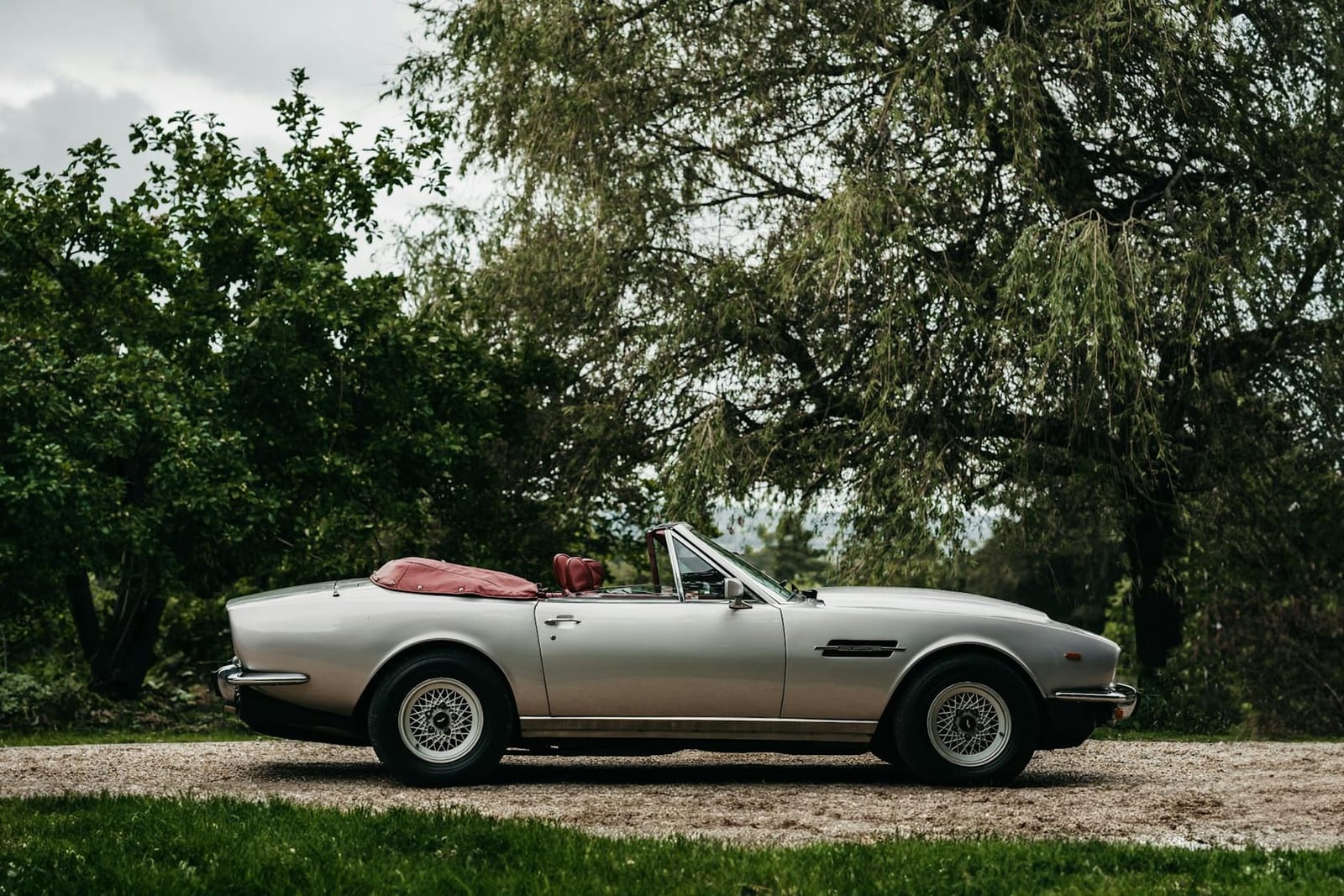
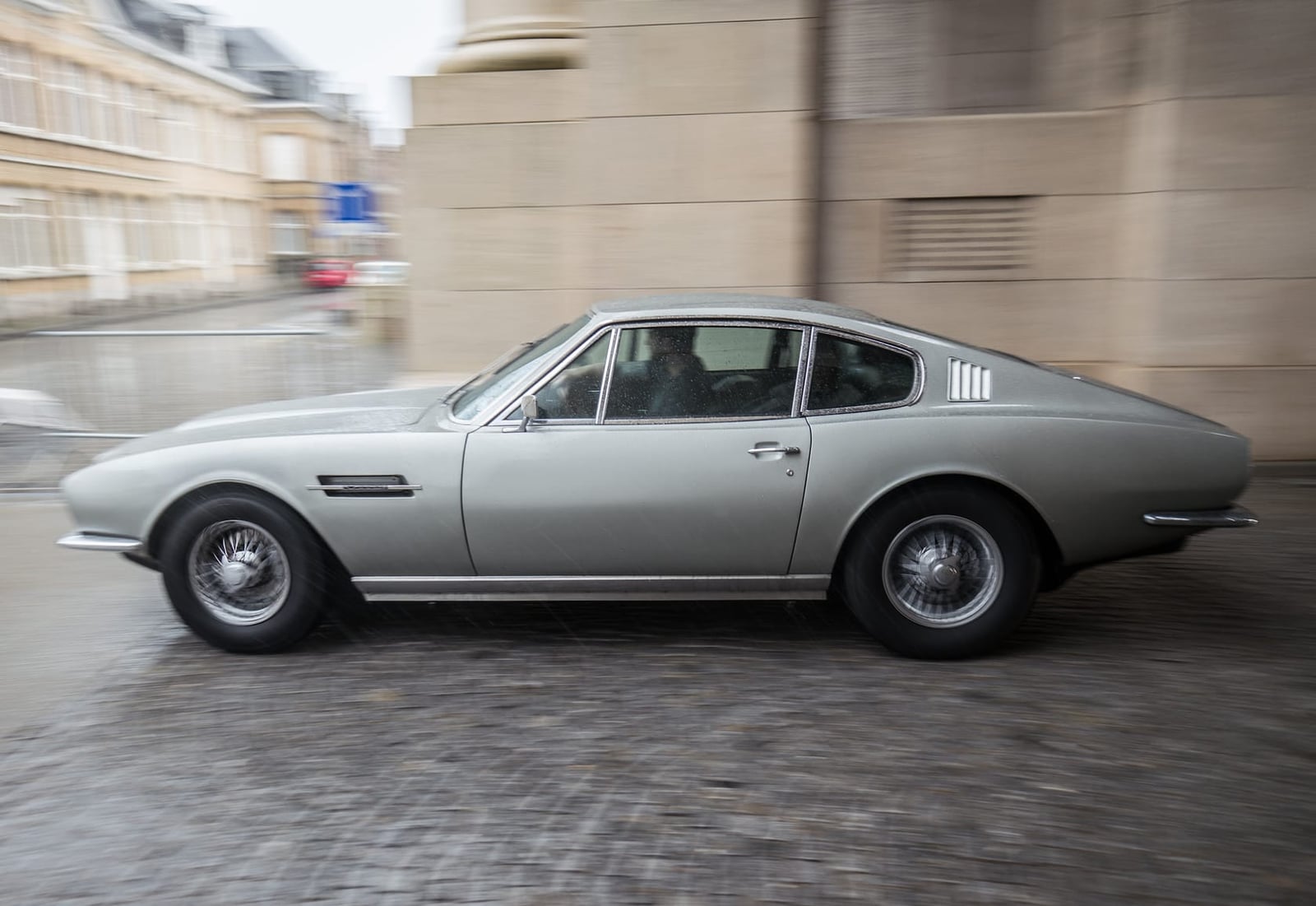
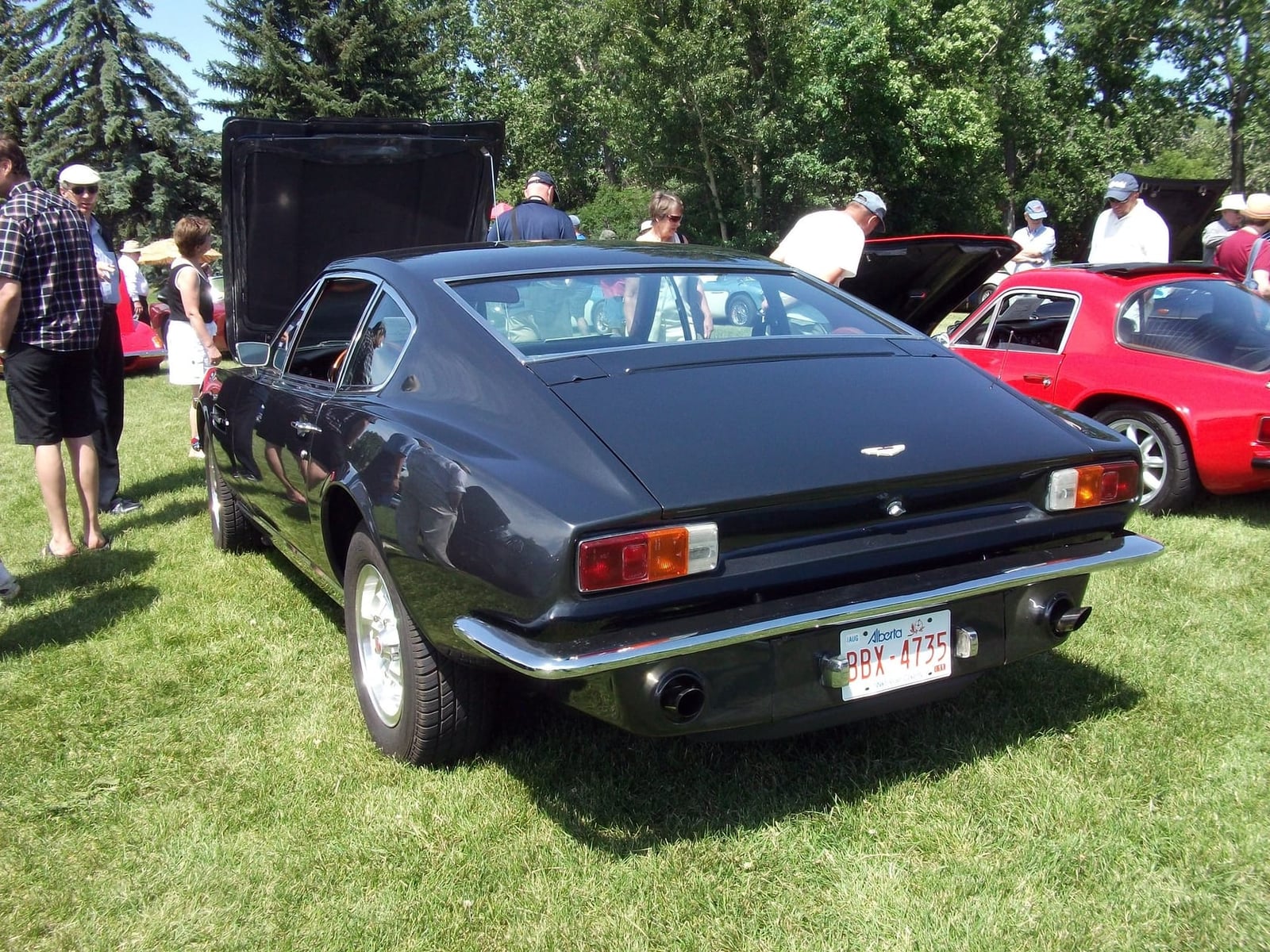
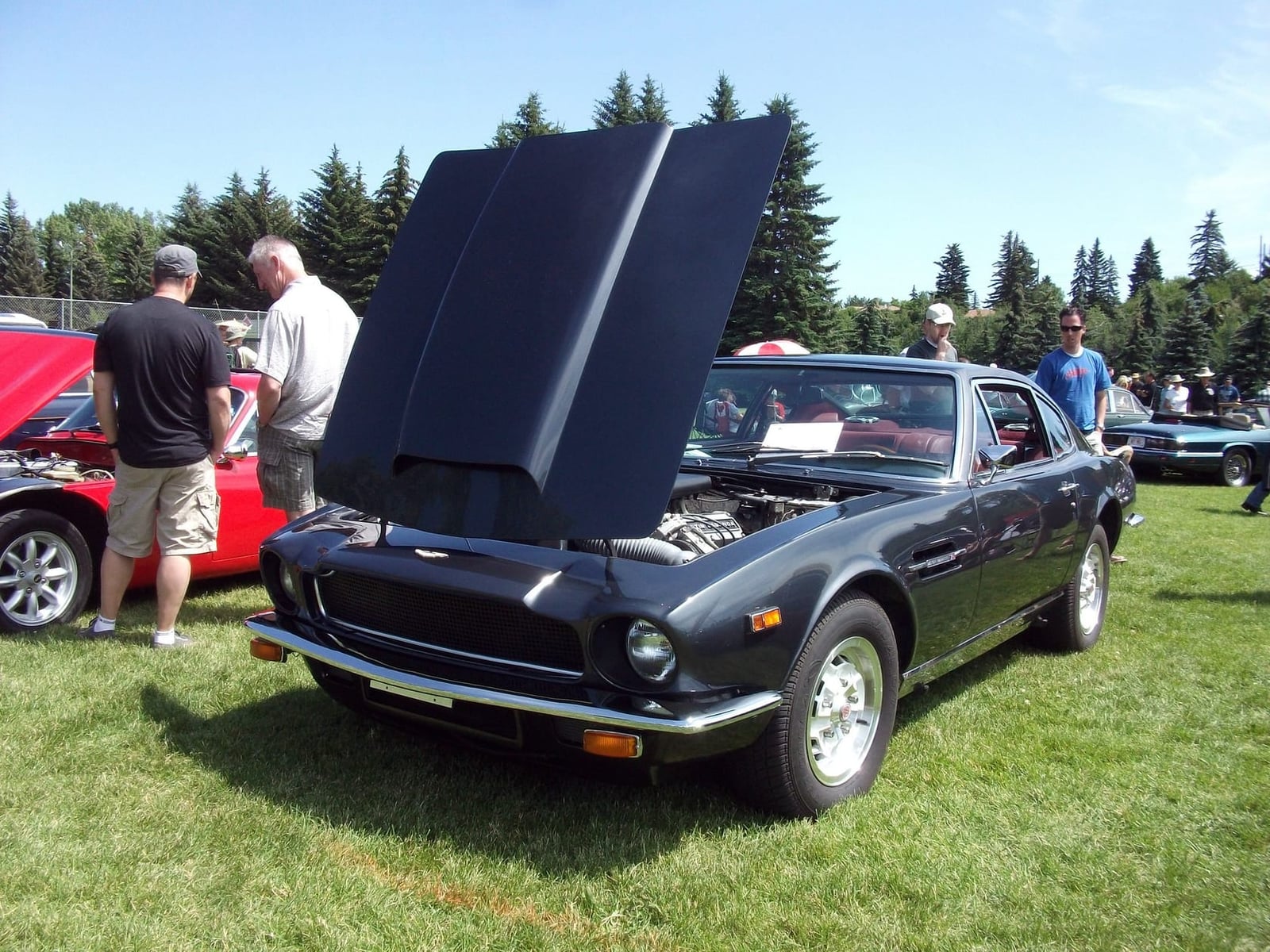
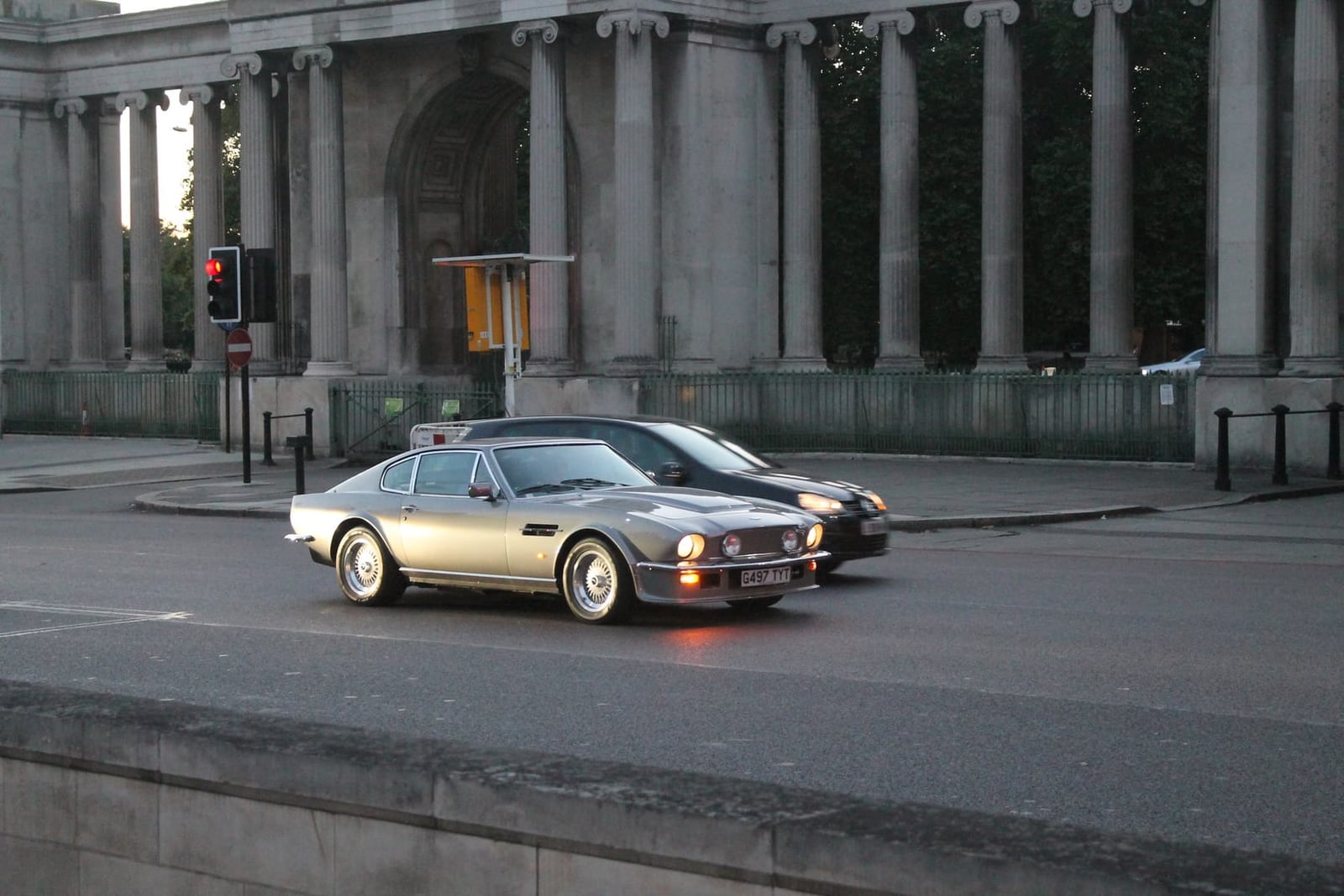
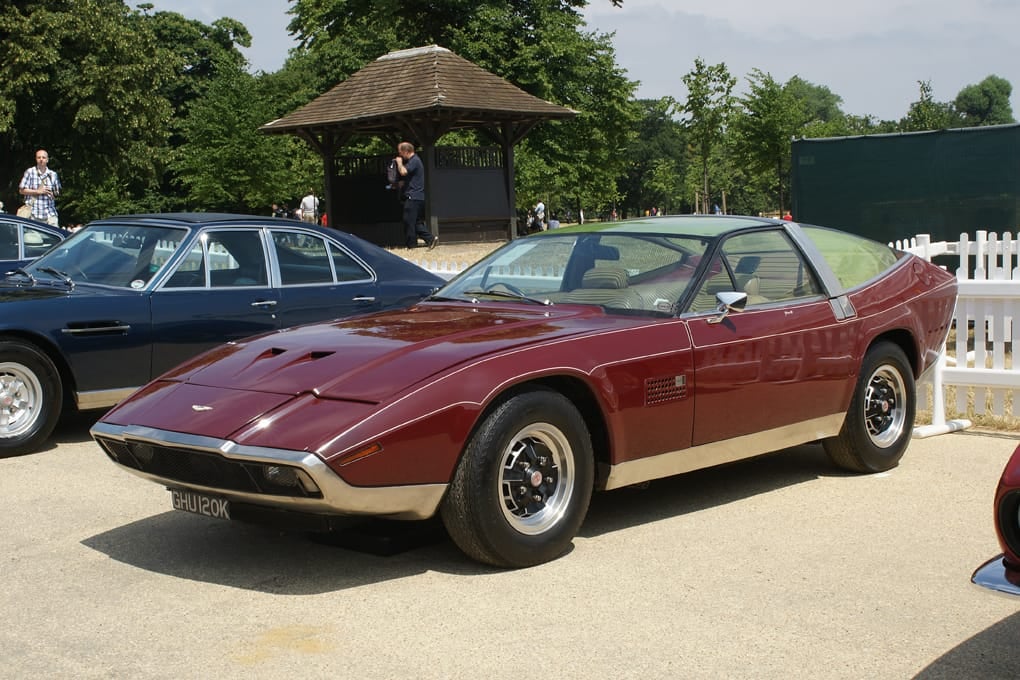
DBS / V8: the short history
- 1967The DBS launches with the DB6's 4.0 six under Towns' four-headlamp nose, because Marek's V8 needs longer than the body did; De Dion rear and genuine four-seat space.
- 1969The all-alloy 5,340cc V8 arrives and the DBS V8 becomes Britain's fastest four-seater.
- 1972A facelift to single headlamps renames it simply V8 as David Brown sells up.
- 1975Receivership, one of several; Newport Pagnell keeps hand-building the car through it.
- 1977The V8 Vantage arrives with big valves and high compression, output undisclosed, around 170 mph and 0 to 60 in the low fives.
- 1978Oscar India refinements bring the tea-tray tail; the Volante convertible returns.
- 1986The V8 Vantage Zagato revives the Milanese partnership with 52 rectilinear coupes, pre-sold on sketches.
- 1989Production ends after around 4,000 cars across twenty-two years.
The DBS / V8 viewing checklist
Structure
- Sills and outriggers first
- The steel beneath the aluminium panels, where corrosion hides
- Volantes need hood and frame checks of their own
- Factory records and matching numbers, as with every Newport Pagnell car
Maintenance evidence
- Documented specialist maintenance outranks everything else on this family
- The hand-built V8 is tough when serviced properly and costly when neglected
- Sorted V8 saloons are the family's sweet spot; projects rarely make sense
- Nearly two tonnes and a heavy ZF manual mean clutch and gearbox history matter
Specification, because upgrades are common
- Verify carburettor or injection originality against the records
- Oscar India details and any Vantage claim need documentary support
- Six-cylinder DBS cars are the value entry and a different car to drive
- Zagato and Lagonda derivatives are separate markets with their own registries
What the Aston Martin V8 sells for at auction
In 2025 the median Aston Martin V8 sold for £105,056 across 33 sales, 14% up on 2024. In real terms, typical Aston Martin V8 prices were down about 9% over the five years to 2025, once inflation is accounted for.
| Variant | Sold | Typical range | Median |
|---|---|---|---|
| V8 Saloon Carbureted (Series II - IV) | 261 | £36,757 - £71,667 | £52,640 |
| V8 Saloon DBS V8 (Series I) | 89 | £40,108 - £71,000 | £55,108 |
| V8 Volante Carbureted (Series I) | 70 | £43,201 - £120,087 | £90,828 |
| DBS | 67 | £38,659 - £77,890 | £55,200 |
| V8 Volante EFI (Series II) | 60 | £65,246 - £154,848 | £105,354 |
| DBS Vantage | 52 | £47,873 - £95,502 | £70,916 |
| V8 Vantage Saloon | 52 | £49,875 - £166,100 | £117,203 |
| V8 Vantage Volante | 36 | £80,805 - £181,638 | £120,872 |
| V8 Vantage Volante X-Pack | 18 | £167,815 - £280,264 | £235,950 |
| V8 Vantage Saloon X-Pack | 15 | £281,750 - £345,348 | £315,576 |
| V8 Saloon EFI (Series V) | 13 | £34,666 - £107,900 | £96,700 |
| V8 Vantage Volante Prince Of Wales | 11 | £136,492 - £405,964 | £201,600 |
Show the year-by-year mediansHide the year-by-year medians
| Year | Sold | Median | In 2025 money |
|---|---|---|---|
| 2026 (so far) | 23 | £90,555 | |
| 2025 | 33 | £105,056 | £105,056 |
| 2024 | 44 | £91,777 | £95,299 |
| 2023 | 104 | £52,233 | £56,051 |
| 2022 | 101 | £61,803 | £70,779 |
| 2021 | 54 | £68,542 | £84,756 |
| 2020 | 21 | £91,111 | £115,457 |
| 2019 | 21 | £115,312 | £147,616 |
| 2018 | 33 | £107,900 | £140,474 |
| 2017 | 32 | £110,812 | £147,607 |
| 2016 | 42 | £86,100 | £117,642 |
| 2015 | 35 | £86,994 | £120,052 |
| 2014 | 25 | £71,485 | £99,045 |
| 2013 | 26 | £54,226 | £76,204 |
| 2012 | 26 | £56,320 | £80,960 |
| 2011 | 23 | £45,155 | £66,575 |
| 2010 | 26 | £41,100 | £62,950 |
| 2009 | 19 | £31,586 | £49,589 |
| 2008 | 4 | £22,042 | £35,288 |
| 2007 | 15 | £33,750 | £55,912 |
| 2006 | 10 | £17,075 | £28,948 |
| 2005 | 14 | £22,469 | £39,052 |
| 2004 | 16 | £20,412 | £36,207 |
| 2003 | 3 | £38,063 | £68,484 |
| 2001 | 4 | £93,950 | £173,795 |
- £115,700V8 Vantage Volante
- £65,223V8 Saloon Carbureted (Series II - IV)
- £58,344V8 Volante Carbureted (Series I)
- £64,320V8 Saloon DBS V8 (Series I)
- £53,518V8 Saloon Carbureted (Series II - IV)
Strong evidence. 755 recorded sales and a dozen or more a year: the median and the range are well founded. Based on 755 sold results from public classic car auctions (2001 to 10 August 2026). Sold prices, not asking prices, and not a valuation: condition, history and specification vary from car to car. Inflation-adjusted figures use the ONS CPIH index, in 2025 money.
Frequently asked questions
What is the difference between the Aston Martin DBS and the V8?
How fast is the Aston Martin V8 Vantage?
Was the Aston Martin V8 a James Bond car?
What are the Aston Martin V8 series?
How much does an Aston Martin V8 sell for?
What is the most expensive Aston Martin V8 ever sold at auction?
How often does an Aston Martin V8 come up for sale?
Related across themes
More from Aston Martin


Recently added

Land Rover Defender vs Series III: leaf springs or coils, and what three to one at auction is really buying

Ford Capri vs Escort Mk2: the same engines in two different bodies, and the plain saloon now costs more

Jaguar E-Type vs Austin-Healey 3000: the two big British sixes, and what the auction record says about each
