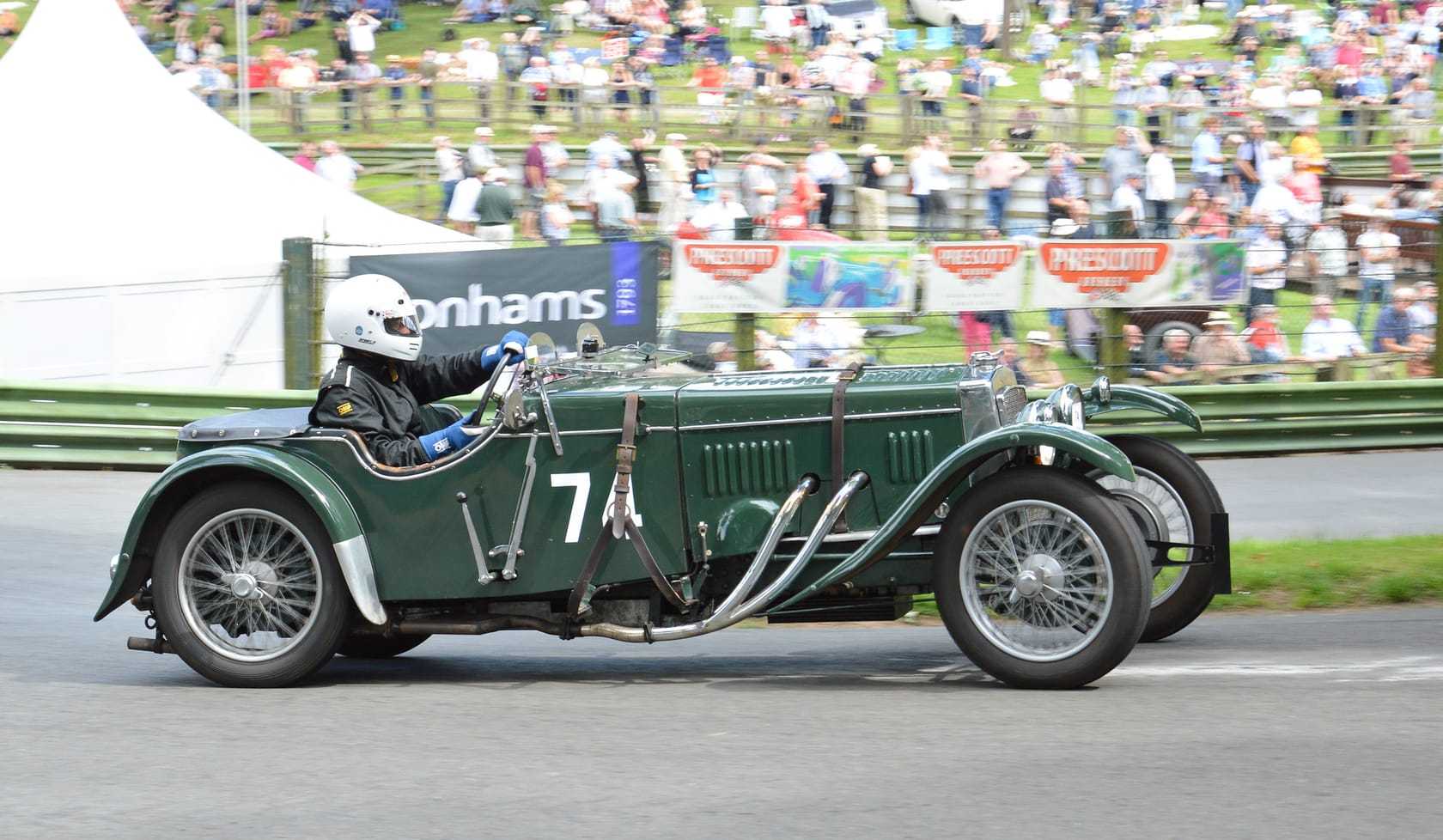
Most companies chase progress; Frazer Nash resisted it, gloriously. Archie Frazer-Nash’s firm drove its rear wheels by chains, one per gear, into the mid-1930s because nothing else changed gear as fast or felt as direct, and the chain gang faithful have never stopped agreeing. Add the pre-war deal that imported BMWs to Britain and the post-war Bristol-engined racers that took third at Le Mans, and this tiny marque, a few hundred cars in all, owns one of the richest stories and strongest markets in the British classic world.
The chain gang
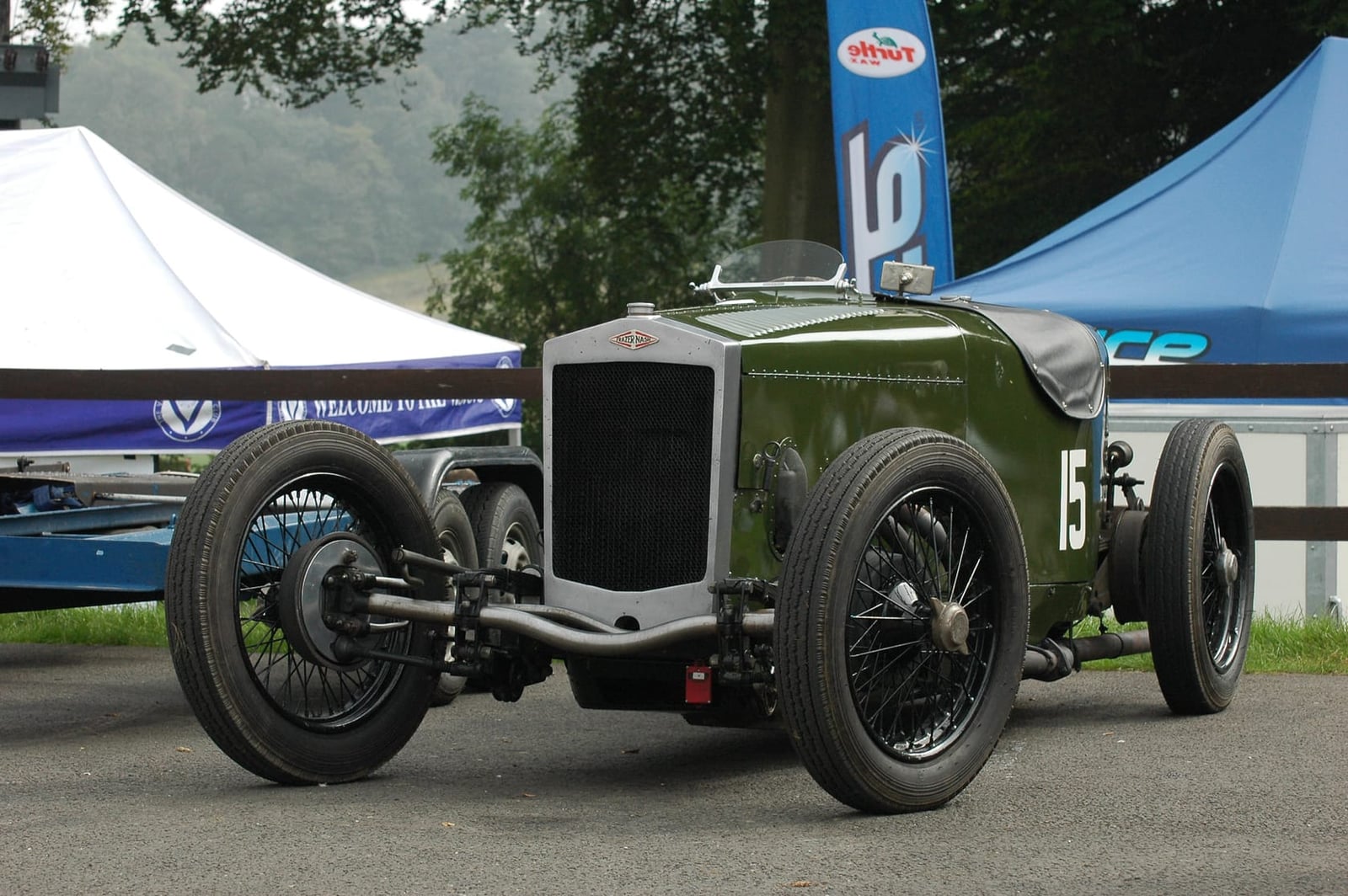
Born in 1922 from the cyclecar-era GN concern, the Frazer Nash sports car was ruthless simplicity: a light chassis, a solid back axle and chain final drive with a dog-clutch per ratio, giving gearchanges measured in milliseconds and a connection to the road nothing geared could match. Boulogne, TT Replica and their siblings took the formula trials-climbing, record- breaking and racing everywhere the twenties and thirties offered, and roughly 400 chain-drive cars built the legend. The Vintage Sports-Car Club paddock still runs on them, driven exactly as intended.

Frazer Nash at auction
What a classic Frazer Nash sells for at auction
- Median sale, 2025
- £70,357
- Sales in 2025
- 5 8 in 2022, the most we have recorded
- Sold when offered
- 61.7% Of the cars put up for auction since 2002
- The record
- £657k Le Mans Replica, Bonhams, August 2013
The BMW chapter
Progress arrived wearing another badge: from 1934 the company imported BMW’s brilliant 315, 319 and 328 models as Frazer Nash-BMWs, giving British buyers the most advanced sports cars of the day and the firm a profitable second line. The relationship shaped what came next for everyone: after the war the BMW 328 engine design passed to Bristol as reparations, and the resulting two-litre six became the heart of post-war Frazer Nash, closing the circle the import business had opened.
Bristol power and the Le Mans Replica
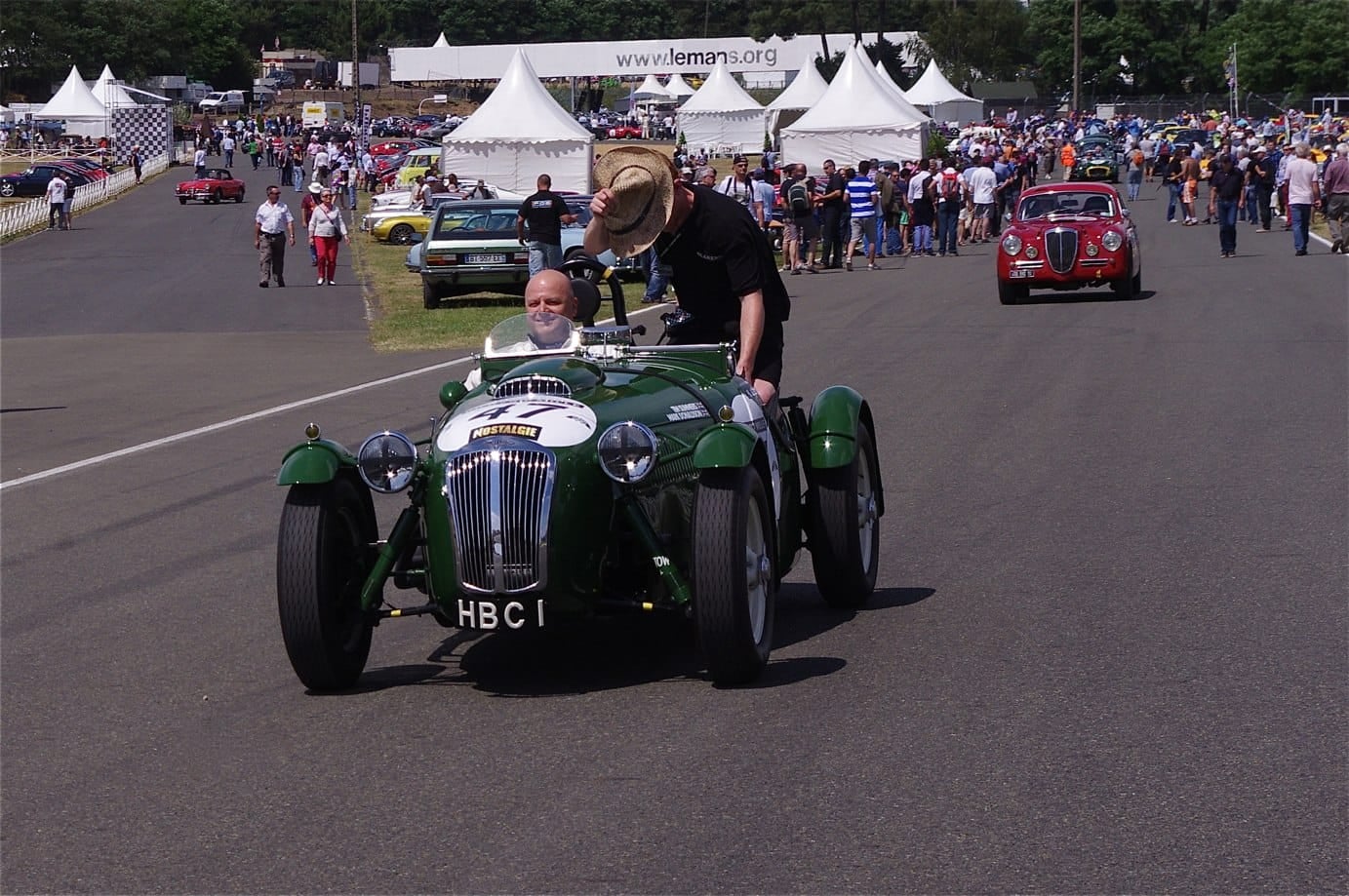
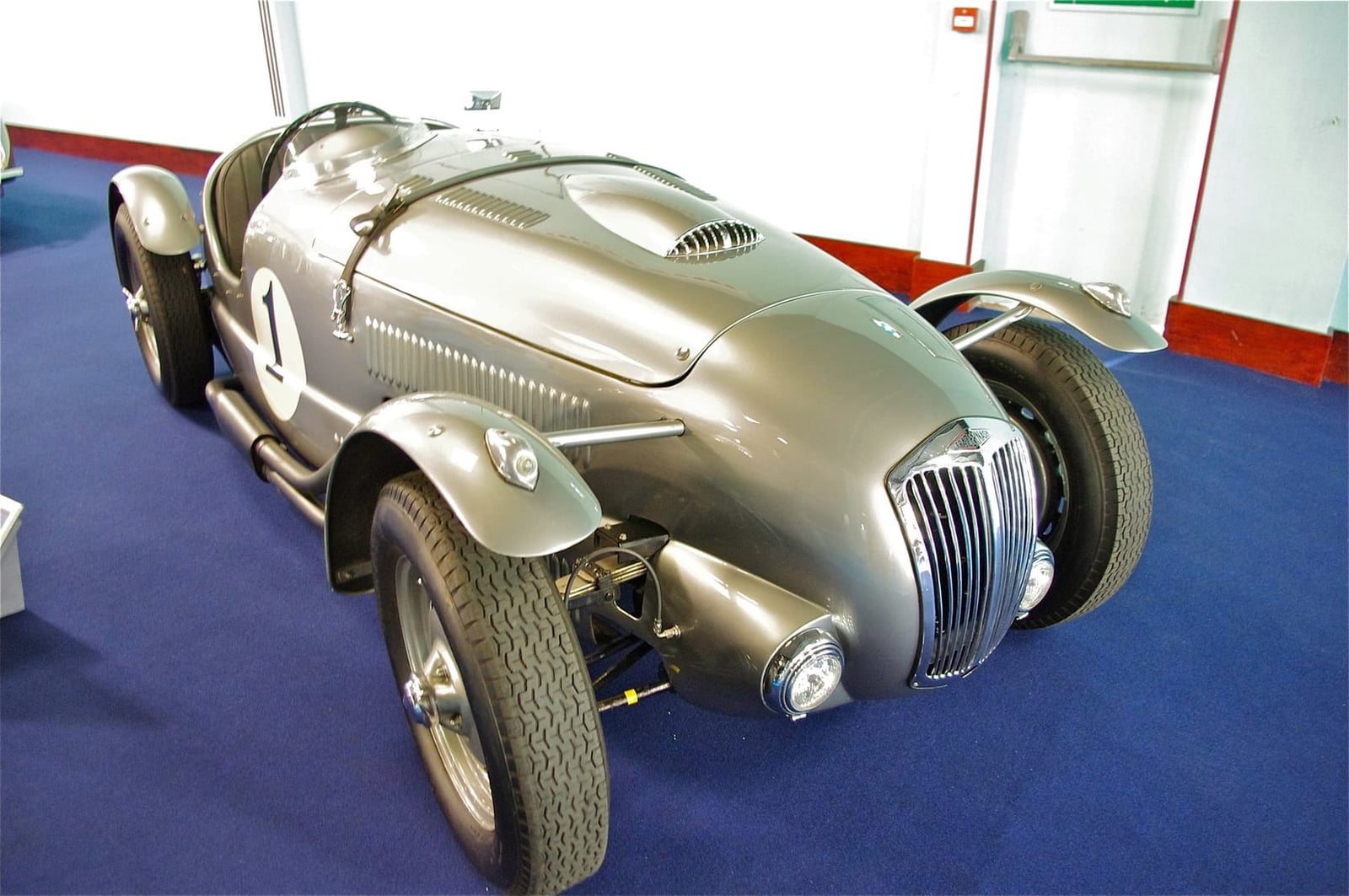
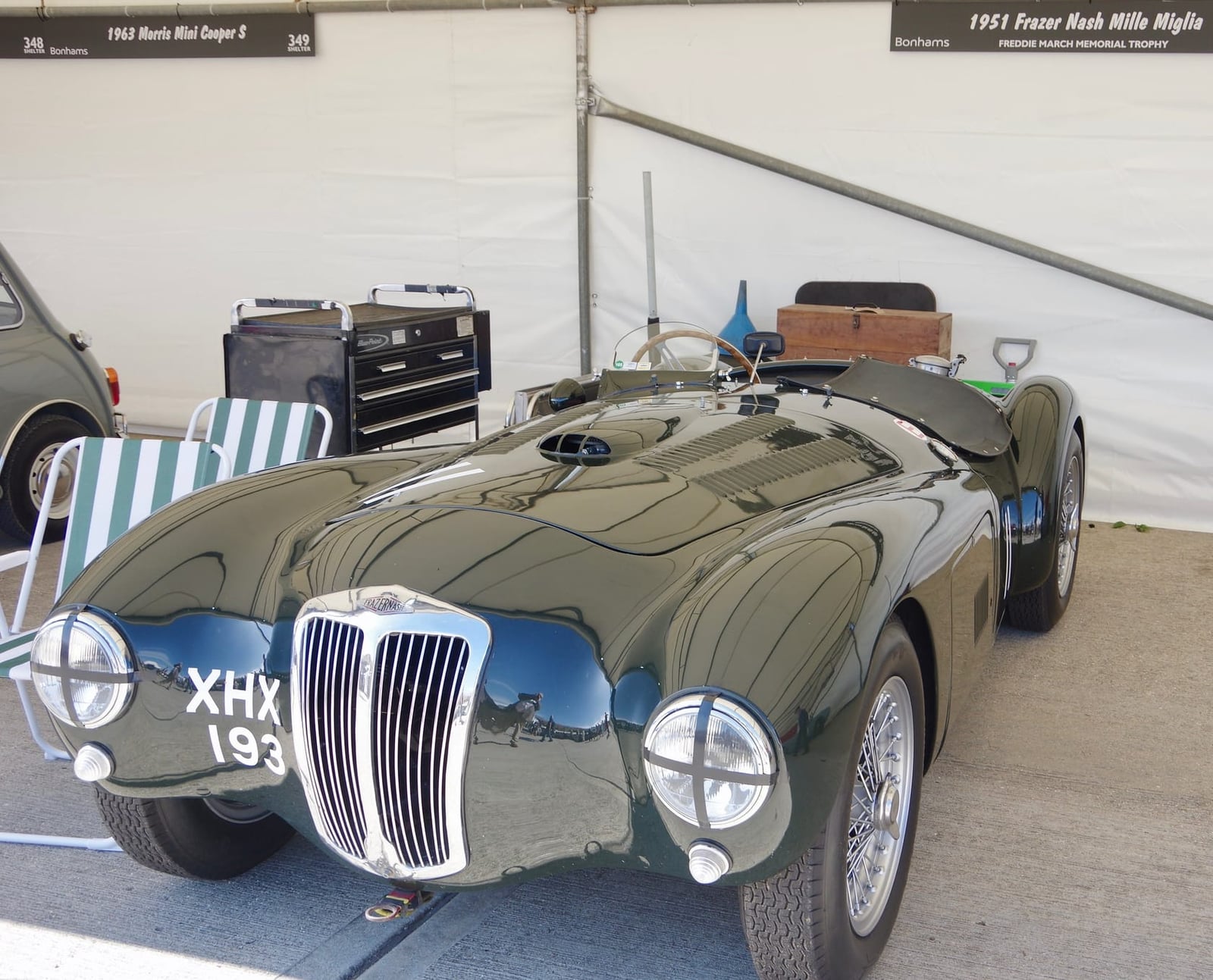
The post-war cars were hand-built jewels: perhaps 85 in total, led by the cycle-winged Le Mans Replica, named for the marque’s third overall at Le Mans in 1949 and campaigned by privateers to wins from Sebring to the Targa Florio, where Franco Cortese’s 1951 victory remains the marque’s greatest single result. Mille Miglia, Targa Florio and Sebring models clothed the same bones in full-width bodywork. Production faded by 1957, the company turning to engineering work, and every one of those few cars is documented, known and wanted.

What a Frazer Nash is like
Ownership is stewardship at this level: the cars are raced, hill-climbed and toured hard by a club that knows every chassis, chain-drive technique is a skill the community teaches, and the Bristol-engined cars combine vintage directness with genuinely modern pace. Parts are made, histories are argued in print, and originality questions get settled by archive rather than opinion. Few ownership communities in the world are tighter, which is precisely what six-figure stewardship needs.

Values: the summit of the small marques
Fifty-eight measured sales at a £128,000 median make Frazer Nash the highest-priced marque this site tracks: Frazer Nash-BMWs from around £80,000, chain-drive cars £150,000 upward with TT Replicas beyond £250,000, and Le Mans Replicas commanding £400,000 to £700,000 and more with period competition history. The market is small, expert and utterly provenance-driven, and it prices exactly what the chain gang always knew: they do not make them like this, and mostly never did.
More photos