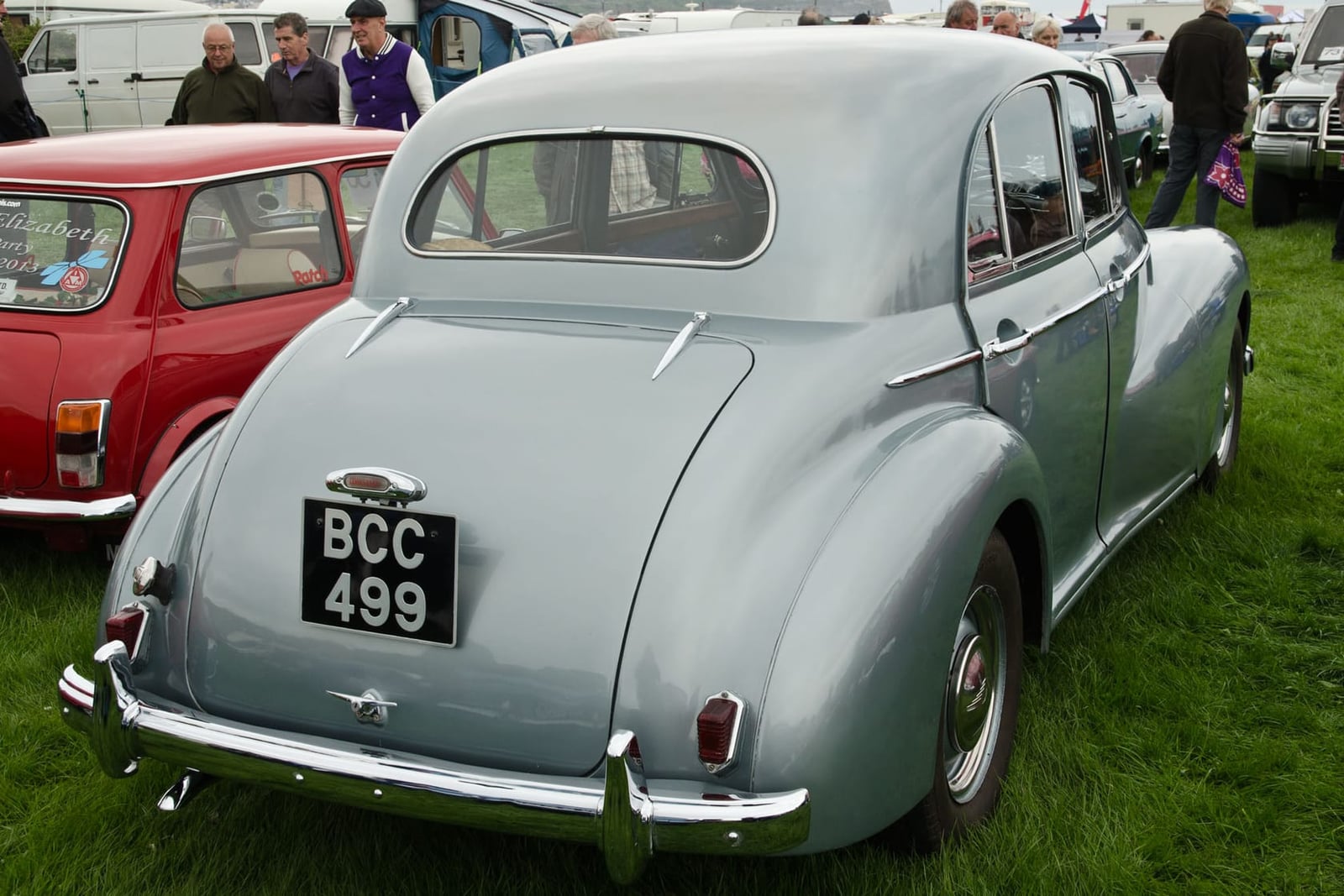
Wolseley’s signature glowed in the dark: an illuminated radiator badge, lit with the sidelights from 1932. The badge carried a company that had been Britain’s biggest car maker in the Edwardian era through a Nuffield takeover, decades as BMC’s luxury rung, and a fifties reign as the definitive police car, before British Leyland retired the name in 1975. Wolseley cars are today’s quiet bargain among classic badges, and their story runs through the whole British industry.
Sheep shears to market leader
The company began in wool: the Wolseley Sheep Shearing Machine Company’s ambitious general manager, one Herbert Austin, built its first experimental cars before the Vickers armaments group founded Wolseley Motors around him in 1901. Austin left to found his own marque in 1905, but Wolseley grew into Britain’s largest car maker of the Edwardian age, building everything from small twins to grand limousines. Receivership in 1926 brought a famous auction: William Morris bought the firm with his personal cheque in 1927, and Wolseley entered the Nuffield empire it would never leave.

Wolseley at auction
What a classic Wolseley sells for at auction
- Median sale, 2025
- £4,102 Down from £7,471 in 2021
- Sales in 2025
- 36 38 in 2024, the most we have recorded
- Sold when offered
- 78.7% Of the cars put up for auction since 2004
- The record
- £161k 10hp, Bonhams, November 2021
The sporting thirties
Under Morris the marque found a sporting streak: the overhead-cam Hornet six of 1930 put a silky engine in a light chassis, and the Hornet Special became a favourite of the era’s coachbuilders and specials trade, with pointed tails and cycle wings over genuine pace. The same overhead-cam thinking fed the MG line next door, and pre-war Wolseleys from the Nine to the 25 gave the middle classes deluxe motoring with a Morris backbone. The Hornet Specials are the marque’s blue-riband collectables today.
The police years
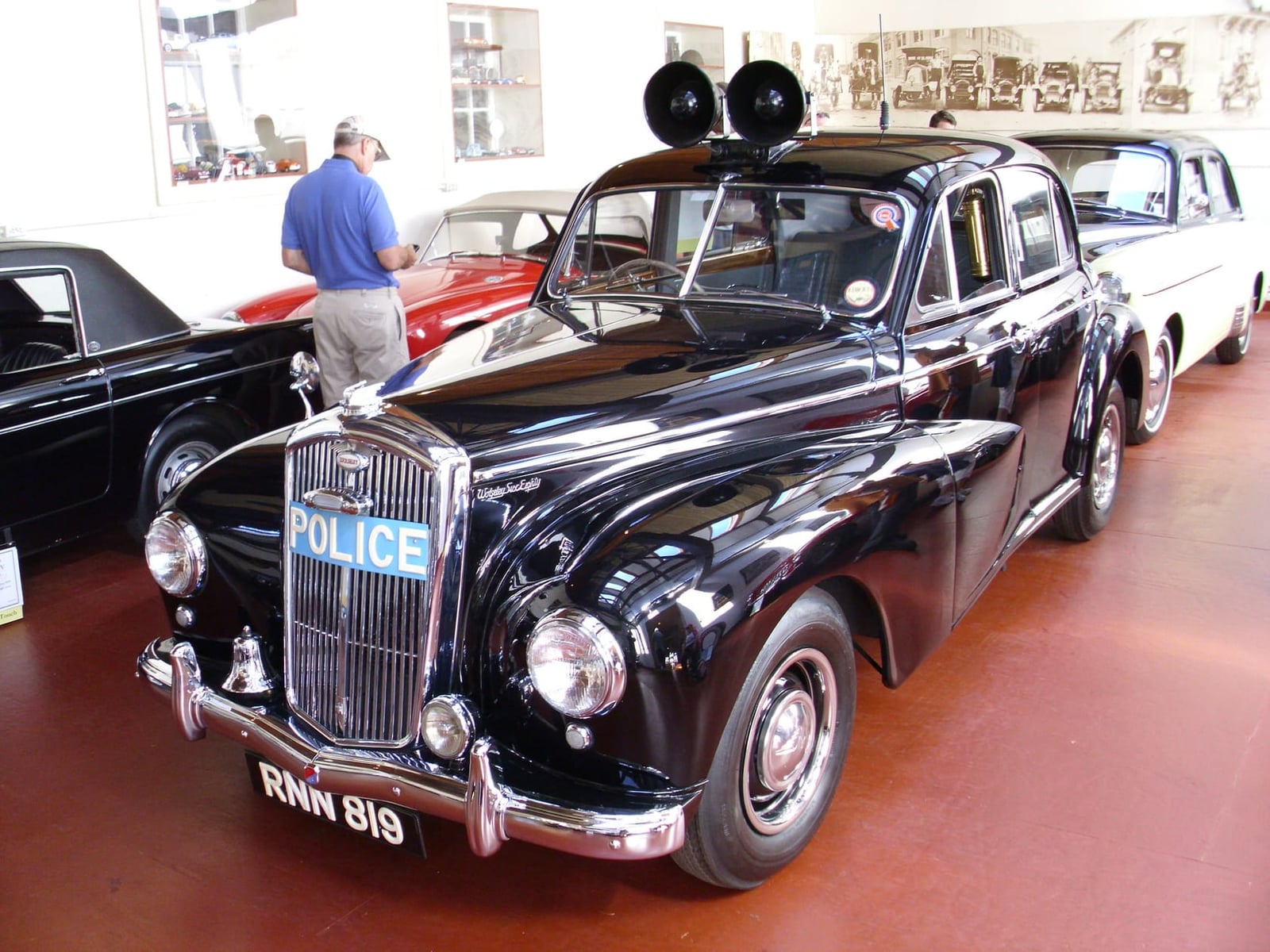
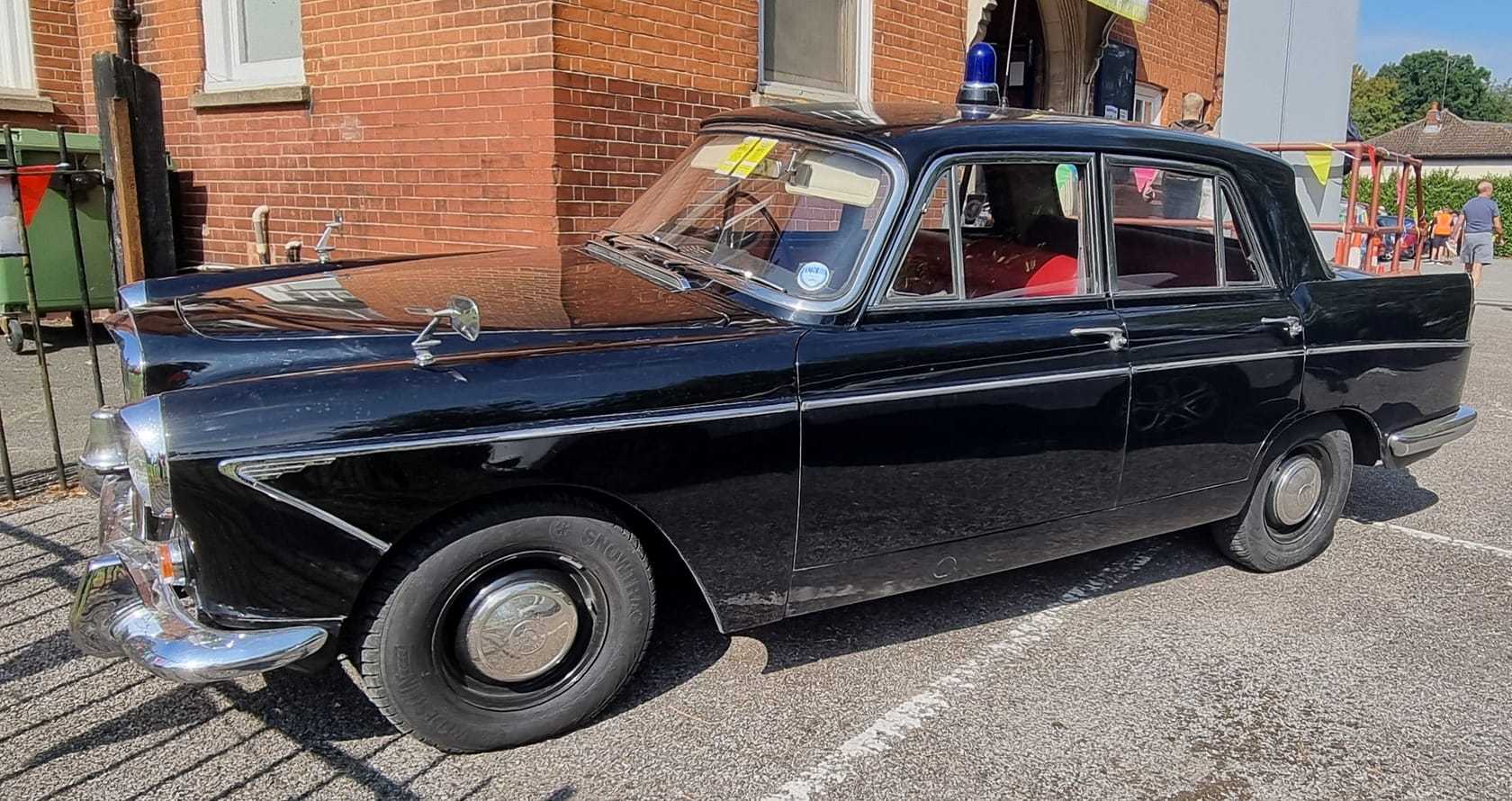
Post-war Wolseley found its defining role: the 6/80 of 1948, with its overhead-cam six and stately pace, became the standard police car of forces across Britain, its black silhouette, bell and illuminated badge turning into national shorthand for the law in every fifties film. The 6/90, 6/99 and 6/110 continued the beat into the sixties alongside 4/44 and 15/50 civilian saloons. Genuine ex-police cars with provenance are the survivors enthusiasts fight over, and the museum-kept examples still wear their roof bells proudly.

The badge-engineering decades
BMC positioned Wolseley as the luxury rung of every ladder: the 1500 dressed a Morris Minor floorpan in leather and walnut, the Farina 15/60 and 16/60 topped the Cambridge-Oxford family, the Hornet put a boot and the lit badge on the Mini, the 1100-1300 gained Wolseley trim, and the 18/85 and Six did the same for the landcrab. Nothing wore the badge that a sister Austin or Morris did not share underneath, and nothing mattered less to the loyal buyers who wanted the glow and the timber.

Decline and the seven-month wedge
British Leyland inherited more badges than it needed, and Wolseley’s end came quickly: the wedge-shaped 18-22 series of March 1975, the last car to carry the illuminated grille, lost its name that October when the range was rebranded Princess. Seven months of production made the final Wolseley an instant curiosity, and 74 years of the marque closed with a model that never even received a proper name. The Wolseley Register keeps the whole span alive, from Edwardian survivors to the last wedges.

Values: luxury trim at bargain prices
Three hundred and six measured sales at a £5,800 median make Wolseley one of the cheapest doors into classic ownership: post-war saloons from £3,000, good cars £5,000 to £12,000, with Hornet Specials, genuine police cars and pre-war rarities beyond. The pattern rewards the marque’s old promise, because the leather and timber that cost extra in 1960 now come at Morris money, and the badge still lights up when the sidelights go on.
More photos