Frogeye Sprite: the happiest face in motoring (1958–1961)
At a glance
- Years
- 1958–1961
- Body styles
- Two-seat roadster
- Drivetrain
- Front engine, rear-wheel drive
- Engines
- 948cc A-series twin-carburettor four
- Power
- 43 bhp
- Top speed
- Around 83 mph
- Trim levels
- One joyous specification; Speedwell and Sebring tuning in period
- Production
- About 49,000
- Assembly
- Abingdon, Oxfordshire
- Designer
- Donald Healey Motor Company; body by Gerry Coker
- Values
- Projects from around £6,000; usable cars £10,000-£15,000; the best £18,000-£25,000
- The price
- £669 at launch in 1958, the cheapest real sports car in Britain
- The face
- Bonnet-top headlamps meant to retract; the budget said they stayed
The models
No car in this entire hobby is greeted with more smiles at the gate than a Frogeye. The Austin-Healey Sprite Mk I of 1958 set out to be the cheapest real sports car in Britain, £669 on the road, and became something better: the car whose cost-cutting accident of bonnet-top headlamps produced the friendliest face in motoring. Around 49,000 were built in three years, the deep survivor market keeps the Frogeye Sprite attainable, and nothing else delivers so much joy per horsepower.
A sports car for £669
Donald Healey’s brief from BMC was a sports car anyone could afford, built from the corporate parts bins: the 948cc A-series with twin SUs making 43 bhp, Morris Minor rack-and-pinion steering, and a light unitary body drawn by Gerry Coker in one happy curve. Launched at £669, the Sprite undercut everything with comparable spirit, sold through Austin dealers everywhere, and put open-top motoring within reach of people the sports-car world had ignored. Abingdon built it alongside the MGs, and the little car’s success seeded the whole Spridget line that followed through the Sprite family and MG Midget.

The face: an accident of accounting
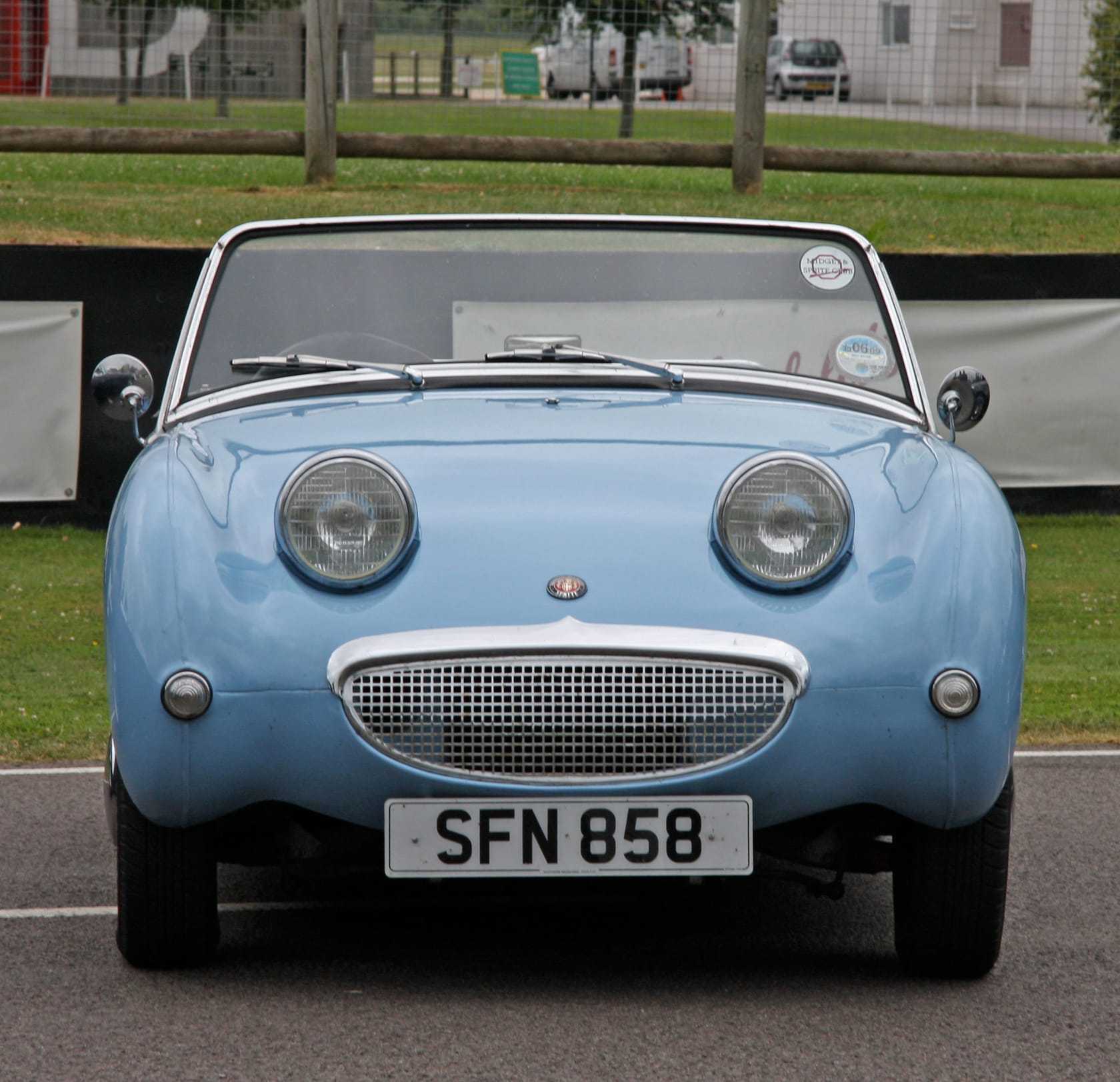
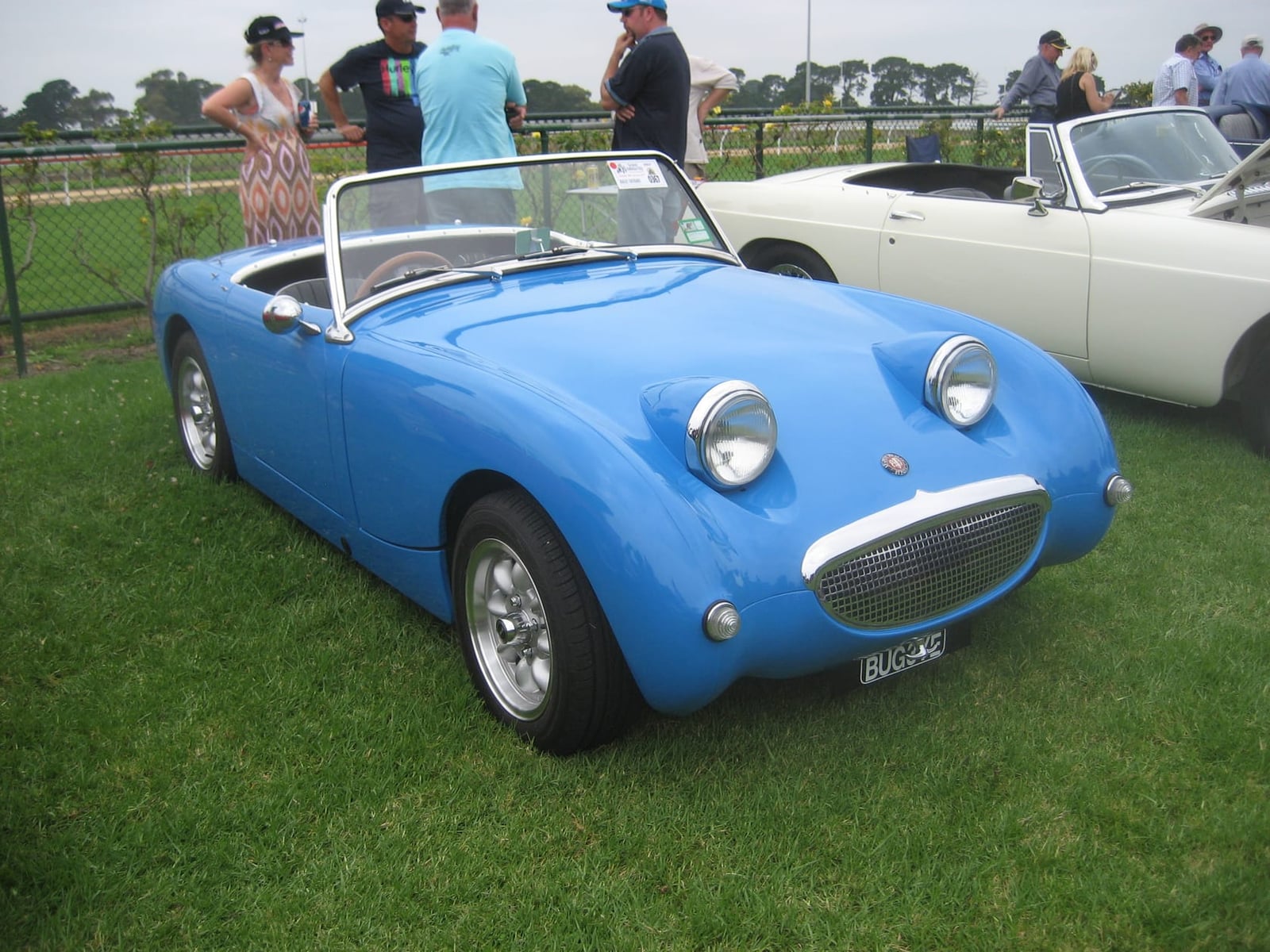
The Frogeye’s lamps were designed to retract, folding flat into the bonnet, until the costings killed the mechanism and BMC simply fixed them upright where they stood. The result was a front end of upright chrome-ringed eyes above a wide grinning grille, frog-eyed to Britain, bug-eyed to America, and instantly, permanently loveable. No focus group would have approved it and no designer has ever bettered it: the Frogeye disarms traffic wardens, delights children and makes every other car at a show look faintly self-important.

No boot lid, no handles, no matter
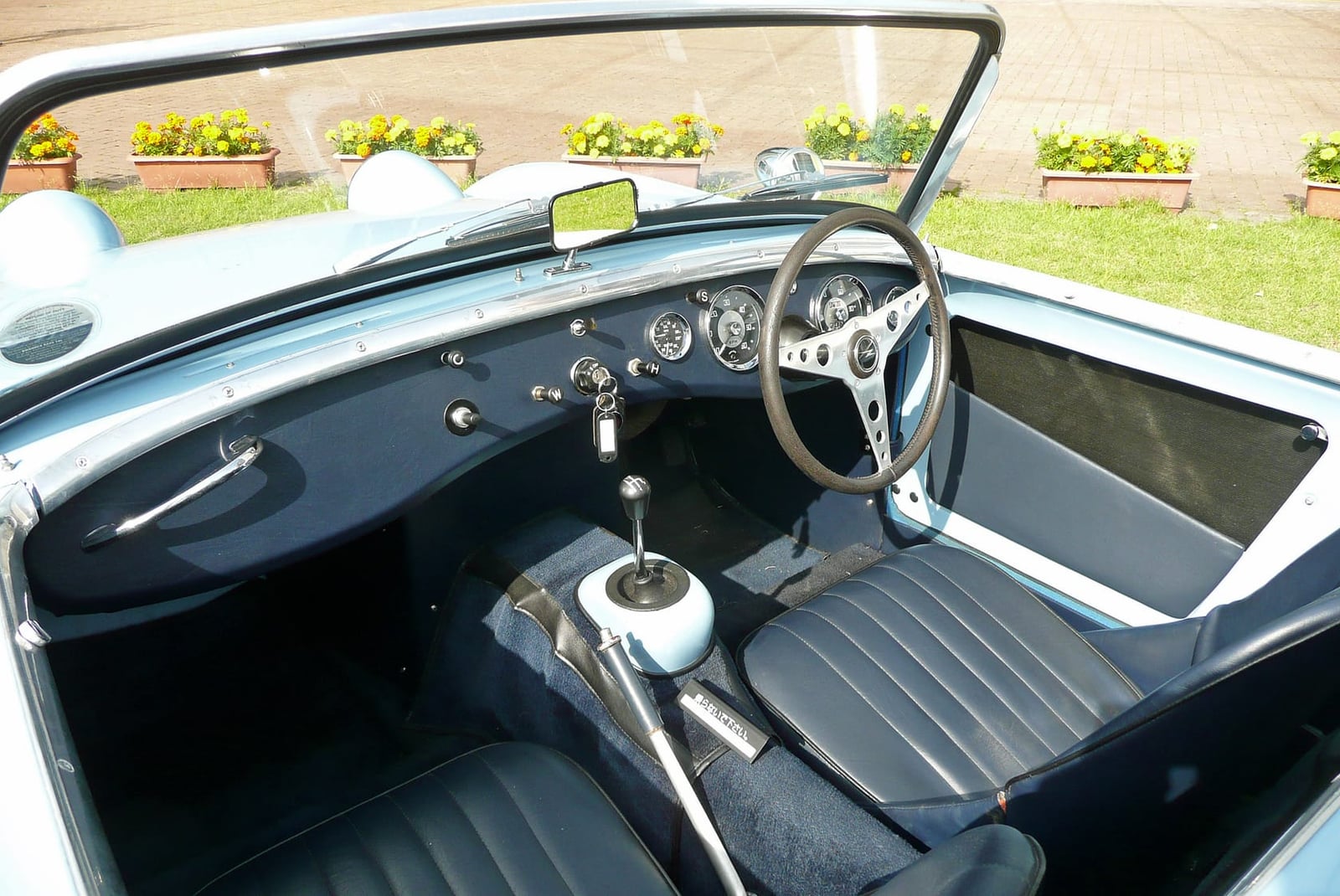
The economies continued behind the seats: there is no boot lid, luggage posting in from inside the cabin, no exterior door handles, sidescreens instead of windows, and a one-piece front end that lifts whole to reveal the engine like a toybox opening. None of it hurt the car. The structure gained stiffness from the missing apertures, the lift-up front makes maintenance a pleasure, and the luggage rack became the Frogeye’s universal accessory. At 660-odd kilograms the car needs little power to entertain, which is precisely the design’s genius.

Sebring Sprites and the racing habit
BMC’s competition shops took the Frogeye racing immediately, and the American endurance classic gave its name to a breed: Sebring Sprites wore streamlined hardtop bodywork and tuned engines for class assaults at Sebring, Le Mans and beyond, with results that embarrassed far larger machinery. Speedwell and a cottage industry of tuners served the privateers, and historic grids still field swarms of Frogeyes driven flat out everywhere, the racing habit having never paused in sixty-five years. Few cheap cars carry so complete a competition pedigree.

What a Frogeye is like to drive
Momentum motoring in its purest possible form: 43 bhp means the little Frogeye is driven flat out almost everywhere, which is legal, hilarious and strangely quick point-to-point on a B-road. The steering is quick and alive, the car corners flat on its tiny footprint, the exhaust crackles out of all proportion to the speed, and every journey ends with the same grin the grille wears. Modern traffic asks some courage on main roads, but on the lanes the Frogeye remains one of the great honest driving experiences at any price.

The Frogeye industry
Sixty-five years of devotion built a complete support world: every panel, including the one-piece front, is remanufactured in steel or glassfibre, trim and hood kits come off the shelf, and A-series expertise lives on every street corner of the classic world. The same depth demands care, because plenty of later Sprites and Midgets have been dressed as Frogeyes with replacement front ends, and glassfibre bonnets, period-legitimate as a lightweight upgrade, affect value against original steel. The clubs’ chassis-number knowledge (true Frogeyes begin AN5) settles identity quickly, and a car with matching numbers and its steel nose is the collector specification.

Buying a Frogeye today
Rust decides everything: the sills, floors, spring boxes, rear axle mounts and front shroud all corrode, and accident-damaged front ends hide under glassfibre replacement bonnets, so originality of the steel front is a real value point. Mechanical parts are Minor-cheap and everywhere; correct early details, gauges, seats and sidescreens, reward the careful. Beware Mk II cars back-converted with Frogeye front ends, and check chassis numbers begin AN5. The market’s depth, 318 measured sales at a £12,850 median, keeps honest cars from £10,000, projects from £6,000 and the best around £25,000, joy at pocket-money rates among 1950s sports cars.

More photos
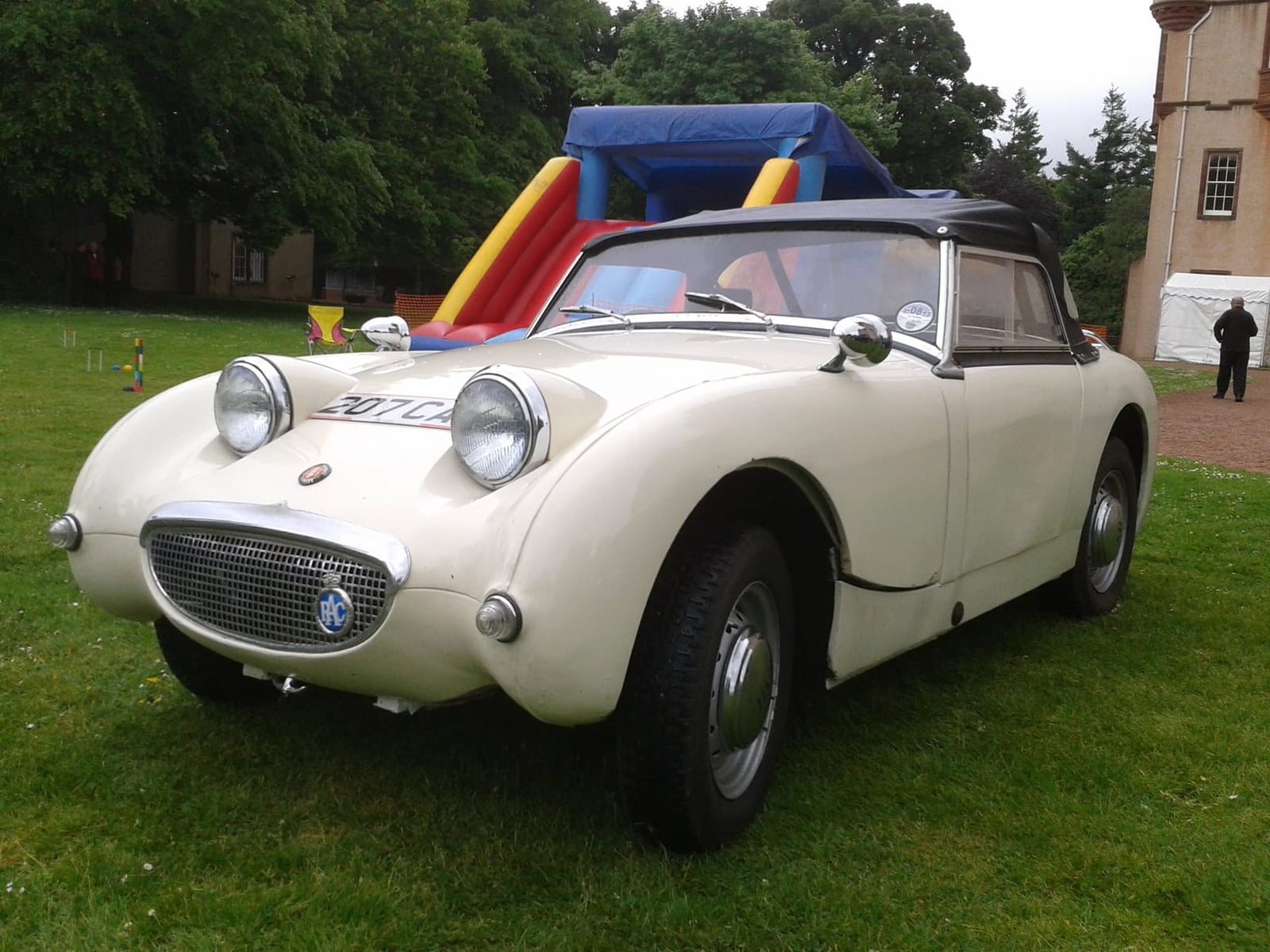
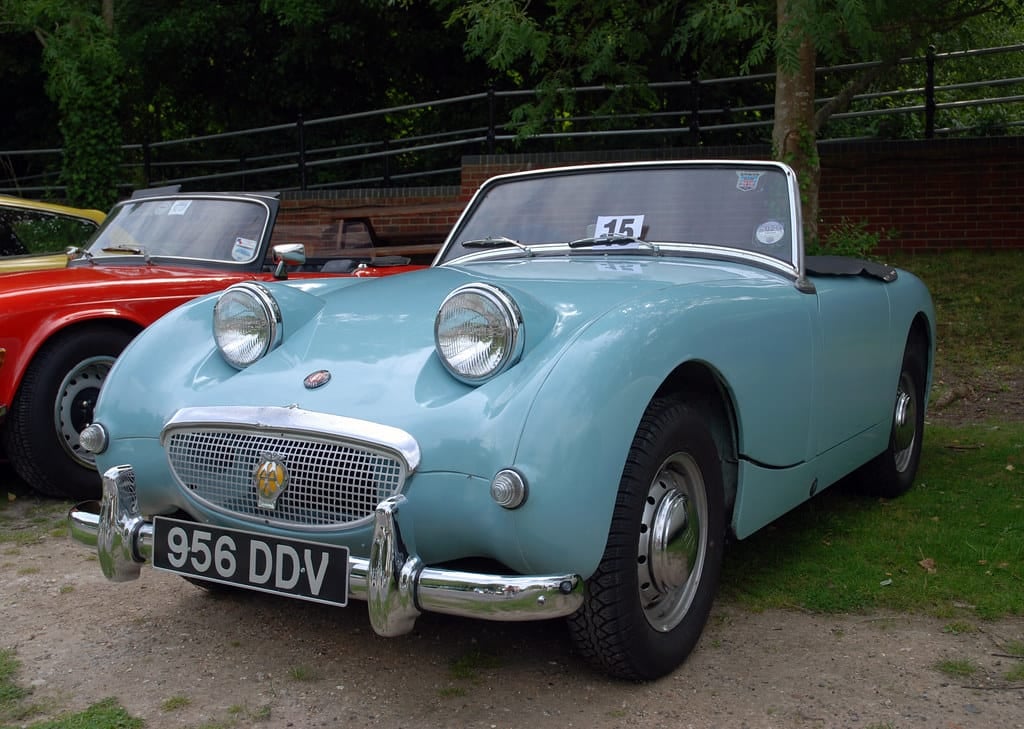
Key dates for the Frogeye
- 1958Launched at £669 on the road: a 948cc A-series with twin SUs, Morris Minor steering, and Gerry Coker's body drawn in one curve.
- 1958The retracting headlamp mechanism is killed by the costings and BMC fixes the lamps upright where they stand, creating the face.
- 1959 onwardsBMC competition shops take it racing; Sebring Sprites wear streamlined hardtops for class assaults at Sebring and Le Mans.
- 1961Production ends at about 49,000 cars in three years; the Mk II opens the wider Spridget line with the MG Midget.
Before you buy a Frogeye
Identity, because Frogeyes get made
- True Frogeye chassis numbers begin AN5, and the clubs settle identity quickly
- Beware Mk II cars back-converted with Frogeye front ends
- A matching-numbers car with its original steel nose is the collector specification
- Glassfibre bonnets are period-legitimate as a lightweight upgrade but affect value
Rust
- Sills, floors and spring boxes, the structural set
- Rear axle mounts and the front shroud
- The missing boot lid and door apertures stiffen the shell, so damage there matters more than it looks
- Accident-damaged front ends hide under replacement bonnets; check what the steel underneath is doing
Detail and mechanicals
- Correct early gauges, seats and sidescreens reward the careful and cost the careless
- A-series mechanical parts are Minor-cheap and available everywhere
- The luggage rack is the universal period accessory, since there is no boot lid
- Period Speedwell and Sebring tuning parts add interest, and should be documented rather than assumed
What the Frogeye Sprite sells for at auction
In 2025 the median Frogeye Sprite sold for £12,650 across 51 sales, 4% up on 2024. In real terms, typical Frogeye Sprite prices were down about 32% over the five years to 2025, once inflation is accounted for.
Show the year-by-year mediansHide the year-by-year medians
| Year | Sold | Median | In 2025 money |
|---|---|---|---|
| 2026 (so far) | 29 | £11,383 | |
| 2025 | 51 | £12,650 | £12,650 |
| 2024 | 37 | £12,150 | £12,616 |
| 2023 | 33 | £14,742 | £15,820 |
| 2022 | 23 | £14,748 | £16,890 |
| 2021 | 21 | £13,910 | £17,201 |
| 2020 | 20 | £14,696 | £18,623 |
| 2019 | 18 | £14,710 | £18,832 |
| 2018 | 19 | £12,612 | £16,419 |
| 2017 | 11 | £13,594 | £18,108 |
| 2016 | 19 | £11,613 | £15,867 |
| 2015 | 9 | £15,241 | £21,033 |
| 2014 | 10 | £11,502 | £15,937 |
| 2013 | 3 | £12,075 | £16,969 |
| 2011 | 4 | £4,435 | £6,539 |
| 2009 | 3 | £5,625 | £8,831 |
| 2007 | 3 | £7,088 | £11,742 |
- £8,570Sprite Mk I
- £9,250Sprite Mk I
- £15,062Sprite Mk I
- £27,000Sprite Mk I
- £19,422Sprite Mk I
Strong evidence. 318 recorded sales and a dozen or more a year: the median and the range are well founded. Based on 318 sold results from public classic car auctions (2002 to 10 August 2026). Sold prices, not asking prices, and not a valuation: condition, history and specification vary from car to car. Inflation-adjusted figures use the ONS CPIH index, in 2025 money.