Austin-Healey Sprite values: the Frogeye at double the Spridget, the Sebring premium, and a market off its 2022 peak
A Frogeye Mk I sells for more than double the Mk II, III and IV that followed. Sprite prices from 636 recorded auction sales, what a Sebring Sprite and its replicas make, how the Sprite compares with the MG Midget it shares everything with, and why Sprite values have fallen by a third in real terms since 2022.
Built 1958–1971

What the Sprite (Frogeye) sells for at auction
In 2025 the median Sprite (Frogeye) sold for £10,810 across 77 sales, much where it was in 2024. In real terms, typical Sprite (Frogeye) prices were down about 33% over the five years to 2025, once inflation is accounted for.
| Variant | Sold | Typical range | Median |
|---|---|---|---|
| Sprite Mk I | 318 | £9,800 - £16,778 | £12,850 |
| Sprite Mk IV | 64 | £4,356 - £8,564 | £5,785 |
| Sprite Mk III | 44 | £3,100 - £6,090 | £5,082 |
| Sprite Mk II | 40 | £5,675 - £10,364 | £7,330 |
| Sebring Sprite Replica | 11 | £12,434 - £19,970 | £15,000 |
Show the year-by-year mediansHide the year-by-year medians
| Year | Sold | Median | In 2025 money |
|---|---|---|---|
| 2026 (so far) | 43 | £9,968 | |
| 2025 | 77 | £10,810 | £10,810 |
| 2024 | 59 | £10,740 | £11,152 |
| 2023 | 57 | £13,275 | £14,245 |
| 2022 | 59 | £13,886 | £15,903 |
| 2021 | 59 | £13,284 | £16,426 |
| 2020 | 50 | £12,768 | £16,180 |
| 2019 | 45 | £11,988 | £15,346 |
| 2018 | 41 | £11,250 | £14,646 |
| 2017 | 24 | £13,325 | £17,750 |
| 2016 | 29 | £10,580 | £14,456 |
| 2015 | 14 | £13,275 | £18,320 |
| 2014 | 19 | £10,125 | £14,029 |
| 2013 | 14 | £12,707 | £17,857 |
| 2012 | 4 | £6,241 | £8,971 |
| 2011 | 8 | £6,876 | £10,137 |
| 2009 | 6 | £8,438 | £13,247 |
| 2007 | 9 | £6,188 | £10,251 |
| 2005 | 5 | £8,100 | £14,078 |
| 2004 | 5 | £7,088 | £12,573 |
- £8,570Sprite Mk I
- £9,250Sprite Mk I
- £15,062Sprite Mk I
- £27,000Sprite Mk I
- £19,422Sprite Mk I
Strong evidence. 636 recorded sales and a dozen or more a year: the median and the range are well founded. Based on 636 sold results from public classic car auctions (1995 to 10 August 2026). Sold prices, not asking prices, and not a valuation: condition, history and specification vary from car to car. Inflation-adjusted figures use the ONS CPIH index, in 2025 money.
The Sprite is two cars with one name, and Austin-Healey Sprite values are two markets in one record: 636 recorded sales since 1995, about 60 a year lately, at a median of £11,700, with the middle half between £7,100 and £15,700. Three-quarters of the cars offered find a buyer. The spread runs from a £650 project to £130,700 for a genuine Sebring Sprite, and half the record is the Frogeye Mk I of 1958 to 1961, the car with the face, which on its own is worth more than double the Spridgets that followed it and nearly three times an MG Midget.
The Austin-Healey Sprite model guide covers the Frogeye, the Spridget years and what to check, and the Frogeye has a page of its own. This page is about the money, and about a market that has come off a decade-long plateau.
The Frogeye at double the rest
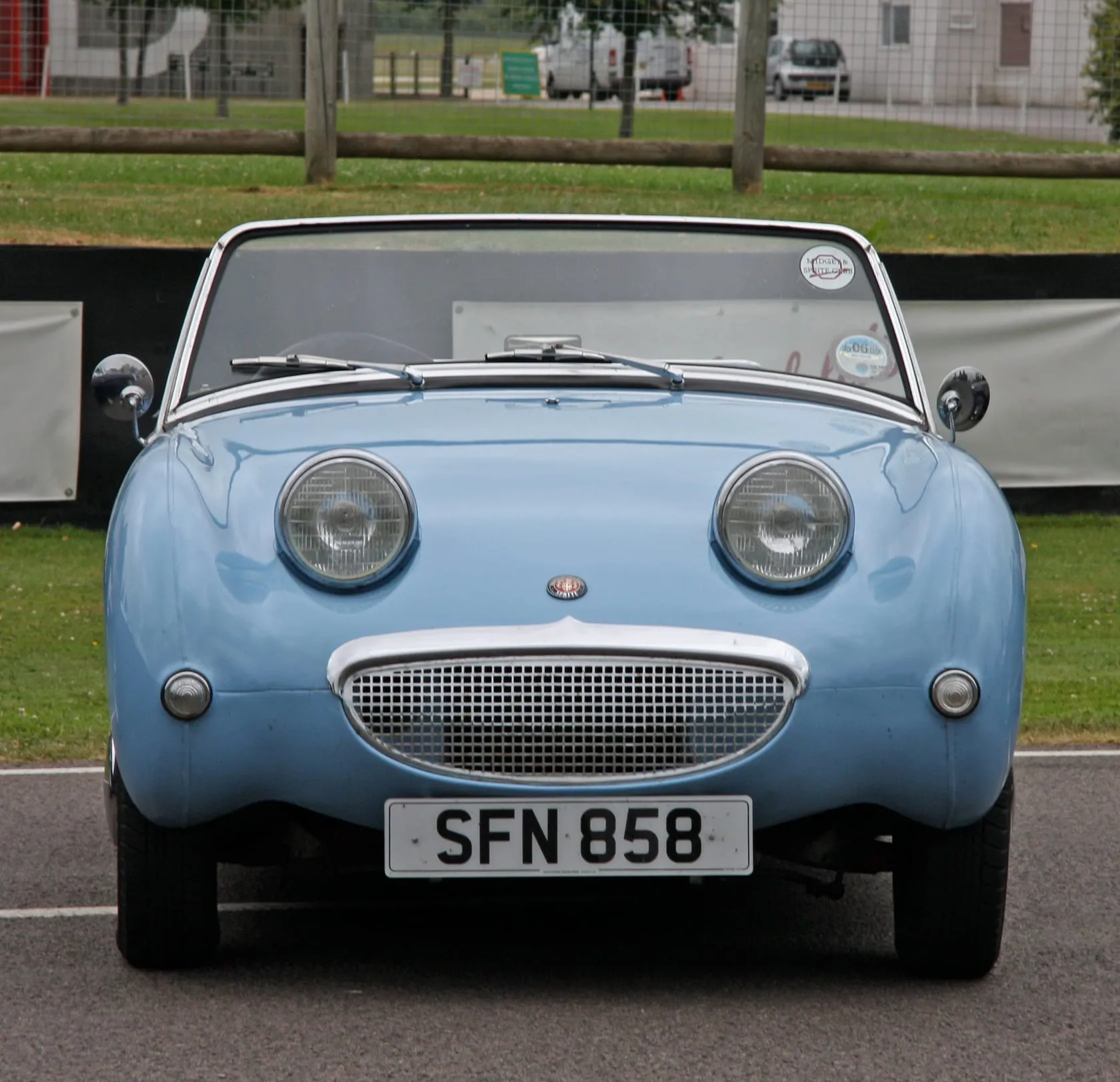
The variant table on this page has one line that carries the rest. The Frogeye Mk I, 318 recorded sales, has a median of £12,850, with the middle half between £9,800 and £16,800 and the best restored cars at £20,000 to £25,000. Below it the Spridgets fall away in order: the Mk II of 1961 to 1964, the first with the conventional nose, at £7,300 across 40 sales; the Mk IV of 1966 to 1971, the 1,275cc car with the folding hood, at £5,800 across 64; and the Mk III of 1964 to 1966, with the 1,098cc engine and the wind-up windows, at £5,100 across 44. The premium for the Frogeye over the later cars is more than double at the median and wider still at the top, where a later Sprite rarely passes £10,000 and a Frogeye with the right history can pass £30,000.
The reasons are the usual ones and one unusual one. The Frogeye is the original, the rarer and the prettier car, and the one the enthusiasts picture; it is also the only Sprite that is not an MG Midget with a different grille, so it has no cheaper twin to set its price. The badge-engineered Sprites of 1961 onwards, built beside the Midget at Abingdon, sell level with or a little above it: the Mk II a little ahead of the Midget Mk I, the Mk III and Mk IV within a few hundred pounds of the Midget Mk III. The Healey name is worth a little; the face is worth a lot.
Above everything are the Sebring Sprites, the competition cars Healey built with the coupé and the alloy bodies. A genuine one is a collector’s car, and the £130,700 sale that tops the record in 2019 was for one; the replicas and recreations, eleven in the record at a median of £15,000, sell on the quality of their build and the honesty of their description.

What moves the price of a Sprite
The body, because the running gear is the A-series and costs nothing. A Sprite’s sills are structural and rot, as do the floors, the rear spring hangers and the A-posts, and on the Frogeye the one-piece bonnet, which hinges at the back and carries the wings and the headlamps, is the expensive panel: a car with its original bonnet, straight and undamaged, is worth more than one with a glassfibre replacement, and the hinges and the bonnet landing are where the accidents show. A Frogeye with its sills and floors done properly, with the receipts, sits in the upper half of its range whatever the paint.
Then originality, which counts for more on a Frogeye than on almost any cheap British classic. The correct 948cc engine, the original bonnet, the sliding side-screens, the period colour and the steel wheels all add with the collectors, while the upgrades that make a Frogeye a better car, the 1,275 engine, disc brakes and a later gearbox, add with the users and take off with the collectors, so the market prices a modified Frogeye on the buyer rather than the car. On a later Sprite, as on a Midget, the shell and the history set the price and the specification barely moves it. Mileage means little on any of them.

Off the 2022 peak
The chart shows a long plateau and a recent slide. The yearly median sat around £6,000 to £8,400 through the 2000s and early 2010s, jumped to £12,700 in 2013 as the Frogeye became a collector’s car, and then stayed between £11,000 and £13,900 for a decade, peaking at £13,900 in 2022. It fell to £13,300 in 2023, £10,700 in 2024 and £10,800 in 2025, and the 2026 figure so far is just under £10,000. Restated in today’s money the Sprite has lost about a third since 2022 and more than two-fifths since 2015.
The sample explains part of it, with the online auctions bringing more later Sprites and more projects into the record, and a median built on those is lower than one built on restored Frogeyes. The rest is the market for small 1950s and 1960s sports cars, whose buyers are ageing and whose successors want an E-Type or a Porsche. The Frogeye has held its value better than the later cars, which have fallen with the Midget, and a good Frogeye is still dearer in real terms than it was in 2010; a Mk III or Mk IV is cheaper than it has been in ten years.

Where Sprites change hands
The Frogeye sells on both sides of the Atlantic, where it was the Bugeye and sold in far greater numbers than at home, and the later Sprites sell mostly in Britain. A single fortnight in late July and early August 2026 shows the pattern: Frogeyes at £27,000 at a British specialist sale and £9,250 at a Yorkshire sale room, and three more on the American online platforms at £19,400, £15,100 and £8,600. The best Frogeyes and the Sebrings pass through the Healey specialists and the catalogued auctions at prices above the recorded range; the later cars change hands at the regional sale rooms and the online platforms alongside the Midgets they resemble. Whether a recorded price includes the buyer’s premium varies by sale, which is one more reason to read the usual range rather than any single result.

Insuring, restoring, selling
For an agreed-value policy a good Frogeye belongs in the upper half of its range and a restored one above it; a later Sprite sits around its mark’s median, and a Sebring or a competition car is insured on its own figure. On restoration the Frogeye is the one Spridget where the sums can work, because a finished car sells for £20,000 and more and the parts are cheap; a later Sprite restored to the same standard sells for half that, so the project is for the owner who wants the doing of it. If you are selling, the spring is the season, the photographs that sell a Frogeye are of the bonnet hinges and the sills, and the honest expectation for an ordinary Frogeye is its median, with the £20,000 figures reserved for the cars with the history and the paint to match.
Related
The Sprite shares everything but its face with the Midget, which sells for less than half as much; its big brother the Austin-Healey 3000 sells for three times as much, and its rival in period, the Triumph Spitfire, for about half. For the decade, see British classic cars of the 1960s. For how all the figures on this site are compiled, see what classic cars sell for.