Austin-Healey 3000 values: the BJ8, the two-seaters, and a decade of drifting prices
The Mk III BJ8 leads the table and the rare two-seaters beat it. Austin-Healey 3000 values from 1,184 recorded auction sales, what a works history is worth, what the chassis and the shut lines do to the price, and why the Big Healey has lost nearly half its value in real terms since 2013.
Built 1959–1967
What the 3000 (Big Healey) sells for at auction
In 2025 the median 3000 (Big Healey) sold for £32,138 across 89 sales, 8% down on 2024. In real terms, typical 3000 (Big Healey) prices were down about 37% over the five years to 2025, once inflation is accounted for.
| Variant | Sold | Typical range | Median |
|---|---|---|---|
| 3000 Mk III BJ8 | 460 | £31,645 - £53,011 | £42,000 |
| 3000 Mk III | 140 | £29,030 - £48,252 | £36,857 |
| 3000 Mk I BT7 | 112 | £27,750 - £41,397 | £33,690 |
| 3000 Mk II BJ7 | 112 | £25,781 - £42,596 | £32,234 |
| 3000 Mk II | 89 | £24,150 - £41,000 | £34,855 |
| 3000 Mk I | 83 | £25,644 - £41,962 | £32,736 |
| 3000 Mk II BT7 | 73 | £27,758 - £42,829 | £33,755 |
| 3000 Mk I BN7 | 48 | £31,140 - £49,723 | £41,174 |
| 3000 Mk II BN7 | 22 | £42,879 - £59,700 | £48,112 |
| 3000 Mk III Replica | 6 | £8,726 - £15,312 | £14,701 |
Show the year-by-year mediansHide the year-by-year medians
| Year | Sold | Median | In 2025 money |
|---|---|---|---|
| 2026 (so far) | 68 | £30,724 | |
| 2025 | 89 | £32,138 | £32,138 |
| 2024 | 87 | £35,030 | £36,374 |
| 2023 | 79 | £42,703 | £45,824 |
| 2022 | 91 | £40,060 | £45,878 |
| 2021 | 89 | £40,611 | £50,218 |
| 2020 | 57 | £40,500 | £51,322 |
| 2019 | 73 | £42,109 | £53,906 |
| 2018 | 53 | £40,593 | £52,847 |
| 2017 | 64 | £40,714 | £54,232 |
| 2016 | 58 | £42,074 | £57,487 |
| 2015 | 50 | £38,420 | £53,020 |
| 2014 | 39 | £43,487 | £60,253 |
| 2013 | 41 | £42,858 | £60,228 |
| 2012 | 38 | £35,962 | £51,695 |
| 2011 | 37 | £33,813 | £49,852 |
| 2010 | 15 | £30,531 | £46,762 |
| 2009 | 22 | £38,125 | £59,855 |
| 2008 | 21 | £35,619 | £57,023 |
| 2007 | 20 | £30,234 | £50,088 |
| 2006 | 14 | £21,643 | £36,692 |
| 2005 | 26 | £30,143 | £52,390 |
| 2004 | 26 | £21,782 | £38,637 |
| 2003 | 9 | £25,149 | £45,249 |
| 2002 | 4 | £31,184 | £56,848 |
| 2001 | 5 | £34,307 | £63,463 |
| 1999 | 3 | £18,483 | £35,133 |
- £29,9953000 Mk III BJ8
- £25,4373000 Mk II BT7
- £25,5153000 Mk I BN7
- £46,2503000 Mk III
- £31,5003000 Mk III
Strong evidence. 1,184 recorded sales and a dozen or more a year: the median and the range are well founded. Based on 1,184 sold results from public classic car auctions (1994 to 10 August 2026). Sold prices, not asking prices, and not a valuation: condition, history and specification vary from car to car. Inflation-adjusted figures use the ONS CPIH index, in 2025 money.
The Big Healey is one of the best-recorded cars in the database, and Healey 3000 values are unusually well founded as a result: 1,184 sales since 1994, about 90 a year lately, at a median of £37,100, with the middle half of them between £29,000 and £48,300. Seven in ten of the cars offered find a buyer. The spread runs from a £1,400 rolling shell to £317,000 for a works rally car, but most of the record is a single kind of car, the restored Mk III convertible, sold in North America, where nine in ten 3000s were delivered new and where most of them still are.
The Austin-Healey 3000 model guide covers the three marks, the works cars and what to check. This page is about the money, and about a market that has been quietly going down for longer than almost any other in the British classic world.
The BJ8 leads, the two-seaters beat it
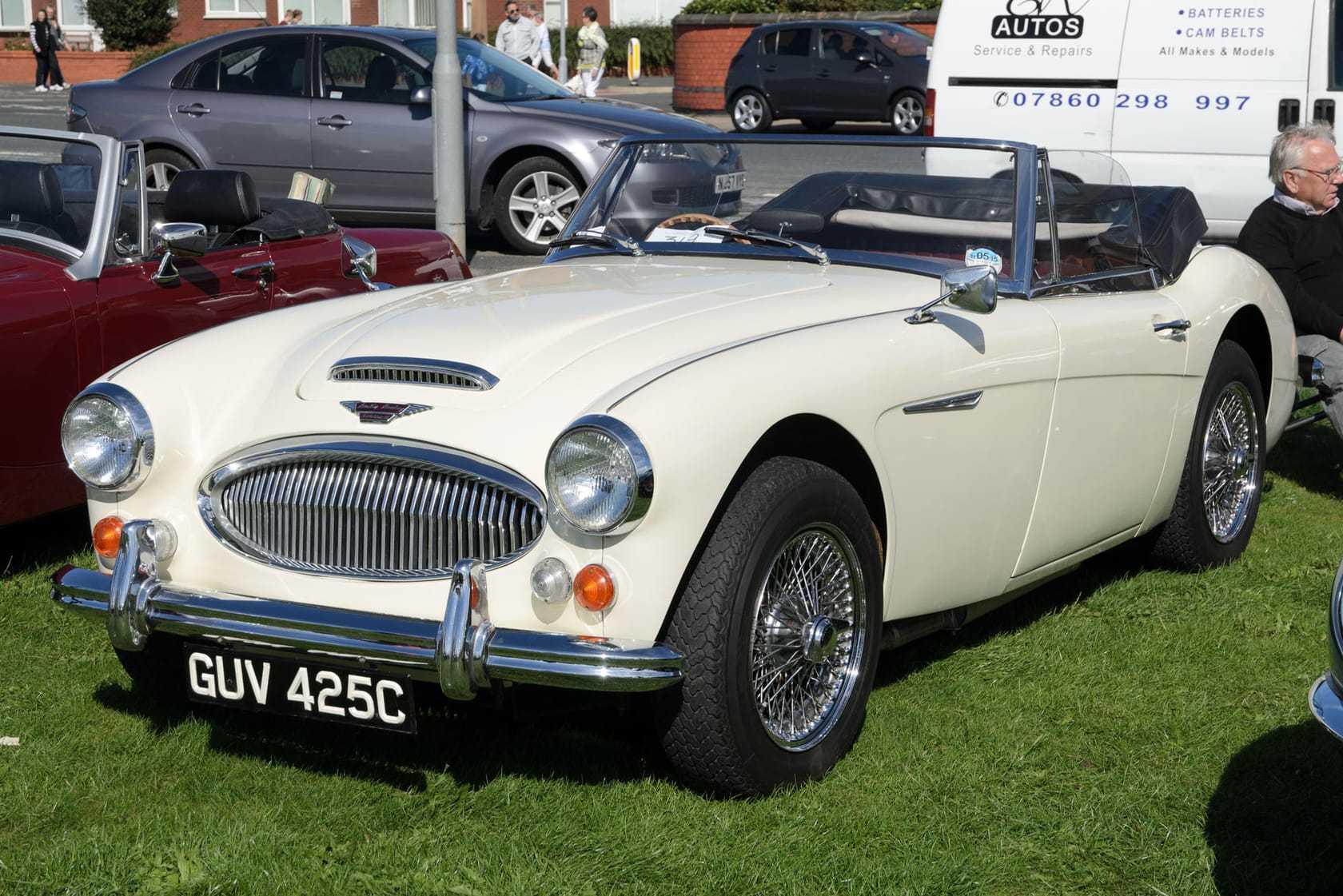
The variant table on this page shows two things at once. The Mk III BJ8 of 1964 to 1967 is the car the market prefers: 460 recorded sales at a median of £42,000, against £32,000 to £35,000 for the four-seat Mk I and Mk II cars. It is the most developed Healey, with 150 bhp, wind-up windows, a proper folding hood and a wood-veneer dashboard, and because it was built in the greatest numbers it is the car most often restored to a high standard, which lifts its median further.
The exception is body, not mark. The two-seater BN7, sold alongside the 2+2 BT7 on the Mk I and Mk II, was built in far smaller numbers, and the market pays for it: the Mk I BN7 has a median of £41,000 and the Mk II BN7, the triple-carburettor two-seater of 1961 to 1962 and the rarest standard 3000, £48,000 across only 22 sales. A two-seater is worth £5,000 to £15,000 more than the equivalent four-seat car in the same condition. Above everything are the works cars, the 3000s that BMC’s competition department ran on the great European rallies; genuine examples with their history sell for several times a standard car, and the record sale in the data, £317,000 for a works Mk I in 2016, is one of them. The replicas of works cars, of which the record holds a few, make less than a standard road car.

What moves the price of a Big Healey
The chassis and the shrouds. A 3000’s body sits on a separate frame that rusts at the outriggers and the rear spring hangers and bends at the front in even a modest collision, and the car’s low-slung exhaust and frame mean that ground clearance damage is routine. The front and rear shrouds are aluminium and corrode where they meet the steel, the sills are structural, and the doors, boot and bonnet shut lines tell a restorer’s competence at a glance. A car that sits square on a sound frame with good gaps is in the upper half of its range; one that does not is a project, and a Big Healey project is a very expensive thing to finish.
Originality matters more on a Healey than on an MG and less than on a Jaguar. A Heritage certificate confirming the car’s body, engine and original colour is the starting point for a strong price; an export car converted to right-hand drive sells below a home-market car, and the conversion should be declared. Period colours, especially the two-tone schemes, wire wheels, overdrive, which most cars had, and the hardtop each add a little. A documented restoration by a recognised Healey specialist adds a great deal, because buyers know what a bad one costs to undo. Mileage barely matters on a car that has usually been rebuilt.

A decade of drifting prices
The chart on this page is the most telling on the site. The yearly median climbed from £30,000 in 2007 to £43,000 in 2013 and 2014, and then stopped: for nine years it sat between £40,000 and £43,000, while inflation ran at its fastest in forty years. In today’s money that plateau was a steady decline. Since 2023 the nominal figure has fallen too, to £35,000 in 2024 and £32,100 in 2025, and restated in 2025 money the Big Healey is worth nearly half what it was in 2013.
The sample effect that softens the other medians on this site applies less here: the Healey has never been an online-auction car in the way the MGB is, and the record is still mostly catalogued cars. The fall is real, and it has a cause. The Big Healey was the car of a generation that is now in its seventies and eighties, and as that generation sells, the buyers who replace it have other cars in mind. The two-seaters and the works cars have held their money; the ordinary restored BJ8 has not. For a buyer who wants the best-looking British roadster of its decade, the market has been moving in their favour for ten years.

Where Big Healeys change hands
Most of the record is North American, through the online platforms and the catalogued sales, and the American cars set the figures: a single week in August 2026 produced three sales there between £25,400 and £30,000. British sales are fewer and run a little higher, because the home-market cars are scarcer; the same week saw a Mk III make £31,500 at a Yorkshire sale room and another £46,250 online in Britain. The best cars, and the works cars, pass through the international auction houses and the Healey specialists, at prices above the range on this page. Whether a recorded price includes the buyer’s premium varies by sale, which is one more reason to read the usual range rather than any single result.

Insuring, restoring, selling
For an agreed-value policy a restored BJ8 belongs in the upper half of its range and a two-seater above it; the works cars are insured on their provenance, not on any table. On restoration the arithmetic is the hardest on this site: a body-off rebuild at a Healey specialist runs to £80,000 and beyond, against a finished value of £45,000 to £60,000 for most cars, so a cheap project is only ever a bargain for someone doing the work themselves. If you are selling, the spring is the season, the median for the variant is the honest expectation for a sound car, and the shut lines in the photographs will do more for the price than the chrome.
Related
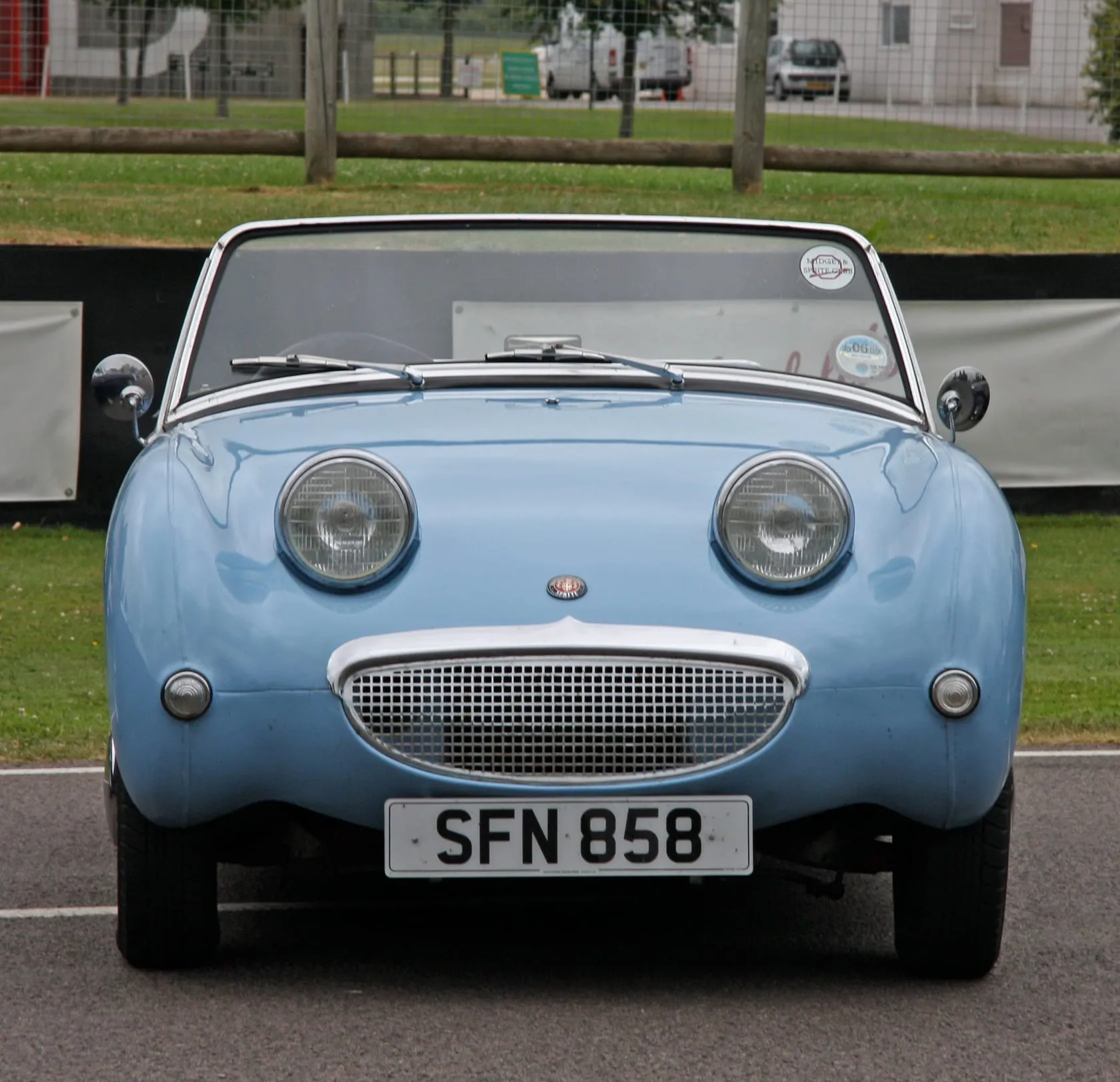
The 3000 grew out of the Austin-Healey 100 and sits at the top of the Healey range, with the little Sprite at the bottom; when it was dropped in 1967 the MGC was built partly to fill the gap, and sells today for less than half. For how all the figures on this site are compiled, see what classic cars sell for.
Frequently asked questions
How much is an Austin-Healey 3000 worth?
Which Austin-Healey 3000 is worth the most?
Are Austin-Healey 3000 prices falling?
Is a Mk III Austin-Healey worth more than a Mk I or Mk II?
How much does it cost to restore an Austin-Healey 3000?
What is the most expensive 3000 (Big Healey) ever sold at auction?
How often does a 3000 (Big Healey) come up for sale?
Related across themes


More Austin-Healey values


Recently added

Bentley Turbo R: the blown Bentley that saved the badge (1985–1999)

Bentley S-series: the quiet twin with the beautiful secrets (1955–1965)

Rolls-Royce Silver Spirit and Silver Spur: the last Crewe bargain (1980–1999)
