Rover P5 and P5B: the car that ran the country (1958–1973)
The Rover P5 was Britain's establishment car, the 3-Litre saloon and coupe that carried ministers and monarchs, transformed in 1967 by the Buick-derived V8 into the P5B. A guide to saloon and coupe, the state-fleet story, the V8's arrival, buying checks and values.
Built 1958–1973 191 recorded sales
At a glance
- Years
- 1958–1973
- Body styles
- Four-door saloon; four-door lowered coupe from 1962
- Drivetrain
- Front engine, rear-wheel drive
- Engines
- 3.0-litre straight-six; 3.5-litre aluminium V8 (P5B)
- Power
- Around 115 bhp (3-Litre) to 160 bhp (P5B)
- Top speed
- Around 96 mph (3-Litre); 110 mph (P5B)
- Trim levels
- 3-Litre Mk I-III; P5B saloon and coupe
- Production
- Around 69,000 (48,500 P5; 20,600 P5B)
- Assembly
- Solihull, Warwickshire
- Designer
- David Bache
- Values
- Usable from around £5,000; good cars £8,000-£14,000; the best P5B coupes beyond £20,000
- The clientele
- Prime Ministers from Wilson to Thatcher, and the Queen's personal example
- The transformation
- The 1967 V8 turned a stately six into the definitive British express
The models
Some cars serve governments; the Rover P5 practically joined one. Launched in 1958 as the 3-Litre and transformed in 1967 by the Buick-derived V8 into the P5B, the big Solihull saloon carried Prime Ministers, ministries and the Queen herself, and stayed on the state fleet years after production ended. The Rover P5 is Britain’s establishment car, and today it offers more presence per pound than anything in its class.
The 3-Litre: dignity first
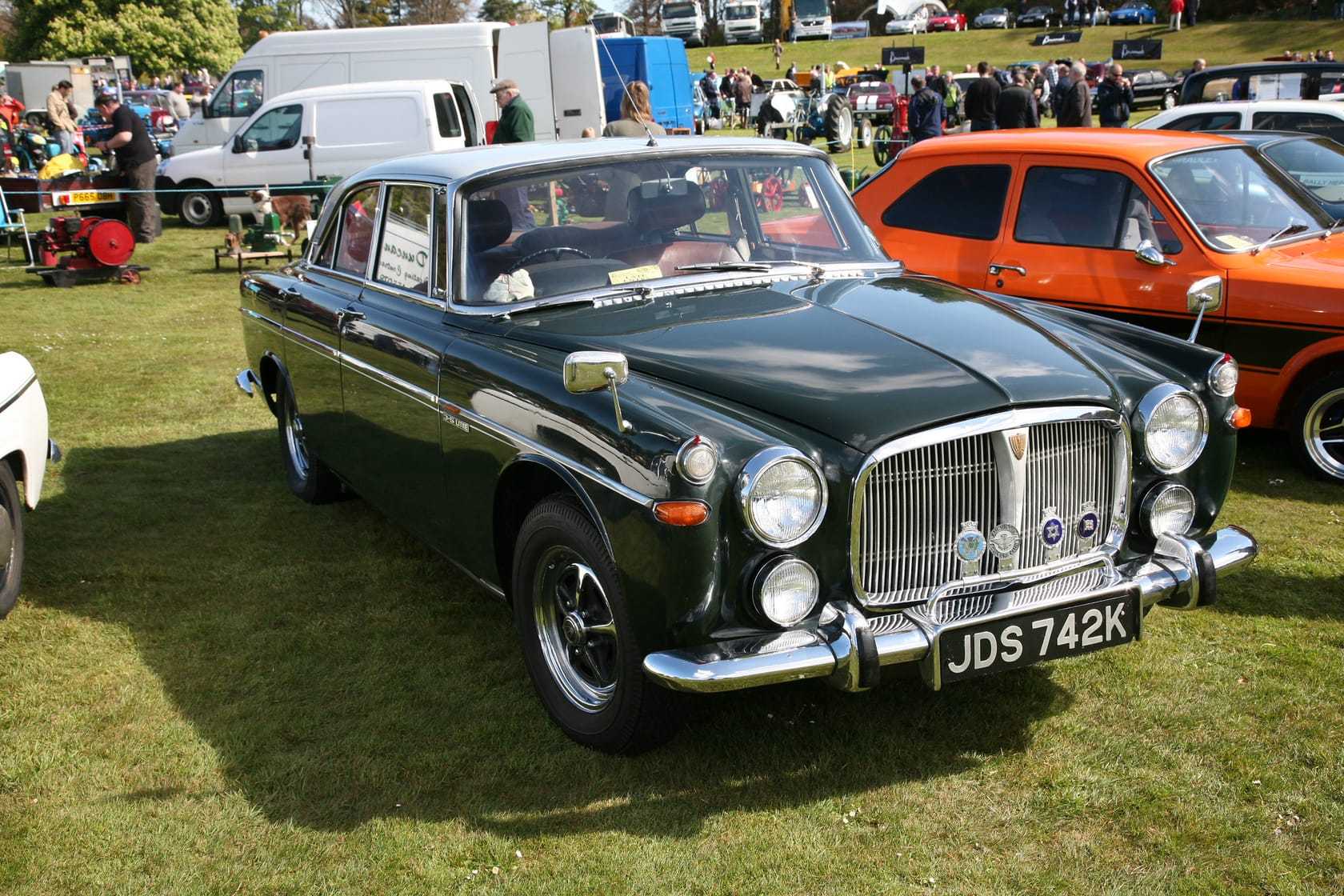
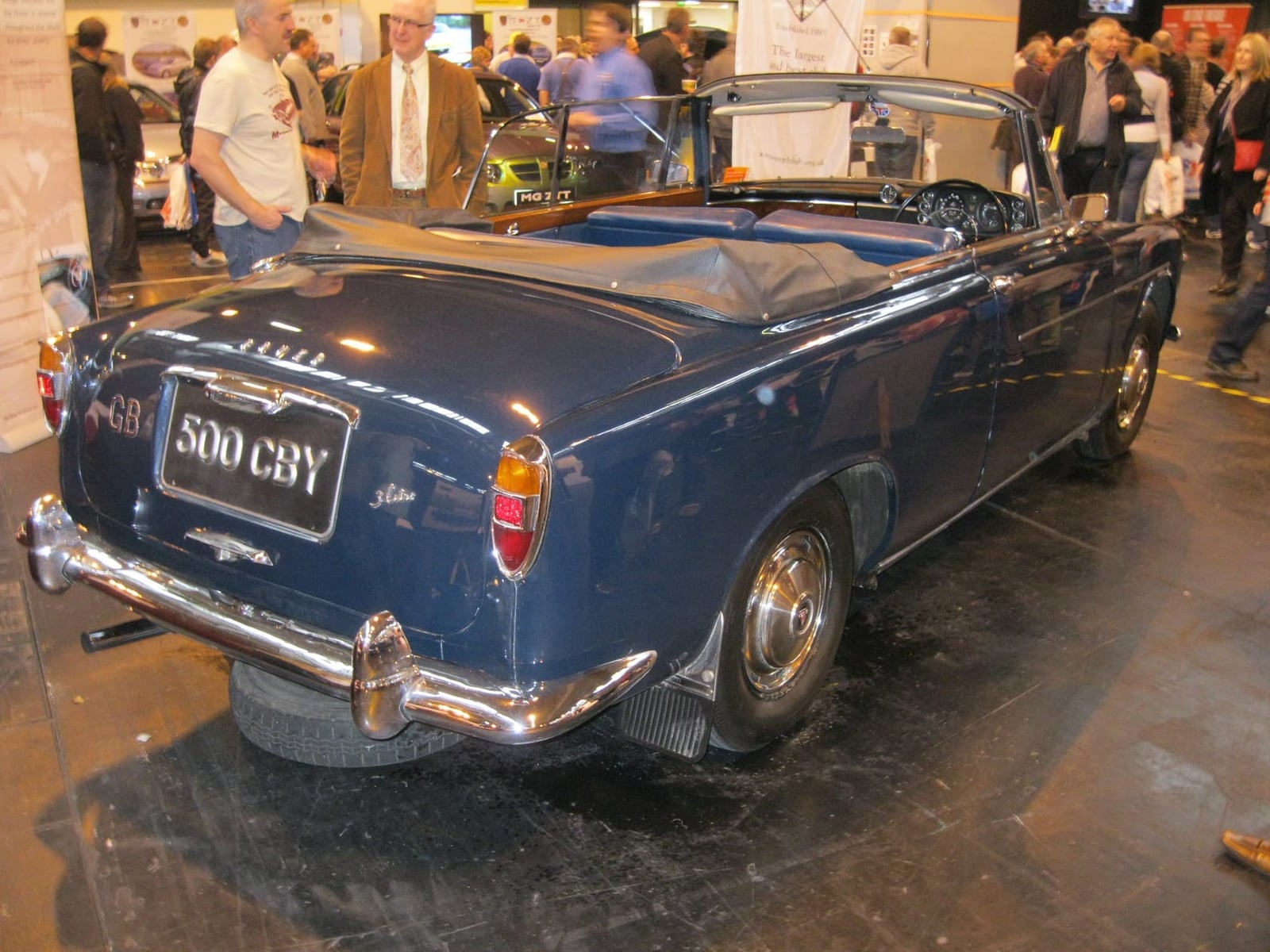
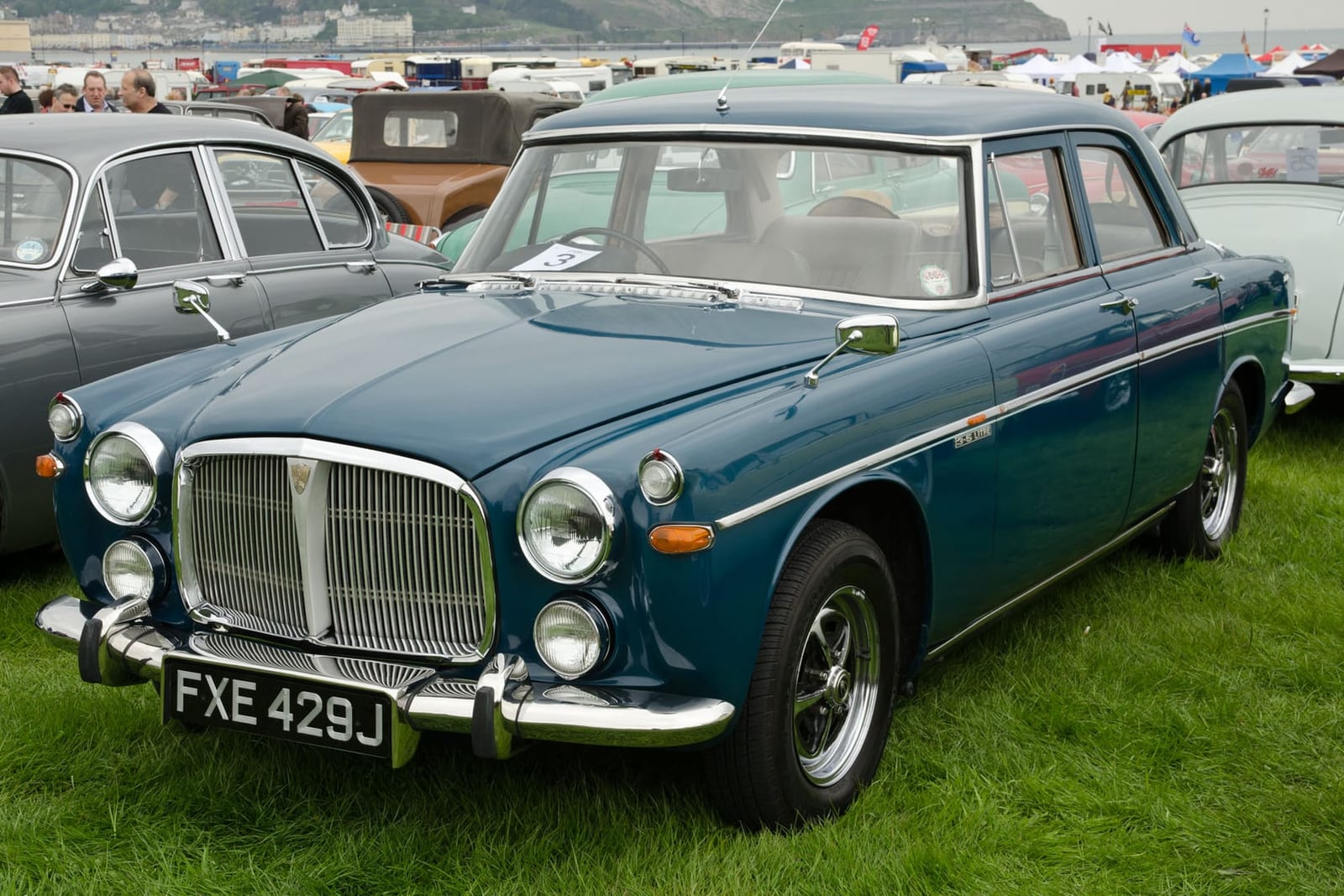
David Bache drew the P5 as Rover’s first unitary car and its grandest statement: long, tall, faced with a broad grille, and finished inside to boardroom standard. The 3.0-litre straight-six moved it with more composure than urgency, which suited the clientele exactly, and successive Mk II and Mk III revisions added power steering and polish. In 1962 Bache produced the masterstroke, the coupe, the same body with the roof lowered two and a half inches into one of the great British profiles. The P4’s customers had somewhere grander to graduate.

The B is for Buick
By the mid-1960s the six was outpaced, and Rover’s answer became company legend: the aluminium 3.5-litre V8 acquired from General Motors’ Buick division, lightened onto the P5 in 1967 to create the P5B. The effect was transformation, 160 bhp, a hundred-and-ten-mile-an-hour stride, and that woofling exhaust note, delivered through a smooth automatic with the dignity intact. Rostyle wheels and driving lamps announced it quietly. The same engine went on to power the Range Rover and half of British specialist motoring, but it never suited anything better than the big saloon it rescued.

The state car
Whitehall adopted the P5 early and never really let go. Harold Wilson’s pipe-smoke filled one; Edward Heath and James Callaghan used them; the government stored a fleet of P5Bs against the production end, running them into the 1980s, so Margaret Thatcher rode to the Palace in 1979 in a car six years out of production. The Queen kept her own green P5B among her personal cars. Embassies, lord mayors and police forces completed the order book. No British saloon carries more constitutional history per square foot of walnut.

Coupe or saloon, six or eight
Four P5 personalities await buyers. The six-cylinder saloon is the stately original, slowest and often the best-preserved; the six coupe adds the rakish roof at gentle money; the P5B saloon delivers the V8’s effortlessness with maximum rear-seat dignity; and the P5B coupe combines everything the model ever promised, which is why it leads values by a clear margin. Automatic transmission dominates throughout, entirely in character. Whichever combination, originality of trim and the presence of the full tool tray and picnic tables mark the cars that were always loved.

What a P5 is like to drive
The Rover P5 drives like the building it resembles: massive calm, deep-chair comfort, controls weighted for deliberation, and a cabin whose wood, wool and hide belong to another idea of luxury entirely. The six is stately; the V8 changes the story, effortless from any speed, its reserve the whole point. Body roll is generous, the brakes prefer anticipation, and hurrying feels like running in a library, yet an easy 80 mph motorway stride comes with total composure. It is grand touring in the literal sense, and modern traffic parts for it in a way owners never quite stop enjoying.

Buying a P5 today
Structure first: sills, floors, wheelarches, screen surrounds and the front subframe mounts all rot, and the unitary shell makes corrosion the deciding cost. The interior is the second estate: full restoration of the wood and leather can exceed the car’s value, so sound original cabins deserve their premiums. Mechanically the V8 is famously cheap to keep and the six famously durable; check cooling health on both and gearbox manners on the automatics. Coupes carry the desirability, and documented history, state-adjacent or otherwise, sells P5s faster than paint ever has. Parts support runs stronger than the model’s rarity suggests, the V8 sharing its ecosystem with half of British motoring and the clubs covering the six, so the risk is never mechanical abandonment, only deferred structural truth.

Values: presence at half price
The record, 191 sales at a £7,900 median, prices the P5 world honestly: £5,000 to £8,000 usable, £8,000 to £14,000 good, the best P5B coupes past £20,000. Against any equivalent Jaguar or Mercedes of the era that is presence at half price, with the state-history glamour thrown in. The 1960s built no more British car, in every sense, and the establishment’s old flagship now rewards exactly the buyers it always did: the patient, the careful, and the quietly confident.

More photos
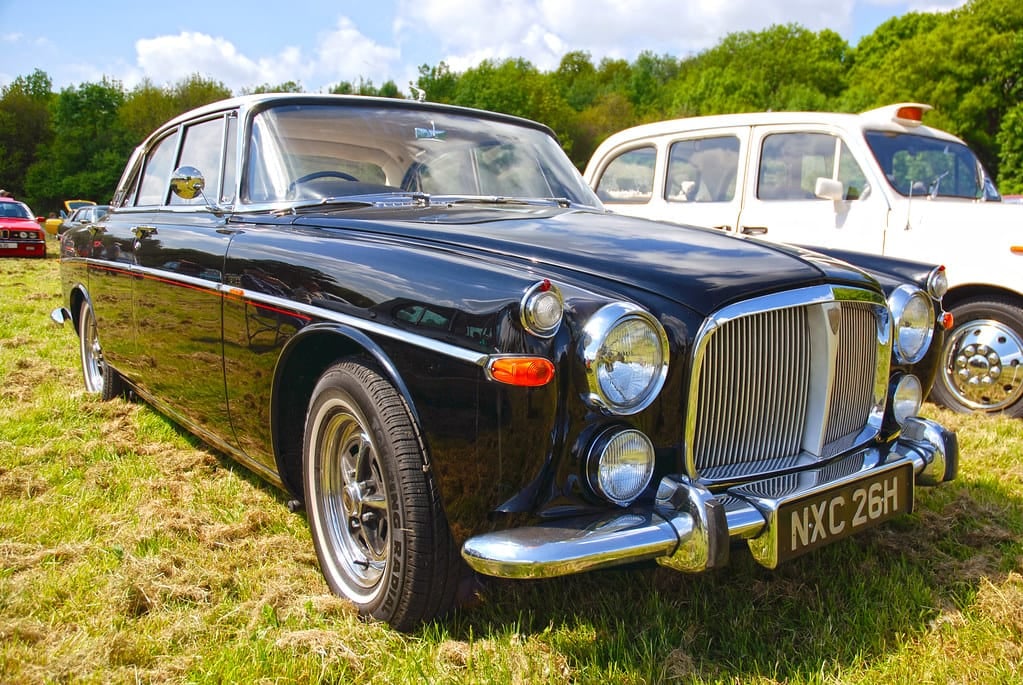
Key dates for the P5 / P5B
- 1958The 3-Litre launches as Rover's first unitary car and its grandest statement, finished inside to boardroom standard.
- 1962David Bache's masterstroke: the coupe, the same body with the roof lowered two and a half inches.
- 1965Mk III revisions complete the six-cylinder line's polish.
- 1967The aluminium 3.5-litre ex-Buick V8 creates the P5B: 160 bhp, a 110 mph stride, Rostyle wheels and driving lamps.
- 1973Production ends at around 69,000 cars; the government stores a fleet of P5Bs and runs them into the 1980s.
- 1979Margaret Thatcher rides to the Palace in a P5B six years out of production.
Before you buy a P5 / P5B
Structure first
- Sills, floors and wheelarches
- Screen surrounds and the front subframe mounts
- The unitary shell makes corrosion the deciding cost
- Deferred structural truth is the only real risk; mechanical abandonment never is
The interior, the second estate
- Full wood-and-leather restoration can exceed the car's value
- Sound original cabins deserve their premiums
- Boardroom-standard finish means boardroom-standard repair bills
- Documented history, state-adjacent or otherwise, sells P5s faster than paint
Mechanical and version
- The V8 is famously cheap to keep; the six famously durable
- Check cooling health on both and gearbox manners on the automatics
- Coupes carry the desirability over saloons
- Parts support runs stronger than the rarity suggests
What the P5 & P5B sells for at auction
In 2025 the median P5 & P5B sold for £7,684 across 20 sales, 8% down on 2024. In real terms, typical P5 & P5B prices were down about 59% over the five years to 2025, once inflation is accounted for.
| Variant | Sold | Typical range | Median |
|---|---|---|---|
| P5B | 114 | £6,329 - £14,906 | £10,547 |
| P5 | 77 | £4,644 - £10,000 | £6,760 |
Show the year-by-year mediansHide the year-by-year medians
| Year | Sold | Median | In 2025 money |
|---|---|---|---|
| 2026 (so far) | 15 | £7,168 | |
| 2025 | 20 | £7,684 | £7,684 |
| 2024 | 21 | £8,325 | £8,644 |
| 2023 | 18 | £11,662 | £12,515 |
| 2022 | 26 | £8,634 | £9,888 |
| 2021 | 17 | £16,126 | £19,941 |
| 2020 | 8 | £14,825 | £18,787 |
| 2019 | 6 | £19,006 | £24,331 |
| 2018 | 16 | £6,994 | £9,106 |
| 2017 | 3 | £7,200 | £9,591 |
| 2016 | 10 | £6,645 | £9,079 |
| 2015 | 10 | £6,136 | £8,468 |
| 2012 | 3 | £7,693 | £11,059 |
| 2009 | 3 | £7,875 | £12,363 |
| 2005 | 3 | £4,343 | £7,548 |
- £3,750P5
- £11,200P5B
- £8,400P5
- £3,964P5B
- £10,250P5
Reasonable evidence. 191 recorded sales: enough for the range to mean something, though a few unusual cars can still move a single year's median. Based on 191 sold results from public classic car auctions (2005 to 10 August 2026). Sold prices, not asking prices, and not a valuation: condition, history and specification vary from car to car. Inflation-adjusted figures use the ONS CPIH index, in 2025 money.
Frequently asked questions
What is the difference between the Rover P5 and P5B?
Why did Prime Ministers use the Rover P5B?
What is a Rover P5 coupe?
Is a Rover P5 expensive to run?
How much is a Rover P5 or P5B worth?
What is the most expensive P5 & P5B ever sold at auction?
How often does a P5 & P5B come up for sale?
Related across themes
More from Rover


Recently added

Bentley S-series: the quiet twin with the beautiful secrets (1955–1965)

Rolls-Royce Silver Spirit and Silver Spur: the last Crewe bargain (1980–1999)

Rolls-Royce Corniche: the coachbuilt survivor that outlived its makers (1971–1995)
