Rover P4: fourteen years of Auntie (1949–1964)
The Rover P4 was the dignified saloon Britain's professionals trusted for fourteen years, from the Cyclops-eyed 75 of 1949 through the 60, 90, 105 and the final 95 and 110. A guide to the Auntie Rovers, the numbers decoded, the gas-turbine connection, buying checks and values.
Built 1949–1964 144 recorded sales
At a glance
- Years
- 1949–1964
- Body styles
- Four-door saloon
- Drivetrain
- Front engine, rear-wheel drive
- Engines
- 2.0-2.6 litre four and six-cylinder petrol
- Power
- Around 60 bhp (60) to 123 bhp (110)
- Top speed
- Around 77-100 mph by model
- Trim levels
- 75, 60, 90, 105R/105S, 80, 100, 95, 110
- Production
- Around 130,000 across all versions
- Assembly
- Solihull, Warwickshire
- Designer
- Rover under Maurice Wilks; early styling influenced by Studebaker
- Values
- Usable from around £3,500; good cars £6,000-£10,000; the best beyond
- The nickname
- Auntie: upright, dependable, and everyone's respectable relative
- The oddity
- The 1949 75's central Cyclops fog lamp, deleted within three years
The models
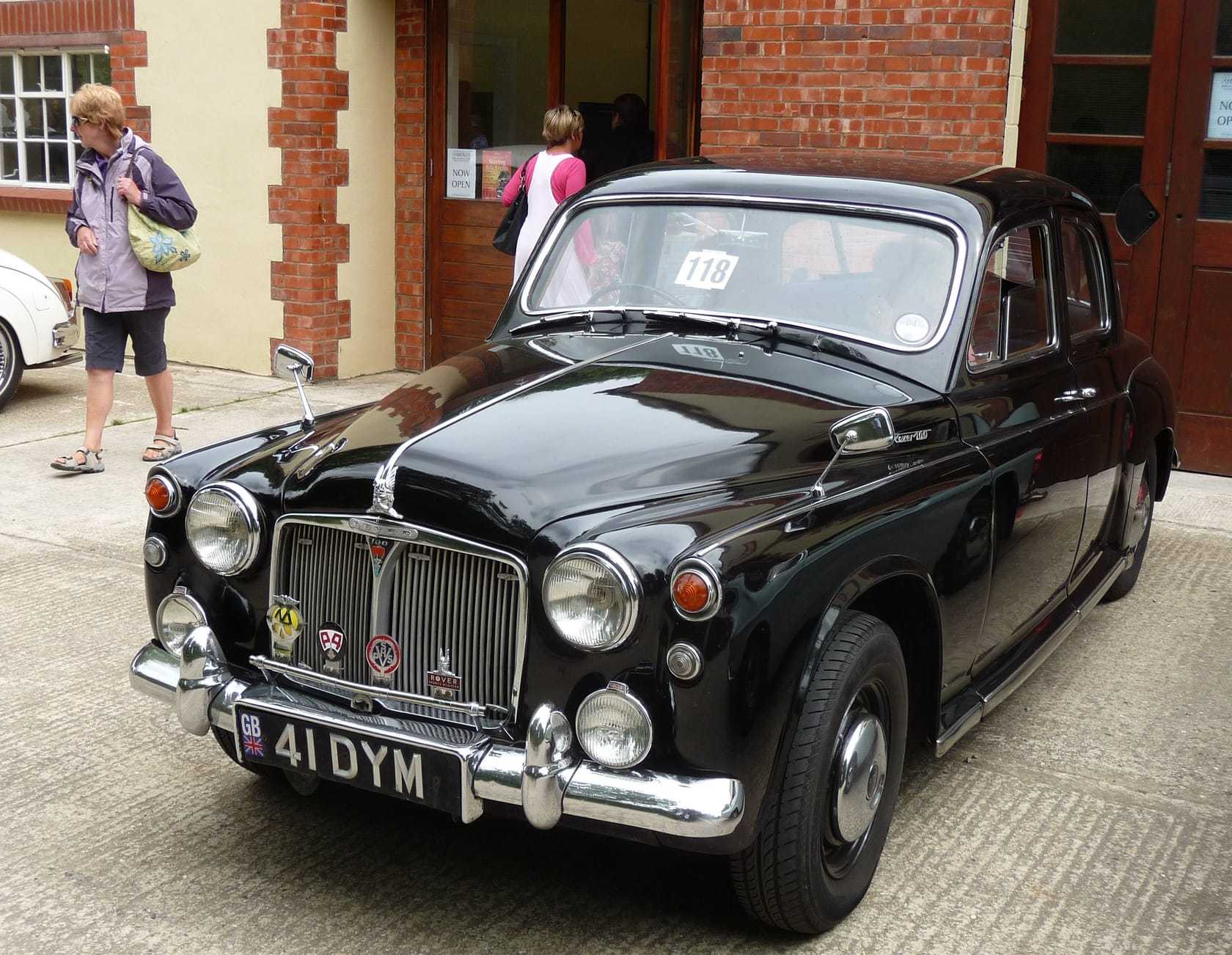
So upright and dependable that the country simply called it Auntie, the Rover P4 was the default transport of professional Britain, the doctor’s car and the bank manager’s car. Launched in 1949 and built for fourteen years across eight badge numbers, it defined Rover’s manners for good, and it remains the gentlest and most affordable way into the marque and one of the best-made bargains of its whole era.
The Cyclops arrives
The P4 75 of 1949 startled Rover’s conservative customers: full-width styling borrowed openly from Studebaker, and a single fog lamp mounted dead-centre in the grille that earned the original cars their Cyclops nickname. Beneath the modern suit sat Rover tradition, a separate chassis, aluminium panels over a steel frame, and cabinet-grade wood and leather within. The shock faded, the centre lamp went in 1952, and the shape settled into the upright dignity it kept to the end, refined rather than redesigned for over a decade.


Decoding the numbers: 75 to 110
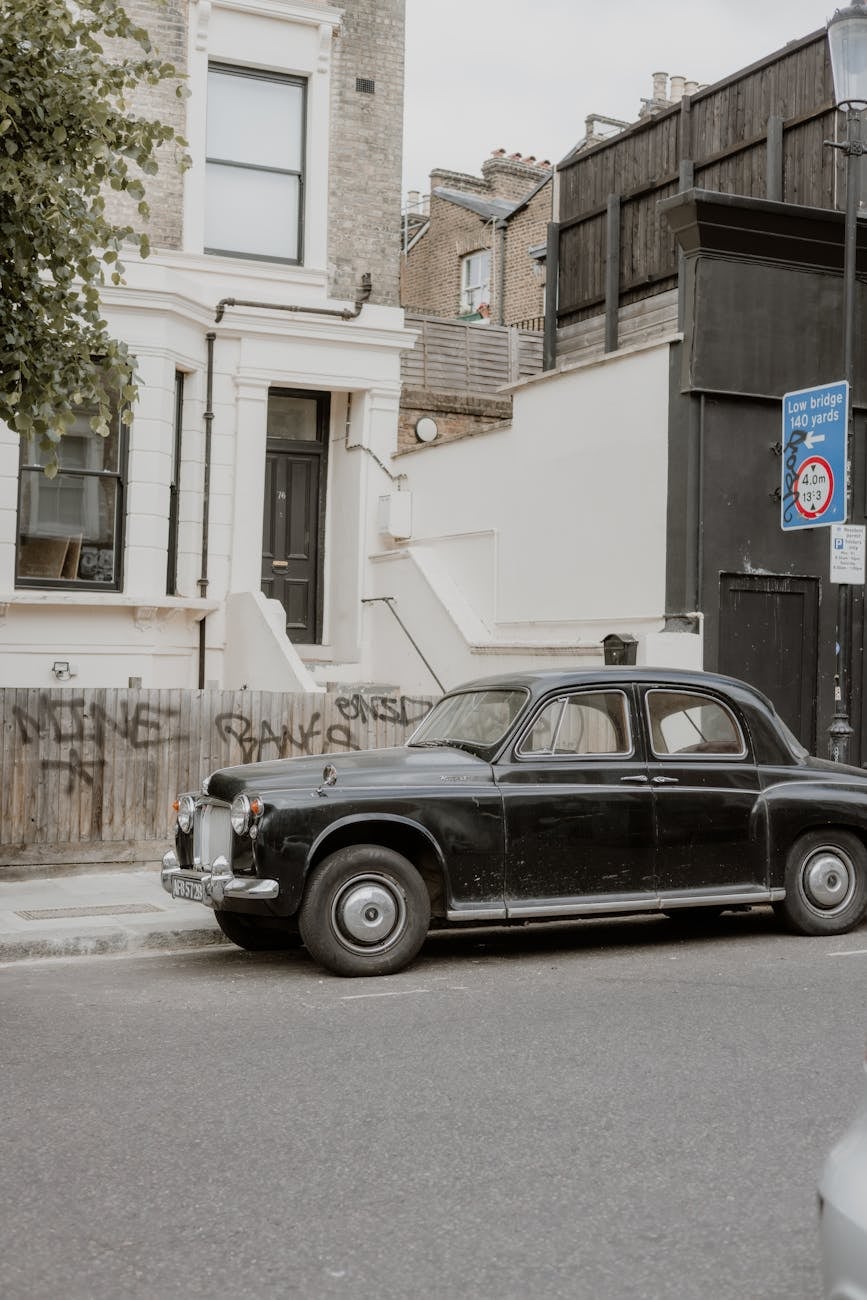
Rover badged P4s roughly by horsepower, and the ladder tells the story. The 75 began it; the economy four-cylinder 60 and the six-cylinder 90 broadened it from 1953; the twin-carburettor 105 added pace in 1956, with the curious 105R offering Rover’s own semi-automatic; and the final quartet, 80, 100, 95 and 110, carried the design to 1964 with the 110 the liveliest of all. Through every number the recipe held: six-cylinder smoothness (the 60 and 80 fours excepted), deep seats, a right-hand gearchange ancestry, and build quality that shamed dearer cars.

Auntie’s Britain
The P4’s fourteen years map respectable post-war Britain: the doctor’s rounds, the solicitor’s commute, the drive to church. It was never cheap and never flashy, which is exactly why its buyers trusted it, and why so many were maintained beautifully, garaged through every winter, serviced on schedule by the same garage for decades, and finally handed to the clubs rather than the scrapyard. Alongside it, Solihull’s engineers ran their wilder experiments, the gas-turbine JET1 prototype was a P4-based machine, and the marque’s Land Rover sibling conquered the countryside while Auntie kept the towns. The 1950s produced no more quietly confident car.

The oddballs: 105R and the specials
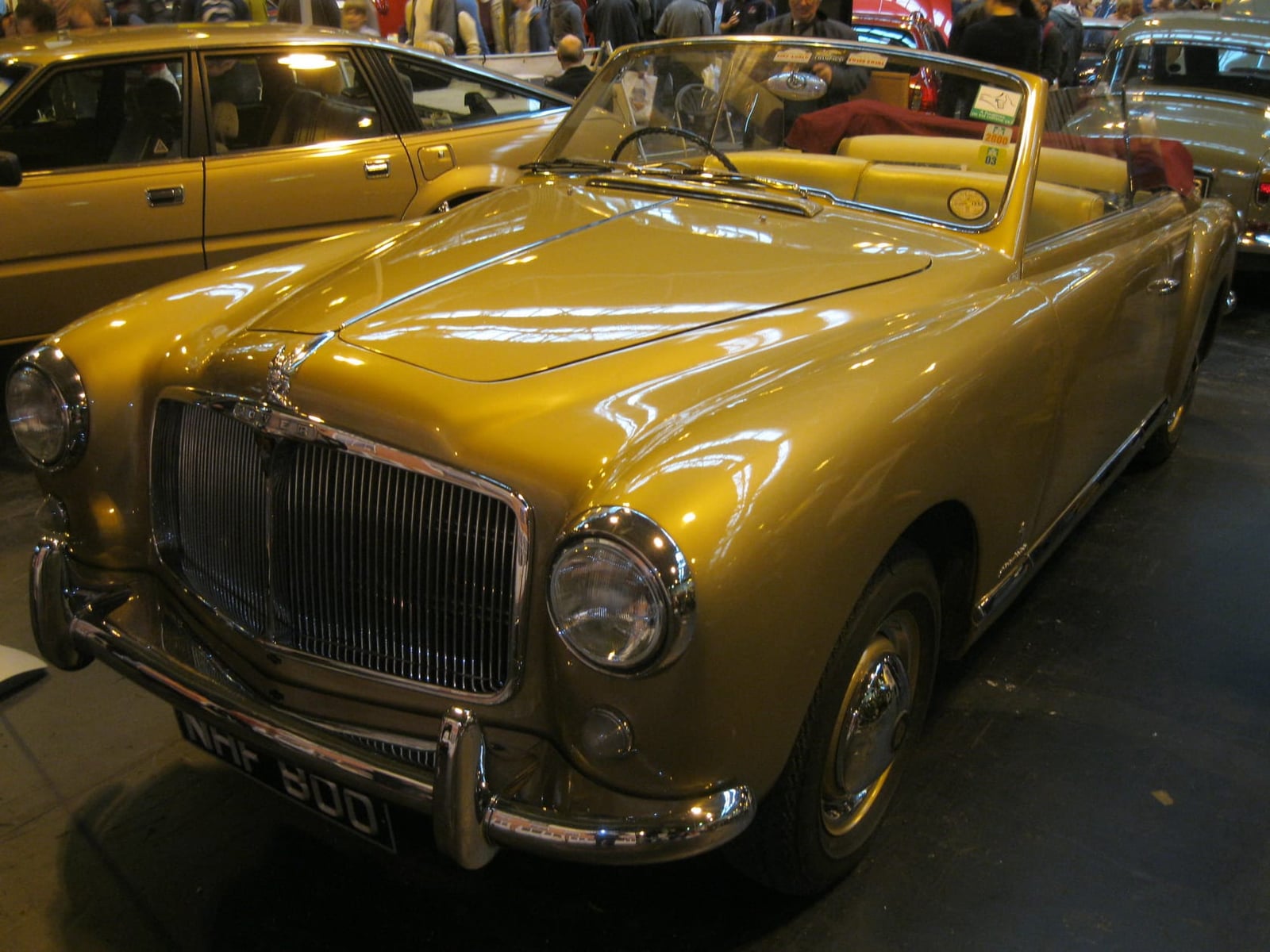
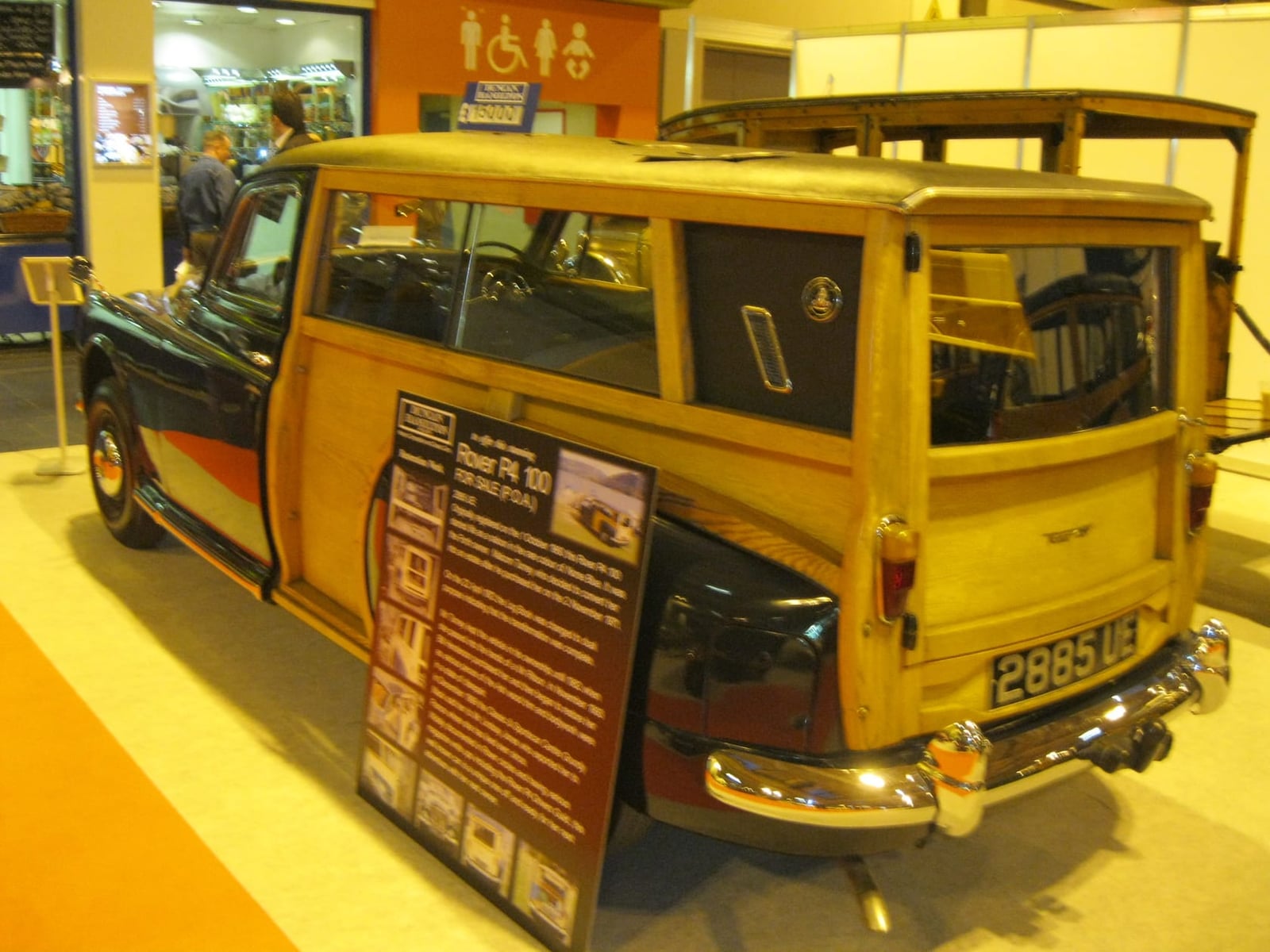
The range’s curiosities reward knowing. The 105R of 1956 carried Roverdrive, the company’s own two-pedal transmission, dignified in intent and glacial in effect, dropped within three years and now a collector’s talking point. Marauder sports specials built on P4 running gear by ex-Rover engineers number among the marque’s rarest offshoots, and the gas-turbine experiments, JET1 above all, borrowed the P4’s body for some of Britain’s boldest engineering publicity. Even Auntie, it turns out, had adventures; the clubs treasure every one of them.

What a P4 is like to drive
A P4 moves the way it looks: unhurried, hushed and deliberate. The sixes pull with turbine smoothness from walking pace, the ride flatters bad roads, and the controls, delicate wand of a gearlever, unassisted steering that lightens with speed, ask gentle inputs. A 100 or 110 cruises happily at 60 with reserves for the motorway. Nothing rewards hustling; everything rewards composure. Owners describe long P4 journeys arriving less tired than in moderns, which was always the Rover promise.

Buying a Rover P4 today
The aluminium panels mislead: the steel structure beneath, box sections, sills, bulkhead and chassis outriggers, is where P4s rot, so inspect frame-first with the trim’s condition second. Interiors are the budget item, with full wood-and-leather restoration costing more than most purchase prices, so a sound original cabin is worth paying up for. Mechanically the engines are unstressed and parts supply through the clubs is excellent; the 105R’s Roverdrive transmission needs a specialist’s eye, and freewheel-equipped early cars take a mile or two of acclimatising before their charm lands. Choose condition and completeness over badge number every time, and favour cars whose history shows the pattern these Rovers reward: one careful owner class, garaged, serviced by habit. The P4 world is full of such cars, because that was always exactly who bought them.

Values and where Auntie sits
The measured record, 144 sales at a median near £4,500, keeps the P4 among the great value buys of its generation: usable cars from £3,500, good ones £6,000 to £10,000, Cyclops 75s and the best restorations beyond. That is half the money of an equivalent Jaguar for arguably better construction, and the P4 world’s gentle temperament extends to its prices, its shows and its famously patient technical forums. As an introduction to what made Rover matter, the family’s fourteen patient years remain the perfect first chapter.

More photos
The P4 in dates
- 1949The 75 startles Rover's conservative customers with Studebaker-influenced full-width styling and the central Cyclops fog lamp.
- 1952The Cyclops lamp goes, and the shape settles into the upright dignity it keeps to the end.
- 1950The gas-turbine JET1 prototype, a P4-based machine, carries some of Britain's boldest engineering publicity.
- 1953The economy four-cylinder 60 and six-cylinder 90 broaden the range.
- 1956The twin-carburettor 105 adds pace, and the curious 105R offers Rover's own glacial semi-automatic Roverdrive.
- 1959The final quartet begins: 80, 100, 95 and 110 carry the design forward, the 110 the liveliest of all.
- 1964Production ends at around 130,000 cars; the P6 takes the marque somewhere entirely new.
P4: what to check before you buy
Frame first
- The separate chassis endures, but inspect it before the trim
- Aluminium panels over a steel frame corrode where the metals meet
- Sills and body mounts on any car that has sat
- Trim condition is second, but only because the frame is first
The interior, which is the budget item
- Full wood-and-leather restoration costs more than most purchase prices
- A sound original cabin is worth paying up for
- Cabinet-grade wood needs a cabinet-maker, not a garage
- Complete cars beat projects, as everywhere the trim is the expense
Mechanical and version
- Engines are unstressed and club parts supply is excellent
- The 105R's Roverdrive needs a specialist's eye
- Early freewheel transmission takes acclimatising and is not a fault
- Choose condition over badge number; the 110 is the liveliest, the Cyclops 75 the collector piece
What the P4 sells for at auction
In 2025 the median P4 sold for £3,136 across 19 sales, 28% down on 2024. In real terms, typical P4 prices were down about 53% over the five years to 2025, once inflation is accounted for.
| Variant | Sold | Typical range | Median |
|---|---|---|---|
| P4 100 | 40 | £3,024 - £7,078 | £4,864 |
| P4 75 | 30 | £1,038 - £5,086 | £3,244 |
| P4 95 | 22 | £3,152 - £6,608 | £4,612 |
| P4 110 | 18 | £4,374 - £8,876 | £6,143 |
| P4 80 | 9 | £3,600 - £5,400 | £4,370 |
| P4 90 | 9 | £1,526 - £6,792 | £3,024 |
| P4 | 6 | £3,054 - £4,850 | £3,942 |
| P4 105R | 5 | £3,800 - £4,822 | £4,781 |
Show the year-by-year mediansHide the year-by-year medians
| Year | Sold | Median | In 2025 money |
|---|---|---|---|
| 2026 (so far) | 12 | £2,962 | |
| 2025 | 19 | £3,136 | £3,136 |
| 2024 | 11 | £4,370 | £4,538 |
| 2023 | 20 | £5,175 | £5,553 |
| 2022 | 17 | £5,400 | £6,184 |
| 2021 | 16 | £4,512 | £5,579 |
| 2020 | 9 | £5,250 | £6,653 |
| 2019 | 4 | £8,350 | £10,689 |
| 2018 | 8 | £4,411 | £5,743 |
| 2016 | 4 | £4,550 | £6,217 |
| 2014 | 5 | £5,376 | £7,449 |
| 2011 | 4 | £712 | £1,050 |
| 2010 | 3 | £4,781 | £7,323 |
| 2006 | 4 | £978 | £1,658 |
- £1,680P4 60
- £6,500P4 100
- £2,900P4 80
- £7,448P4 100
- £2,764P4 100
Reasonable evidence. 144 recorded sales: enough for the range to mean something, though a few unusual cars can still move a single year's median. Based on 144 sold results from public classic car auctions (2005 to 10 August 2026). Sold prices, not asking prices, and not a valuation: condition, history and specification vary from car to car. Inflation-adjusted figures use the ONS CPIH index, in 2025 money.
Frequently asked questions
Why is the Rover P4 called Auntie?
What do the Rover P4 numbers mean?
What is the Cyclops Rover?
Is a Rover P4 a good classic to own?
How much is a Rover P4 worth?
What is the most expensive P4 ever sold at auction?
How often does a P4 come up for sale?
Related across themes
More from Rover

Rover P5 and P5B: the car that ran the country (1958–1973)

Rover P6: the first Car of the Year, and still the clever one (1963–1977)

Rover SD1: supercar lines, police stripes, Leyland luck (1976–1986)

Rover 800: the Honda-era bridge from the SD1 to the 75, and the Sterling that sank in America (1986–1999)
Recently added

Bentley S-series: the quiet twin with the beautiful secrets (1955–1965)

Rolls-Royce Silver Spirit and Silver Spur: the last Crewe bargain (1980–1999)

Rolls-Royce Corniche: the coachbuilt survivor that outlived its makers (1971–1995)
