Daimler SP250: the fibreglass V8 the police couldn't catch (1959–1964)
The Daimler SP250 paired Edward Turner's jewel of a 2.5-litre V8 with a fibreglass body and a face nobody forgets, chased London's cafe racers in police service, and died young under Jaguar ownership. A guide to the Dart, the A to C specs, buying checks and values.
Built 1959–1964 153 recorded sales
At a glance
- Years
- 1959–1964
- Body styles
- Two-seat fibreglass roadster
- Drivetrain
- Front engine, rear-wheel drive; separate chassis
- Engines
- 2548cc Edward Turner V8
- Power
- 140 bhp
- Top speed
- Around 120 mph
- Trim levels
- A-spec (1959–61), B-spec (1961–63), C-spec (1963–64); police specification
- Production
- 2,654
- Assembly
- Coventry
- Designer
- Edward Turner (engine); in-house body
- Values
- Projects from around £15,000; good cars £25,000-£40,000; the best beyond £50,000
- The heart
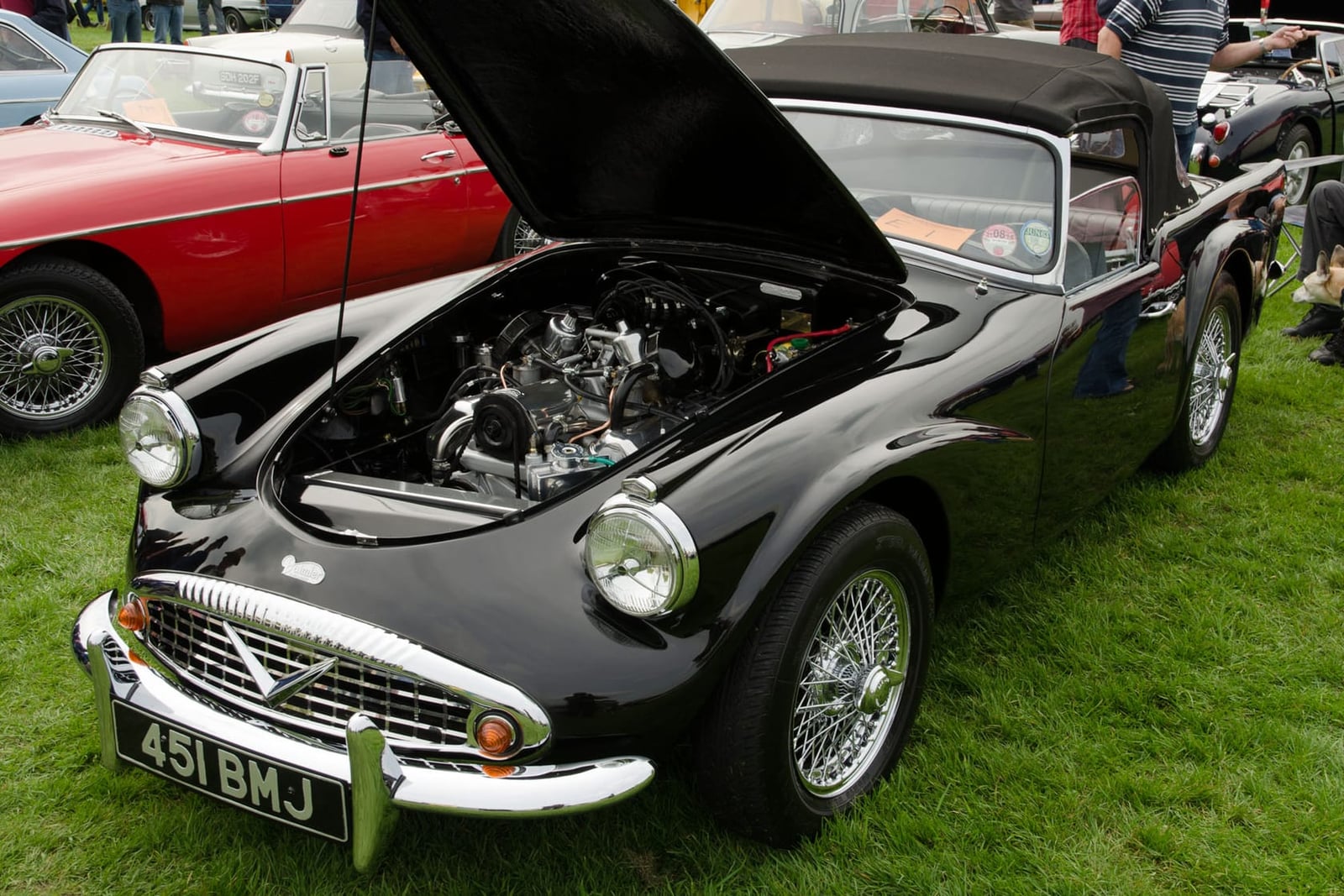
- Edward Turner's 2.5-litre hemi-head V8, drawn with a motorcycle designer's eye
- The beat
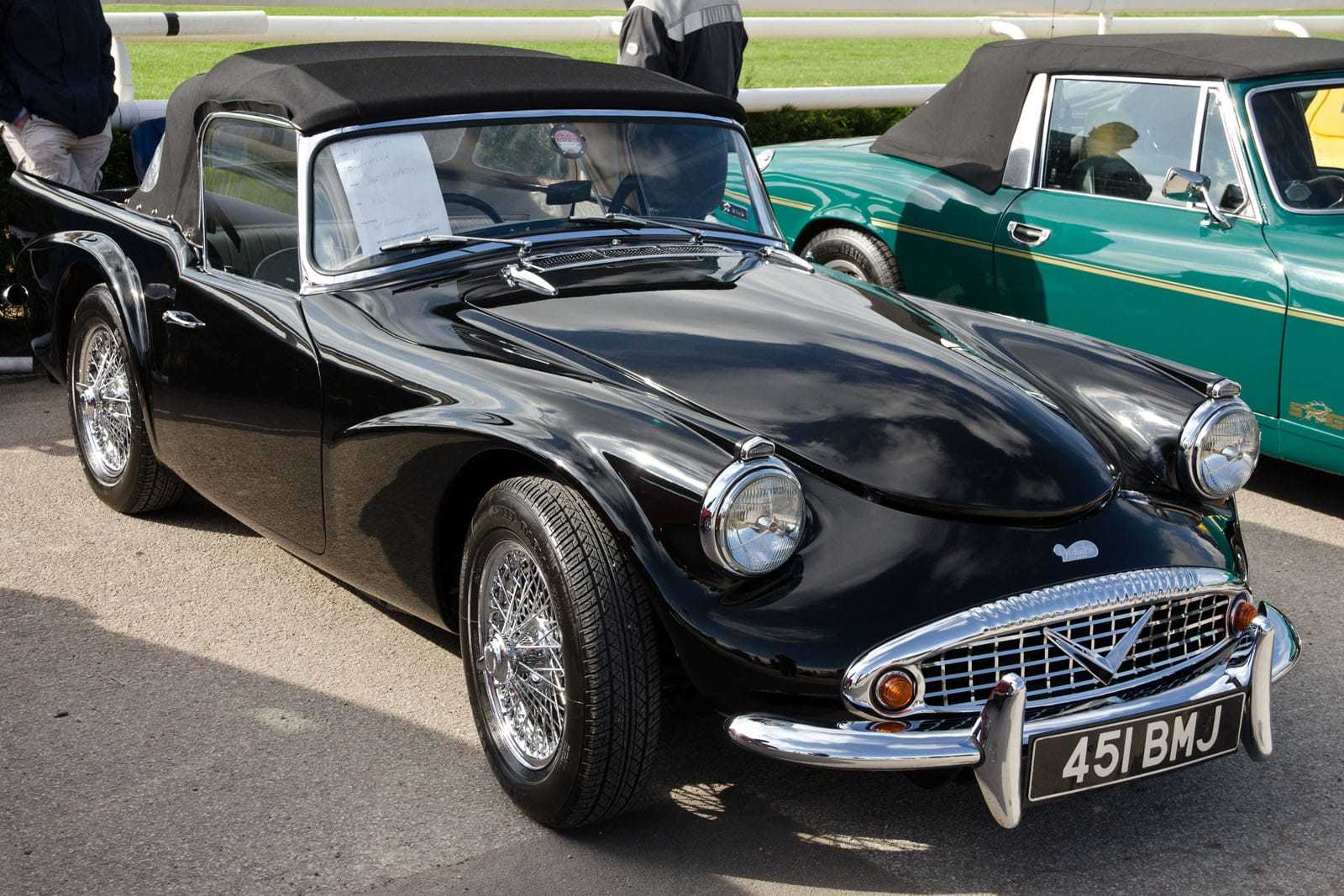
- The Metropolitan Police ran black SP250s to catch 1960s cafe racers
The models
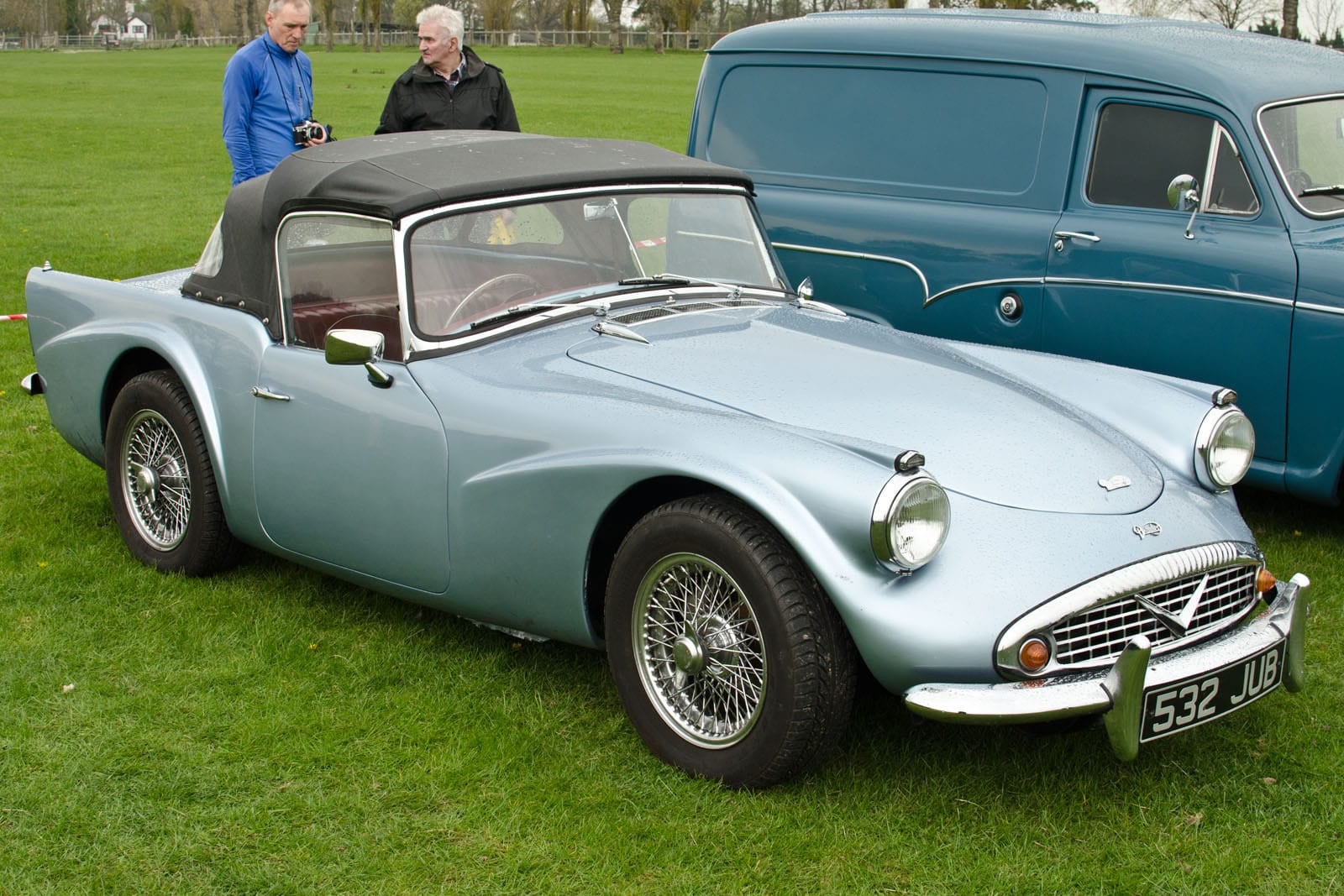
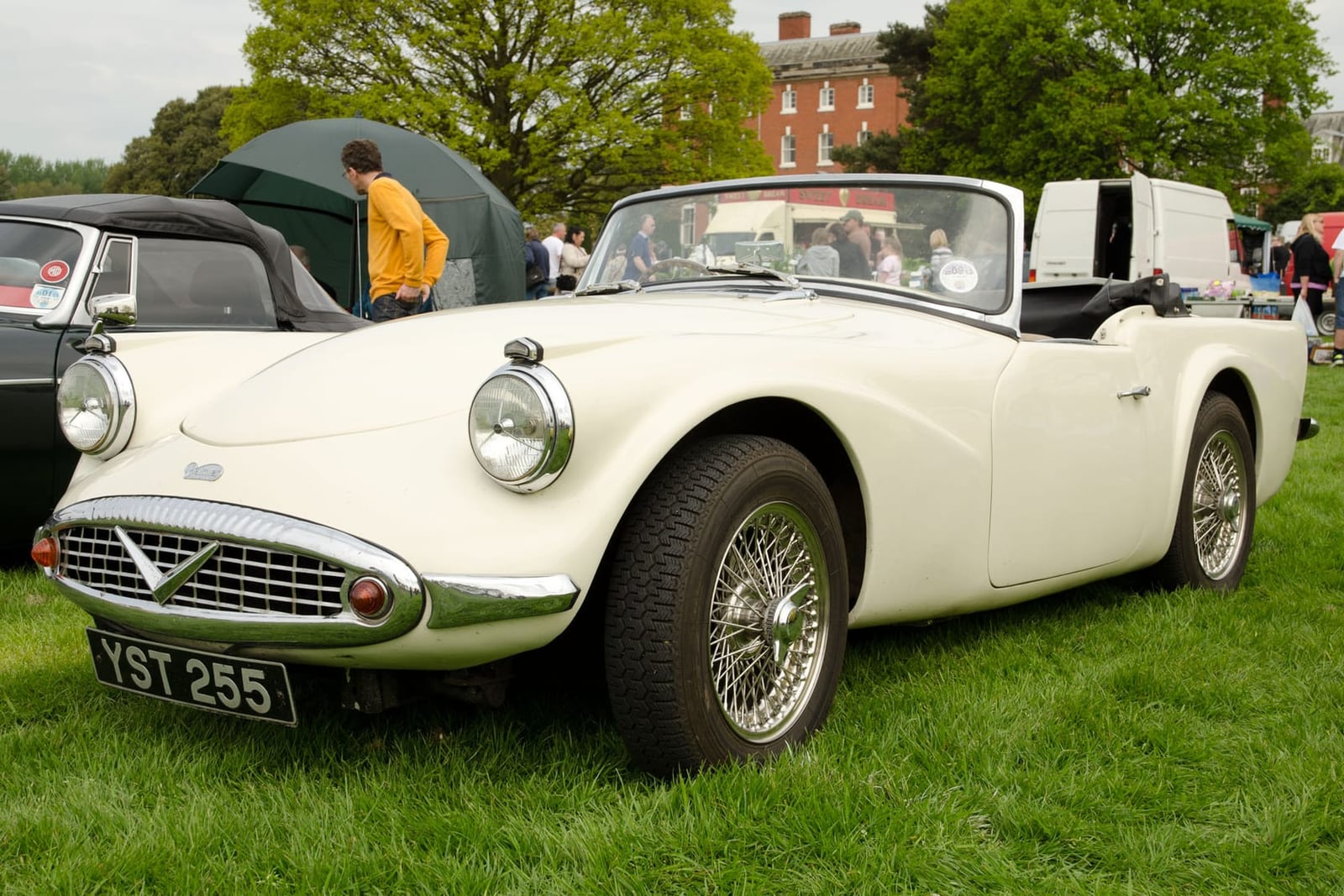
By the late 1950s the Daimler name meant stately saloons and royal limousines, which makes its last independent gamble all the stranger and more wonderful: a fibreglass two-seater with a motorcycle engineer’s V8 and a face like a startled catfish. The Daimler SP250, briefly the Dart, could genuinely touch 120 mph in 1959, spent its service years chasing cafe racers for the Metropolitan Police, and died young when Jaguar bought the company. The survivors are the great value V8 sports cars of their era, and among its most charismatic.
The Turner V8
The engine explains everything worth loving about the car. Edward Turner, the genius behind Triumph’s great motorcycle twins, drew Daimler a 2548cc V8 with hemispherical combustion chambers, lightweight valve gear and an appetite for revs no British production V8 of the day could match. It made 140 bhp with silken manners and a burble collectors now cross fields to hear, and it proved tough in hard police service. When the sports car died, the engine carried on in the V8-engined Mk2-bodied saloon, but the SP250 remains its purest home.

Dart to SP250: a troubled launch
The 1959 New York debut went wrong twice: the Dart name drew an immediate objection from Chrysler, custodians of Dodge’s Dart, forcing the retreat to the SP250 project code, and the press cars’ A-spec chassis flexed enough on poor roads that doors could spring open. Sales limped, the styling drew jokes, and the little company lacked the money to answer either quickly. Jaguar’s 1960 purchase of Daimler brought salvation of a sort: the 1961 B-spec stiffened the chassis and shell properly, added an adjustable steering column and better bumpers, the 1963 C-spec brought a standard heater and other civilities, and the car matured into what it should have been at launch, just as its new owner, with an E-Type to sell at a similar price, lost all commercial interest in it. Production ended in 1964 at 2,654 cars, the prettier SP252 prototype was shown internally and shelved, and Daimler’s sports car adventure closed after a single act, which is exactly why the survivors feel so special now.
The police Darts
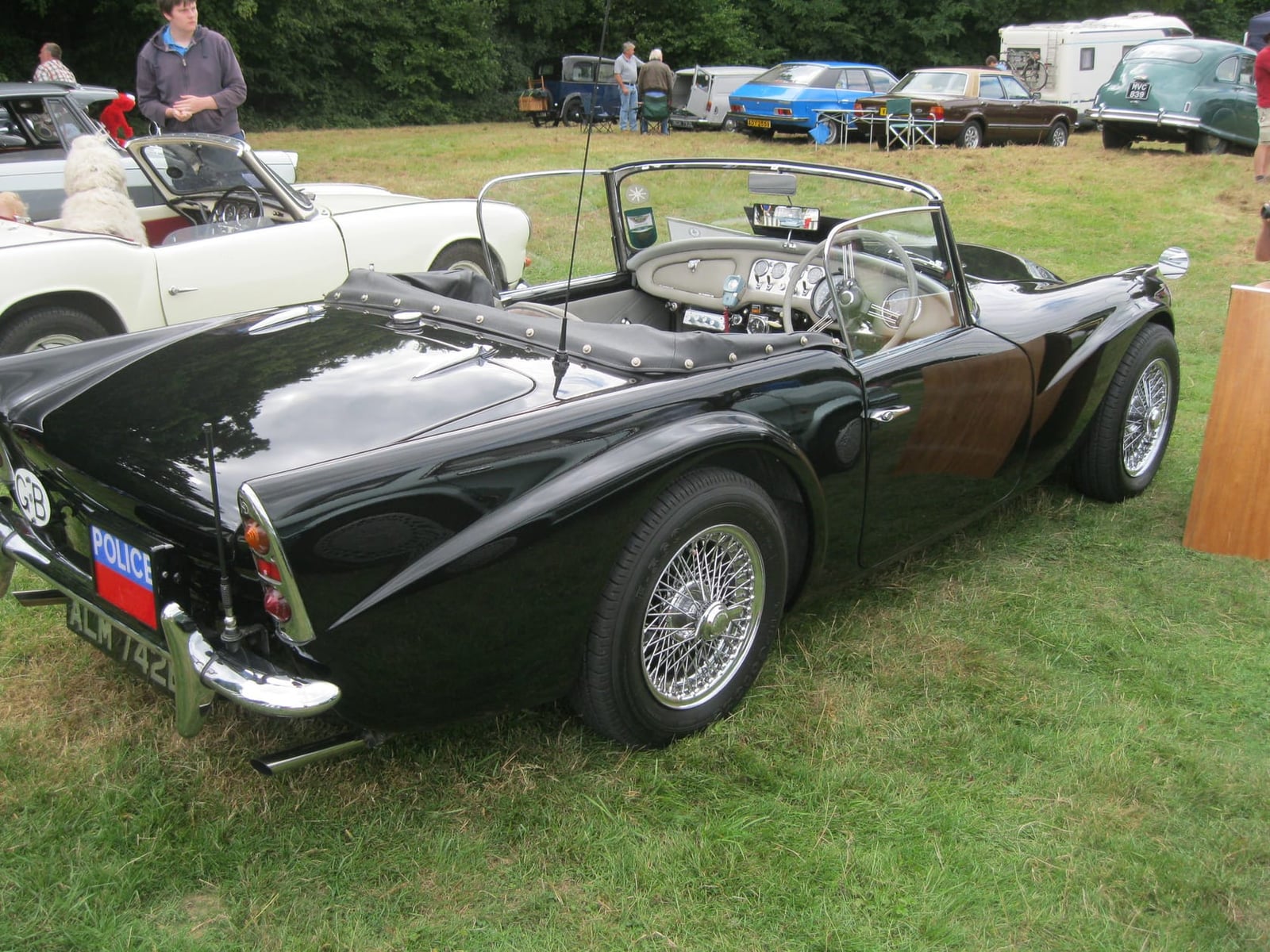
The model’s best stories wear black: the Metropolitan Police ran SP250s, most with automatic gearboxes, specifically to police the ton-up motorcycle scene of the early sixties, the Turner V8 being one of the few things on the road that could stay with a tuned Bonneville. Forces beyond London followed. Genuine ex-police cars survive with documentation, wearing their calibrated speedometers and radio blanking plates as badges of honour, and they trade at a premium the story fully earns.

What an SP250 is like to drive
The SP250 drives like its parentage: the V8 dominates, eager, characterful and quick for its day, with 120 mph genuinely available and a mid-range that embarrasses contemporary sixes. B and C-spec cars steer and stop well by period standards on their four-wheel discs, the fibreglass body keeps weight sensible, and the whole car feels lighter on its feet than the styling ever suggests. It is happiest as a fast tourer rather than a track device, exactly the brief Turner’s engine answers best, and the soundtrack does half the entertaining, a woofling idle rising to a hard-edged snarl no XK six ever made. Manual cars predominate and suit the character; the automatics, many ex-police, waft surprisingly well and carry the better stories.

Living with an SP250
Ownership is friendlier than the rarity suggests: the Daimler and Lanchester Owners Club supports the model with spares schemes, technical archives and a register that knows most of the 2,654 by chassis number, while the V8’s fundamentals, chains, bearings, carburettors, are all serviceable with ordinary skills and club guidance. The fibreglass body shrugs off the winter salt that would eat a steel rival, boot space embarrasses most sixties roadsters, and the car cruises modern A-roads without strain, all of which keeps SP250s genuinely driven rather than statically shown. The social calendar helps: Darts gather at Daimler centenaries, police-vehicle events and V8 celebrations alike, and an owner who wants an excuse to drive rarely waits more than a fortnight for one.
Buying an SP250 today
Fibreglass changes the checklist: the body cannot rust but can craze, crack and hide poor repairs, so panel condition and fit want careful reading, while the separate steel chassis underneath demands the corrosion inspection the body escapes. A-spec cars deserve specialist assessment of the known flex points. The V8 is durable with cared-for cooling and oil supply, parts flow through the Daimler and Lanchester Owners Club network, and originality, colour, trim, correct equipment, moves value. At 153 measured sales and a £27,900 median, projects start near £15,000, good cars hold £25,000 to £40,000, and documented police Darts and the best restorations run beyond £50,000: Jaguar pace, Daimler rarity, half the money.

More photos
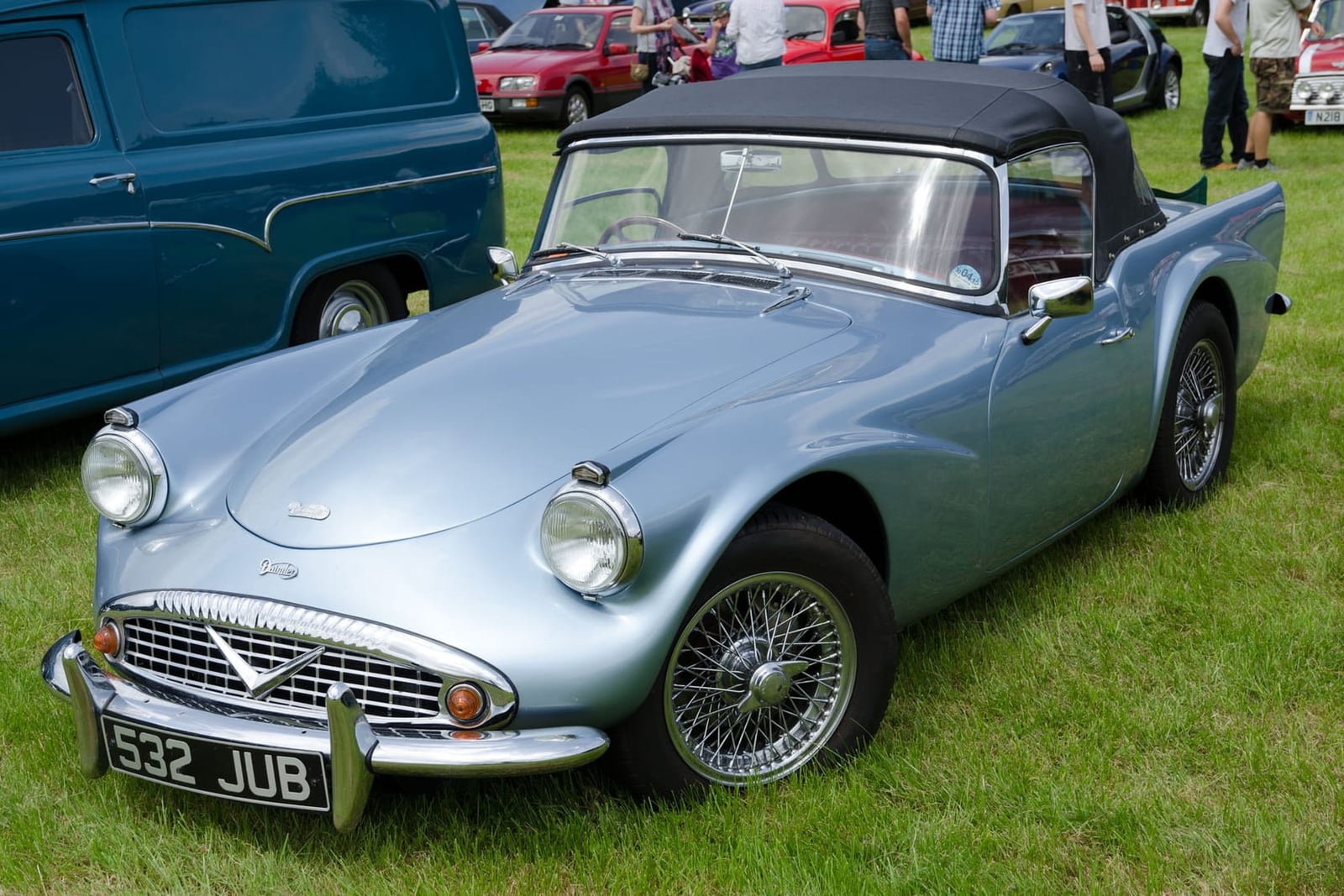
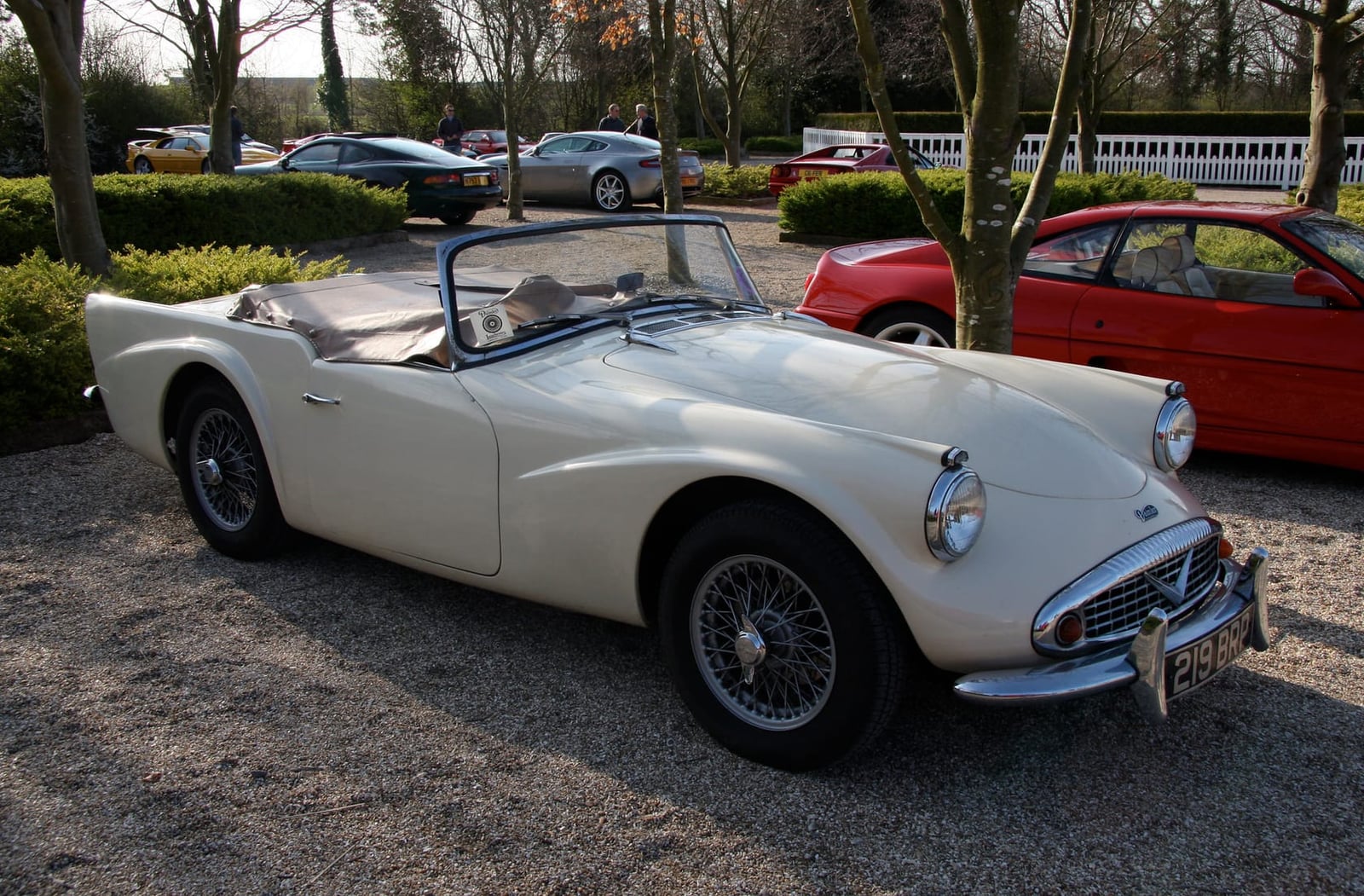
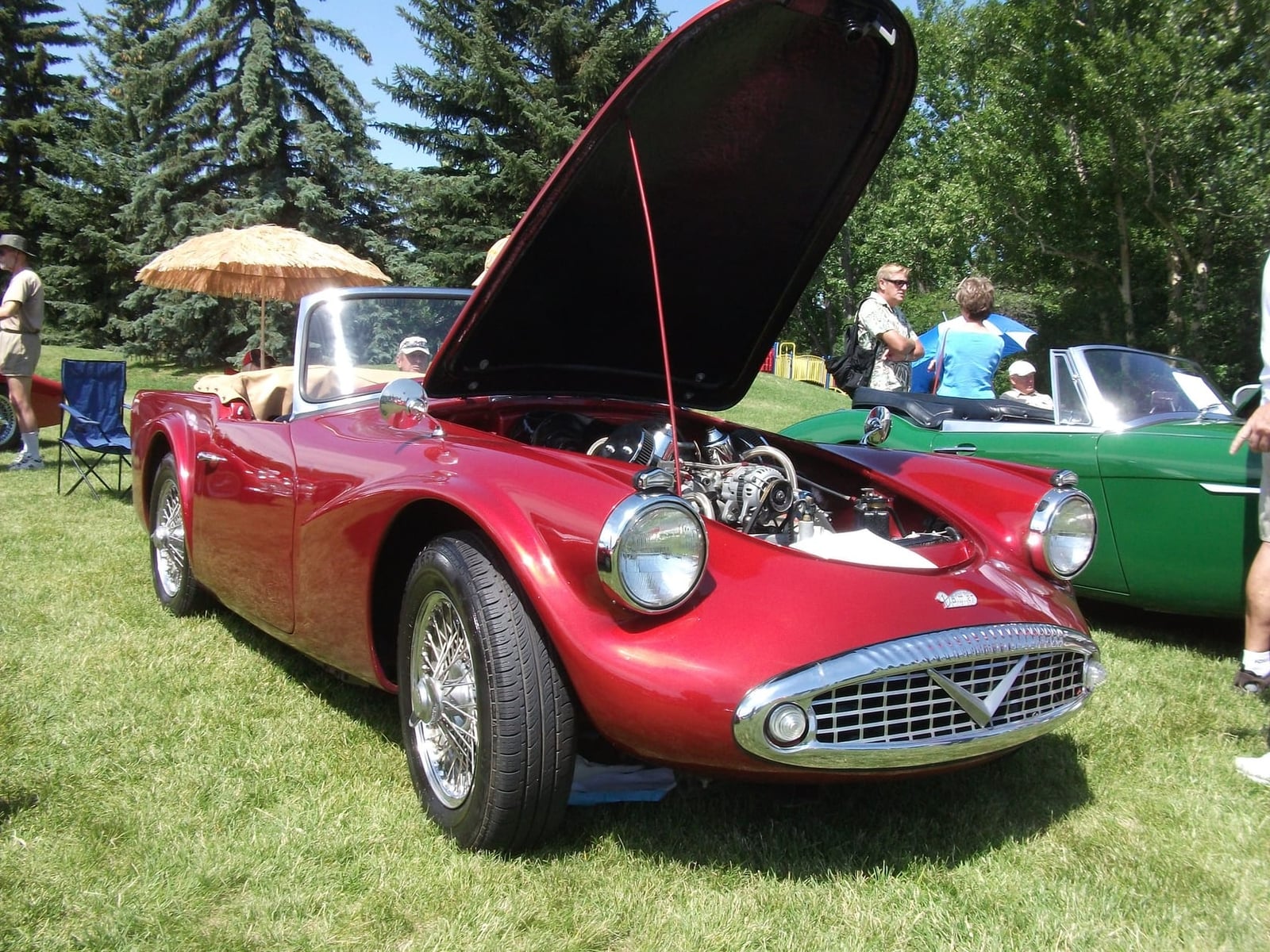
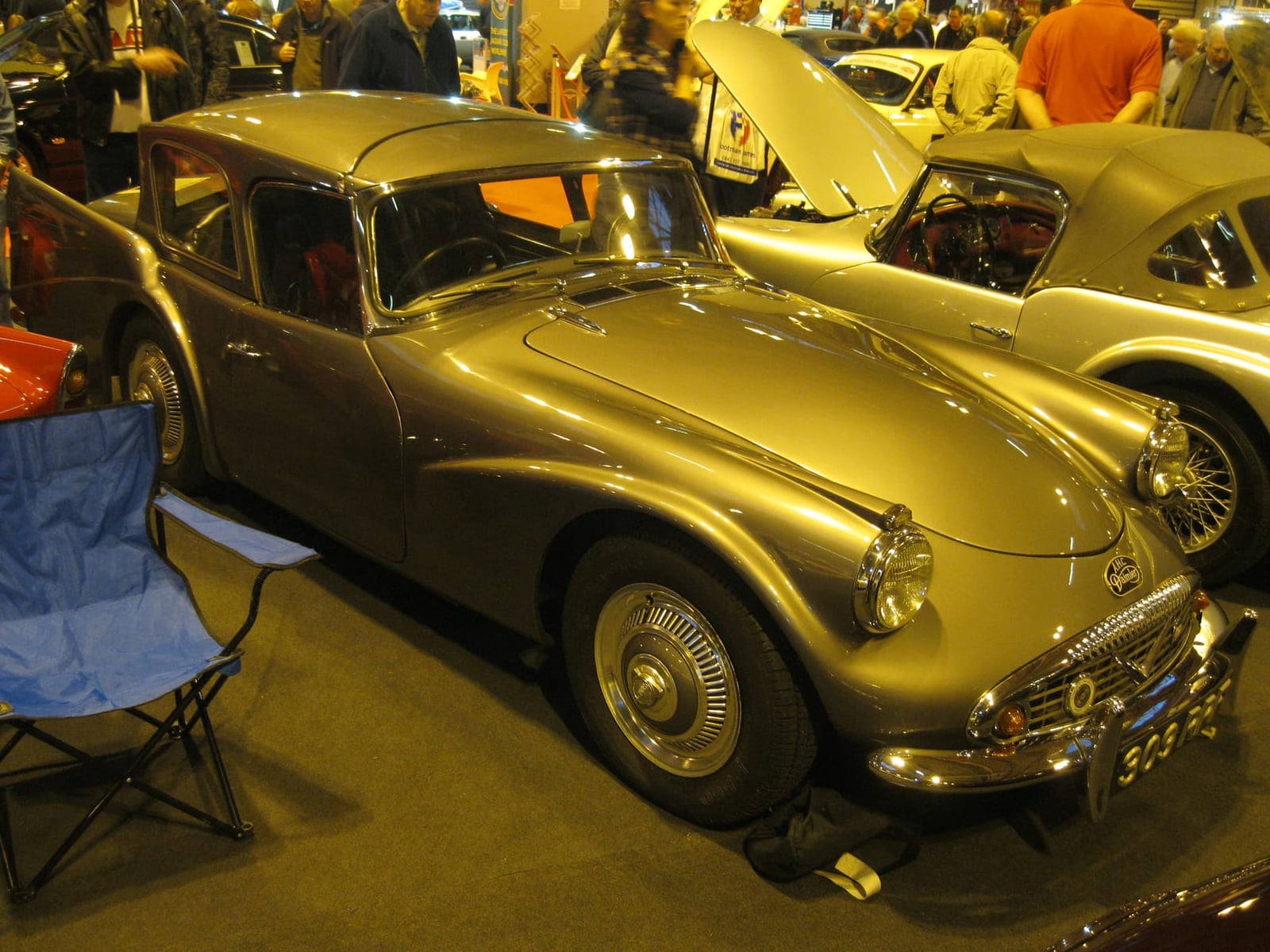
How the SP250 changed
- 1959Debuts in New York as the Dart; Chrysler objects on behalf of Dodge and the car retreats to its SP250 project code.
- 1959A-spec cars reach customers, and press reports of chassis flex on poor roads damage the launch.
- 1960Jaguar buys Daimler.
- 1961The B-spec stiffens the chassis and shell properly, adds an adjustable steering column and better bumpers.
- Early 1960sThe Metropolitan Police run SP250s, mostly automatics, to police the ton-up motorcycle scene.
- 1963The C-spec brings a standard heater and other civilities.
- 1964Production ends at 2,654 cars; the prettier SP252 prototype is shown internally and shelved.
Before you buy an SP250
Body and chassis
- Fibreglass crazing, cracking and disguised repairs: read panel condition and fit carefully
- The separate steel chassis needs the corrosion inspection the body escapes
- A-spec cars deserve specialist assessment of the known flex points
- B and C-spec cars are the sorted ones and steer and stop well by period standards
The Turner V8
- Durable with cared-for cooling and oil supply
- Chains, bearings and carburettors are all serviceable with ordinary skills and club guidance
- Parts flow through the Daimler and Lanchester Owners Club network
- Manual cars predominate and suit the character; many automatics are ex-police
Provenance and originality
- Genuine ex-police cars survive with documentation, calibrated speedometers and radio blanking plates
- Colour, trim and correct equipment all move value
- The register knows most of the 2,654 cars by chassis number
- Spec, A, B or C, is worth confirming rather than assuming from the year
What the SP250 Dart sells for at auction
In real terms, typical SP250 Dart prices were down about 32% over the five years to 2025, once inflation is accounted for.
| Variant | Sold | Typical range | Median |
|---|---|---|---|
| SP250 | 146 | £21,868 - £34,494 | £27,528 |
| SP250 Police | 7 | £50,200 - £55,725 | £52,875 |
Show the year-by-year mediansHide the year-by-year medians
| Year | Sold | Median | In 2025 money |
|---|---|---|---|
| 2026 (so far) | 10 | £25,226 | |
| 2025 | 14 | £23,968 | £23,968 |
| 2024 | 7 | £25,939 | £26,934 |
| 2023 | 14 | £28,625 | £30,717 |
| 2022 | 20 | £26,491 | £30,338 |
| 2021 | 10 | £30,865 | £38,166 |
| 2020 | 10 | £28,000 | £35,482 |
| 2019 | 7 | £22,200 | £28,419 |
| 2018 | 10 | £34,992 | £45,555 |
| 2017 | 7 | £43,875 | £58,444 |
| 2016 | 3 | £37,661 | £51,458 |
| 2015 | 9 | £31,543 | £43,529 |
| 2014 | 8 | £32,510 | £45,044 |
| 2012 | 7 | £29,046 | £41,754 |
| 2011 | 4 | £27,844 | £41,051 |
- £13,664SP250
- £51,750SP250
- £19,448SP250
- £22,995SP250
- £27,456SP250
Reasonable evidence. 153 recorded sales: enough for the range to mean something, though a few unusual cars can still move a single year's median. Based on 153 sold results from public classic car auctions (2003 to 10 August 2026). Sold prices, not asking prices, and not a valuation: condition, history and specification vary from car to car. Inflation-adjusted figures use the ONS CPIH index, in 2025 money.