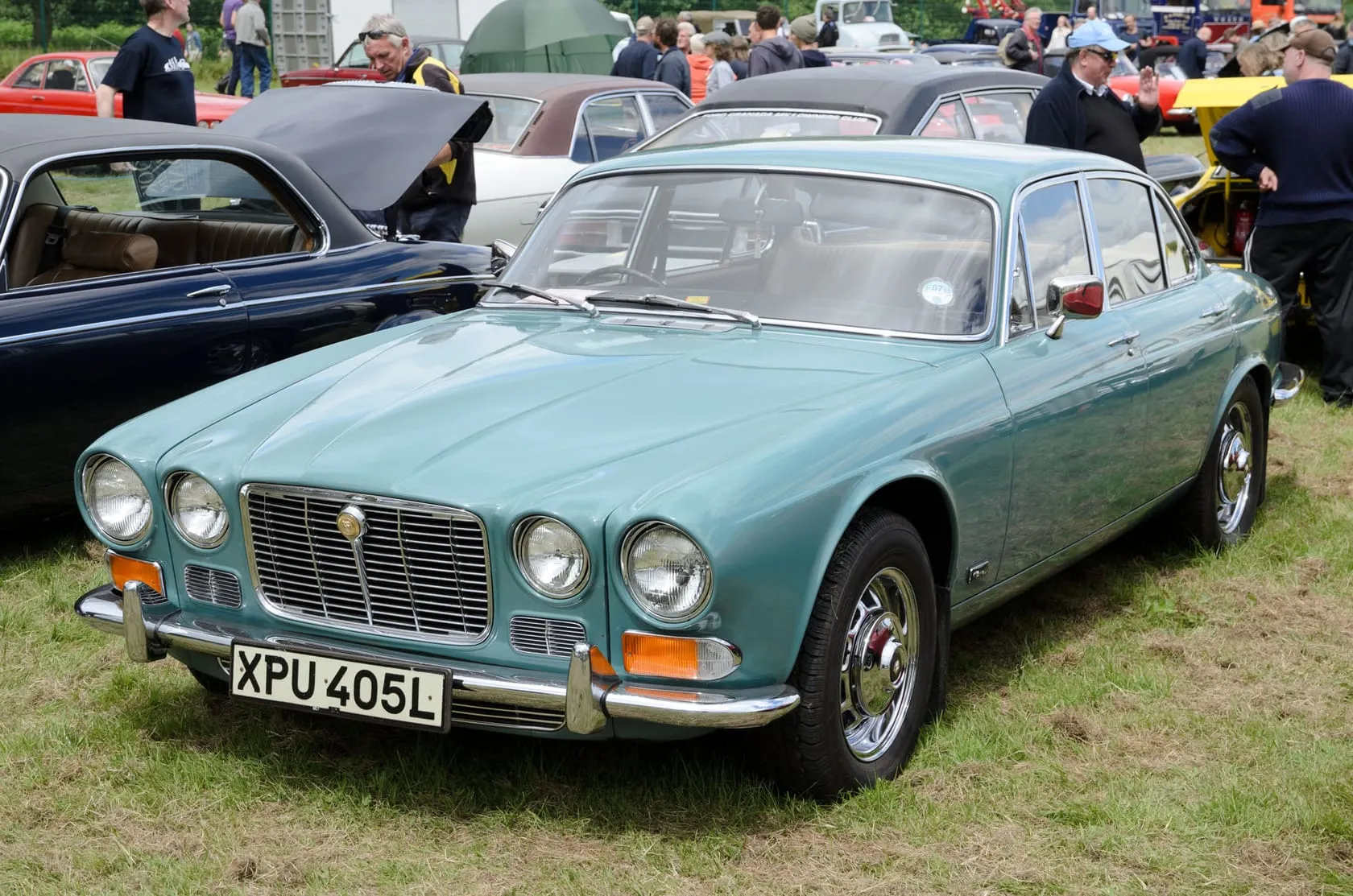
Jaguar XJ6 Series 3: the Pininfarina polish on Lyons' last saloon (1979–1992)
The Series 3 was the XJ6 perfected, the 1979 Pininfarina reskin of Sir William Lyons' saloon that outlived its own replacement, carried Jaguar through the Egan quality revival and ran to 1992 as the V12. A guide to what changed, the 3.4, 4.2 and 5.3 engines, the Sovereigns and Daimlers, what to check, and why the Series 3 is the XJ to use.
Built 1979–1992

At a glance
- Years
- 1979–1987 (six-cylinder); to 1992 as the V12
- Body styles
- Four-door saloon
- Drivetrain
- Front engine, rear-wheel drive; five-speed manual or automatic
- Engines
- 3.4 and fuel-injected 4.2 XK six; 5.3 V12
- Power
- 3.4: 161 bhp; 4.2: around 200 bhp; V12 HE: 295 bhp
- Top speed
- 4.2: around 128 mph; V12: 147 mph
- Production
- Around 132,000 Series 3s, the great majority 4.2s
- Assembly
- Browns Lane, Coventry
- Designer
- Sir William Lyons' original, reskinned by Pininfarina
- Values
- Projects from £1,000; good usable cars £4,000-£9,000; the best low-mileage cars £15,000-£25,000 and one exceptional sale at £41,900
- The outliver
- The Series 3 V12 stayed in production until 1992, six years after the XJ40 arrived to replace it
- The rescue
- It was the car John Egan's quality drive fixed in public, and the sales that followed helped carry Jaguar to its 1984 privatisation
The models
The Series 3 is the XJ6 perfected, and the proof is how long it refused to die. Launched in March 1979 as a reskin of Sir William Lyons’ 1968 saloon, it was meant to hold the line until the XJ40 arrived; it ended up outliving its replacement’s welcome, carrying Jaguar through the John Egan quality revival and the 1984 privatisation, and staying in production as the V12 until the end of 1992. Around 132,000 were built, it was the Jaguar on every successful driveway of the 1980s, and it is now the XJ to use: the best built, the best supported and the cheapest good big Jaguar there is.
The XJ6 and XJ12 guide covers the whole three-series story; this page is the Series 3’s own, what changed, the engines and the badges, what to check and what one costs.
What Pininfarina changed
Jaguar handed the facelift to Pininfarina, and the Italians treated the shape like the monument it was. The roofline rose and the pillars slimmed, enlarging the glass and the cabin; the door handles went flush, the bumpers wrapped around in black-faced form, the grille grew a subtle vane, and the details moved the car into the 1980s without breaking a line Lyons had drawn. Underneath, the 4.2 gained Lucas fuel injection, a proper five-speed manual replaced the old overdrive box for the few who wanted it, and the cabin was steadily upgraded through the run. It is the only case of an outside house restyling a Jaguar icon and being thanked for it.

Six cylinders, twelve cylinders and the Egan rescue
The engines told the range’s story. The 3.4 XK six stayed on carburettors for the fleet buyer; the injected 4.2, with about 200 bhp, was the heart of the range and the engine in most survivors; and the 5.3 V12 sat above both in the XJ12 and Daimler Double Six, from 1981 in high-efficiency HE form with 295 bhp and a genuine 147 mph. Build quality, dire in the late British Leyland years, became the company’s public battleground: John Egan’s quality drive from 1980 fixed the Series 3 in full view of the press, sales rose on the proof, and the car’s success underwrote Jaguar’s 1984 return to private ownership. The six-cylinder cars ran to spring 1987; the V12s, built in small numbers at Browns Lane, to the end of 1992.

Sovereign, Daimler and Vanden Plas
The badges were a ladder on one car. Until 1983 the plusher XJ6 wore Daimler’s Sovereign name; from 1983 Jaguar took Sovereign for its own top six-cylinder trim, and the Daimler range became the Double Six and the Vanden Plas above it, fluted grilles, rear picnic tables and the deepest walnut in the catalogue. Mechanically they are all the same saloon, and the market prices them close enough that the sensible buyer shops on condition and lets the badge fall where it may; a Daimler usually brings more equipment for the same money, and the last Double Sixes are the most opulent Lyons-shape Jaguars ever built.

What it is like to drive and own
Nothing this side of far more modern metal rides like a sorted Series 3. The steering is light and alive, the six is smooth and the V12 smoother, and the car covers ground in a silence that explains every legend about Jaguar saloons; the manual 4.2 is the enthusiast’s pick and the automatic the character fit. Running one is the XJ bargain it always was, with parts supply excellent, the specialists everywhere and the club scene deep; the costs that matter are body repairs, which dwarf the car’s value, and the V12’s appetite when neglected. Fuel economy is high teens for the 4.2 and low teens for the V12. The earliest Series 3s are in the historic vehicle tax class now, a 1986 car joins in April 2027, and none clears the London ULEZ.
Buying guide: what to look for
The shell decides everything, because an XJ rusts in places that cost more than the car: the multi-section sills, the floors, the wheel arches, the valances, the boot floor, the screen surrounds and the rear radius-arm mountings, where rot lets the suspension pull away. Buy the driest, straightest shell in reach and treat everything mechanical as detail. On the engines, the 4.2 wants proof its cooling has been kept right and tolerates old-age oil leaks; the V12 is a joy with an unbroken history and a liability without one; gearboxes and axles rarely trouble anyone. Then the cabin and the electrics, which set the top of the market: wood, leather, working air conditioning and central locking, and the long file of a garaged car. A cheap V12 remains the classic trap, and a £3,000 Series 3 is usually a £10,000 restoration wearing a temptation.

Current value and where it sits
Within the wider XJ6 record on this site the Series 3 sales, about 250 of them, sit at a median of £5,300, with the middle half between roughly £2,900 and £9,300; projects start around £1,000, honest cars sit at £4,000 to £9,000, and the best low-mileage Sovereigns and V12s reach £15,000 to £25,000. The highest recorded XJ6 sale in the data, £41,900 in 2024, was a Series 3, which says what the market thinks of the best of them. The full family record, badge against badge with the coupé, the XJR and the Daimlers, is on the page covering what a classic XJ sells for.

How the Series 3 changed
- 1979Pininfarina's facelift arrives, roofline raised, pillars slimmed, door handles flush and bumpers wrapped in black-faced form, with Lucas fuel injection for the 4.2.
- 1980John Egan's quality drive begins, fixing the Series 3 in full view of the press.
- 1981The 5.3 V12 moves to high-efficiency HE form, 295 bhp and a genuine 147 mph.
- 1983Jaguar takes the Sovereign name for its own top six-cylinder trim, and the Daimler range becomes the Double Six with Vanden Plas above it.
- 1984The car's success underwrites Jaguar's return to private ownership.
- Spring 1987The six-cylinder cars end.
- End of 1992The last V12s, built in small numbers at Browns Lane, finish the run.
Series 3: what to check before you buy
The shell decides everything
- The multi-section sills, the floors, the wheel arches and the valances
- Boot floor, screen surrounds, and the rear radius-arm mountings, where rot lets the suspension pull away
- Buy the driest, straightest shell in reach and treat the mechanical side as detail
Engines
- The 4.2 wants proof its cooling has been kept right, and tolerates old-age oil leaks
- The V12 is a joy with an unbroken history and a liability without one
- Gearboxes and axles rarely trouble anyone
What sets the top of the market
- Wood, leather, working air conditioning and central locking
- The long file of a garaged car
- A cheap Series 3 is usually a large restoration wearing a temptation
Related
The Series 3 closed the saloon line that began with the Mk2’s successor and handed Browns Lane to the XJ40; its stablemate through the 1980s was the XJS, and its rivals the Mercedes S-Class and the Rover SD1. For the decade, see British classic cars of the 1980s.
More photos