Classic Mini Cooper values: 1960s against 1990s, the S premium, and what a replica is worth
The median is a 1990s Rover Cooper price, not a 1960s car. Classic Mini Cooper values from 1,101 recorded auction sales, what a genuine 1960s Cooper S makes, the Mk I premium, what a replica sells for against the real thing, and why provenance matters more here than on any other small British car.
Built 1961–2000
What the Mini Cooper sells for at auction
In 2025 the median Mini Cooper sold for £12,420 across 127 sales, 15% down on 2024. In real terms, typical Mini Cooper prices were down about 42% over the five years to 2025, once inflation is accounted for.
| Variant | Sold | Typical range | Median |
|---|---|---|---|
| Mini Cooper | 578 | £6,616 - £15,696 | £9,914 |
| Mini Cooper S | 260 | £16,328 - £33,577 | £24,224 |
| Mini Cooper Sport | 58 | £10,704 - £20,162 | £14,140 |
| Mini Cooper S Mk I | 35 | £27,504 - £37,372 | £33,750 |
| Mini Cooper Mk II | 26 | £9,130 - £17,386 | £12,172 |
| Mini Cooper S Replica | 25 | £10,528 - £20,500 | £16,080 |
| Mini Cooper S Mk II | 21 | £16,919 - £26,438 | £24,645 |
| Mini Cooper 1.3 | 20 | £6,828 - £13,167 | £10,907 |
| Mini Cooper S Mk III | 16 | £16,166 - £23,188 | £19,580 |
| Mini Cooper Mk I | 13 | £16,146 - £25,977 | £20,000 |
| Mini Cooper Replica | 12 | £6,740 - £9,205 | £7,432 |
| Mini Cooper Monte Carlo | 10 | £12,120 - £13,986 | £12,781 |
Show the year-by-year mediansHide the year-by-year medians
| Year | Sold | Median | In 2025 money |
|---|---|---|---|
| 2026 (so far) | 92 | £13,040 | |
| 2025 | 127 | £12,420 | £12,420 |
| 2024 | 109 | £14,673 | £15,236 |
| 2023 | 129 | £13,440 | £14,422 |
| 2022 | 98 | £15,182 | £17,386 |
| 2021 | 85 | £15,950 | £19,723 |
| 2020 | 70 | £16,875 | £21,384 |
| 2019 | 72 | £18,332 | £23,468 |
| 2018 | 65 | £14,352 | £18,685 |
| 2017 | 59 | £20,160 | £26,854 |
| 2016 | 48 | £10,819 | £14,782 |
| 2015 | 27 | £8,140 | £11,233 |
| 2014 | 19 | £10,495 | £14,541 |
| 2013 | 14 | £18,705 | £26,286 |
| 2012 | 13 | £9,941 | £14,290 |
| 2011 | 13 | £10,925 | £16,107 |
| 2010 | 9 | £9,200 | £14,091 |
| 2009 | 9 | £5,944 | £9,332 |
| 2008 | 11 | £7,150 | £11,447 |
| 2007 | 11 | £8,625 | £14,289 |
| 2006 | 4 | £7,136 | £12,099 |
| 2005 | 7 | £5,512 | £9,580 |
| 2004 | 5 | £5,400 | £9,578 |
| 2002 | 3 | £6,022 | £10,978 |
- £10,398Mini Cooper 1.3
- £11,760Mini Cooper
- £9,000Mini Cooper
- £13,837Mini Cooper
- £11,700Mini Cooper
Strong evidence. 1,101 recorded sales and a dozen or more a year: the median and the range are well founded. Based on 1,101 sold results from public classic car auctions (2002 to 10 August 2026). Sold prices, not asking prices, and not a valuation: condition, history and specification vary from car to car. Inflation-adjusted figures use the ONS CPIH index, in 2025 money.
The Cooper is the Mini the sale rooms see most, and Mini Cooper values are the figures that need the most care: 1,101 recorded sales since 2002, about 110 a year lately, at a median of £13,500, with the middle half between £8,200 and £22,600. Three-quarters of the cars offered find a buyer. The spread runs from a £945 project to £182,000 for a Cooper S with competition history, but the first thing to understand is that the record holds two different cars with the same name, built thirty years apart, and that the median belongs to the younger one.
The Mini Cooper model guide covers both eras, the difference between a Cooper and a Cooper S, the Monte Carlo years and how to tell a genuine car from a clone. This page is about the money, and about why provenance decides more of it here than on any other small British classic.
The 1960s car and the 1990s car
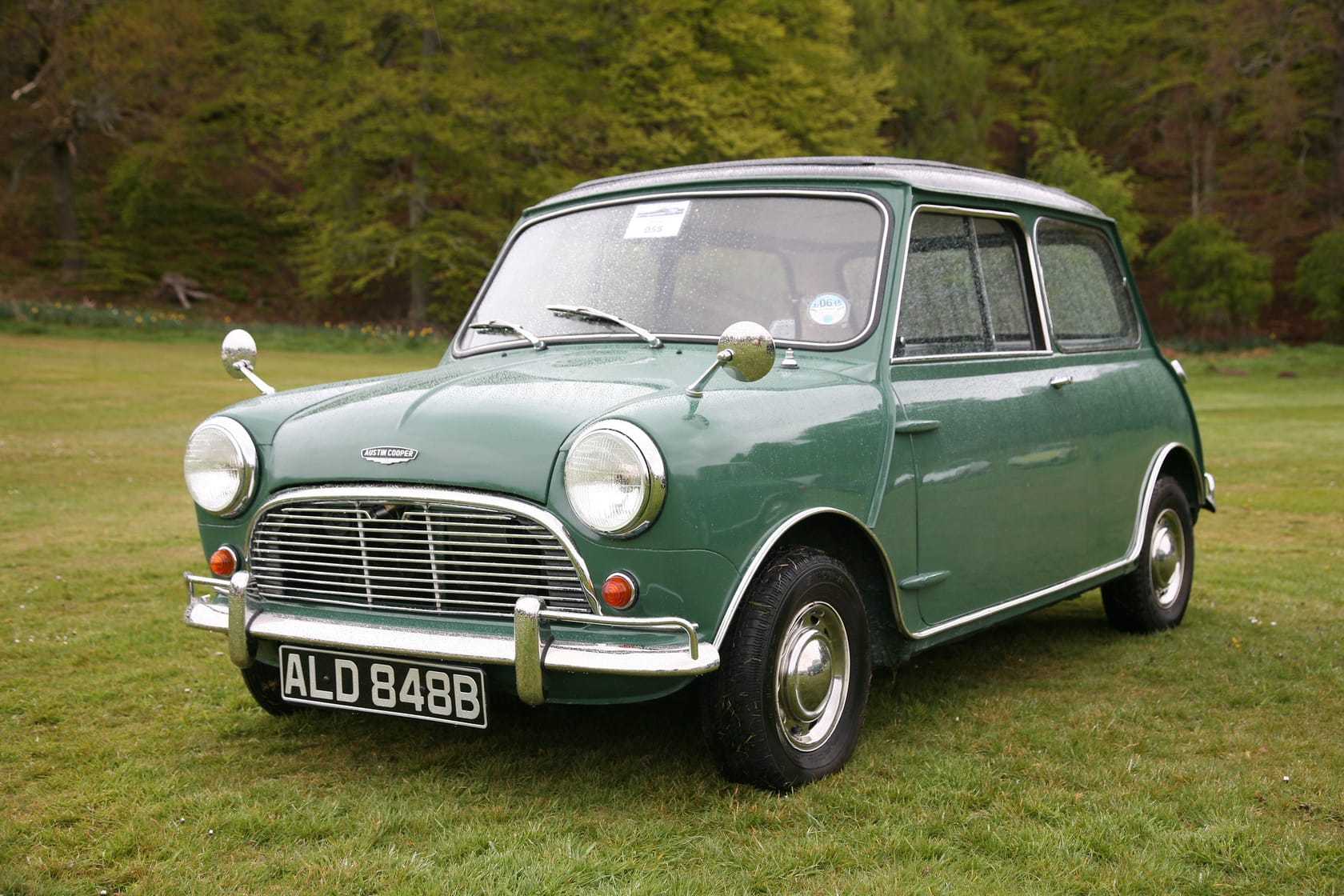
The original Cooper and Cooper S were built from 1961 to 1971; the revival Cooper, built by Rover from 1990 to 2000, outsold them and now dominates the record. The variant table on this page shows the two markets side by side. The plain “Mini Cooper” line, 578 sales at a median of £9,900, is mostly Rover-era cars, with the late Cooper Sport run-out models at £14,100 and the 1994 Monte Carlo edition at £12,800. The 1960s cars sit above: a Mk I Cooper at £20,000, a Mk II Cooper at £12,200, and the Cooper S at £24,200 across 260 sales, rising to £33,750 for the Mk I S of 1963 to 1967 and falling to £19,600 for the Mk III S of 1970 to 1971, the last and least loved of the originals.
The S premium is the largest in the Mini world and it is earned. The S had the bigger-bore engines in 970, 1071 and 1275 cc, the disc brakes and the twin tanks, and it won the Monte Carlo Rally three times in four years; a genuine Mk I S is worth about two-thirds more than a Mk I Cooper in the same condition, and more than double a Mk II. Above the standard cars are the works cars themselves, the Monte Carlo winners and the team cars, which sell for several times a road car: the record in the data, £182,000 for a Cooper S in 2018, is one of them.

Genuine, replica and converted
Because the gap between a Cooper S and a standard Mini is so wide, and because every Mini shares the same shell, the Cooper has been faked more than any British car. The record prices the fakes honestly: a Cooper S replica, sold as such, has a median of £16,100 across 25 sales, more than a standard Cooper because a well-built one is a quicker, better car, and less than half a genuine Mk I S. A Cooper replica sits at £7,400. The premium for the genuine article is the premium for the paperwork.
That paperwork is the Heritage certificate, the chassis and engine number records and, above all, the Mini Cooper Register, which exists to authenticate these cars and whose verdict the market accepts. A genuine S with its original engine, its correct body features for the year and a continuous history sells at the top of the range; a genuine S with a replacement engine or an unexplained gap sells in the middle; a car without the documents sells as a replica whatever the seller says. After provenance comes the shell, which rusts everywhere a Mini rusts (the sills, the floors, the subframe mounts, the A-panels and the boot floor), then originality of specification, and last of all mileage, which on a restored 1960s car means nothing.

Why the median has fallen
The chart shows a median that peaked at about £20,000 in 2017, sat at £18,300 in 2019, and has fallen since, to £13,400 in 2023 and £12,400 in 2025; in today’s money that is a drop of nearly half. It would be wrong to read that as the 1960s Cooper losing half its value. What happened is the mix. When the record was small it was mostly catalogued 1960s cars; as the online auctions grew it filled with Rover Coopers, which are good, cheap, usable cars and which pull the median down toward their own price. The genuine Cooper S has held up far better, and the Mk I cars have barely moved.
The Rover cars have their own small market inside the big one. The 1990 and 1991 RSP cars, the first of the revival with the carburettor engine and the Cooper stripes, are the collectable ones; the 1.3i Coopers of the middle 1990s are the cheapest way into a Cooper of any kind; and the late multi-point-injection cars and the Cooper Sport of 1998 to 2000, the best built and the last, sell a little above the rest. A low-mileage late car in an original colour with its history is the Rover Cooper the market pays for.

Where Coopers change hands
The Cooper is a British-market car and the record shows it: the sale rooms of northern England and the Midlands, the online platforms and the specialists all trade them, and a single week in August 2026 produced five sales between £9,000 and £13,800, three of them in British auction rooms. The genuine 1960s S cars mostly pass through the specialists and the Register’s members at prices above the auction range, because the buyer wants the paperwork checked first. Whether a recorded price includes the buyer’s premium varies by sale, which is one more reason to read the usual range rather than any single result.

Insuring, restoring, selling
For an agreed-value policy a genuine 1960s S belongs in the upper half of its variant’s range with the Register’s authentication on file; a Rover Cooper around its median. On restoration the Cooper is kinder than most: panels, shells and every mechanical part are available, a Mini is small, and a good restoration of a genuine S can recover its cost because the market pays for the car. A restoration of a standard Mini into a Cooper lookalike cannot. If you are selling a 1960s car, get the Register’s letter before the advert; if you are selling a Rover Cooper, the median is the honest expectation and the spring is the season.
Related
The Cooper leads the Mini market; the standard Mini range, the Clubman and the special editions trade below it, and the Moke has a market of its own. For how all the figures on this site are compiled, see what classic cars sell for.