Triumph TR4 values: the TR4A premium, Surrey tops and wires, the TR5 above and the TR6 below, and a market that has halved
The TR4 now sells for more than the TR6 and less than the TR5. Triumph TR4 prices from 479 recorded auction sales, why the independent-rear TR4A commands only a little more, what the Surrey top, overdrive and a home-market history add, and why the Michelotti TR has lost half its value in real terms since 2016.
Built 1961–1967
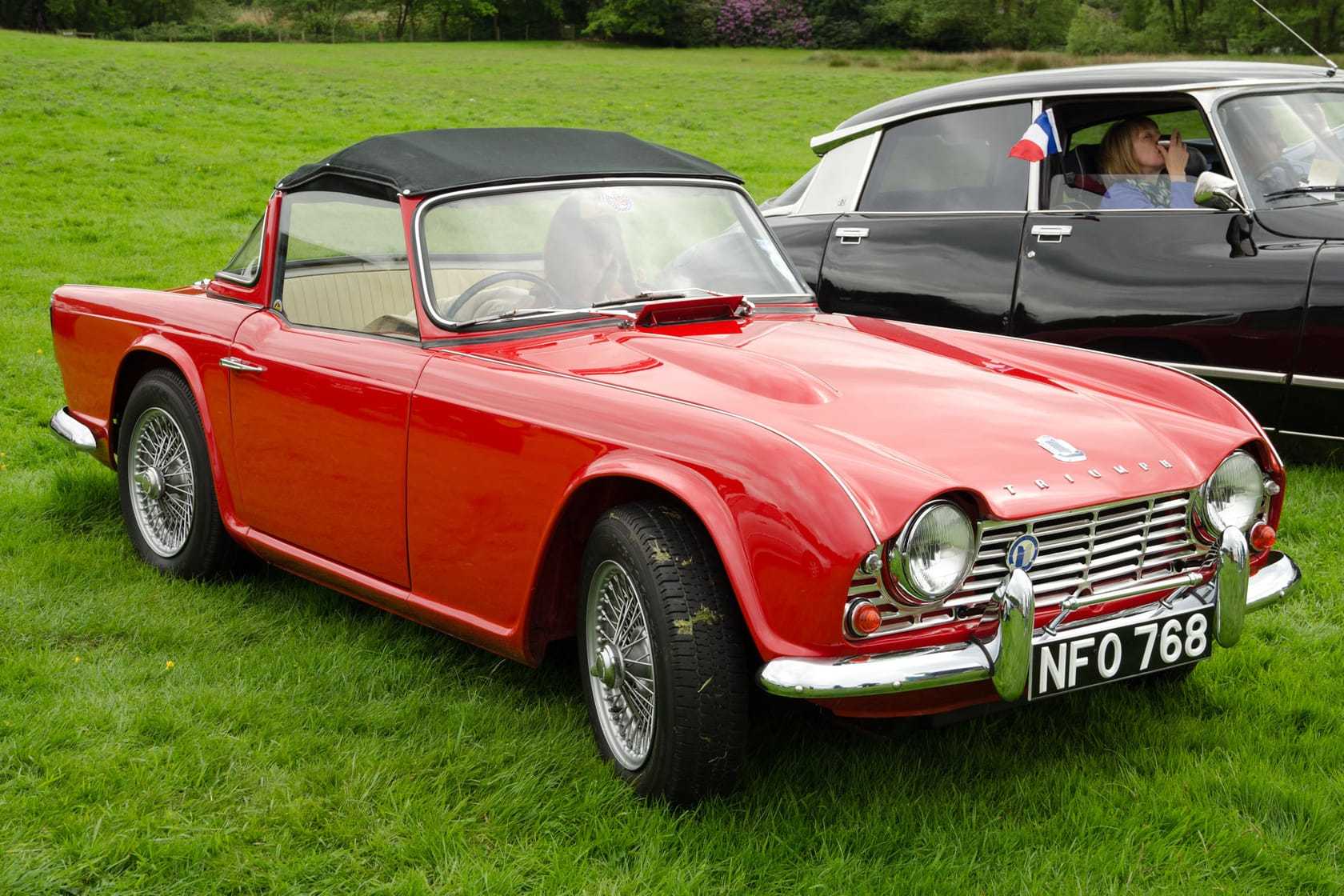
What the TR4 sells for at auction
In 2025 the median TR4 sold for £14,292 across 47 sales, 13% down on 2024. In real terms, typical TR4 prices were down about 44% over the five years to 2025, once inflation is accounted for.
| Variant | Sold | Typical range | Median |
|---|---|---|---|
| TR4 | 247 | £13,220 - £22,678 | £17,650 |
| TR4A | 232 | £12,979 - £22,996 | £18,854 |
Show the year-by-year mediansHide the year-by-year medians
| Year | Sold | Median | In 2025 money |
|---|---|---|---|
| 2026 (so far) | 30 | £14,772 | |
| 2025 | 47 | £14,292 | £14,292 |
| 2024 | 44 | £16,460 | £17,092 |
| 2023 | 40 | £18,520 | £19,874 |
| 2022 | 57 | £21,514 | £24,638 |
| 2021 | 57 | £19,514 | £24,130 |
| 2020 | 37 | £20,276 | £25,694 |
| 2019 | 37 | £16,875 | £21,603 |
| 2018 | 23 | £19,125 | £24,899 |
| 2017 | 30 | £18,590 | £24,763 |
| 2016 | 18 | £21,048 | £28,759 |
| 2015 | 9 | £18,230 | £25,157 |
| 2014 | 11 | £15,680 | £21,725 |
| 2013 | 4 | £22,902 | £32,184 |
| 2012 | 7 | £13,720 | £19,722 |
| 2011 | 7 | £20,703 | £30,524 |
| 2008 | 4 | £13,786 | £22,071 |
| 2007 | 5 | £16,104 | £26,679 |
| 2006 | 3 | £6,624 | £11,230 |
- £9,816TR4A
- £31,164TR4
- £11,900TR4A
- £16,080TR4A
- £15,444TR4
Strong evidence. 479 recorded sales and a dozen or more a year: the median and the range are well founded. Based on 479 sold results from public classic car auctions (1998 to 10 August 2026). Sold prices, not asking prices, and not a valuation: condition, history and specification vary from car to car. Inflation-adjusted figures use the ONS CPIH index, in 2025 money.
The TR4 is the first of the modern-looking TRs, Michelotti’s crisp body on the side-screen cars’ chassis and engine, and Triumph TR4 values are a record split almost evenly between the two cars that wore it: 479 recorded sales since 1998, about 50 a year lately, at a median of £18,100, with the middle half between £13,100 and £23,000. Three in four of the cars offered find a buyer. The spread runs from a £750 project to £61,200 for one car at an American sale, and the live-axle TR4 and the independent-rear TR4A sit within £1,200 of each other at the median, which makes this another TR market where condition decides more than the badge.
The Triumph TR4 model guide covers the Michelotti body, the TR4A and its suspension, the Surrey top and what to check. This page is about the money, and about a market that has given back a decade of gains.
TR4A over TR4, by less than the folklore says
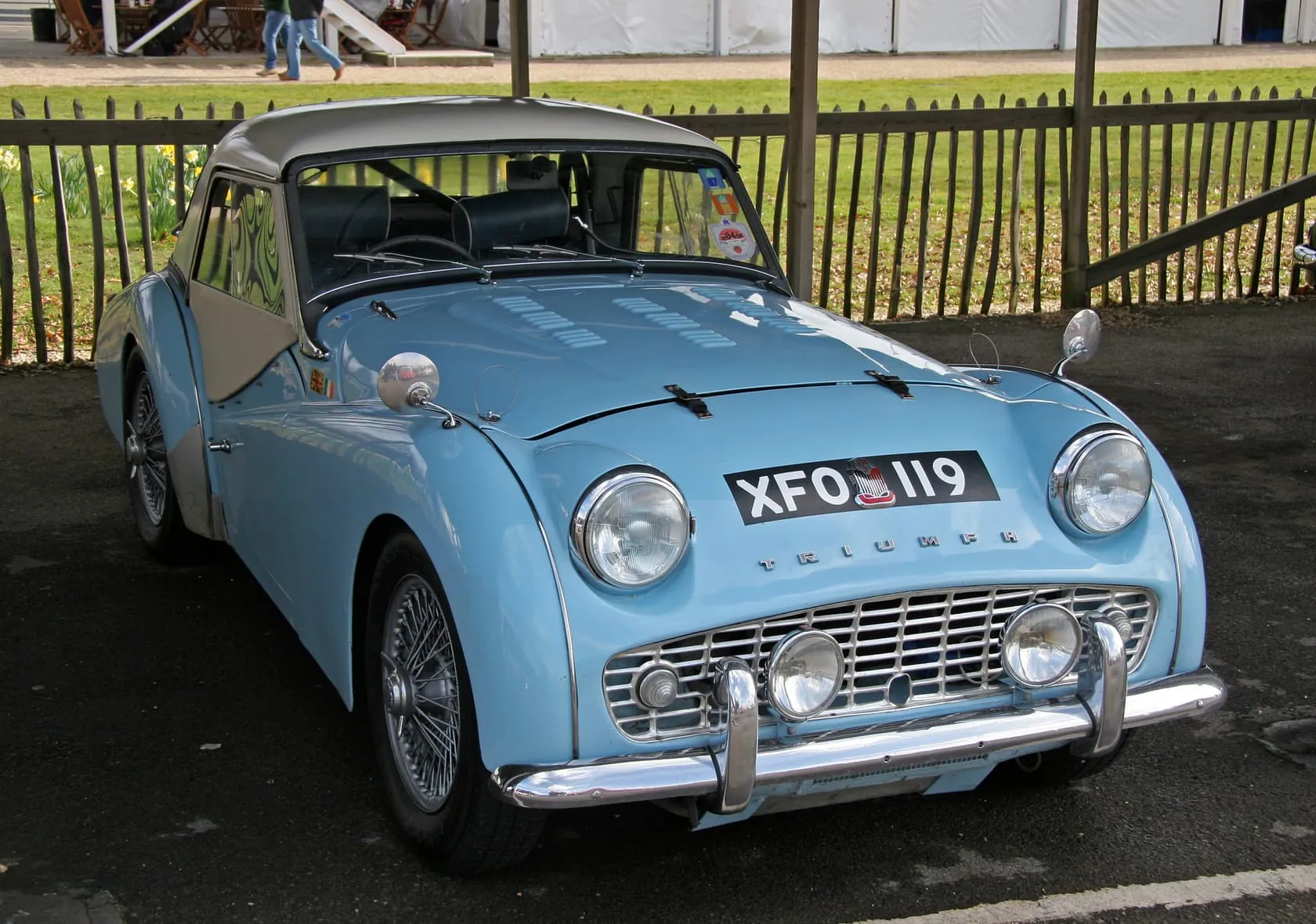
The variant table on this page has two lines. The TR4 of 1961 to 1965, with the live rear axle, the simpler chassis and the purer early look, sits at a median of £17,650 across 247 recorded sales; the TR4A of 1965 to 1967, with the independent rear suspension on most cars, the revised chassis, the wing-top side lamps and the wood dashboard, sits at £18,850 across 232. The premium for the IRS is about seven per cent, far less than its reputation suggests, because the collectors like the early car for its simplicity, the users like the TR4A for its ride, and the market lets them cancel out; a live-axle TR4A, of which America took a large number, sells as a TR4.
Above both sits the TR5 of 1967 to 1968, the same body with the fuel-injected 2.5-litre six, at £27,800 on a record of 129 and a rarity of 2,947 cars; below both, at £13,850, sits the TR6, whose record is the largest of any TR and holds the most ordinary cars. The side-screen TR3 sits level with the TR4 at £18,300. The coachbuilt Dove GTR4, the fastback coupé conversion of the early 1960s of which around 50 were built, trades on its own history when one appears, and the best restored standard cars reach £30,000 to £40,000, which is where the TR4’s ceiling has been for a decade.

What moves the price of a TR4
The chassis, then the steering wheel, then the extras. A TR4 is a separate-chassis car and the chassis rusts at the outriggers and the rear rails, and on the TR4A at the trailing-arm mountings for the independent rear suspension, where rot is both expensive and dangerous; a rotten chassis means a body-off restoration that costs more than the finished car, so a car with a sound or documented chassis, with the receipts, sits in the upper half of its range whatever the paint. The body follows at the sills, the floors, the inner wings and the rear deck, and the wet-liner engine and the running gear, simple and well supported, move the price least.
Then where the car came from. The great majority of TR4s were exported, most to America, and a genuine home-market right-hand-drive car sells at a premium in Britain of perhaps ten to twenty per cent over a left-hand-drive import, with a declared conversion somewhere between. Then the extras, which count for more on a TR4 than on most TRs: the Surrey top above all, the factory hardtop with the removable centre panel that made the TR4 the first targa-style production car, rare and complete examples rarer, which lifts a car clear of the ordinary range; then overdrive, wire wheels, a period colour, the original interior and a long history file with the club’s involvement. Mileage means little on a car that has usually been restored at least once.

Half the value it had in 2016
The chart shows a plateau and a slide. The yearly median was around £14,000 to £16,000 in the late 2000s, rose to £21,000 in 2016 and sat between £17,000 and £21,500 through the years that followed, peaking in cash at £21,500 in 2022. It has fallen since: £18,500 in 2023, £16,500 in 2024 and £14,300 in 2025, with the 2026 figure so far about £14,800. Restated in today’s money the TR4 has lost half its value since 2016 and two-fifths since 2022.
The sample explains part of it, with the online auctions bringing the ordinary left-hand-drive imports and the projects into a record that once held mostly restored home-market cars; the rest is the cause the TR3 and the MGA share, a 1960s sports car whose buyers are leaving the market while the buyers who follow want something later. The cars with Surrey tops and the home-market TR4As have held up better than the median; the ordinary imported TR4, which is much of the record, has not, and a sound one is now cheaper in real terms than it was in 2010.

Where TR4s change hands
The TR4 sells on both sides of the Atlantic, where most of them went new. The British regional sale rooms and the Triumph specialists sell the home-market cars and the settled imports, and a single fortnight in late July and early August 2026 shows the range: a TR4A at £11,900 at a Yorkshire sale, another at £16,100 on a British online platform, a TR4 at £15,400 at a Surrey sale; the American online platforms sell the rest, with a TR4A at £9,800 and a TR4 at £31,200 in the same week, the spread between a project and a restoration. The best restored cars and the Dove coupés pass through the catalogued sales at prices above the recorded range. Whether a recorded price includes the buyer’s premium varies by sale, which is one more reason to read the usual range rather than any single result.

Insuring, restoring, selling
For an agreed-value policy a good TR4 or TR4A belongs around its median and a restored car in the upper half of the range; a car with its Surrey top sits above that, and a Dove on its own figure. On restoration the arithmetic is the chassis’s: a body-off rebuild costs more than a standard car is worth, so the right buy is the car with that work done, and the project is for the owner who wants the doing of it. If you are selling, the spring is the season, the chassis photographs and the heritage certificate sell the car, the Surrey top sells itself, and the honest expectation for an ordinary TR4 is its median, not the figure a restored home-market car fetched in 2016.
Related
The TR4 sits between the TR3 that came before it, which sells for about the same, and the TR5 that followed, which sells for half as much again; the TR6 that replaced the TR5 sells for less than any of them, and the MGA, the TR4’s rival in period, for a little more. For the decade, see British classic cars of the 1960s. For how all the figures on this site are compiled, see what classic cars sell for.
Frequently asked questions
How much is a Triumph TR4 worth?
Is a TR4A worth more than a TR4?
Is a TR4 worth more than a TR6?
What does a Surrey top add to a TR4?
Are Triumph TR4 prices falling?
What should I look for when valuing a TR4?
What is the most expensive TR4 ever sold at auction?
How often does a TR4 come up for sale?
Related across themes
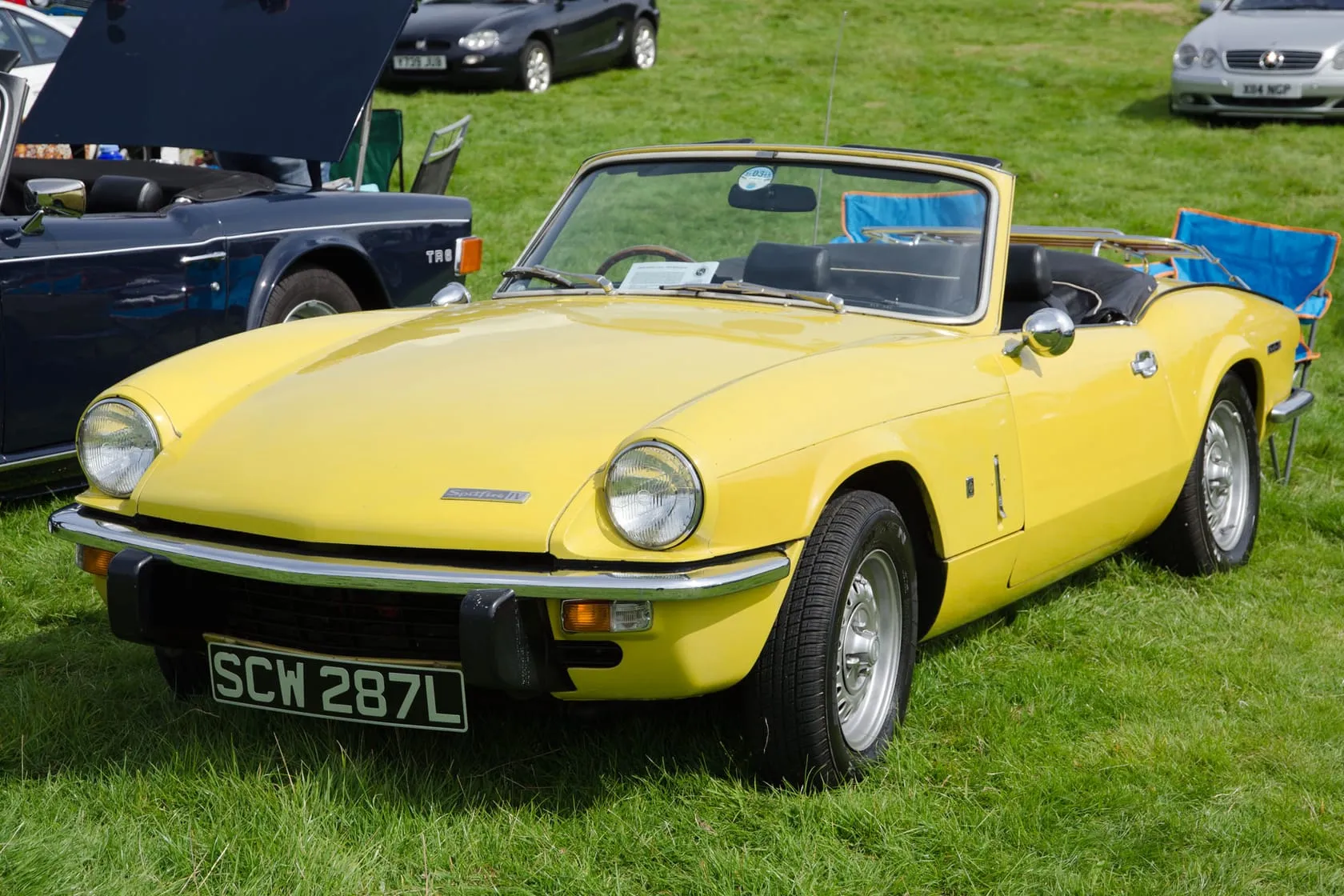
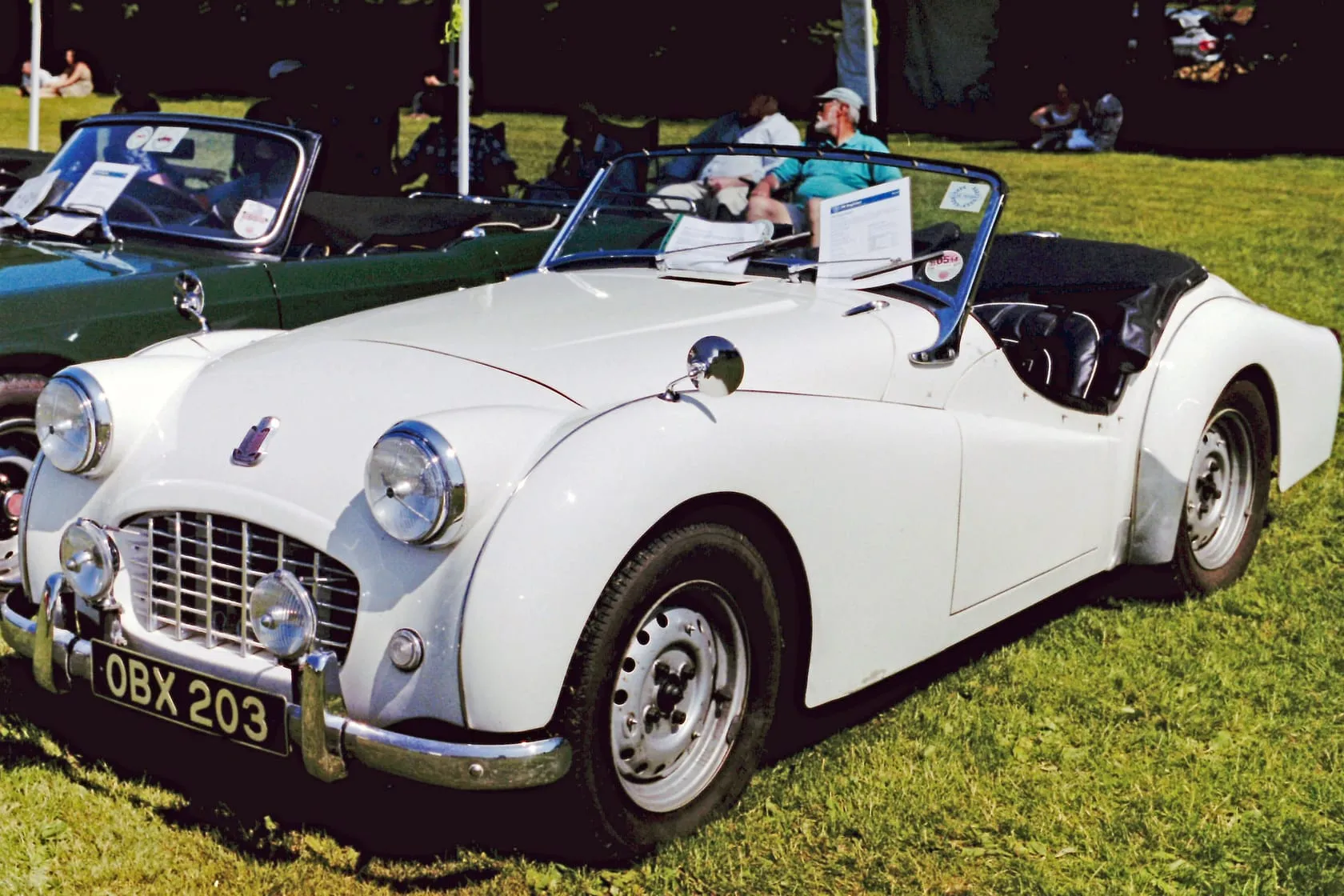
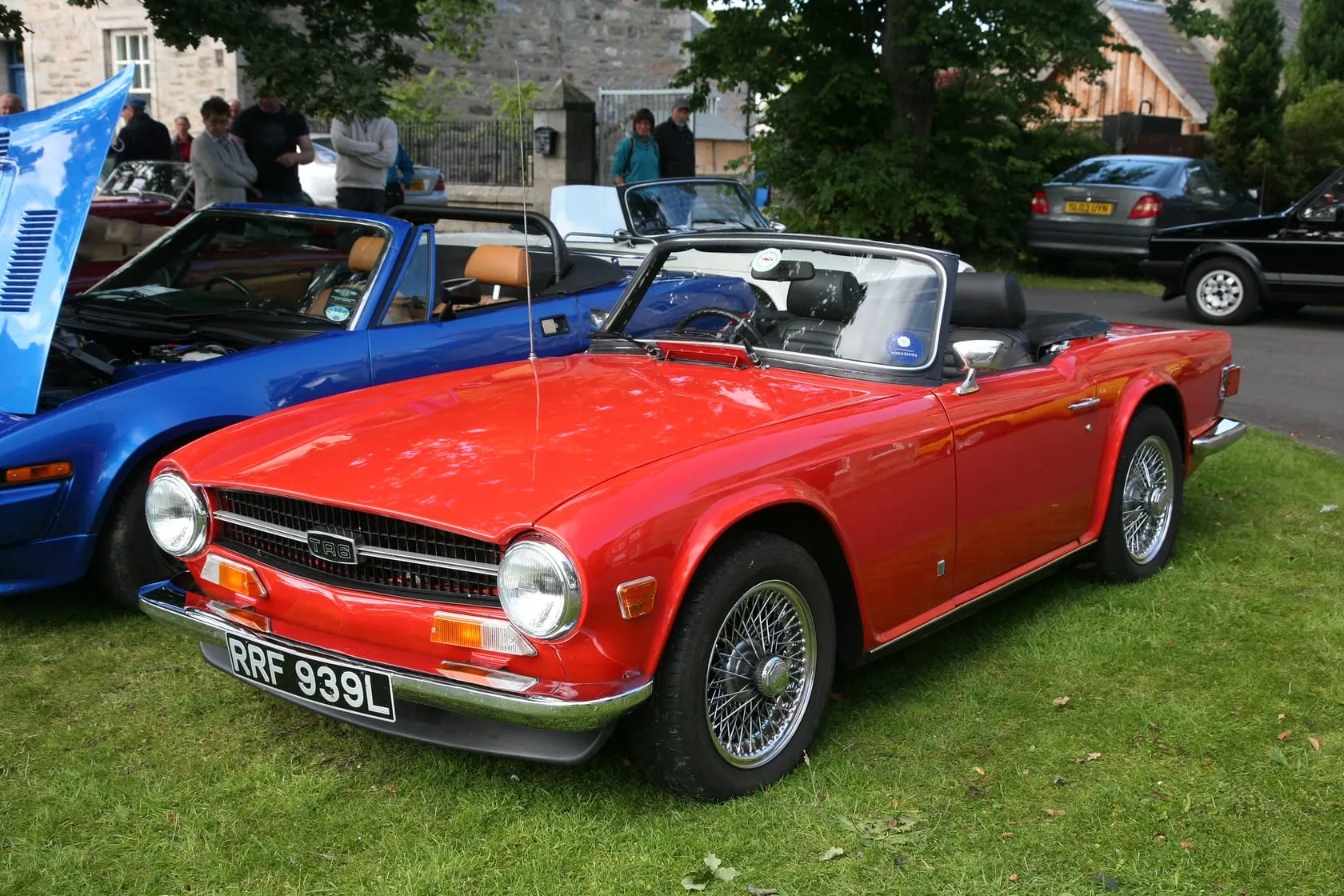
More Triumph values

Triumph TR6 values: injection over carburettor, and what 1,280 sold prices say

Triumph Spitfire values: Mk1 and Mk2 at nearly double the 1500, the Mk3 between, and the cheapest open Triumph there is

Triumph Stag values: Mk2 over Mk1, manual level with automatic, the original-engine premium, and a market down by half

Triumph TR3 values: TR3B over TR3A over TR3, the works cars apart, and a market back to 2010 prices
Recently added

Inspecting a classic before you buy: the free checks, the paperwork, and what a V5C does not prove

TVR: Blackpool's glassfibre hooligans, from Grantura to the last V8s

A classic as a first car: the licence rules, the insurance reality, and the cars that make it work
