Triumph TR6 values: injection over carburettor, and what 1,280 sold prices say
A home-market fuel-injection car sells above the American carburettor cars that dominate the record. Triumph TR6 values from 1,280 recorded auction sales, what the chassis and the Lucas system do to the price, and why the TR6 has given back a third of its pandemic gains.
Built 1968–1976
What the TR6 sells for at auction
In 2025 the median TR6 sold for £13,945 across 130 sales, 4% up on 2024. In real terms, typical TR6 prices were down about 32% over the five years to 2025, once inflation is accounted for.
Show the year-by-year mediansHide the year-by-year medians
| Year | Sold | Median | In 2025 money |
|---|---|---|---|
| 2026 (so far) | 98 | £12,529 | |
| 2025 | 130 | £13,945 | £13,945 |
| 2024 | 145 | £13,389 | £13,903 |
| 2023 | 123 | £16,380 | £17,577 |
| 2022 | 138 | £16,200 | £18,553 |
| 2021 | 159 | £16,875 | £20,867 |
| 2020 | 83 | £16,194 | £20,521 |
| 2019 | 83 | £13,108 | £16,780 |
| 2018 | 81 | £12,320 | £16,039 |
| 2017 | 59 | £14,524 | £19,347 |
| 2016 | 37 | £11,666 | £15,940 |
| 2015 | 24 | £11,234 | £15,504 |
| 2014 | 25 | £8,312 | £11,517 |
| 2013 | 18 | £9,558 | £13,433 |
| 2012 | 17 | £8,623 | £12,396 |
| 2011 | 11 | £8,567 | £12,631 |
| 2010 | 6 | £8,692 | £13,313 |
| 2009 | 5 | £6,657 | £10,451 |
| 2008 | 8 | £9,667 | £15,476 |
| 2007 | 10 | £6,488 | £10,748 |
| 2006 | 6 | £7,426 | £12,590 |
| 2005 | 7 | £6,355 | £11,045 |
| 2004 | 4 | £6,468 | £11,474 |
- £19,477TR6
- £13,936TR6
- £24,152TR6
- £15,777TR6
- £17,638TR6
Strong evidence. 1,280 recorded sales and a dozen or more a year: the median and the range are well founded. Based on 1,280 sold results from public classic car auctions (1995 to 10 August 2026). Sold prices, not asking prices, and not a valuation: condition, history and specification vary from car to car. Inflation-adjusted figures use the ONS CPIH index, in 2025 money.
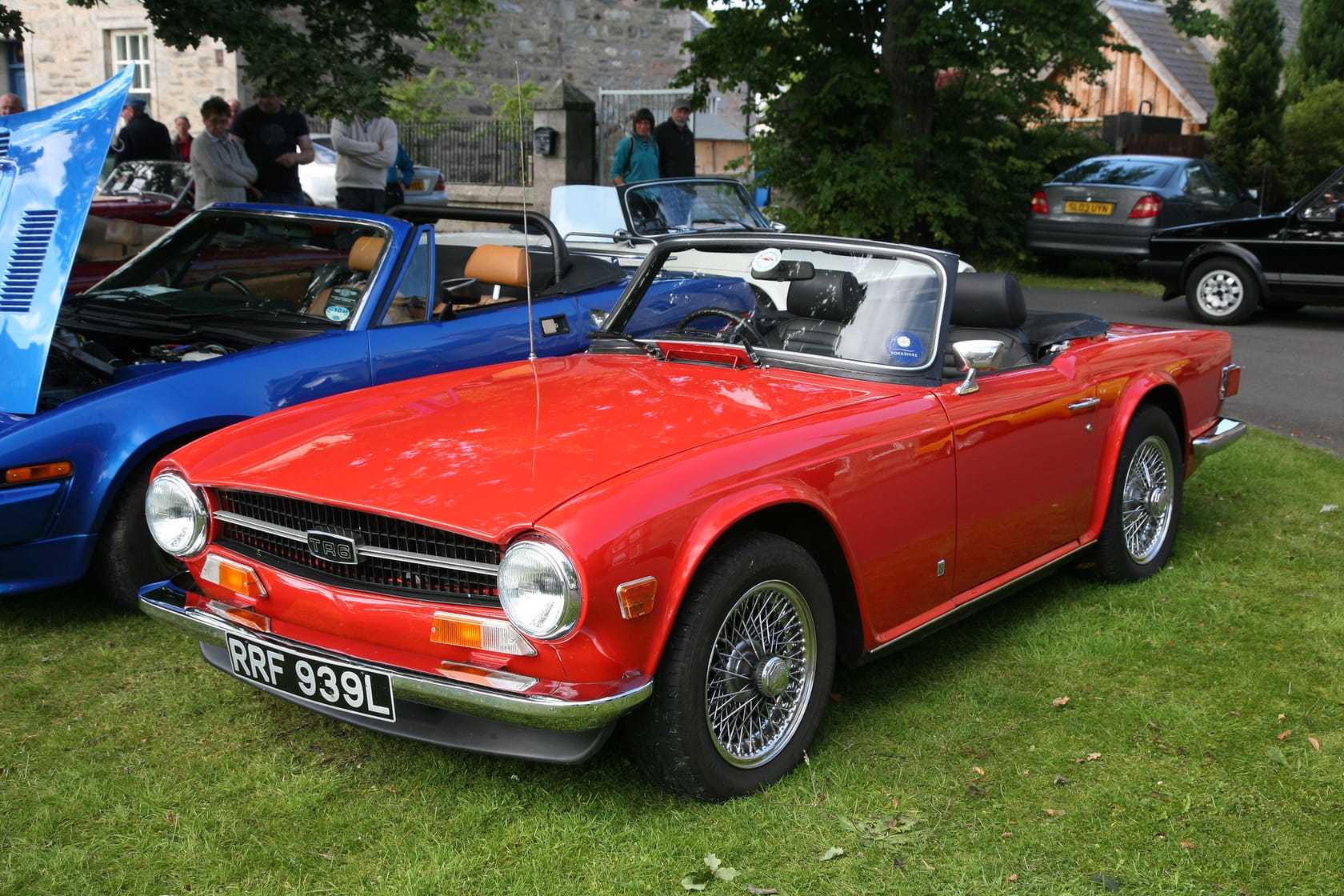
The TR6 was Triumph’s best-selling TR and its most exported, and the sale-room record reflects both: 1,280 sales since 1995, about 140 a year lately, at a median of £13,850, with the middle half of them between £10,300 and £18,400. Three-quarters of the cars offered find a buyer. The spread runs from a £600 rolling shell to £62,000 for an exceptional car sold in 2023, but the TR6 market is a narrower one than most: there are no rare variants, no competition cars worth millions, just a great many roadsters that differ mainly in where they were sold and what sits under the bonnet.
That is the thing to understand before reading the figures. More than four in five TR6s were built for North America with twin carburettors, and those cars dominate the record, so the median is an American carburettor car’s price. The home-market fuel-injection car that British buyers want sits above it. The TR6 model guide covers the cars, the engines and what to check. This page is about the money.
Injection over carburettor, home market over export
The TR6 came in two engines for two markets. The home and European cars used Lucas mechanical fuel injection on the 2.5-litre six, giving 150 bhp on the CP cars of 1969 to 1972 and 125 bhp on the CR cars from 1973, after the engine was detuned for smoother running. The North American cars, the CC and later CF series, ran twin Stromberg carburettors and about 105 bhp. The injection cars are scarcer, a good deal quicker and the ones the British market values, and in the same condition they sell for fifteen to twenty-five per cent more than a carburettor car.
Many carburettor cars have come home. A left-hand-drive American car converted to right-hand drive, with or without an injection conversion, sells between the two, and should be described as what it is; a genuine home-market car with its commission plate and a Heritage certificate to match is worth the whole of the premium. Within the injection cars the early 150 bhp CP models carry a small premium over the later CR, and overdrive, the factory hardtop, wire wheels and an original period colour (Magenta, Mimosa, Sapphire, the short-lived shades of the early 1970s) each add a little. At the top, the best restored home-market cars make £25,000 to £35,000.

Chassis, tub and the Lucas question
The TR6 is a separate-chassis car, and the chassis is where the price is decided. The frame rusts at the rear trailing-arm mounts, the differential mounts and the outriggers, and cracks at the diff mounts under hard use; a car on a sound or properly repaired frame sits in the middle of its range, and a car on a rotten one is a project whatever the body looks like. The body tub rusts at the sills, the floors, the inner wings and the rear deck, and because the tub comes off the chassis for proper repair, the cost of doing it right is most of a car’s value.
Then there is the injection. The Lucas system’s reputation for hot starting and fuel vaporisation kept TR6 prices down for a generation, and a car with the system sorted, usually with a modern electric pump and a rebuilt metering unit, is worth its premium; a car with the injection removed and carburettors fitted is worth less than an original carburettor car, because it is neither one thing nor the other. A long history file, a documented restoration and an original colour with the paperwork to prove it add; mileage, on a car that has usually been restored, barely registers.

The climb to 2021, and the fall back
The chart shows the TR6 riding the affordable-classic boom and then giving part of it back. The yearly median was around £6,500 through the late 2000s, £9,600 in 2013, £14,500 in 2017 and a peak of £16,900 in 2021, when the pandemic put a premium on open cars and anything a buyer could enjoy at home. Since then it has slipped to £13,400 in 2024 and £13,900 in 2025; restated in today’s money the fall from 2020 is about a third, and the TR6 is back to roughly where it stood, in real terms, in 2015.
The usual two causes apply. The online auctions have brought hundreds more ordinary American cars into the record each year, which pulls the median toward the carburettor car, and the affordable end of the sports-car market has softened since 2022 as its buyers have aged. The good home-market injection cars have held better than the figure suggests, and the gap between a sorted UK car and an unsorted export car is if anything wider than it was. For a buyer who wants a TR6 to drive, the market has not been this reasonable since before the pandemic.

Where TR6s change hands
Most of the record is the online auctions, and most of those are in North America, where the bulk of the cars still live: a single week in August 2026 produced five sales between £13,900 and £24,200, four of them there. In Britain the traditional sale rooms see the projects and the estates, and the good injection cars mostly pass between members of the TR Register and through the specialists, at prices a little above the auction range because the buyer can see the chassis. Whether a recorded price includes the buyer’s premium varies by sale, which is one more reason to read the usual range rather than any single result.

Insuring, restoring, selling
For an agreed-value policy a good home-market injection car belongs in the upper half of the range, a sorted export car around the median. On restoration the arithmetic is against the project: a body-off rebuild with the tub off the chassis costs more than any TR6 is worth, so the £6,000 project with a soft frame is rarely the bargain it looks, and the right buy is the car someone has already restored properly. If you are selling, spring is the season for an open car, the median for the car’s market is the honest expectation, and the photograph that sells a TR6 is of the chassis, not the paint.
Related
The TR6 closed the line that ran from the TR4 through the rare, injected TR5, which sells for roughly double a TR6; it was replaced by the wedge TR7, which sells for roughly half. For a reader choosing between them, which TR to buy sets them side by side. For how all the figures on this site are compiled, see what classic cars sell for.
Frequently asked questions
How much is a Triumph TR6 worth?
Is a fuel-injection TR6 worth more than a carburettor one?
Are Triumph TR6 prices going up?
What is the difference between a CP and a CR TR6?
Does overdrive add value to a TR6?
What is the most expensive TR6 ever sold at auction?
How often does a TR6 come up for sale?
Related across themes
More Triumph values

Triumph Spitfire values: Mk1 and Mk2 at nearly double the 1500, the Mk3 between, and the cheapest open Triumph there is

Triumph Stag values: Mk2 over Mk1, manual level with automatic, the original-engine premium, and a market down by half

Triumph TR3 values: TR3B over TR3A over TR3, the works cars apart, and a market back to 2010 prices

Triumph TR4 values: the TR4A premium, Surrey tops and wires, the TR5 above and the TR6 below, and a market that has halved
Recently added

Bentley Turbo R: the blown Bentley that saved the badge (1985–1999)

Bentley S-series: the quiet twin with the beautiful secrets (1955–1965)

Rolls-Royce Silver Spirit and Silver Spur: the last Crewe bargain (1980–1999)
