TVR Griffith: the name Blackpool saved for its wildest cars (1963–2002)
Twice in TVR's history the Griffith name meant the same thing, the biggest V8 Blackpool could find in the smallest car that would hold it, first with Ford muscle in 1963 and again with Rover power in 1991. A guide to both eras, the unbuilt 2017 revival, buying checks and values.
Built 1963–2002 65 recorded sales
At a glance
- Years
- 1963–1967 and 1991–2002
- Body styles
- Two-seat coupe (sixties); two-seat convertible (nineties)
- Drivetrain
- Front engine, rear-wheel drive; glassfibre body on tubular chassis
- Engines
- Ford 289 V8 (200/400); Rover V8 4.0/4.3/5.0 (1991–2002)
- Power
- Around 195-271 bhp (sixties); 240-340 bhp (nineties)
- Top speed
- Around 150-167 mph by era and specification
- Trim levels
- 200 and 400 (sixties); 4.0, 4.3, 500 (nineties)
- Production
- About 300 sixties cars; about 2,600 nineties cars
- Assembly
- Blackpool, Lancashire
- Designer
- Grantura base with Jack Griffith's V8 idea; nineties body under Peter Wheeler
- Values
- Nineties cars from around £14,000; the best 500s £25,000-plus; sixties originals far beyond
- The formula
- Both times: the biggest available V8 in the smallest car that would take it
- The ghost
- A third Griffith was unveiled in 2017 and never reached production
The models
Twice in TVR history the same glorious idea was given the same name, a generation apart, and both times it worked. In 1963 the Griffith meant Ford’s 289 V8 crammed into the tiny Grantura shell, around 300 cars of notorious savagery; in 1991 it meant Rover V8 thunder in the prettiest body Blackpool ever drew, about 2,600 cars that defined nineties TVR. A third TVR Griffith was unveiled in 2017 and never built. In every decade the name meant the same thing: the most engine, the least car, and no apologies offered to anyone.
Jack Griffith has an idea
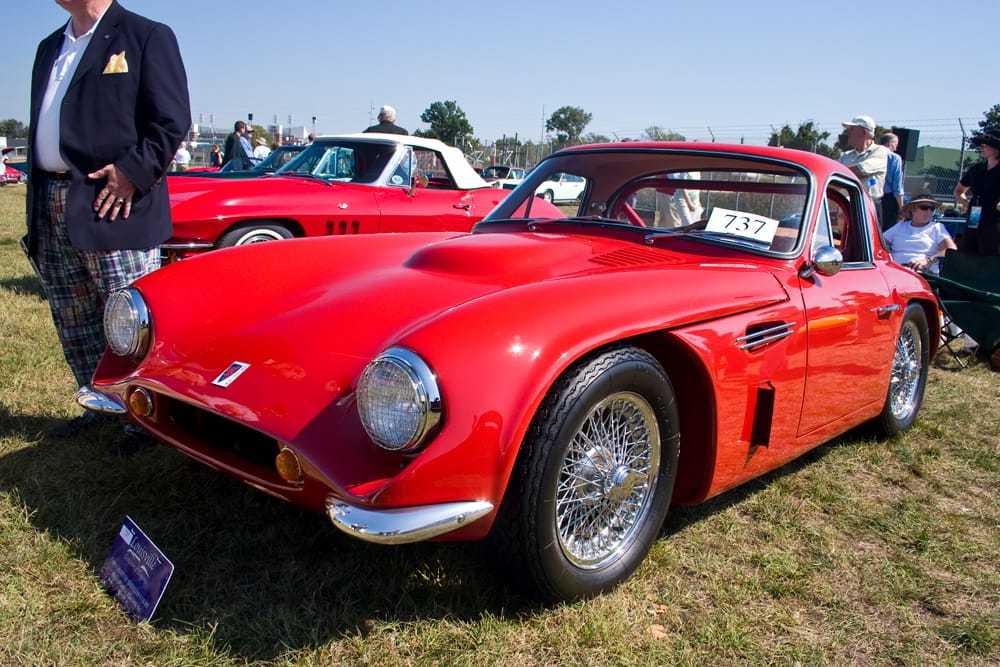
The story begins with an American Ford dealer: Jack Griffith, who serviced Shelby Cobras, bet that the little TVR Grantura could swallow the same 289 V8, and Blackpool obliged. The 1963 Griffith 200 put up to 271 hp in a car of around 800 kilograms, with acceleration in Cobra territory and cooling, brakes and manners that struggled to keep up; the 400 tidied the tail, the suspension and some of the terror. Around 300 were built before the American operation collapsed, nearly taking TVR with it, and the survivors are the marque’s most valuable cars.

Terror, briefly: the 200 and 400
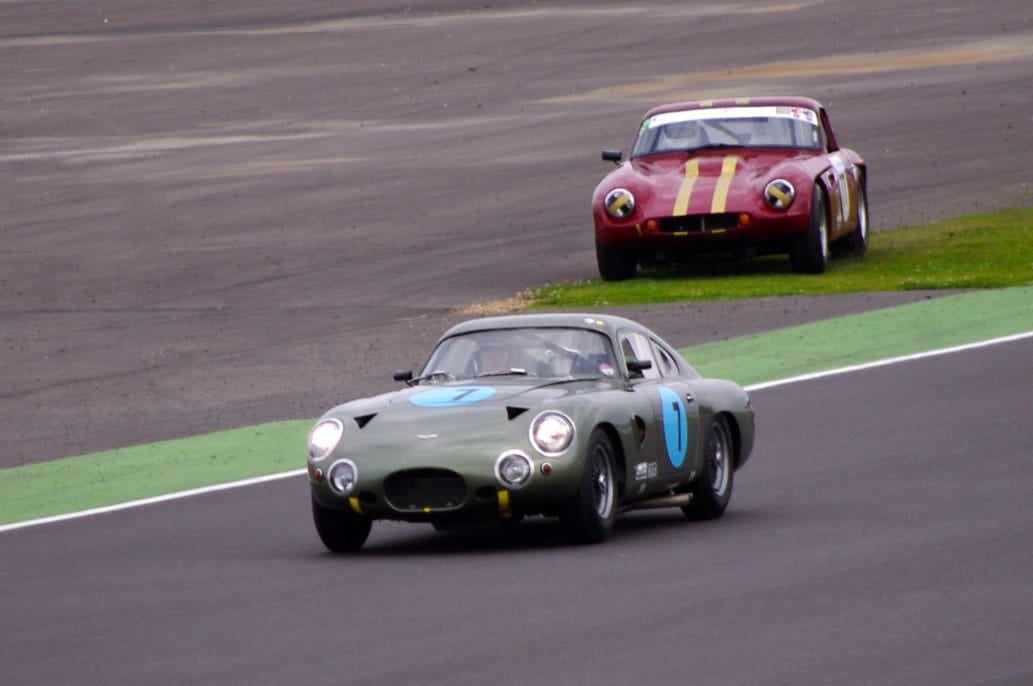
Period accounts of the sixties Griffith read like weather warnings: monstrous straight-line speed, a wheelbase shorter than a Mini’s, cooling that surrendered in traffic, and development time measured in enthusiasm rather than months. Racing suited it, class wins and headlines followed, and the recipe’s imbalance became its immortality; nothing else of the era offered this power-to-weight at the money. The collapse that followed taught Blackpool caution for a decade, but the lesson that stuck was different: TVR customers wanted the biggest engine available, and eventually the company would build its whole identity on it.

1991: the name returns
Peter Wheeler’s Griffith revival understood exactly what it was invoking: the 1991 car wrapped the Rover V8, 4.0 and soon the 500’s five litres, in flowing glassfibre with not one straight line, on the proven backbone chassis. The press swooned, the order book exploded on the show stand itself, and the Griffith with its Chimaera sibling powered TVR’s golden decade: about 2,600 Griffiths to 2002, every one loud, gorgeous and devoid of driver aids on principle. The 500 remains many enthusiasts’ definitive TVR of all, the moment the outlaw firm from the seaside built a genuinely world-class sports car at last.
The 500: the definitive nineties TVR
From 1993 the Griffith 500 completed the revival: the Rover V8 taken out to 4,988cc and about 340 bhp, a sweeter gearchange, and pace, 60 mph in the low fives and beyond 165 mph, that embarrassed contemporary exotics while the exhaust note embarrassed thunderstorms. Many enthusiasts rank the 500 as the definitive TVR of the whole Wheeler era: prettier than the Chimaera, saner than the Cerbera, and blessed with the Rover engine’s vast support network rather than the in-house units’ specialist demands. The market agrees, placing clean 500s at the top of the nineties Griffith band and closing the gap to far more exotic machinery year by year.
The 2017 ghost
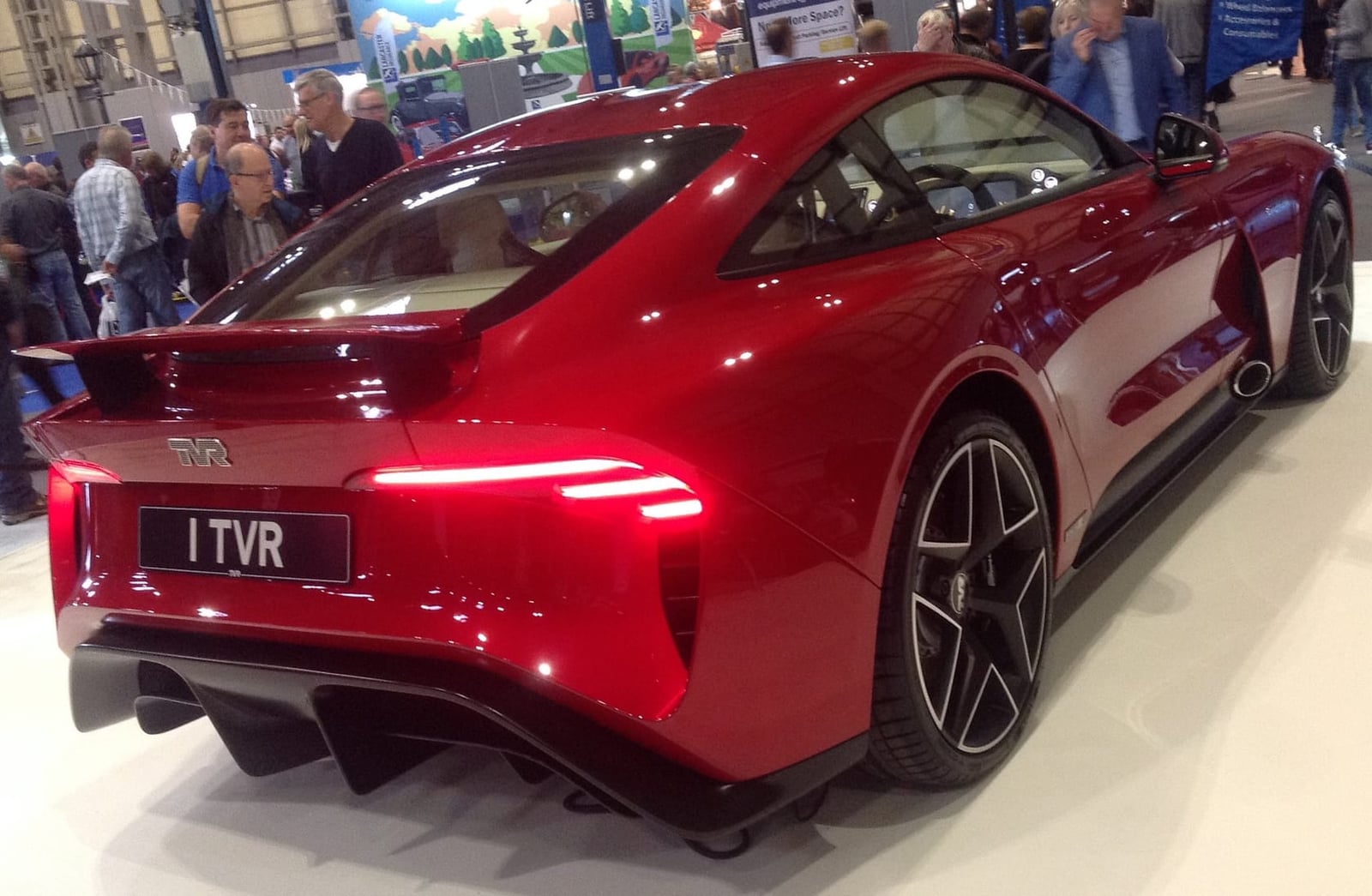
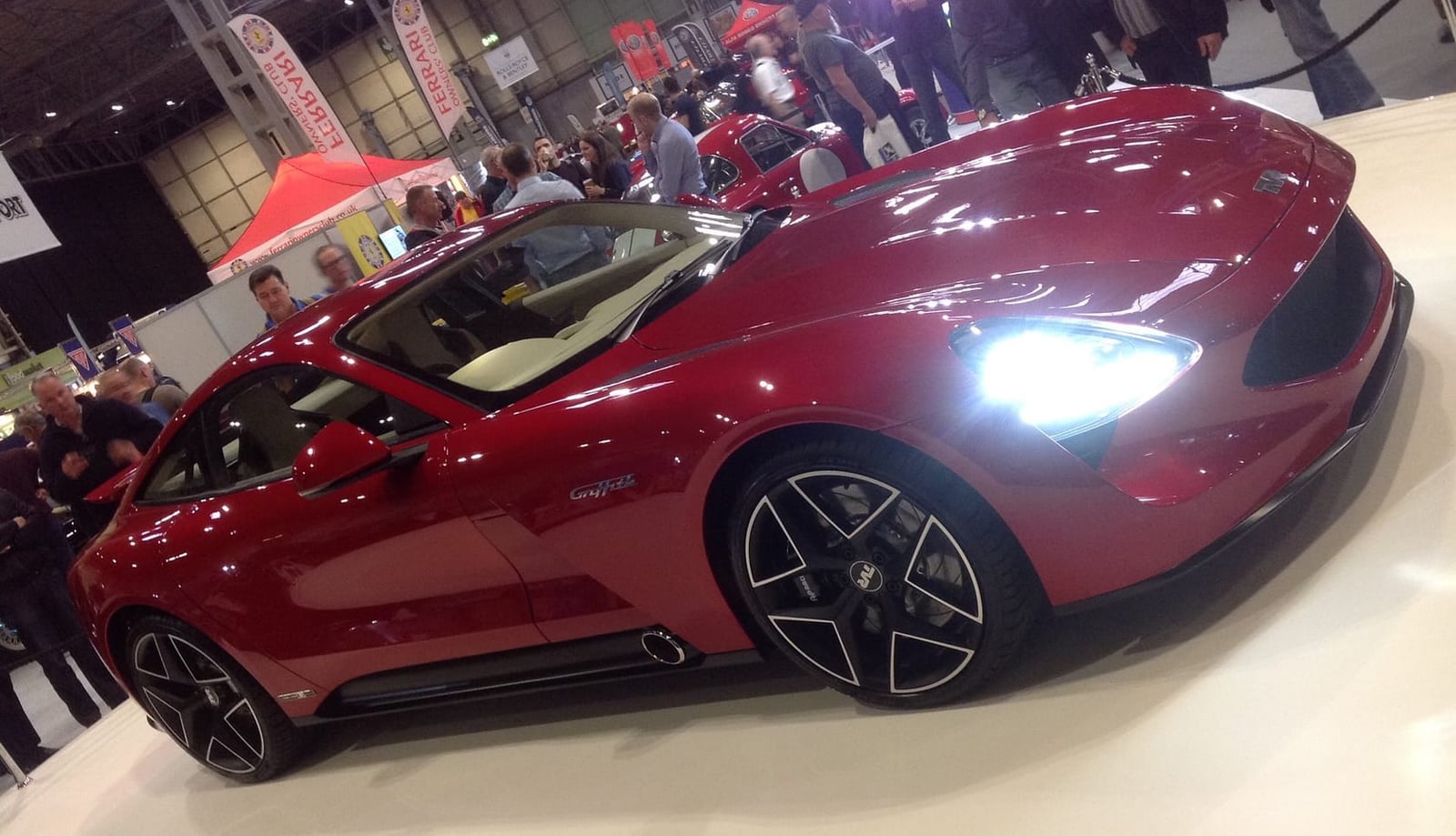
The Griffith name was chosen for TVR’s attempted resurrection: a new coupe engineered with Gordon Murray’s iStream methods around a Ford V8, unveiled to acclaim at the 2017 Goodwood Revival with production promised in Wales. Deposits were taken; funding and factory never aligned; no customer car has ever been delivered. The revival Griffith survives as a handful of prototypes and a cautionary tale, and its failure left the classic cars on this page as the marque’s living presence.

What a Griffith is like to drive
The nineties car distils the TVR promise: the Rover V8’s bellow, a kerbweight near 1,050 kilograms, steering that fizzes, and a chassis that rewards commitment while punishing complacency, with no electronic mercy anywhere. A 500 overtakes like few classics at any price and sounds better doing it. The sixties cars are another order of intensity again, short, brutal and demanding, best experienced with respect and a wide road. Neither era does mildness; both do event-per-mile like almost nothing else British.
Buying a Griffith today
Nineties cars: the chassis is the purchase, outriggers and backbone rusting invisibly beneath perfect glassfibre, so documented frame refurbishment leads every negotiation; the V8 is cheap to keep, cooling history matters, and the club knows the survivors. Values run from about £14,000 usable to £30,000 for the best 500s, within a measured record of 65 sales at a £17,800 median. Sixties 200s and 400s are collector territory, provenance-checked and priced at multiples, with racing history compounding. Both eras reward buying the best structure and history available, and neither rewards impatience.
More photos
The Griffith timeline
- 1963American Ford dealer Jack Griffith bets the Grantura will swallow a 289 V8, and Blackpool obliges: up to 271 hp in around 800 kilograms.
- 1965The 400 tidies the tail, the suspension and some of the terror.
- 1967The American operation collapses after around 300 cars, nearly taking TVR with it.
- 1991Peter Wheeler revives the name: the Rover V8 in flowing glassfibre on the proven backbone chassis, and the press swoons.
- 1993The Griffith 500 takes the V8 to 4,988cc and about 340 bhp, with 60 mph in the low fives and beyond 165 mph.
- 2002Production ends at about 2,600 nineties cars.
- 2017A third Griffith is unveiled at Goodwood on Gordon Murray iStream methods; deposits are taken and no customer car is ever delivered.
Buying checklist: the Griffith in front of you
Chassis, which is the purchase
- Outriggers and backbone rust invisibly beneath glassfibre that never will
- Documented frame refurbishment leads every negotiation on a nineties car
- Neither era rewards impatience; buy the best structure available and wait for it
- The club knows the survivors, and is the sensible first call
Engine
- The Rover V8 is cheap to keep and vastly better supported than TVR's later in-house units
- Cooling history matters more than mileage on these cars
- The 500's 4,988cc engine is the one the market ranks highest
- Sixties cars ran the Ford 289, with cooling that surrendered in traffic even when new
Era and provenance
- Sixties 200s and 400s are provenance-checked collector cars priced at multiples
- Racing history compounds value on the sixties cars specifically
- The 2017 revival exists only as prototypes; no customer car was delivered
- A clean 500 sits at the top of the nineties band and has been closing on far more exotic machinery
What the Griffith sells for at auction
In 2025 the median Griffith sold for £19,080 across 13 sales, 6% down on 2024. In real terms, typical Griffith prices were down about 27% over the five years to 2025, once inflation is accounted for.
| Variant | Sold | Typical range | Median |
|---|---|---|---|
| Griffith | 57 | £15,400 - £21,440 | £17,269 |
| Griffith (1963 - 1967) | 8 | £29,842 - £85,222 | £55,582 |
Show the year-by-year mediansHide the year-by-year medians
| Year | Sold | Median | In 2025 money |
|---|---|---|---|
| 2026 (so far) | 5 | £16,884 | |
| 2025 | 13 | £19,080 | £19,080 |
| 2024 | 12 | £20,346 | £21,126 |
| 2023 | 5 | £16,234 | £17,421 |
| 2022 | 7 | £16,900 | £19,354 |
| 2021 | 7 | £22,260 | £27,526 |
| 2020 | 4 | £20,524 | £26,008 |
| 2019 | 4 | £21,977 | £28,134 |
- £16,750Griffith (1963 - 1967)
- £8,000Griffith
- £17,163Griffith
- £16,884Griffith
- £43,312Griffith
Reasonable evidence. 65 recorded sales: enough for the range to mean something, though a few unusual cars can still move a single year's median. Based on 65 sold results from public classic car auctions (2006 to 10 August 2026). Sold prices, not asking prices, and not a valuation: condition, history and specification vary from car to car. Inflation-adjusted figures use the ONS CPIH index, in 2025 money.
Frequently asked questions
What was the original TVR Griffith?
What engine does the 1990s TVR Griffith have?
What is the difference between a TVR Griffith and a Chimaera?
What happened to the 2017 TVR Griffith revival?
How much is a TVR Griffith worth?
What is the most expensive Griffith ever sold at auction?
How often does a Griffith come up for sale?
Related across themes

More from TVR


Recently added

Land Rover Series I values: the 80-inch premium, the factory Reborn cars, and a market off its 2021 peak

Parts and clubs: how the British classic scene keeps a fifty-year-old car on the road

Jaguar XK140 values: the one XK where the drophead beats the roadster, and the cheapest of the three at the median
