Rolls-Royce 20/25 values: a pre-war Rolls for £29,000, and falling
The cheapest genuine pre-war Rolls-Royce, and what 524 recorded auction sales say it is worth. Why the earliest 20hp is the dearest of the three, why a famous coachbuilder can lower the price rather than raise it, and why these cars have lost half their real value in six years.
Built 1922–1939
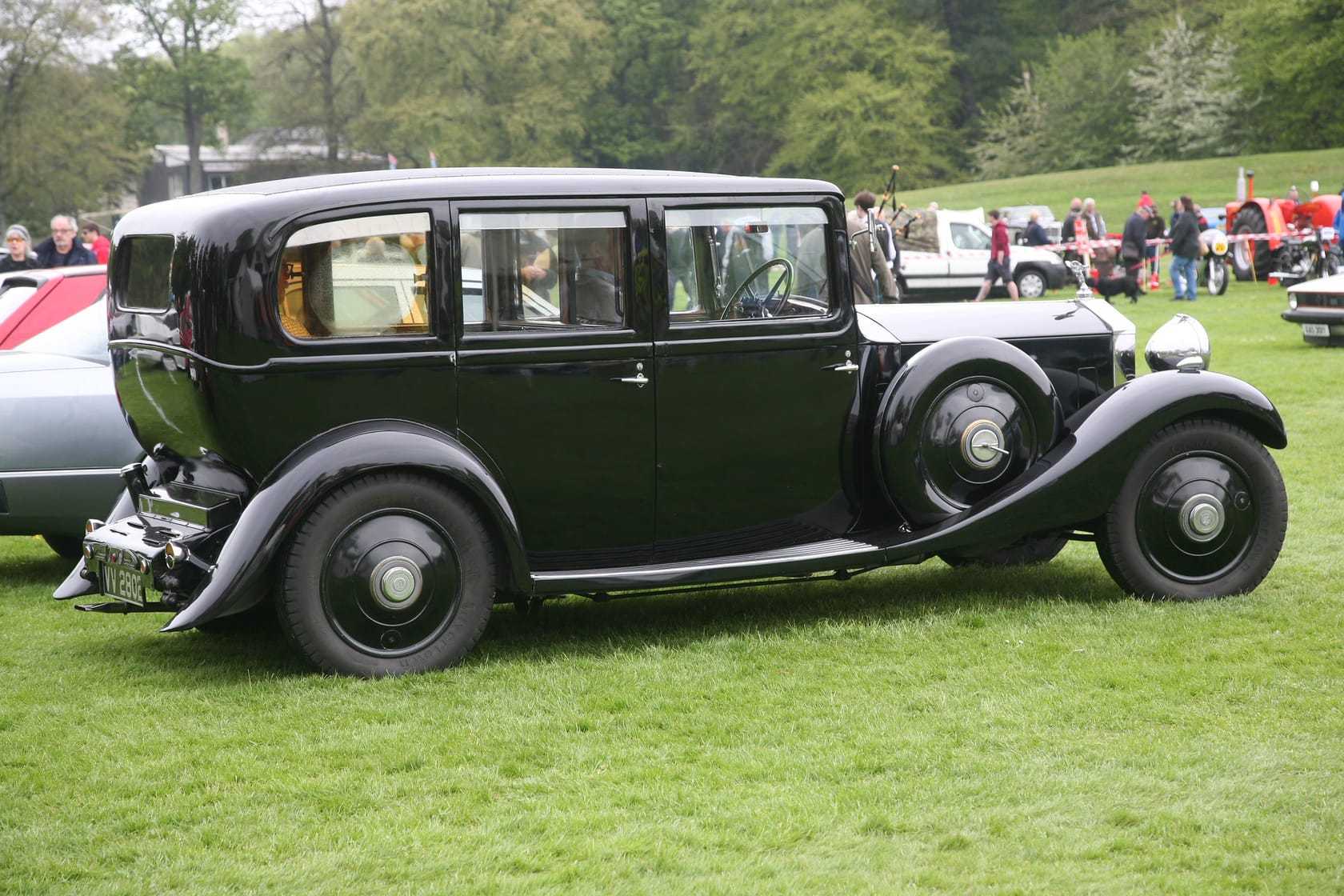
What the Rolls-Royce 20/25 sells for at auction
In 2025 the median Rolls-Royce 20/25 sold for £20,615 across 40 sales, 6% down on 2024. In real terms, typical Rolls-Royce 20/25 prices were down about 48% over the five years to 2025, once inflation is accounted for.
| Variant | Sold | Typical range | Median |
|---|---|---|---|
| 20/25 | 183 | £20,568 - £42,238 | £29,250 |
| 20hp | 102 | £23,519 - £45,000 | £31,192 |
| 25/30 | 76 | £16,120 - £38,981 | £24,522 |
| 20/25 Park Ward | 16 | £22,500 - £32,141 | £26,942 |
| 20/25 Hooper | 15 | £12,066 - £25,074 | £21,000 |
| 20/25 Barker | 12 | £21,736 - £36,499 | £27,998 |
| 20/25 Shooting Brake | 12 | £31,410 - £49,810 | £34,508 |
| 20/25 Thrupp & Maberly | 12 | £18,476 - £55,183 | £27,938 |
| 25/30 Hooper | 8 | £17,672 - £25,926 | £20,910 |
| 20/25 Freestone & Webb | 6 | £38,271 - £72,934 | £52,254 |
| 20hp Park Ward | 6 | £28,000 - £40,260 | £30,244 |
| 20hp Hooper | 5 | £21,951 - £33,488 | £30,375 |
Show the year-by-year mediansHide the year-by-year medians
| Year | Sold | Median | In 2025 money |
|---|---|---|---|
| 2026 (so far) | 23 | £17,496 | |
| 2025 | 40 | £20,615 | £20,615 |
| 2024 | 29 | £21,951 | £22,793 |
| 2023 | 33 | £27,500 | £29,510 |
| 2022 | 33 | £30,350 | £34,758 |
| 2021 | 32 | £32,201 | £39,818 |
| 2020 | 21 | £31,050 | £39,347 |
| 2019 | 21 | £32,469 | £41,565 |
| 2018 | 29 | £35,112 | £45,712 |
| 2017 | 19 | £32,200 | £42,892 |
| 2016 | 20 | £30,525 | £41,707 |
| 2015 | 20 | £42,888 | £59,185 |
| 2014 | 21 | £34,500 | £47,801 |
| 2013 | 29 | £29,147 | £40,960 |
| 2012 | 21 | £33,350 | £47,941 |
| 2011 | 20 | £29,248 | £43,121 |
| 2010 | 20 | £35,050 | £53,684 |
| 2009 | 13 | £29,250 | £45,922 |
| 2008 | 22 | £23,862 | £38,202 |
| 2007 | 11 | £24,188 | £40,071 |
| 2006 | 11 | £37,800 | £64,084 |
| 2005 | 15 | £24,930 | £43,329 |
| 2004 | 14 | £30,662 | £54,388 |
| 2001 | 3 | £23,500 | £43,472 |
- £11,00025/30
- £13,72820/25 Thrupp & Maberly
- £9,52020/25 Barker
- £16,25020hp
- £7,75020hp
Strong evidence. 524 recorded sales and a dozen or more a year: the median and the range are well founded. Based on 524 sold results from public classic car auctions (1995 to 10 August 2026). Sold prices, not asking prices, and not a valuation: condition, history and specification vary from car to car. Inflation-adjusted figures use the ONS CPIH index, in 2025 money.
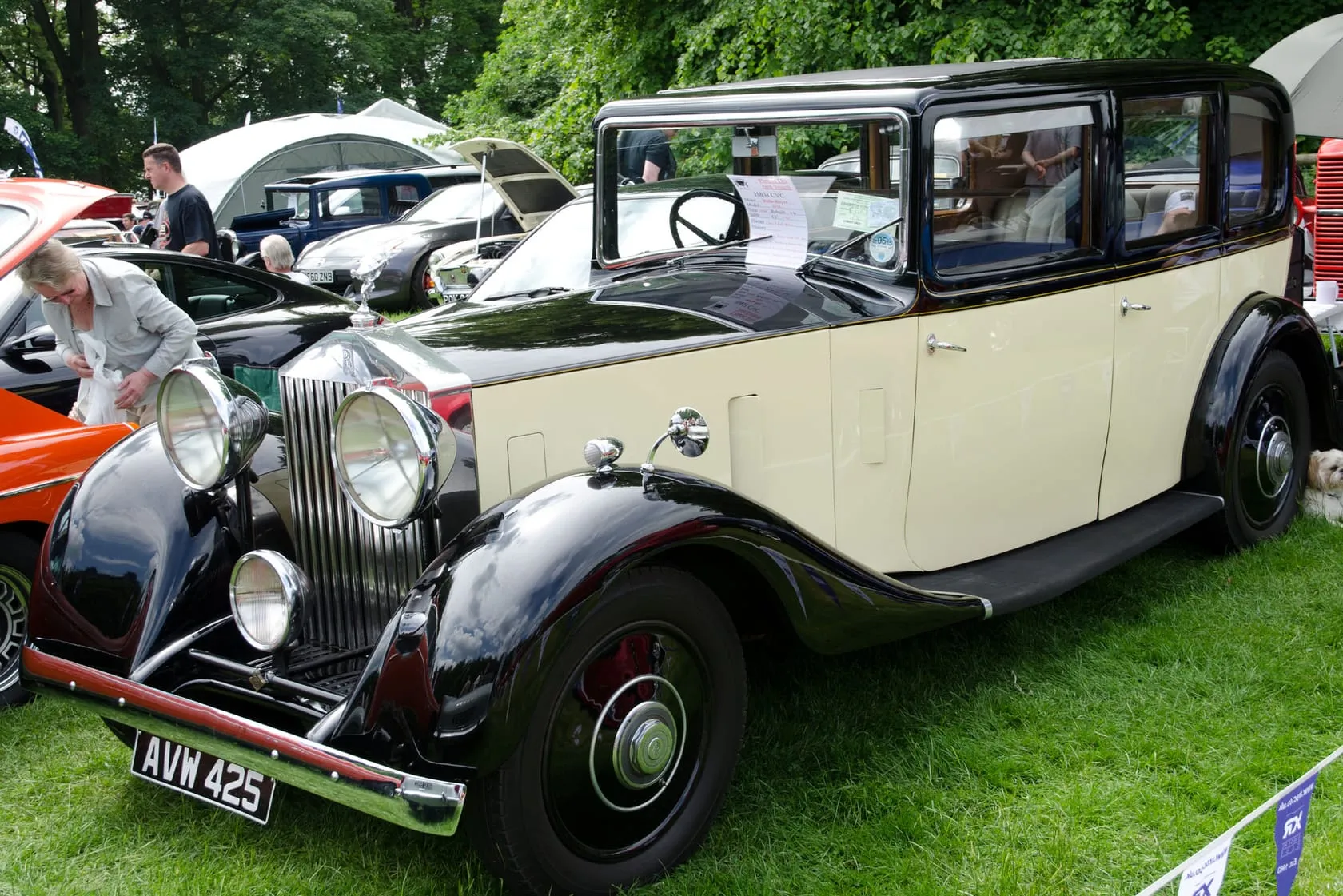
The small-horsepower Rolls-Royces are the cheapest genuine pre-war Rolls-Royces there are. Rolls-Royce 20/25 values sit at a median of £28,750 across 524 recorded sales, with the middle half between £20,579 and £41,631, which puts a hand-built, coachbuilt 1930s Rolls below the price of a good Silver Cloud III. Three in four cars offered find a buyer, the highest clearance rate in this batch, and the record runs from £1,575 to £207,000.
The Rolls-Royce 20/25 guide covers the 20hp, the 20/25 and the 25/30, and what to check. This page is about the money.
The oldest one is the dearest
The three models run backwards to the engineering. The 20hp of 1922 to 1929, the earliest and least developed, sits at £31,192 across 102 recorded sales. The 20/25 that replaced it, the volume car, at £29,250 across 183. And the 25/30 of 1936 to 1938, with the largest engine and the most development, at £24,522 across 76.
That is collector logic rather than driver logic. The 20hp is a vintage car with the period presence to match; the 25/30 is the most usable of the three and the least evocative. Anybody buying one of these to actually drive is therefore being paid to choose the better car, which is a rare position on this site.

The coachbuilder does not save you here
On the Phantom, a Brewster body nearly doubles the price. On the small chassis it does almost nothing, and sometimes less than nothing. A Park Ward-bodied 20/25 sits at £26,942 and a Barker-bodied one at £27,998, both below the £29,250 plain-car figure. A Hooper body drops it to £21,000. Only the shooting brakes, at £34,508 across 12 sales, clear the standard car by a real margin.
The explanation is what the coachwork actually is. On a small-horsepower chassis most of it was formal saloon and limousine work for professional-class owners, and formal bodies are exactly what today’s buyers do not want: heavy, upright, and impossible to use casually. The market here pays for style rather than for a signature, and a plain tourer beats a famous name on a stuffy body every time. Seventy-one of the 524 sales sit outside the listed rows in the coachbuilt tail.
Half the value gone in six years
The yearly median reads £31,050 in 2020, £32,201 in 2021, £30,350 in 2022, £27,500 in 2023, £21,951 in 2024, £20,615 in 2025 and about £17,496 so far in 2026. In today’s money that is £39,347 falling to £17,496.
Losing well over half the real value in six years is severe, and unlike the Phantom’s noisy chart this one is a clean line on a decent sample. The cause is generational rather than mechanical. These cars were bought new by the professional classes, kept by enthusiasts through the second half of the century, and are now reaching the market as those owners stop driving. The generation arriving behind them is smaller, and a 1930s saloon asks more of a new owner than a 1960s one does.
For a buyer that is an opportunity of a specific kind: the entry price into pre-war Rolls-Royce ownership has roughly halved in six years while the cars themselves have not changed at all.

Where 20/25s change hands
Through the British specialist sale rooms, almost entirely, and at consistently modest money. The summer of 2026 shows the working range: a 25/30 at £11,000, a Thrupp & Maberly-bodied 20/25 at £13,728, a Barker-bodied car at £9,520 and a 20hp at £16,250. Three in four offered cars sell, which is the highest clearance in this batch and tells you that reserves here are set realistically rather than hopefully. Whether a recorded price includes the buyer’s premium varies by sale, which is one more reason to read the usual range rather than any single result.
Insuring, restoring, selling
Insure on the individual car with its coachbuilder and body style recorded, because the rows here are close enough together that the specific car matters more than the model. On restoration, be blunt: ash framing, coachbuilt panels and hand-trimmed interiors are three specialist trades, and the total exceeds what any of these cars makes except the very best. The only sound purchase is a car somebody else has already sorted. If you are selling, the chassis and body records are the strongest thing you have, and the market is falling, so a realistic reserve is the difference between selling and not.
Related
The 20/25 sits below the Phantom, which costs three times as much, and above nothing: it was the entry point to the marque. Its successor after the war was the Silver Wraith. For the period, see British classic cars of the 1920s and 1930s. For how all the figures on this site are compiled, see what classic cars sell for.
Frequently asked questions
How much is a Rolls-Royce 20/25 worth?
Which small-horsepower Rolls-Royce is worth the most?
Does coachwork increase the value of a 20/25?
Are Rolls-Royce 20/25 prices falling?
Is a 20/25 a cheap way into a pre-war Rolls-Royce?
What should I check before buying a 20/25?
What is the most expensive Rolls-Royce 20/25 ever sold at auction?
How often does a Rolls-Royce 20/25 come up for sale?
Related across themes
More Rolls-Royce values

Pre-war Rolls-Royce Phantom values: the V12 is the cheapest one

Rolls-Royce Silver Cloud values: the saloon at £34,000 and the drophead at five times that

Rolls-Royce Silver Shadow values: a Rolls for Fiesta money, and why that is the trap

Rolls-Royce Silver Spirit values: the cheapest Rolls of all, and the long one that is not
Recently added

Bentley Continental R values: the convertible outsells the coupe by half

Frazer Nash: the chain gang and the Bristol-hearted racers (1922–1957)

Bristol Cars: the aeroplane company that built Britain's oddest aristocrats (1945–2011)
