TVR Sagaris: 406 bhp, no airbags, and the last car out of Blackpool (2005–2006)
The TVR Sagaris was the last production car built at Bristol Avenue, Blackpool, a 406 bhp Speed Six coupé on the T350's bones with slashed wings, side-exit exhausts and a glass rear spoiler, 213 built in 2005 and 2006 before the factory closed. A guide to how it came about, what it is like, what to check, and why it is the most valuable modern TVR.
Built 2005–2006
At a glance
- Years
- 2005–2006
- Body styles
- Two-seat coupé, glassfibre body on a tubular steel backbone chassis
- Drivetrain
- Front engine, rear-wheel drive, five-speed manual gearbox
- Engines
- 4.0-litre TVR Speed Six, 24-valve straight-six
- Power
- 406 bhp and 349 lb ft
- Top speed
- 185 mph claimed; 0 to 60 mph in 3.7 seconds
- Production
- 213, all at Bristol Avenue, Blackpool
- Assembly
- Blackpool, Lancashire
- Designer
- Graham Browne, with TVR's in-house studio
- Values
- £50,000-£70,000 for most; the best low-mileage cars £80,000-£90,000
- The name
- A sagaris was the light battle-axe of the Scythians, in keeping with a Blackpool habit of naming cars for weapons and monsters
- The last
- The final new TVR to reach production before the Bristol Avenue factory closed in 2006
The models
The Sagaris is the last TVR, and it looks it. It went on sale in 2005 as the fastest, wildest and best-finished car the Bristol Avenue factory in Blackpool had built, a 406 bhp Speed Six coupé on the bones of the T350 with slashes cut into its wings, exhausts that exit in front of the rear wheels, a transparent rear spoiler and no anti-lock brakes, traction control or airbags of any kind; and within two years the factory that built it had closed. The TVR Sagaris is a classic by any measure that matters, 213 cars built in 2005 and 2006, and the one the sale rooms price above every other TVR of the Peter Wheeler era.
This page covers how it came about, the Speed Six, the body and what it was drawn for, the two owners it was built under, what it is like to drive and own, what to check, and what one is worth.
The last car from Bristol Avenue
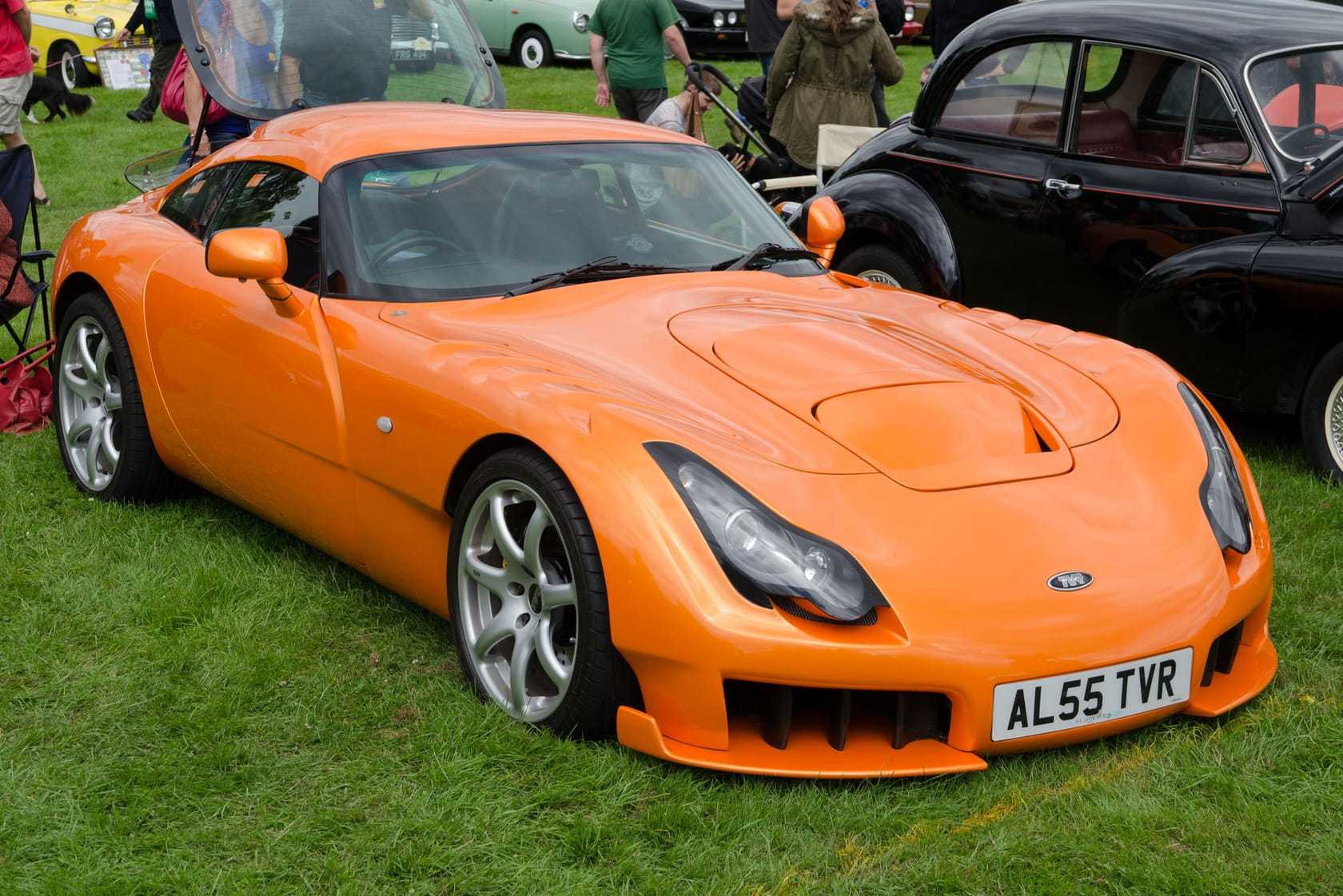
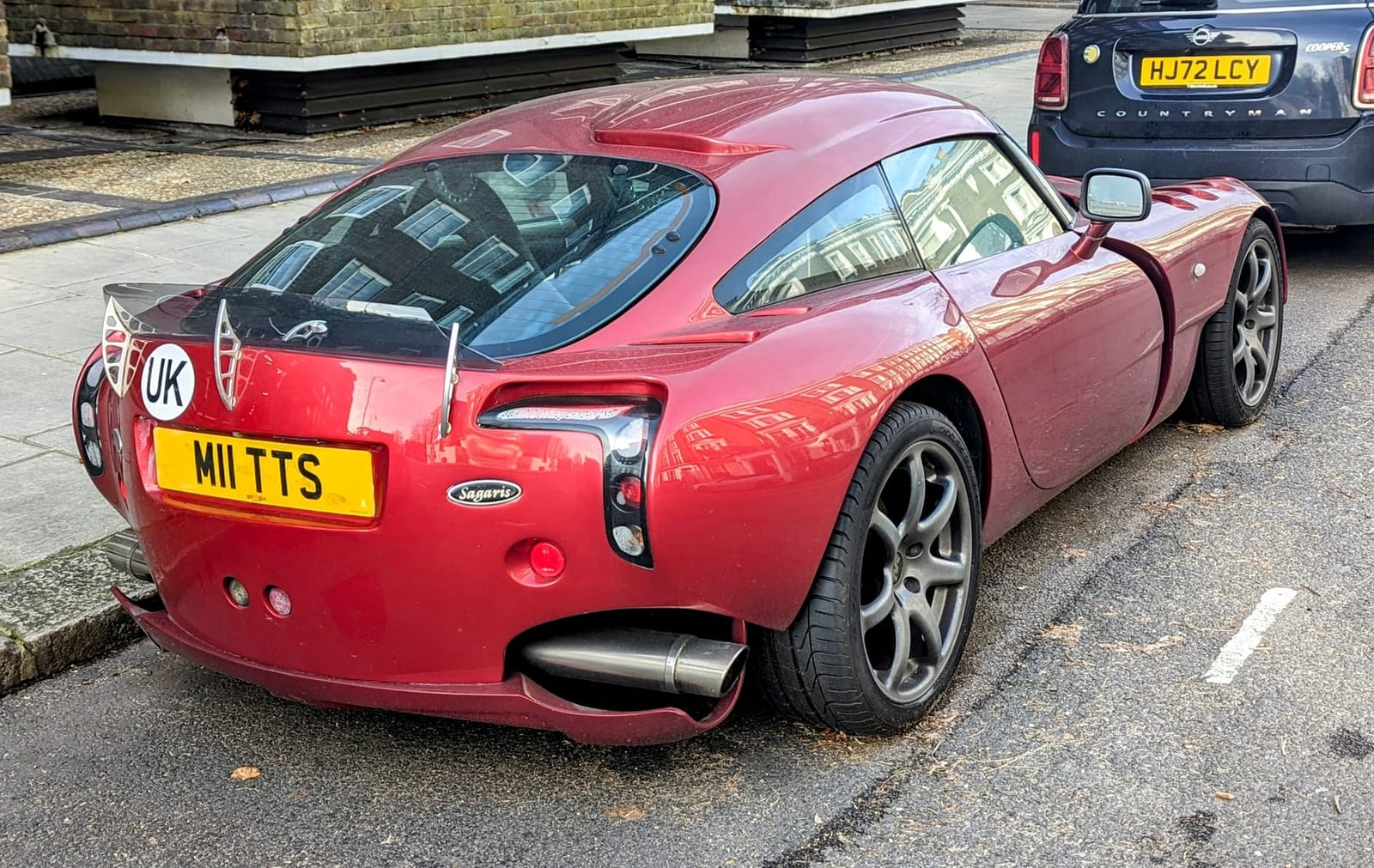
The Sagaris appeared as a concept at the MPH03 show at the end of 2003, the last new shape to emerge under Peter Wheeler, who had owned TVR since 1981 and whose cars had grown faster and stranger every year. Graham Browne’s design took the T350 coupé, the small Speed Six car launched in 2002, and rebodied it with a road-going endurance racer in mind: the cut-outs behind the front wheels and the slashes in the wings to let hot air out, the side exhausts to keep the tail clean, the vents on the bonnet and the clear Perspex spoiler across the boot. The name was a Scythian battle-axe, which fitted a factory that had already named cars Cerbera, Chimaera and Griffith. The pre-production car was shown at Birmingham in 2004, and the first customer cars were delivered in 2005, built by hand in Blackpool like every TVR before them.

Speed Six: 406 bhp and no aids
The engine was TVR’s own 4.0-litre Speed Six, the 24-valve straight-six that Al Melling had drawn for the Cerbera and that the Tuscan had made famous, tuned for the Sagaris to 406 bhp and 349 lb ft and driving the rear wheels through a five-speed manual gearbox. In a car weighing 1,078 kg that gave TVR’s claimed 0 to 60 mph in 3.7 seconds and 185 mph, supercar figures from a car that cost less than half a Ferrari, and it came with TVR’s usual refusal of driver aids: no anti-lock braking, no traction or stability control, no airbags, on the reasoning that a driver who knew the car was safer than one who trusted the electronics. The racing intent was real: a Sagaris ran in British endurance racing, and the road cars kept the racer’s details.

The body: slashes, side pipes and a glass wing
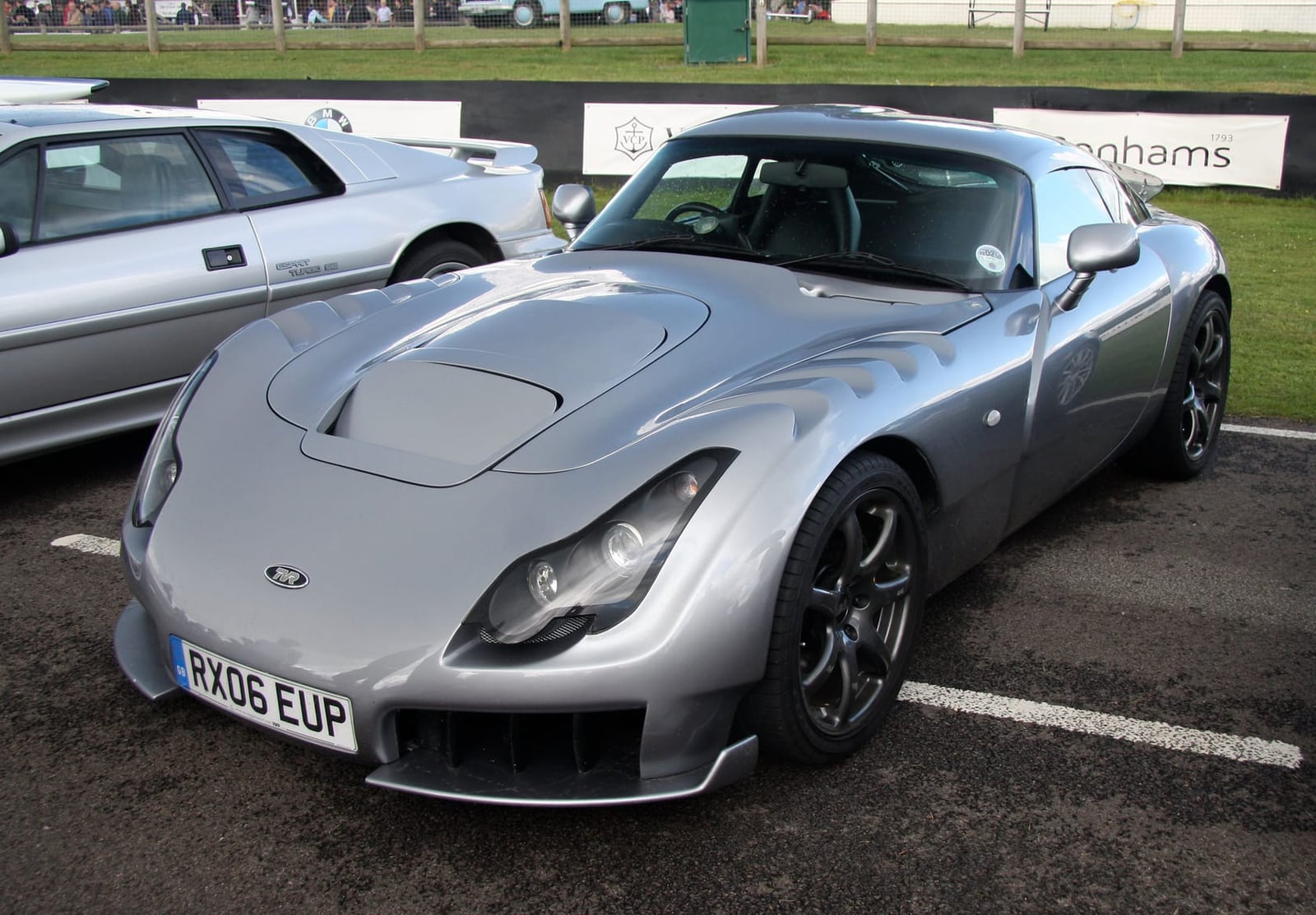
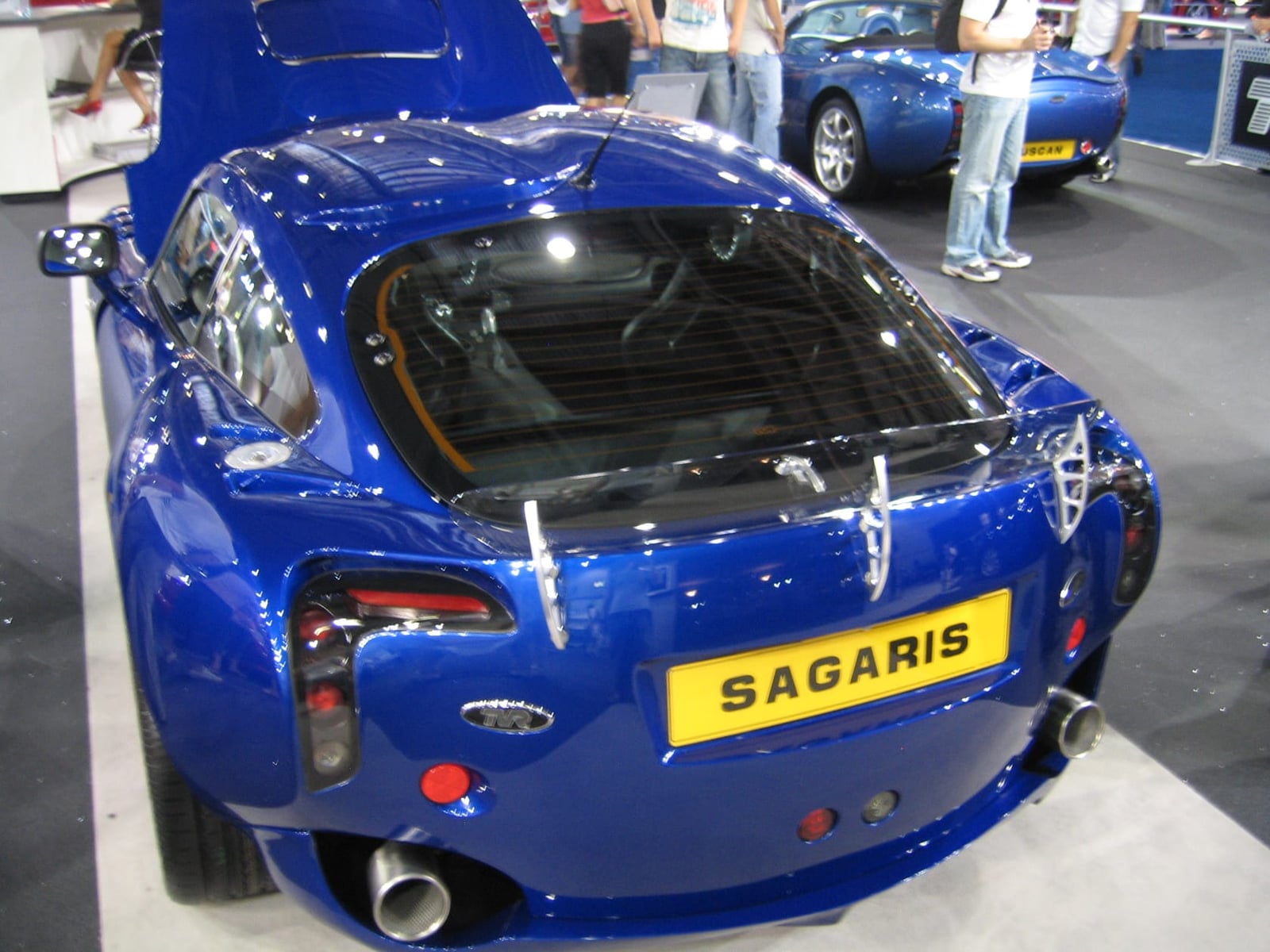
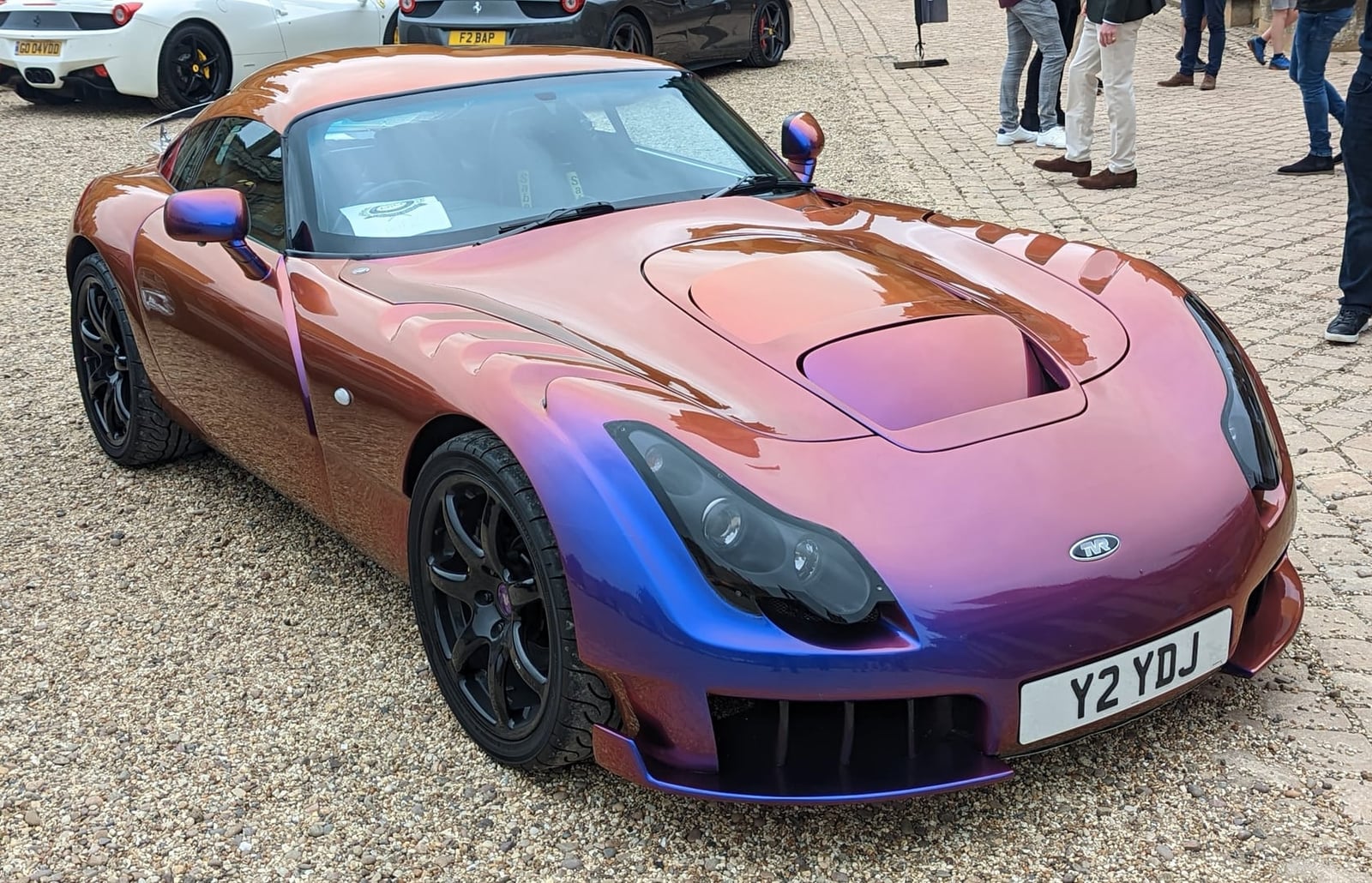
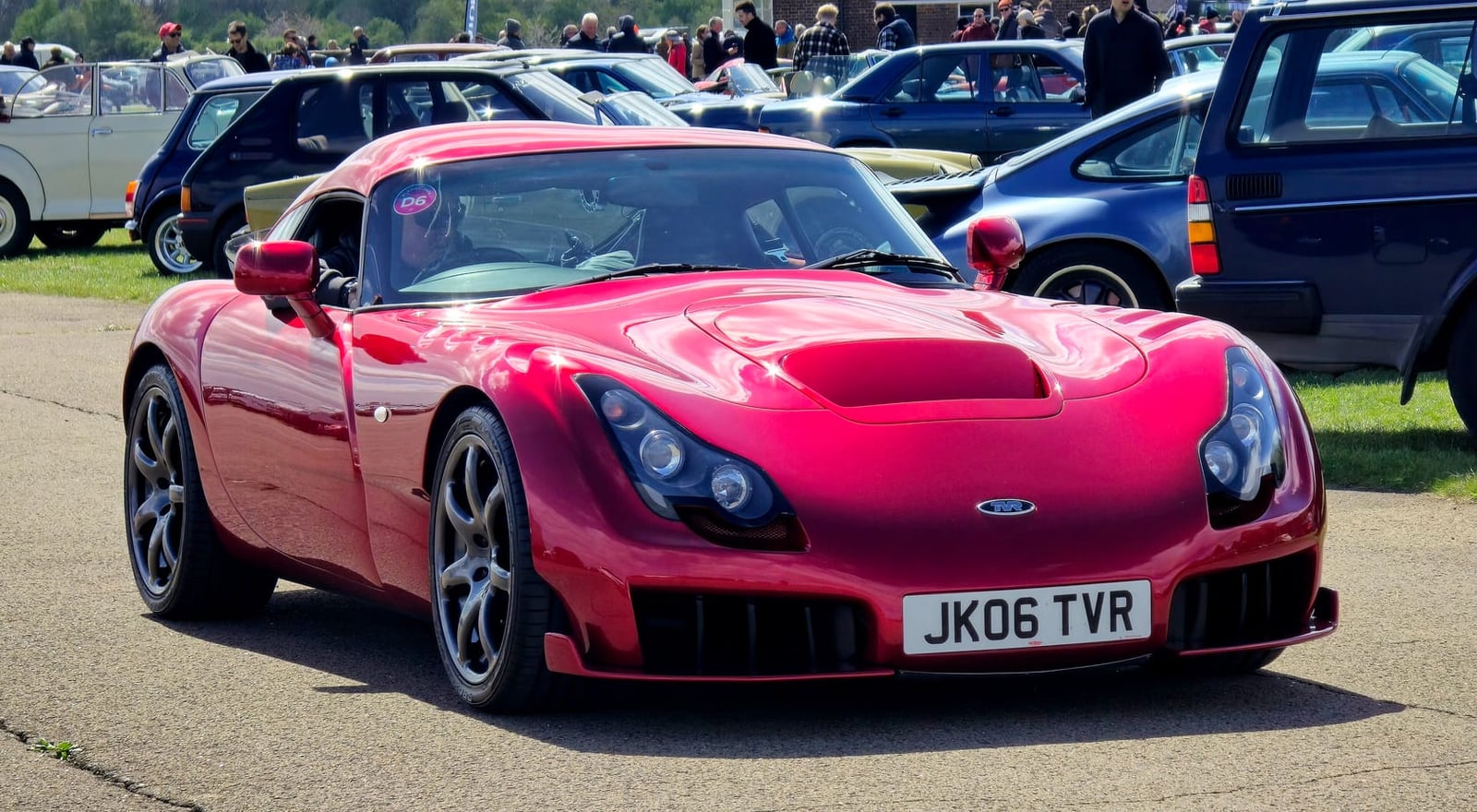
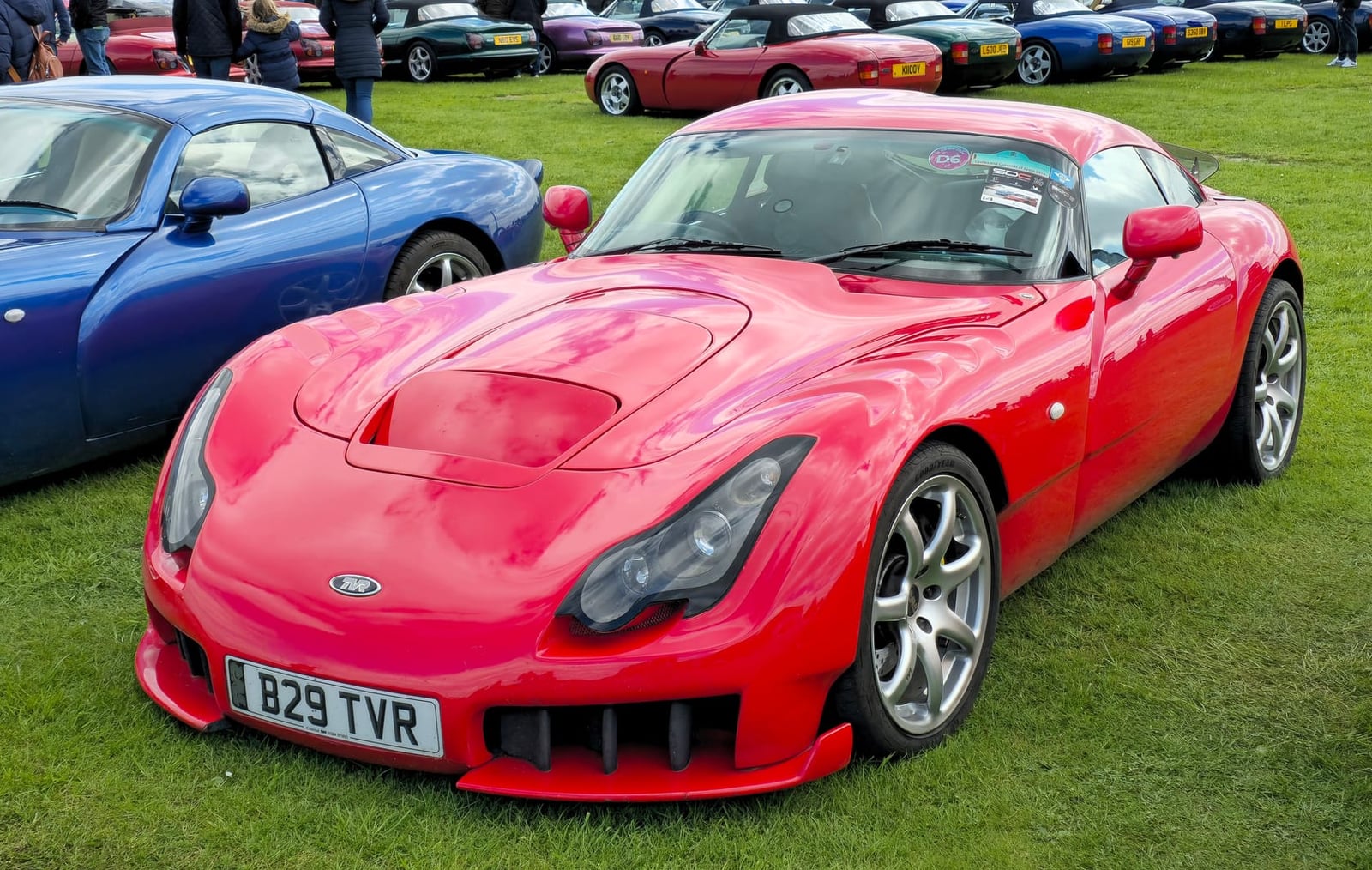
The Sagaris is the TVR shape that divides people most, and the details are the reason. The nose drops almost to the ground with the headlamps set behind clear covers; the wings are cut with diagonal slashes; the exhausts leave the body just ahead of the rear wheels on each side; and the rear is clean to the point of bareness, with no bumper, the lamps set into the tail and the spoiler a sheet of clear Perspex on two stalks, so that it does its aerodynamic job without blocking the window. Inside, the cabin was TVR’s best, trimmed in leather to the customer’s choice, with the company’s own instruments and switchgear and the door-release buttons hidden under the mirrors in the Blackpool manner. The paint was TVR’s too, and the colour-shift finishes that changed from bronze to purple with the light became a Sagaris signature alongside the orange.

Built under two owners
The Sagaris was designed in the last year of Peter Wheeler’s ownership and built in the first years of Nikolai Smolenski’s: the young Russian bought TVR in July 2004, before the first car was delivered. Under his chief engineer Daniel Boardman the factory put unusual effort into the Sagaris’s quality, reworking the suspension settings and chasing the water leaks and electrical faults that had plagued earlier cars, and the result was the best-built TVR there had been. It was not enough to save the company. Production ended in 2006 with 213 cars made, the Bristol Avenue factory closed that autumn, and a Sagaris 2 prototype shown in 2008 with a revised tail never reached production. The revivals that followed, from a kit-built version to the new-era TVR of 2017, have not put another car on the road from Blackpool, and the Sagaris remains the last.

What it is like to drive and own
A Sagaris is loud, fast and demanding, and more civilised than its reputation. The Speed Six pulls hard from low revs and bellows through the side pipes, the steering is unassisted and quick, the ride is firm but not brutal, and the chassis, sorted by the last Blackpool engineers, is more forgiving than a Tuscan’s. There is still a tonne of car with 406 bhp and no electronic aids, so a damp roundabout asks for respect, and the noise and the attention the car draws are part of every journey. The cabin is snug, the boot is small and the view out of the back is through the spoiler.
Ownership is a specialist matter. The Speed Six needs regular oil changes and a specialist’s ear, the cooling system must be kept right, and the body and chassis want inspection every year; the TVR specialists and the owners’ club keep every car on the road, parts are available for most things, and the cost of a year is a sports-car figure rather than a supercar one. Fuel economy is around 20 mpg driven gently and half that driven as intended. A 2005 car pays road tax by its carbon dioxide figure, in a high band; most meet Euro 4 and clear the London ULEZ, but check the V5C.

Buying guide: what to look for
Engine first. The Speed Six’s early troubles with finger followers and valve guides had been addressed by the Sagaris’s time, but the engine’s condition is the single biggest item on any TVR’s bill, and a car with a documented rebuild by a recognised specialist, with the revised parts, is the one to buy; ask for compression figures, listen for top-end noise, and check the oil and the cooling system. Then the chassis: the tubular backbone is powder-coated steel and the outriggers rust underneath, so a car needs to be on a ramp. Then the body: glassfibre crazes and cracks at the stress points, the paint is expensive to match, and a poorly repaired accident shows in the panel gaps and the headlamp covers.
Then the details. The door and boot releases, the electric windows, the instruments and the immobiliser can all misbehave; water ingress through the roof seals and the windows was the factory’s own last battle; and the interior leather and the colour-shift paint are costly to put right. A full history with a specialist, a low mileage and an unmodified car carry the biggest premiums, and with 213 built the owners’ club can usually tell a buyer the history of the individual car.

Current value and where it sits
The record is small, which with 213 cars is no surprise: eleven recorded auction sales on this site, at a median of about £64,000. The ordinary range runs from around £50,000 to £70,000, and the top of the market moved in late 2024, when two cars sold within a week at £84,000 and £90,000. At the time of writing most Sagaris trade between £50,000 and £70,000 and the best low-mileage cars between £80,000 and £90,000, mostly through the online auctions and the TVR specialists, and a colour-shift car with a full history sells fastest.
That puts the Sagaris at the top of the modern TVRs: the Tuscan’s median sits at about a third of the Sagaris’s, the Cerbera’s lower still, and the T350 it was built from changes hands for less than half; only the 1960s Griffith, the V8 car that started the marque’s reputation, keeps it company. For the marque as a whole, see the TVR guide.

The Sagaris in dates
- Late 2003Shown as a concept at MPH03, the last new shape to emerge under Peter Wheeler, rebodying the T350 with a road-going endurance racer in mind.
- July 2004Nikolai Smolenski buys TVR before the first customer car is delivered; the pre-production car is shown at Birmingham.
- 2005First customer cars are delivered: 406 bhp and 349 lb ft from the 4.0 Speed Six, through a five-speed manual, with no driver aids of any kind.
- 2006Production ends at 213 cars and the Bristol Avenue factory closes that autumn.
- 2008A Sagaris 2 prototype with a revised tail is shown and never reaches production.
Before you buy a Sagaris
Engine, the biggest item
- A documented rebuild by a recognised specialist, with the revised parts, is the car to buy
- Ask for compression figures and listen for top-end noise
- Check the oil and the cooling system, which must be kept right
- Finger-follower and valve-guide troubles were addressed by the Sagaris's time, but the file still proves it
Chassis and body
- The tubular backbone is powder-coated steel and the outriggers rust underneath: put it on a ramp
- Glassfibre crazes and cracks at the stress points
- A poorly repaired accident shows in the panel gaps and the headlamp covers
- The paint is expensive to match, and the colour-shift finishes doubly so
Details and history
- Door and boot releases, electric windows, instruments and the immobiliser can all misbehave
- Water ingress through the roof seals and windows is the known weakness
- Interior leather and colour-shift paint are costly to put right
- A full specialist history, low mileage and an unmodified car carry the biggest premiums
Related
The Sagaris closed a line that ran from the Grantura through the M-series, the Chimaera and the Speed Six cars. Its rival in period was the Porsche 911, and its nearest British relation, in spirit and in price, the last of the Lotus Esprit line that had ended the year before. For the decade that came before it, see British classic cars of the 1990s.
More photos
Frequently asked questions
Is the TVR Sagaris a classic?
How fast is the TVR Sagaris?
What is the difference between the TVR Sagaris and the T350?
Why does the TVR Sagaris have a clear rear spoiler?
What are the common problems with a TVR Sagaris?
How much is a TVR Sagaris worth?
Related across themes


More from TVR


Recently added

Aston Martin: power, beauty and perpetual peril from Newport Pagnell

Mini Cooper vs Austin-Healey Sprite: two A-series icons, two kinds of fun

Jaguar XJS vs Triumph Stag: two British grand tourers with a reputation to live down
