Lotus Elise: the bonded-aluminium bathtub that saved Lotus (1996–2021)
The Lotus Elise put a glassfibre body on a bonded aluminium chassis that weighed 68 kilograms, gave it 118 bhp and 725 kilograms, and saved the company for twenty-five years. A guide to the S1, S2 and S3, the 111S and the Cup cars, what an Elise is like to live with, what to check, and what the sale rooms pay now that the first cars are classics.
Built 1996–2021
At a glance
- Years
- 1996–2021
- Body styles
- Two-seat mid-engined roadster, glassfibre body on a bonded aluminium chassis
- Drivetrain
- Mid engine, rear-wheel drive; no power steering on any of them
- Engines
- Rover K-series 1.8 (1996–2004); Toyota 1.8 and supercharged 1.8 (2004–2021); Toyota 1.6 (2011–2021)
- Power
- S1: 118 bhp; 111S: 143 bhp; S2 111R: 189 bhp; S2 SC: 218 bhp; S3 Cup 250: 243 bhp
- Top speed
- S1: 124 mph; the supercharged cars around 145-154 mph
- Production
- Around 35,000 across the three series, all at Hethel
- Assembly
- Hethel, Norfolk
- Designer
- Julian Thomson (body) and Richard Rackham (chassis)
- Values
- Usable S1s £12,000-£20,000 and the best beyond £30,000; S2s £15,000-£30,000 by engine with the supercharged cars above; late S3s and Cup cars £30,000-£50,000
- The name
- Elisa Artioli, granddaughter of the Bugatti chairman who owned Lotus in 1995, gave the car her name and appeared with it at launch
- The chassis
- The extruded, bonded aluminium tub weighed 68 kg, and nothing else on sale was built like it
The models
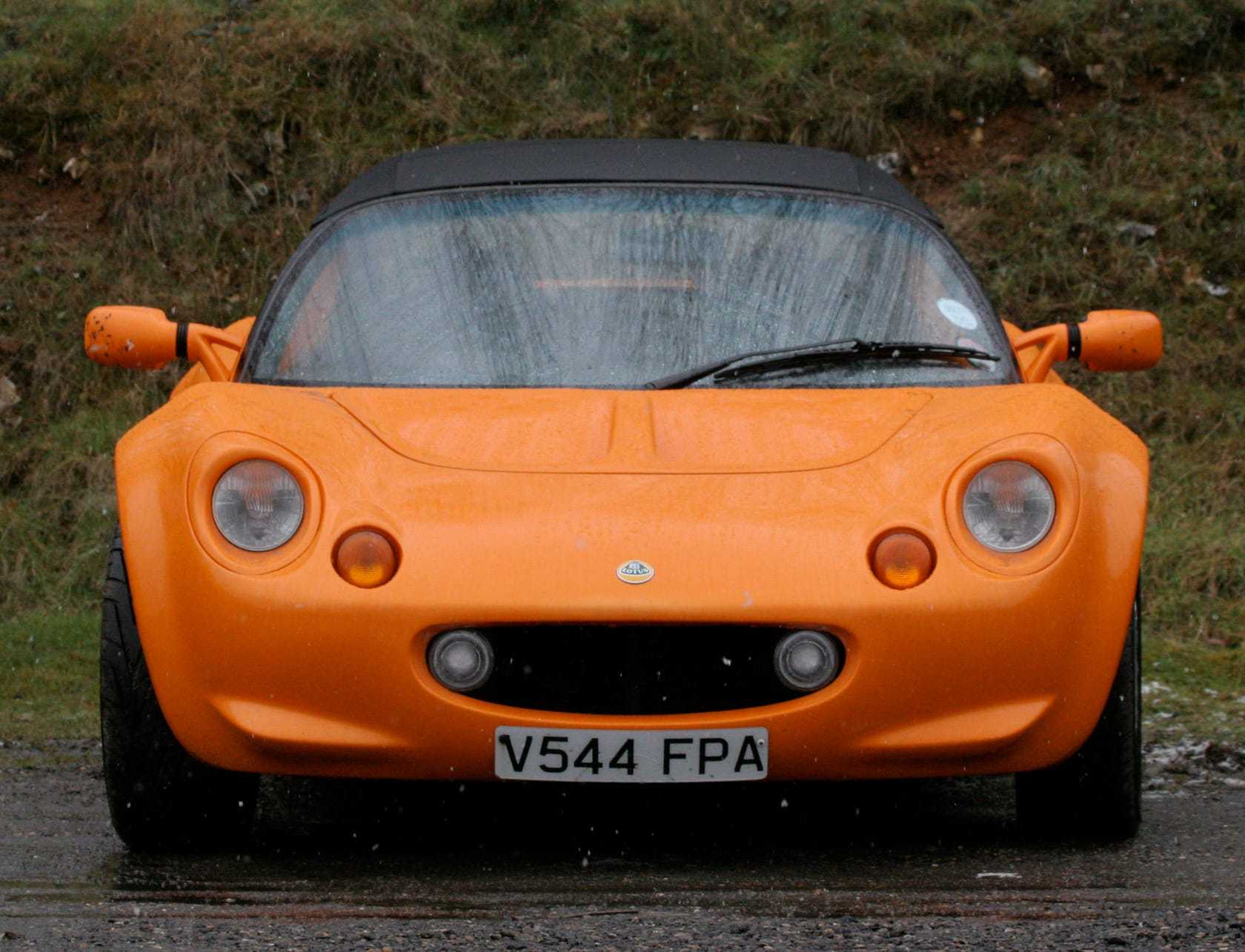
The Elise is the car that saved Lotus, and it did it by weighing nothing. In 1996 Hethel put a glassfibre body over a chassis of extruded aluminium sections bonded together with adhesive, a tub that weighed 68 kilograms and cost a fraction of anything comparable to build, dropped in the Rover K-series with 118 bhp, and sold the result for £18,950. The whole car weighed 725 kilograms. Nothing else on sale drove like it, because nothing else on sale was built like it, and for twenty-five years and around 35,000 cars the Lotus Elise carried the company, fathered the Exige and the Vauxhall VX220, and lent its chassis thinking to everything from the Tesla Roadster to half the low-volume industry.
The first cars are approaching thirty and the last are barely run in, so this page treats the Elise the way the site treats the Focus RS: one line, three chapters, and a market that has started to sort the collectible from the used. It covers the S1, S2 and S3, the fast versions, what an Elise is like to live with, what to check and what the sale rooms pay.
The S1: 725 kilograms and a 68-kilogram chassis
The S1 was shown at Frankfurt in 1995 and named after Elisa Artioli, the young granddaughter of the Bugatti chairman who owned Lotus at the time. Richard Rackham’s chassis was the revolution: aluminium extrusions bonded, not welded, into a bathtub that weighed 68 kilograms, with a glassfibre body by Julian Thomson over it and composite crash structures at each end. The K-series 1.8 gave 118 bhp, which with 725 kilograms meant 0 to 60 mph in under six seconds, and the early cars stopped through metal-matrix composite discs that later became a collector’s detail in themselves. There was no power steering, no anti-lock brakes on the first cars, barely a hood, and a cabin of bare aluminium; the press called it the purest sports car since the Elan, and the order book saved the company.

111S, Sport 135 and the fast S1s
Lotus being Lotus, the S1 sprouted versions: the Sport 135 of 1998, the 111S of 1999 with the VVC head and 143 bhp, the Sport 160, and at the top the 340R, the doorless, roofless special of 2000, and the Exige, the hardtop S1 with the wing that became a line of its own. The standard car remained the point, and the S1’s argument, that lightness beats power, held to the end of its run in 2001.

The S2: the wind-tunnel Elise and the Toyota years
The S2 of 2001 was the same idea drawn harder: a sharper body over an updated tub, developed alongside the Vauxhall VX220 that Hethel built on the same line, with the K-series carrying on in the base car and the 111S. In 2004 the Rover engine gave way to Toyota’s 1.8, revving to 8,500 rpm in the 189 bhp 111R and the Elise R, and from 2006 the softer Elise S brought the entry price down while the supercharged SC of 2008 took 218 bhp to the top of the range. The S2 was the Elise that went to America, where the federalised cars of 2005 to 2011 sold in numbers and now anchor the auction record, and the Toyota years fixed the one anxiety the K-series cars carried, because the Japanese engines are close to unburstable.

The S3 and the last Elises
The S3 of 2011 revised the nose, added a 1.6-litre Toyota base engine and grew the fast versions: the supercharged Elise S with 217 bhp, then the Sport 220, the Cup 250 and the run of special editions that carried the car to 2021, when the Final Editions closed Elise, Exige and Evora production together and Hethel turned to the electric era. The last Cup cars, under 900 kilograms with 243 bhp and aerodynamic downforce the S1 never dreamed of, are the fastest Elises and, with the S1, the ones the market has decided to keep.

What it is like to drive and own
An Elise drives like nothing heavier ever can. The unassisted steering reads the road through your fingertips, the car changes direction the way a motorcycle does, and even the 118 bhp S1 is fast in the only way that matters on a British road, because it carries its speed instead of building it. The trade is the getting in, over a wide sill under a low roof, a cabin with little storage and less sound-deadening, and a hood that is a job rather than a button. Most owners use theirs on fine days and trackdays, which is what the car is for.
Ownership is specialist but not exotic. The Toyota engines need only service items; the K-series needs its head gasket treated as a consumable and done properly once, with the receipts; parts supply through the Lotus specialists is good, and the club scene is large. Insurance is reasonable for what the car is, fuel economy is in the high thirties driven normally, tax is by carbon dioxide and low for a sports car, and every Elise clears the London ULEZ. The earliest S1s reach the historic vehicle class in 2036.

Buying guide: what to look for
The tub first, because it is the car. The bonded chassis cannot be welded, crash repairs are a matter of replacing sections or the tub itself, and corrosion where the steel subframe and fittings meet the aluminium needs checking on the early cars; a car with a damaged or badly repaired tub is a parts car whatever the price. Then the clamshells: the one-piece glassfibre front and rear are expensive, so cracks, star crazing and mismatched paint matter. Then the engine by era: on a K-series, when the head gasket was last done and with what parts; on a Toyota car, the service record and, on the supercharged engines, the blower’s history. Then the wear items that trackdays consume: the rear toe links, which should be the upgraded parts, the suspension, the brakes and the tyres’ age.
Then the history. An Elise with a thick file, an unmodified specification and a known chain of owners sells above everything else; a car with a roll bar, harnesses and a stripped interior has lived on circuits and is priced accordingly. The specials, the 340R, the Sport 160, the Cup cars and the Final Editions, trade on their numbers and their paperwork.

Current value and where it sits
The record on this site holds 526 Elise sales, and it needs one caveat: much of it is American, where the federal 2005 to 2011 cars sell above British money, and the S2’s £32,600 median reflects that more than it reflects a British classified. The S1 sits at £19,000 across 109 sales, with usable British cars from £12,000, good ones at £15,000 to £22,000 and the best original examples beyond £30,000; one exceptional car has made £56,600. The K-series S2s and the Elise S are the cheapest way in, from about £15,000 in Britain; the supercharged SC sits at £43,000 in the record and the S3 at £31,600, with the late Sport and Cup editions at £30,000 to £50,000. The Elise’s market has the shape the Esprit’s had five years ago: the first cars turning into collector’s items while the rest are still priced as used, which is the moment the collectors like best.
For the marque as a whole, see the Lotus guide; for how this site reads sale-room figures, see what classic cars sell for.

Key dates for the Elise
- 1995Shown at Frankfurt and named after Elisa Artioli, granddaughter of the Bugatti chairman who then owned Lotus.
- 1996On sale at £18,950: Richard Rackham's bonded aluminium tub, Julian Thomson's glassfibre body, a 118 bhp K-series and 725 kilograms.
- 1999The 111S adds the VVC head and 143 bhp, above the 1998 Sport 135; the doorless 340R and the hardtop Exige follow in 2000.
- 2001The S2 arrives, a sharper body on an updated tub, developed alongside the Vauxhall VX220 built on the same Hethel line.
- 2004Toyota's 1.8 replaces the Rover K-series, revving to 8,500 rpm and 189 bhp in the 111R; the anxiety of the K-series years ends.
- 2008The supercharged SC takes 218 bhp to the top of the S2 range.
- 2011The S3 revises the nose and adds a 1.6 Toyota base engine, growing into the Sport 220 and Cup 250.
- 2021The Final Editions close Elise, Exige and Evora production together after around 35,000 Elises, all built at Hethel.
Buying checklist: the Elise in front of you
The tub, because it is the car
- Bonded aluminium cannot be welded; repair means replacing sections or the tub itself
- Check corrosion where steel subframes and fittings meet the aluminium, especially on early cars
- A damaged or badly repaired tub makes the car a parts car whatever the asking price
- One-piece glassfibre clamshells are expensive: look for cracks, star crazing and mismatched paint
Engine, by era
- K-series: when the head gasket was last done, and with which parts
- Toyota: the service record, and on supercharged cars the blower's history
- Early S1 metal-matrix composite brake discs are a collector's detail in their own right
- No power steering on any of them, so heaviness at parking speed is the design, not a fault
Track use and history
- Rear toe links should be the upgraded parts; trackdays consume the originals
- Suspension, brakes and tyre age all tell you how the car has been used
- A roll bar, harnesses and a stripped interior mean a circuit life, and the price should reflect it
- The specials, from the 340R and Sport 160 to the Cup cars and Final Editions, trade on numbers and paperwork
Related
The Elise is the third of Hethel’s three great ideas, after the Elan’s backbone and the Esprit’s wedge, and the only one that saved the company twice, once in 1996 and again through everything it spawned. Its rivals in period were the Mazda MX-5, the Toyota MR2 and the Porsche Boxster, all heavier; its British siblings the Exige and the Vauxhall VX220, which shared its tub. For the decade that produced it, see British classic cars of the 1990s.
More photos


Frequently asked questions
Is the Lotus Elise a classic?
What is the difference between the Elise S1, S2 and S3?
Which Lotus Elise is best to buy?
What are the common problems with a Lotus Elise?
How much is a Lotus Elise worth?
Why was the Lotus Elise so important?
Related across themes
More from Lotus

Lotus Elan: 700 kilograms that changed what a sports car had to be (1962–1973)

Lotus Esprit: the wedge that went underwater and grew into a supercar (1976–1992)

Lotus Eleven: the tiny sports racer that made Lotus a marque (1956–1958)


