Lotus Carlton: the 176mph Vauxhall they tried to ban (1990–1992)
The Lotus Carlton was a Vauxhall saloon rebuilt by Lotus around a twin-turbo straight-six, 377bhp, 176mph, faster than contemporary Ferraris with five seats, and so quick the press and Parliament called for it to be banned. A guide to how it was built, the ban campaign, the famous crime spree, what to check, and what one costs now.
Built 1990–1992 43 recorded sales
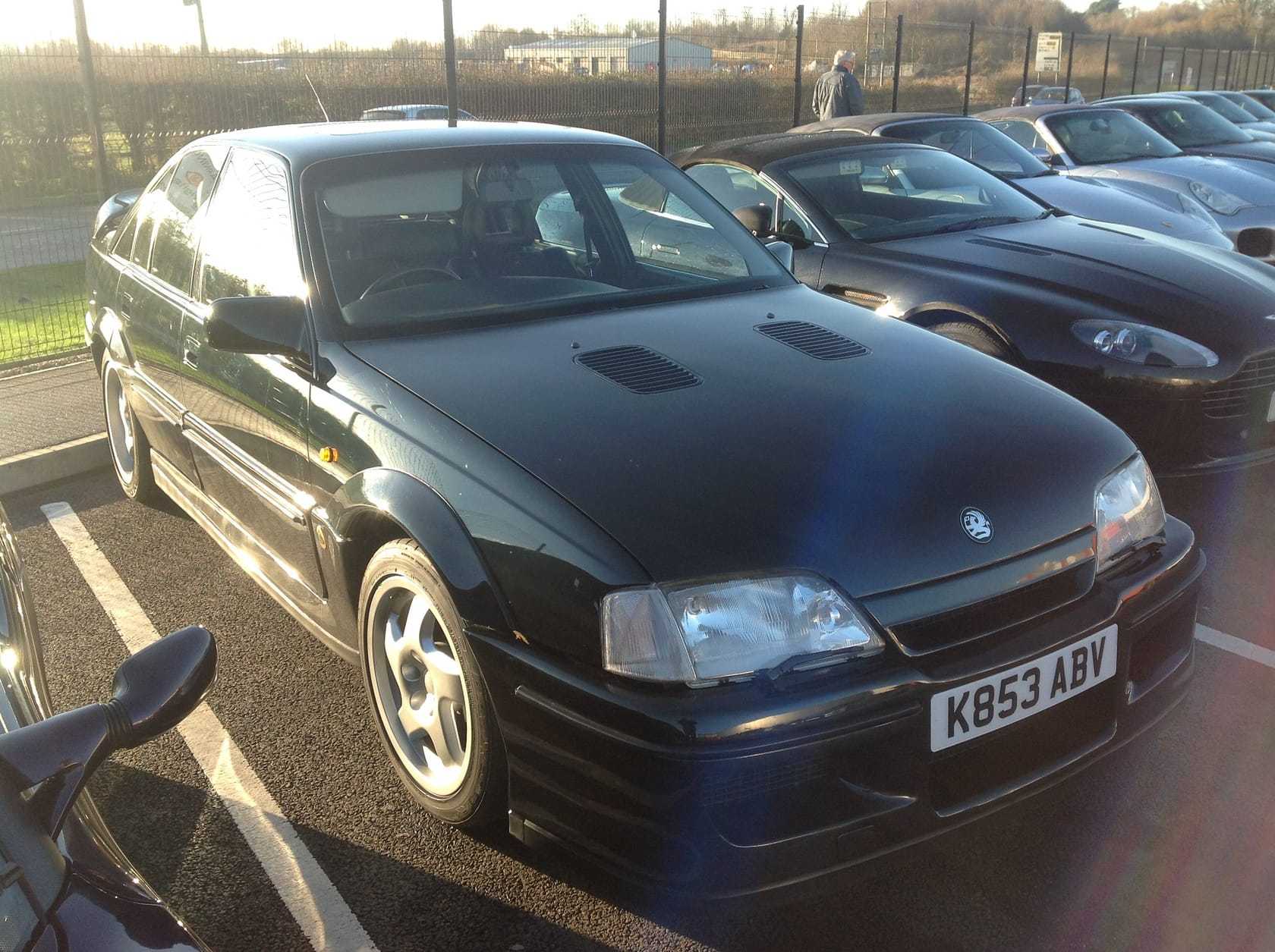
At a glance
- Years
- 1990–1992
- Body styles
- Four-door saloon
- Drivetrain
- Front engine, rear-wheel drive
- Engines
- 3.6-litre twin-turbocharged straight-six
- Power
- 377 bhp
- Trim levels
- One specification, all in Imperial Green
- Production
- Around 950 in total; roughly a third UK-market Carltons
- Assembly
- Base cars from Rüsselsheim; conversion at Hethel, Norfolk
- Designer
- Lotus engineering programme (Type 104)
- Values
- Usable from around £40,000; the best beyond £70,000
- The numbers
- 377 bhp and 176 mph from a four-door in 1990
- The scandal
- Newspaper and parliamentary calls to ban it, which sold every last car
The models
Nineteen-ninety’s most scandalous new car had five seats, a boot and a Vauxhall badge. The Lotus Carlton, a Rüsselsheim-built saloon rebuilt at Hethel around a 377 bhp twin-turbo straight-six, out-ran the contemporary Ferrari 348 flat out, provoked a newspaper ban campaign and questions in Parliament, and sold every example it upset people to make. No Lotus project ever applied the company’s engineering to more subversive effect.
Type 104: how to corrupt a company car
The recipe began with General Motors ownership: GM held Lotus in the late 1980s and wanted a halo for its European flagship. Lotus took the Vauxhall Carlton GSi, bored and stroked its straight-six to 3.6 litres, added two Garrett turbochargers and a Corvette ZR-1 six-speed gearbox, then re-engineered the suspension, brakes and aerodynamics until the chassis deserved the output: 377 bhp in an era when Ferrari’s 348 offered 300. Every car was finished by hand at Hethel alongside Esprit production, all in the same deep Imperial Green, alongside left-hand-drive Omega-badged sisters for the Continent.

The ban campaign
Britain’s reaction made the car immortal. A tabloid campaign demanded the 176 mph saloon be banned or speed-limited, the question reached Parliament, and industry voices solemnly debated whether such performance was responsible. Lotus and Vauxhall declined to change anything, and the argument did what arguments do: advertised the car to exactly the buyers who wanted one. Around 950 were built before recession, not regulation, ended production in 1992.
Production numbers deserve a footnote of their own: plans spoke of over a thousand cars, but recession-era demand stopped the line at roughly 950, split between right-hand-drive Carltons and left-hand-drive Omegas, which is why the car feels rarer on British roads than even the figure suggests.

The getaway legend
Folklore then finished the job the headlines started. A stolen Lotus Carlton spent months in the early 1990s as a Midlands ram-raid getaway car, with police frankly admitting nothing in the patrol fleet could stay with it. The episode was criminal, expensive and, at thirty years’ distance, irresistibly cinematic, and it sealed the Carlton’s status as the fast saloon with an outlaw biography to match its speedometer.
What a Lotus Carlton is like to drive
The shock is how modern it feels. Boost arrives with a long, rising surge that still reorganises a driver’s expectations, the ZR-1 gearbox is heavy and positive, and the chassis, this being Lotus, turns a two-tonne-feeling brief into something poised and precise at speeds the badge has no business reaching. It rides better than the sports saloons that followed it, too. What it never does is feel tame: the Carlton remains an event every time, which is exactly what around £48,000 bought in 1990.

The fast-saloon benchmark
Every argument about fast saloons since 1990 has been conducted in the Carlton’s shadow. Its contemporary rivals held moral high ground rather than pace: BMW’s M5 of the day gave away more than 60 horsepower, and Germany’s gentleman’s agreement limited its cars to 155 mph while the Hethel Vauxhall ran unrestricted to 176. It took the best part of a decade for volume manufacturers to sell anything comparably fast with four doors, and by then the template, huge turbocharged torque, discreet styling, chassis engineering worthy of the output, was exactly the one Lotus had written.
The car’s completeness is what period road testers kept returning to. This was no drag-strip special: it rode with genuine suppleness, carried four adults and their luggage, and idled through traffic like the company car it outwardly resembled. At around £48,000 in 1990 it cost Porsche 911 money and undercut anything with comparable pace by a distance, which made the outrage it attracted all the more useful as advertising.

Buying a Lotus Carlton today
Scarcity shapes everything: with roughly 950 built and perhaps a third of them UK Carltons, the market is small, specialist and increasingly serious about provenance. Inspection priorities are mechanical history above all, evidence of care for the turbos, cooling and the unique-to-model parts whose remanufacture is costly, plus accident history on a car many drove hard, and originality of the Imperial Green paint and interior. Join the owners’ community before buying rather than after, because known cars trade quietly between enthusiasts and the register knowledge on any individual example, its colour-matched history file included, is worth real money. Values have climbed steeply: usable cars from around £40,000, the best beyond £70,000, and the direction of travel is one way as the fast-saloon era becomes collectable. Running costs are surprisingly sane between the big-ticket items, with Vauxhall-shared service parts keeping routine maintenance ordinary; it is the Carlton-only pieces that demand deep pockets and patience. The era’s context is in the cars of the 1990s.

More photos
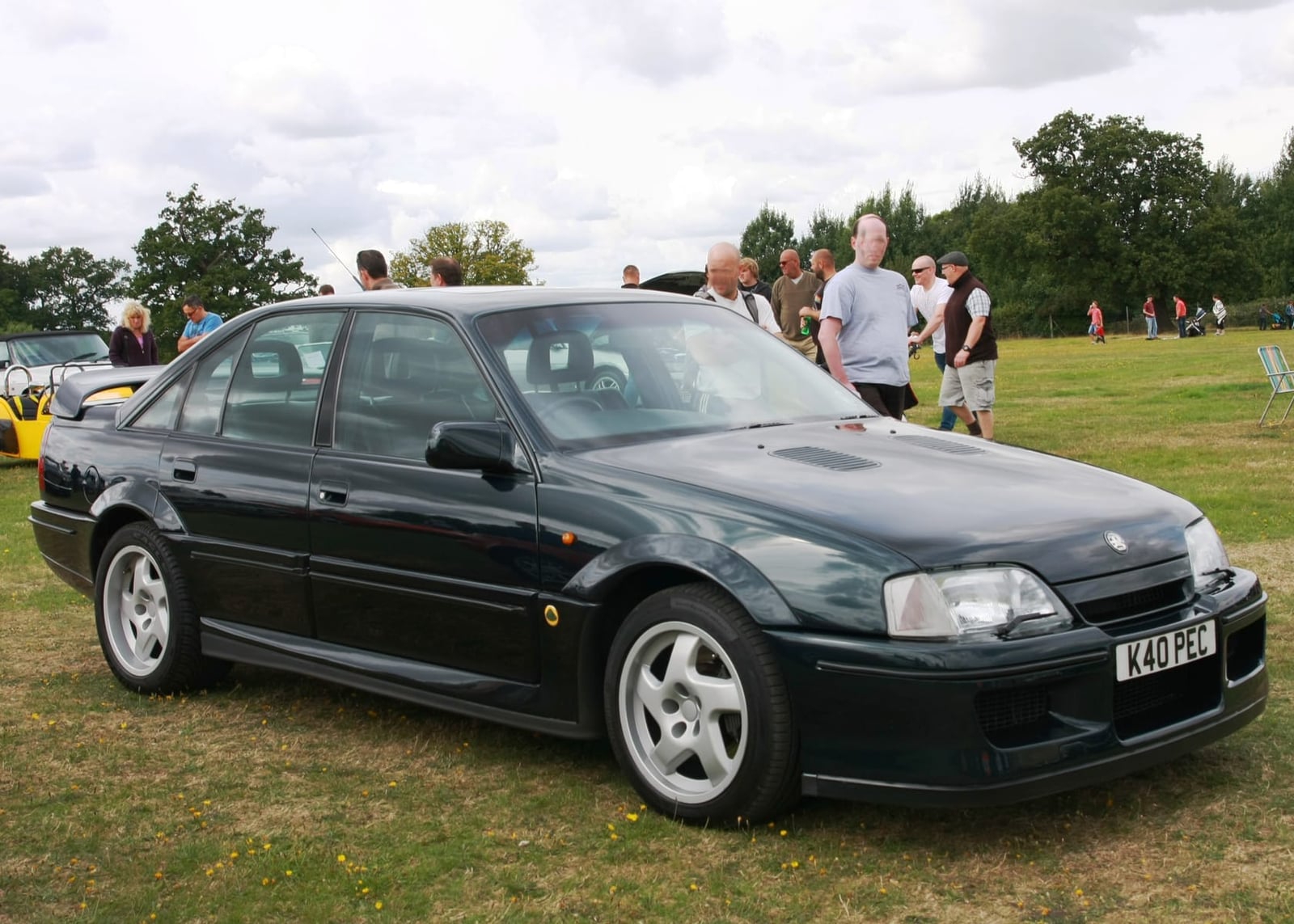
Carlton: the short history
- 1988GM, then owner of Lotus, commissions Type 104: a halo for its European flagship, built from the Vauxhall Carlton GSi.
- 1990Launched at around £48,000: the six bored and stroked to 3.6 litres, two Garrett turbochargers, a Corvette ZR-1 six-speed, and every car hand-finished at Hethel in Imperial Green.
- 1990A tabloid campaign demands the 176 mph saloon be banned, the question reaches Parliament, and the argument sells every car.
- Early 1990sA stolen Carlton spends months as a Midlands ram-raid getaway car, with police admitting nothing in the fleet could stay with it.
- 1992Recession, not regulation, ends production at roughly 950 cars, short of the thousand-plus planned.
The Carlton viewing checklist
Mechanical history, above all
- Evidence of care for the turbos and cooling
- The unique-to-model parts whose remanufacture is costly
- Accident history, on a car many drove hard
- The big-ticket items are Carlton-only; the routine servicing is Vauxhall-ordinary
Originality
- Every car was Imperial Green, so the paint's originality is checkable
- Interior originality carries the same weight
- The colour-matched history file is worth real money
- Left-hand-drive Omega-badged sisters exist and are a different market
Community
- Join the owners' community before buying rather than after
- Known cars trade quietly between enthusiasts
- The register's knowledge of any individual example is part of its value
- Roughly a third of production were UK Carltons, so supply is thinner than the build number suggests
What the Carlton sells for at auction
The Carlton comes to auction only occasionally: 43 recorded sales since 2006, typically making between £29,632 and £64,288 . With so few sales, treat any single result as a data point rather than a market price.
- £53,600Lotus Carlton
- £51,196Lotus Carlton
- £109,125Lotus Carlton
- £69,403Lotus Carlton
- £39,927Lotus Carlton
Thin evidence. Only 43 recorded sales: read the figures as a sketch of the market, not a price. Based on 43 sold results from public classic car auctions (2006 to 10 August 2026). Sold prices, not asking prices, and not a valuation: condition, history and specification vary from car to car. Inflation-adjusted figures use the ONS CPIH index, in 2025 money.
Frequently asked questions
Why was the Lotus Carlton so controversial?
How fast is a Lotus Carlton?
What did Lotus actually change on the Carlton?
Is the Lotus Carlton story about the stolen one true?
How much is a Lotus Carlton worth now?
What is the most expensive Carlton ever sold at auction?
How often does a Carlton come up for sale?
Related across themes



More from Lotus


Recently added

Bentley S-series: the quiet twin with the beautiful secrets (1955–1965)

Rolls-Royce Silver Spirit and Silver Spur: the last Crewe bargain (1980–1999)

Rolls-Royce Corniche: the coachbuilt survivor that outlived its makers (1971–1995)
