Daimler V8 250: the sweetest-engined Mk2 of them all (1962–1969)
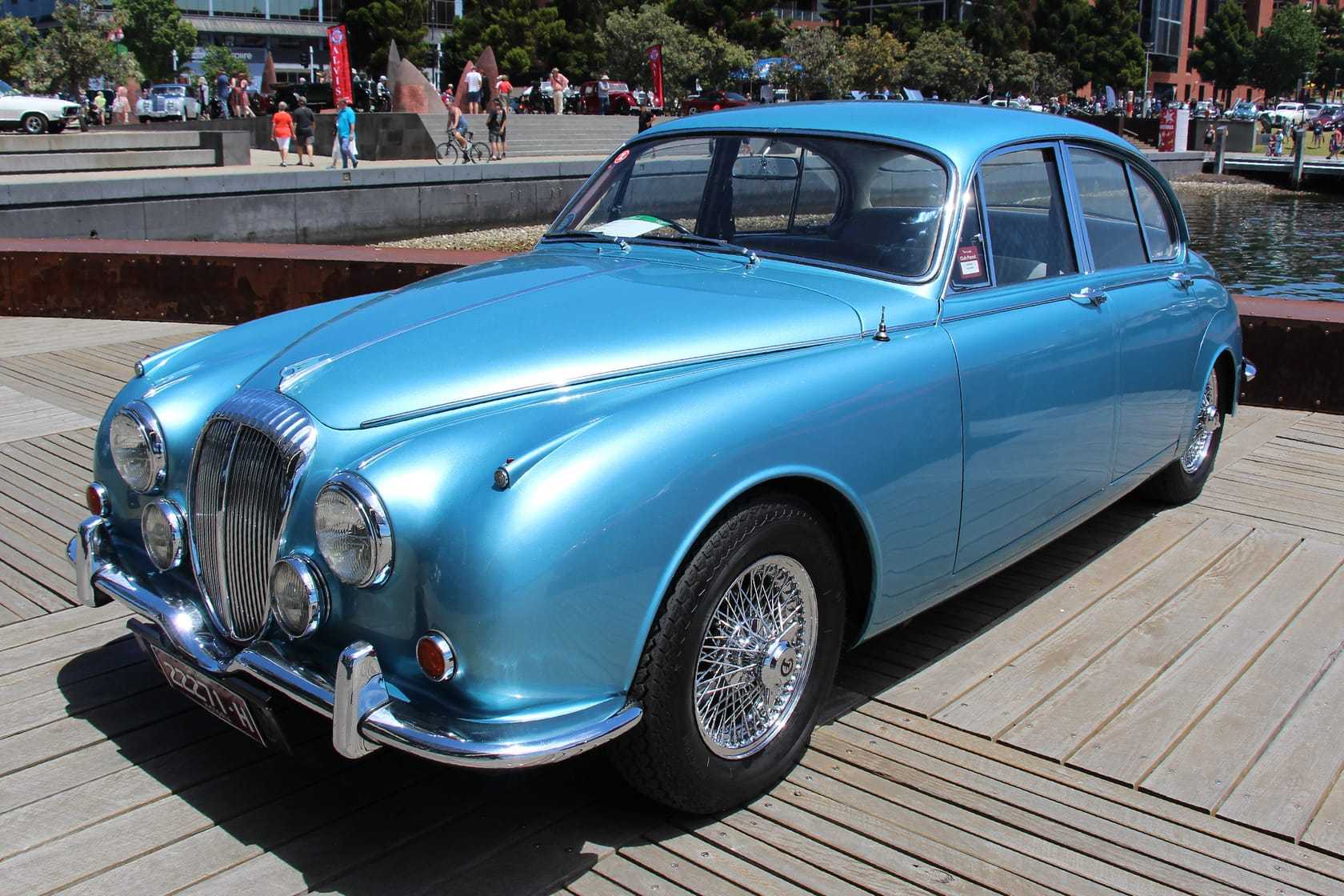
The Daimler V8 250 put Edward Turner's 2.5-litre V8 into the Jaguar Mk2 bodyshell with a fluted grille and a club-armchair interior, became the best-selling Daimler ever, and remains the connoisseur's route into the Mk2 world. A guide to the 1962–69 saloon, buying checks and values.
Built 1962–1969 213 recorded sales
At a glance
- Years
- 1962–1969
- Body styles
- Four-door sports saloon
- Drivetrain
- Front engine, rear-wheel drive
- Engines
- 2548cc Turner V8
- Power
- 140 bhp
- Top speed
- Around 112 mph
- Trim levels
- 2.5 V8; V8 250 with slimline bumpers from 1967; automatic standard, rare manuals
- Production
- 17,880, the best-selling Daimler of all time
- Assembly
- Browns Lane, Coventry
- Designer
- Jaguar body; Edward Turner engine
- Values
- Projects from around £4,000; good cars £9,000-£18,000; the best and rare manuals beyond £25,000
- The blend
- Jaguar Mk2 elegance, Daimler flutes, and Turner's V8 singing under the bonnet
- The record
- 17,880 built made it the most numerous Daimler in the marque's history
The models
The best-selling Daimler of all time was, by any structural measure, a Jaguar. When Jaguar bought the old Coventry firm in 1960 it inherited Edward Turner’s brilliant little V8 with nowhere to live, and the solution created a minor classic: the Daimler V8 250, the Mk2 bodyshell wearing fluted brightwork and, in the view of a devoted minority, the sweetest engine ever fitted to the shape. Some 17,880 were built to 1969, more than every previous Daimler model combined, and they remain the knowing buyer’s route into the whole Mk2 world.
Flutes on a Mk2: how it happened
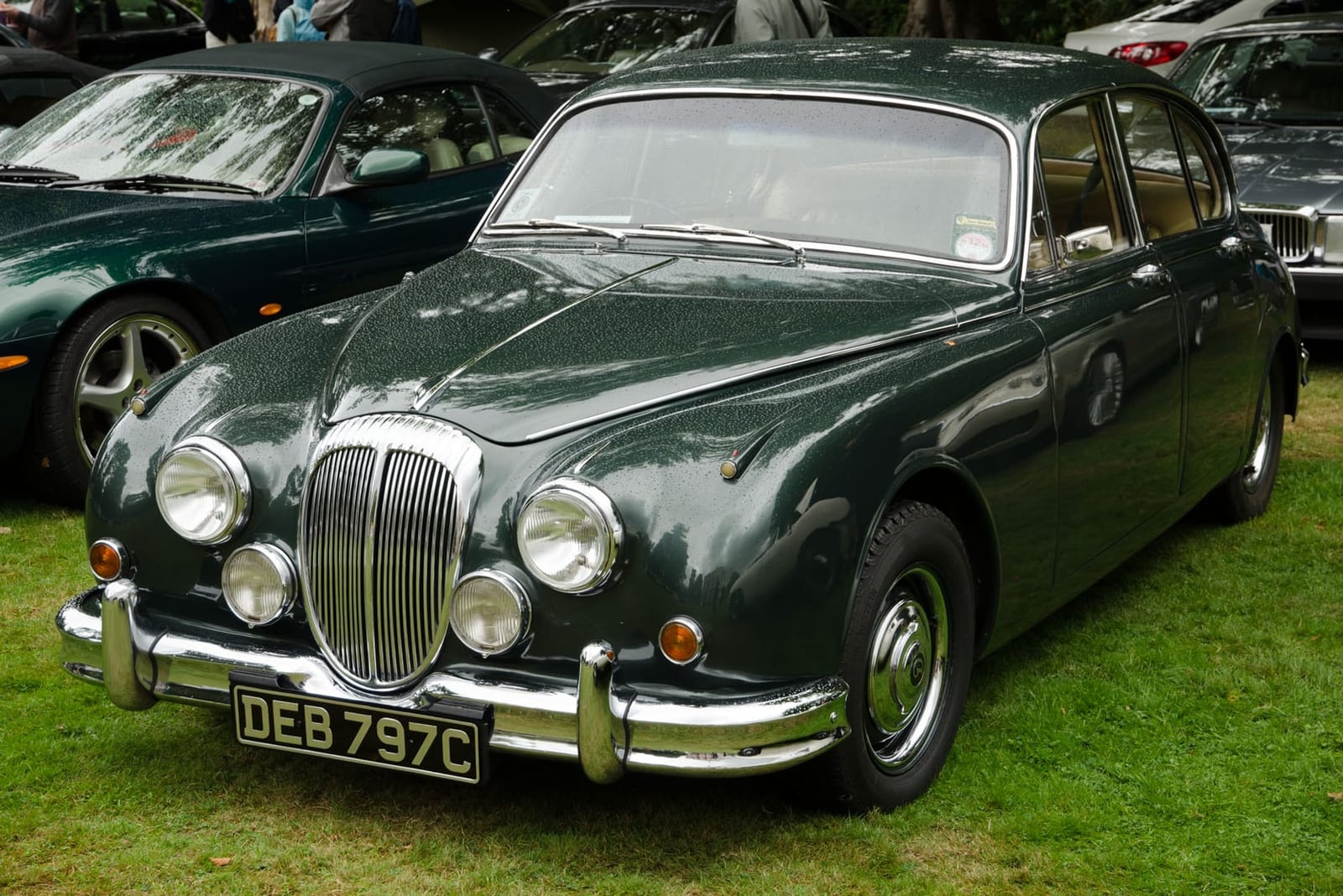
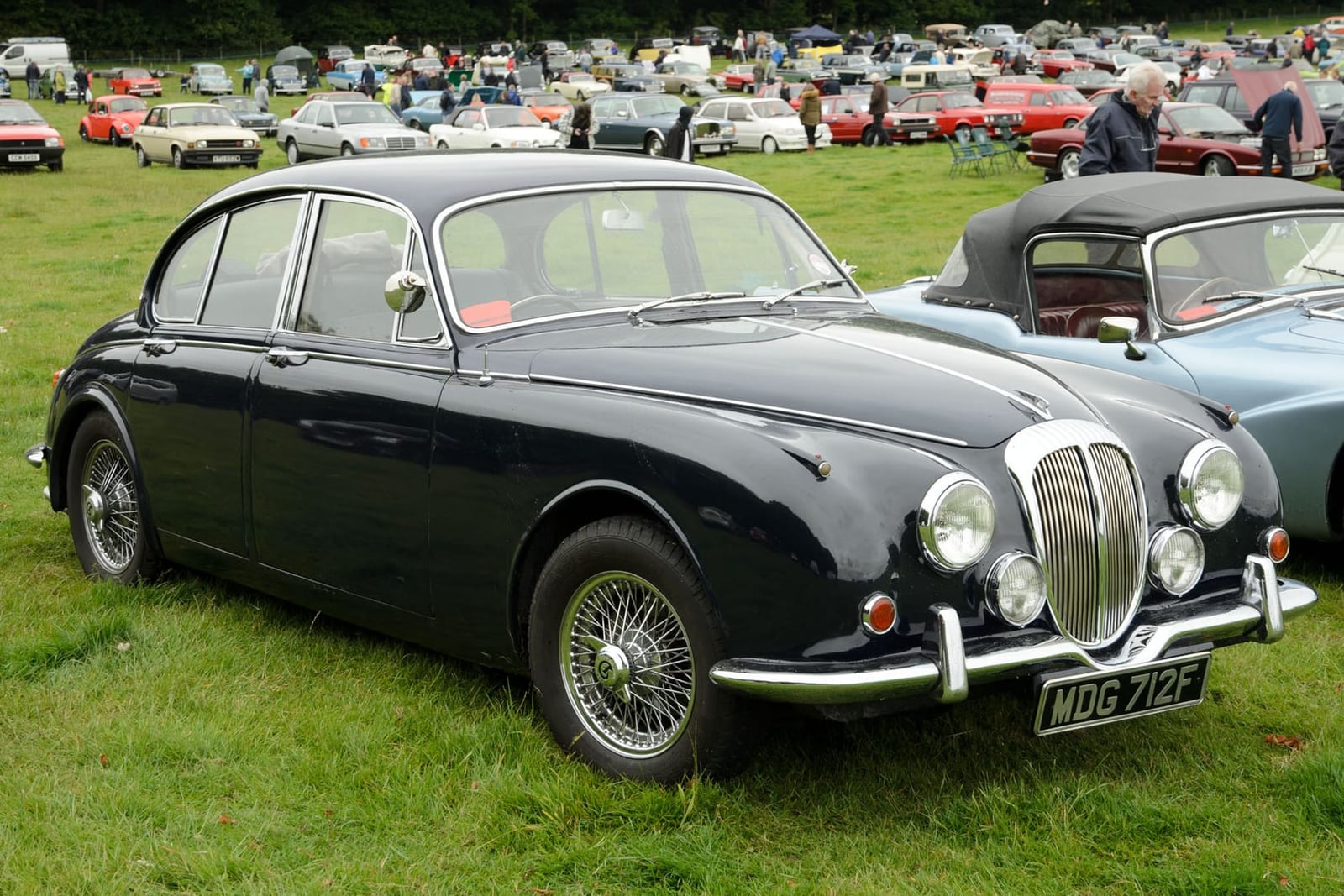
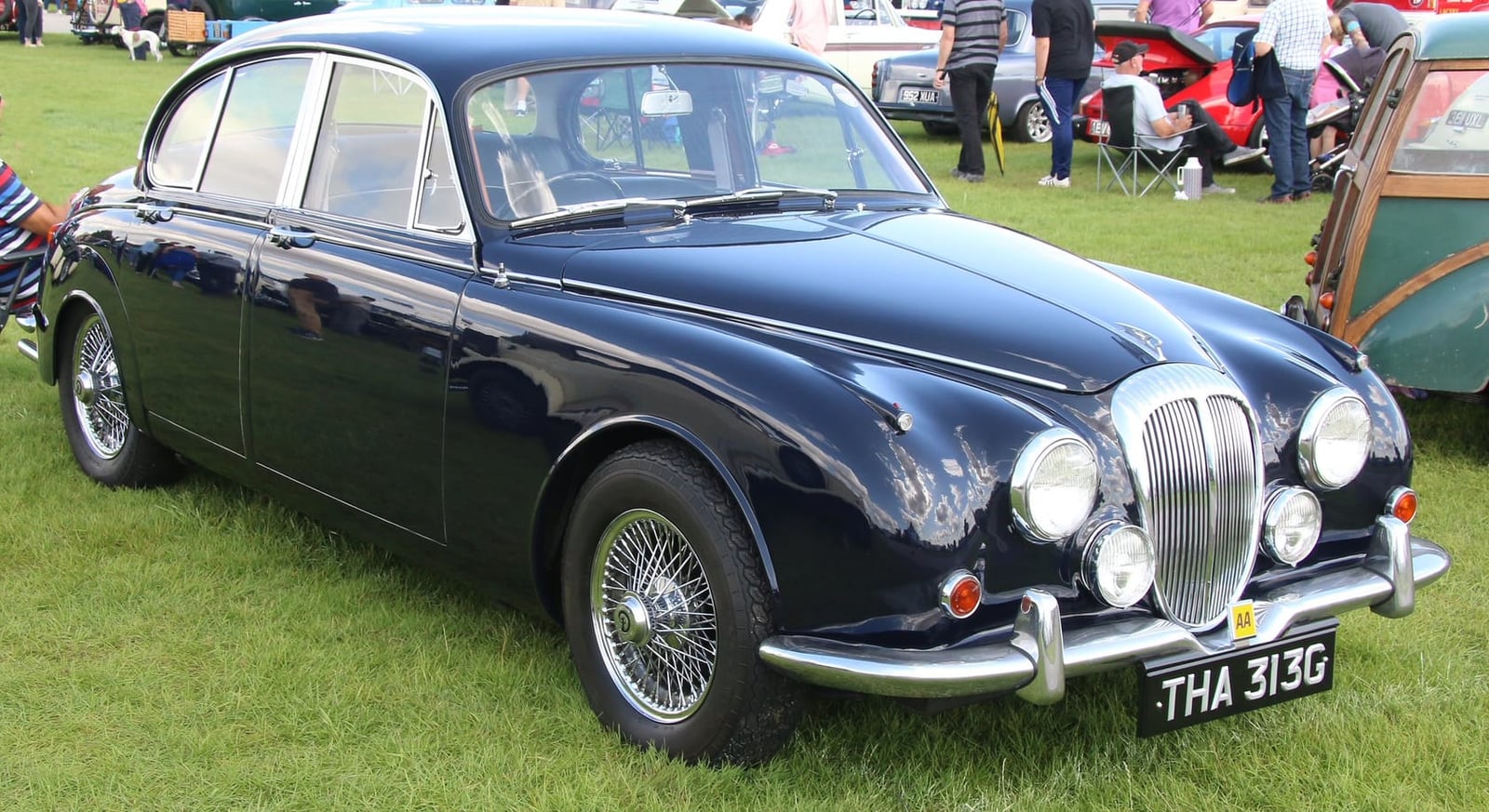
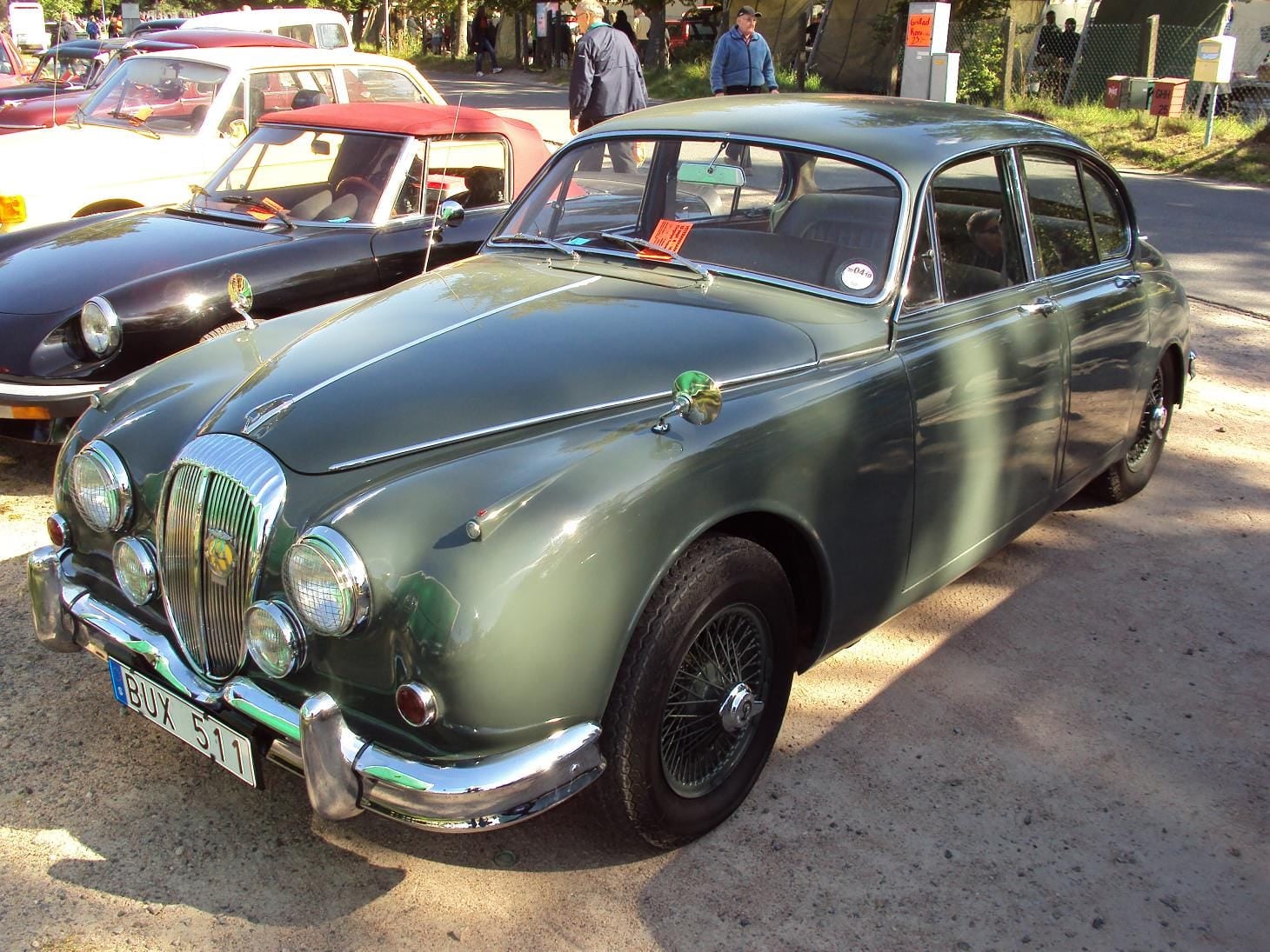
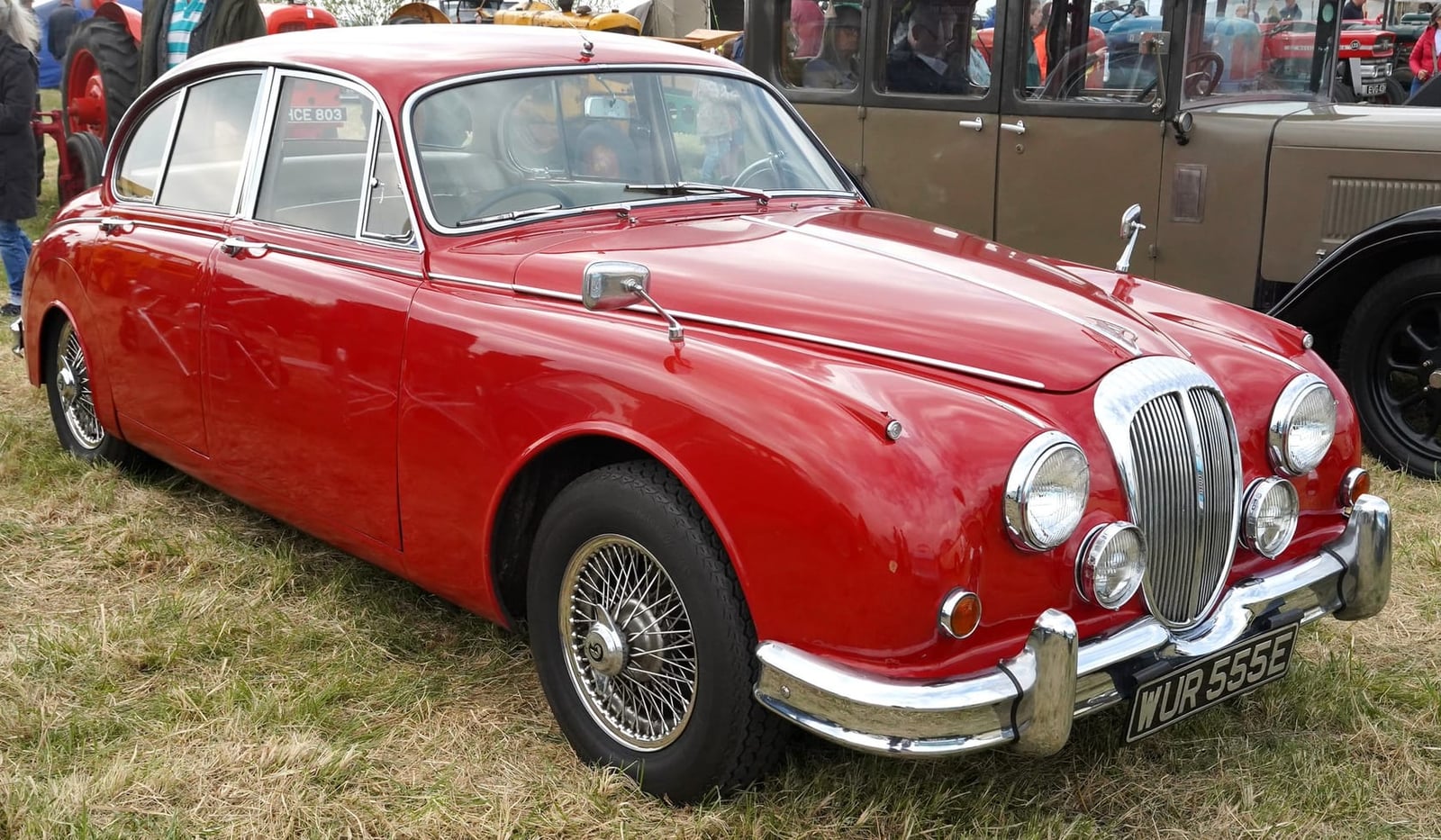
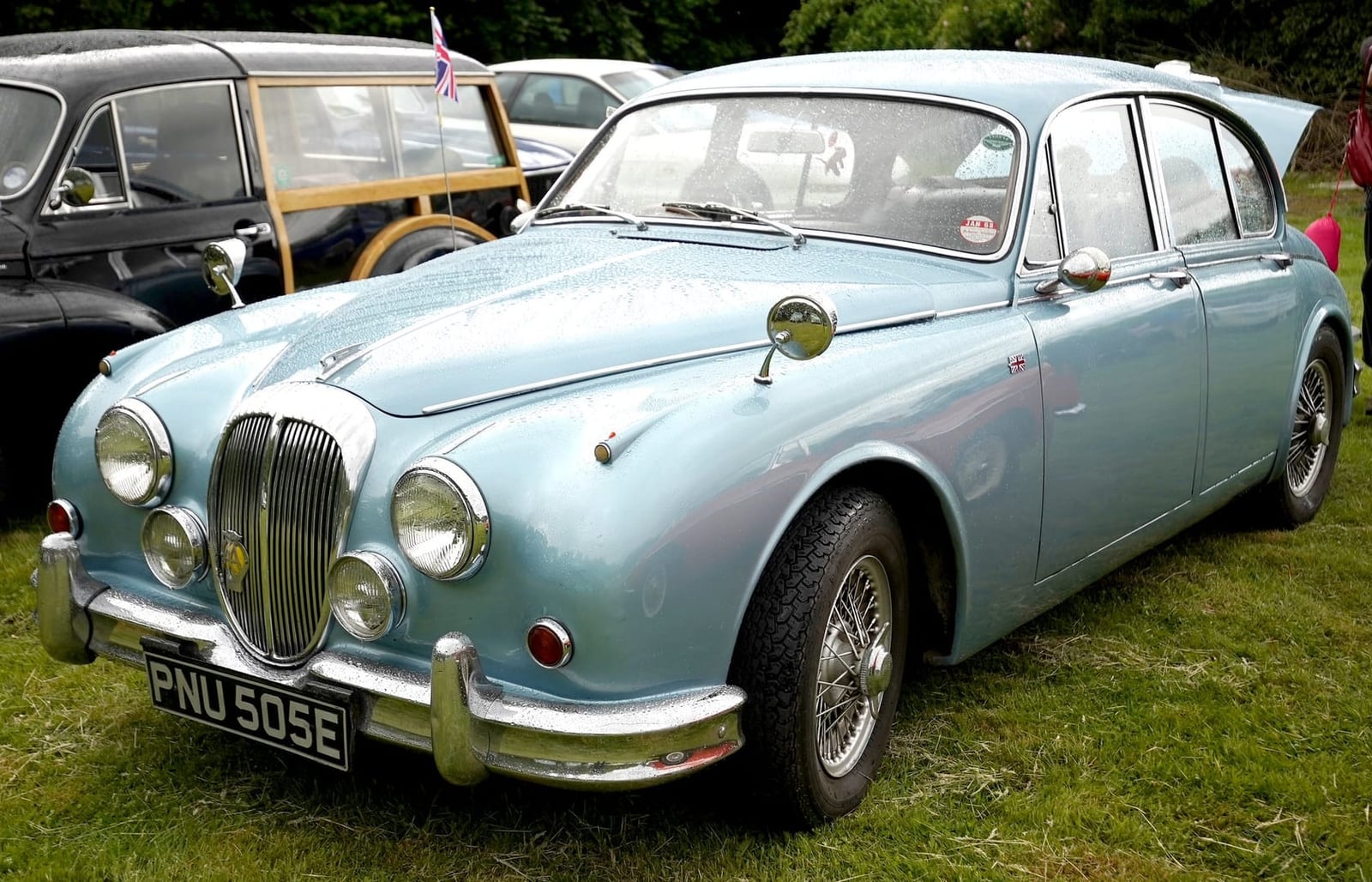
Jaguar’s purchase of Daimler brought factories, royal warrants and two fresh V8s, but no modern saloon to put them in. The answer, launched in 1962 as the Daimler 2.5 V8, dropped the smaller engine into the Mk2 shell with Daimler’s traditional fluted grille and rear number-plate surround, a split-bench front seat and richer cabin details. Traditional Daimler customers, who would never have bought anything so racy as a Jaguar, bought it in droves; so did buyers who simply preferred its manners, and the model quietly rescued the marque’s volume at a stroke. The 1967 facelift brought slimline bumpers, ventilated leather and the V8 250 badge, and production ran to 1969, after which the fluted grille moved onto Sovereign-badged Jaguars and Turner’s engine retired with the car, the last Daimler power unit the company ever built.

The Turner V8 in a bigger home
The engine came straight from the SP250 sports car: Edward Turner’s 2548cc hemi-head V8, 140 bhp of free-revving, silken urge with a burble unlike anything else in the Jaguar catalogue, an engine road testers of the day praised as among the sweetest of any size on sale. In the saloon it carried less weight over the nose than the XK six, which is the source of the model’s enduring reputation for sweeter steering and better balance than its faster Jaguar sisters. Almost every car took the Borg-Warner automatic gearbox; the small number of factory manuals, with or without overdrive, are the acknowledged collector jackpots of the whole run.

The Daimler difference
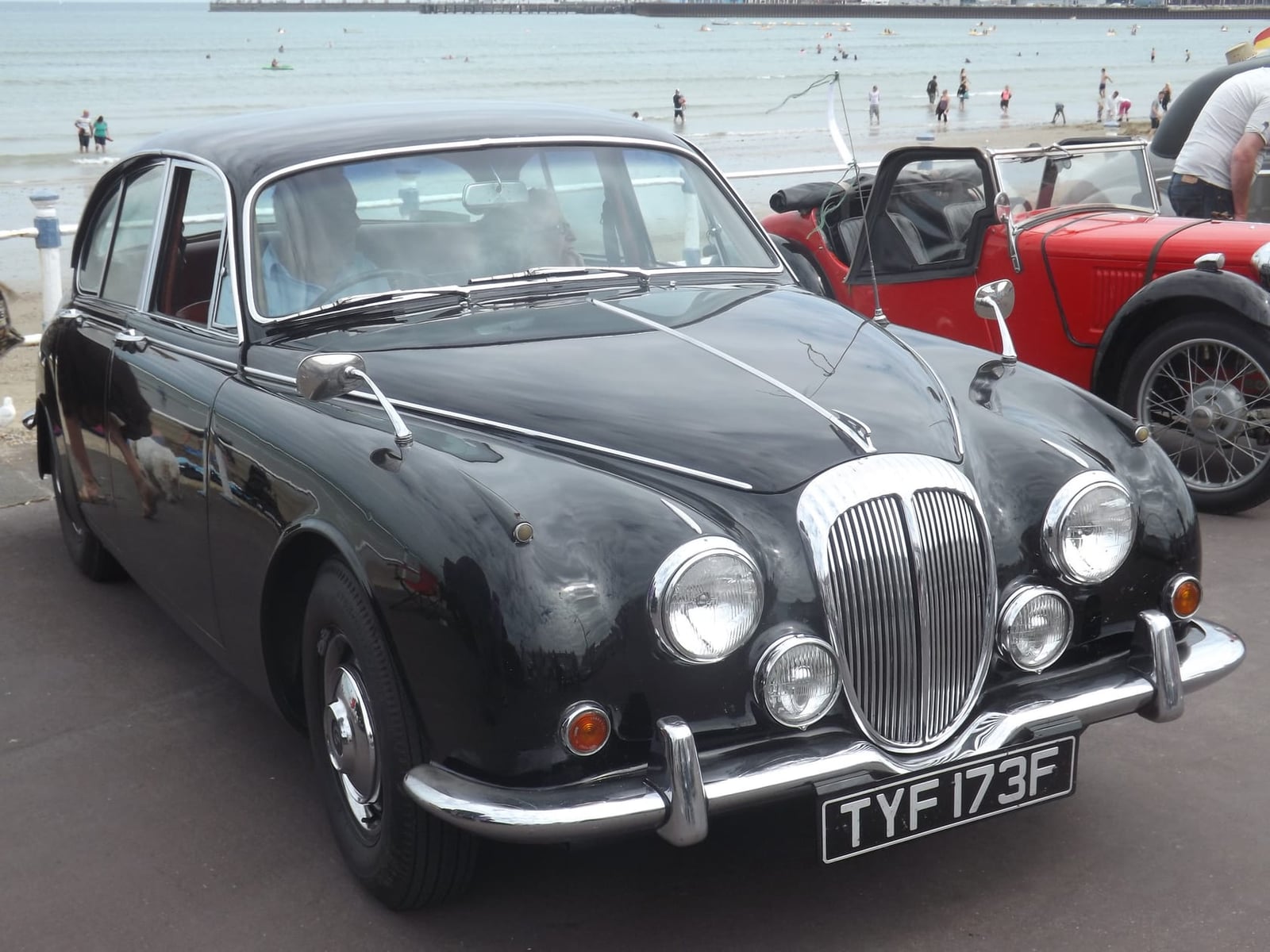
The changes ran deeper than the flutes suggest. Daimler buyers got a split-bench front seat with folding centre armrest where Jaguar fitted buckets, deeper pile and brighter cabin detailing, standard power steering on later cars, and a badge whose royal associations still counted with exactly the solicitors, doctors and mayors the car courted. The wedding and civic trades adopted the model for the same reasons and kept many alive through the lean years, usually in black. Underneath, Jaguar quietly gave the Daimler its own axle ratio and retuned springs to suit the lighter engine, small choices that add up to the different character owners defend so firmly. It was badge engineering done with unusual sincerity, and the buyers could tell.
What a V8 250 is like to drive
The Daimler is the relaxed member of the Mk2 family: the V8 spins willingly to a 112 mph maximum, the automatic suits its nature, and the lighter nose gives the steering a delicacy the six-cylinder cars cannot quite match, all wrapped in the Mk2’s compact, beautifully visible body. It is a car for wafting quickly rather than racing, with the engine note as the standing entertainment, and the rare manual cars sharpen the experience considerably for those lucky enough to find one. Owners who try both families tend to report the same heresy: for real-world road use, the Daimler is the nicer car, and the price difference runs the wrong way.

Buying a V8 250 today
The examination is the Mk2’s: rust in sills, floors, jacking points, arches, valances and around the front crow’s feet decides everything, because structural repair on these shells outruns the model’s gentle values quickly. The V8 wants evidence of cooling-system health and clean oil, with top-end rattle the warning sign of neglected adjustment, and originality of the Daimler-specific trim, flutes, badging, the split bench, matters to value because those are the parts the Jaguar network cannot supply. A thick history file and club membership in the paperwork are worth paying for at these prices. Parts flow through the Jaguar and Daimler club networks, insurance and thirst sit usefully below the six-cylinder cars, and a sorted example makes an entirely practical high-days classic.

Values: the connoisseur’s discount
Two hundred and thirteen measured sales at a £9,800 median make the Daimler the accessible door to the whole Mk2 shape: projects from £4,000, good cars £9,000 to £18,000, exceptional examples and the rare manuals beyond £25,000, all consistently below equivalent Jaguars. The market has priced badge over balance for decades now, which perfectly suits the buyers who know better, and as Jaguar’s sixties saloons climb year on year, the fluted bargain sitting quietly underneath them keeps looking smarter to everyone paying attention.
More photos
The V8 250 in dates
- 1960Jaguar buys Daimler, inheriting Edward Turner's V8 with nowhere to live.
- 1962The Daimler 2.5 V8 drops the smaller engine into the Mk2 shell with a fluted grille and number-plate surround, a split-bench front seat and richer cabin details.
- 1962 onwardsJaguar gives the Daimler its own axle ratio and retuned springs to suit the lighter engine.
- 1967The facelift brings slimline bumpers, ventilated leather and the V8 250 badge.
- 1969Production ends at 17,880 cars, the best-selling Daimler of all time; Turner's engine retires with it, the last Daimler power unit the company built.
Buying checklist: the V8 250 in front of you
Rust, as on any Mk2
- Sills, floors and jacking points
- Arches, valances and around the front crow's feet
- Structural repair on these shells outruns the model's gentle values quickly
- A thick history file and club membership in the paperwork are worth paying for
The V8
- Evidence of cooling-system health and clean oil
- Top-end rattle is the warning sign of neglected adjustment
- The engine carries less weight over the nose than the XK six, which is the source of the model's reputation
- Almost every car is a Borg-Warner automatic; factory manuals are the collector jackpots
Daimler-specific originality
- Flutes, badging and the split-bench front seat are what the Jaguar network cannot supply
- Later cars have standard power steering; confirm what is fitted
- 1967 onward cars wear slimline bumpers and the V8 250 badge
- Wedding and civic-trade cars, usually black, kept many alive and often carry continuous history
What the V8 250 saloon sells for at auction
In 2025 the median V8 250 saloon sold for £7,776 across 25 sales, 20% down on 2024. In real terms, typical V8 250 saloon prices were down about 33% over the five years to 2025, once inflation is accounted for.
| Variant | Sold | Typical range | Median |
|---|---|---|---|
| V8 250 | 195 | £6,049 - £14,081 | £9,562 |
| 2.5 V8 | 18 | £10,025 - £20,950 | £14,750 |
Show the year-by-year mediansHide the year-by-year medians
| Year | Sold | Median | In 2025 money |
|---|---|---|---|
| 2026 (so far) | 11 | £9,000 | |
| 2025 | 25 | £7,776 | £7,776 |
| 2024 | 13 | £9,775 | £10,150 |
| 2023 | 20 | £11,266 | £12,089 |
| 2022 | 21 | £10,248 | £11,736 |
| 2021 | 21 | £13,500 | £16,694 |
| 2020 | 10 | £9,099 | £11,530 |
| 2019 | 8 | £6,788 | £8,690 |
| 2018 | 14 | £6,275 | £8,169 |
| 2017 | 11 | £12,320 | £16,411 |
| 2016 | 16 | £12,908 | £17,636 |
| 2015 | 6 | £13,440 | £18,547 |
| 2014 | 4 | £7,929 | £10,986 |
| 2013 | 8 | £10,666 | £14,989 |
| 2012 | 3 | £9,562 | £13,745 |
| 2011 | 5 | £5,625 | £8,293 |
| 2009 | 4 | £6,638 | £10,421 |
| 2007 | 4 | £21,562 | £35,722 |
- £3,672V8 250
- £4,872V8 250
- £9,000V8 250
- £9,408V8 250
- £6,000V8 250
Strong evidence. 213 recorded sales and a dozen or more a year: the median and the range are well founded. Based on 213 sold results from public classic car auctions (2004 to 10 August 2026). Sold prices, not asking prices, and not a valuation: condition, history and specification vary from car to car. Inflation-adjusted figures use the ONS CPIH index, in 2025 money.
Frequently asked questions
Is the Daimler V8 250 just a Jaguar Mk2?
What is the difference between the 2.5 V8 and the V8 250?
Why do enthusiasts rate the Daimler V8 over the Jaguar Mk2?
What should I check when buying a Daimler V8 250?
How much is a Daimler V8 250 worth?
What is the most expensive V8 250 saloon ever sold at auction?
How often does a V8 250 saloon come up for sale?
Related across themes
More from Jaguar


Recently added

Rolls-Royce Silver Shadow values: a Rolls for Fiesta money, and why that is the trap

Aston Martin V8 values: twelve badges, a six-fold spread, and a chart that lies

Daimler SP250: the fibreglass V8 the police couldn't catch (1959–1964)
