Wolseley 1500: the Minor in a dinner jacket (1957–1965)
The Wolseley 1500 dressed the Morris Minor floorpan in leather, walnut and the glowing badge, gave the B-series real pace in a light shell, and became one of the friendliest classics of its era. A guide to the 1957–65 saloon, its Riley twin, buying checks and values.
Built 1957–1965 55 recorded sales
At a glance
- Years
- 1957–1965
- Body styles
- Two-door-boot four-door saloon
- Drivetrain
- Front engine, rear-wheel drive
- Engines
- 1489cc BMC B-series
- Power
- About 50 bhp; 43 in some export tunes
- Top speed
- Around 78 mph
- Trim levels
- One luxury specification: leather seats, walnut dash and door cappings
- Production
- About 100,000 plus Irish assembly
- Assembly
- Longbridge, Birmingham
- Designer
- BMC studios over Issigonis Minor foundations
- Values
- Projects from around £1,500; good cars £4,000-£7,000; the best beyond £9,000
- The recipe
- A stretched Morris Minor floorpan, a 1.5-litre B-series and a gentleman's club interior
- The twin
- The sportier Riley One-Point-Five shared everything but carburettors and character
The models
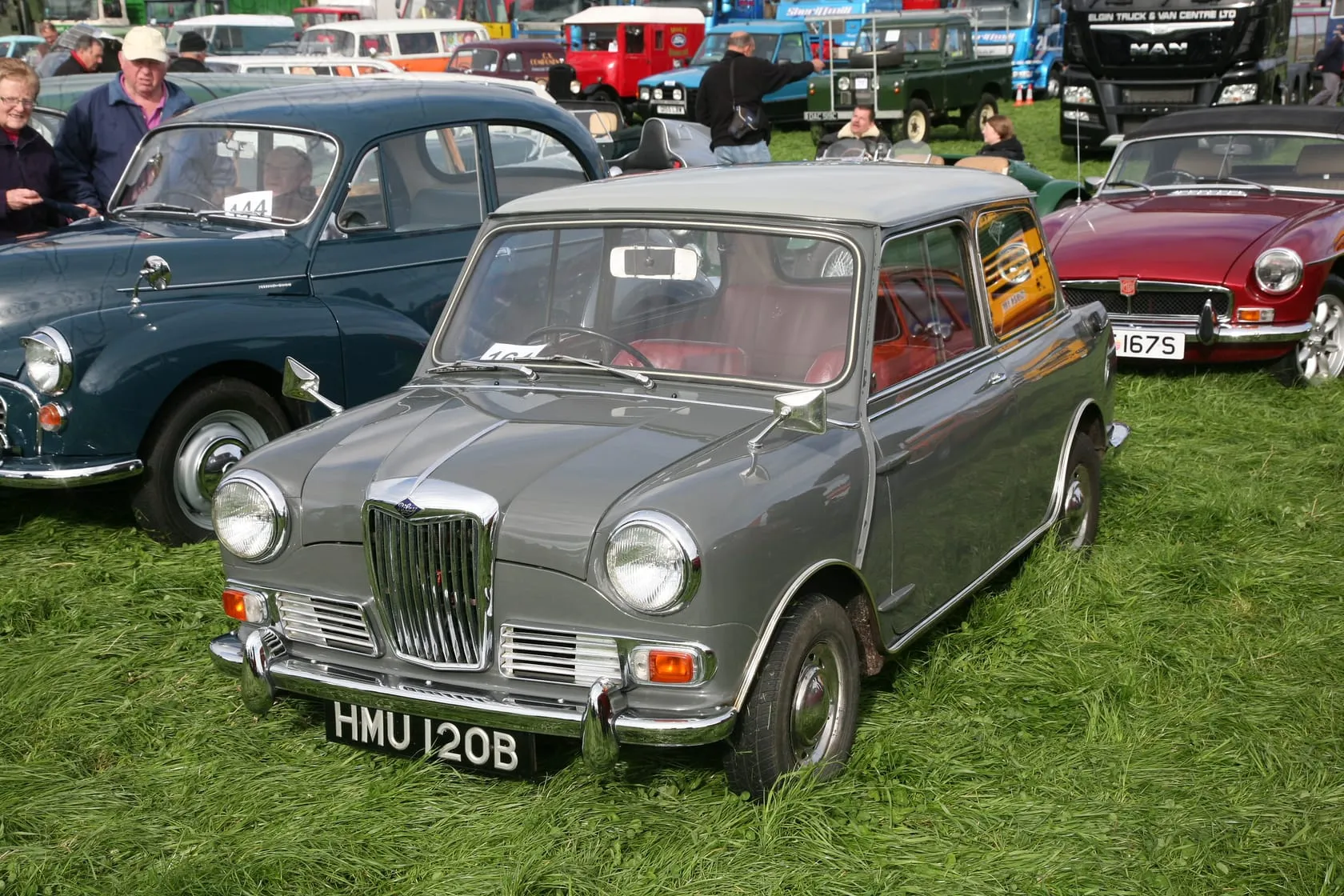
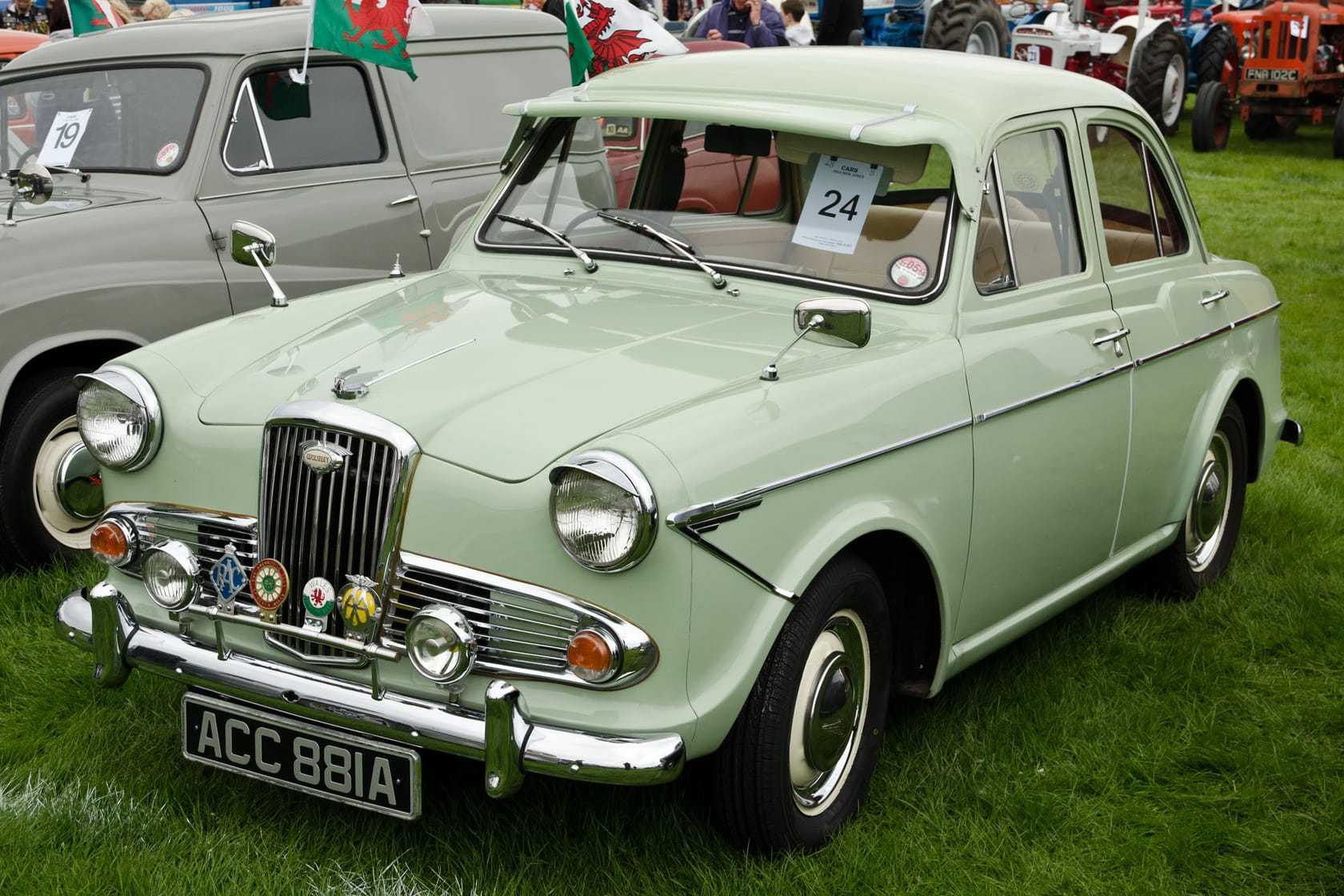
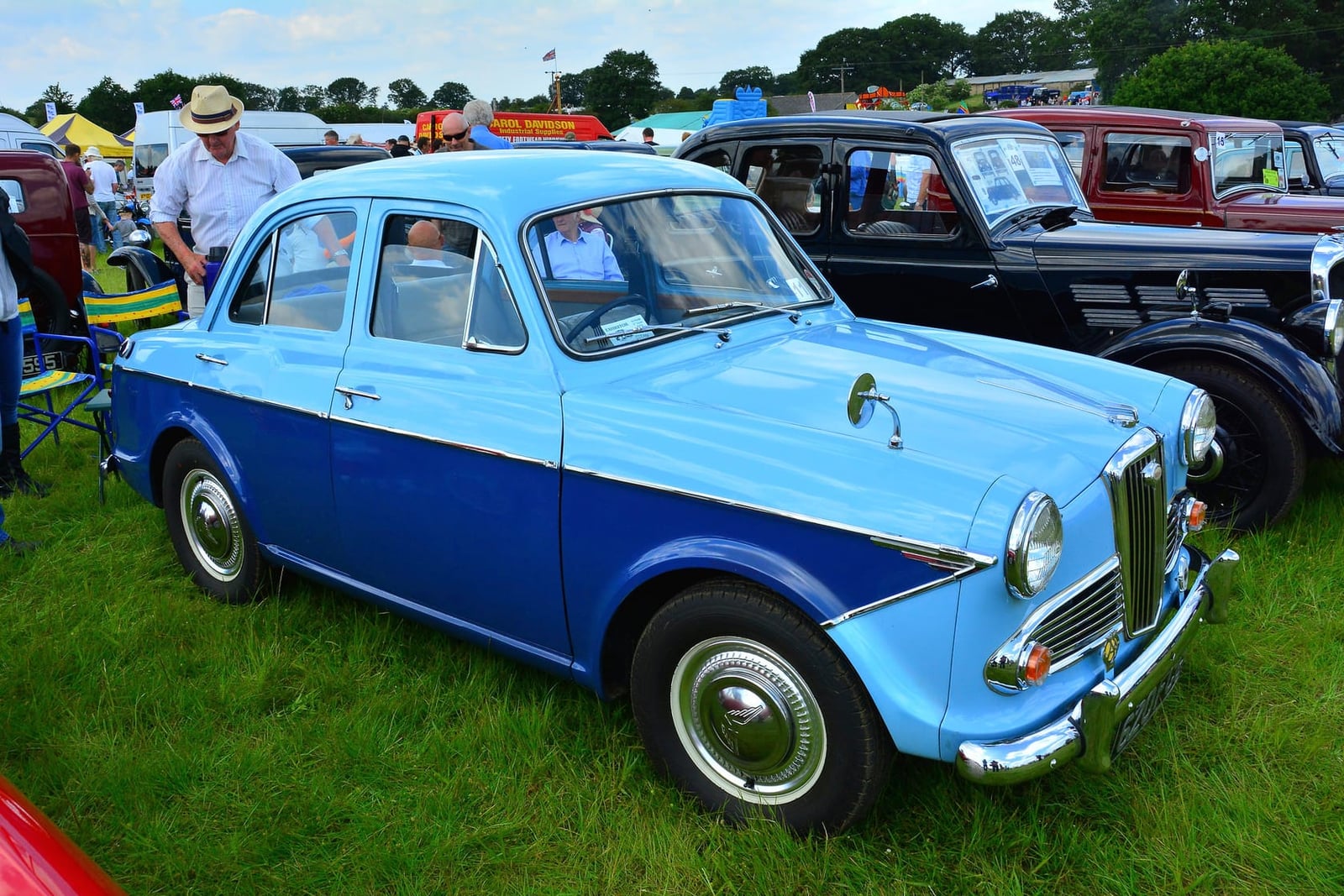
Take a Morris Minor, stretch the floorpan, double the engine, and send the result to a gentleman’s outfitter: that is the Wolseley 1500, and the recipe worked for eight years and roughly 100,000 cars. Launched in 1957 as Wolseley’s compact luxury entry, the 1500 wrapped leather and walnut around the simplest mechanicals BMC owned, and it survives today as one of the cheapest, friendliest routes into fifties classic ownership anywhere in the hobby, with the glowing badge and the club-library interior thrown in at no extra charge.
The recipe: Minor bones, luxury suit
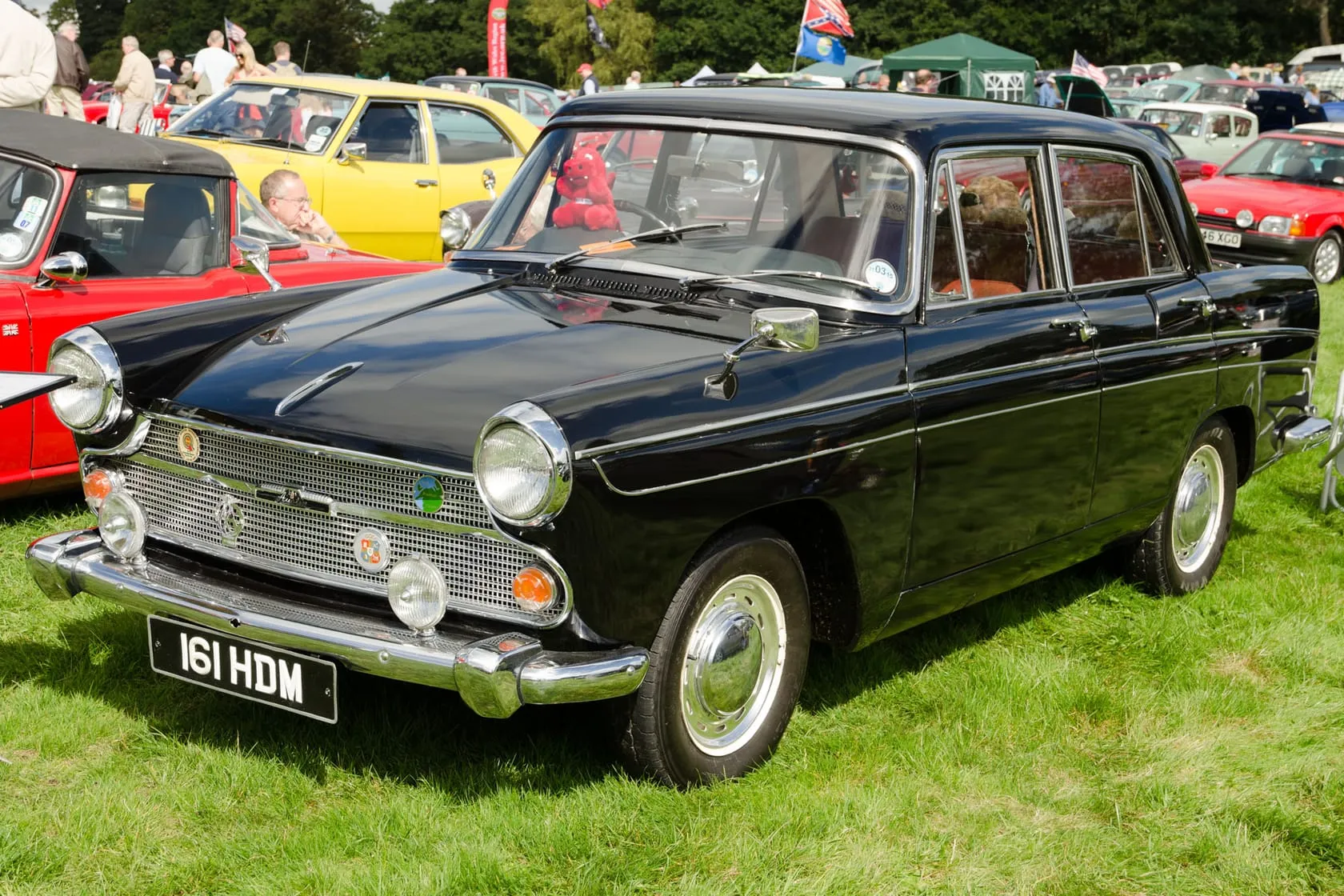
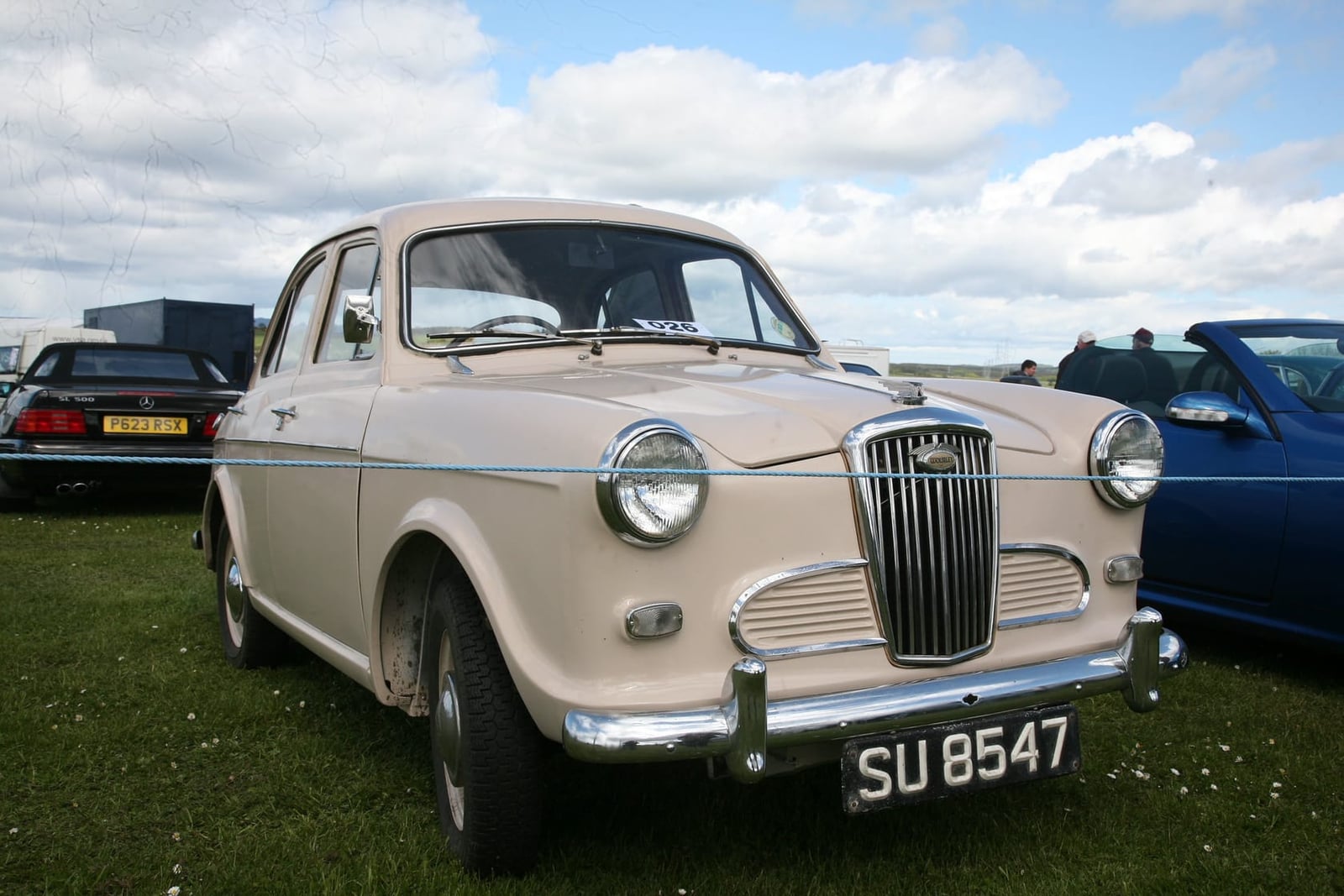
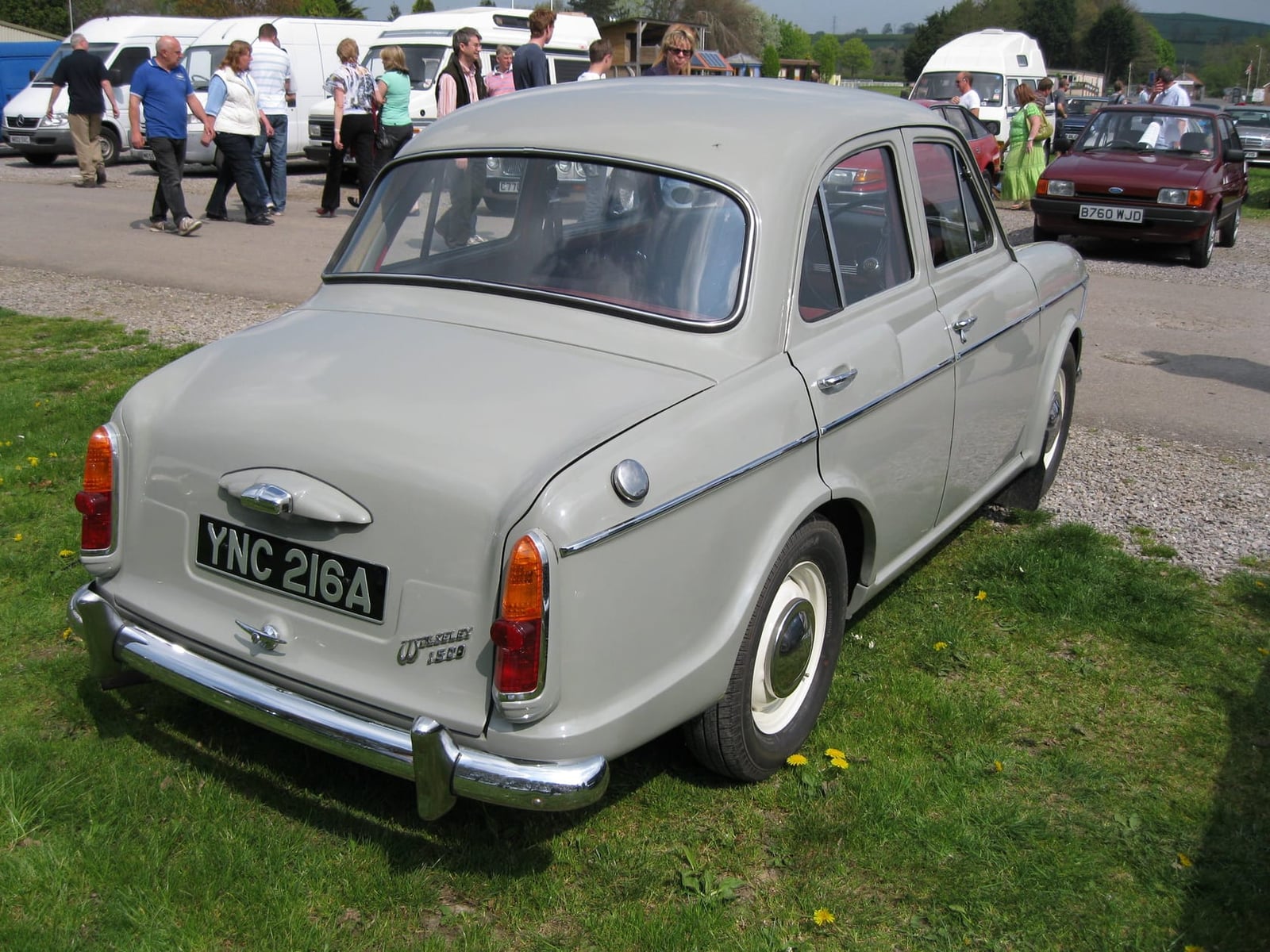
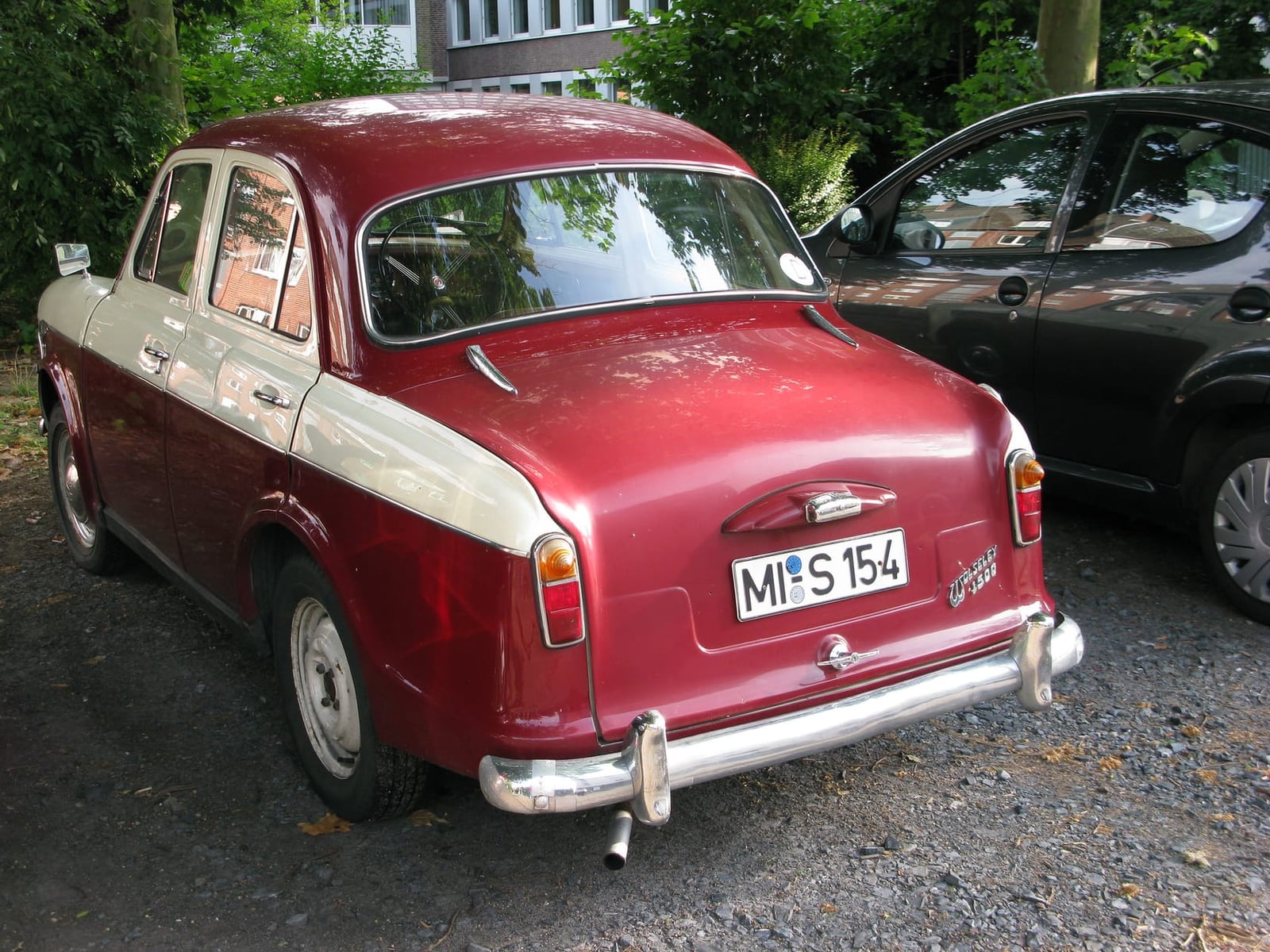
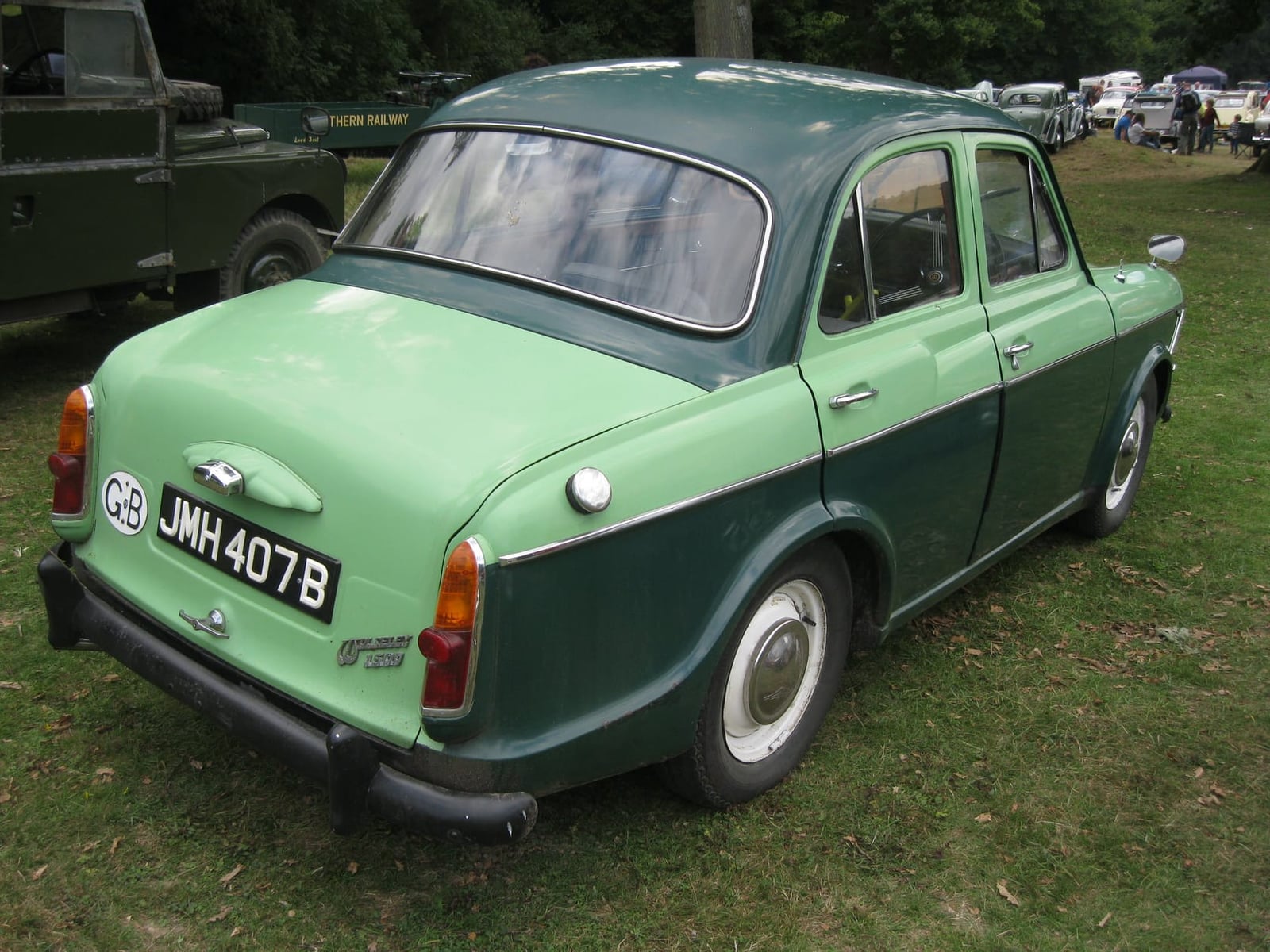
The 1500 began as a Minor replacement project that BMC wisely repurposed: the Morris Minor’s floorpan, rack-and-pinion steering and torsion-bar front suspension carried over almost unchanged, with the 1.5-litre B-series engine and a close-ratio gearbox transforming the performance. Over it went a crisp upright body a foot shorter than the family Farinas, and inside went the Wolseley treatment: leather seats, a walnut dashboard and door cappings, deep carpet and the quiet fittings of a club library. Middle England approved immediately, and the price, comfortably below the big Farina Wolseleys, made the luxury-in-miniature pitch irresistible to exactly the buyers BMC drew on the brochure covers.

The Riley twin and the family
BMC ran its favourite trick: the identical body served the sportier Riley One-Point-Five, twin carburettors lifting it to around 62 bhp against the Wolseley’s single-carb 50, rev counter and racier trim completing the character change. The pairing served two loyal audiences from one tooling bill, and the Riley went on to a club-racing career the Wolseley politely declined, though the shared bones mean a 1500 tuned to Riley specification is a straightforward weekend’s work. Mk II cars of 1960 hid the bonnet and boot hinges, the 1962 Mk III refreshed the details, and production ran to 1965 with Irish-assembled cars adding to the total.

Mark by mark: spotting the differences
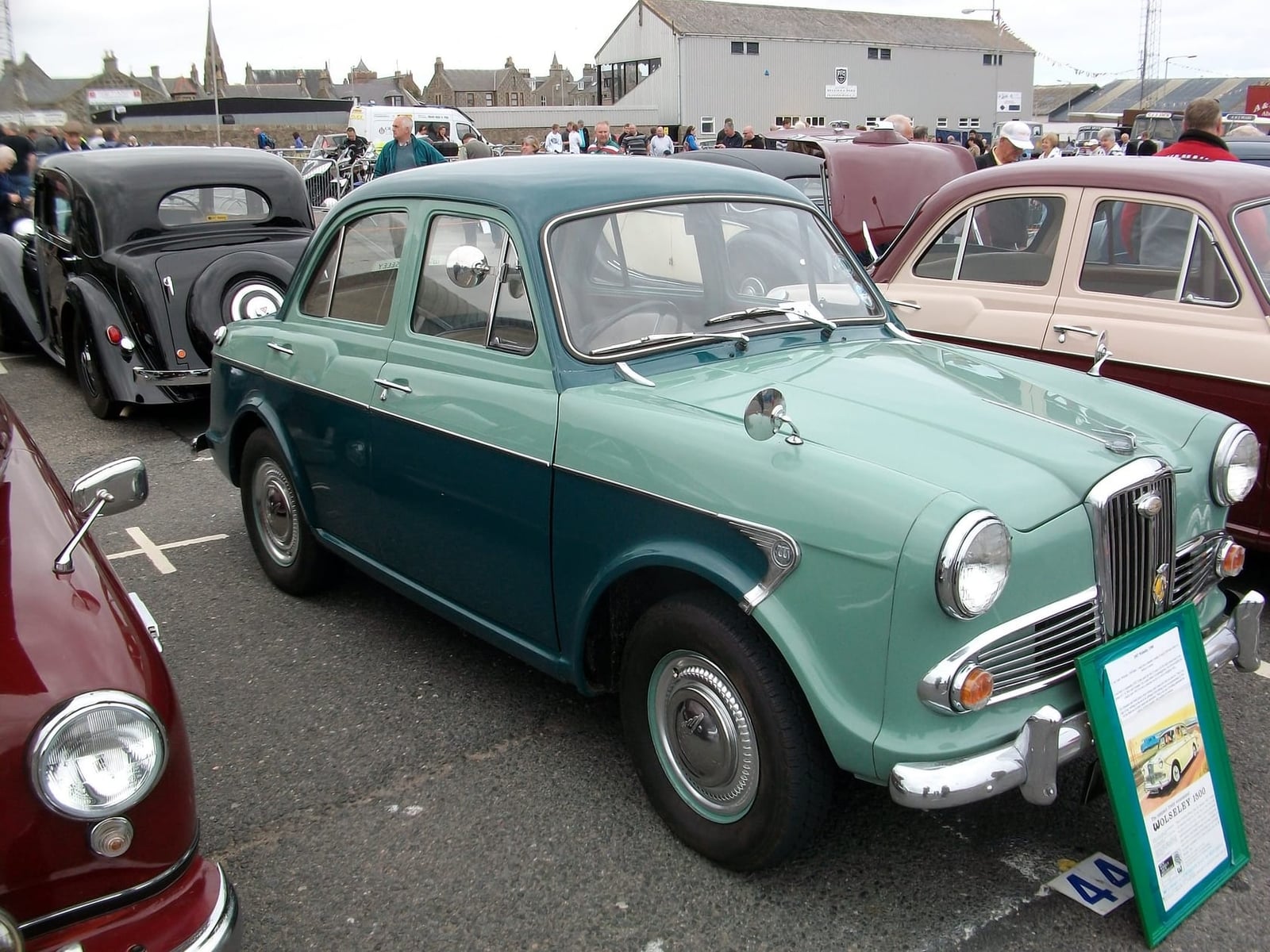
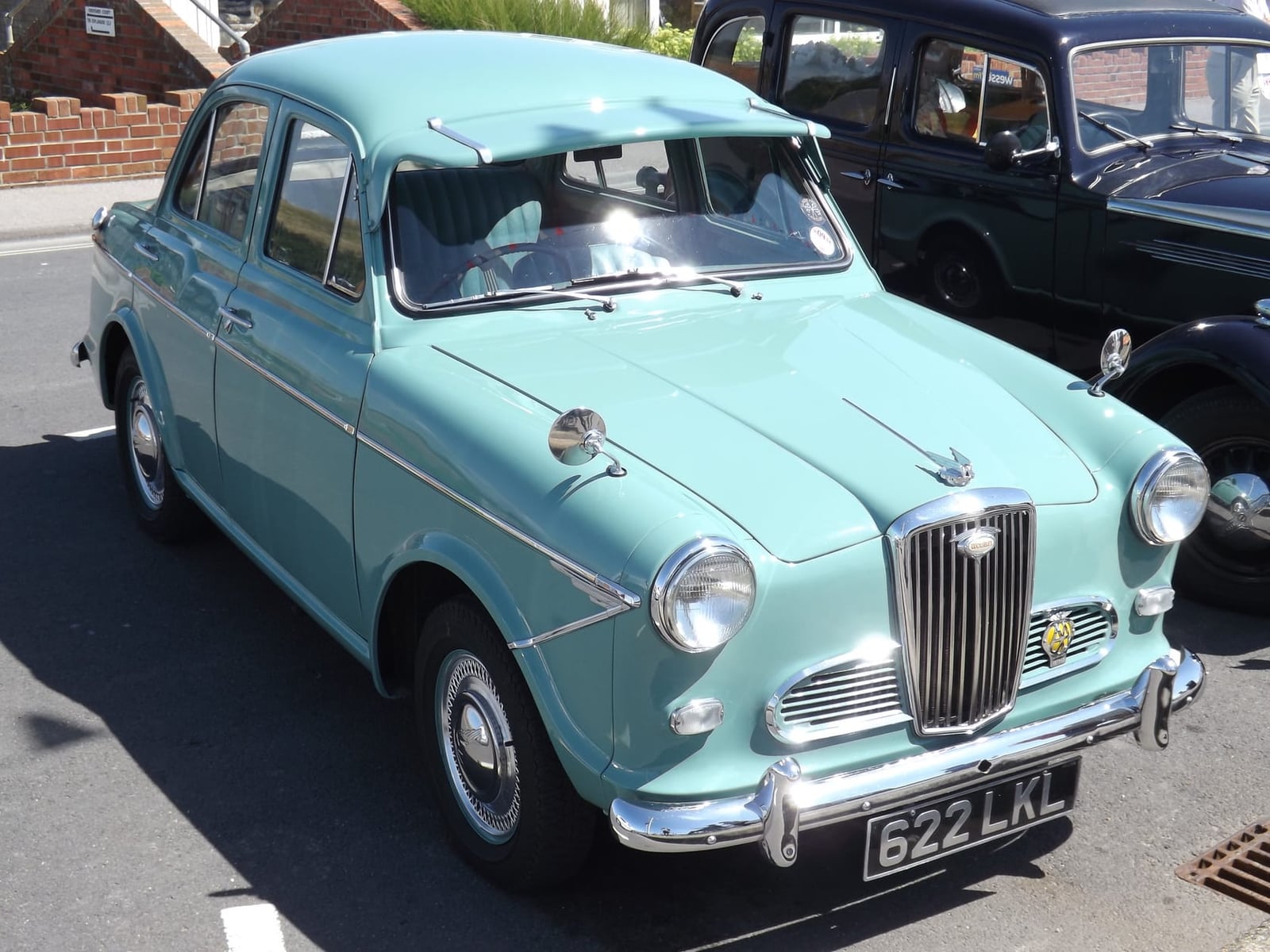
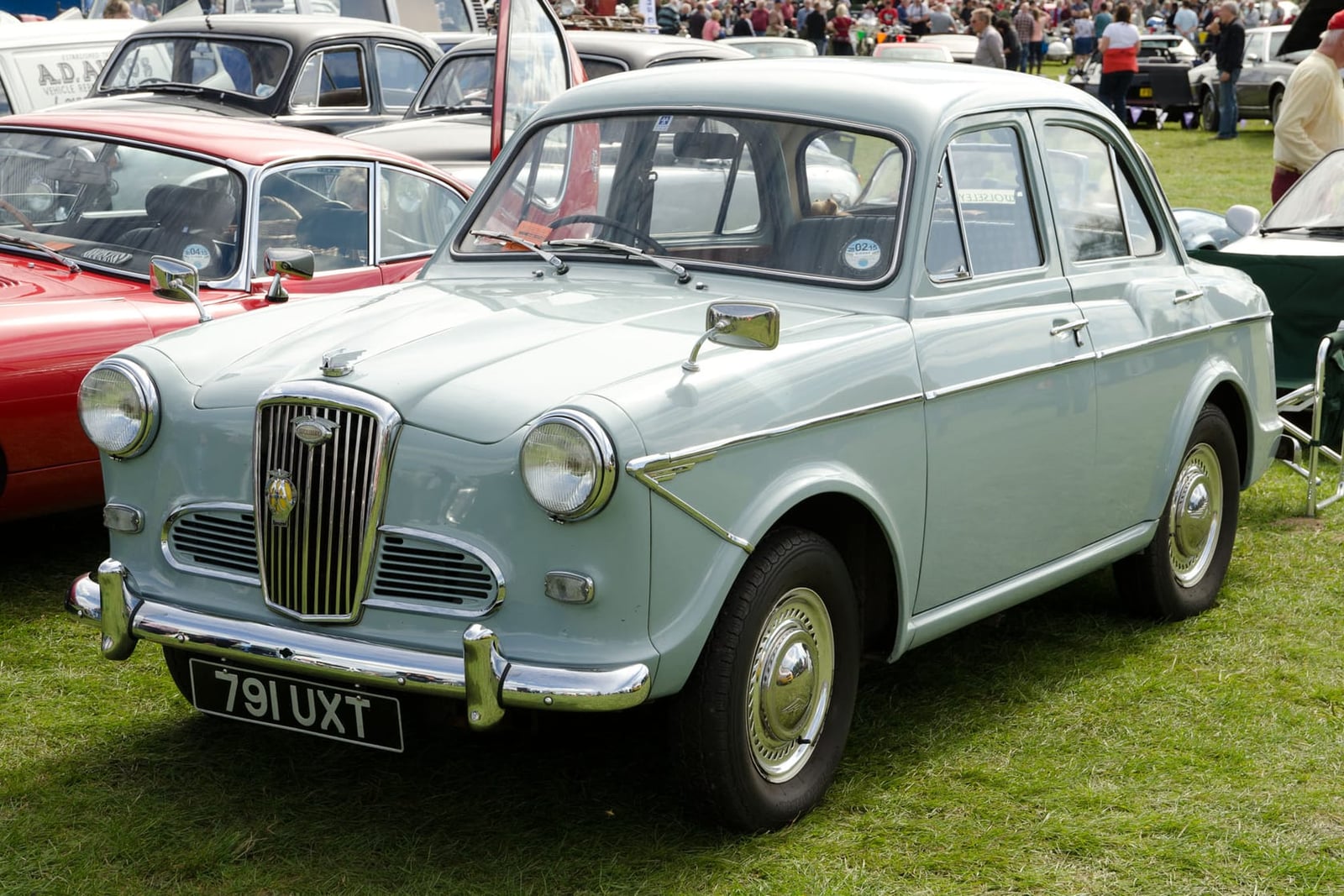
The model’s evolution was gentle enough to summarise on one hand: Mk I cars of 1957–60 wear exposed bonnet and boot hinges and the daintiest brightwork, the 1960 Mk II tucked the hinges away and tidied the cabin, and the 1962 Mk III brought revised lamps, grille details and trim through to the 1965 finish. Irish-assembled cars from the Dublin line add their own footnote to the registers, and a handful of export and police-fleet variations reward the specialist spotter. None of the changes alter the driving experience meaningfully, so buyers can choose on condition first and mark second, though originality-minded collectors gravitate to the crispest Mk I details and the club concours classes reward correct hinges and badging with real point scores.
What a 1500 is like to drive
The Minor’s virtues survive the tailoring intact: light, accurate rack steering, tidy handling on the torsion-bar front end, and a fluency that makes the car feel keener than 50 bhp suggests, because it weighs barely 900 kilograms. Seventy-eight flat out and a relaxed sixty cruise keep it honest on modern roads, the B-series thrums along contentedly on the close-ratio box, and the tall seating and thin pillars give the kind of easy visibility that makes old-car town driving a pleasure rather than a trial, with the walnut and leather turning every errand faintly ceremonial. It is, in the best sense, a Minor with a better suit and longer legs.

Buying a Wolseley 1500 today
Rust decides everything at these values: sills, floors, spring hangers, wing bottoms and the front chassis legs want proper inspection with a torch and a prod, because bodywork bills outrun the market fast and a shiny car over a rotten floor is the classic trap of the breed. Mechanical worries barely exist, the B-series and Minor running gear are cheap, understood and supported everywhere, unleaded conversion is routine, and upgrades from the Minor and MG worlds, front discs, five-speed conversions, taller final drives for motorway work, fit readily for those who want them without offending the club scene. Interiors matter more than paint: complete walnut, sound headlining and presentable leather lift a car’s value further than any respray. The Wolseley Register and the Minor network between them cover every need the model has.

Values: the affordable glow
Fifty-five measured sales at a £3,700 median keep the 1500 among the gentlest classic buys in Britain: projects from £1,500, good cars £4,000 to £7,000, the best under £10,000 even now. The Riley twin typically carries a sporting premium, which makes the Wolseley the value pick of the pair for buyers who prize the badge, the burr and the unhurried manner over twin carburettors. Too few change hands each year to read a trend from with any confidence, but the 1500 remains comfortably inside first-classic budgets. Few classics offer this much character per pound, and fewer still light up their own name at dusk, which settles most arguments on the show field before they begin.
More photos
The 1500 in dates
- 1957Launched as Wolseley's compact luxury entry: the Minor's floorpan, rack steering and torsion bars under a body a foot shorter than the Farinas, with a 1,489cc B-series and a close-ratio gearbox.
- 1957The Riley One-Point-Five shares the body with twin carburettors, around 62 bhp, a rev counter and racier trim.
- 1960The Mk II hides the bonnet and boot hinges and tidies the cabin.
- 1962The Mk III brings revised lamps, grille details and trim.
- 1965Production ends at about 100,000 cars, plus Irish assembly from the Dublin line.
1500: what to check before you buy
Rust, which decides everything
- Sills, floors and spring hangers, with a torch and a prod rather than a glance
- Wing bottoms and the front chassis legs
- Bodywork bills outrun the market fast at these values
- A shiny car over a rotten floor is the trap this breed sets
Interior, which matters more than paint
- Complete walnut dashboard and door cappings
- Sound headlining and presentable leather
- A good interior lifts value further than any respray
- Club concours classes reward correct hinges and badging with real point scores
Mechanical and mark
- B-series and Minor running gear are cheap, understood and supported everywhere
- Unleaded conversion is routine, and Minor and MG upgrades fit readily without offending the clubs
- Mk I cars wear exposed hinges and the daintiest brightwork; originality-minded collectors prefer them
- None of the mark changes alters the driving experience, so choose on condition first
What the Wolseley 1500 sells for at auction
Show the year-by-year mediansHide the year-by-year medians
| Year | Sold | Median | In 2025 money |
|---|---|---|---|
| 2026 (so far) | 4 | £3,410 | |
| 2025 | 7 | £3,510 | £3,510 |
| 2024 | 7 | £4,000 | £4,153 |
| 2023 | 6 | £5,061 | £5,431 |
| 2022 | 8 | £2,808 | £3,216 |
| 2021 | 11 | £3,617 | £4,473 |
| 2016 | 6 | £3,525 | £4,816 |
- £2,0211500
- £1,1001500
- £4,8001500
- £5,0761500
- £2,5071500
Thin evidence. Only 55 recorded sales: read the figures as a sketch of the market, not a price. Based on 55 sold results from public classic car auctions (2016 to 10 August 2026). Sold prices, not asking prices, and not a valuation: condition, history and specification vary from car to car. Inflation-adjusted figures use the ONS CPIH index, in 2025 money.