Lotus Cortina: the saloon Jim Clark drove on three wheels (1963–1970)
The Lotus Cortina put Colin Chapman's twin-cam engine into Ford's family saloon and created the touring-car legend of the 1960s, Jim Clark cornering it on three wheels in every archive reel. A guide to Mk1 and Mk2, the racing record, originality traps and values.
Built 1963–1970 157 recorded sales

At a glance
- Years
- 1963–1970
- Body styles
- Two-door saloon
- Drivetrain
- Front engine, rear-wheel drive
- Engines
- 1558cc Lotus twin-cam four
- Power
- 105 bhp (road trim)
- Top speed
- Around 108 mph
- Trim levels
- Mk1 (A-frame then leaf-spring rear); Mk2 (Dagenham-built)
- Production
- About 3,300 Mk1 and 4,000 Mk2
- Assembly
- Cheshunt (Mk1); Dagenham (Mk2)
- Designer
- Colin Chapman's Lotus engineering on Ford's Cortina shell
- Values
- Good Mk1s £35,000-£60,000; Mk2s from around £25,000; genuine race history beyond
- The image
- Jim Clark, inside front wheel in the air, defining 1960s saloon racing
- The livery
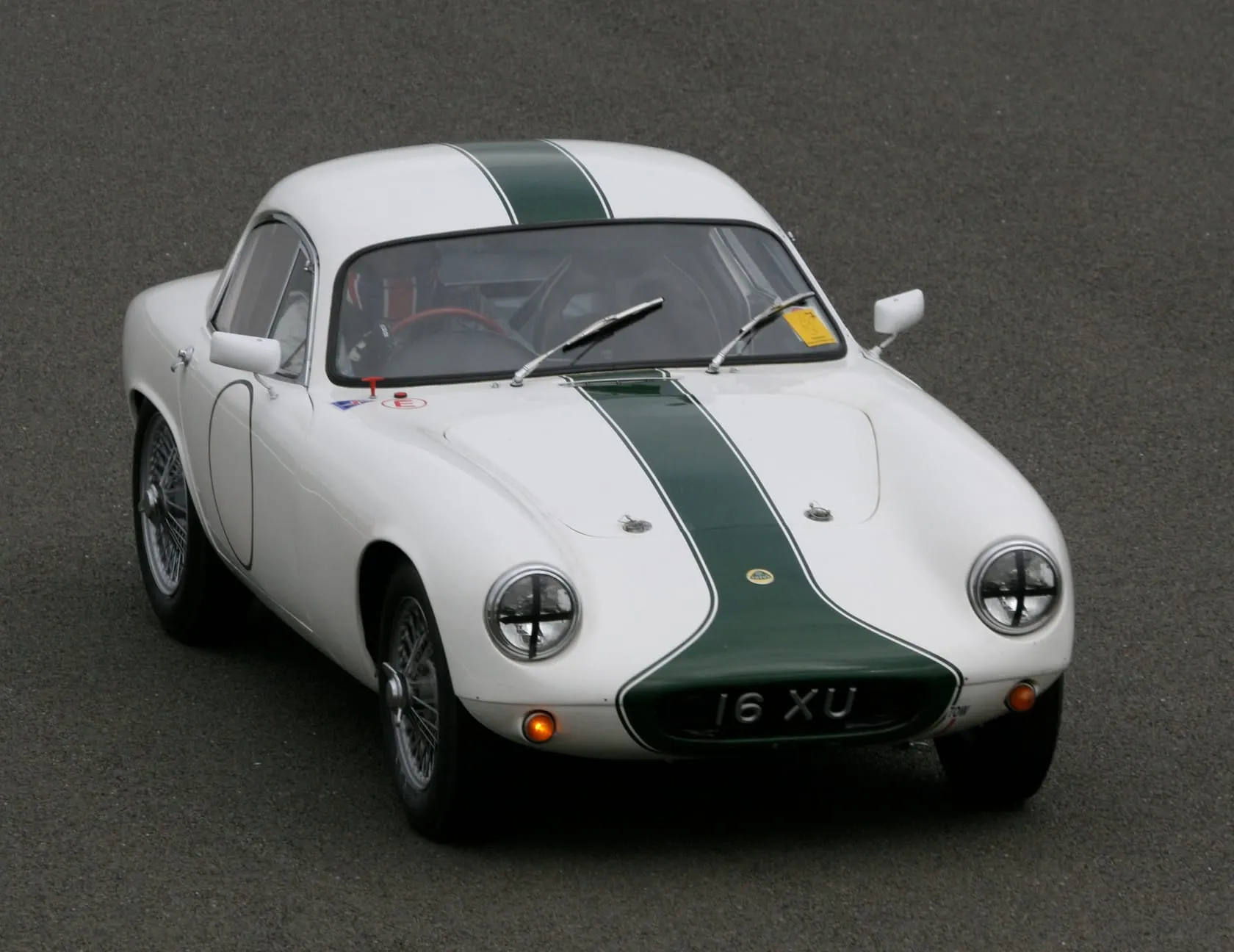
- Ermine white with Sherwood green flash, the most famous two-tone in British racing
The models
Two great British institutions shook hands in 1963 and accidentally invented the fast saloon’s single most famous image. Ford wanted its Cortina homologated for racing; Lotus wanted a volume contract; and the Lotus Cortina that resulted spent the decade cornering on three wheels with Jim Clark at the work, winning championships and selling the idea that a family box could be a racing car. Sixty years on it remains the most valuable Cortina of all, and the shortest sentence in fast-saloon history: white car, green stripe, wheel in the air.
The twin-cam in the Ford shell
The recipe was Colin Chapman doing what he did to other people’s cars: the 1558cc Lotus twin-cam (the Elan’s engine) into the two-door Cortina shell, a close-ratio box, lowered suspension with the ambitious A-frame rear end, aluminium skins on the first cars, and the Ermine-and-Sherwood livery. Cheshunt assembled the Mk1s on the same site as the sports cars, hand finishing included, and Ford dealers sold a 105 bhp saloon that revved like a racer because in every part that mattered it was one. The A-frame’s teething troubles brought leaf springs by 1965, sacrificing purity for reliability nobody now regrets.

Clark, three wheels and the legend
Homologation done, the works cars went racing and made history weekly: Jim Clark took the 1964 British Saloon Car Championship with the inside front wheel airborne through every televised corner, Sears and Whitmore added wins across Europe, and the white-and-green attitude became the sixties’ defining saloon-car image. The competition record hallmarked the road cars permanently, and a period racing history remains the single biggest value multiplier a Lotus Cortina can carry, with Goodwood grids still fighting over the surviving works cars every September.

Mk2: Dagenham civilises the recipe
The 1967 Mk2 brought the twin-cam formula into the new Cortina body, built at Dagenham alongside the 1600E and GT it increasingly resembled: quieter, better-trimmed, badged Cortina Lotus, and easier to live with in every way that dulled the legend slightly. Around 4,000 were built to 1970, when the twin-cam torch passed to the Escort. The Mk2’s civility now reads as value: the same engine and badge lineage at half Mk1 money, and the pick for owners who intend to drive rather than exhibit.

Aeroflow, batches and the spotting guide
Mk1 lore rewards detail. The earliest cars carry aluminium doors, bonnet and bootlid plus the A-frame rear; 1964’s Aeroflow facelift brought the vented dashboard era; and by 1965 steel panels and leaf springs standardised the recipe the racing cars had already proven. Colours never varied: every Mk1 left in Ermine White with the Sherwood Green flash, which makes any other scheme a repaint by definition. Quarter bumpers, split front bumpers and green-badged wheels complete the spotter’s checklist, and the registers can match most surviving shells to build records, the single most valuable check a buyer can commission.

What a Lotus Cortina is like to drive
The period magic still works. The twin-cam pulls hard past 4,000 rpm with a bark no pushrod Ford matches, the gearchange snicks, and the chassis balances into corners with the tail-happy adjustability that made the racing photographs. It is quick enough to enjoy modern A-roads and raw enough to make 60 mph feel like sport, with the close-ratio gearbox insisting on involvement at every junction. Weekend touring, historic rallying and Goodwood-adjacent showing off all suit it equally. Leaf-spring cars ride better than A-frame purism suggests; Mk2s add refinement without losing the engine’s character. Few classics deliver their myth this directly.

Buying a Lotus Cortina today
Authenticity is the market: genuine cars carry identifiable shell details, engine numbers and history, and the clubs plus marque registers can verify most survivors, so use them before money moves, because well-built replicas outnumber real cars in the classifieds. Then the usual Cortina structure checks, sills, legs, arches, plus twin-cam health: chain rattle, oil pressure and evidence of specialist care. A-frame Mk1s deserve axle-locating inspection. Documented originality costs double and is worth treble; the £25,000 lookalike is only ever a lookalike.

Values: the championship premium
At a measured median of £34,500 across 157 sales, with good Mk1s £35,000 to £60,000, race-history cars beyond and Mk2s from £25,000, the Lotus Cortina prices its legend rationally: below the exotics it beat on track, far above the saloons it resembles. The 1960s built no more influential fast saloon, every homologation special since owing it the template, and the white car with the green flash remains the shortest route from family-car body to racing history that British motoring ever offered.

More photos


Lotus Cortina: the short history
- 1963The 1558cc Lotus twin-cam goes into the two-door Cortina shell, assembled at Cheshunt alongside the sports cars, with aluminium skins and the A-frame rear end.
- 1964Jim Clark takes the British Saloon Car Championship with the inside front wheel airborne through every televised corner.
- 1964The Aeroflow facelift brings in the vented dashboard era.
- 1965Steel panels and leaf springs replace the aluminium skins and the troublesome A-frame, sacrificing purity for reliability nobody now regrets.
- 1967The Mk2 moves the recipe to Dagenham, quieter and better trimmed, badged Cortina Lotus.
- 1970Production ends after around 4,000 Mk2s, and the twin-cam torch passes to the Escort.
The Lotus Cortina viewing checklist
Authenticity, which is the market
- The clubs and registers verify most survivors, so use them before money moves
- Well-built replicas outnumber real cars in the classifieds
- Every Mk1 left in Ermine White with the Sherwood Green flash, so any other scheme is a repaint by definition
Spotting a genuine Mk1
- The earliest cars carry aluminium doors, bonnet and bootlid plus the A-frame rear
- Quarter bumpers, split front bumpers and green-badged wheels complete the spotter's list
- By 1965 steel panels and leaf springs had standardised the recipe
Structure and twin-cam health
- Sills, chassis legs and arches, as on every Cortina of the era
- Chain rattle, oil pressure and evidence of specialist care on the twin-cam
- A-frame Mk1s deserve an axle-locating inspection
What the Lotus Cortina sells for at auction
In 2025 the median Lotus Cortina sold for £28,750 across 13 sales, 17% down on 2024. In real terms, typical Lotus Cortina prices were down about 45% over the five years to 2025, once inflation is accounted for.
| Variant | Sold | Typical range | Median |
|---|---|---|---|
| Lotus Cortina | 133 | £24,656 - £47,040 | £34,500 |
| Lotus Cortina Competition | 16 | £32,924 - £95,975 | £57,439 |
| Lotus Cortina Replica | 8 | £14,025 - £28,656 | £21,282 |
Show the year-by-year mediansHide the year-by-year medians
| Year | Sold | Median | In 2025 money |
|---|---|---|---|
| 2026 (so far) | 7 | £26,333 | |
| 2025 | 13 | £28,750 | £28,750 |
| 2024 | 12 | £34,718 | £36,050 |
| 2023 | 11 | £32,625 | £35,010 |
| 2022 | 10 | £35,351 | £40,485 |
| 2021 | 9 | £42,560 | £52,628 |
| 2020 | 14 | £41,408 | £52,474 |
| 2019 | 9 | £48,033 | £61,489 |
| 2018 | 16 | £49,438 | £64,362 |
| 2017 | 8 | £37,870 | £50,445 |
| 2016 | 10 | £34,950 | £47,754 |
| 2015 | 7 | £47,040 | £64,915 |
| 2014 | 9 | £32,200 | £44,614 |
| 2013 | 4 | £59,774 | £84,000 |
| 2012 | 3 | £34,500 | £49,594 |
| 2011 | 3 | £21,938 | £32,344 |
| 2010 | 3 | £21,825 | £33,428 |
- £19,000Lotus Cortina
- £32,696Lotus Cortina Competition
- £22,880Lotus Cortina
- £26,333Lotus Cortina
- £21,840Lotus Cortina
Reasonable evidence. 157 recorded sales: enough for the range to mean something, though a few unusual cars can still move a single year's median. Based on 157 sold results from public classic car auctions (2001 to 10 August 2026). Sold prices, not asking prices, and not a valuation: condition, history and specification vary from car to car. Inflation-adjusted figures use the ONS CPIH index, in 2025 money.