Lotus Elan values: Sprint over S4, two-seater over +2, the 26R apart, and fifteen years of standing still
What the Elan sells for at auction
In 2025 the median Elan sold for £18,000 across 53 sales, 8% down on 2024. In real terms, typical Elan prices were down about 37% over the five years to 2025, once inflation is accounted for.
| Variant | Sold | Typical range | Median |
|---|---|---|---|
| Elan | 276 | £15,297 - £28,002 | £21,510 |
| Elan +2S | 80 | £10,542 - £18,716 | £15,004 |
| Elan Sprint | 70 | £20,492 - £33,894 | £29,284 |
| Elan +2 | 64 | £11,238 - £18,706 | £14,025 |
| Elan 26R | 7 | £45,208 - £73,565 | £71,848 |
Show the year-by-year mediansHide the year-by-year medians
| Year | Sold | Median | In 2025 money |
|---|---|---|---|
| 2026 (so far) | 33 | £19,293 | |
| 2025 | 53 | £18,000 | £18,000 |
| 2024 | 36 | £19,531 | £20,280 |
| 2023 | 46 | £23,906 | £25,654 |
| 2022 | 34 | £23,158 | £26,521 |
| 2021 | 49 | £20,839 | £25,769 |
| 2020 | 44 | £22,500 | £28,512 |
| 2019 | 22 | £21,406 | £27,402 |
| 2018 | 26 | £19,302 | £25,130 |
| 2017 | 32 | £22,397 | £29,834 |
| 2016 | 27 | £17,080 | £23,337 |
| 2015 | 21 | £20,720 | £28,594 |
| 2014 | 14 | £20,702 | £28,684 |
| 2013 | 15 | £18,149 | £25,505 |
| 2012 | 12 | £15,938 | £22,910 |
| 2011 | 5 | £20,358 | £30,015 |
| 2010 | 8 | £17,212 | £26,363 |
| 2008 | 3 | £10,406 | £16,659 |
| 2007 | 5 | £7,475 | £12,384 |
| 2006 | 4 | £9,591 | £16,260 |
| 2005 | 3 | £7,130 | £12,392 |
- £15,100Elan +2S
- £11,138Elan +2
- £15,750Elan +2S
- £14,500Elan +2S
- £16,312Elan
Strong evidence. 498 recorded sales and a dozen or more a year: the median and the range are well founded. Based on 498 sold results from public classic car auctions (1995 to 10 August 2026). Sold prices, not asking prices, and not a valuation: condition, history and specification vary from car to car. Inflation-adjusted figures use the ONS CPIH index, in 2025 money.
The Elan is the car that changed what a sports car had to be, and Lotus Elan values have been the same figure for a long time: 498 recorded sales since 1995, about 45 a year lately, at a median of £20,000, with the middle half between £13,700 and £28,000. Seven in ten of the cars offered find a buyer. The spread runs from a £760 project to £164,250 for the Emma Peel car from The Avengers, and the record covers the whole Chapman-era line, the two-seater of 1962 to 1973, the Sprint, the four-seat +2 and the 26R racers, with the front-drive M100 of 1989 to 1995 recorded separately and far below.
The Lotus Elan model guide covers the backbone chassis, the twin-cam, the series and the +2, the M100 and what to check. This page is about the money, and about a market that rose early and has stood still since.
Sprint over the rest, and the +2 a third below
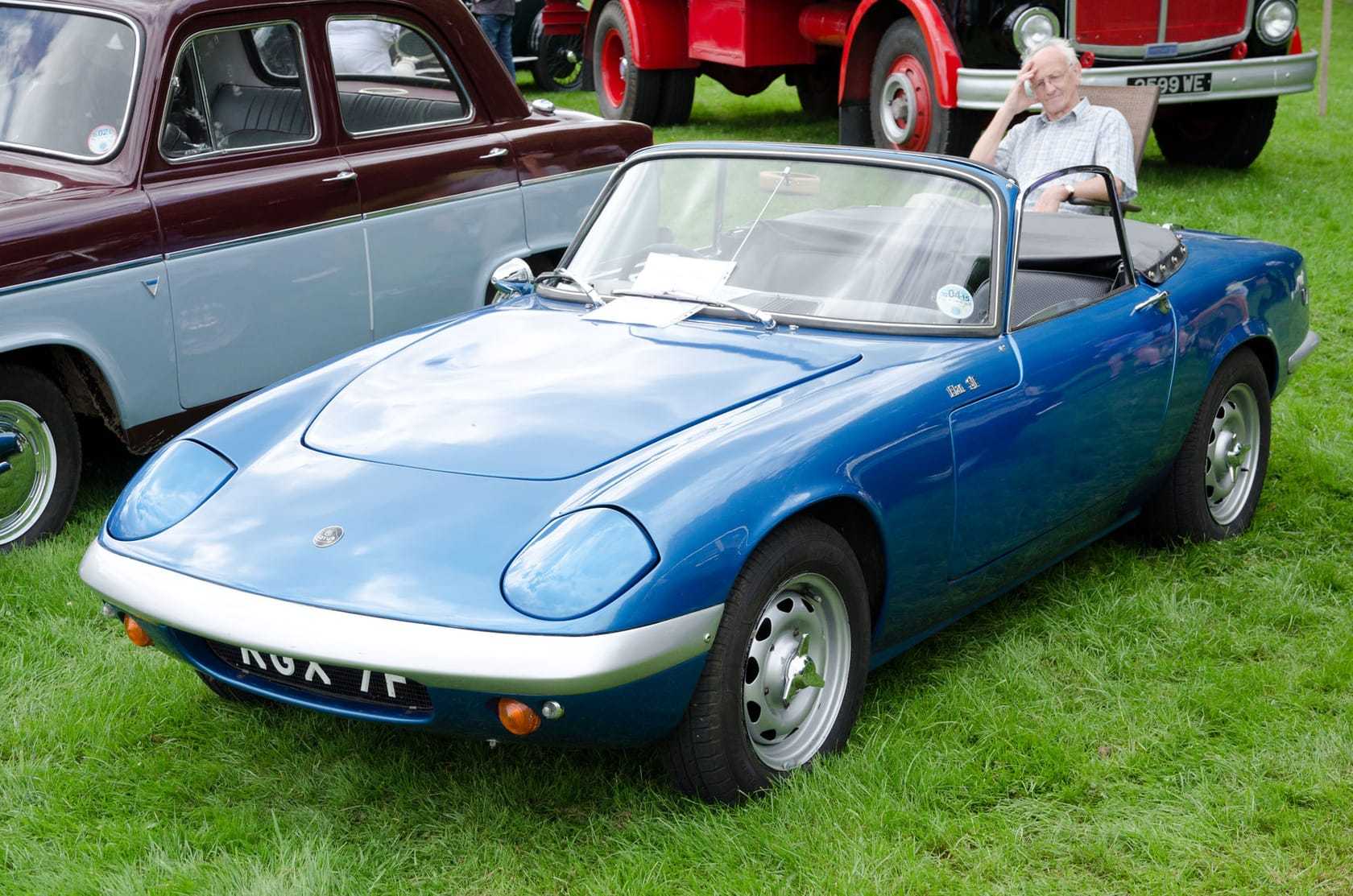
The variant table on this page is short, because the sale rooms rarely narrowed a two-seater Elan beyond its name: 276 of the 498 sales are simply “Elan”, a mixture of S1 to S4 roadsters and fixed-heads, at a median of £21,500. Above them sits the Sprint of 1971 to 1973, the big-valve car with 126 bhp and the two-tone paint, at £29,300 across 70 sales, about a third more; below them the four-seat +2 of 1967 to 1971 at £14,000 across 64 and the +2S of 1969 to 1975 at £15,000 across 80, about a third less. And apart from all of them the 26R, the factory racing Elan of 1964 to 1966, at £71,800 across seven sales, with the best beyond £100,000.
The reasons are the ones the Lotus market has always given. The Sprint is the last and the fastest of the two-seaters and the one with the look; the S3 and S4 are nearly the same car for less; the early S1 with its original features is the rarity, priced on its date rather than its pace and reaching £40,000 to £55,000 when restored. The +2 has the same twin-cam and the same backbone with more room and less lightness, and has trailed the roadster since it was new. Above everything is the Avengers car, the Elan driven by Diana Rigg as Emma Peel, whose £164,250 in 2023 tops the record and describes nothing but itself.
The front-drive M100 of 1989 to 1995, the Elan name’s second life, is not in this record but sits in the same data: 114 recorded sales at a median of about £6,050, less than a third of the original, with the Turbo SE and the S2 at the top of its range and the best cars around £12,000.

What moves the price of an Elan
The chassis rules, as it does the purchase. The original steel backbone rusts around the front crossmember and the suspension towers, and a great many Elans now sit on galvanised replacement chassis; a car with a documented replacement is the better buy for use and sits in the upper half of its range among the users, while a car on a sound original chassis is the one the concours collectors pay for, so establish which you are looking at and price accordingly. Then the twin-cam: the engine is the car’s value, the water pump is the known weakness and an engine-out job on most setups, and a car with a rebuilt engine by a recognised specialist, with the receipts, sells above one with an unknown one.
Then identity and originality. A Sprint is proven by its numbers and its big-valve head, not its stripes; an S1 by its early features, the twin-cam’s early form and the chassis number; a 26R by its history. The correct engine and gearbox, a period colour, a good hood and the right wheels all add, and a history file with the Lotus specialists’ names in it adds more. Glassfibre crazing is cosmetic and the market knows it; a tired interior is not, because a retrim costs a large fraction of the car’s value. Mileage means little on a car that has been apart at least once.

Fifteen years of standing still
The chart shows a car that rose early and stopped. The yearly median was £7,000 to £10,000 through the late 2000s, rose to £17,200 in 2010 and £20,400 in 2011, and has sat between £17,000 and £24,000 ever since: £22,400 in 2017, £22,500 in 2020, £23,900 in 2023, the nominal peak, and then £19,500 in 2024 and £18,000 in 2025, with the 2026 figure so far about £19,300. In cash the Elan has stood still for fifteen years; restated in today’s money it has lost about two-fifths since 2011 and since 2017.
The sample explains a little, with the online auctions bringing more +2s and more projects into the record in recent years, and the rest is the market: the Elan reached its level when the 1960s sports-car boom arrived, and that boom has ended while the buyers for a 1960s Lotus have aged. The later generation’s cars, the Esprit above all, have caught up and passed it, and an Esprit now sells for more than an Elan for the first time. The Sprints and the early S1s have held up; the ordinary S3 and S4 and the +2 have drifted, and a sound +2S is cheaper in real terms than it has been since the 2000s.

Where Elans change hands
The Elan is a British car in a mostly British record. The regional sale rooms, the Lotus specialists and the online platforms all trade them, and a single week at the end of July 2026 shows the range: +2S cars at £14,500 and £15,100 at a Yorkshire sale, a +2 at £11,100 and another +2S at £15,750 at a specialist auction, and a two-seater at £16,300 at a catalogued sale the week before. The Sprints, the S1s and the 26Rs pass through the specialists and the international sales at prices above the recorded range. Whether a recorded price includes the buyer’s premium varies by sale, which is one more reason to read the usual range rather than any single result.

Insuring, restoring, selling
For an agreed-value policy a good two-seater belongs around its median and a Sprint or a restored S1 in the upper half of the range; a 26R is insured on its history, and a +2 at its own figure. On restoration the arithmetic is the model guide’s: Elan restoration costs outrun Elan values at every level short of the Sprint, so the project is for the owner who wants the doing of it, and the sensible buy is the finished car with the chassis and engine paperwork. If you are selling, the chassis photographs and the engine receipts sell the car, the spring is the season, and the honest expectation for an ordinary S4 is its median, not the figure a Sprint fetched.
Related
The Elan sits below the Esprit, which now sells for about a third more, and above the Europa and the Elite in the Lotus range; its rivals in period were the MGB, which sells for a third as much, and the Alfa Romeo Spider. For the decade, see British classic cars of the 1960s. For how all the figures on this site are compiled, see what classic cars sell for.