Ford Capri values: V6 over four, Brooklands and 3.0 S at the top, RS3100 apart, and a market that peaked in 2020
What the Ford Capri sells for at auction
In 2025 the median Ford Capri sold for £14,062 across 83 sales, 13% up on 2024. In real terms, typical Ford Capri prices were down about 45% over the five years to 2025, once inflation is accounted for.
| Variant | Sold | Typical range | Median |
|---|---|---|---|
| Capri Mk III | 88 | £4,565 - £13,130 | £8,850 |
| Capri Mk III 2.8i | 54 | £8,606 - £18,303 | £13,317 |
| Capri Mk III 2.8 Injection | 54 | £8,540 - £17,150 | £12,094 |
| Capri Mk I 3000 | 35 | £13,480 - £23,950 | £19,800 |
| Capri Mk III 2.8 Brooklands | 34 | £19,630 - £35,346 | £24,942 |
| Capri Mk III 3.0 S | 30 | £16,154 - £26,753 | £21,292 |
| Capri Mk I 1600 | 25 | £8,200 - £14,742 | £10,414 |
| Capri Mk I | 22 | £7,670 - £23,952 | £13,761 |
| Capri Mk III 2.0 | 21 | £6,325 - £11,880 | £8,600 |
| Capri Mk III 2.0 Laser | 17 | £7,560 - £14,625 | £11,250 |
| Capri Mk I RS3100 | 15 | £20,880 - £51,952 | £48,375 |
| Capri Mk III 3.0 | 14 | £5,812 - £11,609 | £7,934 |
Show the year-by-year mediansHide the year-by-year medians
| Year | Sold | Median | In 2025 money |
|---|---|---|---|
| 2026 (so far) | 41 | £12,846 | |
| 2025 | 83 | £14,062 | £14,062 |
| 2024 | 77 | £12,400 | £12,876 |
| 2023 | 78 | £9,860 | £10,580 |
| 2022 | 56 | £12,826 | £14,689 |
| 2021 | 58 | £13,305 | £16,452 |
| 2020 | 20 | £20,240 | £25,648 |
| 2019 | 25 | £17,920 | £22,940 |
| 2018 | 24 | £12,260 | £15,961 |
| 2017 | 30 | £18,984 | £25,288 |
| 2016 | 29 | £12,100 | £16,533 |
| 2015 | 10 | £13,056 | £18,017 |
| 2014 | 7 | £14,875 | £20,610 |
| 2013 | 4 | £5,860 | £8,235 |
| 2011 | 3 | £23,000 | £33,910 |
| 2010 | 4 | £25,336 | £38,805 |
| 2007 | 3 | £800 | £1,325 |
| 2006 | 4 | £3,262 | £5,531 |
| 2005 | 3 | £10,575 | £18,380 |
- £15,000Capri Mk III 2.8
- £10,360Capri Mk I 2000
- £20,250Capri Mk III 2.8 Brooklands
- £15,600Capri Mk III
- £10,250Capri Mk III 2.8 Injection
Strong evidence. 566 recorded sales and a dozen or more a year: the median and the range are well founded. Based on 566 sold results from public classic car auctions (2004 to 10 August 2026). Sold prices, not asking prices, and not a valuation: condition, history and specification vary from car to car. Inflation-adjusted figures use the ONS CPIH index, in 2025 money.
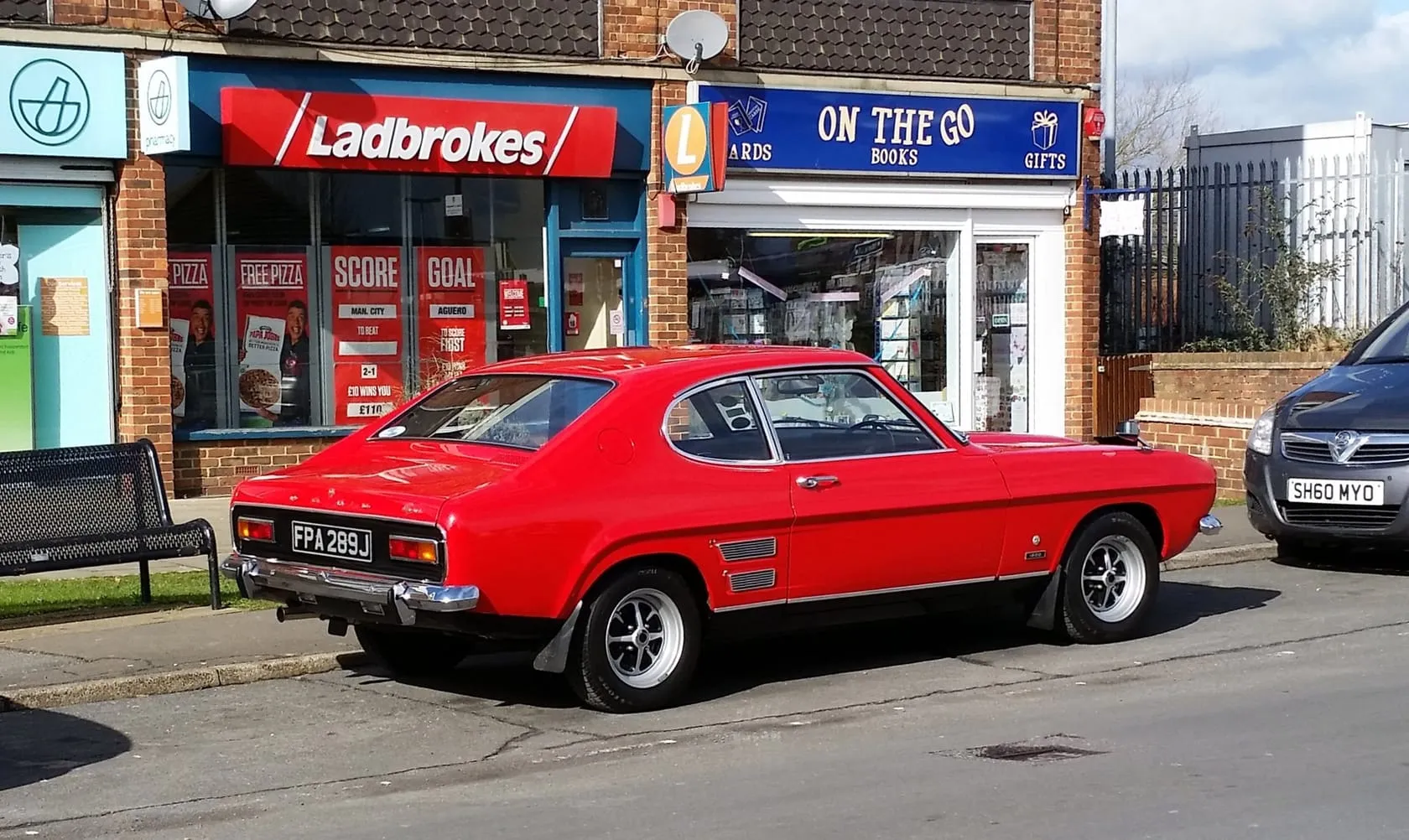
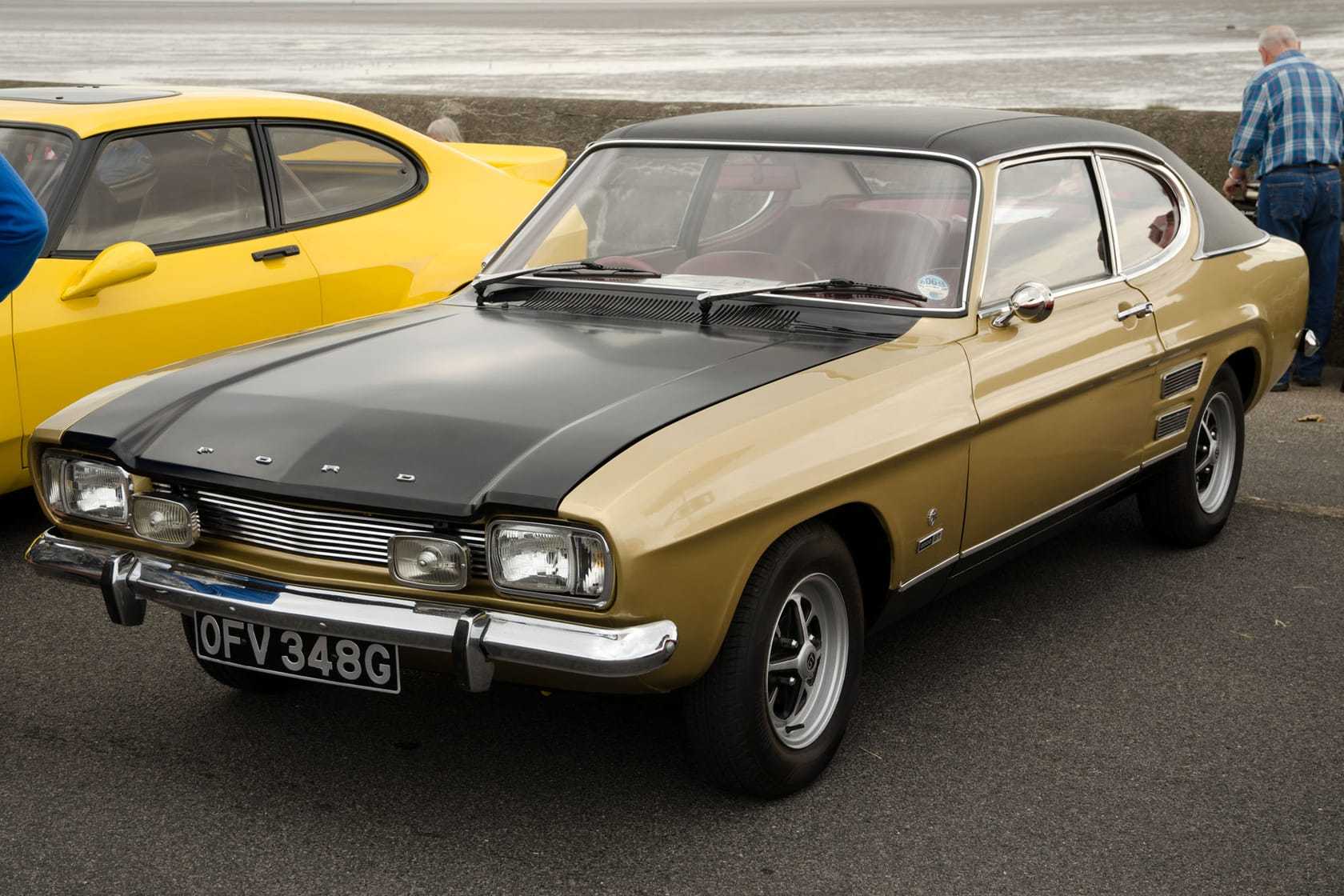
The Capri is the car Ford always promised you, and Ford Capri values are a record with an engine in every line: 566 recorded sales since 2004, about 70 a year lately, at a median of £12,800, with the middle half between £7,800 and £21,800. Seven in ten of the cars offered find a buyer. The spread runs from a £700 project to £186,750 for one exceptional 3.0 S sold in 2023, and the order within it is the order of the engine bay: four-cylinder cars at the bottom, the V6s in the middle, the homologation RS cars at the top and the 280 Brooklands, the Mk1 3000 and the 3.0 S between.
The Ford Capri model guide covers the three marks, the engines, the specials and what to check, and the 2.8 Injection has a page of its own. This page is about the money, and about a market that peaked in 2020 and has been finding its level since.
V6 over four, and the specials on top
The variant table on this page is long because Ford built the Capri in every engine it had, and the market prices them by the cylinder count. The four-cylinder cars sit at the bottom: the Mk3 2.0 at a median of £8,600, the plain Mk3 the source never narrowed at £8,850 across 88 sales, the Mk1 1600 at £10,400 and the run-out Laser of 1984 to 1986 at £11,250. The V6s sit above them: the 2.8 Injection of 1981 to 1986, the most numerous fast Capri and the one most people remember, at about £12,700 across 108 sales under its two names, and the plain Mk3 3.0 at £7,900 across 14, pulled down by projects. Then the specials: the Mk1 3000 of 1969 to 1974 at £19,800 across 35, the Mk3 3.0 S of 1978 to 1981 at £21,300 across 30, and the 280 Brooklands run-out of 1987, 1,038 cars in Brooklands Green with leather, at £24,900 across 34, the highest median of any standard Capri.
Above everything are the homologation cars. The RS3100 of 1973, the British-built answer to the German RS2600 with the bored-out 3.1-litre Essex V6 and the ducktail spoiler, sits at £48,400 across 15 sales with the best at £50,000 and beyond, and the RS2600 sells higher still on the rare occasions one reaches a British sale. The £186,750 that tops the record, for a 3.0 S in 2023, was paid for a car with a history and describes nothing but itself. The Mk2 of 1974 to 1978 is the Capri the market overlooks: too few sales under its own name to make the table, and a good 3.0 Ghia is the cheapest V6 Capri there is.

What moves the price of a Capri
The body, because every Capri rusts and the repair panels cost more than the mechanical parts. The sills, the floors, the front and rear wheel arches, the inner wings, the strut tops, the rear spring hangers and the chassis rails all go, and the Mk2 and Mk3 add the tailgate and its surround; a car with sound sills and arches, with the receipts, sits in the upper half of its range whatever the paint, and a car with filler in them is a project at any price, because a full shell restoration costs more than any Capri short of a Brooklands is worth. The engines, the Pinto fours and the Essex and Cologne V6s, are cheap, simple and well supported and move the price least, though a 2.8 Injection with its original injection and a 3.0 S with its Essex V6 need to be what they say.
Then originality, which matters more on a Capri than on most cheap classics because so many were modified when they were cheap. The correct engine, the right wheels and trim, the stripes and the badges on an S or a Laser, a factory sunroof on a Mk3 and a period colour all add; a bodykit, a later engine or a set of modern wheels take off with the enthusiasts who set the prices. A genuine Brooklands or RS is proven by its chassis and engine numbers, not its badges, and the market treats every RS as a claim. A long history file and a low mileage add more on a Capri than on most classics, because so few survivors have either.

A market that peaked in 2020
The chart shows a boom and a correction. The yearly median rose through the late 2010s, to £19,000 in 2017 and £20,200 in 2020, the peak, when the fast-Ford generation reached collecting age and the online auctions had not yet found the ordinary cars. It fell to £13,300 in 2021, £12,800 in 2022 and £9,900 in 2023, and has recovered to £12,400 in 2024 and £14,100 in 2025, with the 2026 figure so far around £12,800. Restated in today’s money the Capri is worth about 45 per cent less than at its 2020 peak and a little more than it was in 2023.
The sample explains most of it. The record has grown fourfold since 2020, with the online auctions bringing the four-cylinder cars, the Lasers and the projects into a record that once held mostly restored V6s, and a median built on those is a lower figure for the same cars. The specials have held up: the Mk1 3000, the 3.0 S, the Brooklands and the RS cars sit near their figures, while the ordinary 2.8 Injection and the four-cylinder cars have fallen with the market for 1970s and 1980s Fords generally. Against its siblings the Capri now sits below the Escort, whose RS and Mexico cars lift that record, and above the Cortina.

Where Capris change hands
The Capri is a British car in a British record. The regional sale rooms, the fast-Ford specialists and the online platforms all trade them, and a single week at the end of July 2026 shows the range: a Mk3 2.8 at £15,000 and a plain Mk3 at £15,600 at a Yorkshire sale, a 2.8 Injection at £10,250 at the same sale, a Mk1 2000 at £10,360 in the south and a 280 Brooklands at £20,250 at a specialist auction. The RS cars and the best Mk1 3000s pass through the catalogued sales and the specialists at prices above the recorded range. Whether a recorded price includes the buyer’s premium varies by sale, which is one more reason to read the usual range rather than any single result.

Insuring, restoring, selling
For an agreed-value policy a good 2.8 Injection belongs around its median and a restored one in the upper half of the range; a 3.0 S, a Brooklands or a Mk1 3000 sits at its own figure, and an RS is insured on its numbers. On restoration the arithmetic is blunt for the ordinary cars: a full shell restoration costs more than a finished 2.8i is worth, so the project is for the owner who wants the doing of it, and the sensible buy is the car with the body already done. If you are selling, the spring is the season, the photographs that sell a Capri are of the sills, the arches and the strut tops, and the honest expectation for an ordinary 2.8 Injection is its median, not the figure a Brooklands fetched in 2020.
Related
The Capri shared its engines with the Cortina and its showrooms with the Escort, and it now sells for more than the first and less than the second; its rival in period was the Opel Manta, and its spiritual successor nothing Ford has built since. For the decade, see British classic cars of the 1970s. For how all the figures on this site are compiled, see what classic cars sell for.