Ford Cortina Mk3: Detroit hips on a Dagenham saloon (1970–1976)
The Coke-bottle Cortina of 1970 shared its floorpan with the German Taunus, swapped struts and leaf springs for wishbones and coils, brought the Pinto engine and the 2000E, and was Britain's best-selling car by 1972. The range, the period verdicts, what rots, and Mk3 prices at auction.
Built 1970–1976 53 recorded sales
At a glance
- Years
- 1970–1976
- Body styles
- Two-door saloon, four-door saloon, five-door estate
- Drivetrain
- Rear-wheel drive
- Engines
- 1.3 and 1.6 Kent crossflow; 1.6 and 2.0 Pinto overhead-cam
- Power
- 57 to 98 bhp gross at launch, from the 1300 to the 2.0 GXL
- Trim levels
- Base, L, XL, GT, GXL; 2000E from the late-1973 facelift
- Production
- About 1.1 million; Britain's best-selling car in 1972
- Assembly
- Dagenham
- Designer
- Engineered under Harley Copp at Ford's Brentwood centre; floorpan shared with the Taunus TC
- UK survivors
- Roughly a thousand on the DVLA record by third-party counts, taxed and SORN together
- Values
- Around £8,400 median at auction; usable cars from about £5,000, good 2000Es and GXLs £9,000 to £15,000
The models
The Cortina Mk3 is the moment Ford of Britain stopped building a British car and started building a European one with an American face. It went on sale on 23 October 1970 with a body that borrowed its hips from Detroit, a floorpan it shared with the German Taunus, and a chassis that threw out almost everything the Cortina Mk2 had used. Contemporary testers were not sure about the cabin. Buyers had no doubts at all, and by 1972 it was the best-selling car in the country.
Detroit lines, a shared floorpan
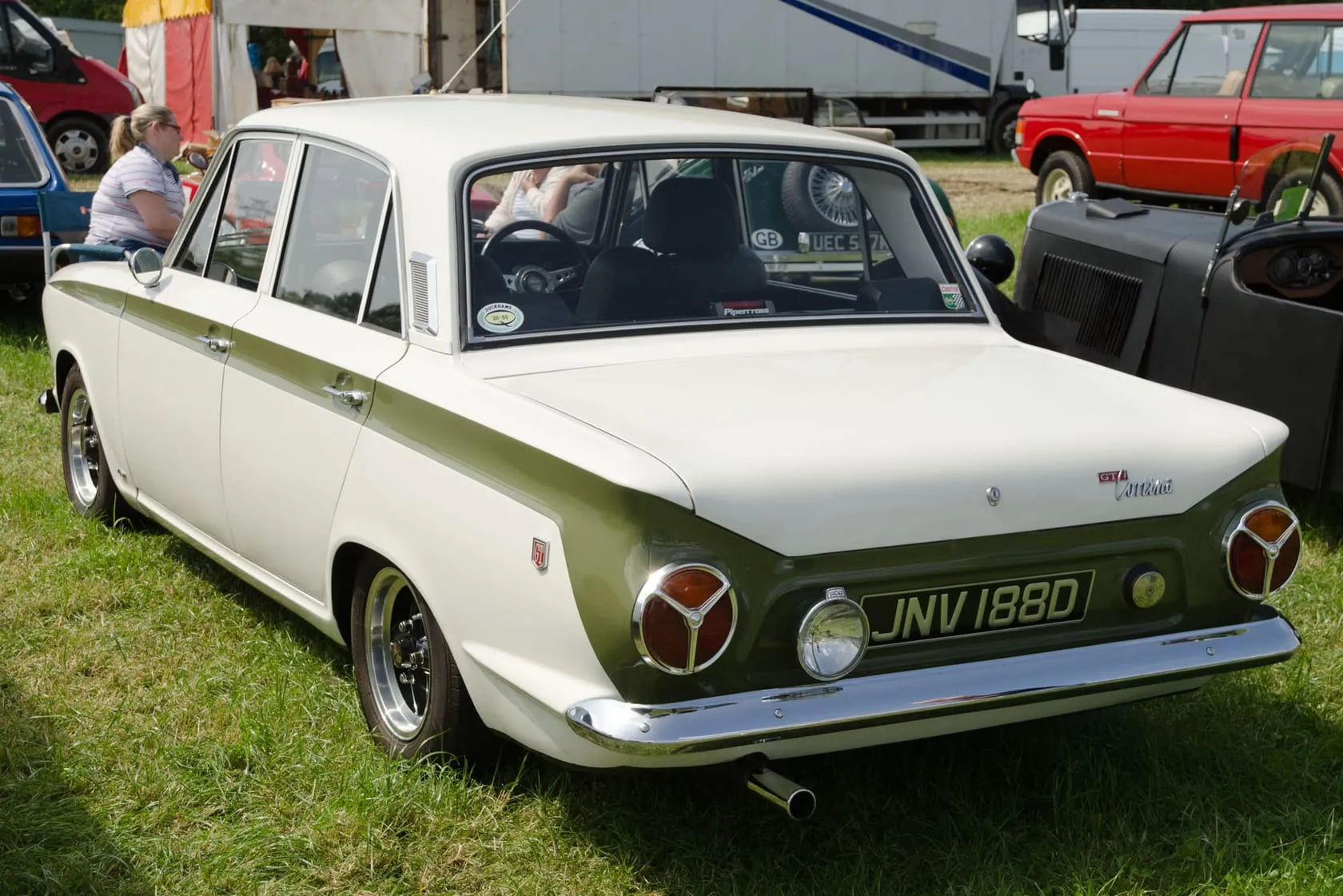
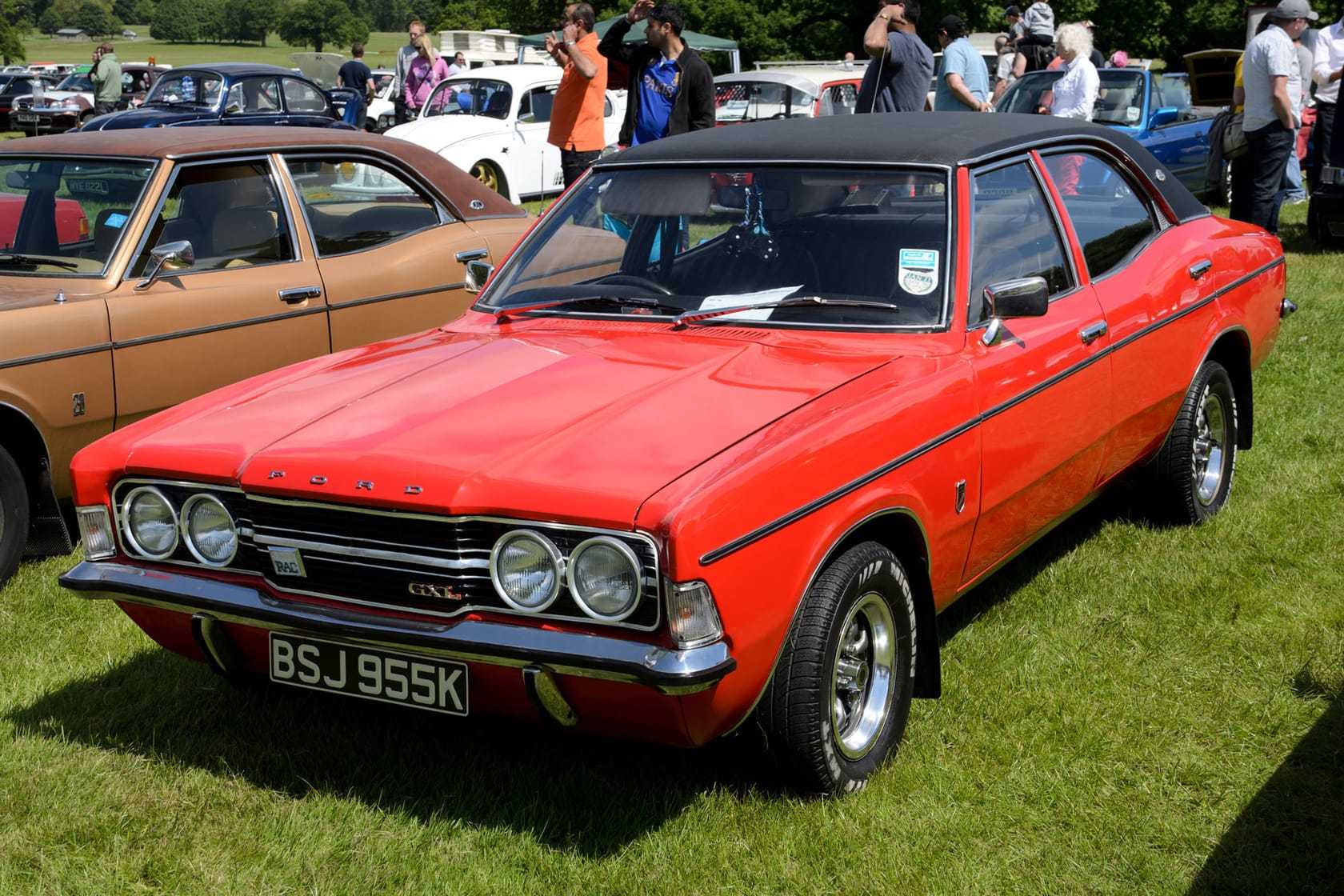
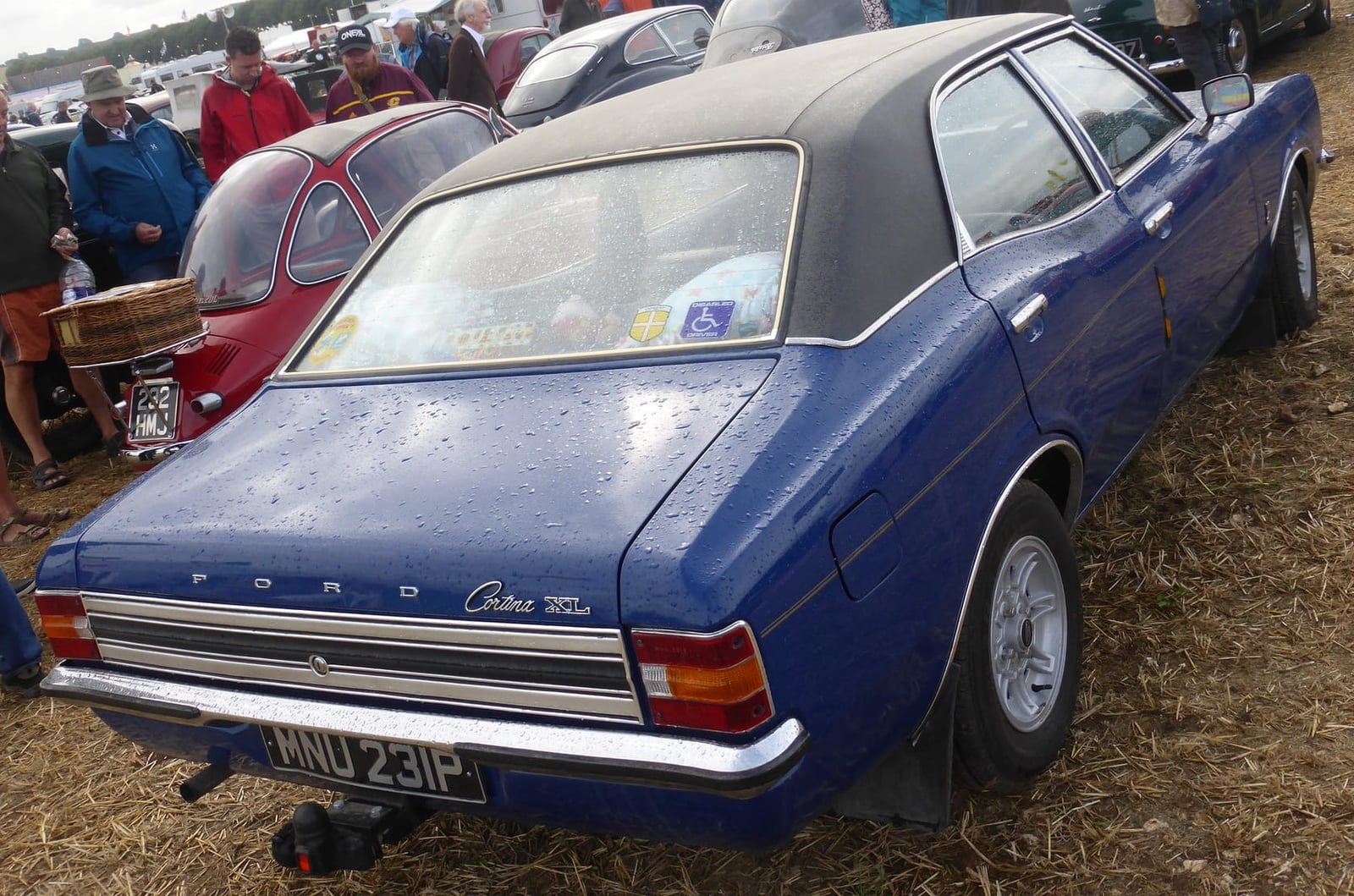
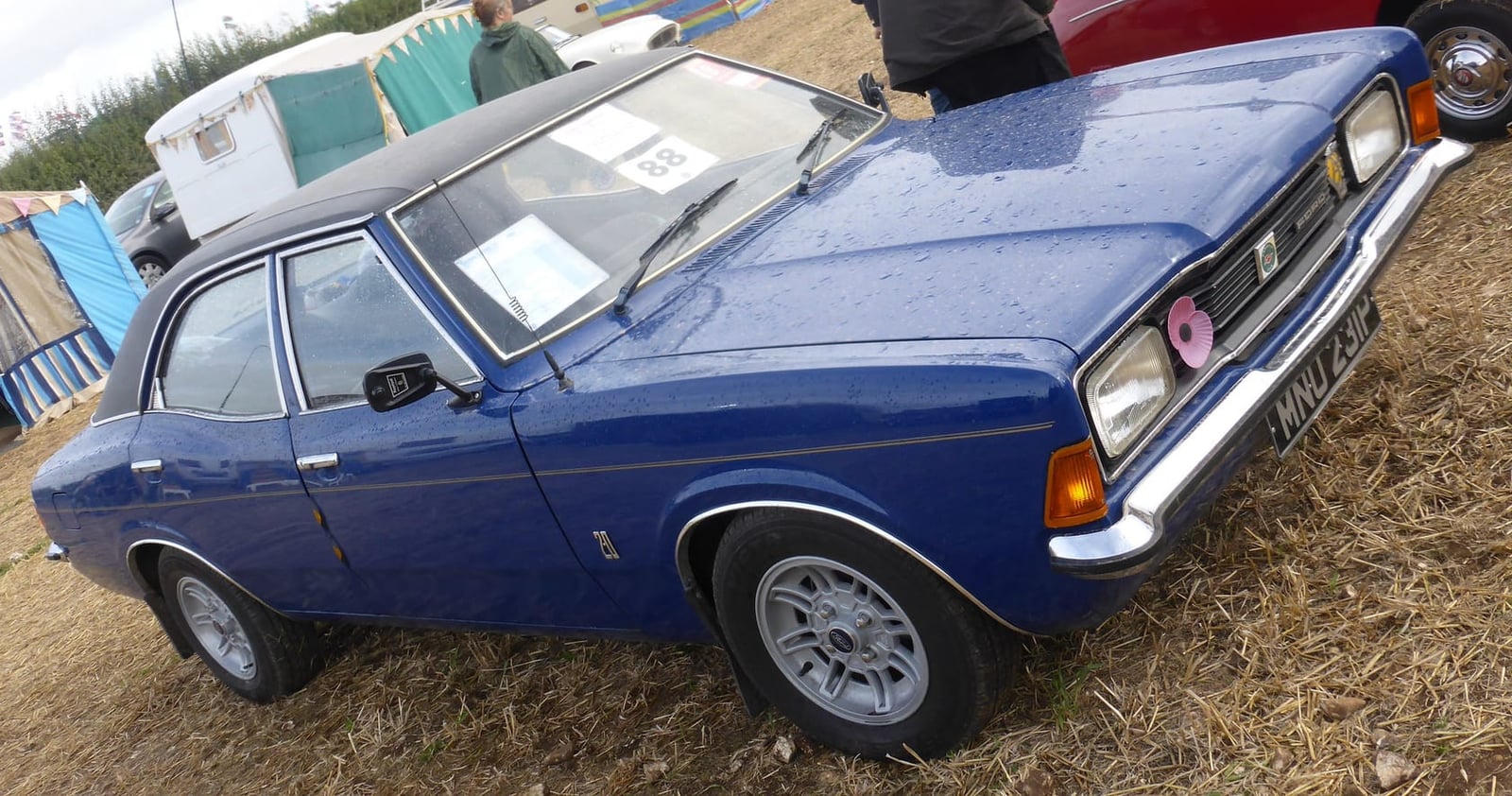
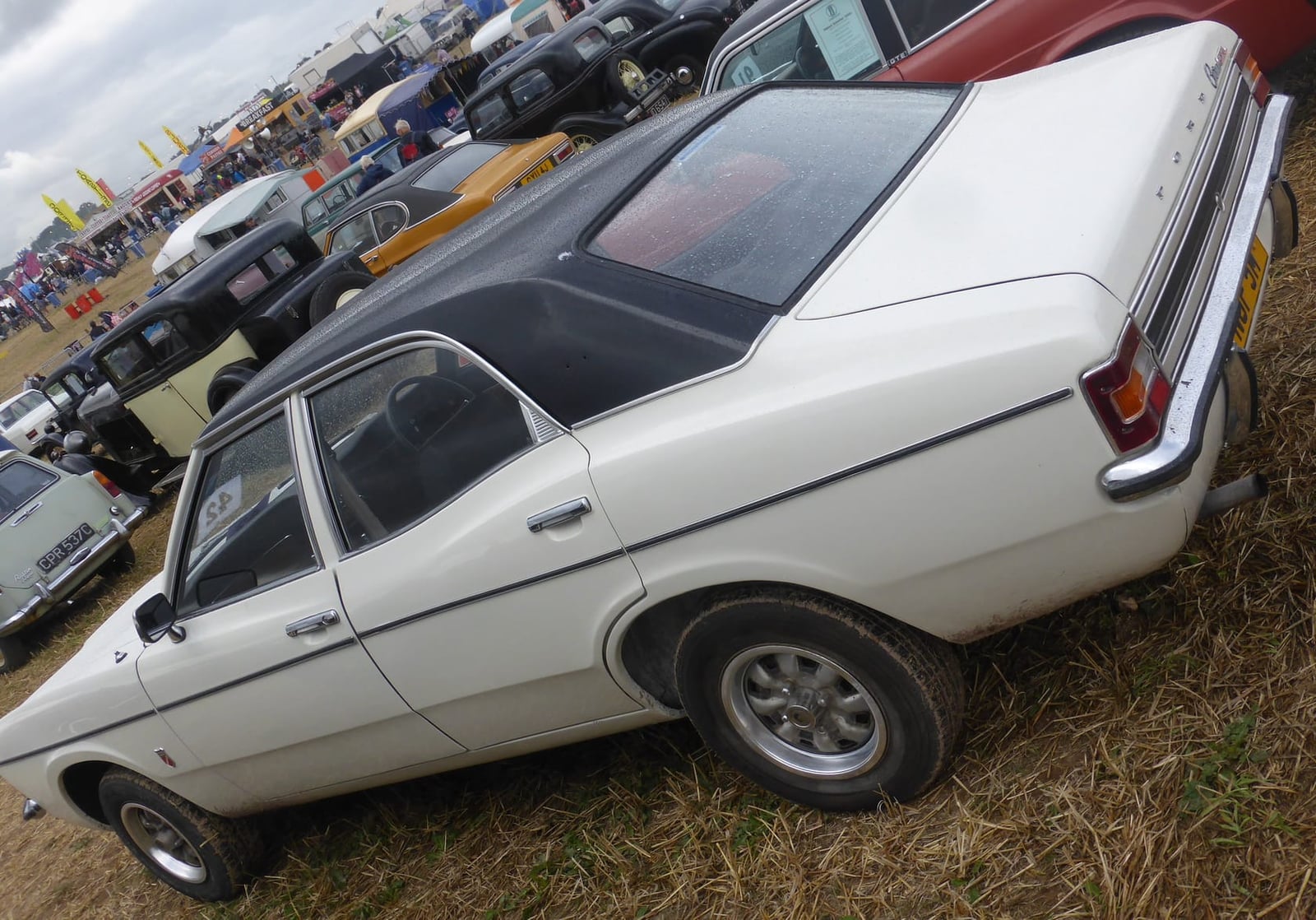
The project was called TC1, for Taunus-Cortina, and it was a product of Ford’s decision to make its British and German companies work as one. Harley Copp, Ford’s engineering vice-president at Brentwood, oversaw it as his last European car. The styling took its cue from the Mercury Montego and the Ford LTD of the late 1960s, with a waistline that rose sharply over the rear wheels. That kick gave the car its nickname, and the Coke-bottle Cortina is what everyone still calls it.
The German Taunus TC launched about a month earlier. The two cars shared the floorpan and most of their major components, but not the outer panels: door skins, rear wings, bonnet, boot lid, grille and lights all differed, and the Taunus had less of the Cortina’s hip. The engines differed too. The Taunus never had the Kent unit that the British car kept for its smaller models.
Ford launched the Cortina with 35 basic versions across two-door and four-door saloons and a five-door estate, with prices running from £913 for a two-door 1300 to £1,338 for the 2.0 GXL, purchase tax included.

The chassis that changed
Every Cortina before the Mk3 had used MacPherson struts at the front and leaf springs at the back. The Mk3 dropped both. At the front it got double wishbones on a self-contained crossmember with rack-and-pinion steering; at the back, a live axle located by four links on coil springs. The overhead-cam models added an anti-roll bar and dual-circuit servo brakes as standard.
The car was also lower, a little wider, and rode on a wheelbase about three and a half inches longer than the Mk2’s. Early cars were bouncy, and in 1971 Ford revised the spring rates, dampers and front bushes to calm them down. The same basic underbody carried on under the Cortina Mk4 and Mk5, which is good news for anyone restoring a Mk3 now.

Kent and Pinto
The Mk3 kept the Kent crossflow engines in 1.3 and 1.6 form and added Ford’s new overhead-cam engine, the Pinto, with its camshaft driven by a toothed belt, in 1.6 and 2.0 litre sizes. Motor Sport’s launch report, quoting gross figures, gives the spread: 57 brake horsepower for the 1300, 68 for the 1600 Kent, 88 for the 1600 overhead-cam and 98 for the 2.0. The 2.0 was quoted at 10.6 seconds to 60mph.
A four-speed manual was standard and a three-speed automatic was offered on everything except the 1.3. At the late-1973 facelift Ford moved every 1.6 over to the Pinto and kept the Kent only for the 1300.

L, XL, GT, GXL and the 2000E
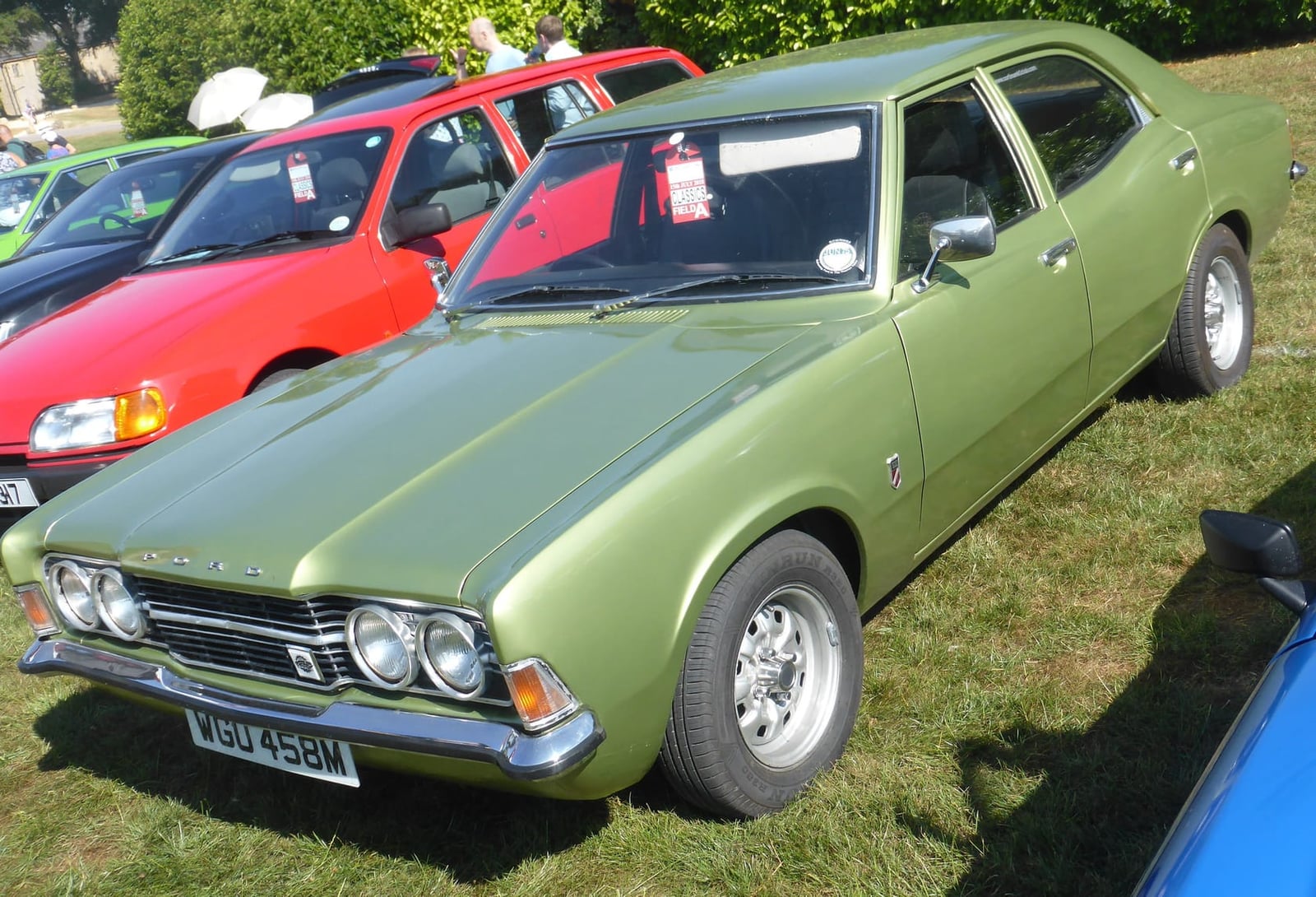
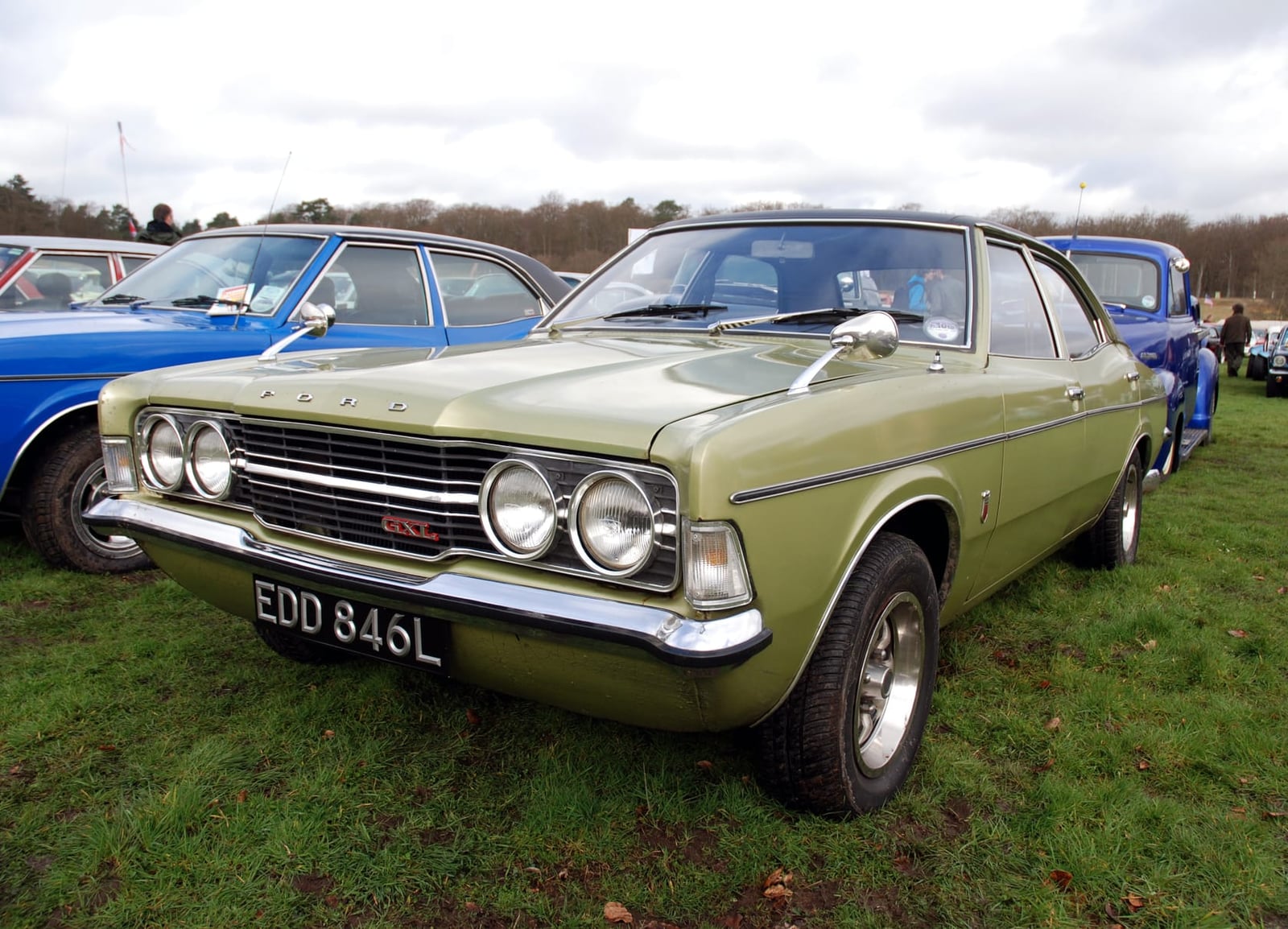
The trim ladder went base, L, XL, GT and GXL. The GT and GXL had four round headlamps and Rostyle wheels, and the GXL added a vinyl roof, rubbing strips, reclining front seats, a heated rear screen and two-speed wipers. A 1600 GXL existed briefly alongside the 2.0, and the estate came in base, L and XL form.
The facelift, known as the TD, arrived in late 1973. It brought a flatter dashboard, rectangular headlamps on the XL, GT and new 2000E, and the end of the two-door GT. The 2000E replaced the GXL at the top of the range, following the formula the 1600E had set on the Mk2: the big engine, the better seats and a lot of wood-effect trim. The 2000E and the GXL are the two Mk3 names that matter most in the market now.

A slow start, then the top of the chart
The Mk3’s first year was rough. A ten-week strike between April and June 1971 cost Ford roughly 100,000 cars, and early production problems held sales back. Motor Sport, driving the range at its launch in November 1970, thought the cabin felt cheap, closer to a Vauxhall Victor than it should have been, and found the ride and handling only slightly better than the Mk2 1600E’s. The writer still preferred the older car.
By 1972 none of that mattered. The Cortina was Britain’s best-selling car that year, and a Motor Sport test of a 1600 GT that July found plenty to like: a good gear change, strong brakes, accurate steering and tidy handling, against an abrupt clutch, weak pulling at low revs and dials set too deep in the dashboard. It managed about 100mph and 27 to 29 miles per gallon. For the 1970s company-car driver, that was the deal.

Buying a Cortina Mk3 now
Survivors are thin on the ground. Third-party counts built from DVLA data suggest roughly a thousand Mk3s on the record, taxed and SORN together, though the agency’s loose model names make any figure approximate.
Start underneath. The inner sills rot from the inside, so a sound outer sill proves little. Look at the scuttle below the wipers, the front suspension turrets, the valances, the door bottoms, the jacking points and the lower rear corners. The good news is the shared underbody: Mk4 and Mk5 Cortinas use much of the same metalwork, so repair sections are easier to come by than for the Mk2.
On the road, a Mk3 that wanders has probably worn its rear void bushes, of which there are eight on the trailing arms and axle. Vague gear selection usually means the plastic ball at the base of the lever has worn. A weeping differential cover and earthing faults are both common. With a Pinto, ask for proof of the last cambelt change and budget for one if there is none, because a snapped belt wrecks the engine. The Cortina Mk3 Club and the Cortina Owners Club are the places to check a car’s identity, especially for a 2000E or GXL.

Values: the 2000E and the GXL lead
Fifty-three recorded auction sales since 2011 put the Mk3’s median near £8,400, with the middle half of the market between about £5,200 and £11,500 and seven cars in ten offered actually selling. The 2000E and the GXL sit together at around £9,300, while ordinary 1600s change hands near £5,000. The best price on record is £18,400 for a 2000 GXL at Manor Park in September 2024, and the recent years have run higher than the long-run median on small numbers of sales.
The Mk3’s underpinnings outlived it. The squared-off Mk4 that replaced it in 1976 was a new body on the same floor, and it kept the Cortina at the top of the British sales charts to the end of the decade.
More photos
Cortina Mk3: what changed and when
- 23 Oct 1970The Mk3 goes on sale with 1.3 and 1.6 Kent and 1.6 and 2.0 Pinto engines, in two-door, four-door and estate form.
- 1971A ten-week strike costs Ford about 100,000 cars, and revised springs and dampers soften the early cars' ride.
- 1972The Cortina becomes Britain's best-selling car.
- Late 1973The facelift brings a new dashboard, rectangular headlamps on the upper models, Pinto engines for every 1.6, and the 2000E in place of the GXL.
- 1976The Mk4 replaces it on the same underbody.
What to check on a Cortina Mk3
Structure
- Inner sills, which rot from the inside out
- The scuttle below the wipers and the front suspension turrets
- Valances, door bottoms, jacking points and the lower rear corners
Running gear
- The rear void bushes on the trailing arms and axle: eight of them, and worn ones make the car wander
- A worn plastic ball at the base of the gear lever causes vague selection
- A corroded differential cover that weeps oil
Engines and electrics
- Ask for proof of the last Pinto cambelt change; a snapped belt wrecks the engine
- Earthing and wiring faults are common on tired cars
- Kent engines are simpler and rarely give trouble
What the Cortina Mk3 sells for at auction
In real terms, typical Cortina Mk3 prices were down about 3% over the five years to 2025, once inflation is accounted for.
| Variant | Sold | Typical range | Median |
|---|---|---|---|
| Cortina Mk III 2000 E | 13 | £5,000 - £10,720 | £9,350 |
| Cortina Mk III 1600 | 12 | £3,311 - £9,855 | £5,072 |
| Cortina Mk III 2000 GXL | 9 | £7,992 - £14,950 | £9,250 |
Show the year-by-year mediansHide the year-by-year medians
| Year | Sold | Median | In 2025 money |
|---|---|---|---|
| 2026 (so far) | 7 | £14,950 | |
| 2025 | 9 | £11,500 | £11,500 |
| 2024 | 5 | £6,912 | £7,177 |
| 2023 | 7 | £9,250 | £9,926 |
| 2021 | 5 | £9,540 | £11,797 |
| 2020 | 4 | £9,324 | £11,816 |
| 2017 | 3 | £2,875 | £3,830 |
| 2016 | 3 | £10,120 | £13,827 |
| 2015 | 3 | £4,500 | £6,210 |
- £6,160Cortina Mk III 2000 E
- £12,096Cortina Mk III 1600 GT
- £15,336Cortina Mk III 1600
- £14,950Cortina Mk III 2000 GXL
- £17,437Cortina Mk III 2000 E
Thin evidence. Only 53 recorded sales: read the figures as a sketch of the market, not a price. Based on 53 sold results from public classic car auctions (2011 to 10 August 2026). Sold prices, not asking prices, and not a valuation: condition, history and specification vary from car to car. Inflation-adjusted figures use the ONS CPIH index, in 2025 money.