Ford Capri Mk2: the Capri that grew a hatchback (1974–1978)
Ford of Britain's first hatchback was a Capri, the Capri II of February 1974, with a bigger cabin, a shorter bonnet, Pinto and Essex engines and, from 1976, the 3.0 S and Ghia. The range, the JPS and X-pack specials, what the period testers said, what rots, and Mk2 prices at auction.
Built 1974–1978 38 recorded sales
At a glance
- Years
- 1974–1978
- Body styles
- Three-door hatchback coupe
- Drivetrain
- Rear-wheel drive
- Engines
- 1.3 and 1.6 Kent crossflow, 1.6 and 2.0 Pinto, 3.0 Essex V6
- Power
- 54 bhp in the 1300 to around 138 bhp in the 3.0
- Trim levels
- L, XL, GT, Ghia; S from 1976; JPS special edition
- Production
- About 100,000 sold in 1975, its best year
- Assembly
- Halewood until October 1976, then Cologne
- UK survivors
- About a hundred cars recorded under the Capri II S label alone on DVLA-based counts
- Values
- Around £9,000 median at auction; usable cars from about £7,300, good 3.0s into the teens
The models
By 1974 the Capri Mk1 had sold 1.2 million and taught Ford that buyers would pay for a coupe that looked fast. The Capri II, launched on 25 February 1974, set out to keep those buyers as they got older and acquired families. It did that by being more sensible, which is both its strength and the reason it remains the cheapest of the three generations to buy.
A tailgate and a bigger cabin
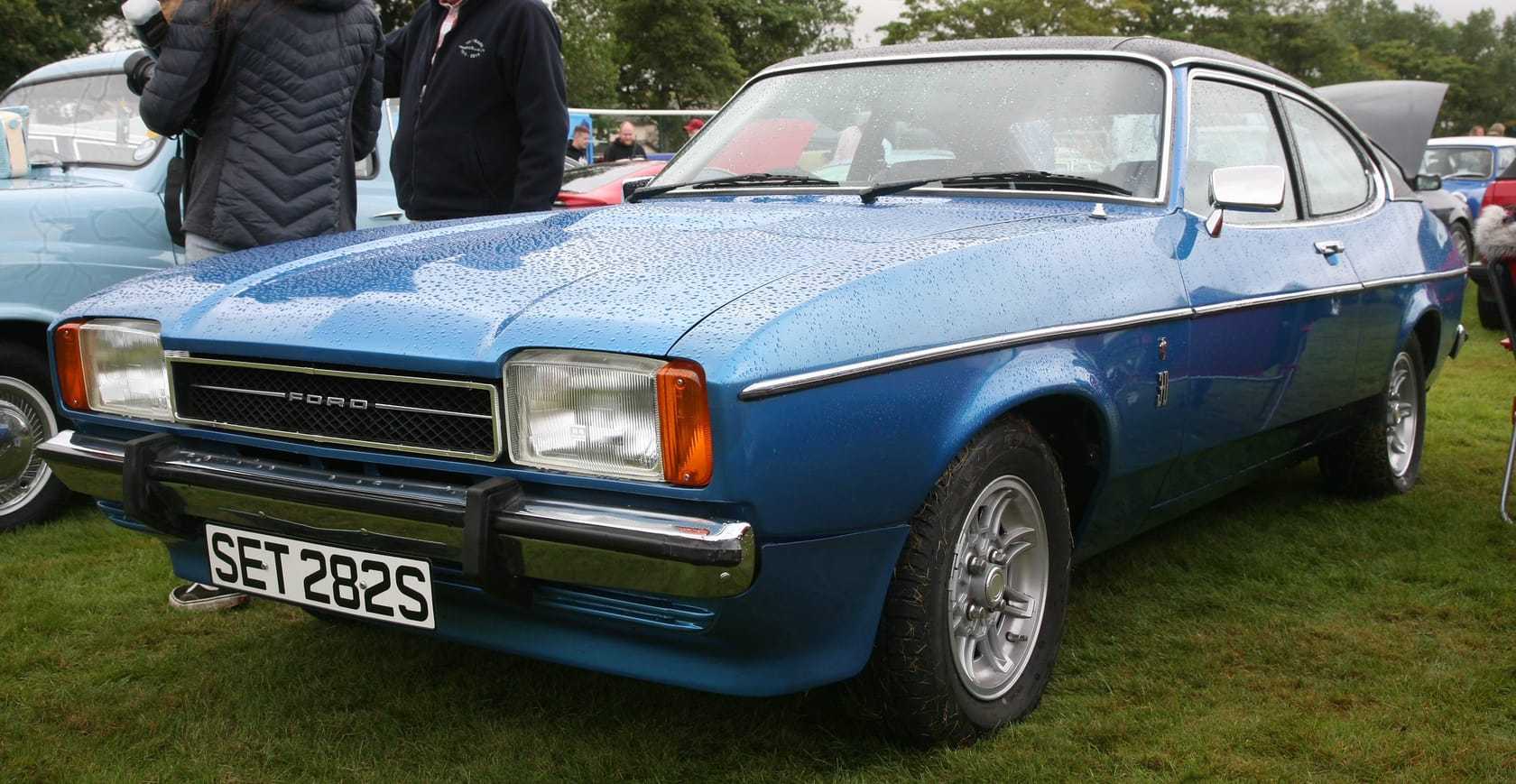
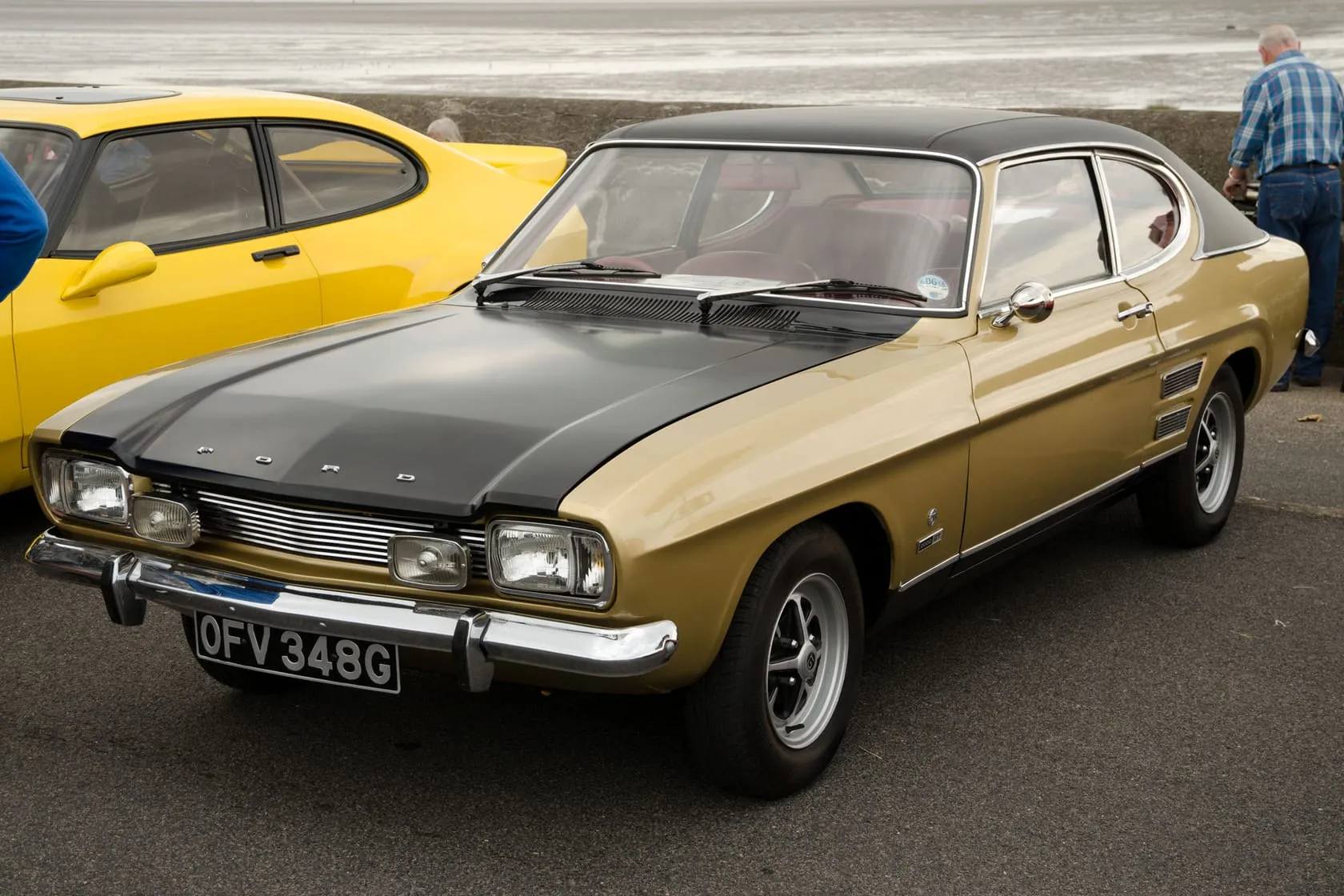
The Mk2 kept the long-bonnet, short-tail profile but changed nearly everything else about the body. The bonnet was shorter, the cabin larger, and the boot lid gave way to a lifting tailgate with a folding rear seat behind it. It was the first hatchback Ford of Britain had built. Large rectangular headlamps replaced the Mk1’s round ones, the dummy scoops and swage lines on the flanks went, and inside there was a new dashboard and a smaller steering wheel.
The changes under the skin were modest. The front discs grew, an alternator was fitted, and higher models offered power steering, but the live rear axle stayed on leaf springs as it always had. The Capri had become a car you could take on a family holiday, and for many owners that was the point.

Kent, Pinto and the Essex V6
The engine range shifted towards Ford’s newer units. The 1.3 Kent crossflow made about 54 brake horsepower and the 1.6 crossflow about 71, while the 1.6 GT used the overhead-cam Pinto at about 87. The 2.0 Pinto, at around 98 brake horsepower, replaced the Mk1’s Essex V4. At the top sat the 3.0 Essex V6, quoted at about 138 brake horsepower, though period figures vary with the measuring standard.
A four-speed manual was standard, and Ford’s C3 three-speed automatic was offered on everything except the 1.3. From 1976 the automatic came as standard on the Ghia.

L, GT, Ghia and the S
The launch range ran from the 1300L to the 3000GT, with XL, GT and Ghia trims in between. A 1300L cost £1,336 and a 3000GT £1,932 when the car was new. The big change came in May 1976, when Ford dropped the 3.0 GT and replaced it with two very different V6 cars.
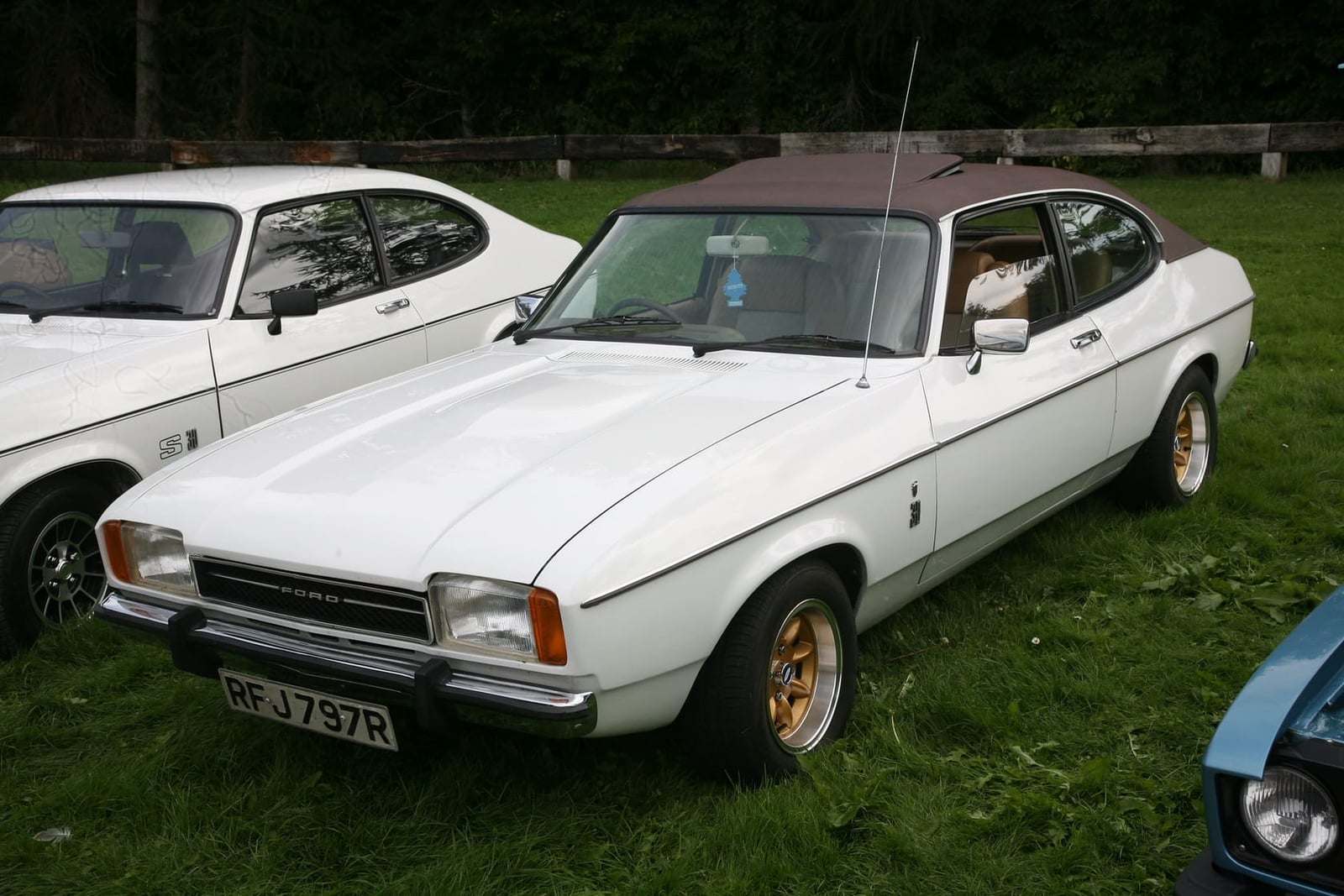
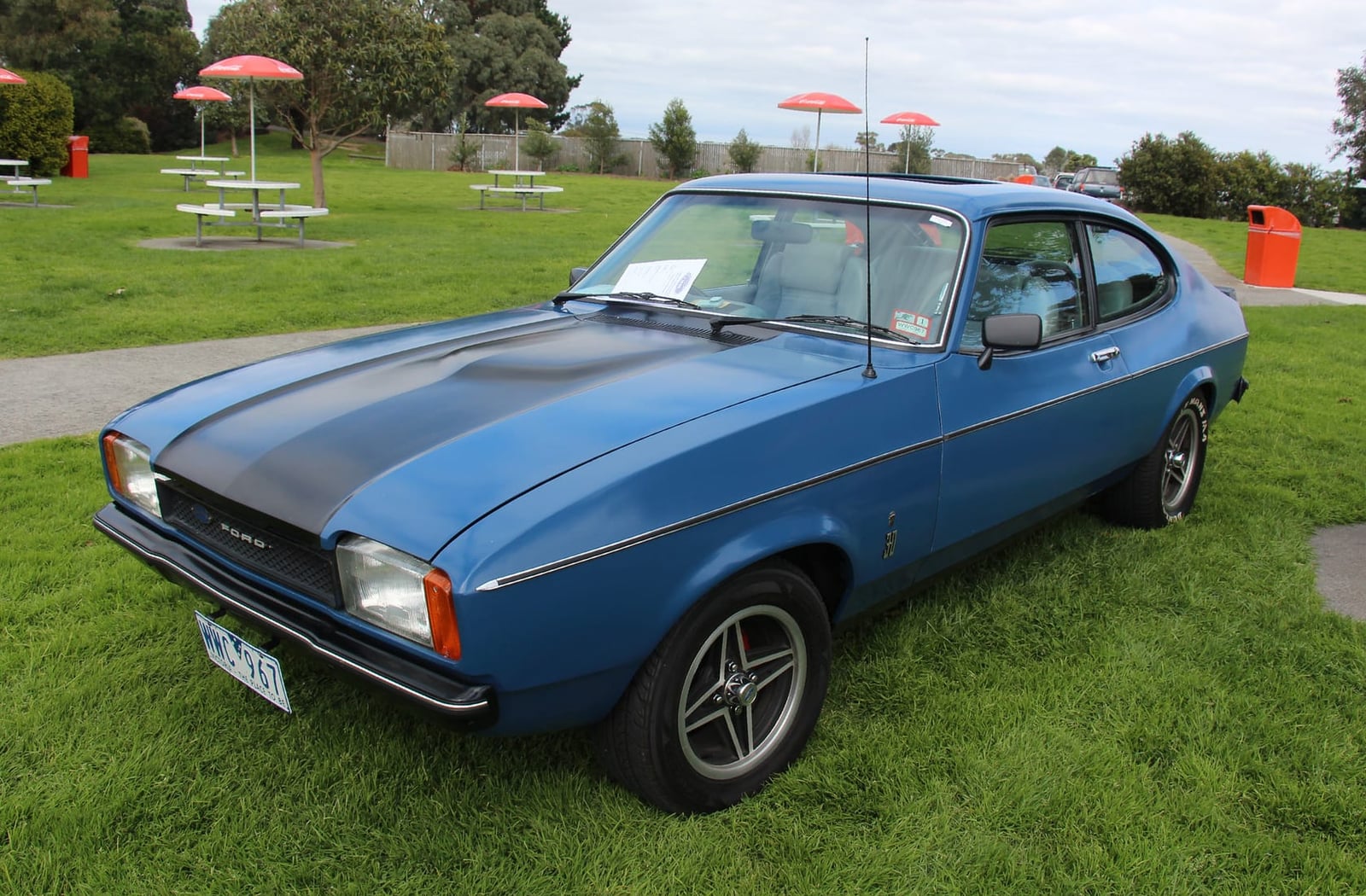
The 3.0 S was the sporting one, with a front air dam. The 3.0 Ghia was the luxury one, with alloy wheels, tinted glass, a tilt-and-slide sunroof and its automatic gearbox. The Ghia’s Essex V6 was the same engine Reliant used in the Scimitar GTE, which says something about how far up the market Ford was trying to reach. In the auction market today the 3.0 S and the 3.0 Ghia are the names that matter, with the 2.0 S and the GT behind them.

The JPS and the X-pack
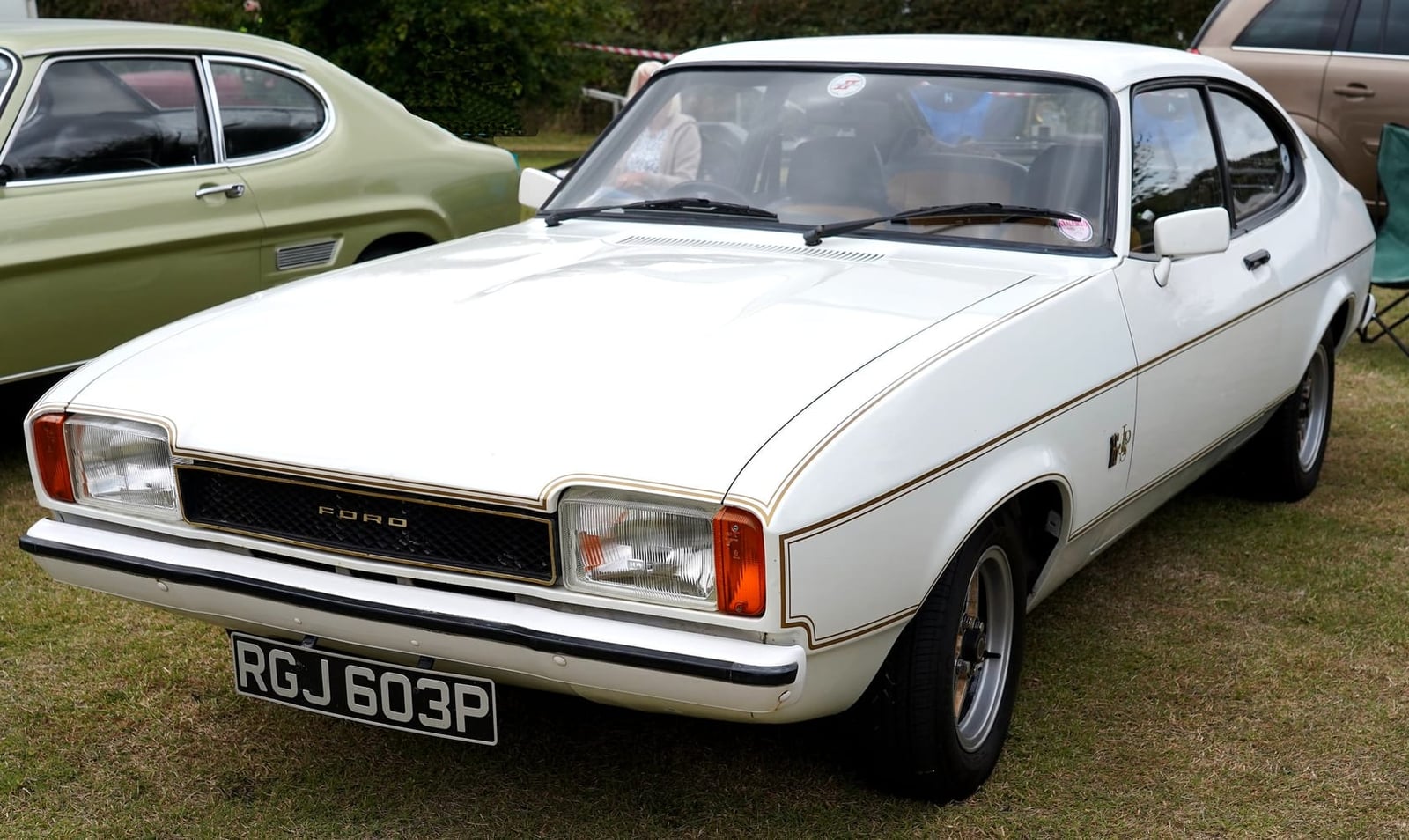
The most striking Mk2 is the John Player Special of 1975, dressed in the black and gold that Lotus raced in Formula One. Ford built 2,003 of them, most in black and some in white, with gold pinstripes, gold wheels and a beige interior, on 1.6, 2.0 and 3.0 engines. A real JPS is a different car from one with a set of gold stripes, and the paperwork is what separates them.
From late 1977 Fibresports offered wide-body glassfibre kits for 3.0 cars, sold as the X-pack and the Series X, with uprated engines. Only around a hundred conversions were made, and the kits ran on into the Mk3’s early years.

What the testers said
The magazines were mostly kind. Motor found the 1600XL less taut and responsive than the Mk1 but more refined and more versatile, and Autocar called it a “vast improvement on earlier models”. Car was cooler, finding the 2000GT attractive and practical but calling its engine tinny and preferring the Volkswagen Scirocco and Toyota Celica. Motor Sport praised the quality of the Ghia.
Buyers were less sure than the testers. Around 100,000 Mk2s found homes in 1975, well short of the Mk1’s best years, and when Halewood stopped building Capris in October 1976 the car became a Cologne product for the rest of its life. In the 1970s it was still a common sight, and a 3.0 GT played a part in the 1974 John Wayne film Brannigan.

Buying a Capri Mk2 today
Rust attacks the same places on every Capri. On a Mk2 check the chassis rails and legs, the floors and sills, the boot floor, the inner arches, the bulkhead, the strut tops and the A-pillars, and if the car has a sunroof, the drains around it.
Mechanically, Pinto engines wear their camshafts and can develop bottom-end knocks, and the Essex V6 wears its fibre timing gears and suffers head gasket failures that show as oil in the coolant. A car with a limited-slip differential needs the right oil in it, and the leaf springs sag with age. Interior trim and body panels are the scarce parts. DVLA-based counts list a little over a hundred cars under the Capri II S label, which gives a sense of how thin the field is, and the Capri Mk2 Register and Capri Club International are the places to check a car’s history.

Values: the cheapest way into a Capri
Thirty-eight recorded auction sales since 2010 put the Mk2 median near £9,000, with the middle half of the market between about £7,300 and £11,500 and six cars in ten offered actually selling. The 3.0 Ghia sells at a median around £8,800, a little below the generation as a whole.
The record is a television car: £56,250 at H&H in April 2016 for a 2.0 S sold as the one Terry McCann drove in Minder. Ordinary road cars are worth a small fraction of that, and race-prepared cars are left out of these figures. The Capri Mk3 replaced the Mk2 in March 1978 with four headlamps and the same basic body.
More photos
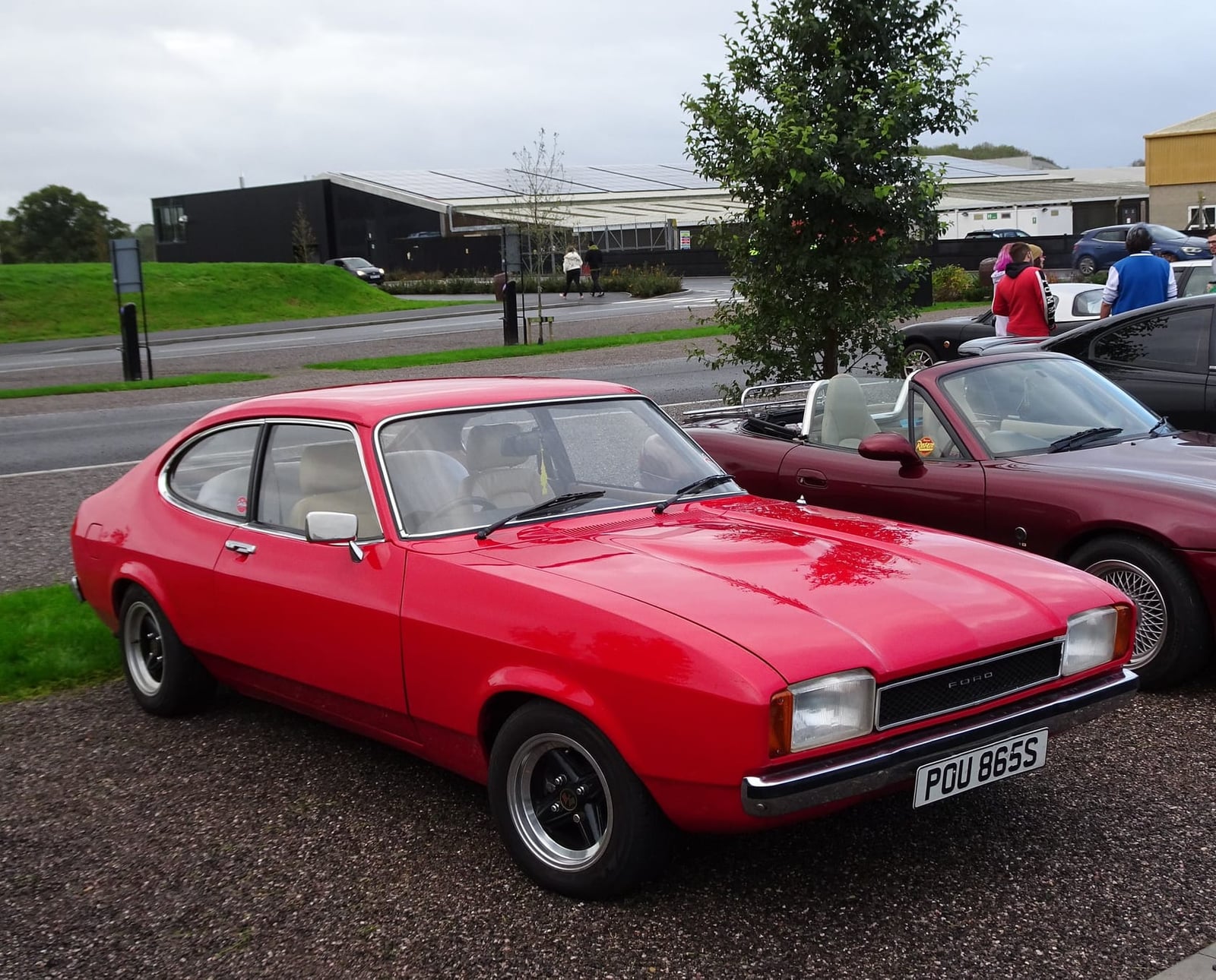
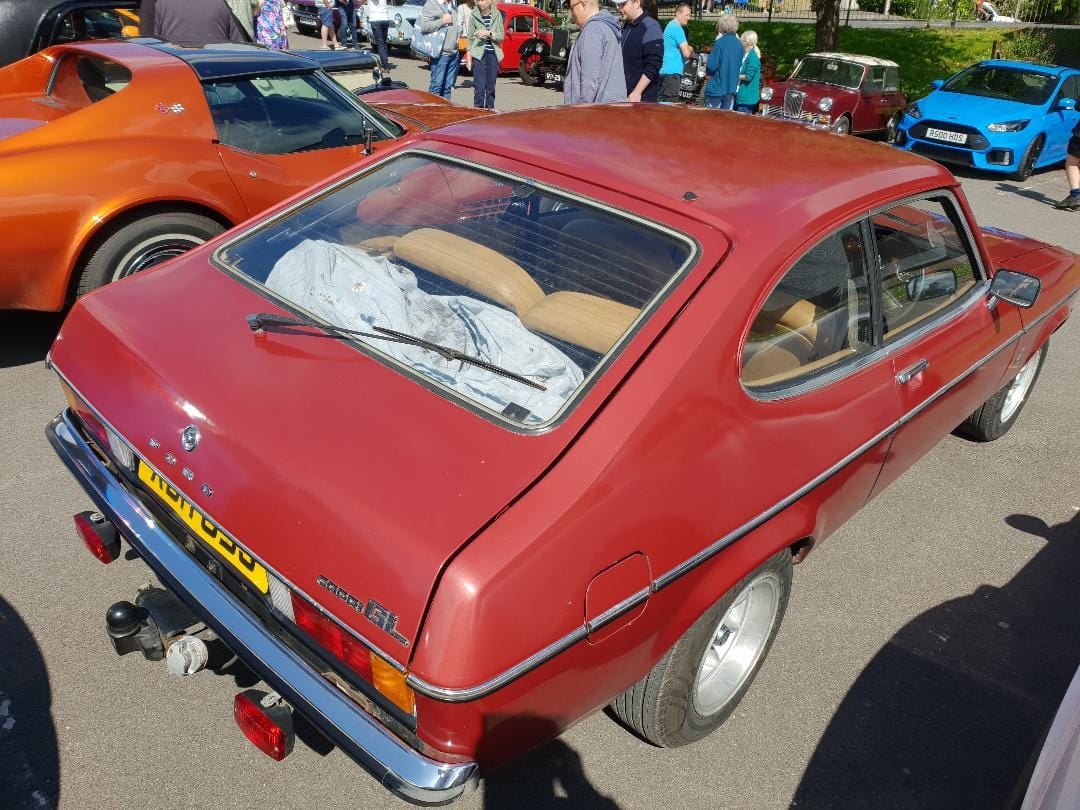
The Capri Mk2 timeline
- 25 Feb 1974The Capri II launches with a hatchback, a larger cabin and a shorter bonnet.
- 1975Around 100,000 Mk2s are sold, and the 2,003-car JPS special edition goes on sale.
- May 1976The 3.0 GT is dropped; the 3.0 S and 3.0 Ghia take over, with automatic standard on the Ghia.
- Oct 1976Halewood stops building Capris; production continues at Cologne.
- Late 1977Fibresports wide-body kits begin to appear on 3.0 cars as the X-pack.
- Mar 1978The four-headlamp Mk3 replaces it.
Before you buy a Capri Mk2
Structure
- Chassis rails and legs, floors and sills
- Inner wings, the bulkhead, strut tops and A-pillars
- The boot floor and the drains around any sunroof
Mechanicals
- Pinto camshaft wear and bottom-end knocks
- Essex V6 fibre timing gears, head gaskets and oil in the coolant
- A limited-slip differential needs the right oil; leaf springs sag with age
Originality
- S, Ghia and JPS trim is easy to copy, so check against the Capri Mk2 Register
- Interior trim and panels are the parts that are hard to replace
What the Capri Mk2 sells for at auction
| Variant | Sold | Typical range | Median |
|---|---|---|---|
| Capri Mk II 3.0 Ghia | 11 | £7,850 - £11,831 | £8,814 |
| Capri Mk II | 11 | £8,170 - £13,100 | £10,140 |
Show the year-by-year mediansHide the year-by-year medians
| Year | Sold | Median | In 2025 money |
|---|---|---|---|
| 2026 (so far) | 7 | £9,200 | |
| 2025 | 5 | £11,600 | £11,600 |
| 2024 | 4 | £9,070 | £9,418 |
| 2023 | 6 | £6,728 | £7,220 |
| 2022 | 4 | £8,216 | £9,409 |
| 2017 | 3 | £11,000 | £14,653 |
- £12,514Capri Mk II 2.0
- £9,250Capri Mk II 3.0 Ghia
- £26,437Capri Mk II 3.0 Ghia
- £4,725Capri Mk II 2.0 GL
- £9,200Capri Mk II
Thin evidence. Only 38 recorded sales: read the figures as a sketch of the market, not a price. Based on 38 sold results from public classic car auctions (2010 to 10 August 2026). Sold prices, not asking prices, and not a valuation: condition, history and specification vary from car to car. Inflation-adjusted figures use the ONS CPIH index, in 2025 money.
Frequently asked questions
How much is a Ford Capri Mk2 worth?
When was the Ford Capri Mk2 made?
Was the Capri Mk2 a hatchback?
What is the difference between the Capri Mk2 3.0 S and 3.0 Ghia?
How many JPS Capris were made?
What is the most expensive Capri Mk2 ever sold at auction?
How often does a Capri Mk2 come up for sale?
Related across themes

More from Ford


Recently added

Rolls-Royce Silver Ghost values: the best car in the world, and the American ones for half

Aston Martin DB5 values: the Bond tax, and the convertible at twice the coupe

How to SORN a car, and how to tax it again: a classic owner's guide
