Jaguar E-Type values: what every series sells for, and why the price has fallen
One order never changes, roadster over coupe over 2+2 and Series 1 over everything. Jaguar E-Type prices from 4,029 recorded auction sales, what a right-hand-drive car or a restoration does to the value, and why the E-Type is cheaper in real terms now than in 2010.
Built 1961–1975
What the Jaguar E-Type sells for at auction
In 2025 the median Jaguar E-Type sold for £51,203 across 338 sales, 9% down on 2024. In real terms, typical Jaguar E-Type prices were down about 36% over the five years to 2025, once inflation is accounted for.
| Variant | Sold | Typical range | Median |
|---|---|---|---|
| E-Type Series III Roadster | 630 | £41,280 - £71,103 | £55,380 |
| E-Type Series II Roadster | 474 | £40,028 - £66,670 | £55,378 |
| E-Type Series I Roadster 3.8 | 415 | £76,352 - £147,300 | £105,009 |
| E-Type Series I Roadster 4.2 | 376 | £71,269 - £130,440 | £96,123 |
| E-Type Series III Coupe | 321 | £25,200 - £42,021 | £33,862 |
| E-Type Series I FHC 4.2 | 194 | £52,204 - £95,053 | £68,454 |
| E-Type Series I FHC 3.8 | 190 | £54,012 - £97,773 | £71,968 |
| E-Type Series II FHC | 182 | £29,988 - £49,627 | £40,188 |
| E-Type Series II 2+2 | 168 | £21,010 - £37,939 | £29,744 |
| E-Type Series 1.5 Roadster | 101 | £55,566 - £80,438 | £67,394 |
| E-Type Series I 2+2 4.2 | 85 | £28,687 - £47,040 | £36,168 |
| E-Type Series 1.5 2+2 | 34 | £21,876 - £41,504 | £31,254 |
Show the year-by-year mediansHide the year-by-year medians
| Year | Sold | Median | In 2025 money |
|---|---|---|---|
| 2026 (so far) | 207 | £47,436 | |
| 2025 | 338 | £51,203 | £51,203 |
| 2024 | 293 | £56,128 | £58,282 |
| 2023 | 293 | £65,101 | £69,860 |
| 2022 | 314 | £65,392 | £74,889 |
| 2021 | 324 | £63,058 | £77,975 |
| 2020 | 255 | £63,250 | £80,152 |
| 2019 | 238 | £60,924 | £77,991 |
| 2018 | 221 | £72,800 | £94,777 |
| 2017 | 257 | £67,260 | £89,593 |
| 2016 | 206 | £65,295 | £89,215 |
| 2015 | 190 | £67,020 | £92,488 |
| 2014 | 138 | £56,270 | £77,965 |
| 2013 | 118 | £48,378 | £67,986 |
| 2012 | 91 | £40,083 | £57,619 |
| 2011 | 85 | £44,650 | £65,830 |
| 2010 | 62 | £38,334 | £58,714 |
| 2009 | 51 | £34,801 | £54,636 |
| 2008 | 58 | £27,974 | £44,784 |
| 2007 | 36 | £28,376 | £47,010 |
| 2006 | 38 | £29,370 | £49,792 |
| 2005 | 60 | £29,236 | £50,813 |
| 2004 | 52 | £23,471 | £41,632 |
| 2003 | 21 | £27,532 | £49,536 |
| 2002 | 12 | £27,242 | £49,661 |
| 2001 | 16 | £25,084 | £46,403 |
| 1999 | 9 | £21,980 | £41,780 |
| 1998 | 6 | £24,200 | £46,839 |
| 1997 | 9 | £18,534 | £36,538 |
| 1996 | 12 | £17,870 | £36,002 |
| 1995 | 11 | £19,744 | £40,911 |
| 1994 | 6 | £19,160 | £40,741 |
- £50,641E-Type Series II 2+2
- £63,019E-Type Series II FHC
- £49,904E-Type Series II Roadster
- £44,408E-Type Series II Roadster
- £5,453E-Type Series III Coupe
Strong evidence. 4,029 recorded sales and a dozen or more a year: the median and the range are well founded. Based on 4,029 sold results from public classic car auctions (1993 to 10 August 2026). Sold prices, not asking prices, and not a valuation: condition, history and specification vary from car to car. Inflation-adjusted figures use the ONS CPIH index, in 2025 money.
No British classic puts more money through the sale rooms than the E-Type, and nothing shows E-Type values like the record of those sales: 4,029 of them since 1993, about 300 a year lately, at a median of £56,250, with a spread that runs from a £1,150 parts car to a £6.2 million factory Lightweight. Seven in ten of the cars offered find a buyer. The E-Type is traded worldwide, most heavily in North America, where the bulk of the left-hand-drive production went, and that shapes the figures in ways a British buyer needs to understand.
The E-Type model guide explains the three series and what to check; the pages for the Series 1, Series 2 and Series 3 go deeper on each. This page is about what they sell for, and about the one thing the sale rooms have been saying for seven years that the price guides have been slow to repeat.
Roadster over coupé, Series 1 over everything
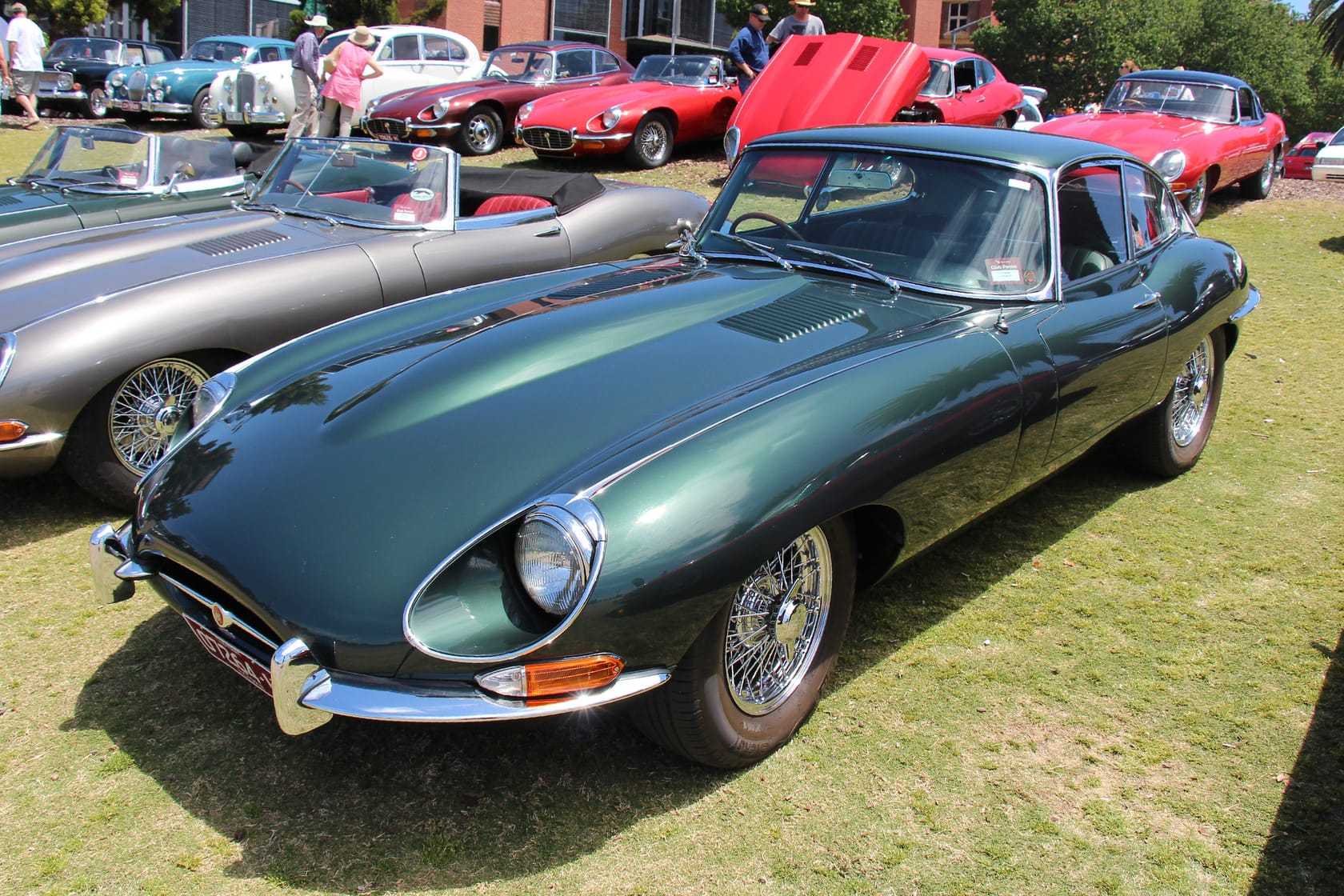
The order of E-Type values has not changed in forty years. The variant table on this page puts numbers on it: a Series 1 3.8 roadster has a median sold price of £105,000 and a Series 1 4.2 roadster £96,000; the Series 1 coupés sit around £70,000; the Series 1.5 roadster of 1967 to 1968, with its open headlamps and the old interior, about £67,000; the Series 2 roadster and the Series 3 V12 roadster both around £55,000; and the 2+2 coupés, in any series, between £30,000 and £36,000. In every series the roadster is worth roughly a third more than the coupé and about double the 2+2.
Within that, the earliest cars carry the biggest premiums: the 1961 to 1962 flat-floor roadsters with outside bonnet locks and welded louvres are the ones that go past £150,000 and, for the best, £200,000. Above them sit the competition cars. The twelve Lightweights built in 1963 and 1964 are in a different market altogether, and the record sale in the data, £6.2 million for one of them in 2017, is the highest price for any British car in the database.

What moves the price of an E-Type
Three things, and the series is only the first. The second is the body. An E-Type is a monocoque with a tubular front frame, and its sills, floors, rear bulkhead and the front frame itself rust and crash; the bonnet, a huge single pressing, is the most expensive panel on any British classic to replace or straighten. A car with good gaps and original floors is worth a great deal more than a shiny one with neither, and a full body-off restoration at a specialist now runs well into six figures. The £120,000 Series 1 roadster is very often a car that cost someone more than that to make.
The third is paperwork. A Jaguar Heritage certificate confirming the car’s original engine, gearbox, body, colour and market is the starting point for any serious price; “matching numbers” matters more on an E-Type than on almost any other British classic. It matters because so many cars have been changed. Most E-Types were built left-hand drive for export, and the sale-room record is dominated by those cars, so in Britain a genuine right-hand-drive home-market car sells at a premium of perhaps ten to twenty per cent, a converted car somewhat less, and a 2+2 that has been cut down into a “roadster” a great deal less than either, if it is honestly described. Colour, period options such as wire wheels and a hardtop, and a long history file each add a little. Mileage barely matters on a car that has usually been rebuilt.

The boom, and the slide since 2018
The chart tells a story the price guides have been slow to admit. The yearly median rose from around £28,000 in 2008 to £48,000 in 2013 and £72,800 in 2018, the peak of the classic-car boom, when a Series 1 roadster was routinely a six-figure car. Since then it has drifted down, with a pause rather than a recovery in the middle: £61,000 in 2019, £63,000 to £65,000 through the pandemic years, £56,000 in 2024 and £51,200 in 2025. Restated in today’s money the 2018 figure was nearly £95,000, so the real fall is close to half, and an E-Type now costs less in real terms than it did in 2010.
Some of that is the sample. Online auctions have brought hundreds of ordinary cars and many more 2+2s into the record each year, and a median built on those is lower than one built on the catalogued cars of 2013. But the correction is real as well: the buyers who wanted an E-Type because they remembered it new are selling, not buying, and the 1960s sports-car market as a whole has softened since 2022. The better cars have held up best. A good Series 1 roadster still makes six figures; it is the coupés, the 2+2s and the tired roadsters that have fallen furthest. For a buyer who wants an E-Type to drive, the present market is the best in a decade.

Where E-Types change hands
The exceptional cars, the flat-floors and the competition history, sell through the big international auction houses, and those results set the headlines. The middle of the market has moved online: the online platforms now sell the greater part of the E-Types in the record, and a single week in August 2026 shows the spread, from a £5,400 V12 coupé project to a £63,000 Series 2 coupé and a £50,600 Series 2 2+2 that shows what a very good one can make. In Britain the right-hand-drive cars mostly change hands through the specialists and the owners’ clubs, at prices a little above the auction range because the buyer can inspect the floors. Whether a recorded price includes the buyer’s premium varies by sale, which is one more reason to use the usual range rather than any single result.

Insuring, restoring, selling
For an agreed-value policy a good Series 1 roadster belongs in the upper half of its variant’s range, a Series 2 or 3 roadster around its median, and a 2+2 a little below. On restoration the arithmetic is unforgiving: unless the car is a flat-floor or has competition history, a project at £20,000 plus a six-figure rebuild produces a car worth less than the sum. Buy finished. If you are selling, the median for the variant is the honest expectation for a sound car, the spring is the season, and the two things that move the price at the viewing are the Heritage certificate and the state of the floors.
Related
The figures here are for the E-Type as a whole; the series pages hold the detail on each generation. The E-Type’s ancestor, the XK120, and its successor, the XJS, bracket it in the Jaguar range and in price, the one above it and the other far below. For how all the figures on this site are compiled, and E-Type values alongside every other Jaguar’s, see what classic cars sell for.
Frequently asked questions
How much is a Jaguar E-Type worth?
Which Jaguar E-Type is the cheapest to buy?
Are Jaguar E-Type prices falling?
Is a Series 3 V12 E-Type worth less than a Series 1?
Is a right-hand-drive E-Type worth more?
How much does it cost to restore an E-Type?
What is the most expensive Jaguar E-Type ever sold at auction?
How often does a Jaguar E-Type come up for sale?
Related across themes
More Jaguar values

Jaguar Mk2 values: 3.8 over 3.4 over 2.4, the restomod premium, and a market back to 2010 prices

Jaguar XJ values: the cheapest big Jaguar, 1968 to 2009, and the coupé at three times the saloon

Jaguar XJS values: convertible over coupé, V12 over six, and why it is still the cheapest big Jaguar

Jaguar XK120 values: the alloy premium, roadster over coupé, and a market half what it was
Recently added

Bentley S-series: the quiet twin with the beautiful secrets (1955–1965)

Rolls-Royce Silver Spirit and Silver Spur: the last Crewe bargain (1980–1999)

Rolls-Royce Corniche: the coachbuilt survivor that outlived its makers (1971–1995)
