Ford Sierra: the jellymould that replaced the Cortina (1982–1993)
The Ford Sierra replaced the best-selling Cortina with aerodynamic styling Britain nicknamed the jellymould, and slowly won the country over across 1.3 million UK sales. A guide to the ordinary Sierras, the XR4i and XR4x4, the Sapphire saloons, why survivors are so rare, buying checks and values.
Built 1982–1993 144 recorded sales
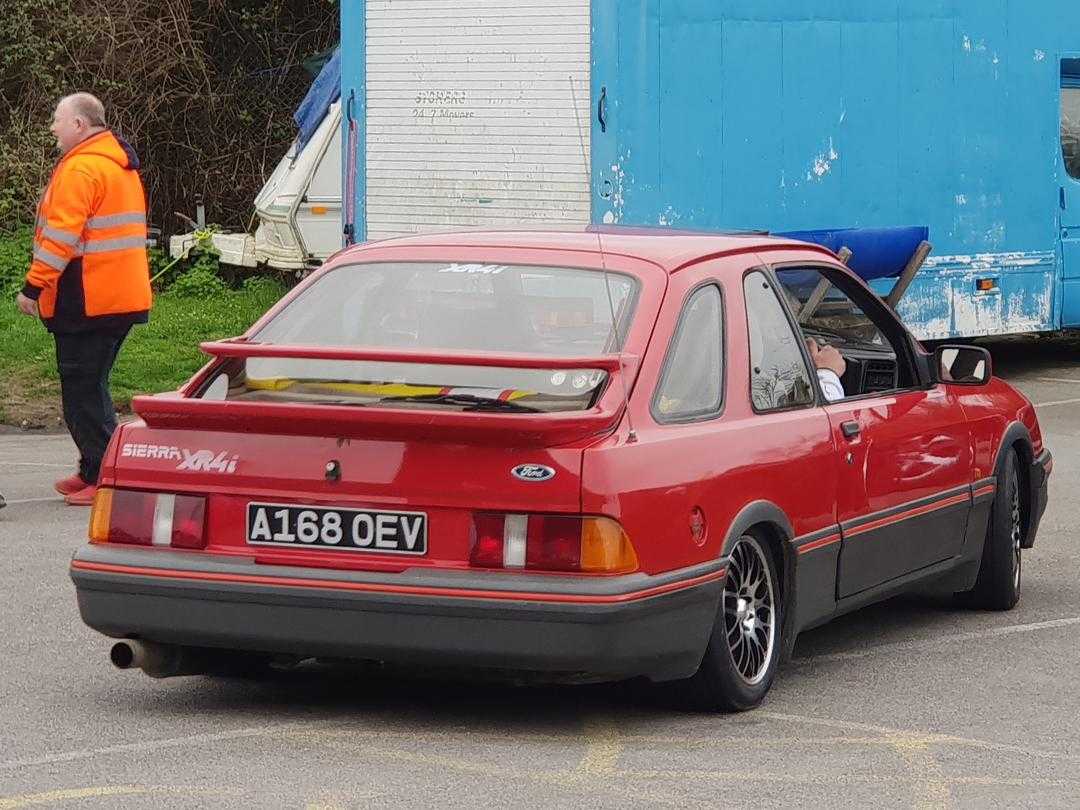
At a glance
- Years
- 1982–1993
- Body styles
- Three and five-door hatchback, estate; Sapphire four-door saloon from 1987
- Drivetrain
- Rear-wheel drive; four-wheel drive (XR4x4)
- Engines
- 1.3-2.0 Pinto and DOHC fours; 2.3-2.9 V6; 2.3 diesel
- Power
- Around 60 bhp to 150 bhp (XR4i/XR4x4)
- Top speed
- Up to around 130 mph (XR4i)
- Trim levels
- Base, L, GL, Ghia; XR4i, XR4x4; Sapphire range; RS models covered separately
- Production
- Around 3.4 million worldwide; about 1.3 million UK sales
- Assembly
- Dagenham (UK), Genk (Belgium), Cologne
- Designer
- Uwe Bahnsen, Ford of Europe
- Values
- Usable cars from around £3,000; good examples £5,000-£9,000; XR4i and XR4x4 beyond
- The nickname
- The jellymould: Britain's verdict on the 1982 aero styling, affectionate eventually
- The vanishing
- 1.3 million UK sales, and survivors now number in the low thousands
The models
Ford bet Britain’s best-selling nameplate on the Sierra in 1982, and the country was not ready for the shape. It dropped the Cortina’s razor edges for wind-tunnel curves instantly christened the jellymould, wobbled through its first years against the Cavalier, then quietly sold 1.3 million in Britain alone. Today the ordinary Ford Sierra is a rarity, the fast ones are icons, and the shape reads as pure distilled 1980s.
Replacing a legend with a jellymould
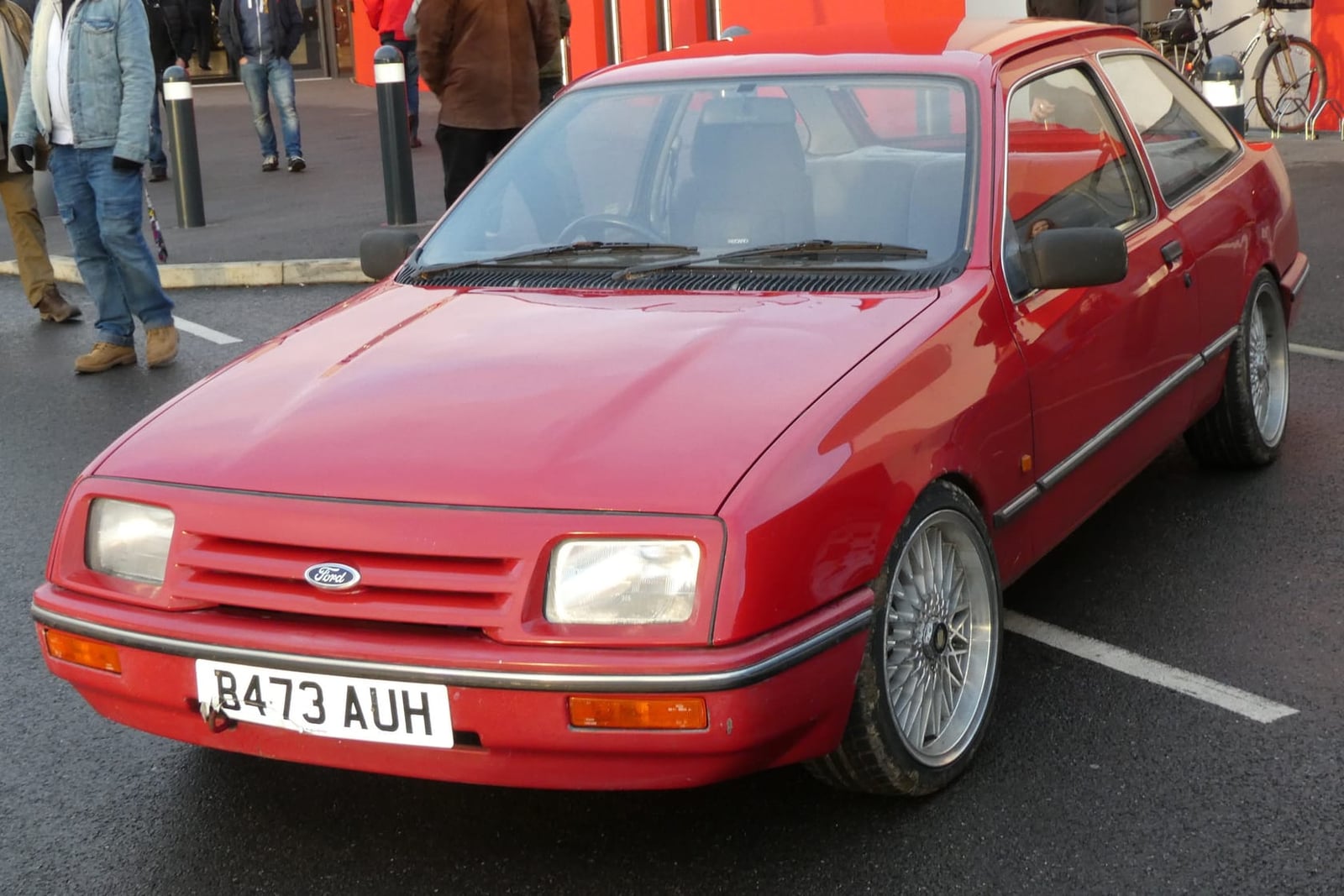
Uwe Bahnsen’s design brief was aerodynamic efficiency, and the Sierra delivered a drag coefficient a third better than the Cortina’s, with soft forms a decade ahead of the market. Fleet Britain flinched: the familiar Cortina virtues, rear-wheel drive and Pinto engines, hid under styling the trade papers called radical and the canteen called the jellymould. Vauxhall’s front-drive Cavalier feasted on the hesitation, and Ford responded with steady facelifts, culminating in the smoother 1987 revision that finally made the shape mainstream.

XR4i, XR4x4 and the fast Sierras
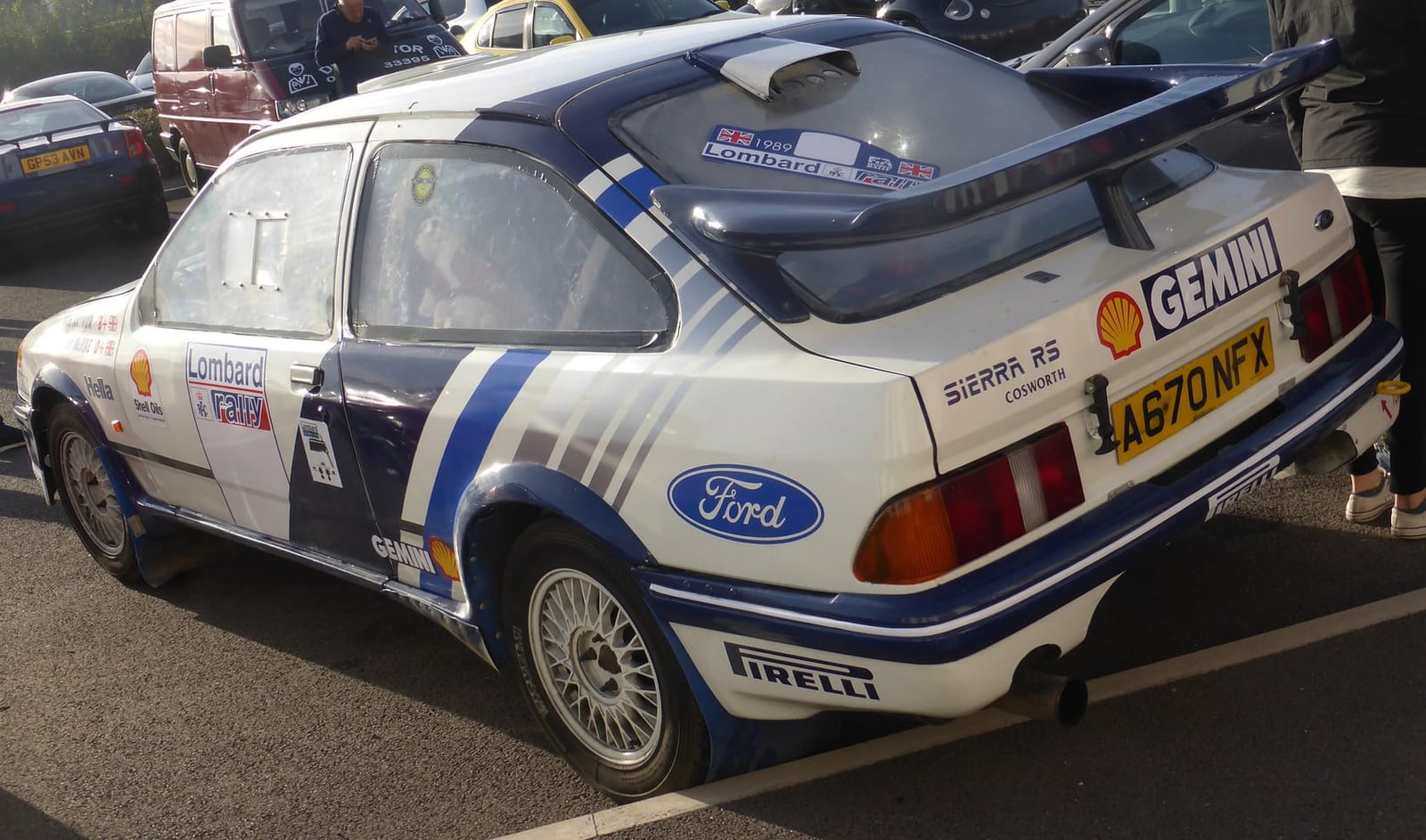
The performance story began with the 1983 XR4i, a 2.8 V6 three-door wearing spoked pillars and the infamous double rear wing, and matured into the 1985 XR4x4, whose four-wheel drive made it the quietly quick choice of the decade. Above them, the turbocharged RS versions took the shell to touring-car domination, a story told in our Sierra RS Cosworth guide. The fast Sierras’ halo now lifts the whole family: even a base 1.6 wears the silhouette the RS500 made famous.


Sapphire, estates and the working Sierras
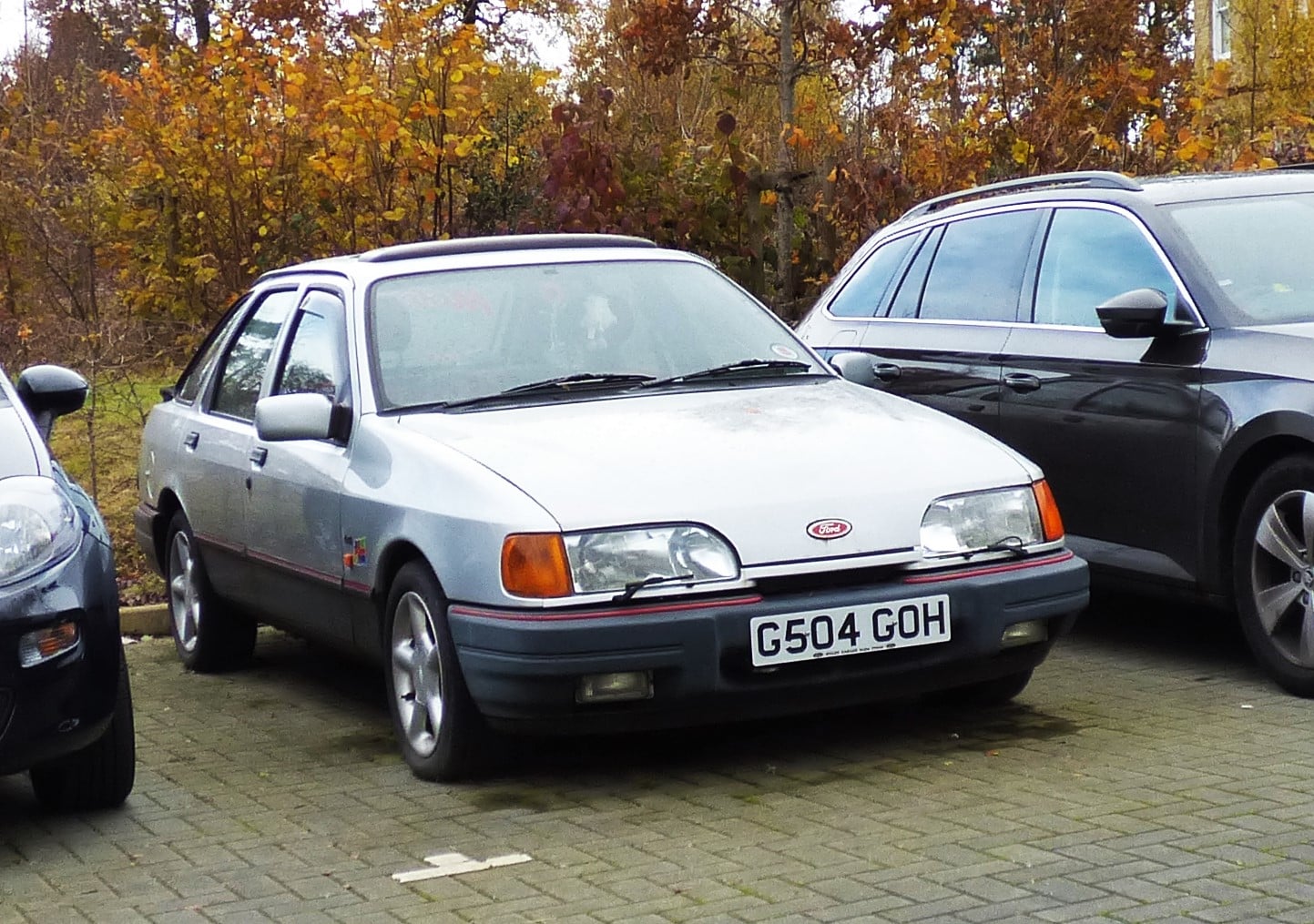
The Sierra earned its keep in working trim. The five-door hatch and the vast estate hauled reps, families and tools; the 1987 Sapphire saloon calmed conservative fleets with a proper boot; and diesel versions ground out minicab miles. These are the Sierras that vanished almost completely, worked to death and raced into banger-track oblivion, which has inverted the market: an honest GL estate or base Sapphire now draws the crowd that ignores another modified fast one. The 1980s Ford story has no better example of the ordinary becoming precious.

The Sierra’s other lives
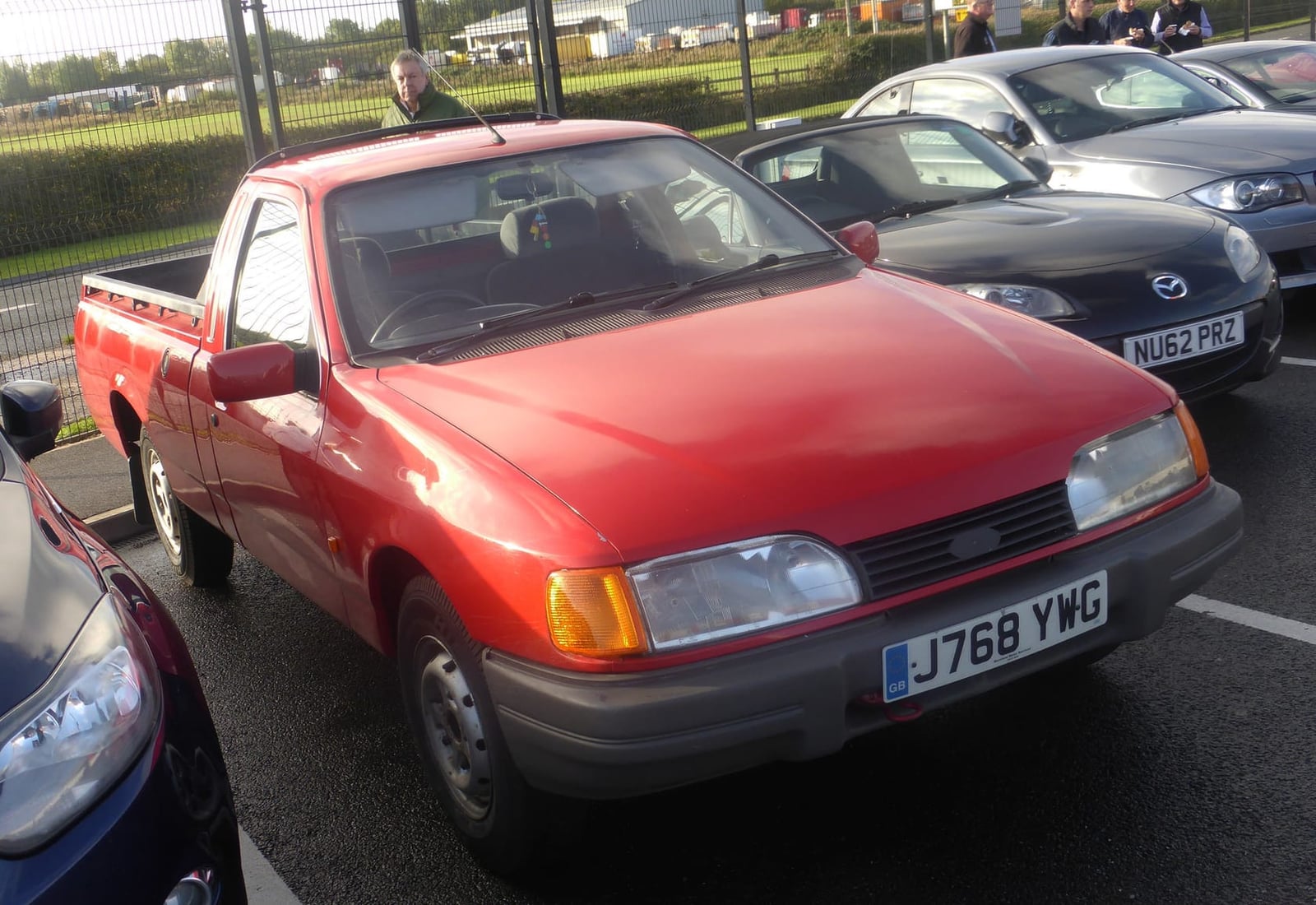
The family ran wider than the showroom range. The P100 pickup put a Sierra front half over a working load bed and became the builder’s yard standard of its decade; America received the three-door as the Merkur XR4Ti with a turbo four, a cult footnote now; and South Africa’s XR8 squeezed a Windsor V8 in for homologation, the rarest civilian Sierra of all. Police forces up and down the country ran big fleets of 2.0 and XR4x4 patrol cars, adding yet another survivor category the clubs lovingly track and restore. Every one of these branches is scarcer than the mainstream cars, and each brings its own small collector world to the Sierra story.

What a Sierra is like to drive
The recipe is the Cortina’s polished: rear-drive balance, light controls, and engines from mild Pinto to muscular V6, wrapped in a quieter, slipperier body. A 2.0 GL cruises motorways with modern ease, the XR4x4 covers wet B-roads with real pace, and everything is unintimidating to drive and to fix. The Sierra was engineered as transport rather than theatre, and forty years on that translates to the most usable classic Ford of its generation, with parts commonality across millions of cars.
Buying a Ford Sierra today
Rust hits arches, sills, inner wings, tailgate seams and screen surrounds; sound structure matters far more than trim spec, because good panels are scarcer than mechanicals. Pinto and V6 engines are tough and known; check service history, cooling health, and on 4x4s the transfer-case’s oil habits. Originality is the market’s obsession, after decades of modification, so unmolested cars with history carry firm premiums and modified cars price accordingly. The owners’ clubs, fast-Ford adjacent, know the survivor population individually, and provenance files, old MOTs and dealer books add real money at sale time, because a documented ordinary Sierra is now a rarer thing than most supercars.
Values: the ordinary made rare
Sierra values track scarcity: £3,000 to £5,000 usable, £5,000 to £9,000 good, low-mile time-warps beyond, XR4i toward £18,000, XR4x4 a step back. Set against 1.3 million sold, every survivor is a statistical marvel, and the market has finally noticed. For the buyer who remembers the school run in one, no classic delivers more 1980s per pound; for the collector, the civilian Ford Sierra is the missing context that makes the Cosworth legend legible. Either way the advice is identical: find the least modified, least rotten car in the land, pay what it takes, and keep it exactly as Dagenham intended, because originality is the one thing the survivors cannot grow back.

More photos
How the Sierra changed
- 1982Launched to replace the Cortina, dropping razor edges for wind-tunnel curves instantly christened the jellymould.
- 1983The XR4i adds a bi-plane rear wing and 150 bhp of V6; the P100 pickup puts a Sierra front half over a working load bed.
- 1985The XR4x4 brings four-wheel drive; America receives the three-door as the turbocharged Merkur XR4Ti.
- 1987The Sapphire four-door saloon calms conservative fleets with a proper boot.
- 1990South Africa's XR8 squeezes a Windsor V8 in for homologation, the rarest civilian Sierra of all.
- 1993Production ends at around 3.4 million worldwide and about 1.3 million UK sales; the Mondeo replaces it.
What to check on a Sierra
Rust and structure
- Arches, sills and inner wings
- Tailgate seams and both screen surrounds
- Sound structure matters far more than trim specification
- Good panels are now scarcer than mechanical parts
Mechanical
- Pinto and V6 engines are tough and known; judge on service history and cooling health
- On 4x4 cars, check the transfer case's oil habits
- Diesel versions ground out minicab miles and have the histories to match
- Parts commonality across millions of cars keeps the running costs low
Originality and provenance
- Unmolested cars with history carry firm premiums; modified cars price accordingly
- Provenance files, old MOTs and dealer books add real money at sale
- A documented ordinary Sierra is now rarer than most supercars
- The owners' clubs know the survivor population individually, including the ex-police fleets
What the Ford Sierra sells for at auction
In 2025 the median Ford Sierra sold for £5,500 across 37 sales, 36% up on 2024. In real terms, typical Ford Sierra prices were down about 30% over the five years to 2025, once inflation is accounted for.
| Variant | Sold | Typical range | Median |
|---|---|---|---|
| Sierra | 64 | £2,346 - £6,662 | £3,310 |
| Sierra XR4x4 | 35 | £2,750 - £7,351 | £5,540 |
| Sierra XR4i | 28 | £4,812 - £8,562 | £7,007 |
| Sierra Sapphire | 17 | £2,500 - £9,562 | £5,500 |
Show the year-by-year mediansHide the year-by-year medians
| Year | Sold | Median | In 2025 money |
|---|---|---|---|
| 2026 (so far) | 9 | £2,700 | |
| 2025 | 37 | £5,500 | £5,500 |
| 2024 | 20 | £4,056 | £4,212 |
| 2023 | 26 | £4,767 | £5,115 |
| 2022 | 10 | £4,698 | £5,380 |
| 2021 | 13 | £3,441 | £4,255 |
| 2020 | 10 | £6,190 | £7,844 |
| 2019 | 5 | £4,000 | £5,121 |
| 2018 | 3 | £9,500 | £12,368 |
| 2016 | 3 | £1,624 | £2,219 |
| 2014 | 3 | £1,050 | £1,455 |
- £2,500Sierra Sapphire
- £7,200Sierra
- £15,187Sierra XR4x4
- £9,000Sierra Sapphire
- £2,100Sierra
Reasonable evidence. 144 recorded sales: enough for the range to mean something, though a few unusual cars can still move a single year's median. Based on 144 sold results from public classic car auctions (2004 to 10 August 2026). Sold prices, not asking prices, and not a valuation: condition, history and specification vary from car to car. Inflation-adjusted figures use the ONS CPIH index, in 2025 money.
Frequently asked questions
Why was the Ford Sierra called the jellymould?
What is the difference between the Sierra XR4i and XR4x4?
What is a Ford Sierra Sapphire?
How many Ford Sierras are left?
How much is a Ford Sierra worth?
What is the most expensive Ford Sierra ever sold at auction?
How often does a Ford Sierra come up for sale?
Related across themes


More from Ford

Ford Sierra RS Cosworth: the rep's car that became a legend (1986–1992)

Ford Fiesta Mk1: the little front-driver that changed Ford forever (1976–1983)

Ford Mondeo ST220: the last great fast Ford saloon, and the ST200 before it (1999–2007)

Ford Focus RS: Mk1, Mk2 and Mk3, the RS500, and the ST170 that came first (2002–2018)
Recently added

Bentley S-series: the quiet twin with the beautiful secrets (1955–1965)

Rolls-Royce Silver Spirit and Silver Spur: the last Crewe bargain (1980–1999)

Rolls-Royce Corniche: the coachbuilt survivor that outlived its makers (1971–1995)
