Ford Fiesta Mk1: the little front-driver that changed Ford forever (1976–1983)
The Ford Fiesta Mk1 was Ford's first front-wheel-drive small car, a clean-sheet supermini that sold a million inside three years and founded a nameplate that ran nearly half a century. A guide to the Mk1's story, the XR2 and Supersport, why survivors are so scarce, what to check, and what one costs today.
Built 1976–1983 93 recorded sales
At a glance
- Years
- 1976–1983 (UK sales from early 1977)
- Body styles
- Three-door hatchback; van
- Drivetrain
- Front engine, front-wheel drive
- Engines
- 957cc and 1117cc Valencia; 1.3 Crossflow; 1.6 Kent (XR2)
- Power
- 40 bhp to 84 bhp (XR2)
- Trim levels
- Base, L, GL, Ghia, S, Supersport, XR2
- Production
- Over two million Mk1s; a million inside the first three years
- Assembly
- Valencia, Dagenham and Saarlouis
- Designer
- Tom Tjaarda proposal, developed by Ford design
- Values
- Usable from around £3,500; good cars £6,000-£10,000; XR2s well beyond
- The first
- Ford's first front-wheel-drive production car, project Bobcat
- The wanted one
- The round-lamp XR2 of 1981, the nameplate's first hot hatch
The models
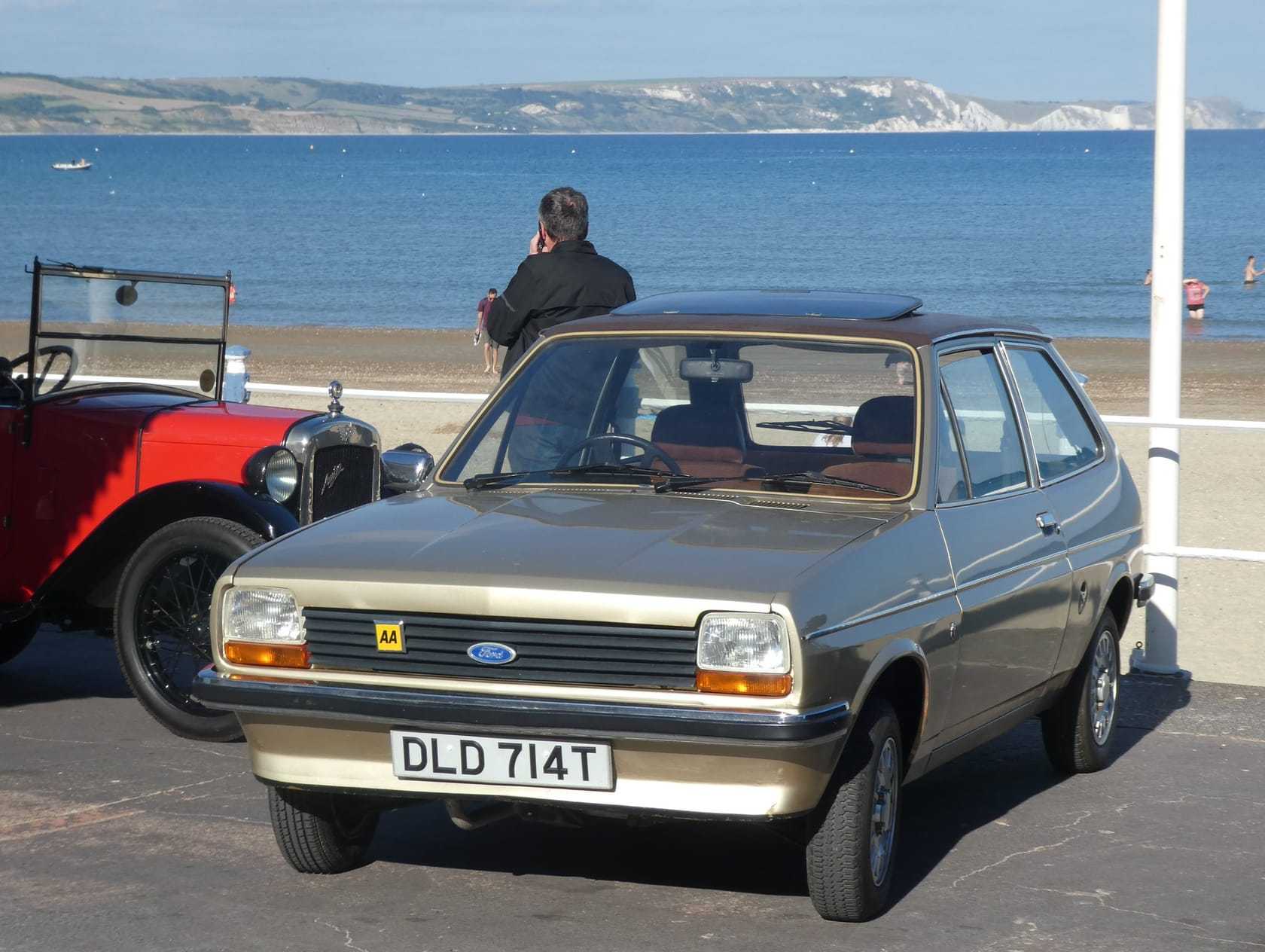
Every Fiesta that ever queued outside a British school traces back to this one: the Mk1 of 1976, Ford’s first front-wheel-drive production car and the biggest bet the company had placed in Europe. A clean-sheet supermini, a brand-new Spanish factory to build it, and a name chosen by Henry Ford II himself, and within three years a million had been sold. As founding documents of modern motoring go, few are this unassuming.
Project Bobcat: Ford learns front-wheel drive
By the early 1970s the supermini wave was breaking across Europe, Fiat’s 127 leading it, and Ford, a rear-drive company to its bones, had nothing to answer with. Project Bobcat became the Fiesta: a transverse-engined front-driver on a crisp three-door body, with the new Valencia plant in Spain built specifically to make it and Dagenham joining for British supply. The engineering was deliberately simple, the packaging was excellent for the footprint, and the whole car weighed comfortably under 800 kilograms, which made even the 957cc base engine feel willing.


The range: from 950 Popular to Ghia
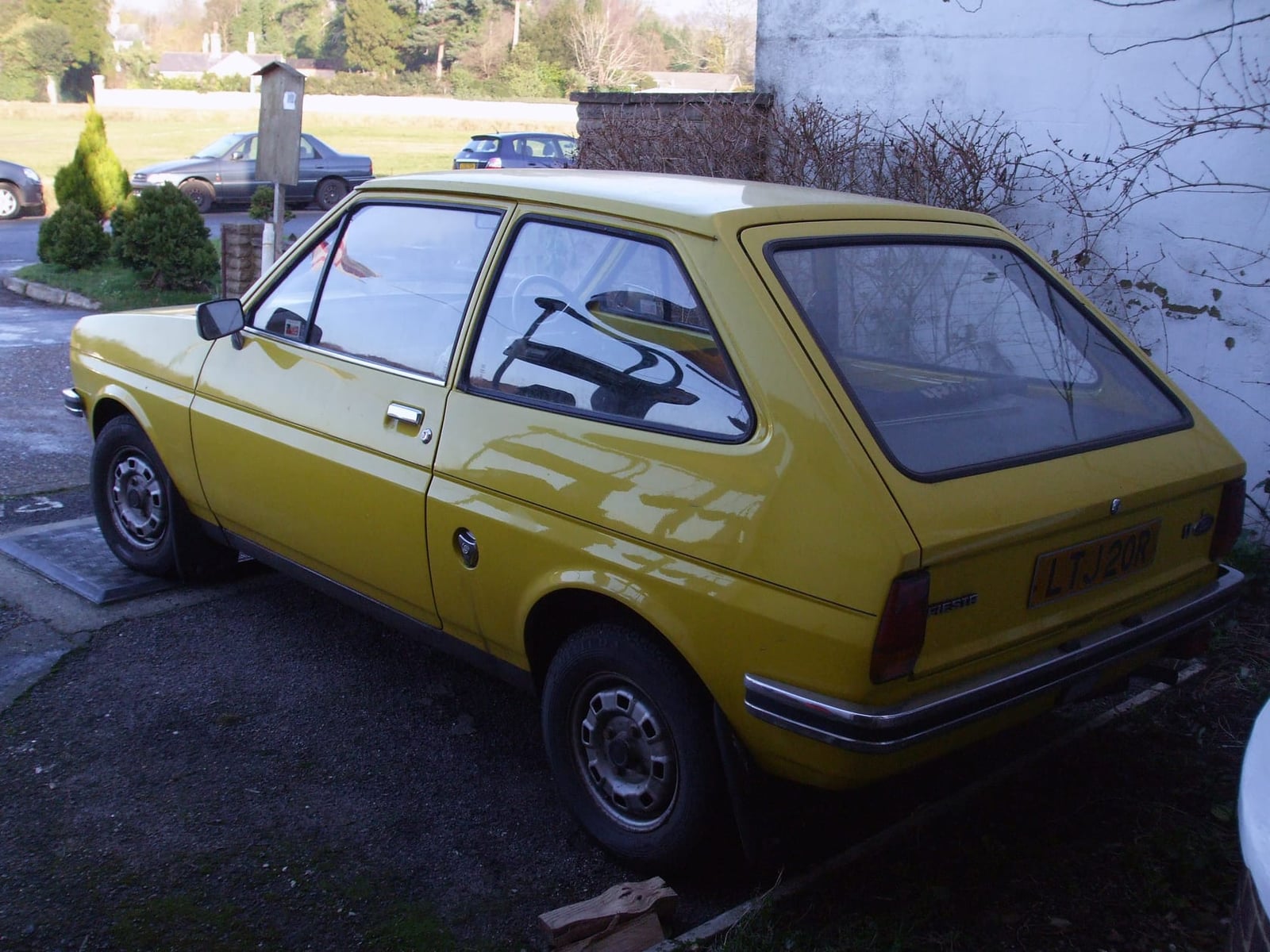
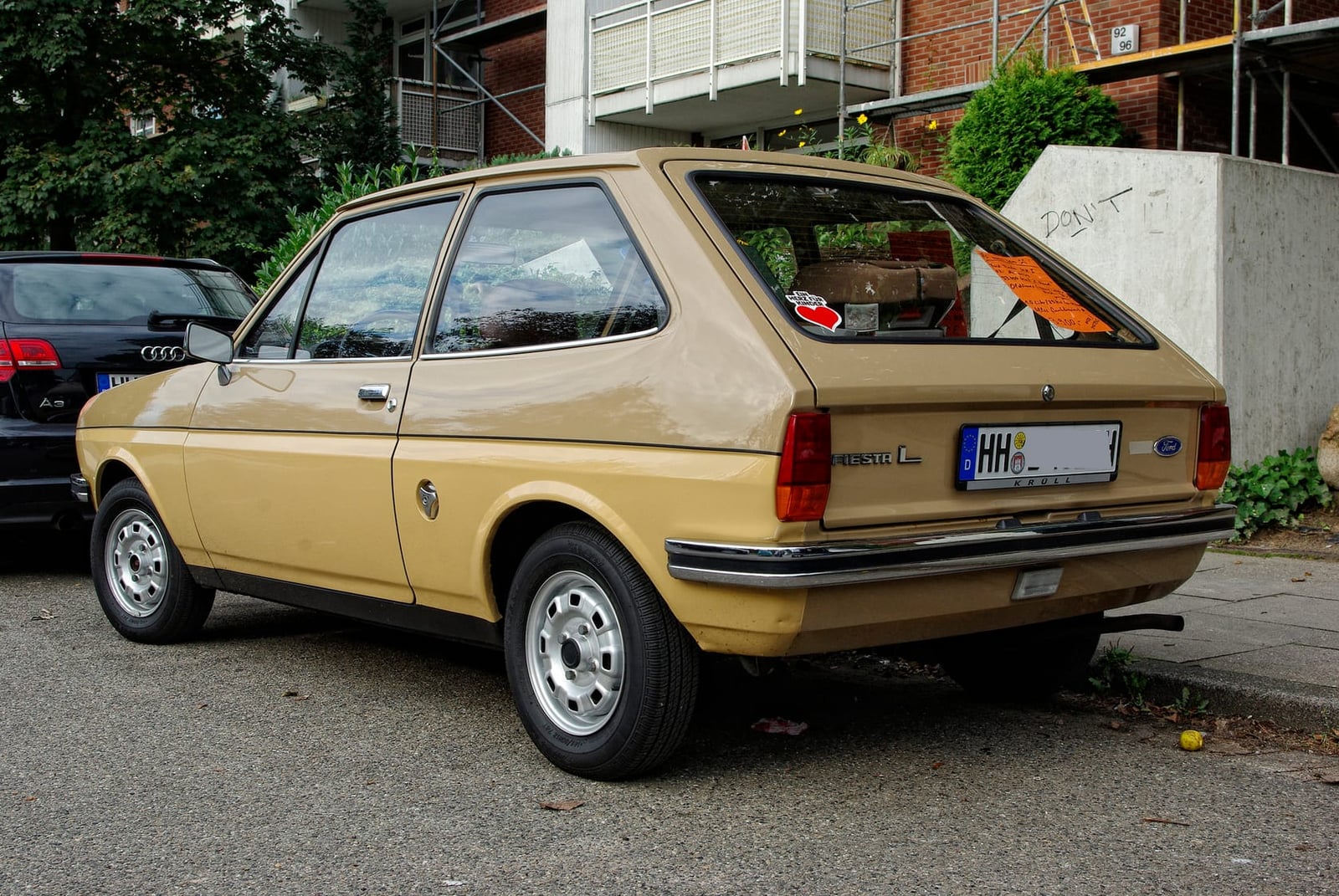
The Mk1 range mapped 1970s Britain precisely: base and L cars for the driveway, GL and plush Ghia trims above, the 1117cc Valencia engine as the volume choice and the 1.3 Crossflow arriving for buyers who wanted proper A-road pace. It drove with a lightness and tidiness that surprised road testers expecting a cynical badge-job, and it out-sold every expectation Ford had set for it. The vans became a fixture of British small trade, and are near extinct today.

Supersport and XR2: the hot one arrives
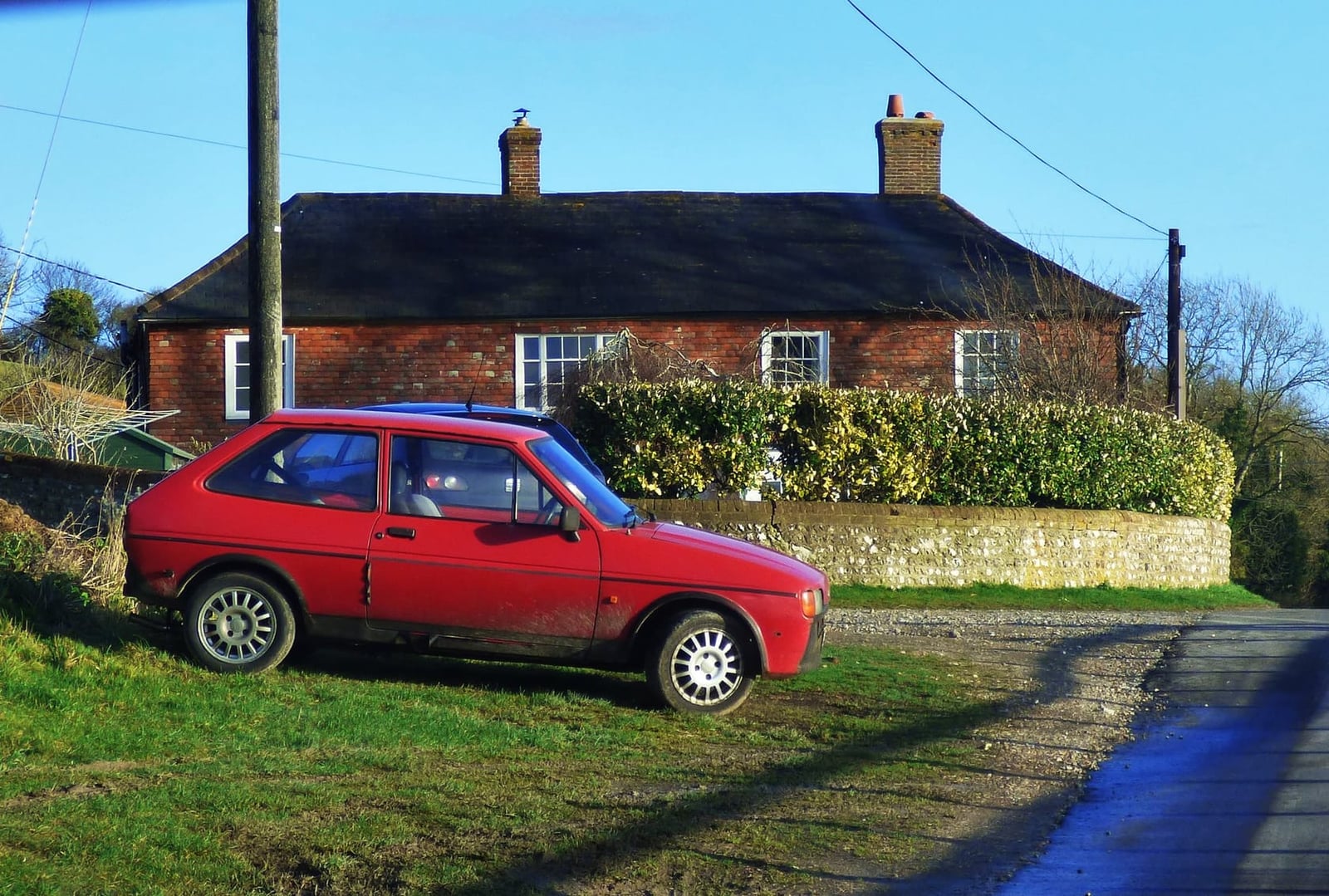
Ford tested the sporting water in 1980 with the Supersport, one year only, a 1.3 with wide arches and attitude, and then committed in 1981: the Ford Fiesta XR2 took the 1.6 Kent engine to 84 bhp in a car of barely 800 kilograms, wearing round headlamps, alloys and a 105 mph top speed. It was the first hot Fiesta, the start of a bloodline that ran through XR2i to the Fiesta ST, and it is now the most wanted Mk1 of all, with the Supersport its rarer, quieter shadow.
Why survivors are so scarce
The Mk1’s fate was the supermini’s fate: bought cheap, worked hard, rusted young and scrapped without sentiment. Sills, wheelarches, tailgates and front wings went first, and successive scrappage waves cleared the rest, so a car that sold in the millions now survives in the low thousands. The pattern inverts the usual market: cherished XR2s outnumber honest base-model cars, and a plain 957 Popular in original condition is now the rarer sight at a show than the hot hatch that once chased it.


What a Ford Fiesta Mk1 is like to drive today
The surprise of a Ford Fiesta Mk1 now is how sweet the fundamentals remain. With so little weight the unassisted steering stays light and chatty, the gearchange is a wand, and even the small engines keep up with town traffic without strain, though motorways ask for patience from a 957. The driving position is upright and the glass area vast by modern standards, so the car feels roomier and airier than its footprint has any right to allow. Kent-engined cars add genuine briskness, and a sorted XR2 remains a properly quick cross-country tool in the old hot-hatch manner, grip modest, chassis honest, driver busy and grinning.
Against modern superminis the Mk1 is a period lesson in how much car the 1970s fitted into three metres and 800 kilograms, and using one daily is still plausible in a way few 1970s classics manage: parts are cheap, economy is excellent, and everything is fixable on a driveway in an afternoon.

Buying a Fiesta Mk1 today
Values reward the patient: cars surface through the owners’ club and estate sales more often than the open classifieds, and the van version is now so scarce that commercial-vehicle collectors compete for survivors.
Rust decides everything, so inspect sills, floors, inner wings, arches and the tailgate surround before admiring anything else; mechanical parts are cheap and shared with millions of period Fords, but Mk1-specific trim and glass take patience. On XR2s, originality is the market: correct engine, wheels, interior and badging separate the £20,000 car from the £8,000 one, and period modification was near universal, so unmolested cars command real premiums. Values for ordinary cars run £3,500 to £10,000 with XR2s well beyond. Insurance sits in the cheapest classic brackets, and a Mk1 remains one of very few 1970s classics that can still earn its keep on the school run. The Mk1 sits at the young end of the Ford story here, the moment the company that built the Cortina learned the trick that carried it through the 1980s.


More photos
Key dates for the Fiesta Mk1
- 1976Project Bobcat reaches production as Ford's first front-wheel-drive car, built at Valencia, Dagenham and Saarlouis; UK sales follow in early 1977.
- 1979A million cars are built within the first three years.
- 1980The Supersport tests the sporting water for one year only: a 1.3 with wide arches and attitude.
- 1981The XR2 arrives with the 1.6 Kent at 84 bhp, round headlamps, alloys and 105 mph, the first hot Fiesta.
- 1983Production ends at over two million Mk1s; the bloodline runs on through XR2i to the Fiesta ST.
Fiesta Mk1: what to check before you buy
Rust, which decides everything
- Sills, floors and inner wings before admiring anything else
- Arches and the tailgate surround
- Front wings, which went early on most cars
- Successive scrappage waves cleared the rest, so a sound shell is the whole purchase
Mechanical, which is cheap
- Parts are cheap and shared with millions of period Fords
- Everything is fixable on a driveway in an afternoon
- Kent-engined cars add genuine briskness over the Valencia units
- Economy is excellent, which makes daily use plausible in a way few 1970s classics manage
Version and provenance
- The XR2 is the most wanted Mk1, with the one-year Supersport its rarer, quieter shadow
- A plain 957 Popular in original condition is now the rarer show sight
- The van version is scarce enough that commercial-vehicle collectors compete for survivors
- Cars surface through the owners' club and estate sales more often than the open classifieds
What the Ford Fiesta Mk1 sells for at auction
In 2025 the median Ford Fiesta Mk1 sold for £7,560 across 17 sales, 9% up on 2024. In real terms, typical Ford Fiesta Mk1 prices were down about 66% over the five years to 2025, once inflation is accounted for.
| Variant | Sold | Typical range | Median |
|---|---|---|---|
| Fiesta | 47 | £2,376 - £5,976 | £4,624 |
| Fiesta XR2 | 31 | £10,282 - £18,281 | £13,284 |
| Fiesta Supersport | 11 | £13,826 - £20,470 | £18,975 |
Show the year-by-year mediansHide the year-by-year medians
| Year | Sold | Median | In 2025 money |
|---|---|---|---|
| 2026 (so far) | 8 | £14,128 | |
| 2025 | 17 | £7,560 | £7,560 |
| 2024 | 12 | £6,950 | £7,217 |
| 2023 | 14 | £12,244 | £13,139 |
| 2022 | 11 | £10,355 | £11,859 |
| 2021 | 7 | £5,341 | £6,604 |
| 2020 | 4 | £17,658 | £22,376 |
| 2019 | 5 | £8,325 | £10,657 |
| 2018 | 3 | £10,000 | £13,019 |
| 2016 | 3 | £7,700 | £10,521 |
- £17,000Fiesta Supersport
- £20,750Fiesta XR2
- £3,700Fiesta
- £3,550Fiesta
- £10,638Fiesta XR2
Reasonable evidence. 93 recorded sales: enough for the range to mean something, though a few unusual cars can still move a single year's median. Based on 93 sold results from public classic car auctions (2005 to 10 August 2026). Sold prices, not asking prices, and not a valuation: condition, history and specification vary from car to car. Inflation-adjusted figures use the ONS CPIH index, in 2025 money.
Frequently asked questions
What years is the Mk1 Ford Fiesta?
Was the Ford Fiesta Mk1 a success?
What is the difference between the Fiesta Supersport and XR2?
Why are Mk1 Fiestas so rare now?
How much is a Ford Fiesta Mk1 worth?
What is the most expensive Ford Fiesta Mk1 ever sold at auction?
How often does a Ford Fiesta Mk1 come up for sale?
Related across themes


More from Ford

Ford Mondeo ST220: the last great fast Ford saloon, and the ST200 before it (1999–2007)

Ford Focus RS: Mk1, Mk2 and Mk3, the RS500, and the ST170 that came first (2002–2018)

Ford Cortina: Britain's best-selling car of the 1960s and 70s (1962–1982)

Ford Granada: the executive Ford from The Sweeney to Cosworth (1972–1994)
Recently added

Bentley S-series: the quiet twin with the beautiful secrets (1955–1965)

Rolls-Royce Silver Spirit and Silver Spur: the last Crewe bargain (1980–1999)

Rolls-Royce Corniche: the coachbuilt survivor that outlived its makers (1971–1995)
