Ford Granada Mk2: Cologne V6s, Ghia X and the executive Ford of the 1980s (1977–1985)
Ford reskinned the Granada on the same chassis in 1977, swapped the Essex V6 for Cologne units and the fuel-injected 2.8i, and built the police, taxi and company car of its day. The range from 2.0 L to Ghia X, the 1981 facelift, Cowley's car in The Professionals, what to check, and Mk2 prices.
Built 1977–1985 59 recorded sales
At a glance
- Years
- 1977–1985
- Body styles
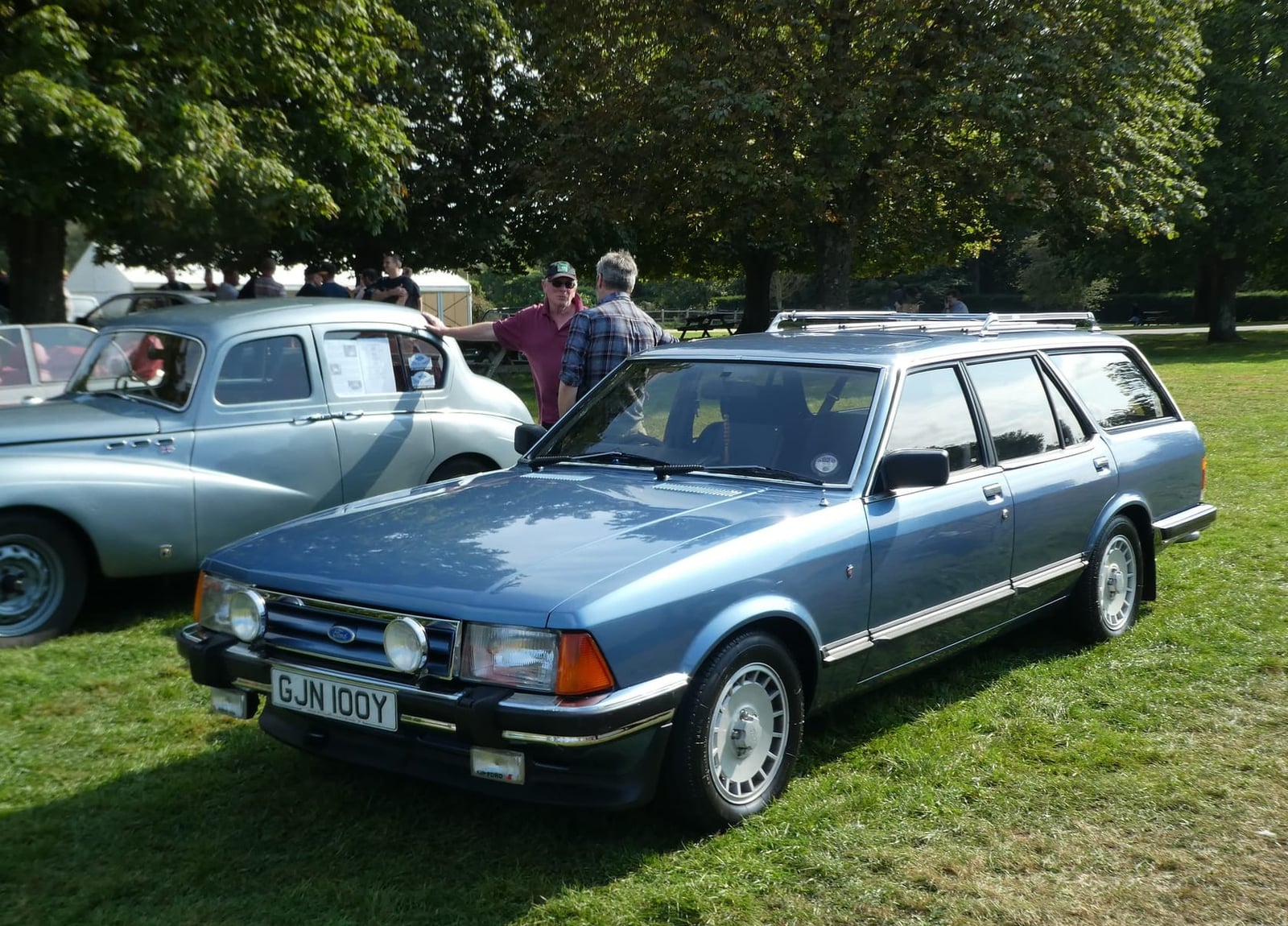
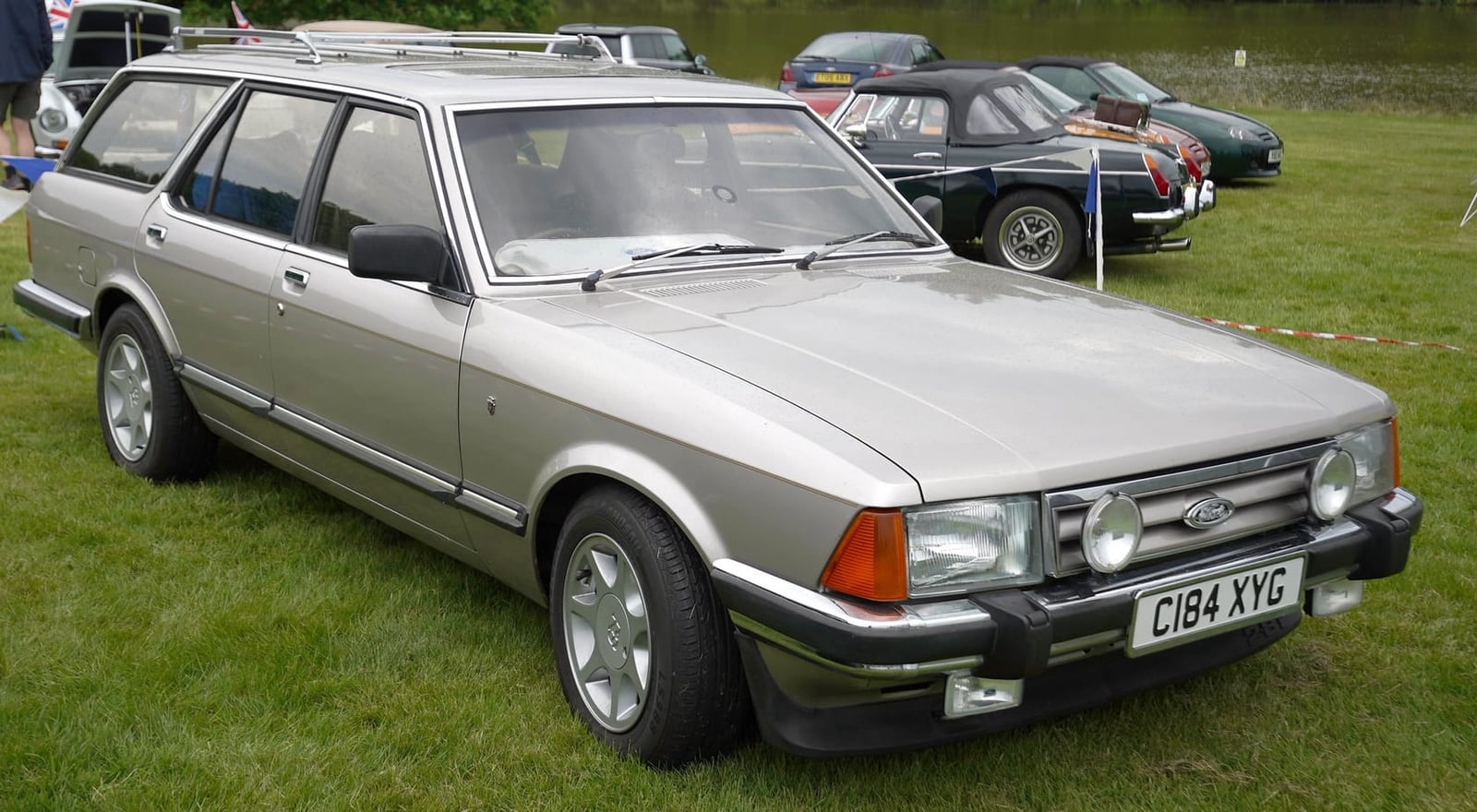
- Four-door saloon, five-door estate
- Drivetrain
- Rear-wheel drive
- Engines
- 2.0 Pinto; 2.3 and 2.8 Cologne V6, the 2.8 also with fuel injection; 2.1 and 2.5 diesels
- Power
- Up to 160 bhp in the original 2.8i, 150 bhp after the 1981 facelift
- Trim levels
- L, GL, GLS, Ghia, Ghia X, Ghia X Executive, LX; 2.8i S
- Production
- Britain's seventh best-selling car in 1979, with more than 50,000 sold
- Assembly
- Cologne
- UK survivors
- No Mk2-only count; the DVLA's Granada figures mix all three generations
- Values
- Around £5,500 median at auction; the top quarter of sales £9,200 and up
The models
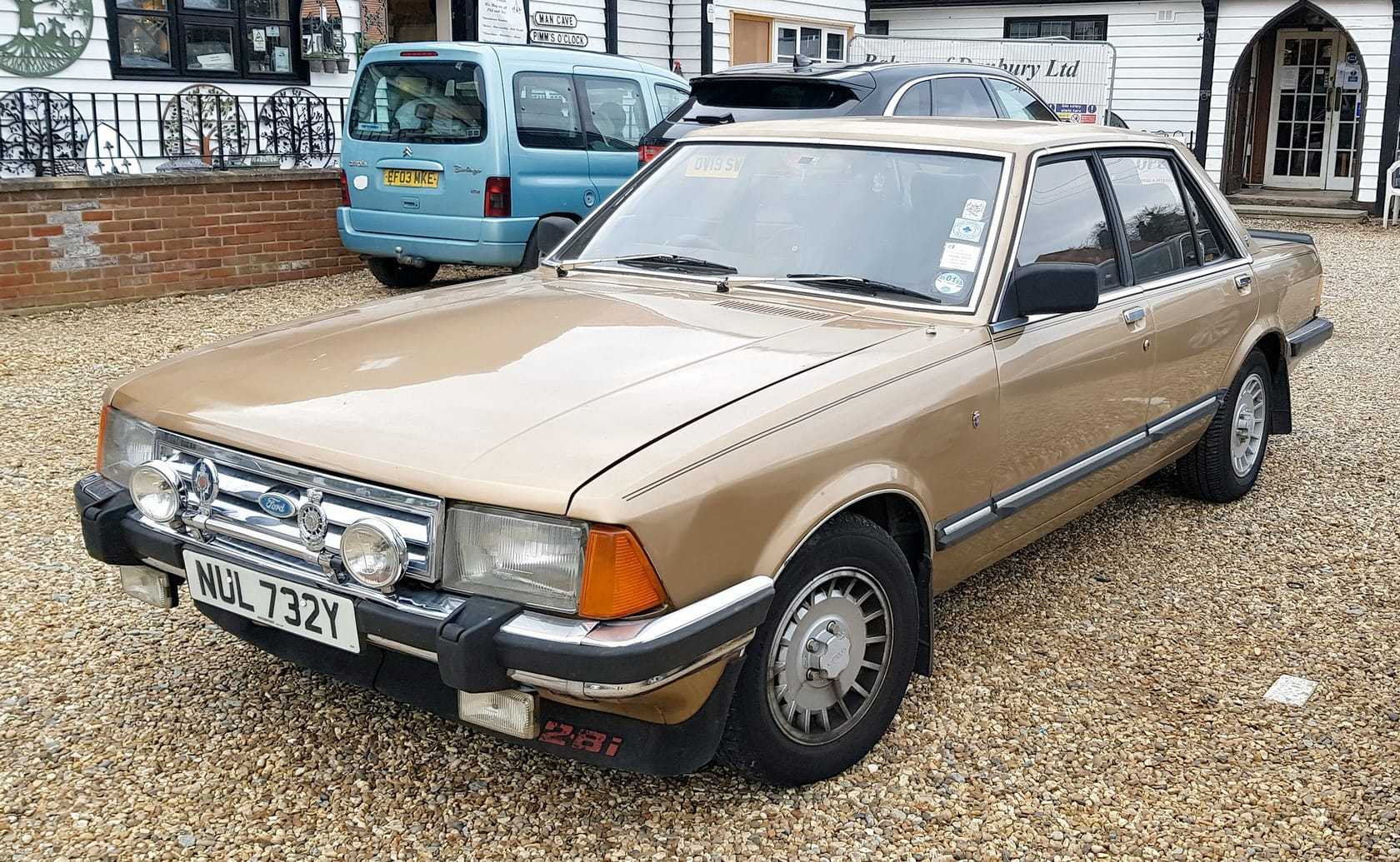
By 1977 the Granada Mk1 had been on sale for five years, and Ford chose to reclothe it rather than replace it. The Mk2, unveiled in the late summer of 1977 and known inside Ford as the Granada 78, kept the chassis, swapped the Essex engines for German V6s and added fuel injection at the top of the range. Through the early 1980s it was the big British company car, the police traffic car and the taxi, and very few of them were looked after once those jobs were done.
Granada 78
The styling was done under Uwe Bahnsen, Ford of Europe’s design chief, with Patrick Le Quément running the forward design studio. It was a reskin rather than a new car: a new roof, new front and new rear on the 1972 platform, with crisper, flatter surfaces in place of the Mk1’s curves. Underneath the suspension was the same all-independent layout, with coil springs at both ends, rack-and-pinion steering, discs at the front and drums at the back.
The range shrank to a four-door saloon and a five-door estate. The coupe was dropped for lack of demand, and the two-door saloon sold on the Continent until 1981 never came to Britain. Every British-market Mk2 was built at Cologne, because Dagenham had stopped making the Granada in 1976.

Cologne V6 and the 2.8i
The Mk1’s British Essex V6s did not carry over. In their place came the German Cologne V6 in 2.3 and 2.8 litre sizes, the 2.3 at around 108 horsepower and the carburettor 2.8 at around 135, with the 2.0 Pinto four below them. At the top sat the 2.8i, with Bosch K-Jetronic fuel injection and 160 brake horsepower at launch, rated at 150 after the 1981 facelift.
Diesels followed for the taxi trade. The Granada GLD shown at Geneva in March 1979 used a 2.1 Peugeot-designed engine, replaced by a 2.5 around 1982. Four-speed and five-speed manual gearboxes and Ford’s three-speed C3 automatic were offered, and power steering became standard on British cars in 1983.

On test in 1978
Motor Sport tested a 2.8i S in January 1978. At £5,910 before around £380 of extras, it managed about 117 mph, 0 to 60 mph in nine seconds and 26 miles per gallon on Michelin TRX tyres. Bill Boddy did not pretend it was a Mercedes or BMW beater, calling it “a most acceptable luxury car in its own right”. He liked its stability and disliked a harsh ride, an eager clutch and a gear lever with long travel. In the 1980s, that was the honest pitch for the big Ford: most of the comfort and pace for much less money.

L to Ghia X, and the 1981 facelift
The trim ladder ran L, GL, GLS, Ghia and Ghia X, with the Ghia X Executive as a British-market pack on top and an LX and an S pack along the way. A Ghia brought velour trim, a wood-effect dashboard, electric windows and a sunroof, with air conditioning offered from 1982.
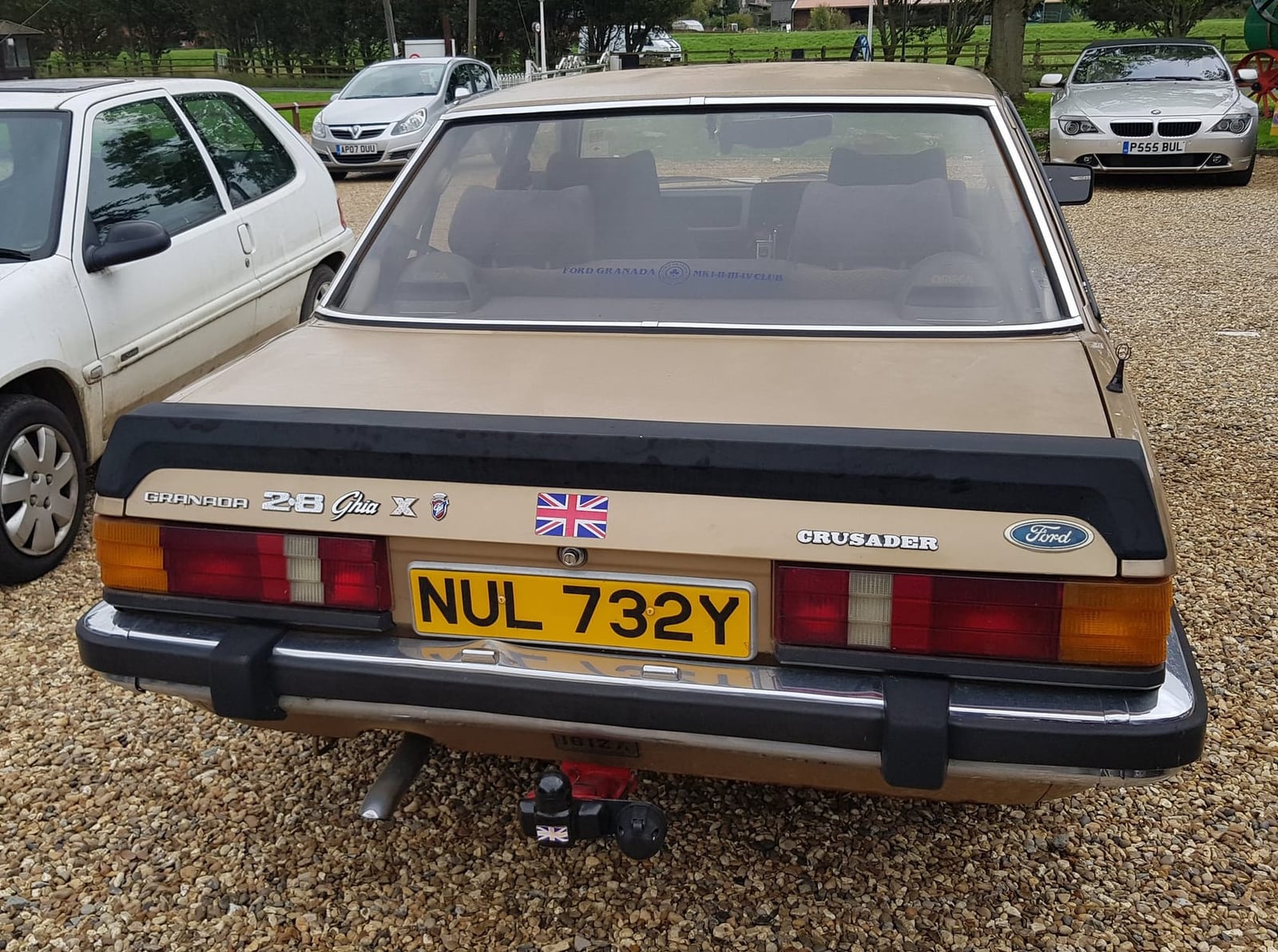
In September 1981 the Granada 82 facelift changed the look. Ford fitted wraparound bumpers, a three-bar grille in body colour, a revised dashboard, restyled tail lamps, new seats and variable-rate rear springs, and reportedly changed more than two thousand parts in all. Most survivors are post-facelift cars, and the facelifted V6s are the ones collectors want. Coleman Milne built Minster, Dorchester and Grosvenor limousines on the Mk2, and a Windsor estate from 1982.

Squad cars, taxis and Cowley
The Mk2 sold well. In 1979 it was Britain’s seventh best-selling car, with more than 50,000 sold, and it led its class throughout. Police forces ran them as traffic cars; Essex Police used a 2.8 automatic GL from 1984 to 1987 and then sold it at auction for £2,209.75. Taxi firms bought the diesels, and Ford offered a taxi pack.
Television kept the Granada in view. George Cowley drove a Mk2 2.8i Ghia in The Professionals, with Ford of Britain supplying the car, and The Sweeney moved on to a silver Mk2 2.8i S after its Consul GT and Mk1 Granadas.

Buying a Granada Mk2 today
Rust and years of hard use as taxis and old bangers mean few survive. The good news is that the sills do not usually rot badly on a Mk2, so a car with very poor sills is likely to be poor everywhere else too. Brake problems are common on cars that have stood, and decent replacement trim, especially for the Ghia and Ghia X, is very scarce. The Cologne V6 belongs to the same family as the engines in the later Capri and Sierra, which helps with mechanical parts.
There is no reliable count of Mk2s alone. The DVLA’s Granada figures cover all three generations together. The Granada Mk I and Mk II Drivers Guild and the Granada Mk I Owners Club both take Mk2 owners.

Values: still cheap for a V6 executive car
Fifty-nine recorded auction sales since 2011, not counting the unrelated American Granada, put the Mk2 median near £5,500, with the middle half of the market between about £4,100 and £9,200 and about three cars in four offered actually selling. The best price on record is £29,531 at H&H in April 2025.
The Granada Mk3 that replaced the Mk2 in April 1985 was a hatchback, and the first mainstream European car with anti-lock brakes as standard across its range.
More photos
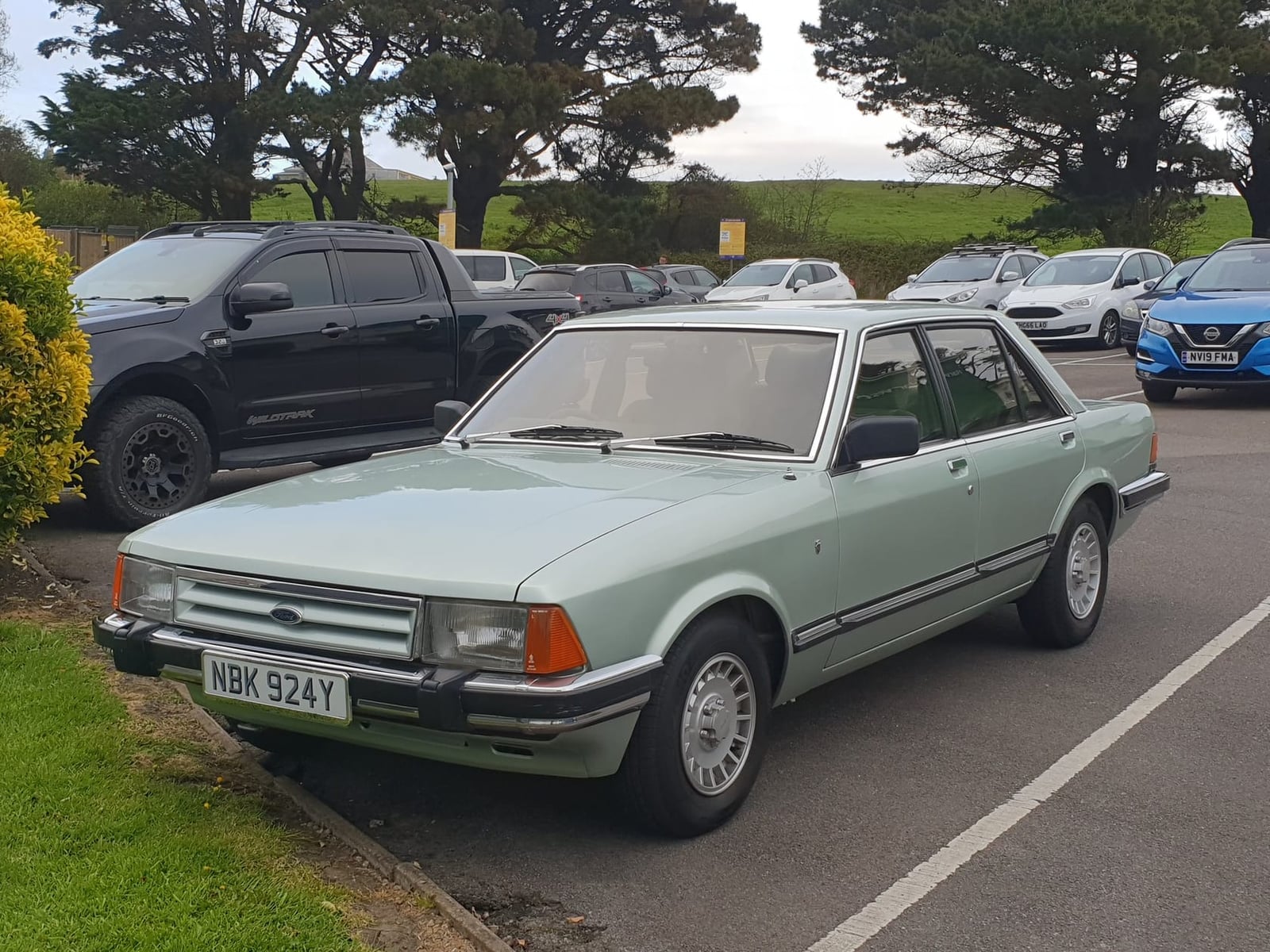
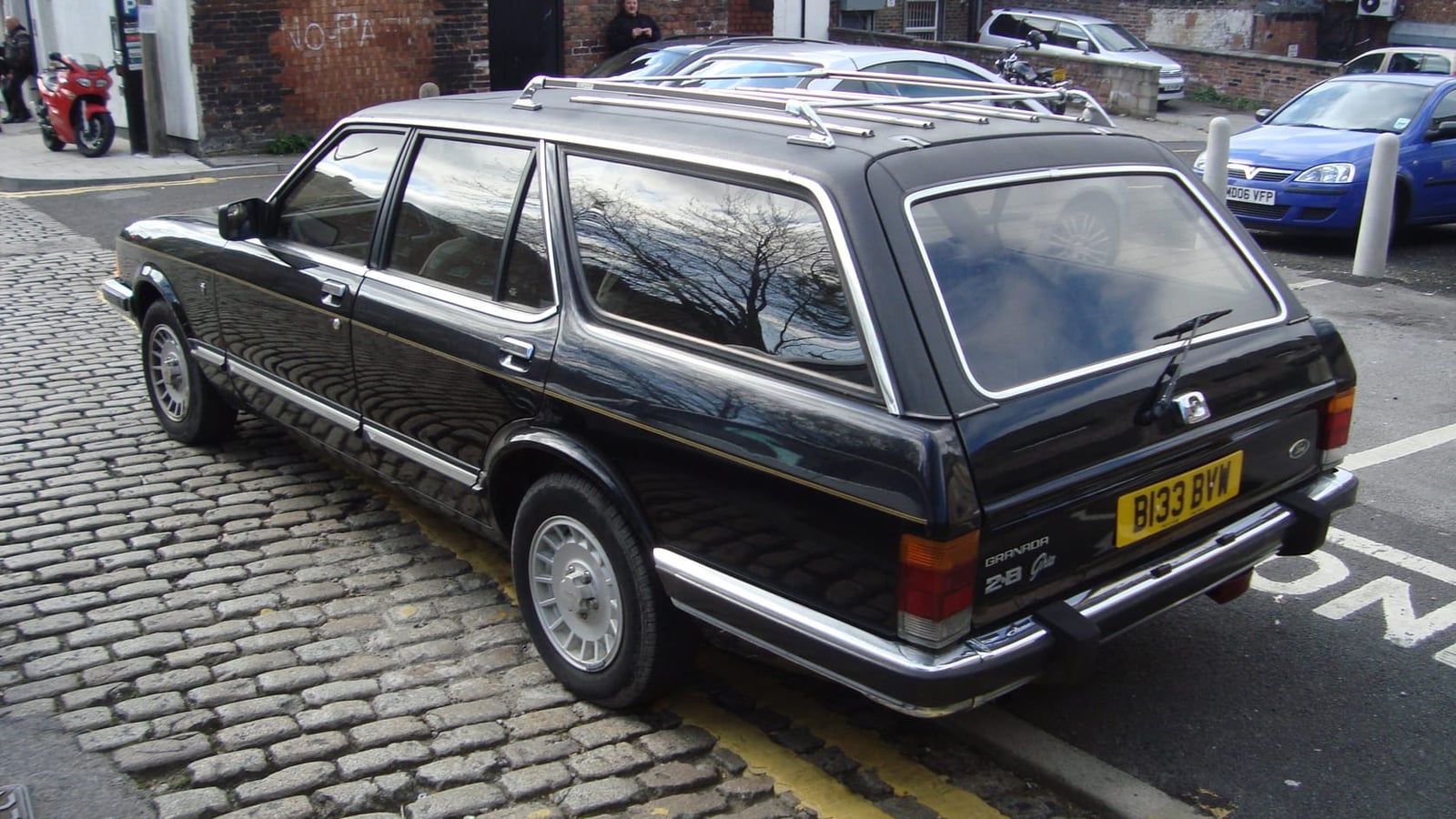
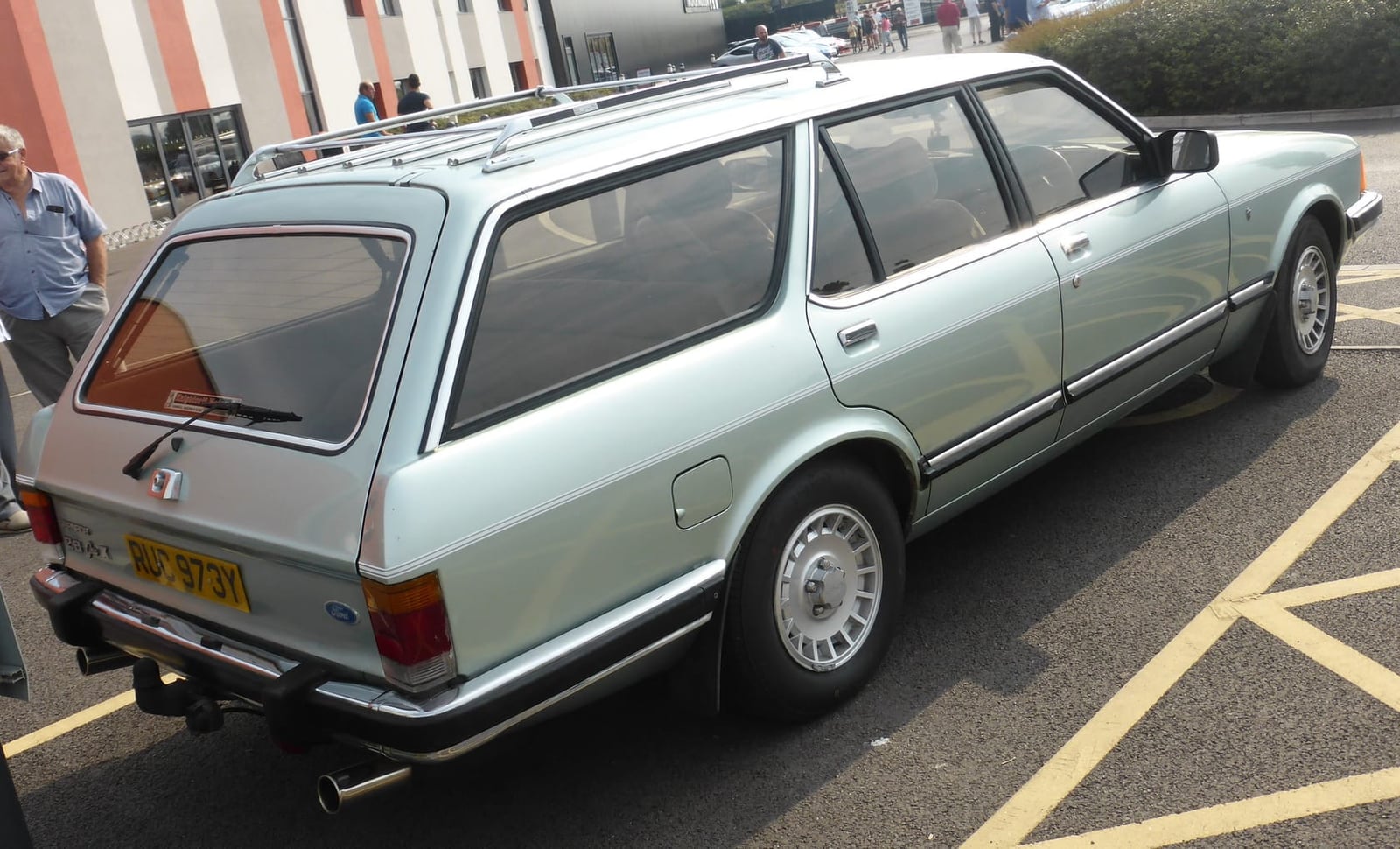
Granada Mk2: the short history
- Aug 1977The Granada 78 arrives with a new body on the Mk1 chassis and Cologne V6 engines, including the fuel-injected 2.8i.
- Mar 1979The diesel Granada GLD is shown at Geneva.
- 1979The Granada is Britain's seventh best-selling car, with more than 50,000 sold.
- Sept 1981The Granada 82 facelift brings wraparound bumpers, a body-coloured grille, a new dashboard and new tail lamps.
- 1982 to 1983A 2.5 diesel replaces the 2.1, air conditioning is offered, and power steering becomes standard.
- Apr 1985The hatchback Mk3 replaces it.
Granada Mk2: what to check before you buy
Bodywork
- Sills do not usually rot badly on a Mk2, so badly rotten sills point to a car that is poor everywhere
- Check the whole underside, because a life as a taxi or banger has finished most of them
Mechanicals
- Brake problems are common on cars that have stood unused
- The Cologne V6 is the engine to have, and the 2.8i the strongest
Trim
- Decent replacement trim is very scarce, especially for Ghia and Ghia X cars
- Post-1981 facelift cars have the body-coloured grille most people remember
What the Granada Mk2 sells for at auction
In 2025 the median Granada Mk2 sold for £10,575 across 10 sales, 72% up on 2024.
Show the year-by-year mediansHide the year-by-year medians
| Year | Sold | Median | In 2025 money |
|---|---|---|---|
| 2026 (so far) | 9 | £9,936 | |
| 2025 | 10 | £10,575 | £10,575 |
| 2024 | 12 | £6,138 | £6,374 |
| 2023 | 6 | £6,973 | £7,483 |
| 2022 | 5 | £5,076 | £5,813 |
| 2021 | 4 | £5,447 | £6,736 |
| 2015 | 4 | £1,650 | £2,277 |
- £12,656Granada
- £10,050Granada
- £5,400Granada
- £9,936Granada
- £8,000Granada
Thin evidence. Only 59 recorded sales: read the figures as a sketch of the market, not a price. Based on 59 sold results from public classic car auctions (2011 to 10 August 2026). Sold prices, not asking prices, and not a valuation: condition, history and specification vary from car to car. Inflation-adjusted figures use the ONS CPIH index, in 2025 money.