How much is a Sunbeam Tiger worth? Nearly five Alpines, and falling since 2020
The same body as an Alpine at nearly five times the money, and a market that has lost almost half its real value since 2020. What 384 recorded auction sales say about the Mk I, Mk IA and Mk II, and why the paperwork sets the price of any one car.
Built 1964–1967
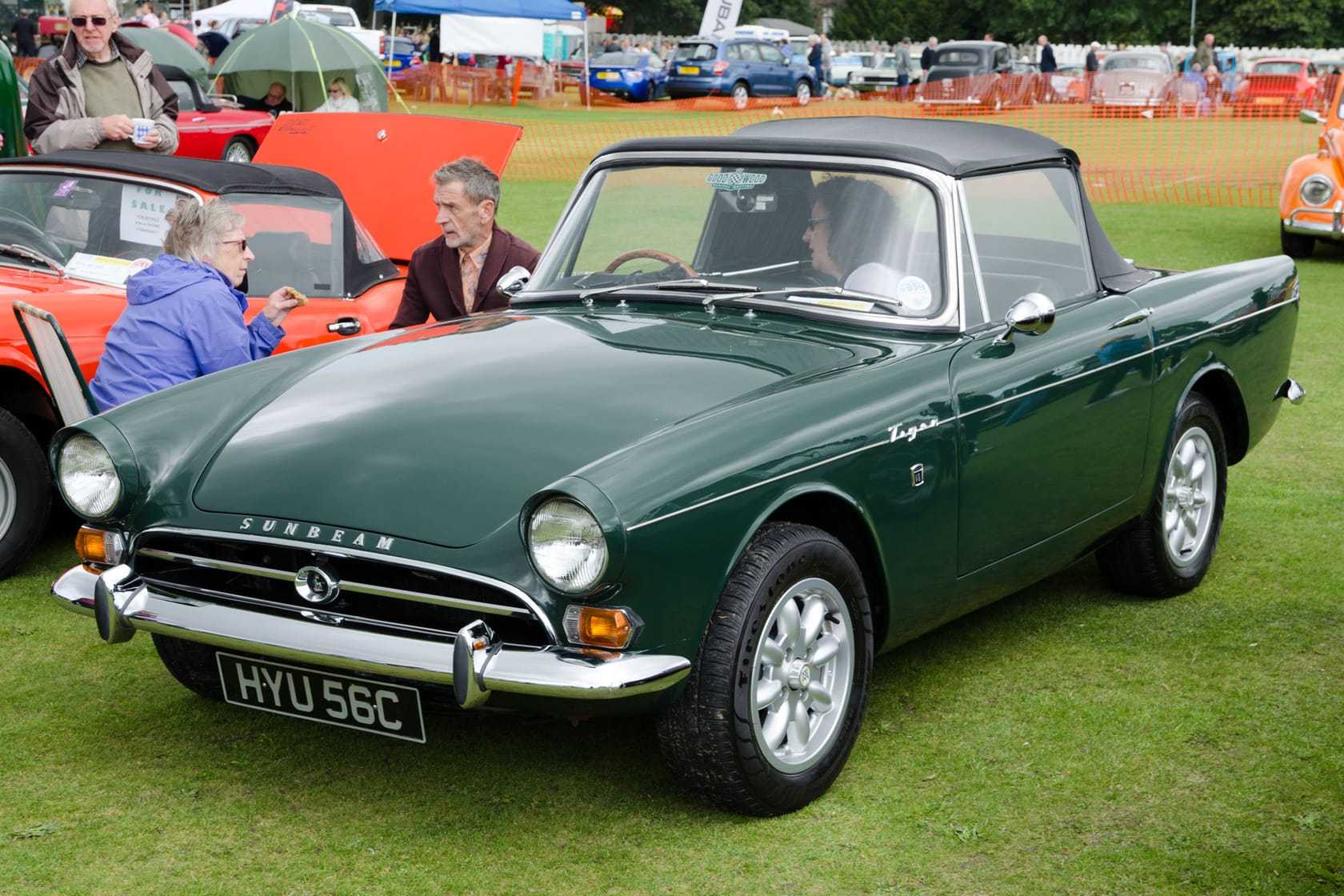
What the Sunbeam Tiger sells for at auction
In 2025 the median Sunbeam Tiger sold for £36,729 across 39 sales, 16% down on 2024. In real terms, typical Sunbeam Tiger prices were down about 46% over the five years to 2025, once inflation is accounted for.
| Variant | Sold | Typical range | Median |
|---|---|---|---|
| Tiger Mk I | 207 | £32,292 - £53,414 | £42,634 |
| Tiger | 72 | £24,064 - £50,838 | £39,471 |
| Tiger Mk IA | 71 | £34,030 - £57,418 | £45,981 |
| Tiger Mk II | 24 | £56,851 - £88,114 | £68,074 |
Show the year-by-year mediansHide the year-by-year medians
| Year | Sold | Median | In 2025 money |
|---|---|---|---|
| 2026 (so far) | 30 | £34,166 | |
| 2025 | 39 | £36,729 | £36,729 |
| 2024 | 34 | £43,780 | £45,460 |
| 2023 | 34 | £46,167 | £49,542 |
| 2022 | 42 | £45,710 | £52,349 |
| 2021 | 27 | £44,370 | £54,866 |
| 2020 | 27 | £53,631 | £67,962 |
| 2019 | 29 | £48,984 | £62,707 |
| 2018 | 18 | £46,966 | £61,145 |
| 2017 | 14 | £50,322 | £67,032 |
| 2016 | 17 | £44,807 | £61,221 |
| 2015 | 18 | £55,901 | £77,143 |
| 2014 | 15 | £41,165 | £57,036 |
| 2013 | 11 | £40,143 | £56,413 |
| 2012 | 10 | £34,975 | £50,277 |
| 2011 | 7 | £25,875 | £38,149 |
| 2010 | 3 | £19,997 | £30,628 |
| 2005 | 3 | £27,269 | £47,394 |
- £11,178Tiger Mk I
- £56,285Tiger Mk II
- £32,106Tiger Mk IA
- £44,850Tiger Mk I
- £20,611Tiger Mk IA
Strong evidence. 384 recorded sales and a dozen or more a year: the median and the range are well founded. Based on 384 sold results from public classic car auctions (1999 to 10 August 2026). Sold prices, not asking prices, and not a valuation: condition, history and specification vary from car to car. Inflation-adjusted figures use the ONS CPIH index, in 2025 money.
Sunbeam Tiger values have been sliding for five years, and the record shows it plainly. Across 384 recorded auction sales the median Tiger made £43,856, with the middle half between £32,122 and £58,080, which is nearly five times what the same body fetches as a four-cylinder Alpine. The V8 premium is not in doubt. The direction is: the yearly median has fallen in real terms every year since 2020, and the 2025 figure of £36,729 was the lowest full year in cash since 2012.
The Sunbeam Tiger guide covers the Shelby prototype, the Jensen build and what to check on the car itself. This page is about the money: which mark the market pays for, what proof is worth, and how far the price has come down.
Five straight years down in real terms
The chart has two halves. From 2012 to 2020 the yearly median went from £34,975 to £53,631, with a spike to £55,901 in 2015 that rests on just 18 sales. Since then it has gone the other way: £44,370 in 2021, £45,710 in 2022, £46,167 in 2023, £43,780 in 2024 and £36,729 in 2025, with 2026 at about £34,166 so far on 30 sales.
In cash that reads as a step down in 2021, three steady years and another step down in 2025. Restated in 2025 money it is a slide with no pause at all: £67,962 in 2020, then £54,866, £52,349, £49,542, £45,460 and £36,729, lower every single year and down 46 per cent across the five. These are not thin samples either. Every year since 2019 rests on between 27 and 42 sales, enough to read as a direction rather than noise, and the direction is down. Whether 2026 finishes below 2025 depends on the second half of the year, but its first 30 sales show no sign of a turn.

The Mk II, the Mk IA and the unmarked cars
The variant rows put the 289-engined Mk II on its own at the top, at £68,074 with a middle half of £56,851 to £88,114. That is roughly half as much again as a Mk IA, but it comes from 24 sales, a small sample for a car where one exceptional example moves the figure, so read it as a premium of that order rather than an exact sum. Some 530 were built and most went to America, which makes a Mk II a car you wait for.
Below it, the two 260-engined marks sit close together. The Mk IA’s median is £45,981 across 71 sales and the Mk I’s £42,634 across 207, a gap of a little over £3,000 that the overlapping ranges make hard to bank on. The row worth a second look is the one with no mark at all: 72 cars catalogued simply as a Tiger, at a median of £39,471 and a lower quartile of £24,064, some £8,000 under the Mk I’s. One plausible reading is that a catalogue entry too thin to name the mark tends to come with a history file to match. Ten more sales sit outside the four rows.

Proof decides the price
A Tiger is an Alpine body with a Ford V8 in it, and an Alpine can be given a Ford V8 by anyone with the patience. That is the whole of the Tiger’s pricing problem. The figures here are for cars sold as Tigers, and what a buyer pays the median for is evidence: the known chassis-number sequences and factory build details that marque experts can check, and above all the owners’ clubs’ authentication certificate, which the market treats as the car’s title deed. An honestly declared conversion trades far below a genuine car, nearer good Alpine money plus the cost of the work, and on a car worth nearly five times an Alpine that gap is exactly what tempts the fakers.
Documented period performance options, fitted by the dealers of Rootes’ American arm, add interest on top. Two cars in the record sit outside the ordinary market altogether. The £152,538 at the top was an ex-works rally car, priced on its competition history, and one heavily modified custom convertible is in there too, a one-off rather than a Tiger in the usual sense. Neither tells you anything about an ordinary Mk I.

Dollars, online bidding and one car in three unsold
The Tiger was built for America, most Mk IIs never left it, and right-hand-drive home-market cars are a small minority. The sale rooms follow the cars. Four of the five most recent sales in the record went through Bring A Trailer, the American online auction, at prices from £11,178 for a Mk I to £56,285 for a Mk II, with a Mk I at £44,850 at RM Sotheby’s alongside them. Those are dollar results restated in pounds, so the exchange rate moves the sterling figure as well as the car.
The other number to know is the clearance rate. Of 581 Tigers offered, 384 sold, about two in three, which leaves one car in three going home unsold. That is a lower rate than the Alpine manages, and it fits a market where many sellers’ expectations were set at 2020 prices while buyers bid at today’s. Whether a recorded price includes the buyer’s premium varies by sale, which is one more reason to work from the middle half rather than any single result.

What to pay, and what to insure it for
A genuine Mk I or Mk IA with its certificate and a sound shell belongs in the upper half of its row, roughly £42,000 to £57,000, and a Mk II from about £57,000. Below about £32,000, the lower quartile of the whole record, the questions multiply: about the paperwork first, then the sills, floors and spring hangers the Tiger shares with the Alpine, because structural repair costs real money on either car.
For an agreed-value policy the median is the wrong anchor, since projects and thinly documented cars pull it down; a sorted, certificated car belongs nearer the upper quartile of £58,080, and the evidence an insurer wants is the same file a buyer wants. Selling runs in the same order: certificate, chassis number, build details, then photographs. In a market five years into a real-terms fall, a realistic reserve matters more than it did in 2020, and the clearance rate suggests plenty of sellers have not yet adjusted.
Related
The Tiger’s four-cylinder twin costs a fraction of the money: see what a Sunbeam Alpine sells for. Among the big-engined roadsters of the decade, the Austin-Healey 3000 sells for a little less at the median and the Jaguar E-Type for more. For the period and the maker, see British classic cars of the 1960s and the Rootes Group. Every model with a record of its own is listed under classic car values.
Frequently asked questions
How much is a Sunbeam Tiger worth?
What is a Sunbeam Tiger Mk II worth?
Have Sunbeam Tiger prices peaked?
Is a V8-converted Alpine worth as much as a real Tiger?
What should I pay for a Sunbeam Tiger?
Why do so many Sunbeam Tigers sell in America?
What is the most expensive Sunbeam Tiger ever sold at auction?
How often does a Sunbeam Tiger come up for sale?
Related across themes
Recently added

Ford Granada Mk2: Cologne V6s, Ghia X and the executive Ford of the 1980s (1977–1985)

Ford Fiesta Mk2: the facelift that kept Ford's small car selling (1983–1989)

What a MINI Cooper S R53 sells for, with the Works cars at twice the money
