Standard Vanguard: one car for the whole world, and the engine that powered everything (1947–1963)
The Standard Vanguard was post-war Britain's one-model gamble, a beetle-backed export machine whose wet-liner engine also powered the Ferguson tractor and the Triumph TR sports cars. A guide to the three phases, the Standard name's fate, the Triumph connection, what to check when buying, and what a Vanguard costs today.
Built 1947–1963 29 recorded sales
At a glance
- Years
- 1947–1963
- Body styles
- Saloon, estate, van and pick-up; Phase I-III plus Sportsman and Vignale
- Drivetrain
- Front engine, rear-wheel drive
- Engines
- 2088cc wet-liner four; 2.0-litre six (Vanguard Six)
- Power
- Around 68 bhp to 85 bhp
- Trim levels
- Phase I, Phase II, Phase III, Sportsman, Vignale, Six
- Production
- Around 550,000 across all phases
- Assembly
- Canley, Coventry; assembled worldwide
- Designer
- Walter Belgrove (Phase I); Michelotti facelift (Vignale)
- Values
- Usable from around £4,000; good cars £6,000-£11,000
- The engine's other lives
- The 2088cc wet-liner four also powered the Ferguson tractor and Triumph TR2
- The fate
- Replaced by the Triumph 2000; the Standard name died with it in Britain
The models
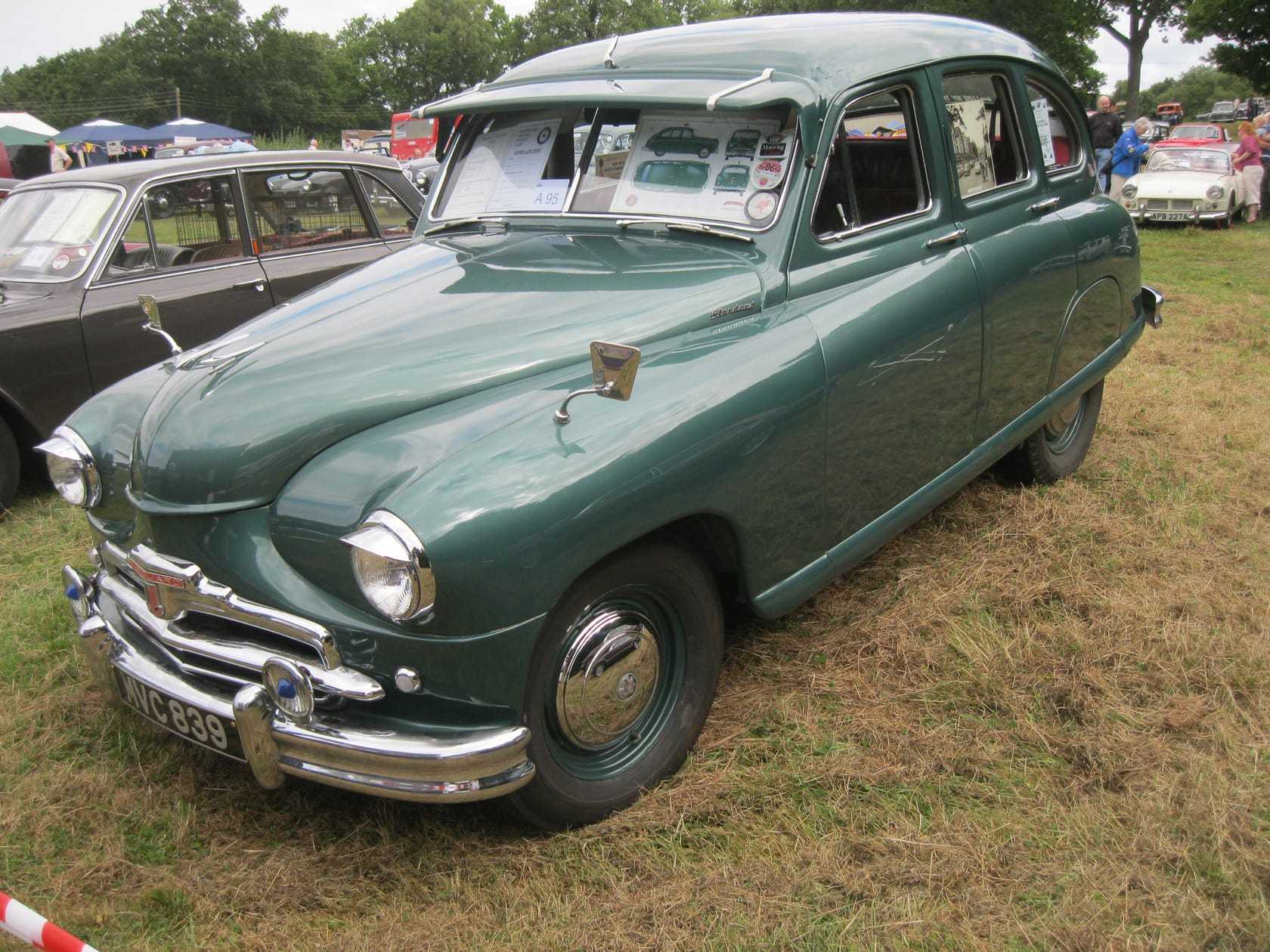
One car for the whole world: that was the Standard Vanguard’s brief, and post-war Britain has no purer expression of the export-or-die years. Launched in 1947 as the Standard Motor Company’s single model for every market, styled for American eyes and named after the Royal Navy’s newest battleship, it sold half a million, seeded Australia and New Zealand with Coventry steel, and lent its engine to a tractor and a sports-car dynasty. Few sensible saloons carry this much story.
The one-model gamble
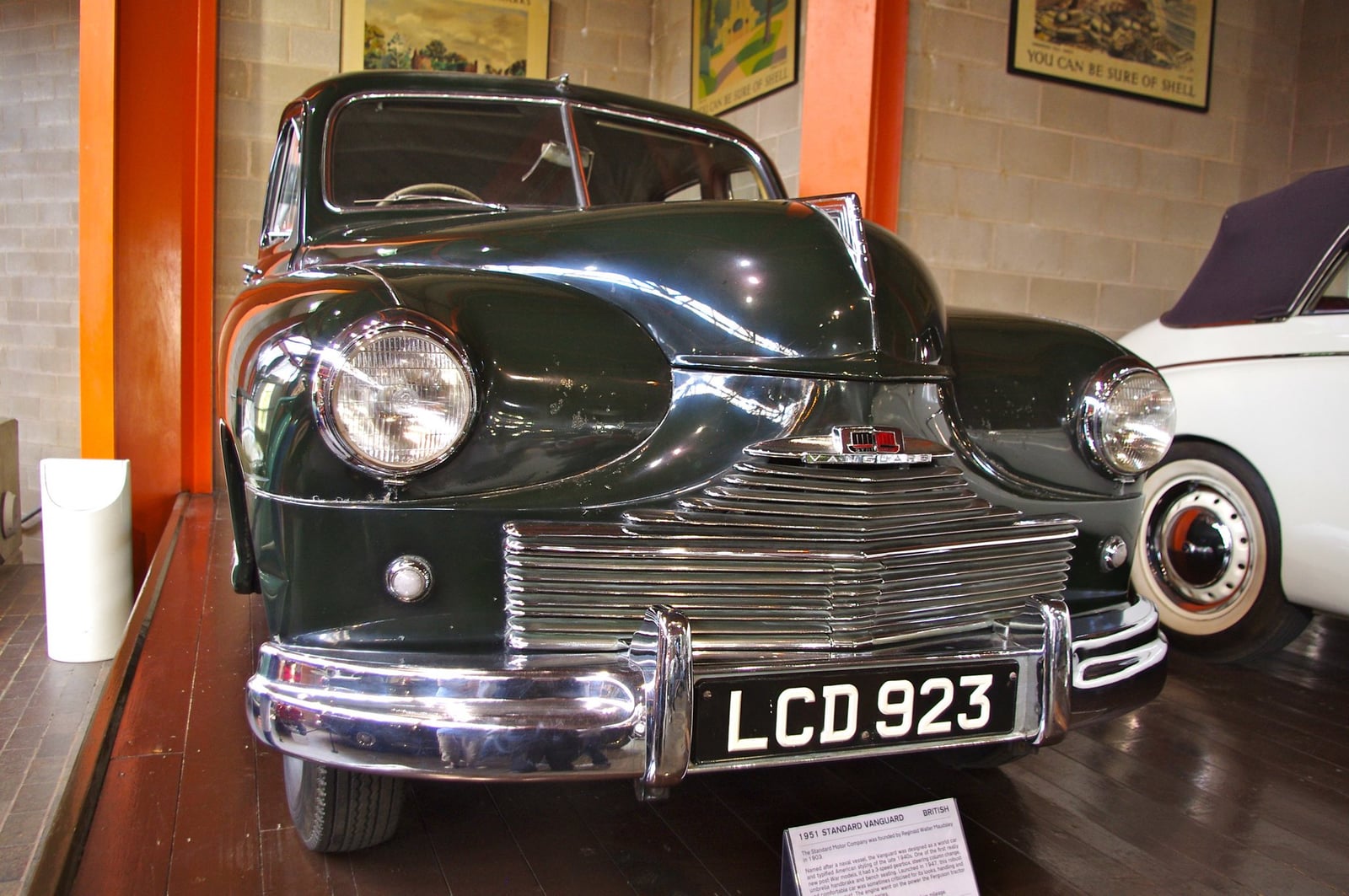
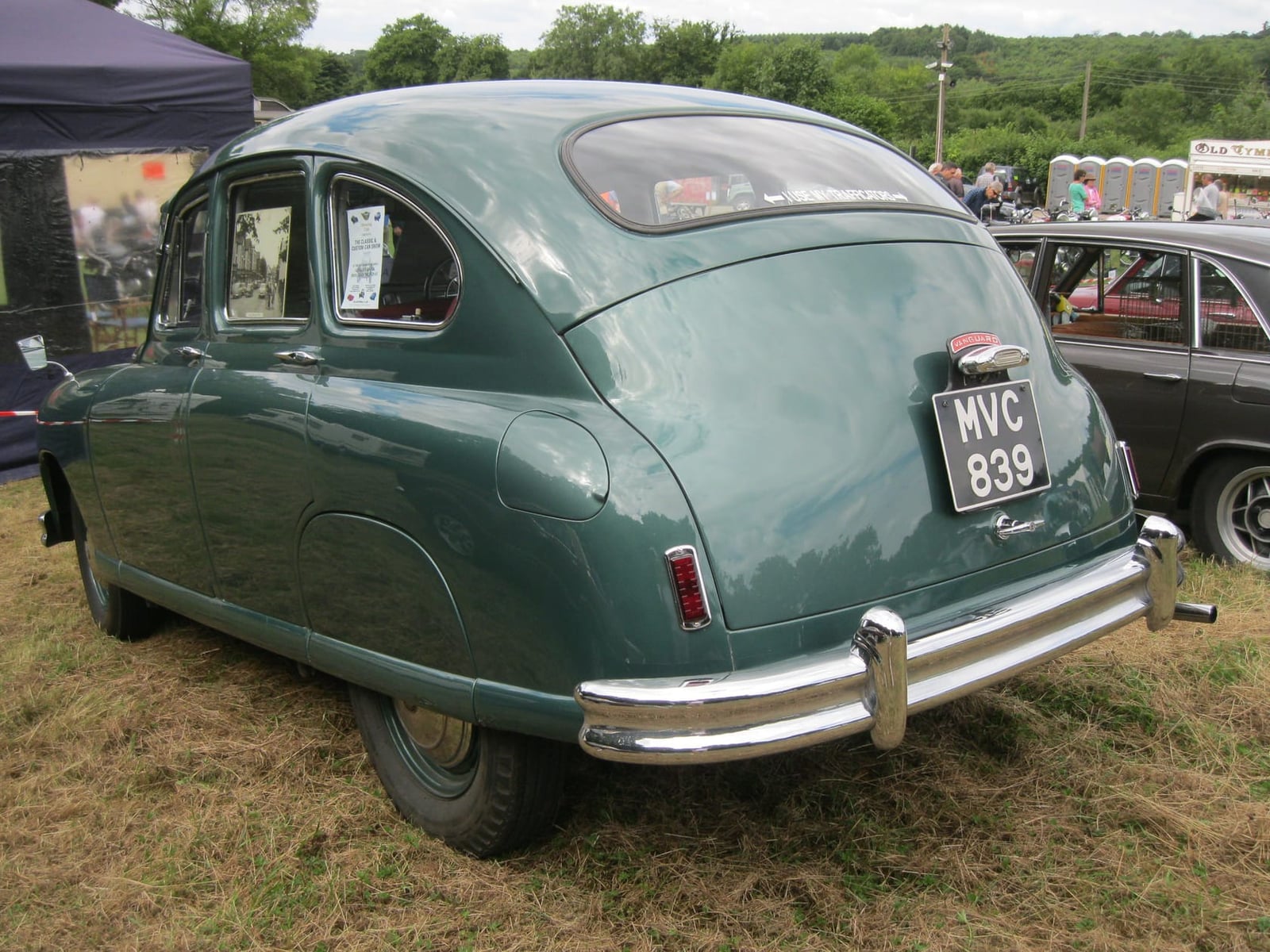
Standard’s managing director John Black bet the company on simplicity: scrap the pre-war range, build one thoroughly modern saloon, and sell it everywhere. Walter Belgrove’s Phase I of 1947 wore full-width, beetle-backed styling that owed more to Detroit than Coventry, sitting on a rugged separate chassis with the new 2088cc wet-liner four. The export-or-die economics did the rest: the great majority of production shipped abroad, with Australia, New Zealand and South Africa assembling their own, and home buyers queued behind the export quota for years.

Three phases and a battleship name
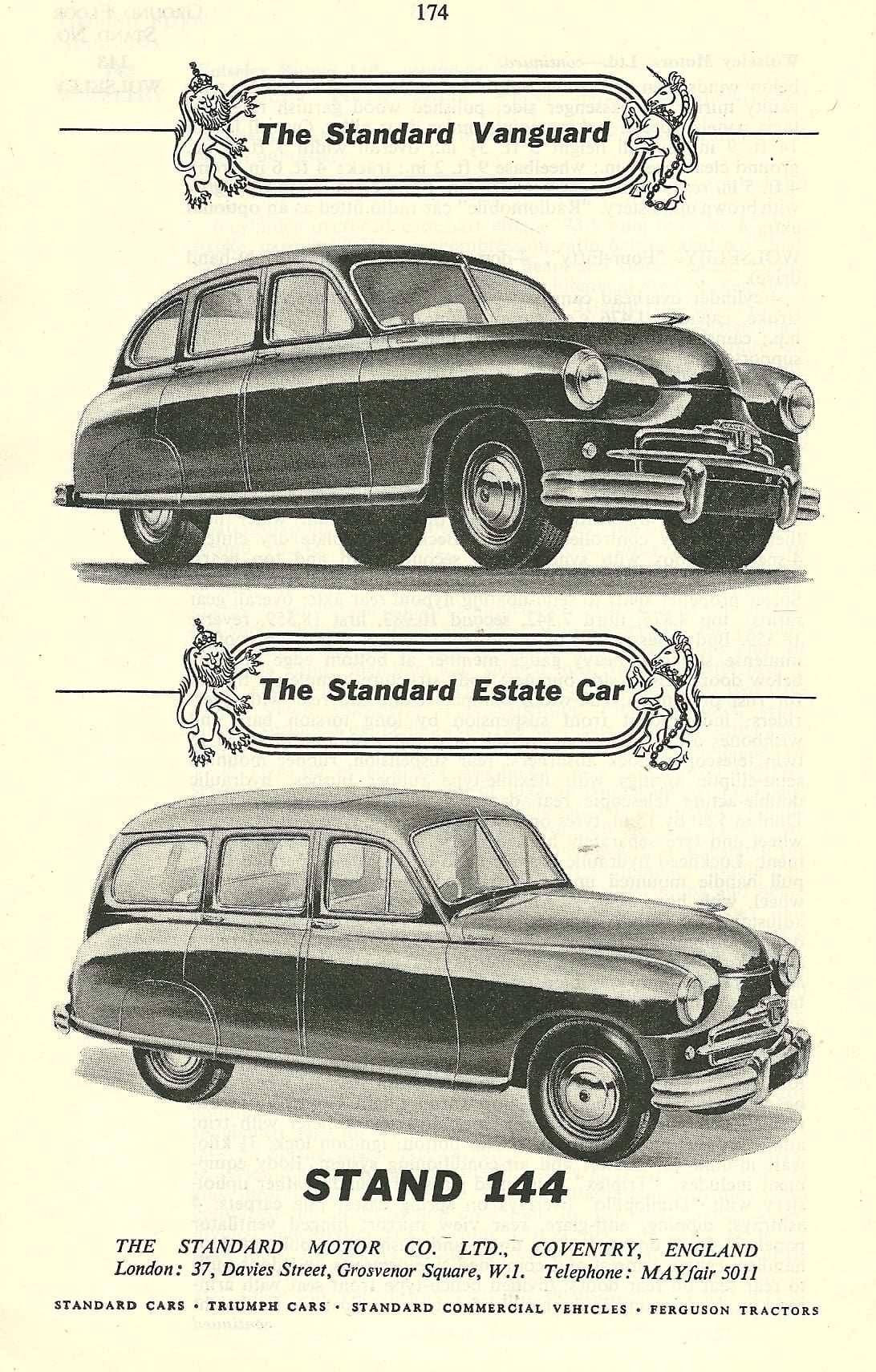
The Vanguard evolved in clear steps. The Phase II of 1953 squared the beetle back into a conventional notchback and added the option of Britain’s first diesel car engine in a mainstream saloon; the Phase III of 1955 brought modern unitary construction and cleaner lines; and the range branched into the two-tone Sportsman, the Vignale Vanguard facelifted by Michelotti, and finally the six-cylinder Vanguard Six. Estates, vans and pick-ups worked alongside throughout. Production ended in 1963 with around 550,000 built, and the replacement told the company’s whole story: it was badged Triumph.

The engine that powered everything
The Vanguard’s wet-liner four deserves its own plaque. Developed alongside Standard’s contract to build the Ferguson TE20 tractor, the 2088cc unit powered the saloon, the tractor programme’s petrol variants, and then, tuned with twin carburettors, the Triumph TR2 and TR3 sports cars that made Triumph’s name in America. Somewhere in the family tree of every side-screen TR sits a ploughing engine wearing a battleship’s name, which is the most British sentence in this site’s catalogue.

The Vanguard abroad
No British saloon of its era travelled further or settled better. Assembly lines in Australia, New Zealand, India and South Africa built Vanguards for their home markets, Australia took the car to its heart as a farm and fleet stalwart, and the pick-up versions worked outback stations for decades. That diaspora matters to British buyers now: the southern-hemisphere survivors outnumber home-market cars, rust-free examples from Australia’s dry states have been trickling back for years, and a repatriated Vanguard with honest history is often the best buy on the market. The model’s global career also explains the odd specification: export markets shaped everything from gearing to ground clearance.
Standard, Triumph and the vanishing name
Standard had owned Triumph since 1945, and the 1950s slowly reversed the badges’ fortunes: Standard meant worthy, Triumph increasingly meant sporting, and buyers noticed. Leyland’s 1961 purchase of Standard-Triumph settled it, and when the Vanguard’s replacement arrived in 1963 it was the Triumph 2000, with the Standard name retired in Britain after sixty years. The Vanguard thus closed a marque as well as a model line, which gives its survivors a poignancy the car’s sturdy nature never asked for.


What a Vanguard is like to drive
The Standard Vanguard drives exactly as its brief demanded: solid, unburstable and unhurried. The big wet-liner four delivers its torque low and early, happiest lugging at middling revs the way its tractor cousins do, and the three-speed column change suits the engine’s lazy character. The ride is soft, the bench seats are sofas, and the whole car feels engineered for bad roads in distant countries, because it was. Keeping up with modern traffic is easier than the age suggests, thanks to that torque, though the brakes reward anticipation in the period manner.

Buying a Standard Vanguard today
Vanguard buying is condition-and-completeness work in the classic 1950s manner. The separate-chassis Phase I and II cars rot where body meets frame, the unitary Phase III demands the usual sill and floor scrutiny, and trim is the true scarcity, especially Phase I brightwork and the Sportsman’s specific fittings. Mechanically the news is excellent: the wet-liner four is famously tough, parts interchange with the TR world helps more than owners expect, and the marque’s club support is devoted. Values stay gentle, £4,000 to £11,000 covering almost everything, for a car whose engine notes connect the tractor field to Le Mans class wins. The cars of the 1950s hold few better stories at the price.


More photos
Key dates for the Vanguard
- 1947John Black bets the company on one model: Belgrove's beetle-backed Phase I, named for the Navy's newest battleship, with the great majority of production shipped abroad.
- 1953The Phase II squares the tail and offers Britain's first diesel engine in a mainstream saloon.
- 1955The Phase III brings unitary construction and cleaner lines.
- 1957The two-tone Sportsman and Michelotti's Vignale facelift branch the range; the Vanguard Six follows.
- 1963Production ends at around 550,000; the replacement is badged Triumph 2000 and the Standard name retires in Britain.
What to check on a Vanguard
Structure, by phase
- Phase I and II: rot where body meets the separate chassis
- Phase III: the usual unitary sill and floor scrutiny
- Estates, vans and pick-ups worked hardest
- A repatriated dry-state Australian car sidesteps most of it
Trim, the true scarcity
- Phase I brightwork above all
- The Sportsman's specific fittings
- Complete cars beat shiny ones in the classic 1950s manner
- The Vignale's Michelotti details are their own small hunt
Mechanical
- The wet-liner four is famously tough and torquey low down
- Parts interchange with the TR world and the Ferguson tractor programme
- The three-speed column change suits the engine's lazy character
- Brakes reward anticipation in the period manner
What the Standard Vanguard sells for at auction
Show the year-by-year mediansHide the year-by-year medians
| Year | Sold | Median | In 2025 money |
|---|---|---|---|
| 2026 (so far) | 7 | £5,000 | |
| 2024 | 4 | £5,704 | £5,922 |
| 2023 | 3 | £11,250 | £12,072 |
| 2020 | 3 | £2,490 | £3,155 |
| 2018 | 3 | £2,688 | £3,499 |
- £6,500Vanguard
- £9,900Vanguard
- £4,536Vanguard
- £1,848Vanguard
- £5,000Vanguard
Thin evidence. Only 29 recorded sales: read the figures as a sketch of the market, not a price. Based on 29 sold results from public classic car auctions (2005 to 10 August 2026). Sold prices, not asking prices, and not a valuation: condition, history and specification vary from car to car. Inflation-adjusted figures use the ONS CPIH index, in 2025 money.
Frequently asked questions
What is a Standard Vanguard?
Did the Standard Vanguard share its engine with the Ferguson tractor?
What happened to the Standard car company?
Is a Standard Vanguard rare now?
How much is a Standard Vanguard worth?
What is the most expensive Standard Vanguard ever sold at auction?
How often does a Standard Vanguard come up for sale?
Related across themes

More from Triumph

Triumph Roadster: dickey seats, Bergerac and the last of a breed (1946–1949)

Triumph Renown: razor-edge grandeur on a Vanguard chassis (1949–1954)

Triumph Mayflower: the watch-charm Rolls-Royce that dared to be different (1949–1953)

Triumph 2000 and 2500: the six-cylinder saloons that invented a class (1963–1977)
Recently added

Bentley S-series: the quiet twin with the beautiful secrets (1955–1965)

Rolls-Royce Silver Spirit and Silver Spur: the last Crewe bargain (1980–1999)

Rolls-Royce Corniche: the coachbuilt survivor that outlived its makers (1971–1995)
