Austin A40: from Devon to Farina, the small Austin that kept reinventing itself (1947–1967)
The Austin A40 badge covered twenty years of small Austins, the export-drive Devon, the rounded Somerset, the Jensen-bodied Sports and the Farina that quietly invented the modern hatchback shape. A guide to the whole family, buying checks and values.
Built 1947–1967 133 recorded sales
At a glance
- Years
- 1947–1967
- Body styles
- Saloons, tourers, estates, vans and pick-ups; Jensen-bodied convertible (Sports)
- Drivetrain
- Front engine, rear-wheel drive
- Engines
- 1200cc OHV four (Devon/Somerset/Sports); 948/1098cc A-series (Farina)
- Power
- Around 34-50 bhp by model
- Top speed
- Around 66-80 mph
- Trim levels
- Devon (1947–52), Somerset (1952–54), Sports (1950–53), Farina Mk I/II (1958–67)
- Production
- Over 850,000 across the family
- Assembly
- Longbridge, Birmingham (Sports bodies by Jensen, West Bromwich)
- Values
- Usable from around £3,000; good cars £4,500-£8,000; Sports and dropheads well beyond
- The span
- One badge, two eras: separate-chassis 1940s Austin to Pininfarina-suited 1960s
- The quiet first
- The Farina Countryman's split tailgate anticipated the hatchback by a decade
The models
Few badges in the whole catalogue worked harder for Austin than A40. Across twenty years it named the Devon that went out and earned Britain’s export dollars, the rounded and respectable Somerset, a Jensen-bodied convertible, and finally the Pininfarina-suited Farina whose crisp two-box shape quietly sketched the modern hatchback before the world had invented a word for it. Over 850,000 cars wore the badge, the clubs keep both eras thriving, and the Austin A40 family remains one of the friendliest and best-supported entry points into the whole post-war hobby.
Devon: the car that earned the dollars
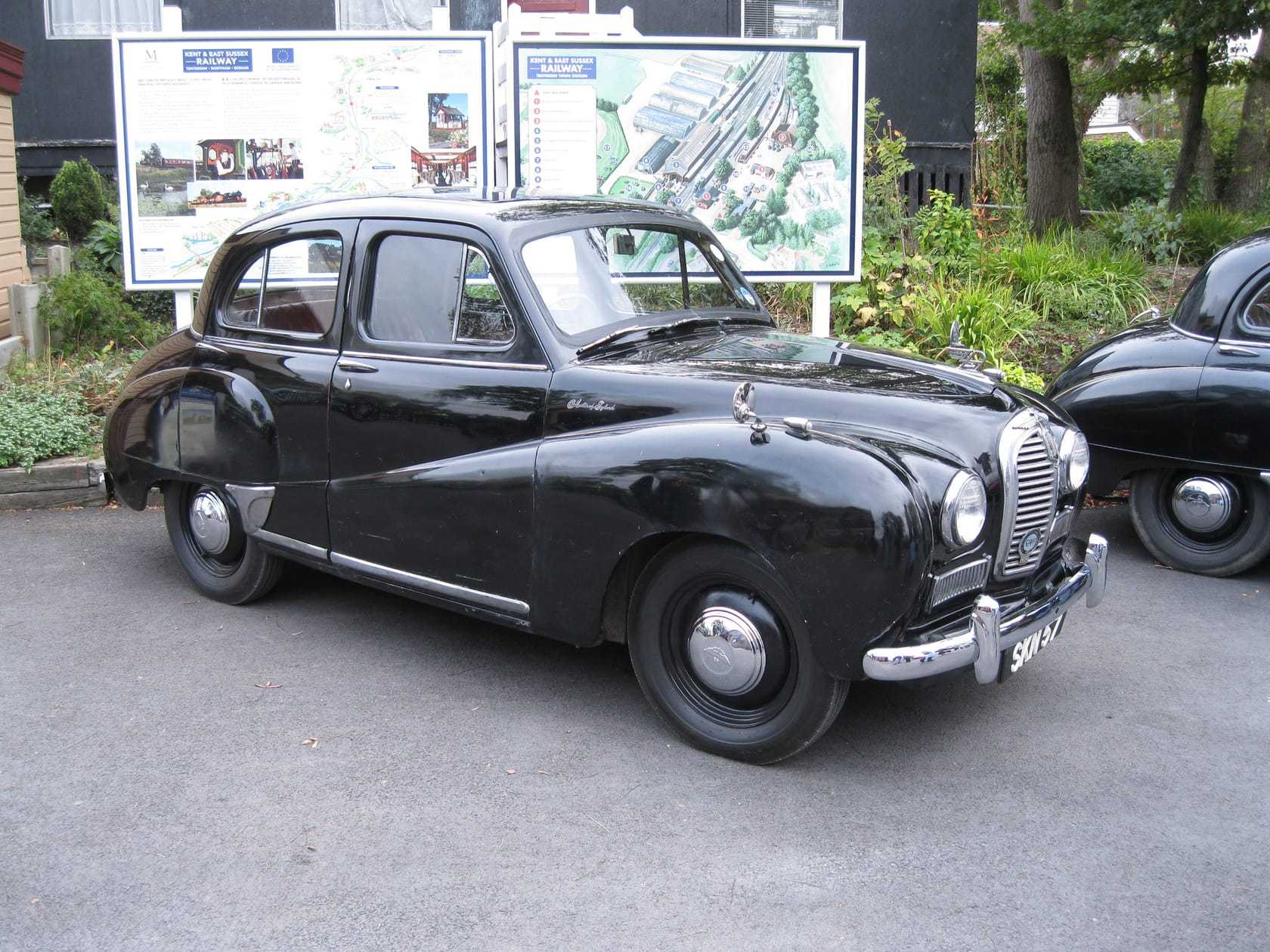
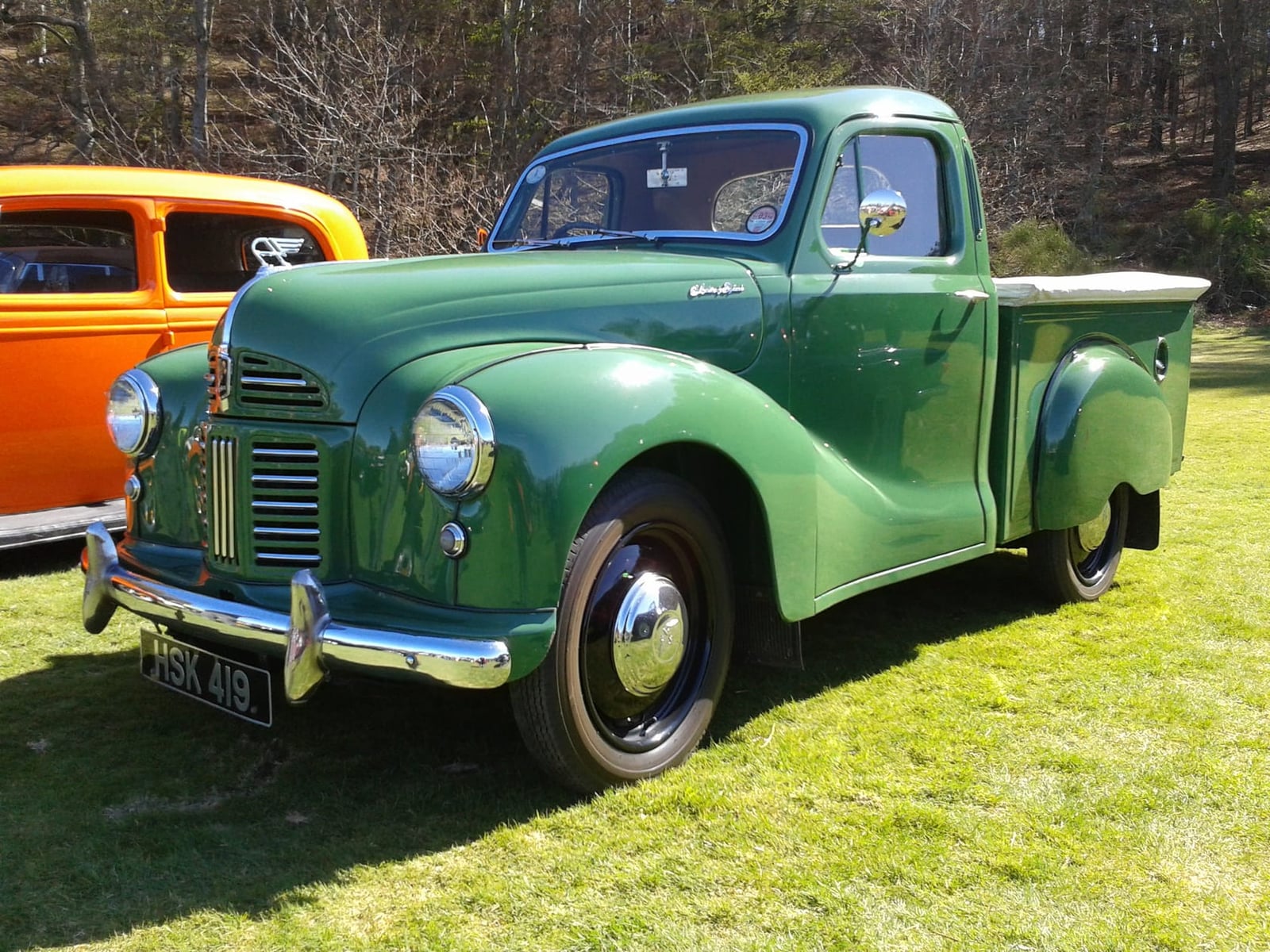
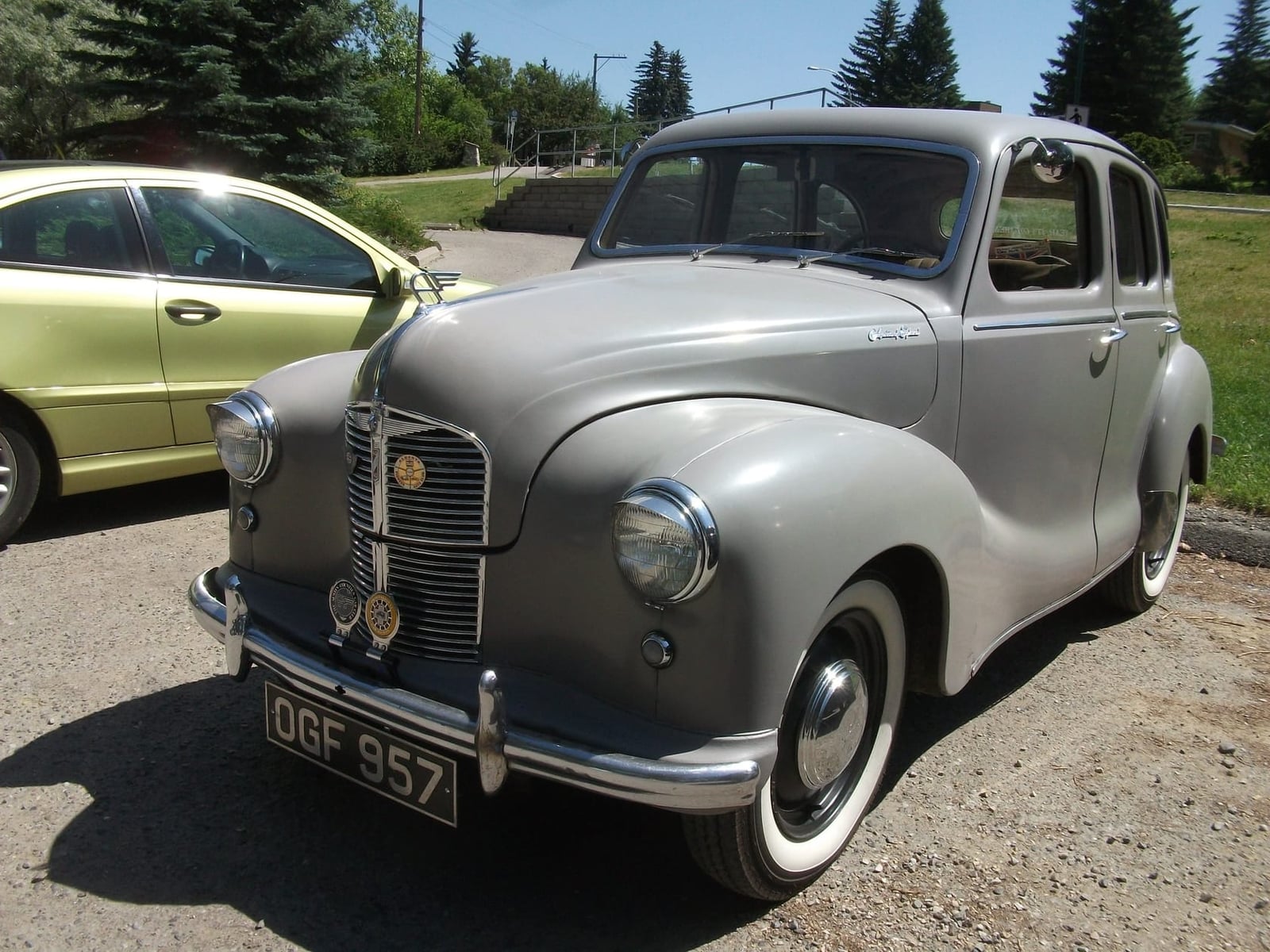
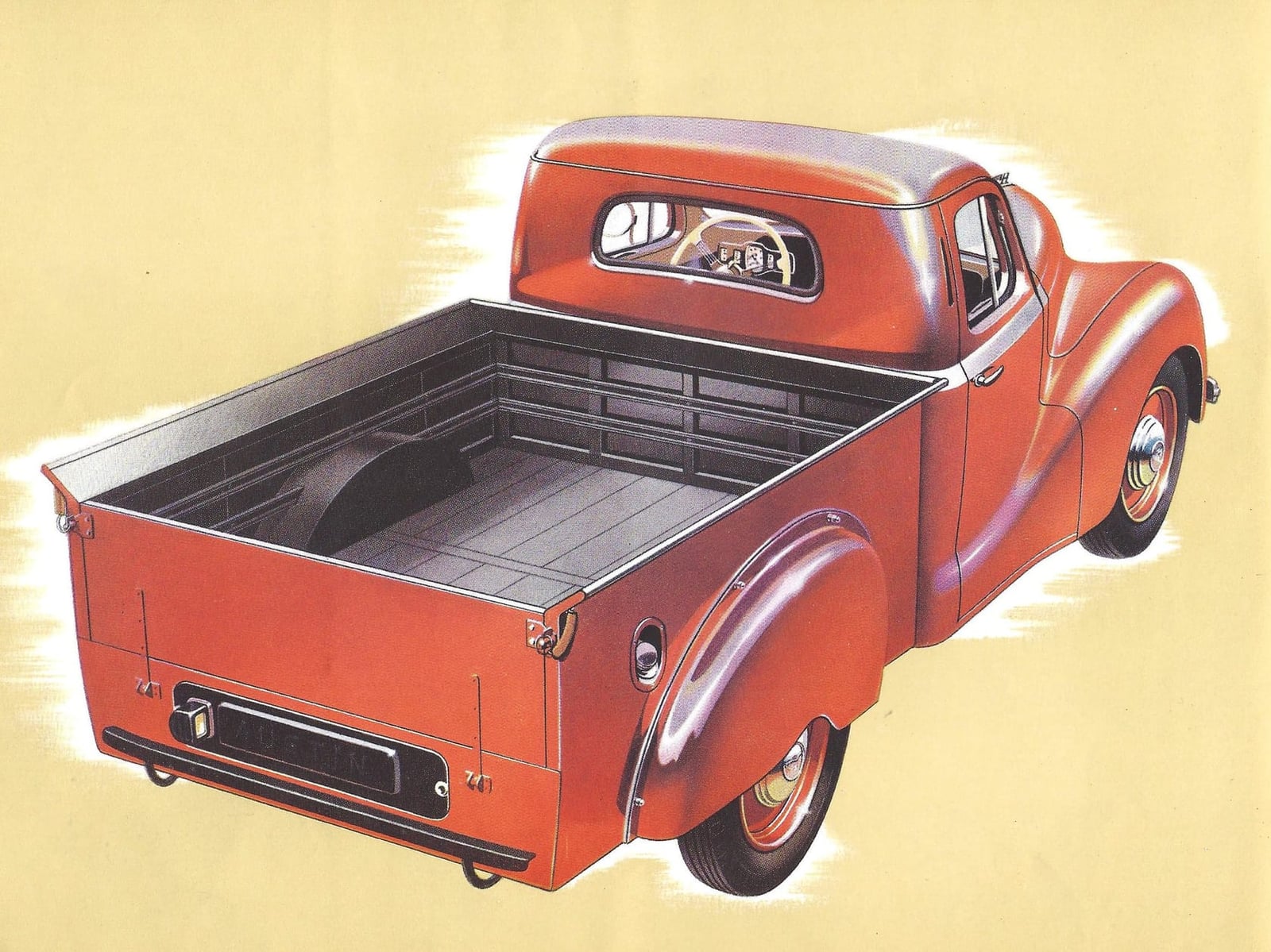
The 1947 A40 Devon (with its two-door Dorset sibling) was Longbridge’s answer to export-or-die: Austin’s first new post-war design, carrying the company’s first new engine, the tough 1200cc overhead-valve four, in a sturdy separate-chassis package aimed squarely at dollar markets. The gamble worked handsomely; Devons sailed to America and across the Commonwealth in their hundreds of thousands, the vans and pick-ups put the badge to work at home, and the A40 became the quiet, uncomplaining workhorse of the whole Longbridge recovery. Survivors carry that story in every upright, sensible line.

Somerset and the softer fifties
The 1952 Somerset reskinned the recipe in the rounded style of the bigger Austins, all soft shoulders and chrome respectability, with the same dependable 1200 beneath. A factory drophead joined the range, rare and cherished now, and the Somerset sold steadily until 1954, when the A40 name went briefly to rest. These are the family’s gentlest cars, vintage in manner without vintage complication, and their club scene overlaps warmly with the pre-war Austin world on one side and the 1950s saloon scene on the other.

The Jensen connection: the A40 Sports
The family’s party piece came from West Bromwich: Jensen styled and built an aluminium four-seat convertible body on the A40 chassis, Austin fitted a twin-carburettor 46 bhp engine, and the A40 Sports (1950–53) gave the sensible badge a genuinely pretty open car, about 4,000 built. The relationship later brought Jensen the Austin-Healey body contract, making the little Sports a footnote in a much bigger story, and genuine examples, always scarce, are the family’s collector premium today.

Farina: the shape of things to come
The badge returned in 1958 on something quietly radical: the A40 Farina, Pininfarina’s crisp two-box body on A-series mechanicals shared with the A35. The 1959 Countryman version added a horizontally split tailgate that opened the whole tail, the hatchback idea a decade early, and design historians have credited the little Austin as the form’s ancestor ever since. The 1962 Mk II brought the 1098cc engine and a longer wheelbase, production ran to 1967, and the Farina’s giant-killing career in historic saloon racing keeps the shape famous on circuits today.

The Farina on track: historic racing royalty
The A40 Farina’s second career made it more famous than its first: light, boxy and beautifully balanced, it became a fixture of historic saloon racing, hustling around circuits in the touring-car classes where the little Austin regularly embarrasses machinery with several times its power, to crowds’ unfailing delight. Race preparation is a mature science, A-series tuning being the best-documented in the hobby, and competitive Farinas change hands in their own market well above road-car money. For the road-car owner the racing scene is pure benefit: it keeps panels, tuning parts and expertise in constant production, and it means an ordinary Farina arrives at any circuit event already carrying sporting credibility.

Buying an A40 today
Both eras of the family reward exactly the same discipline: structure first, everything else second. The early cars rot in their chassis outriggers, sills, wings and floors; the Farinas go in the sills, rear arches, valances and screen surrounds; and with values this gentle across the board, restoration must always be bought already done rather than commissioned at your own expense. Mechanical parts are outstanding for both generations, the 1200 shared across period Austins and the A-series supported by the vast A35 and Minor network. Sports and dropheads demand authenticity checks. Pick the era that suits your pace; the family welcomes both.

Values: honest money across two eras
One hundred and thirty-three measured sales at a £4,500 median price the family honestly: usable cars from £3,000, good Devons, Somersets and Farinas £4,500 to £8,000, Countrymen a step above, dropheads scarce and prized, and the Jensen-built Sports well into five figures. For cars this usable, this supported and this storied, the money remains gentle, and the Farina in particular, historic racing’s favourite giant-killer, looks like the family’s appreciating chapter.

More photos
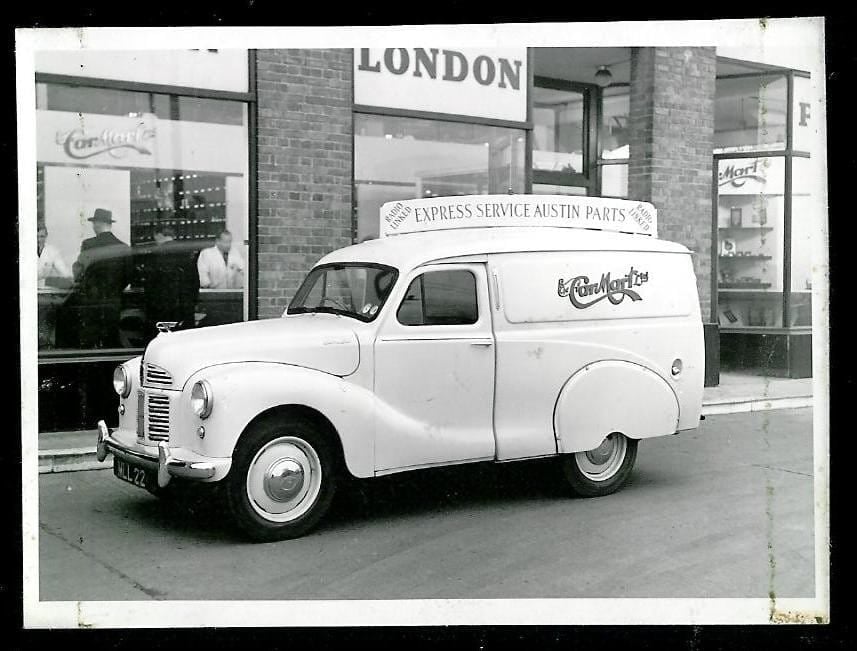
A40: what changed and when
- 1947The Devon and two-door Dorset launch Austin's export drive: the company's first new post-war design and its first new engine, the 1200cc overhead-valve four.
- 1950Jensen builds the aluminium-bodied A40 Sports convertible, about 4,000 in all, beginning the relationship that later brings the Austin-Healey body contract.
- 1952The Somerset reskins the recipe in the rounded style of the bigger Austins, with a rare factory drophead.
- 1958The badge returns on the A40 Farina, Pininfarina's crisp two-box on A-series mechanicals shared with the A35.
- 1959The Countryman's horizontally split tailgate opens the whole tail, the hatchback idea a decade early.
- 1962The Mk II brings the 1,098cc engine and a longer wheelbase.
- 1967Production ends at over 850,000 cars across the family.
What to check on an A40
Structure, first in both eras
- Early cars: chassis outriggers, sills, wings and floors
- Farinas: sills, rear arches, valances and screen surrounds
- Buy restoration already done; commissioning it never pays at these values
- Vans and pick-ups worked hardest and need the hardest look
Mechanical
- The 1200 four is shared across period Austins and parts flow freely
- Farina A-series cars draw on the vast A35 and Minor network
- Race-prepared Farinas are common; establish what has been changed
- Both engines are unstressed and durable when serviced
Rarity and authenticity
- The Jensen-built Sports is the family's collector premium and needs verifying
- Somerset dropheads are rare and cherished
- Countrymen sit a step above the saloons
- Pick the era that suits your pace; the family welcomes both
What the Austin A40 sells for at auction
In real terms, typical Austin A40 prices were down about 70% over the five years to 2025, once inflation is accounted for.
| Variant | Sold | Typical range | Median |
|---|---|---|---|
| A40 | 35 | £1,632 - £5,819 | £2,904 |
| A40 Somerset | 34 | £2,150 - £5,792 | £4,232 |
| A40 Farina | 21 | £2,160 - £5,746 | £3,248 |
| A40 Devon | 16 | £3,094 - £6,092 | £4,958 |
| A40 Sports | 16 | £7,294 - £13,300 | £8,775 |
| A40 Countryman | 7 | £3,188 - £5,662 | £4,200 |
Show the year-by-year mediansHide the year-by-year medians
| Year | Sold | Median | In 2025 money |
|---|---|---|---|
| 2026 (so far) | 12 | £3,800 | |
| 2025 | 22 | £4,445 | £4,445 |
| 2024 | 7 | £5,051 | £5,245 |
| 2023 | 13 | £5,060 | £5,430 |
| 2022 | 13 | £5,107 | £5,849 |
| 2021 | 7 | £5,806 | £7,179 |
| 2020 | 11 | £11,550 | £14,636 |
| 2018 | 9 | £4,200 | £5,468 |
| 2017 | 5 | £6,384 | £8,504 |
| 2016 | 11 | £2,367 | £3,234 |
| 2015 | 6 | £1,750 | £2,415 |
| 2014 | 3 | £2,981 | £4,130 |
| 2013 | 3 | £8,050 | £11,313 |
| 2009 | 3 | £4,500 | £7,065 |
- £2,300A40
- £7,392A40 Sports
- £4,320A40 Somerset
- £2,808A40 Farina
- £1,360A40
Reasonable evidence. 133 recorded sales: enough for the range to mean something, though a few unusual cars can still move a single year's median. Based on 133 sold results from public classic car auctions (2004 to 10 August 2026). Sold prices, not asking prices, and not a valuation: condition, history and specification vary from car to car. Inflation-adjusted figures use the ONS CPIH index, in 2025 money.
Frequently asked questions
What are the different Austin A40 models?
Was the Austin A40 Farina the first hatchback?
What is an Austin A40 Sports?
What engine does the Austin A40 have?
How much is an Austin A40 worth?
What is the most expensive Austin A40 ever sold at auction?
How often does an Austin A40 come up for sale?
Related across themes

More from Austin


Recently added

Bentley S-series: the quiet twin with the beautiful secrets (1955–1965)

Rolls-Royce Silver Spirit and Silver Spur: the last Crewe bargain (1980–1999)

Rolls-Royce Corniche: the coachbuilt survivor that outlived its makers (1971–1995)
