Austin A30 and A35 values: the cheapest way into a real classic, and the race cars at four times the money
A saloon you can drive home for less than a set of tyres for something bigger. Across 227 recorded auction sales, what an Austin A30 and A35 are worth, why the A35 sells above the A30, and what a competition-prepared car makes.
Built 1951–1968
What the Austin A30 & A35 sells for at auction
In 2025 the median Austin A30 & A35 sold for £4,781 across 33 sales, 66% up on 2024. In real terms, typical Austin A30 & A35 prices were down about 61% over the five years to 2025, once inflation is accounted for.
| Variant | Sold | Typical range | Median |
|---|---|---|---|
| A35 | 136 | £2,887 - £7,378 | £4,945 |
| A30 | 53 | £1,960 - £4,500 | £3,119 |
| A30 Seven | 25 | £1,894 - £5,500 | £3,494 |
| A35 Competition | 10 | £13,500 - £26,862 | £15,876 |
Show the year-by-year mediansHide the year-by-year medians
| Year | Sold | Median | In 2025 money |
|---|---|---|---|
| 2026 (so far) | 19 | £3,024 | |
| 2025 | 33 | £4,781 | £4,781 |
| 2024 | 21 | £2,878 | £2,988 |
| 2023 | 28 | £4,950 | £5,311 |
| 2022 | 20 | £3,484 | £3,989 |
| 2021 | 23 | £3,600 | £4,452 |
| 2020 | 18 | £9,662 | £12,244 |
| 2019 | 18 | £5,100 | £6,529 |
| 2018 | 10 | £4,692 | £6,108 |
| 2017 | 12 | £6,726 | £8,959 |
| 2016 | 9 | £4,600 | £6,285 |
| 2015 | 4 | £4,380 | £6,044 |
| 2014 | 4 | £2,291 | £3,174 |
| 2011 | 3 | £20,245 | £29,848 |
- £5,320A35
- £575A35
- £3,360A30
- £3,750A30
- £1,500A35
Strong evidence. 227 recorded sales and a dozen or more a year: the median and the range are well founded. Based on 227 sold results from public classic car auctions (2004 to 10 August 2026). Sold prices, not asking prices, and not a valuation: condition, history and specification vary from car to car. Inflation-adjusted figures use the ONS CPIH index, in 2025 money.
The A30 and the A35 are the cheapest way into a real classic in Britain, and the recorded sales say so plainly. Austin A35 values sit at a median of £4,945 and the A30 at £3,119, with the whole record of 227 sales since 2004 running at £4,162 at the median and a middle half of £2,532 to £7,159. That buys a running, MOT-exempt, tax-exempt saloon with a club, a parts supply and eighty years of goodwill behind it. The spread runs from a £173 project to £33,750 for a competition car, and the gap between those two numbers is most of what this page is about.
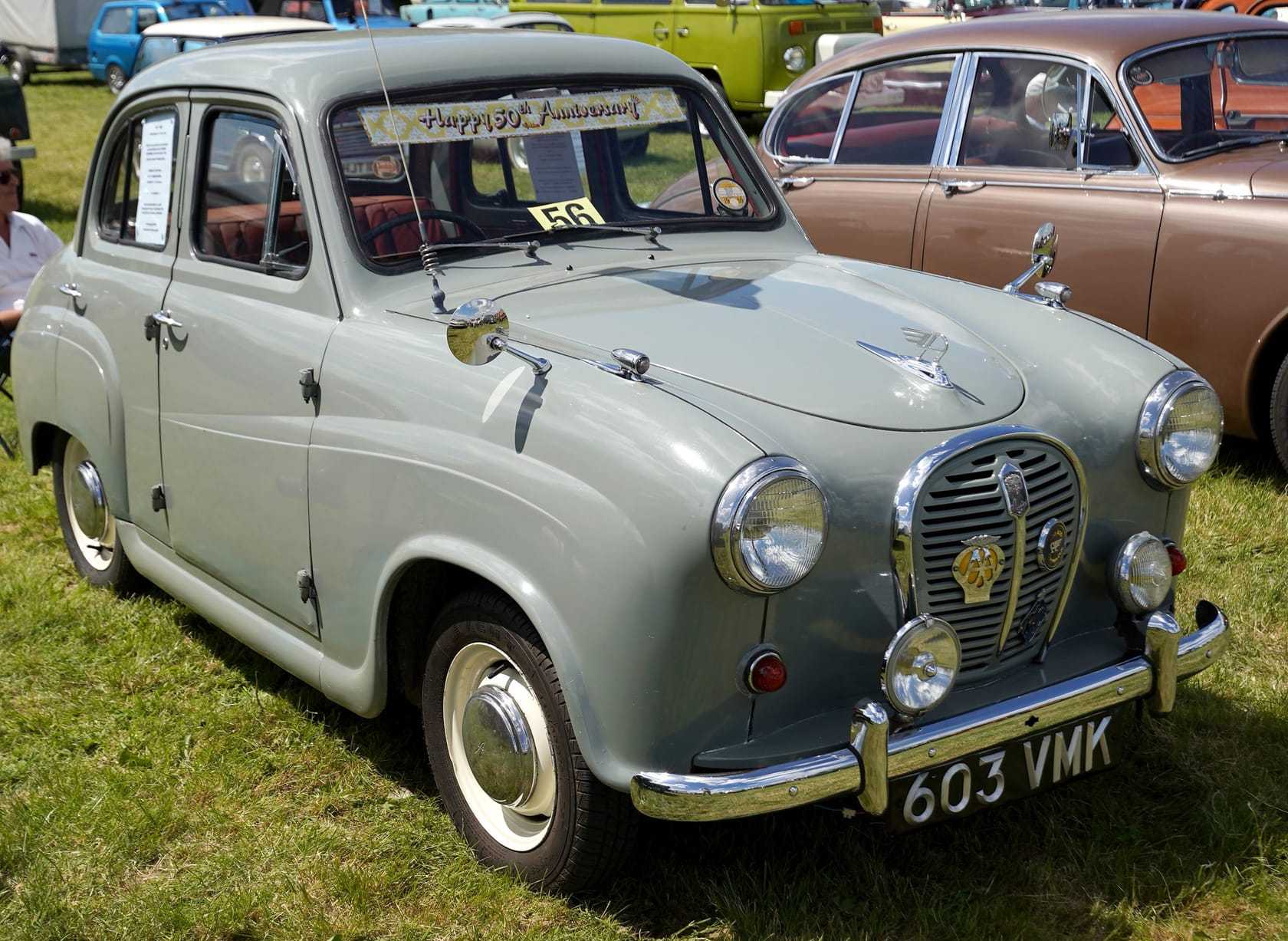
The Austin A30 and A35 guide covers the two models, the bodies and what to check on a small 1950s Austin. This page is about the money, and about a market where the car costs less than the work.
The A35 sells above the A30, and the badge is not why
The A35’s median is £4,945 across 136 recorded sales; the A30’s is £3,119 across 53, with cars listed under the original A30 Seven name at £3,494 across 25. The A30 is the rarer and the earlier car, and it sells for about a thousand pounds less.
That inversion tells you what kind of market this is. Nobody is buying an A35 as an investment, so scarcity earns nothing; buyers are choosing a car to drive, and the A35’s 948cc A-series, larger rear window and better gearbox make it the more usable of two very similar cars. Where a market prices rarity, the A30 would lead. Where a market prices usability, the A35 does, and it does. The same reasoning holds for the Countryman and the vans, which are useful as well as charming and hold their money accordingly.

The race cars are the exception
One row in the record behaves completely differently. Competition A35s sit at £15,876 at the median across 10 recorded sales, with a middle half of £13,500 to £26,862, three to four times a road car, and the highest sale in the whole record, £33,750, was one of them.
The A35 has been a fixture of historic saloon racing for decades, and a properly prepared car with eligibility papers and a race history is not an old Austin at all: it is a competition entry with a grid to go to, priced against what it costs to build one. The boundary matters when buying. A road car with a warmed-over engine and some period-look addenda is not an eligible race car, it sells as a road car, and the gap between the two descriptions is more than the price of a good saloon.

A chart to distrust
The yearly medians read £3,600 in 2021, £3,484 in 2022, £4,950 in 2023, £2,878 in 2024, £4,781 in 2025 and about £3,024 so far in 2026. In real terms the current figure sits below where the market stood in 2016. The honest summary is flat for fifteen years, which at this level means slowly losing ground to inflation.
More useful than the direction is the warning. About 25 sales a year, spread across two models, four body styles and the occasional competition car, is a thin sample, and a single race car in a quiet year moves the median further than the market moves. The 2011 figure of £20,245 that sits at the left of the chart rests on three sales and means nothing at all. Read the middle half across the whole record rather than any one year, and treat a price guide quoting a single annual figure for an A35 as guessing.

Where A30s and A35s change hands
Almost entirely in British regional sale rooms, at the ordinary end. The summer of 2026 is the market in miniature: an A35 at £5,320, an A30 at £3,750, another A30 at £3,360, an A35 at £1,500 and one at £575, all within a fortnight and none of them at a specialist sale. Four in five cars offered find a buyer, which is what happens when nobody has an unrealistic reserve because nobody is expecting to make money. The competition cars go through the historic-racing specialists instead and belong to a different circuit entirely. Whether a recorded price includes the buyer’s premium varies by sale, which is one more reason to read the usual range rather than any single result.
Insuring, restoring, selling
For an agreed-value policy a good road car belongs at the upper end of its range rather than the median, because the median is dragged down by projects that will never be finished. That last point is the whole of the buying advice, too: a full restoration on an A30 costs several times what the finished car makes, so the sums only work if you are doing it yourself for the pleasure of it. Buy the £6,000 sorted car rather than the £1,000 one. If you are selling, an original, unrestored, running car with its history sells faster than a smartened one, because this market is bought by people who want to use a car on Sunday rather than win a concours.
Related
The A30 and A35 are Austin’s answer to the Morris Minor, which outsold them and now sells for a little more, and the direct ancestor of the Mini that replaced them both in spirit. For the wider marque see the classic Austins, and for the period, British classic cars of the 1950s. For how all the figures on this site are compiled, see what classic cars sell for.