Triumph Acclaim: the Honda handshake that ended a marque (1981–1984)
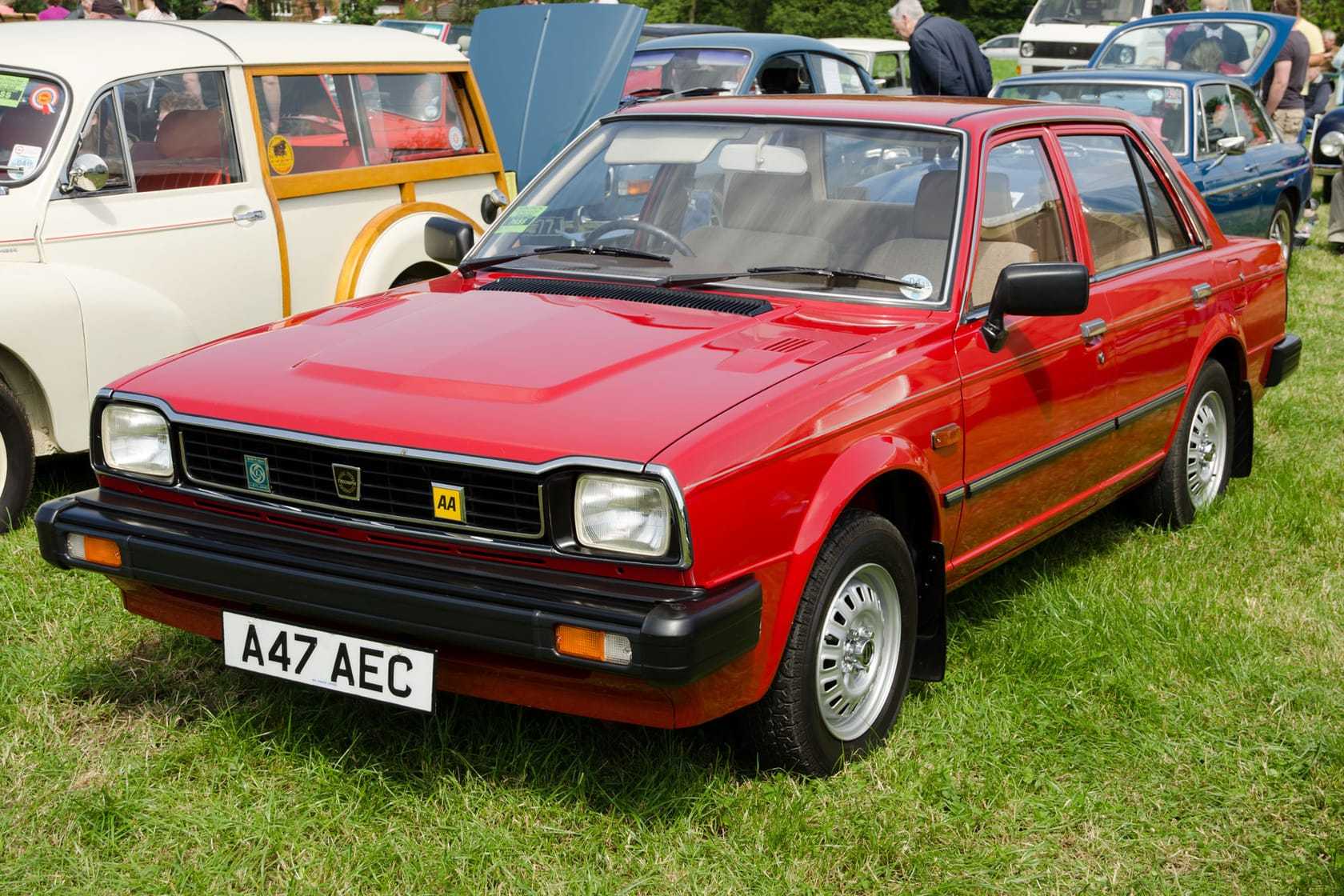
The Triumph Acclaim was a Honda Ballade built by British Leyland at Cowley, the deal that began the Honda-Rover era and the last car ever to wear the Triumph badge. A guide to the Acclaim's unlikely story, the trims and Triomatic, why so few survive, buying checks and values.
Built 1981–1984 12 recorded sales
At a glance
- Years
- 1981–1984
- Body styles
- Four-door saloon
- Drivetrain
- Front engine, front-wheel drive
- Engines
- 1335cc Honda twin-carburettor four
- Power
- 70 bhp
- Top speed
- Around 92 mph
- Trim levels
- L, HL, HLS, CD; Triomatic semi-automatic option
- Production
- 133,626
- Assembly
- Cowley, Oxford
- Designer
- Honda (Ballade); Leyland trim and tuning changes
- Values
- Usable from around £1,500; good cars £2,500-£4,500; the best beyond
- The handshake
- The first fruit of the 1979 BL-Honda deal that led to Rover's Honda era
- The full stop
- When Acclaim production ended in 1984, the Triumph marque ended with it
The models
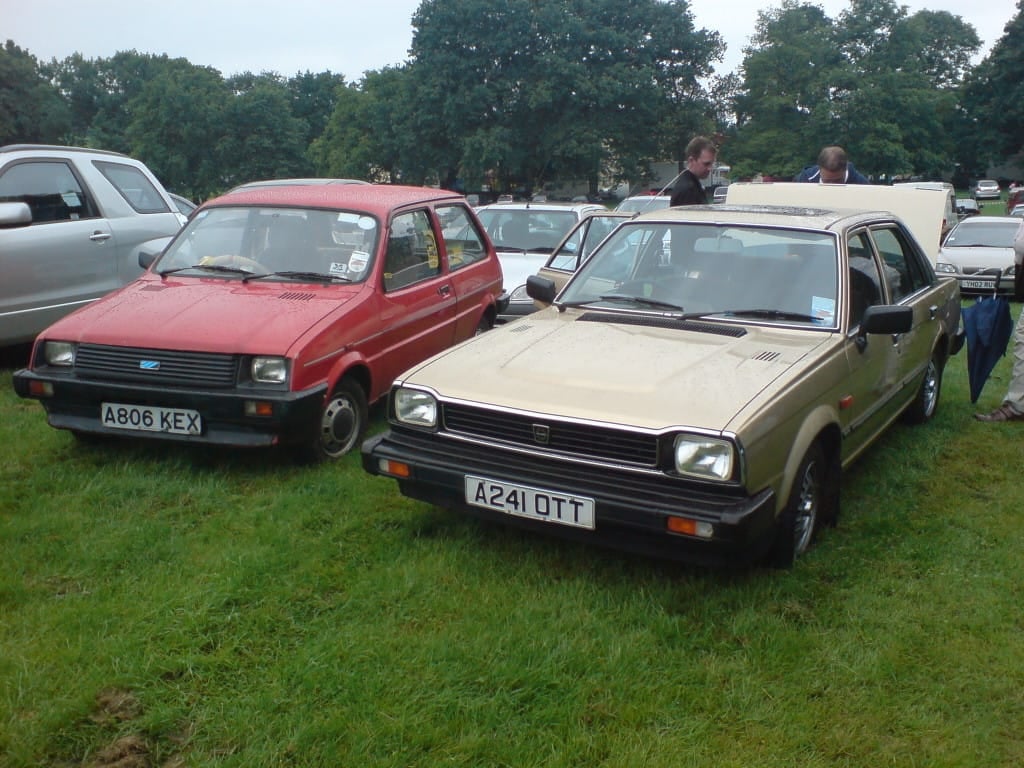
The last Triumph ever built had a Honda engine, a Honda gearbox and a Honda floorpan, and was assembled at Cowley by the company that had spent a decade making the punchline of British industry. The Triumph Acclaim of 1981–84 is a small, tidy, deeply unlikely piece of history: the car that began the Honda era, restored a little of Leyland’s honour, and closed a sporting marque with a family saloon.
The Honda handshake
By 1979 British Leyland needed a modern mid-sized car and had no money to develop one, so it licensed Honda’s Ballade: the first such deal between a British and Japanese maker, signed amid predictable uproar. Cowley built the car with UK-sourced trim, suspension retuned for British roads, and, after internal debate, the Triumph badge, chosen to lend the newcomer respectability. Launched in October 1981, the Acclaim was the moment the British Leyland story turned pragmatic, and its lineage ran directly into the Rover 200, 800 and the whole Honda-Rover era.

A very good little car
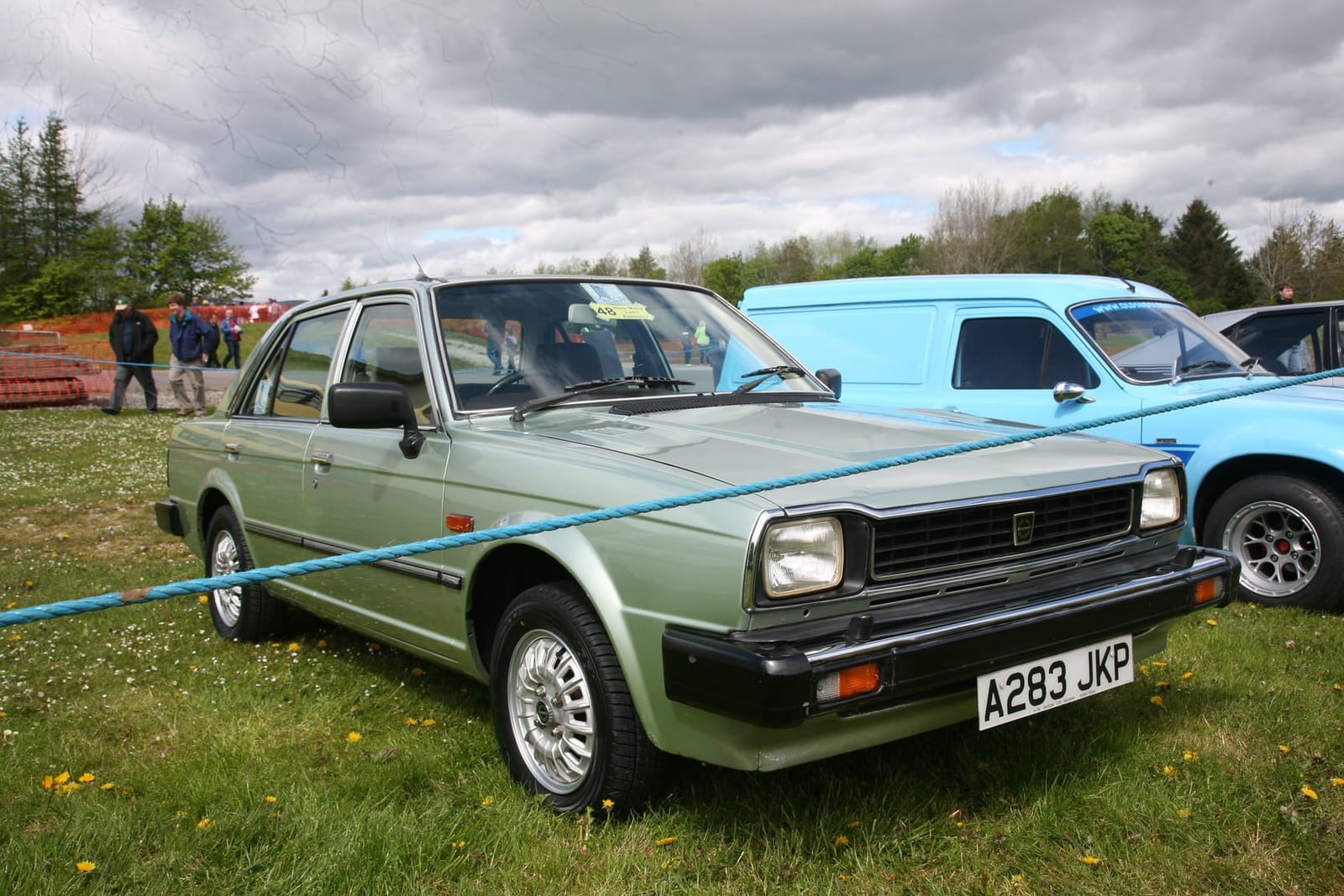
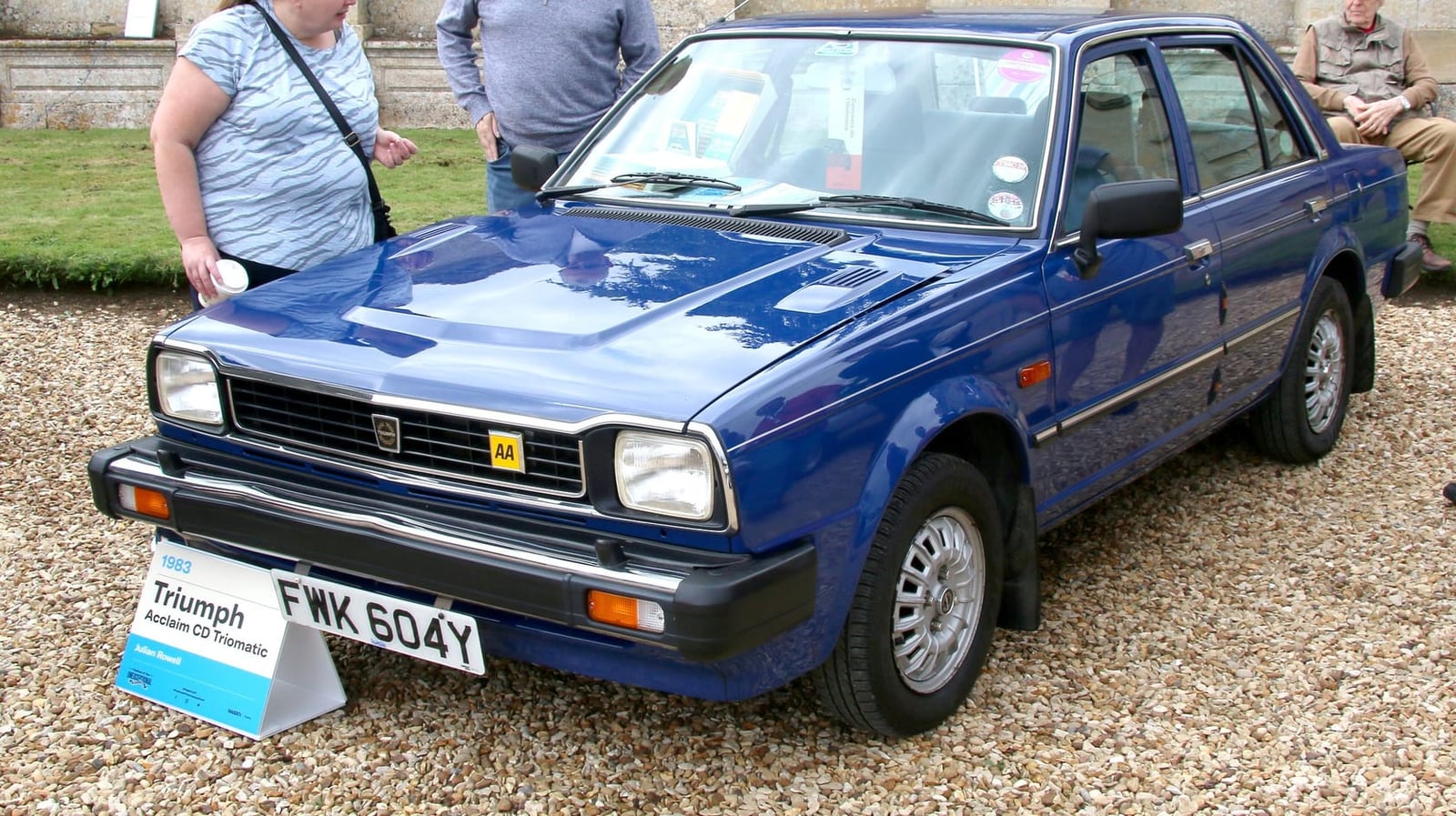
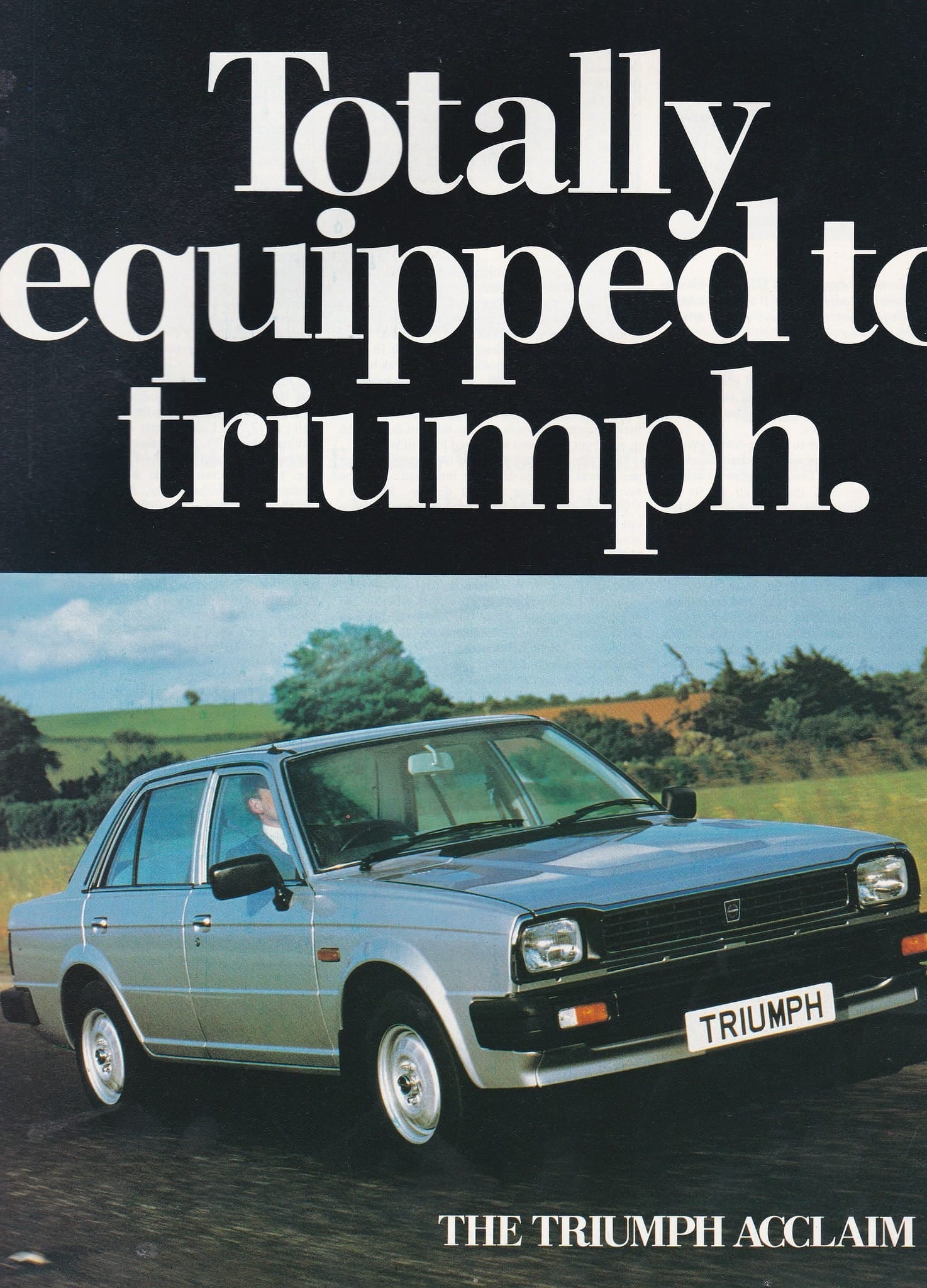
The heresy is that the Acclaim was excellent. Honda’s 1335cc twin-carburettor four gave 70 bhp in a car weighing barely 800 kilograms, brisk for the class, and it started, ran and kept running with a consistency that stunned Leyland’s critics; warranty claims ran at a small fraction of the company norm, a statistic Leyland publicised with something close to relief. Trim climbed from L to the plush CD, the Triomatic semi-automatic served the mature clientele, and 133,626 found homes in three years, sold partly on a slogan of pure period confidence: totally equipped to Triumph.

The last Triumph
The badge’s sports cars were already gone, the TR7 and TR8 line ending as the Acclaim arrived, and when production finished in June 1984 the marque finished with it, the replacement wearing a Rover badge. That accident of scheduling gives the Acclaim its collector identity: the full stop on the marque of the Spitfire and the Stag. Enthusiasts have long since forgiven the car its origins; the register gatherings treat it as what it is, the youngest Triumph, and the one whose survival was least expected.

The afterlife: from banger to darling
The Acclaim’s path to rarity was brutally ordinary. Cheap, dependable used cars became first cars, then bangers, then scrap, with rust closing the account; by the 2000s a model built in six figures had all but vanished, unmourned. The revival came through the register movement and the youngtimer wave: survivors began appearing at shows as curiosities, then as history, and the Acclaim’s role as the bridge to the Rover 200, 400 and 800 era earned it a seriousness nobody predicted. Today a good one is welcomed at any Triumph gathering, usually parked, with some ceremony, at the end of the line.

What an Acclaim is like to drive
Drive one now and the surprise is how modern it feels for 1981: light, precise controls, an eager engine that thrives on revs, a gearchange Honda-slick where Leyland’s were vague, and honest economy in the fifties per gallon. It is narrow, upright and snug in the rear seat, city-sized and easy to place in the friendliest possible way, with visibility modern drivers have forgotten cars ever offered. Nothing about it is sporting and everything about it is pleasant, which was exactly the brief. As a usable entry classic with parts logic split between Triumph clubs and Honda specialists, it has few rivals at the money.

Buying an Acclaim today
Rust decided the Acclaim’s survival and still decides purchases: sills, arches, valances, screen surrounds and suspension mounts want careful checking, because structural steel is the one thing the Honda content cannot save. Mechanically the car is close to vice-free when serviced, with Hondamatic fluid condition the Triomatic’s main question. Trim is the true hunt, shared with no other British car, so complete cars beat projects emphatically. With survivors in the low hundreds, viewing distance is rarely a reason to skip one, and the Acclaim register’s knowledge of individual cars, often down to original supplying dealer, makes provenance questions unusually easy to settle for so humble a machine.

Values: history at hatchback money
Acclaim prices remain a quiet joke: £1,500 to £2,500 usable, £2,500 to £4,500 good, the twelve measured auction sales confirming how rarely they surface at all. That buys the last car of a great British marque, the opening move of the deal that reshaped 1980s British motoring, and running costs at supermini level. As sleeper history goes, the polite little saloon from Cowley is about as cheap as it gets, and every Triumph Acclaim that survives makes the marque’s strange full stop a little easier to find, and a little harder to forget.
More photos
How the Acclaim changed
- 1979British Leyland licenses Honda's Ballade, the first such deal between a British and Japanese maker, signed amid predictable uproar.
- Oct 1981The Acclaim launches from Cowley with UK-sourced trim, suspension retuned for British roads and, after internal debate, the Triumph badge.
- 1982Warranty claims run at a small fraction of the company norm, a statistic Leyland publicises with something close to relief.
- June 1984Production ends at 133,626 cars, and the Triumph marque ends with it; the replacement wears a Rover badge.
Before you buy an Acclaim
Rust, which decided everything
- Sills, arches and valances
- Screen surrounds and suspension mounts
- Structural steel is the one thing the Honda content cannot save
- With survivors in the low hundreds, viewing distance is rarely a reason to skip a car
Mechanical
- Close to vice-free when serviced
- On a Triomatic, the Hondamatic fluid condition is the main question
- The twin-carburettor four thrives on revs and Honda specialists understand it
- Service items follow Honda logic rather than Leyland logic
Trim and provenance
- Trim is the true hunt, shared with no other British car
- Complete cars beat projects emphatically
- L, HL, HLS and CD trims differ enough to matter
- The Acclaim register often knows individual cars down to the original supplying dealer
What the Triumph Acclaim sells for at auction
The Triumph Acclaim comes to auction only occasionally: 12 recorded sales since 2015, typically making between £1,376 and £2,747 . With so few sales, treat any single result as a data point rather than a market price.
- £1,150Acclaim
- £5,700Acclaim
- £4,752Acclaim
- £910Acclaim
- £2,300Acclaim
Thin evidence. Only 12 recorded sales: read the figures as a sketch of the market, not a price. Based on 12 sold results from public classic car auctions (2015 to 10 August 2026). Sold prices, not asking prices, and not a valuation: condition, history and specification vary from car to car.
Frequently asked questions
Was the Triumph Acclaim really a Honda?
Why was the Acclaim the last Triumph?
Was the Triumph Acclaim a good car?
What was the Acclaim Triomatic?
How much is a Triumph Acclaim worth?
What is the most expensive Triumph Acclaim ever sold at auction?
How often does a Triumph Acclaim come up for sale?
Related across themes


More from Triumph

Triumph Vitesse: the Herald with a six-cylinder heart (1962–1971)

Standard Vanguard: one car for the whole world, and the engine that powered everything (1947–1963)

Triumph Roadster: dickey seats, Bergerac and the last of a breed (1946–1949)

Triumph Renown: razor-edge grandeur on a Vanguard chassis (1949–1954)
Recently added

Bentley S-series: the quiet twin with the beautiful secrets (1955–1965)

Rolls-Royce Silver Spirit and Silver Spur: the last Crewe bargain (1980–1999)

Rolls-Royce Corniche: the coachbuilt survivor that outlived its makers (1971–1995)
